Home Blog Page 328

Sketching the Highlands’ scenic views

0

In the ‘40s, celebrated painter and sketcher André Lapine wandered Minden’s backroads, forests and lakeside trails for days; rarely without paper, a pencil or a portable paint kit close at hand.

Many of his sketches of Haliburton County now hang in Minden Hills’ Agnes Jamieson Gallery.

“He always sketched. That was fundamental to whatever art he would produce,” said curator Laurie Carmount.

The gallery launched Sketch Out this year, a series of three outdoor art-making sessions where professional painters guide people through crafting art “en plein air” around the County. Gary Blundell met up with eager sketchers and painters at the Irondale Church, Sept. 18, to practice depicting the building in all its splendour. Carnarvon-based artist Harvey Walker will be hosting a session on Sept. 25 at the Gull River, where he invites any level of artist to join him as he paints the rushing rapids.

“You feel the emotion, you hear the noise,” Walker said.

For Walker, whose work has been exhibited in multiple group and solo shows, crafting art outside is fundamental to his practice. He paints spring blooms and flowers, sunny days at the beach midsummer, or beside frozen ice fishing huts during the deep freeze of winter.

“When you’re painting on location, you’re more connected to what you’re looking at,” Walker said.

He likens it to reading a police report of a situation, as opposed to hearing from an eye witness. If you just paint or draw from a picture, you miss some of the nuance, emotion and scale of the scene you’re creating.

But it can be hard to do, Walker adds. You don’t have the comfort of a living room chair or art studio. However, it’s a challenge artists of all levels have risen to for centuries.

“It’s a major step,” Walker said of creating outdoor art, “but it’s a lot of fun.” It’s also a way to appreciate the wonder of Haliburton County, he said.

Both Carmount and Walker said the program is tailor-made for both experienced artists and newcomers to art.

“You can just go out and do your thing. It’s really a sense of getting what nature has to offer at the time,” said Carmount. Those without equipment such as paints or pencils can buy a $20 drawing kit to bring along, and seasoned plein air artists are invited to bring their own supplies.

Walker said he encourages everyone to recognize art can be a “viable, life-changing hobby.” Sketching outdoors, he said “is the extreme sport version of painting.” He invites everyone to give it a try.

To register for Walker’s workshop, email gallery@mindenhills.ca or call 705-286- 3763.

Minden Monarchs ruled the rink in the 1950s

0

The Haliburton Highlands Sports Hall of Fame Committee said the Minden Monarchs were the dominant men’s hockey team in Haliburton County in the 1950s.

They won the Central Ontario Intermediate “C” League Championship three years in a row, in 1956, 1957, and 1958.

The same seasons, they were Eastern Ontario Champions and Ontario Intermediate “C” Finalists.

“The village of Minden supported the Monarchs with unrivalled enthusiasm, and the Minden Community Centre was jammed with fans every Saturday night to cheer for their local heroes,” the committee said.

Leading the team to consecutive championships were: Doug Powell (playing coach), Mark Vasey and Garnet Lytle (managers), Bernie Trepanier (secretarytreasurer) and Willis Walker (trainer).

On Feb. 24, 1955, The Haliburton Echo reported that the Monarchs trounced the Lakeshore Saints, 13-2.

“A crowd of over 375 hockey fans paid their way into the arena to see Minden overwhelm the Toronto team,” the report said.

Goal scorers were: Gary, Glen and Hugh Vasey, Richardson, Farrell, Wheeler, Rogers, and Lougheed. Other players credited with the win were Watt and Struthers.

“A powerhouse of a team offensively and defensively,” the committee said.

“The Monarchs ruled the rink and teams from Cannington, Little Britain, Bobcaygeon, Coboconk, Haliburton and other Central Ontario hockey clubs knew they were the team to beat.”

Huskies cruise to pair of exhibition wins

0

The Haliburton County Huskies kicked off their pre-season in style this past weekend with a pair of impressive victories over the Aurora Tigers.

In what was a special night Friday for the hometown team, competing in its first ever game, albeit an exhibition, the Huskies roared out of the gates on the road in Aurora, displaying great offensive panache en route to a 6-3 victory over the Tigers.

The very next night, in what was the organization’s home debut at SG Nesbitt Memorial Arena in Minden, the Huskies once again put the Tigers to the sword, coming away with a 7-4 win. A crowd of 195 people were in attendance at the game, generating an incredible atmosphere that the Huskies players responded to right from the first drop of the puck.

Ryan Ramsay, Huskies head coach and general manager, was pleased to pick up a pair of wins as the team prepares for its inaugural OJHL season.

“I thought we played pretty well. We’ve been working really hard over the past two weeks on our systems and getting everyone on the same page, so to see things fall into place and pick up a couple wins was nice,” Ramsay said. “There’s a lot for us to break down now – there’s still work to do, and we’ll keep pumping the systems on the ice in practice as we get ready for the season.”

The Huskies were particularly impressive when they had the puck against the Tigers on home ice on Saturday, creating a steady flow of chances that kept the away side on the back foot for the opening two periods. By the end of the second buzzer, the Huskies had racked up six goals and conceded just one.

The team’s top forward line in particular really stood out over this first exhibition weekend, with star forwards Bryce Richardson and Oliver Tarr showing what they can do when given time and space in the offensive zone. Richardson put up a hat-trick and an assit in Saturday’s game in front of the hometown crowd, with a further two goals on the road the night before in Aurora. Tarr had 10 points across the two contests.

“That line played really, really well. They really put a marker down,” Ramsay down. “We know what we have in those guys, and they have some really great chemistry, so we’re excited about that.”

Ramsay did say that his team would need some secondary scoring once the season gets underway, and that he was looking for some of his other forwards to step up and play a pivotal role once the season gets underway.

“Once we get into the season, everyone can see a stat sheet, so teams are going to put a big focus on our top line and our top players. That will create opportunities for some of our other players, so secondary scoring will be a big thing for us,” Ramsay said. “We have some guys that I think can step up, but we’re also still looking to acquire one or two forwards that can help us out.”

As the team prepares for another home and home exhibition series this weekend, this time against the Collingwood Blues, Ramsay says he’s looking forward to facing off against one of the stronger teams in the OJHL.

“This weekend is going to be a lot stiffer competition. That’s taking nothing away from Aurora, but Collingwood usually has a very good team. They have a great system there. So this will be a really good test for us moving forward to see where we match up with some other teams,” Ramsay said.

The teams will play in Collingwood on Friday, before a home tilt in Minden on Saturday. Puck drop at SG Nesbitt Memorial Arena is slated for 4:30 p.m

Pride group seeks to rescue LGBTQI refugee

0

Minden Pride is aiming to raise $10,000 to help bring an LGBTQ refugee into Canada, giving them an opportunity to start a new life.

The local group is partnering with Rainbow Railroad, a global non-profit that helps individuals facing persecution based on their sexual orientation, gender identity and sex characteristics escape dangerous, sometimes even fatal, situations.

“It’s hard to believe there’s [almost] 70 countries in the world where just being who you are is considered illegal,” Allan Guinan, chair of Minden Pride, informed The Highlander. “Being gay is not OK in a lot of countries still in the world. Afghanistan is just one example. You can be tortured, you can be murdered in Afghanistan for being gay.”

Guinan and a collection of volunteers have banded together in recent weeks in an attempt to raise enough money to sponsor an individual through Rainbow Railroad. As of press time, they have raised approximately $7,797 of their $10,000 goal – the costs associated, Guinan says, with helping one person escape state sponsored violence.

Since being founded in 2006, Rainbow Railroad has helped over 1,600 LGBTQ individuals find safety through emergency relocation and other forms of assistance.

Due to political instability in some parts of the world, most notably in Africa and the Middle East, there has been a huge surge in demand for support and assistance in recent months. Since Jan. 1 of this year, there has been 2,987 individual requests for help received by Rainbow Railroad.

Kimahli Powell, Rainbow Railroad executive director, recently told CBC that his organization has fielded hundreds of requests for assistance from LGBTQ individuals in Afghanistan since the Taliban returned to power in the war-torn country in mid-August.

“Conditions for LGBTQ folks was precarious even before Taliban rule … Our fear with the Taliban is that members of the community will be targets. We’re already seeing disturbing reports from people who reached out to us that the Taliban is seeking out members of the LGBTQ community, and there have been reports of someone allegedly being killed,” Powell said. “We’re really concerned, and the people who have reached out to us are extremely concerned, which is why we have to do everything we can to help people who are at imminent risk escape.”

Guinan echoed those sentiments, saying the current situation in Afghanistan is really driving home the point to members of Minden Pride how fortunate they are.

“The luxuries that we have in Canada, and here in Minden as a community are not necessarily the same for everyone else around the world,” Guinan said. “We’re seeing some truly horrific things happen right now – not only in Afghanistan, but in other places too … Our goal with this is to get somebody out of an area where homosexuality is illegal, or they’ve faced, or are facing some sort of persecution.”

For more information on Rainbow Railroad, visit www.rainbowrailroad.org. To donate to the local fundraising effort, visit www.mindenpride.ca.

Outdoors Association washes for walleye

0

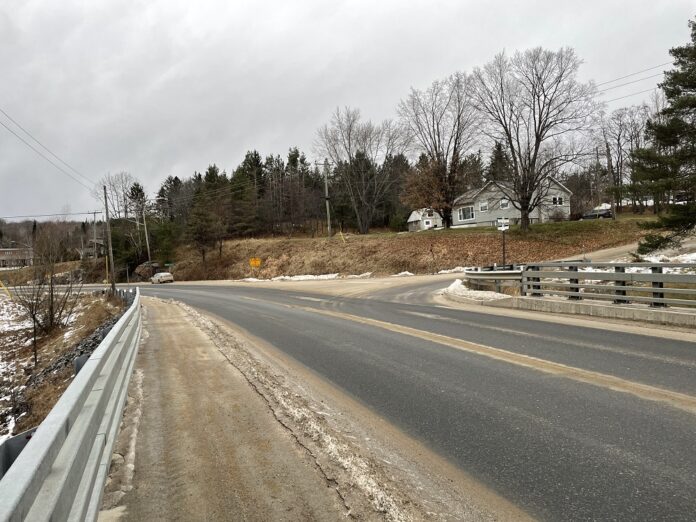
The Haliburton Highlands Outdoors Association (HHOA) brought hip waders and fire hoses into the Drag River Sept. 14 in an attempt to boost the waterway’s Walleye population.

Volunteers washed away sediment from between the rocks under the Highway 118 bridge, a busy spawning site for the fish.

HHOA Director Tim Bahr explained how Walleye eggs won’t stick to rocks when sand and silt get in the way. That could be a reason why Bahr and so many other local anglers have noticed a decline in the tasty fish which is popular for sport fishing.

“Ten years ago, walleye were plentiful and now they’re nearly nonexistent,” Bahr said.

The HHOA will clean the spawning ground yearly, power washing sediment downstream until it’s caught in a filtration net just before the river flows into Head Lake. Dysart’s fire Chief Mike Iles volunteered his time to help, bringing along two fire hoses and pumps.

“It’s one thing that people like us can do to help the fishing,” Bahr said.

The HHOA also polled anglers along the Kashagawigamog chain of lakes and rivers about the health of the area’s fisheries. So far, 138 people who live on the lakes and rivers along the chain or have fished it responded.

Eighty-two per cent said they’ve noticed a Walleye decline throughout the years, and 33 per cent report poor fishing conditions.

“We have heard from many anglers that the Walleye fishing in the Kash Chain has declined significantly,” said Dan Smith, HHOA President, in a press release. “We plan to work with the MNRF to do all we can to improve the fishery.”

Fifty-one per cent of people who responded to the survey said they fish for sport, only keeping the odd fish. Respondent’s concerns included big boat traffic, shoreline development and inadequate fishing regulations that might be causing a decline in fishing conditions. Besides a survey polling those with the bait and reels, the HHOA is also keeping an eye on the fish themselves.

They restarted their Walleye Watch Program this spring to monitor the Drag River spawning site. Retired Fleming College Fisheries and Limnology Professor Denis McGee helped 14 HHOA members stake out the site for 25 nights, measuring the quantities of Walleye eggs in the spawn site. They counted 1,334 Walleye.

The fish were first introduced to the Kashagawigamog chain in the 1950s. It is now one of the most popular fish to catch in Ontario, however shortages have been reported on multiple lakes and water systems. If populations continue to decline, Bahr predicts the sport fishing industry could suffer, or other species could be overfished.

Health Unit plans post-COVID recovery

0

COVID-19 caused seismic shifts in day to day operations for the Haliburton Kawartha Pine Ridge District Health Unit. Whether implementing protective measures, coordinating online meeting schedules, or determining which programs could safely be run, the unit was forced to pivot in nearly all departments. Now, they’re charting a path back to normalizing service delivery.

At a virtual Board of Health meeting Sept. 16, chief medical of health Dr. Natalie Bocking said while COVID-19 protective measures aren’t going away, now is the time to determine how they can restart services halted during the pandemic and reorient current programs to suit postpandemic health needs.

She said the path forward for the region’s health services means “learning to live with COVID-19” after the fourth wave. Core programs, such as health inspections, immunizations and work with vulnerable communities, have been running throughout the pandemic. Other programs are restarting this fall, like dental and sexual health clinics.

Some services remain offline or are running at reduced levels. These include school immunizations, in-person food handler training, oral and vision screening, as well as a broad suite of awareness campaigns around sexual health, climate change and health promotion.“These programs can’t remain offline indefinitely,” Bocking said.

The health unit’s COVID-19 Recovery Plan Framework is a master plan outlining how the health unit will recover from the pandemic. It’s guided by a board of multiple members of the district’s health services team, who have been meeting regularly since June.

The plan seeks to “identify the lessons learned, and incorporate them into [the health unit’s] normal going forward,” explained Lorna McCleary, a health promotion manager and co-chair of the recovery planning team. That includes changing how health unit programs are planned and implemented in light of COVID-19 concerns.

Much of what the plan will look like, and when it will be implemented, is still unknown, pending guidance on COVID-19 concerns. There’s still uncertainty regarding COVID-19 immunization plans for 1-5 year-olds, booster shots, new variants and the extent of the predicted fourth wave.

“All of this is going to impact our capacity to move forward,” McCleary said.

Requests five per cent municipal funding bump

The board voted in favour of a 2022 budget totalling $22,005,474, partially funded by a $15,554,500 allotment from the Ministry of Health for the upcoming fiscal year. The HKPR’s budget factors in a reduction in personnel costs, which will be covered through reserve funds. It’s $281,082 less than the health unit’s 2021 budget, largely due to a projected decrease in COVID-19 costs.

The pandemic cost the HKPR health unit $1,941,187 between April and June, 2020. That includes staffing costs, equipment and PPE purchases and more. $920,910 was spent on COVID-19 vaccination efforts alone.

Ontario’s Ministry of Health has granted the health unit $1,618,300 in one-time funding for the 2021-22 fiscal year, and up to $264,000 in one-time funding for 2022-23. Those funds will help make up the deficit caused by COVID-19 costs, said Angela Vickery, HKPR’s manager of corporate services. With vaccination rates up, the health unit is planning for fewer COVID-19 related costs in 2022, even though Ontario currently faces a fourth wave.

“We will not require the same amount of resources in 2022 as we did in 2021,” Vickery said. The board also voted for a five per cent increase in municipal funding from the County of Northumberland, Haliburton County, and the City of Kawartha Lakes. The County of Haliburton contributed $463,508 in 2020.

Nurse pivots from ER to aesthetics

0

Looking for a lift in life? Registered nurse Jenn Emmerson has a solution. In fact, the former emergency room nurse turned entrepreneur can offer several solutions.

Emmerson owns B.A.O. Beauty Clinic, formerly JE Medical Cosmetics, established a year ago and now located on Maple Avenue in Haliburton. She is certified for cosmetic injectables and multiple advanced procedures including the applications of Platelet-Rich Plasma for skin and hair rejuvenation, fat dissolving injections, and non-surgical facelift techniques using dissolvable sutures called PDO Threads.

The switch from ER to aesthetics was a natural one for Emmerson.

“The most rewarding and fulfilling part of being a nurse is the opportunity to change someone’s day for the better,” said Emmerson. “I wanted to take that feeling and skillset and apply it in a new avenue of nursing, aesthetic nurse, the chance to provide this in my own clinic setting, an uplifting and positive environment that feels safe for everyone and is open to all.

“The ability to give someone a new sense of confidence is so rewarding, keeps me wanting to learn more and always striving to provide the best and safest services to the community.”

Emmerson works with nurse practitioner Christine Wickson and Wickson’s team of fellow NPs at Boost Clinics as the medical directorship for B.A.O. The team members ensure that each potential B.A.O. client is a candidate for treatment and they oversee the treatments.

“With over 14 years of experience, Christine has so much knowledge, keeping [clients] safe and informed every step of the way.”

The new company name B.A.O. began with Emmerson’s children’s initials and then extended to a statement.

“It’s simple, three names – Brooks, Ashton and Olivia, these three inspire and challenge me daily, making me a better person. They teach me to slow down and appreciate the smallest things. Keeping this reminder in my business was important to me. Beautiful, Authentic and Original.”

Emmerson’s family and close friends encouraged her to take a chance and believe in herself in becoming an entrepreneur.

“They still encourage me to this day and I am so grateful for them every step of the way … My passion for making people feel good, appreciated and understood paired with my attention to detail was a perfect match for a career in aesthetic medicine.”

The area resident said the community has also been supportive so far and she feels “extremely grateful” to have made it through the pandemic. She took care to accommodate the community in her choice of new location, finding a convenient and accessible environment filled with light that has an elevator and parking areas in front of the clinic and directly across the street.

The B.A.O. approach to aesthetic treatments is not to change how the client looks but to emphasize and create harmony with their features, said Emmerson, adding she is proud to provide quality medical aesthetics services using industry-leading products. B.A.O. also carries AlumierMD skincare products for purchase.

“As we enter into fall and the cooler months it’s a great time to evaluate your skin. Come in for a medical grade facial and enter the holiday season glowing!” B.A.O. Beauty Clinic is located at 49 Maple Avenue, Unit 6 in Haliburton. Call 705-455-0744, email jenn@baobeauty.ca or visit baobeauty.ca.

Principal hopes to build ‘family atmosphere’

0

While the position of principal is brand new to her, Barb Davies is in familiar surroundings as she begins her position with Cardiff and Wilberforce elementary schools.

The long-time educator transitioned into the role at the beginning of the new school year, replacing the recently retired Elaine Fournier. Davies said she couldn’t be happier as she begins her dream position.

“I’ve been here basically all my life,” said Davies, who grew up in Wilberforce.

“I went to Cardiff for kindergarten, did Grade 1 to Grade 4 in Wilberforce, and then upper elementary and high school in Haliburton … Aside from my time at Western University in London, I have lived my whole life in the Highlands. My heart and soul are here in Wilberforce, and in Cardiff.”

Davies most recently spent five years as vice-principal in Wilberforce, following a similar stint at J.D. Hodgson elementary school in Haliburton. She has taught every grade at the elementary level over a distinguished career that has spanned more than two decades.

Interacting with students and playing a key role in their development is central to all that Davies does in her new day-to-day role as principal. While she enjoyed her experience in the classroom as a teacher, Davies feels she can make more of a difference in the overall school community as an administrator.

A big part of that, she says, is helping to foster a family-like atmosphere at the two sites.

“We really are like one big family, which I feel makes kids feel accepted and cared for and secure. You really can’t expect success in academics if your kids don’t feel those things first, so that’s particularly important to me,” Davies said. “We look at different needs, and do whatever we can to meet those needs. I believe that all students can learn, be successful … and have happy, positive memories all at the same time.”

To help build that level of community spirit in the classroom, Davies has encouraged teachers to lead “student circles” during morning instruction, giving students the ability to talk, share stories and express their feelings in a caring and accepting environment.

“This helps to create a culture of empathy and equity in our schools, and really strengthens the bonds between students in our classrooms,” Davies said.

That particular exercise has been one of the major benefits of having students back on-site and inside the classroom, Davies says. As well, she’s just enjoyed seeing all the smiling faces, and listening to the buzz generated on the playground during recess.

“I love being back. Kids do better, I feel, in the school. They’re with their friends, and that, I think, makes them happier. It helps their wellbeing and their mental health just being able to connect with their classmates,” Davies said. “There’s a quote that I really like – to reach students’ minds, we must pass through their hearts first. It’s been difficult over the past [18 months] in a mostly online environment. In person is where we, as teachers, as educators are able to make the most impact.”

As Davies looks to the future, she’s excited to relaunch some extracurriculars at the schools, such as youth group and the Grade 8 cooking program.

“This is the start of a whole new year, that is filled with new possibilities,” Davies said.

Pandemic pushes school board into deficit

0

COVID and its additional costs are largely responsible for the $3.9 million deficit expected by the Trillium Lakelands District School Board.

On September 14, Superintendent of Finance Tim Ellis shared with trustees the third quarter financial report which ended May 31, 2021.

“This is the first opportunity that I have had to break the numbers to you as we don’t meet in the summer,” Ellis said. “Our actual revenue was lower than our estimates.”

Ellis also detailed that budgets for classroom technology, staff sick leave, maintenance, supply coverage and support for special education students learning at distance were in some cases well above what was budgeted for last year.

“The expected deficit of $3.9 million is just below the 2 percent provision. We can use 2 percent of our accumulated surplus to a maximum of $4 million to cover additional COVID related costs,” Ellis said.

Report confirms driver shortage

Every day more than 13,000 Trillium Lakelands District School Board students are transported to area schools by the 321 buses that are contracted by the board.

This year there are real issues regarding the availability of drivers and buses to cover all the available routes before and after school.

Superintendent of Finance Tim Ellis told trustees on September 14 that, “Bus drivers are at a premium right now. Our operators are working to get as many drivers as possible behind the wheel. This is presenting a real challenge right across the province this year.”

Trustee Judy Saunders wanted to know what the board is doing to make sure all students are being picked up and transported to school on board contracted buses.

“New students may need to wait upwards of a week to be added to driver’s manifests,” Ellis said. “All students will be given transportation, but it will take a little time.”

When queried about the cause of the shortages, Ellis said “Some drivers have chosen not to get vaccinated and some have chosen not to drive this year.”

Saunders continued her questioning, wanting to know whose responsibility it is to communicate with families about students not yet getting on the transport manifest.

Ellis said, “It is up to the schools to communicate with the parents unless a whole bus doesn’t run, and then communication with parents is on the operator.”

Saunders asked if buses that are currently arriving late for school because of doing two runs in the morning can be better coordinated.

Ellis is hoping that routes without drivers will be staffed over the next few weeks as the operators interview for potential drivers.

Student trustee Ryder Lytle asked about the status of late buses that transport students who stay after school for help or to participate in afterschool activities.

“If late buses don’t run,” Lytle said, “students can’t join sports.”

“This has been discussed,” Ellis replied. “We are engaging in dialogues with various parties looking for solutions. This is a significant challenge with the existing buses that we have access to. How do we get students home from practices and transport them to their games? We are looking at many options.”

Enrollment numbers creating problems

Superintendent of Finance Tim Ellis told trustees on September 14 that enrollment is up across both panels, but that until more provincial funding is made available there may be issues with crowded classrooms and not enough spaces on board contracted buses.

Ellis reported that last year the board estimated they would have approximately 11,000 elementary students when doors opened for business on September 7. In reality the board has found themselves with approximately 11,500 to 11,700 students enrolled at the elementary panel depending upon the day.

At secondary, numbers are also up approximately 100 students with the bulk of the increase found at I.E. Weldon in Lindsay and Huntsville High School.

Trustee Stephen Binstock wanted a breakdown on which areas of the board are growing, “because 500 kids are a lot of new kids.”

Firefighters call for volunteers

0

While the Algonquin Highlands fire department is in the midst of an annual recruitment drive for volunteers, Highlands East and Dysart et al fire chiefs say the door is always open to interested candidates.

AH fire Chief Michael French, Highlands East fire Chief Chris Baughman and Dysart fire Chief Mike Iles joined a recent Zoom interview with The Highlander. Minden Hills fire Chief Nelson Johnson was invited but did not attend.

French said their drive is until Sept. 30. Baughman said HE accepts resumes all year round.

“We do have banners out saying that we are accepting recruits but it’s generally allyear round.” He said they don’t have the luxury of many businesses in the area that keep people local “so we need whatever we can when we can.” He said the challenge is people leave the area for work so are generally not around, even if they do want to volunteer, at critical times such as the daytime hours.

Iles said they typically have a drive every fall although they didn’t last year and they’re just about finished for this year. Iles said he should have a full department of 30 firefighters. He was finalizing the hiring process as of Sept. 16. French said they had a dozen applicants but still need candidates for the north of the riding up in the Oxtongue Lake area because, like Baughman, he said there aren’t the businesses up there. “We don’t get a lot of people applying for the area so it is ongoing there.”

Asked what some of the challenges to recruitment are, French said, “A lot of people. Their lives are so busy. They’re very dedicated to their families. Being a volunteer firefighter does require commitment, your weekly training along with other specialized events, and going to your emergency responses … it’s not like older days where you didn’t have as many sports or activities for your kids. It’s a sign of the times.”

Iles said COVID may be having an impact but he does not think it’s a substantial one. And Baugham said with the increase in the County population due to the pandemic, it may lead to more volunteers.

Volunteer firefighters are paid in Haliburton County, most at just under $20-an-hour but the chiefs don’t think that’s an impediment. Baughman said the pay matches the rest of the province. They added they don’t think volunteers join for the money.

Iles said their call volumes continue to increase. “At one time it was a very minimal number of calls and every year it goes up so it becomes more and more of a commitment every year that goes by so it’s a huge commitment.”

French said one key is local employers being willing to release volunteer firefighters to respond to emergencies.

Iles said he is looking for people who are open-minded and team players. Baughman said “it is very fulfilling when you do get to help someone. I think you just have to have an appreciation for that. For me, a thank you is all I need.”

French added, “And they’re serving their community just like if you were going out to be a hockey coach. It’s the same thing. They’re just trying to help out and be part of their community.”

Baughman said it is good for people to know that the departments supply the training and education so they don’t have to be fully trained coming in to what is a highly trained job. He added employers aren’t expected to pay their employees when they go out to a call since the fire departments pay them. Baughman said they provide training and it’s a good way to get out and meet people and their community.

Iles said there are a lot of female volunteers, too. “It’s not a stereotypical job. It’s a job that’s available to everybody.”

French came from a full-time department.

“it’s so refreshing to see the attitude of the volunteers. They’re here because they want to be. Some people will do it for a short time, and a short time becomes 25-30 years.” He noted they have three volunteers around the 50-year-mark and “that shows how much they enjoy doing what they’re doing.”