Home Blog Page 329

A night of fright at Abbey Gardens

0

With Halloween right around the corner, Abbey Gardens is looking to celebrate the holiday in style – transforming the Glen trail into a series of spooktastic scenes inspired by your favourite horror movies. 

Running Oct. 29 and 30, the haunted wagon ride event will take participants on a 25-minute trek through the pitch-black woods on the Abbey site, serving up a healthy dose of scares along the way.

 A little different from the majority of Abbey Gardens’ events, which are typically geared towards children and young families, the wagon ride is more aimed towards adults.

 “Because of the scare level we have, and some of the jump scares we’ve incorporated and the props we’re going to be using, we’re recommending this event only for people who are 16 years of age and older,” said Ashley McAllister, director of operations at Abbey Gardens. “We really wanted to put something together for the older crowd. There really isn’t a lot of stuff going on for teenagers and adults, and those are the people that want to get out and do stuff, especially around Halloween and especially after the year we’ve had.”

 There will be a few scenes set up at distinct points throughout the ride, with a team of approximately 20 volunteers on hand to create a spooky atmosphere and inflict the odd sudden scare. 

All of the work for the event has been done in-house, led by the creative mind of Chris Anderson. 

A staffer at Abbey Gardens by day, Anderson said he spends many a night thinking up innovative and elaborate to scare people for his favourite holiday.

 “I just love Halloween. I’ve always hosted Halloween parties in the past that I’ve put a lot of work into, but given that we just moved to Haliburton and don’t really know a lot of people yet, I couldn’t do that this year,” Anderson said. “So, when I heard we were thinking of putting on an event at Abbey Gardens, I got pretty excited and started offering up all sorts of ideas.”

 Before long, he was offered the lead role in helping to organize the event. Leery of giving too much away before hand, Anderson said people should expect “a little bit of close contact” during the ride, and try to be focused at all times.

He did, however, offer up a helpful tip. “We’re definitely going to be focusing on mind games. If you think you’re being distracted one way,

 there’s probably a good reason for that,” he said. Participants will be asked to wear a mask at all times during the ride, while McAllister said, because this is an outdoor event, it will be open to those who haven’t been vaccinated.

 Each wagon will carry a maximum of 16 people. The event will run from 6 to 10 p.m. See abbeygardens.ca

Shoreline bylaw a start

0

The great Highlands land rush is posing a threat to our waterways but the consultants’ final report on the shoreline preservation bylaw is one way County officials can mitigate the impact.

Since the outset, we’ve had to agree to disagree with those arguing the existing shoreline tree preservation bylaw is doing the job and this one is not needed. Quite frankly, the old one doesn’t have enough teeth.

And we have sadly seen how some property owners, developers and contractors know it and have been pushing the envelope. For example, we were sent photos of a clear-cut on Drag Lake in the summer. The property owners were fined and ordered to do restoration works. They claimed a misunderstanding of the language in the existing bylaw.

We did not write about it at the time as we did not think it was prudent to single out one possible bad apple. The problem was with the core. The legislation was underripe. This week, Haliburton County council has rightfully taken steps to ensure the bad apples can’t get away with citing the rules and regulations aren’t or weren’t clear enough.

The County’s forestry and bylaw officer is getting busier and busier. Between Jan. 1 and July 15, 2021, the man responsible for the existing bylaw had made 45 site visits, issued four fines, eight stop work orders and seven work orders for remediation to address issues from 2020. Further, unlike those who argue a 30-metre setback is an attack on their Constitutional rights to do what they will with their land, the consultants disagree.

They have recommended a 30-metre buffer as it removes up to 85 per cent of pollutants; 85 per cent of sediment; 75 per cent of nitrogen; 100 per cent of woody debris, maintains water temperature; and protects the chemical, physical and biological components of aquatic systems. Further, the 30-metres is already in the County’s official plan; is what the province recommends; and lots of other comparable municipalities use it.

Some don’t get it, so the consultants have recommended the County do more public education on the connection between shoreline buffers and water quality. Adding further teeth, it’s recommended there be permit approval prior to any future tree removal or site alteration in the zone.

The consultants have also quite rightly suggested that the County continue to talk to its municipal partners, the development community and other stakeholders about a permit-based system.

County council still has some work to do around permitting and will have to get a legal review but they should be in a position to pass the new bylaw at their next meeting. There had better be a discussion about enforcement, too, since all local councils have not spent enough money to date on bylaw enforcement staff.

But, no one can now say there was no public consultation. It cannot be argued special interest groups drove the process. The final report was done by consultants from outside of Haliburton County. Their work has revealed best practices in other jurisdictions. It is time we all got behind it – for the sake of our lakes, ponds and natural heritage features. 

New shoreline preservation draft a ‘landmark’

0
A shoreline in Haliburton County

The County of Haliburton has a new draft shoreline preservation bylaw to consider.

At an Oct. 27 meeting, council received its consultant’s draft bylaw and voted to hold a special meeting to discuss it, and chart the next step towards passing a final bylaw. The new draft bylaw comes after nearly five months of community consultation, stakeholder interviews and two sets of surveys and virtual town hall meetings. “This is a landmark thing within Haliburton County,” said Minden Hills Mayor Brent Devolin.

Council is now tasked with discussing the draft and may make changes before it is voted on. “Regardless of what we decide, it’s not going to make everybody happy,” Devolin added. J.L Richards (JLR) and Hutchinson Environmental Services Ltd. (HESL) recommend keeping the shoreline buffer at 30-metres in any future shoreline preservation bylaw.

HESL’s scientific review suggests that will remove up to 85 per cent of pollutants, 85 per cent of sediment and 75 per cent of nitrogen from entering lakes. The draft bylaw allows “minor landscaping” which includes the creation of gardens, maintenance and replacement of pathways and driveways up to five-metres wide, and beaches, as well as the removal of topsoil and up to 25 per cent of trees distributed throughout the shoreline.

It would also strengthen the existing tree preservation bylaw by requiring permit approval “to any future tree removal or site alteration in the shoreline buffer zone selected by County Council.” It prohibits removing native vegetation including trees larger than five-centimetres in width, tree trimming and non-emergency removal of trees and stumps, and the placing of fill or altering the steepness of a shoreline more than a certain amount.

Also added is the protection of ponds and wetlands, which would be classified as bodies of water. The new draft includes allowances for a “lesser shoreline” when a property’s lot depth or site characteristics make it impossible to stick to the 30-metre rule. Applications would include a legal description of a site, a project schedule, and a shoreline plan drawn to scale which includes estimated body of water locations and high watermarks, as well as approximate topography and natural and developed feature locations.

The application process, said J.L Richards planner Jason Ferrigan, was “regarded as a way for the community to grow into the bylaw over time” as well as expanding the matters that can be referred to council such as when a permit is denied or delayed. The consultants suggest a transition period, where applicants would be free to submit for a year, with a simplified permit system, before moving to the full application system.

Those requirements contrast the previous stipulations of the council’s draft bylaw, which required applicants to submit exact locations of all vegetation, trees and shrubs, and calculations regarding the property’s stormwater controls. Many who submitted feedback to consultants claimed those requirements were overly onerous and expensive.

The fine for breaking the bylaw is relaxed: consultants propose $925 tickets for firsttime offenders and second offence fines maxing out at $100,000.

The consultants also provided a short summary overview of the bylaw, often including shorter sentences that do not require prior knowledge of terms common in the legal and planning communities.

Ferrigan described it as the “Coles Notes” version of the bylaw.

Council members noted how the draft bylaw process has sparked anger amongst the community throughout the bylaw process. “The divisiveness and infighting amongst friends and neighbours, I’ve never seen anything like it. And I hope it never happens again because it’s been exceedingly disappointing” Moffatt said.

The 827-page final report includes 470 pages of correspondence from Haliburton County residents and organizations, expressing their views on shoreline preservation initiatives. “Unless you’ve been asleep under a rock,” said Devolin, “for any individual or party who has wanted to have input in this, this has been a good and open and transparent process.”

Couple seeks answers after dogs killed

0
Photo submitted

A Dysart couple is reeling after a beloved hound and her three-month-old puppy were shot and killed.

On the evening of Oct. 21, Lacey Finch and Justin Hutchison’s eight-year-old hound, Hunter, and her puppy, Nova, trotted into the bush behind their house as they did every night. They were always let out to go to the bathroom before eating dinner and cuddling in the living room with Finch and Hutchison.

But Finch said, “I called and called and called and they didn’t come back.” Finch said she then heard two shotgun blasts from the forest.

“We didn’t hear yelling, we didn’t hear barking; nothing.”

Hutchison said he figured it was unsafe to go into the forest which borders their backyard because of the gunshots, however, he went to a property on the other side of the forest where it seemed like the gunshots had come from. They said a person on the property denied hearing gunshots.

After a sleepless night, the couple called the police.

Hutchison later found the dogs’ bodies covered with sticks on the adjacent property, their collars removed.

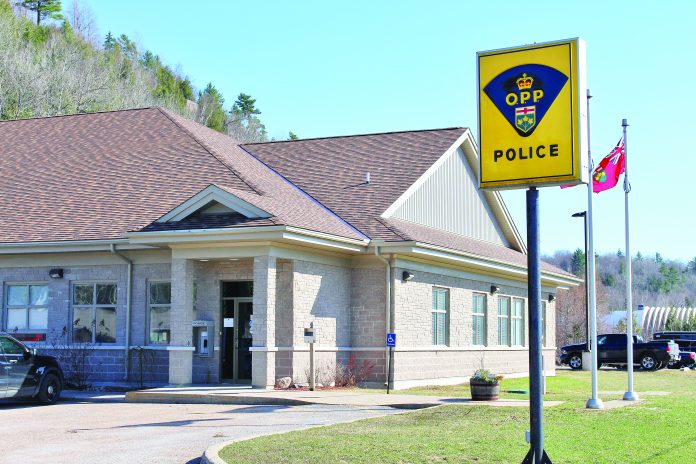
He called the Haliburton Highlands OPP, and an officer attended the scene. According to an OPP press release on Oct. 27, the incident is under investigation but the individual responsible has not been identified.

Hutchison has since buried Hunter and Nova on their property together, along with the puppy’s favourite toy and blanket.

“I’m scared. I’m exhausted. I’m beyond sad for my dogs. They were more than dogs to me, they were my whole life,” Finch said.

Finch described Hunter as “the most gentle dog ever,” who was more like a child than animal. The dog had her own Instagram account “househoundhunter,” where videos and pictures show Hunter posing with other dogs, cuddling on boats, wagging her tail while playing in the snow, and, most recently, keeping a careful eye on Nova.

“You can see how much she was loved, and what her personality was like from her pictures.”

Finch said they were excited to bring Hunter hunting with Nova, to show the puppy how to help. “It was going to be Nova’s first time at the camp this year. Her first time following her mom and her dad.” The couple said they appreciated the outpouring of phone calls, text messages and online comments of support they’ve received since posting about the incident.

“We’re not out there for a hate crime, we’re out there to prevent this from happening to someone else.” They urge people to remain calm and let the police conduct their investigation without interference.

Finch has started a hashtag, #JUSTICEFORHUNTERANDNOVA.

“No matter what happens in the sense of justice, they’re not going to bring back the two things we want.” Hutchison said. “We don’t feel safe [being near] someone who is capable of doing that.”

Finch said justice also means ensuring this doesn’t happen to more families.

“We want to make people aware you just can’t shoot a dog when it comes on your property: you need to follow the correct steps.” Finch said if they had been called or

notified their dogs were trespassing, they would have immediately come to get them. Each dog had a tag and collar.

“I want people to know how much I loved them,” said Finch. “I won’t forget them, they weren’t just dogs.”

The OPP said police are aware of social media posts by other individuals discussing the matter, but cautioned that the person

responsible for the shooting has not been identified. “The Haliburton Highlands detachment will be investigating any incidents that appear to be in response to this shooting,” the press release states.

The OPP requests anyone with information to call 1-888-310-1122 or contact Crime Stoppers to remain anonymous at 1-800-222-8477 (TIPS).

Two charged with firearms offences after dispute in Haliburton

0

Haliburton Highlands OPP have charged two adults after an incident involving assault and firearms.

On Tuesday Oct. 26 at 3:35 pm police received a report of a male and a female in a dispute in downtown Haliburton. Reports claimed a male was in possession of a firearm.

Officers located both people and recovered a firearm. Police charged an adult male with pointing a firearm, careless storage of a firearm, weapon, prohibited device or ammunition, unauthorized possession of a firearm, failure to comply with release order, two counts of assault, possession of a prohibited device or ammunition for dangerous purpose and possession of a weapon for a dangerous purpose.

He is also charged with possession of a schedule I substance for the purpose of trafficking; a category of substances that includes heroin, cocaine, opium, oxycodone, fentanyl, morphine, methamphetamine, and amphetamines.

A second male was also charged with two counts of failure to comply with a release order.

Both people are being held in custody until a bail hearing. Police said the identities of the accused are not being released in an effort to protect the identities of the victims.

In a press release, OPP said “if you or someone you know are experiencing domestic violence, you are not alone. Please call 9-1-1 if you feel that you are in danger.”

OPP investigate downtown Haliburton break and enter

0

Haliburton Highlands OPP is investigating a break and enter at the Remax real estate office on Highland St. in Haliburton.

Police discovered several pieces of electronic equipment were stolen from the offices between the evening of Oct. 21 and the morning of Oct. 22

This incident is still under investigation.

Police are ask anyone with information or video surveillance please contact the OPP at 1-888-310-1122 or contact Crime Stoppers to remain anonymous at 1-800-222-8477 (TIPS).

Show your support by dressing in purple Oct. 27

0

Pull out your favourite grape-coloured garb this Wednesday and show your support for Dress Purple Day.

An annual event organized by the Ontario Association of Children’s Aid Societies, Dress Purple Day is designed to raise awareness about the important role that individuals and communities play in supporting vulnerable children, youth and families and helping them get the resources they need. The event is designed to build stronger partnerships with cross-sector service providers to focus on strengthening families through enhanced community-based prevention and early intervention.

“Dress Purple Day is more important than ever, since the COVID-19 pandemic has created additional stressors for families, and in some cases has increased the risk for the well-being and safety of children and youth,” said Jennifer McLauchlan, executive director of the Kawartha-Haliburton Children’s Aid Society (KHCAS). “On Oct. 27, we are calling on all Ontarians to wear some purple to show children, youth and families that they are here to help.

In the organization’s 2020/21 fiscal year, 141 families residing in Haliburton County accessed programming provided by KHCAS. The organization offers four core services – adoption, foster care and alternative care for children, child maltreatment aid, and support services.

KHCAS works with many other service providers across Haliburton County to support children, youth and families, and collaborates with community partners to speak up for every child and youth’s right to safety and well-being in all spaces, says McLauchlan.

While the organization used to recognize Child Abuse Prevention Month in October, the child welfare sector no longer marks the occasion.

“Vulnerable and marginalized families, especially from the Black and African Canadian community, have told us that the campaign’s emphasis on reporting led to an unwarranted increase in surveillance of their families and communities, says Nicole Bonnie, CEO of the Ontario Association of Children’s Aid Societies. “In many ways, the former Child Abuse Prevention campaign was more harmful than helpful.”

On the contrary, Bonnie says the Dress Purple Day campaign is all about reminding anyone making referrals to child welfare to “check their biases.”

“We know that racism, prejudice and discrimination based on race, ethnicity, religion, ability, poverty and sexual orientation can lead to the overreporting and oversurveillance of families in certain communities,” Bonnie said.

McLauchlan says there are other ways, aside from wearing purple, that people can participate and show their support on Wednesday, including: participating in social media using the hashtag #IDressPurpleBecause; putting up one of the Dress Purple Day posters, found at oacas.org, in your workplace; and using the web banner, found at oacas.org, for your workplace website.

To learn more about the signs of child abuse or neglect and how to report concerns, visit www.khcas.on.ca.

Current booster eligibility

0
Close-up medical syringe with a vaccine.

By Dr. Nell Thomas

Colin Powell died this week from complications of COVID-19. The former U.S. secretary of state had a type of blood cancer called multiple myeloma. This 84-year-old had two COVID vaccines and was about to get his third. 

He was eligible for a third shot because his cancer made his immune system less able to mount antibodies and build a strong defense against the virus. He was also eight months from his second vaccine.

 A weaker or compromised immune system is both unable to mount a strong immune reaction and less likely to keep immunity. That’s why annual influenza vaccines offer a “high dose” version for people over 65 years. 

As we age, our immune systems cannot build as strong an army of antibodies as can a young person’s. In children and babies, a tiny dose of a vaccine turns on a highly robust immune response, which is why vaccinating babies is the ideal time to get the best immunity to diseases. Scientists and health officials are gathering and analyzing data to determine how long we should wait between COVID vaccines and who is most likely to need earlier boosters. That people with suppressed immune systems would need sooner boosters has been certain. What is not certain is how long to wait. 

One recent study analyzing Pfizer vaccines suggests antibody levels wane and disappear after seven months. This small study analyzed blood samples from 46 healthy young or middle-aged adults after receiving two doses, and then six months after the second dose. The initial high levels of antibodies dropped ten-fold by seven months.

 In half the adults neutralizing antibodies were undetectable six months after the second dose, particularly against Delta, Beta, and Mu. Neutralizing antibodies are only part of the body’s immune defense against the virus but are still critical in protecting against infection. 

The authors recommend administering a booster around six to seven months from initial dose. In contrast, a study in Italy showed that seven months after the second dose, there is no reduction in the efficacy of mRNA vaccines in the general population, with a slight decline seen for specific populations. 

This report by the health ministry examined data from more than 29 million people who received two doses of an mRNA vaccine. In the general population effectiveness against infection after seven months was 89 per cent. 

Protection from hospitalization and death at six months from the second dose was 96 per cent and 99 per cent respectively. However, in Italy mask rules are very strict and there are stringent behavioural rules, contributing to low infection rates.

Also, individuals with compromised immune systems lost protection much faster, measurably lower after 28 days from the second dose. Another study by Pfizer published in the Lancet looked at 3.4 million fully vaccinated people and concluded that the vaccine remains highly effective at preventing nearly all virus-linked hospitalizations for “at least” six months, but protection from mild or moderate infection falls to less than 50 per cent. 

Overall, the Pfizer vaccine remained 90 per cent effective at preventing hospitalizations for “all variants,” including the delta, however protection against infection waned significantly over time, falling from 88 per cent within one month after receiving the second dose of the Pfizer vaccine to 47 per cent after six months. 

They concluded that “breakthrough infection” occurring in vaccinated people is because of waning immunity and not because the new variants are escaping protection. In Ontario third shots are now being given to people: (1) with solid tumor transplants; (2) receiving chemotherapy; (3) receiving immune compromising treatment; (4) residents of LTC or seniors in congregate living settings. (5) Advanced HIV or AIDS or other primary immunodeficiency. Details in this link: COVID-19 Vaccine Third Dose Recommendations (gov.on.ca)

A start but a long way to go

0
A sign at Hyland Crest long-term care home in Minden declares a COVID outbreak at the facility

When the Canadian military went into five long-term care homes in Ontario last year, they claimed they found horrific conditions: residents being bullied, drugged, improperly fed and left for hours and days in soiled bedding. 

Soldiers were called in to the Pickering, Scarborough, Etobicoke, North York and Brampton facilities to help during COVID19. Reading their report was “gut-wrenching” and “the hardest thing I have done as premier,” Premier Doug Ford said. Yet, the Ontario Health Coalition claims there have been no fines levied against long-term care homes.

Further, they allege unannounced annual inspections have not resumed. So, when new minister of long-term care Rod Phillips – he of the sneaking out of the county during a lockdown – was appointed, advocates were skeptical. 

But, after months of lobbying for improvements to Ontario’s long-term care system, they were tossed a bone Oct. 15. The numbers sounded impressive but as usual the devil is in the details. Across the province, it supposedly means up to $270 million this year to homes to increase staffing levels, leading to more direct care for residents. 

Locally, it supposedly means nearly half-amillion dollars to be split between Highland Wood, Hyland Crest and Extendicare Haliburton, and then an increase of about $3 million by 2024-2025. That’s when the asked for four hours of direct care per day for residents is supposed to kick in. 

Apparently, they are going to make the four-hour minimum a law, too. Former nurse and MPP Laurie Scott took advantage of the news to take credit for local funding. She said her government plans to train, hire and retain thousands of new staff over the next four years. Currently, residents receive an average of two hours and 45 minutes of direct care from nurses, registered practical nurses and personal support workers (PSWs). The province says the money will bump it up to three by the end of the fiscal year. 

The funding also includes $42.8M to homes to increase care by allied health care professionals (such as physiotherapists and social workers) by 10 per cent this year. Getting lost further in the numbers, the government says it’s spending nearly $5 billion over four years by adding 27,000 people.

 I guess we can say it’s all a start. The Ontario Health Coalition has projected that Ontario needs more than 33,600 full-time equivalent RNs, RPNs and PSWs to get LTC staffing levels up to four hours per resident per day. It’s financial accountability office puts it at 37,000. The province is falling 10,000 short. 

Add to that the fact a reported 30 per cent of PSWs have left the industry during COVID, so there is some catching up to do. And the Ontario government is providing money for new homes. Let’s also keep in mind the money has not flowed yet despite the presser claiming “immediate” action.

 Health care providers are naturally tentative about popping the champagne corks when official funding letters have yet to arrive. While long-term care homes in Haliburton County get good reports about patient care and quality of life, and have not suffered COVID-19 cases, the money is desperately needed. 

Finding and keeping staff has always been a challenge. It should be noted that waitlists for long-term care locally are also in the ‘years’ unless circumstances necessitate an emergency move. 

No money will be turned aside but it’s naiive to think that throwing less money than what is needed at only one part of this problem is any kind of solution.

Summer Festival: funding ‘saved our bacon’

0

The Rails End Gallery and Highlands Summer Festival have been awarded provincial Community Building Fund grants.

The grants are given to arts organizations that have demonstrated impacts in their communities.

Laurie Jones, executive director of The Rails End Gallery, said their $50,000 grant will help fund the staffing model of the gallery which supports the board and volunteer committees as they “get things rolling again.”

While the gallery has been hosting virtual and socially-distanced functions outside, many cornerstone events such as their Haliburton Drum Fest, arts and crafts market or mass yard sale at Head Lake Park haven’t been able to run for two seasons.

“That sidetracked us. It’s like someone changed the deck of cards,” Jones said.

She said the funds will be especially helpful over the next sixth months as they begin to “gear back up” to regular operations. Online programming will continue in some capacity: “everyone loves to talk about art in their pajamas having a coffee,” said Jones.

The Highlands Summer Festival (HSF) will use their $14,000 grant to fund the ongoing costs related to their office and storage space.

“We’ve had two seasons without any shows on the board. We’ve got some operating expenses, there’s rent, there’s heat, there’s hydro, too,” said HSF president Brian Kipping.

2022 will see HSF producing a slate of shows that were planned for 2020. While some, such as “The Sound of Music,” might need to be recast because of ageing cast members, Kipping said he looks forward to being able to gather in person to prepare for the season. In 2020, HSF’s survival was unclear.

“When we looked forward, we couldn’t say with any certainty that we were going to survive financially,” Kipping said. “The grants saved our bacon.”

Laurie Scott, Haliburton-Kawartha Lakes-Brock MPP, said the taxpayerfunded community building fund will help revitalize the arts communities around her riding.

Many have criticized the Ford government’s treatment of the arts in Ontario since he assumed power in 2018. In 2019, he cut nearly half of funding from the Ontario Music Fund and reduced the Ontario Arts Council’s funding by $10 million.

However, during the COVID-19 pandemic, Queen’s Park funded 140 arts organizations to the tune of $24 million in a one-time COVID-relief grant.

“I would say it’s a little flip-floppy, they take with one hand and give with the other. A consistent approach would be much better,” Jones said. She added she was encouraged by the support of the Trillium Fund, which awards the grants.

Despite a turbulent 18 months, both organizations say the grant will help keep them on track as they, and the rest of Haliburton’s arts community, emerge from the COVID-19 pandemic.

“I really appreciate it,” Kipping said. “The grant from Trillium: that’s substantial.”