
Working groups tasked with researching service improvements across the Highlands are discussing uploading aspects of municipal services, such as waste management, infrastructure planning, bylaw and IT, to the County level.
In a Sept. 22 committee of the whole meeting, working groups headed up by municipal CAOs, delivered progress reports to councillors.
“We’re not asking for a final decision on some of these things,” said County CAO Mike Rutter. Instead, he said the meeting was to determine if councillors were “generally supportive” of concepts each working group is researching.
Since June, they’ve been discussing policy improvements proposed by StrategyCorp, a firm hired to review the efficiency of Haliburton’s services.
While the discussion was not about amalgamation of the four municipalities, it was a topic which emerged in council discussion after each working group presented their progress.
“The ‘A word’ was not something that was supposed to form part of the conversation but I don’t see how we can separate the two,” said Warden Liz Danielsen.
“Especially when it comes to these bigticket items, like roads and bridges and waste management and really any of these topics.
” StrategyCorp, in a report presented to council in Nov. 2020, estimated increased collaboration between municipalities could save the County up to $1,193,000 annually. The suggestions include large projects, such as a master transportation plan, which Highlands East CAO Shannon Hunter estimates would cost between $250,000 – $500,000. It would chart the course for road infrastructure, sidewalks, and even public transportation, over the next decades.
Another focus area was waste management. Council expressed interest in continuing to investigate how waste management could be more efficiently dealt with, including the possibility of centralizing the service at the County level.
However working groups aren’t just focusing on big ticket items. CAOs heading up each group outlined ideas ranging from centralized employee benefits to software procurement. Multiple councillors expressed interest in centralizing communication initiatives to ensure consistent messaging about government activities across the Highlands.
For Highlands East Deputy Mayor Cecil Ryall, the suggestions of closer collaboration reflect the challenges the County faces, and only might ease the way to amalgamation. If it happens, “…the ‘A word’ becomes a lot more compatible,” he said. “It’s a direction we’re probably going to be going in, it’s just a question of when.”
Minden Hills Mayor Brent Devolin said he will support initiatives proposed by the working groups that move towards amalgamation.
“I have been firmly convinced, and far more so in the last couple years, we need to go that direction,” he said.
Council made no formal decision on the working groups’ interim reports and will receive an update on the progress of each file in November.
"I'm not an extremist. I care deeply about my shoreline," said Thomas Moch, a Kushog Lake Cottager who penned a letter to County Council asking for a revised approach to the draft bylaw process.
More than 100 Kushog Lake cottagers have signed a letter voicing concern over the County’s draft shoreline preservation bylaw consultation process. According to the letter sent to County councillors Sept. 22, certain cottagers and residents are “very concerned that [their] views are not being adequately represented” in the consultation process, currently facilitated by J.L Richards (JLR) and Hutchinson Environmental Sciences Ltd. (HES).
Thomas Moch, spokesperson for the group and writer of the letter, said there’s been a widespread surge of concern among cottagers across Haliburton as the consultation process enters its final stages. “Everybody on these lakes works extremely hard to have a second property. We all sacrifice a lot, to afford this,” said Moch, vice president of a Canada-wide contracting company.
“For someone to come in and say ‘we’re going to take the first 30 metres of your property and essentially expropriate it from you: everyone’s question is how can you possibly even consider that?”
“The problem right now we’re seeing is the bylaw itself and the elective and subjective input”
Brian Atkins
Moch expressed concern the process was weighted in favour of lake associations and stakeholders like BeShore Haliburton. As of press time, BeShore did not respond to three emails asking for comment. There is currently no bylaw actively being considered by County council. A previously proposed draft bylaw, being reviewed by JLR and HES, suggested restricting development and native vegetation removal within 30 metres of a shoreline’s high water mark.
It did allow property owners to clear access paths and submit permits for development projects such as the installation of docks, fire pits and decks. Brian Atkins, a Kennisis Lake cottager, has similar concerns to Moch.
Brian Atkins, left, and Rod Dobson, a Haliburton resident who also feels the current consultation process on the draft bylaw is inadequate.
He put out a call on Facebook for property owners dissatisfied with the direction of the review process to contact him. Atkins said he’s been “slammed” with messages of people voicing their support, collecting nearly 200 email addresses and names. He’s formed an unofficial group, Concerned Haliburton Waterfront PropertyOwners. “We’re not hiding behind a media budget, we’re out there. Anyone can contact us,” he said. Atkins said neither the consultants nor County council seem to be receptive to their concerns. “Here we are with our hands up in the air going talk to us, talk to us,” he said in an interview.
Warden Liz Danielsen said while not every email councillors receive, of which there have been hundreds related to the bylaw process, is replied to, they are passed on to the consultants. In an interview before the letter was submitted to council, Jason Ferrigan of JLR said his team will receive and take seriously the Kushog residents’ letter. Ferrigan said he’s been impressed by the variety of opinions expressed by property owners and stakeholders around the county.
“It demonstrates to us how much folks in Haliburton care about the quality of their lakes,” he said.
Polling lake associations
Both Moch and Atkins, as well as signatories on Moch’s letter and those who commented on Atkins’ multiple Facebook posts, expressed concern that it seemed as though the opinions of official lake associations were valued higher than individual property owners in the consultation process. “The problem right now we’re seeing is the bylaw itself and the selective and subjective input,” Atkins said, mentioning how many lakes have 40 per cent or more cottagers not a part of lake associations.
He claims the Kennisis Lake Cottage Owners’ Association (KLCOA) has voiced support for the draft bylaw as it was stated before the consultation process began, and has not been transparent with members about interactions with consultants or its connection to BeShore, of which the Coalition of Haliburton Property Owners Associations (CHA) is named as a member. BeShore has published advertisements in local media sources which include the phrase “show your support” in regards to a shoreline protection bylaw.
Debra Wratschko, KLCOA president, said the association pays a small yearly fee to the CHA to access webinars, and online tools. Approximately 50 property owners associations are part of the CHA. Wratschko said she isn’t aware of any information about the consultation process being held back from members.
She said her group has posted on the association’s website each opportunity to get involved with the draft bylaw consultation. “We did express our support to the county for a public consultation process,” said Wratschko. “We recognize we can’t represent all opinions, so for us it was important that everyone had a chance to say their piece to the county.” She said they supported the objectives of the previous draft bylaw “in principle,” in the goal of achieving good water quality and healthy lakes, but have not spoken in favour of a final bylaw direction, such as the 30-metre vegetation buffer.
She said she urges the County to “provide a clear, concise and easy to understand version of the bylaw.” Moch and others said the Kushog Lake Property Owners Association was accused of supporting the draft bylaw without member consent. However president Norma Goodger said while she supports the drafting of a bylaw consistent with science, there’s currently no bylaw on the table to support. It’s impossible to support adocument which is not currently available, nor being considered by County Council, Goodger said.
She said she seeks to inform members about opportunities to get involved. “We have no intention of dividing the community, our role is to inform,” she said. “I believe that the council members are asking very intelligent questions that are building their ability to make the right decision.” Danielsen said council has “recognized all along that lake associations don’t necessarily represent the entirety of a lake.
She said municipal officials have “tried to offer opportunities whether it’s through email or through surveys or through the online open houses” for people to be able to have their say individually. “We’ve tried our hardest to ensure everybody has a voice,” she said, mentioning that all concerned about the draft bylaw the consultants might propose in October will have many more chances to speak up before it is passed into law.
The vegetative debate
A diagram of the protection area included in a 2020 info document from the County on its previous draft shoreline bylaw, in 2020. Photo via County of Haliburton.
While the debate surrounding shoreline preservation bylaws in the County has been ongoing for nearly four years, Moch, Atkins and other cottagers who signed the letter take particular exception to the previously proposed 30-metre vegetative buffer, a rule they expect to see in the next draft bylaw. What that buffer means, writes Moch, is unclear as it did not specify what vegetation was considered native.
The previously proposed bylaw allowed an application process for a long list of development projects within the buffer, which Moch argues would still decrease property value and overly restrict property owners. However, a scientific literature review from consultants HES states the longer the vegetative buffer, the more effectively a shoreline will keep sediment from entering a lake. Yet if the draft bylaw, to be presented to County Council Oct. 28, recommends a 30-metre setback for all lakes, Atkins said “It imposes a one-size-fits-all solution,” which unfairly targets properties with unique topography.
Varying assessment criteria is a suggestion JLR proposed to council at its progress report in September. Moch, claiming Kushog Lake is “above the 75 per cent natural shoreline level considered to be a measure of lake health,” writes that the previously-proposed bylaw will target lakes which already are protected.”
However a 2015 report from Watersheds Canada and the Canadian Wildlife Federation scores Kushog much lower, at approximately 35 per cent naturalized shorelines. The Coalition of Haliburton Property Owners Associations (CHA) of which the KLCOA and Kushog Lake Property Owners Association are members, reports that 92 per cent of lakes in Haliburton do not meet the 75 per cent threshold.
While Moch, Atkins and the many who support their views in Moch’s letter support the current shoreline tree preservation bylaw, Environment Haliburton vice-president Terry Moore said it’s not adequately protecting Haliburton’s shorelines. “It’s an after-the-fact, complaint-based way of dealing with trees only, not shoreline vegetation writ-large,” he said.”It’s been manifestly unsuccessful to begin with, [doing nothing] to stop the degradation of the trees and vegetation around Haliburton County.”
With many speaking out against the previous tenets of the draft bylaw at town halls, online and through lake associations, Moore said he’s aware of a large community that supports stricter measures on their shoreline. “People understand that there’s a relationship between what happens on the shoreline, and what happens on the lake,” he said. Moore said he’s received rude and threatening messages online due to his support of aspects of the previously proposed bylaw.
“They want to see that protected. What they don’t want to do is be subjected to ridicule and attack on social media. It’s been ruthless,” Moore said.
Both Moore and Danielsen urged caution when discussing the future of the draft bylaw. “If people think that there’s a draft bylaw that’s on the table at County council, they’re wrong,” Moore said. “I think it’s misleading for people to start from that perspective.” The Highlander will provide a full online report of the second public town hall, hosted Sept. 29 by JLR and County Council.
The term “small business” has been a fixture in Canadian news and community discussions since the COVID-19 pandemic began.
It’s for good reason: the pandemic and associated health measures only boosted the bottom lines of Amazon, Wal-Mart and Loblaws, while decimating revenues of restaurants, gyms, clothing stores, cafes, hotels and the hundreds of other small businesses that make Haliburton County a good place to live.
We can only hope that the attention small business owners have garnered from provincial and federal governments continue. Artists and creators are small businesses too. Aside from the fact many of us use art to make our houses feel more like homes or find comfort in uncertain times, the industry contributes around $25 billion to Ontario’s GDP, according to a 2019 Ontario Council of the Arts review.
It’s a sector of the economy with wide ripple effects, and the people who work within it are often those working the hardest to make communities beautiful destinations. International tourists flock to Haliburton’s Sculpture Forest and artists from around the province install sculptures on Haliburton’s main street each summer. Students and cottagers enroll in degrees and summer classes at the Haliburton School of Art + Design, and creatives host multiple crosscounty art shows each year.
That’s not to mention the vibrant performing arts organizations which perform top-class operas, plays and concerts. There’s a good chance each and every person who comes to Haliburton for any one of these experiences spends more than a couple of dollars at cafes, restaurants, shops and stores around the Highlands. A county with a healthy arts sector draws people in and can help define its character.
This weekend, artists from Minden to Carnarvon to Haliburton will open their studio doors for the 34th annual Studio Tour. They’ll showcase work that often takes many hours to make; pieces of pottery molded from clay using techniques that they’ve practiced for decades: watercolour depictions of the County’s lakes and forests and much, much more. It’s valuable work. It’s work that reflects our surroundings and encourages us to take time to observe, feel, and marvel.
I, for one, need that encouragement these days. Getting takeout or sitting down for dinner is a way to support the future of our favourite restaurants. Buying art and engaging with artists who have gone nearly two years without a normal show and sale schedule shows support for a valuable, and I’d say integral, part of the county’s cultural and economic fabric.
Haliburton Highlands Health Services (HHHS) will not mandate vaccines for employees.
“It was not an easy process going through the decision-making for how to proceed,” said CEO Carolyn Plummer at a Sept. 23 HHHS board meeting. “We took into consideration a number of factors including choice, including the availability of human resources in our organizations.”
Workers who are medically exempt from the vaccine or those who choose not to be vaccinated will be routinely tested and must partake in a vaccine safety training course.
Many hospitals in Ontario, including Orillia’s Soldiers’ Memorial Hospital (OSMH) and hospitals in Toronto, Windsor and Kingston, have recently announced staff must be vaccinated or risk termination.
“Patients and families expect those who take care of them to be vaccinated,” said Carmine Stumpo, OSMH CEO, in a Sept. 1 press release. “Many of our team members will also be greatly relieved and reassured to know their colleagues are fully vaccinated.”
Plummer said in rural areas like Haliburton, the decision to enforce vaccinations hinges on staff availability.
“The hospitals that have gone forward with policies that lead to termination for those who aren’t vaccinated have the capacity to fill the gaps if staff do leave the organization,” she said in response to a question posed by The Highlander. “We certainly don’t have that same kind of capacity.”
The ruling will apply to all HHHS workers in the service’s hospital, direct care and end-of-life care programs and more.
In her CEO report Plummer wrote that “some members expressed concern over having some staff who remain unvaccinated and whether they should wear full PPE at all times.”
Enforcing selective PPE wearing, she said, would be an infringement on privacy rights.
The decision is consistent with other similarly-sized healthcare services. Muskoka Algonquin Healthcare’s Pandemic Command Team announced in early September staff unable to be vaccinated or choosing not to would have to undergo regular screening and take vaccine safety training courses, but will not be terminating the employment of unvaccinated staff.
According to Plummer the decision also ensures “folks have a choice” about taking the vaccine. Currently, 85 per cent of HHHS staff are fully vaccinated, and Plummer added that no instances of staff to patient spread have been reported.
However, there have been instances of COVID-19 in HHHS locations. In February, Hyland Crest long-term care home in Minden declared an outbreak of COVID19, after two staff members tested positive for the virus. One further caregiver tested positive in March.
All COVID-19 safety protocols will remain in place at HHHS locations.
Widespread staff shortages
Healthcare centers across Canada have been experiencing nursing and physician shortages and HHHS is no different, Plummer reported last week.
“It continues to be an ongoing challenge for us to cover all the areas that need coverage,” she said.
Besides nurses and other primary care staff, HHHS has struggled to fill physician roles. Plummer said many doctors choose to specialize in one role, as opposed to working in multiple capacities at once, “which is historically how physicians in this community and other small communities function,” she said.
While there was little in the way of tangible developments, Algonquin Highlands council spent another couple of hours discussing the long-term viability of the Stanhope Municipal Airport last week – coming to an agreement that a new, updated plan needed to be devised for the site.
In what has long been one of the most contentious and controversial issues in the municipality, the airport took central stage during a special meeting of council on Sept. 23. Algonquin Highlands CAO Angie Bird had asked council for direction on the facility as part of an overarching look at the township’s infrastructure priorities.
Tentative discussions over a number of big ticket items and projects took place in September of last year, and were revisited in July. It was determined that the airport required special attention given that plans for the site have changed drastically over the past decade.
“We’re here today because we have had a number of deferrals [on this issue]. We need to assess where we are, what the opportunities are, what’s changed externally and internally and what direction we can either continue to take, or [discuss] a different direction to take around items [relating to the airport],” Algonquin Highlands Mayor Carol Moffatt informed council. “Basically, I’d say we’re at a bit of a crossroads.”
The airport first came online in 1967, after the township approved the development of a 2,680 ft. grass runway, apron and taxiways and commissioned the construction of a public building, aviation fuel facilities and a hangar building to store aircraft. In 1989, after receiving funding from the federal and provincial governments, the municipality installed a paved 2,500 ft. runway.
Shortly after the turn of the millennium, in 2001, the council of the day launched a plan to develop a new 4,000 ft long runway after being convinced that the airport served as one of Haliburton County’s “strongest opportunities for increased investment.” Those plans were shelved in 2010, with the proposed runway project coming in for significant criticism from the local community.
In 2014, the municipality commissioned a land use and development plan for the airport. Since then, the municipality has developed a partnership with the Ministry of Natural Resources that saw a new 20,000 sq. ft. forestry firefighting headquarters constructed and the development of a new access road, new hangars and improved taxiways at the facility. The township has also discussed the development of 10 new lots on municipal property adjacent to the new MNR headquarters. In September 2020, municipal staff presented a report highlighting the cost to build a new 1,500 metre square access road to service those lots would run the municipality approximately $100,000. Due to financial difficulties and uncertainties brought on by the COVID-19 pandemic, those plans were shelved.
There is a clear divide among council regarding the airport, with some elected officials believing it to be a significant asset to the community, lobbying for continued investment at the site, and others questioning the benefits of pouring more money into it.
“I’m a little more pro-development and proactive about the airport,” said deputy mayor Liz Danielsen, who spoke in favour of an eventual rekindling of the runway project, and the benefits of carrying out work on the proposed new service road to bring those 10 lots – slated for industrial development – online.
Coun. Jennifer Dailloux is firmly on the other side of the fence.
“I would not feel comfortable putting taxpayers’ money towards further development of that space … until we know for sure if we build it they will come,” Dailloux said, referencing the 10 lots in question. “I think the big thing that was missing from [the 2014] study was the half of the market analysis that is not ‘here are the things you can do’, but are ‘here is what the people want.’ When it comes to the development of the industrial lots, for example, we knew from the study that it was possible to do that, what the study was not mandated to do was to find out if there was a demand for an industrial lot in a space such as our airport.
Referencing the land the municipality owns that was originally intended to house the previously proposed 4,000 ft. long runway, Dailloux said she would be more in favour of using the land for other purposes.
“I do not believe an extended runway is a good idea for the benefit of the taxpayers of Algonquin Highlands. I think there are other ways of using taxpayer money to directly support our community,” Dailloux noted.
Moffatt was quick to clarify that the municipality has no intentions of building a new runway anytime soon – saying there would be no way they could afford such a project. Instead, she is focused on making sure the airport is as viable as it can possibly be right now.
She asked for an update on the cookshack – built at the airport by volunteers a number of years ago. CAO Angie Bird noted the facility had some fire code challenges. She also pointed out the main terminal building required extensive work to ensure it met new accessibility requirements (set to come in by 2025), and that many of the hangars also required attention.
Bird said the municipality may be able to secure federal funding to bring the terminal building up to code.
While discussing the cost of these projects, Dailloux suggested that Algonquin Highlands reach out to the regional council in the hopes it will take on some of the financial burden.
Danielsen suggested that would be a hard sell. Moffatt said she would raise the topic at a future meeting of Haliburton County council. In the meantime, council again delayed making any substantial decisions for the site. Danielsen though was adamant in her belief that the township had a responsibility to make the airport “the best little recreational airport it can be.”
Dailloux immediately retorted, “I would love to see this airport be the best little municipal recreational airport it can be, but not for its own sake. If we’re going to make a go at this, it has to be for the benefit of our township and the taxpayers thar are funding it.
Police have arrested three people in connection with an ongoing investigation into a theft and drug ring. File photo.
A man from Fergus, Ontario, has been pronounced dead after a single-vehicle collision on County Road 121 in Minden on Sept 26.
At approximately 6:04 p.m., Haliburton Highlands OPP, along with the Haliburton County Paramedic Services and Minden Hills Township Fire Department, responded to the crash involving an ATV.
A single 45-year-old male rider, Tom White of Fergus, Ontario, was transported to a local hospital, where he was pronounced deceased.
County Road 121 at Rice Road was temporarily closed while Technical Collision Investigation (TCI) officers investigated the scene.
The OPP urges riders to “exercise caution and ride within laws that are designed to keep you safe while operating any type of ORV.”
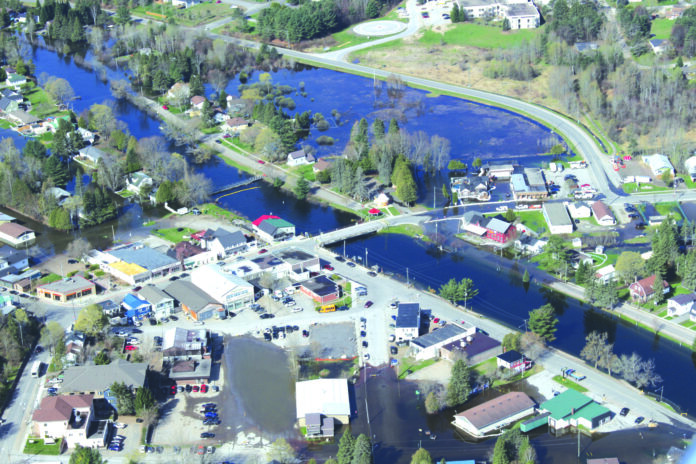
Minden Hills has announced that Upper Dutch Road will be closed due to multiple days of heavy rainfall. The road is closed to traffic from the intersection of County Road 121.
In a press release issued at 5:45 p.m. on Sept. 23, the Township urged caution “around area lakes, rivers, creeks and other water sources such as ditches, as high water levels and swift currents can create unstable conditions.”
Portions of the Riverwalk in downtown Minden are currently underwater and the Township currently advises against using the the Riverwalk and Boardwalk at this time.
Minden Hills said they warn residents in areas near high water to take precautions to protect property that may be at risk.
Monday was a bit of a disaster for Prime Minister Justin Trudeau and the Liberal Party of Canada.
Five weeks after dissolving parliament and launching a 44th federal election, under the guise of offering the public the chance to choose whom it wants at the helm to help lead the country’s recovery post COVID19, and Trudeau is facing up to the reality that he will form yet another minority government.
Make no mistake about it though, this is not a win for the Liberals. The power play failed. When our prime minister made the decision to enter into an untimely early election, he did so with one thought in mind – to come away with a majority.
The end result?
Three additional seats. A grand total of $610 million spent to acquire three extra members of parliament. I have no doubts that Trudeau was confident of getting what he wanted, even as late as a few weeks ago. He and his advisors clearly felt the Liberals had garnered enough good will for the way it responded to the COVID-19 pandemic, where they supported millions of Canadians through the Canada Emergency Response Benefit (CERB) and other likeminded programs.
According to the Government of Canada website, as of Oct. 4, 2020 – the date that CERB benefits ended – a total of 8.9 million people had applied for funding through the initiative. Once all was said and done, the feds had doled out $74.08 billion in CERB payments.
One oversight, perhaps, was that a significant chunk of those who received benefits throughout the pandemic, around 42 per cent, were under the age of 35. In other words, not the demographic that typically makes sure to vote on election day.
It was intriguing when speaking with Jamie Schmale, who was re-elected for a third term as MP for Haliburton-Kawartha Lakes-Brock on Monday. He was, unsurprisingly, hyper critical of Trudeau’s decision to call an early election, saying it was unnecessary given he had the support of the house, with the Bloc and NDPs largely behind him.
Schmale intimated it was a power grab, and that he was pleased it had failed. It’s only fair to point out though, that Trudeau isn’t the first to attempt this sort of thing, and he certainly won’t be the last. The Conservatives have been just as culpable in the past – in fact, former Prime Minister Stephen Harper twice called early elections in attempts to secure majority governments, first in 2008 and again in 2011.
I think the difference is that we needed Trudeau to be better. We needed him to be more responsible. During this desperate time of need, as the country continues to suffer from the effects of a global pandemic, the last thing we needed, the last thing we wanted was an election. I can think of a myriad of ways that $610 million could have been better spent.
Thinking selfishly here in Haliburton County, how about affordable housing? Improved high-speed internet? Transit services?
Heck, I’d even have preferred to see that money go towards our national credit card bill, which, for the record, at present count is now in excess of $1 trillion. Instead, we’re left to reflect on an election that accomplished very little and, in the grand scheme of things, changed absolutely nothing.
(Look for coverage of local PC and Liberal campaigns in our recent news section)
Jamie Schmale’s third victory at the polls wasn’t a surprise for most Haliburton residents. Neither was Judi Forbes’ position as runner-up for the second election in a row.
However, all four other candidates who jockeyed for votes in the HaliburtonKawartha Lakes-Brock riding viewed their performance differently.
Zac Miller, who recently announced he is putting his political career on hold to pursue a masters degree in information, said “it seems like we just wasted $600 million dollars for a parliament that looks the exact same.” However he viewed the campaign as a success, despite predicting who would be heading back to Ottawa this fall. “On a local level, I’m not surprised but I’m quite happy we were able to hold our numbers from 2019,” Miller said, who garnered 14.4 per cent of the vote.
Allison Davidson’s PPC Party nearly quadrupled its vote count, capturing over seven per cent of the vote. “It’s encouraging: I mean it’s a little frustrating overall, with the across Canada results and we’re still in the same boat we were before,” she said. The PPC party did not win any seats in Parliament this election. “But, the thing about our riding is it’s about getting the word out. There’s still lots of people who haven’t even heard about the PPC,” she said.
For Angel Godsoe of the Green Party, the election came while the local Party association was being reconfigured. “We had some great plans for publicity, we had great plans for outreach events [but] then we were thrown into the election…there wasn’t time,” she said. “But I feel we could have done a lot better if we had time to mobilize.”
Gene Balfour, a Libertarian candidate who supported Jamie Schmale’s campaign, said he was pleased with the results despite getting only 444 votes. “My goal was never to get votes. I was trying to promote the ‘less government agenda,’ which feeds into the PPC which also feeds into the Conservative Party. Jamie is a like-spirited guy to me. A more responsible government is what he’d like to see,” he said.
“This time around he got 53 per cent, Allison [Davidson] got 7 per cent, I got 1 per cent if you tally that up you end up with 61 percent in total as opposed to 51 per cent two years ago. As far as I’m concerned that’s an indication there’s a lot of people in this riding that are very sympathetic to the ideas of conservatism in general,” Balfour added.
ole Dobson and his mother Carolyn might have been the Beer Store’s most regular customers this summer, but they weren’t shopping for drinks.
The teen has spent the summer collecting more than 10,000 cans and 3,500 bottles from Koshlong Lake cottages, donating all $1,650 in proceeds to the Haliburton 4C’s food bank.
“It’s important to give back to the community,” said Carolyn, whose family lives in Stouffville. “The community is there for us, provides a wonderful environment to come enjoy with our family and friends and especially in COVID when people have lost jobs.”
Carolyn said she encouraged Cole to take up the project as a way to interact with the community and practice social skills. The teen is part of the ABLE Network, a program that helps people with intellectual disabilities develop job skills in placements and around their communities. Cole had been working at a bottle shop in his hometown, Carolyn said, prompting them to pick up a similar project at their summer community.
Cole said helping people is very important to him, and the project meant a lot of hard work. He and Carolyn spent about four or five hours a week collecting the empties from five drop-off bins around Koshlong Lake.
“And they have been full, very, very full!” said Carolyn, mentioning how the cottagers on the lake were supportive of the project.
The Koshlong Lake Association said in an email that “all those that participated on Koshlong are all very proud of what Cole and Carolyn Dobson have achieved and happy to have helped the Haliburton community.”
Judy MacDuff, of the Haliburton 4Cs food bank, said she was surprised when Carolyn and Cole approached her about the summer long bottle drive.
“It was wonderful!”
MacDuff said the donation will fund the program’s food boxes for an entire month.
“That’s what keeps us going,” she said.
Carolyn said she wanted to thank the staff of the Beer Store in Haliburton, who she said were accommodating of her and Cole’s large weekly returns.