
Home Blog Page 141

The Good Lovelies attracted to Haliburton

0

A folksy, pop, Americana trio, known as The Good Lovelies, will be stopping in Haliburton for the Highlands Summer Festival July 24, 25, and 26.

One of the things that attracts the group to Haliburton is its beauty. The group have played at the Haliburton Folk Society a few times in the past and enjoyed being in cottage country.

“Haliburton’s always been a really nice place for us to play. It’s kind of close to home, so that’s nice. And it’s just so beautiful,” said Caroline Brooks, one of the members of the band. Brooks, along with Kerri Ough and Sue Passmore, will be performing at the Northern Lights Performing Arts Pavilion.

They will be playing from their new album, which came out last October, and is titled We Will Never Be the Same. The record has been nominated for a Juno award.

The songs on their record are compelling in their own way; they speak of complex feelings experienced by women who have come to ponder some of life’s biggest questions.

“We didn’t set out to write the album with that in mind. Often, when you’re writing an album, whether it’s solo or as a collective, you’ll find there are themes that come out as your writing progresses,” Brooks said.

The theme of being a mom, and handling everything that life throws at one in that role, was prominent, plus that of just trying to be good humans.

“There’s a lot of overlap in what we’re experiencing. Sue and I are both mothers. Kerri has experienced a lot of grief in the last couple of years with the loss of a few loved ones,” Brooks said.

The singer added, “it’s just reflective of where we’re at, personally, in that moment.”

The trio will be performing a mix of songs off the new album, and some older EPs. The singers, who also write all their own songs, have fans all around the world as they’ve toured in Germany, the UK, across North America, and beyond.

What excites Brooks the most about playing in Haliburton is the time the trio are here.

“This is a rarity: to stay in one place for three consecutive shows – outside of festival appearances, I can think of only one other time in our 18-year career when we did this.”

We Will Never Be the Same is the group’s fifth full-length studio album.

Cecil Bailey still tapping his toes at 100

0

“He’s always dancing, as you know,” said Paul Sisson, who’s known Cecil Bailey since they were young, and who is also a legion member.

Bailey celebrated his 100th birthday July 14 at the Haliburton Legion. The remarkable milestone attracted 107 guests, who came out to wish Bailey a happy birthday and to celebrate together.

Sisson called Bailey a “steady” member of the legion. Sisson and his wife would sometimes take him back to the Gardens of Haliburton after a social outing, instead of having Bailey call a taxi.

Bailey is a Second World War veteran, serving in Belgium, the Netherlands, England and Germany. He drove an airport crash tender and was almost shipped to Japan, but the Americans bombed Hiroshima and Nagasaki first.

Before the war, Bailey was a Haliburtonian, driving a 1939 Chrysler Royal as a 15-yearold with his friends in the passenger seat. The Chrysler was an exotic car back in the day, and was probably the best car in the County at the time. Bailey’s father, W.O. Bailey, owned the sawmill in town, so the family was well off. Haliburton was known for its logging industry, similar to other places in the region.

Bailey didn’t care much for rules as a teenager. When his dad found out he had been taking the car out, he took the rotor out of the distributor on advice from a friend. Bailey wasn’t going to let that stop him, he took the rotor out of a similar car and put it in his dad’s car and off he went, hitting the roads again.

Carmen Peters, 96, met Bailey in 1936, when Peters was around eight years old. His father worked for W.O. Bailey. “He was helping me out when we were growing up. And then I worked with him, before he went into the army,” said Peters.

Peters also touched on how the Bailey family was instrumental in building up Haliburton and Eagle Lake.

Mike Waller, president of the Haliburton Legion, said he met Bailey 20 years ago at a music event in the clubroom. He recalled an older gentleman coming in, and changing his shoes, but he couldn’t figure out why he was doing it. Bailey was getting ready to dance, and he danced with all of the ladies in the room. He danced the night away, something he is known for.

Waller said, “Cec is just a great guy. Just to sit down and talk to him and listen to his stories about his life has been fantastic.”

Bailey was also instrumental in bringing the train to Haliburton Highlands Secondary School. He also built six houses in Haliburton, with the sixth house starting when he was 83. He had a triple by-pass that year but remarkably continued building the house. Bailey built houses and worked around the Haliburton area for his father.

Gord Kidd & Friends helped ring in the celebrations. The band dedicated a couple of songs to Bailey and addressed him in between numbers.

Deputy mayor for Dysart et al, Walt McKechnie, and MP for HaliburtonKawartha Lakes-Brock, Jamie Schmale, were on hand.

Always dancing, Bailey still had the energy to cut a rug with daughter, Pearl Wood, at the party.

Wood has fond memories of growing up with her dad, who called her his ‘baby doll’.

“Certainly, my dad built every single house we lived in with his hands, saws, hammers, whatever. We may have lived in a little huddle before we got into the house he built, but he built all of our houses,” Wood said.

She added, “he’s always active. My dad never quit. No matter what he did. He was always moving.”

Eternal Root: ‘nurturing hearts and the environment’

0

When Angela Fearrey’s dad passed away in 2018, she wanted to create a living memorial.

Her dream was to incorporate some of his cremated ashes in her garden, but she found that, unfortunately, they killed plants due to their high acidity.

She began researching – and found scientists in the UK and U.S. had come up with a patented soil that will allow cremation ashes to encourage plant growth, “nurturing both our hearts and the environment,” she says.

Meanwhile, her partner, Simon Mainville, lost his father last fall. He said his dad wasn’t interested in expensive funeral practices, so some of his ashes are now resting in a cigar box he once owned, and in an antique camera he had collected. Mainville said his dad would have endorsed a living memorial, too.

Both fathers were avid gardeners.

The couple has launched Eternal Root, which offers living memorials for family members as well as beloved pets.

“When mixed appropriately with LYLG (Let Your Love Grow) soil, cremated ashes can contribute to the flourishing of plant life in your garden,” Fearrey says. “This natural cycle of growth and renewal helps us find healing and comfort as we cultivate beauty in honour of those we have lost, allowing their legacy to blossom in every leaf and petal.”

Some of their offerings include a memorial tree planting service, incorporating ashes into plant life, and offering do-ityourself kits. Fearrey and Mainville will source plants and trees and get LYLG soil from a Canadian distributor.

While not everyone owns a home or has a dedicated space, she said their living memorials can be placed in pots. There is one next to her as she speaks, a Hydrangea that contains the ashes of a beloved dog. She said Eternal Root can find a pot for someone living in a long-term care home, for example. They also do indoor plant memorials, so people can bring nature inside even in the dead of winter.

They are low maintenance, she points out. One day they may even expand to have a more public memorial garden. Maybe someone could get married under a tree that had grown with ashes from a loved one.

She added, “as much as Eternal Root is about gardening – honouring our loved ones with plants and flowers, we’re also here for grief. We’re going to be starting some grief programs as well in the community, and hopefully working with hospice. I’ve been speaking with Let Your Love Grow about coming up and doing some programs.”

With more than 20 years’ experience as a personal support worker and a registered practical nurse specializing in palliative and hospice care, Fearrey said she’s been “privileged to walk alongside families during their most tender moments.”

She also has lived experience with complicated grief. In addition to losing her dad, she has been divorced, uprooted from her home and garden, and had health setbacks that have disrupted work.

“My dad, after he passed away, would send me pictures. I’d see hearts and I think the hearts were just to tell me to stop listening to my head, listen to my heart. So, that’s why the name Eternal Root came about.”

When she hit rock bottom last fall, she said she was counseled to just get out in the garden. It was about then that Mainville’s dad passed away. She had an epiphany. “I wanted to start doing living memorials. I wanted to do memorial tributes for people.”

Mainville chimes in about seeing his mom deal with her grief process, how everything happened very quickly. “My mother didn’t get to grieve until after the funeral when everything finally quieted down and she got some alone time.”

Fearrey encourages everybody to have ‘the talk’ with their loved ones about death and their wishes.

“We need to have those difficult conversations. In a moment, in a second, everything can change. At some point, we’re all going to step into grief. It doesn’t ever go away, but you find ways to heal.”

Contact Eternal Root via eternalroot.ca, or on Facebook at Eternal Root Living Memorial or email info@eternalroot.ca.

The Miracle Worker arrives

0

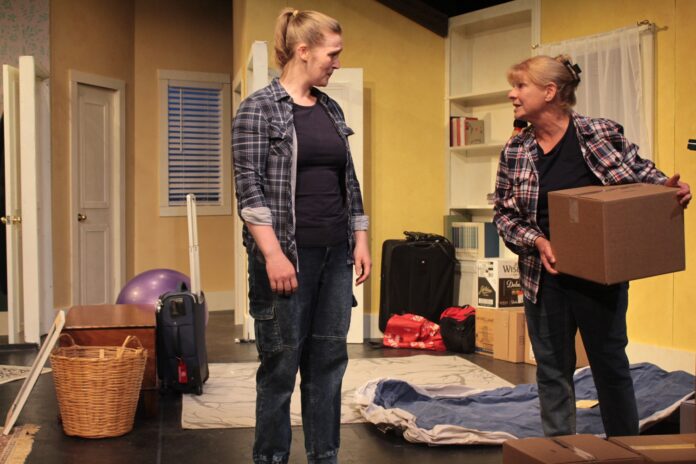
The Highlands Summer Festival is continuing with its second musical of its season, The Miracle Worker.

It’s the story of Helen Keller, the famous deaf and blind girl, who went on to write. Keller communicated mainly through sign language until the age of seven, when she met her first teacher and life-long companion, Anne Sullivan.

Sullivan taught Keller how to read and write, and Keller went on to graduate from Radcliffe College at Harvard University.

The musical touches on the relationship between teacher and student, and tells the story of Sullivan’s journey as she tries to teach Helen.

The musical is directed by Scot Denton, a director, producer, and actor, whose stage career began at the Charlottetown Festival.

The setting for the musical is The Keller homestead in Tuscumbia, Alabama, during the 1880s, when Helen was still a child.

Denton said, “I think there are some performances that are quite astonishing. In particular, the actors Molly Botten [playing Sullivan] and Evelyn Mardus [playing Keller].”

The Miracle Worker started July 15 and will be showing until the 23.

Get to work, health minister

0

Seeing Ontario health minister Sylvia Jones in Haliburton last week – beaming for a photo op for the unveiling (again) of the new CT scanner – irked me.

First of all, the province did not pay for the CT scanner, and will not fork over any money for the CT mammography machine either.

The photo op should have been taken by drone over the high school track, showing all of the people who have donated to the $4.3 million capital campaign. They bought the CT, not Jones, MPP Laurie Scott, or premier Doug Ford. Even the taxpayers of the province did not pony up the money. It’s come on the backs of hard-working Highlanders.

We applaud them. Many still back healthcare services in the County even though they cannot get a family doctor; and despite seeing an ER shuttered; and even though it appears the government prioritizes booze over medicine. Well, at least we can all get our livers CT scanned closer to home now.

The Ontario government does not pay for medical capital costs. It’s why we rely on the Haliburton Highlands Health Services Foundation and the Haliburton and Minden hospital auxiliaries.

In the case of the new CT, we’re told that radiologists (medical doctors that specialize in diagnosing and treating injuries and diseases using medical imaging, such as X-rays, computed tomography (CT), magnetic resonance imaging (MRI), positron emission tomography (PET) and ultrasound), bill fees for services directly through OHIP. Hospitals use their base funding from the province to operate CT services.

While Jones would like to take credit for this, too, it’s you and I who cover the bills through taxation, fees and charges.

Additionally, there are no operational funds available for CT.

In future, HHHS may be eligible for wait times funding to operate beyond the current five days/eight hours per day schedule, but I’m not holding my breath.

So, why was Jones here?

She certainly wasn’t when the Minden community was reeling from the sudden announcement last April that its ER would be shuttered in a mere six weeks’ time. She was missing in action. So was Scott. So was HHHS.

The Harvard Business Review ran an article during COVID entitled ‘Real leaders are forged in crises’.

It summarized that history’s iconic leaders acted in the face of challenging crises. They acknowledged people’s fears, then encouraged them with resolve.

In the case of the ER closure, nothing was done to shepherd the masses. It was only when current HHHS CEO and president Veronica Nelson took over that we saw that type of leadership. Shortly into her tenure, it was she (not Jones or Scott) who faced the unhappy masses. That has earned her respect. She deserved to be front and centre at last week’s photo op, as did Melanie Klodt Wong of the Foundation.

Jones needs to know that while County residents are delighted to finally have a CT scanner, and soon CT mammography, they are the last county in Ontario to get one, so it is long overdue. Nor do many see it is an acceptable tradeoff for the closure of the Minden ER.

I would have preferred she stayed at her desk in Toronto last week and spent time on the many challenges her ministry is facing. Properly fund healthcare in this province, and tell her buddy, Doug, we need family doctors, not mixed drinks in cans in grocery stores.

The struggle is real

0

The rising cost of living – and the need for a livable wage – continues to be a hot local topic.

In Haliburton County, the Haliburton Kawartha Pine Ridge District Health Unit said people need $20.60 an hour to get by. Ontario’s current minimum wage is $16.55. They base that on percentage of wages going to rent and food. And while that minimum wage will climb to $17.20 on Oct. 1, the gap remains wide.

I joined The Highlander as a summer student in May. I had been living with my folks in Oakville while attending university and will return there in late August or early September.

I’m finding the high cost of living in this County would be a deterrent to me wanting to come back as a permanent worker or resident of the Highlands. I was expecting Haliburton and Minden to be more cost-effective, but so far, it hasn’t been that way for me. Although the price of a cup of coffee is a little bit cheaper here than in Oakville or the GTA, I find things to be, overall, a little bit more expensive than I had anticipated.

Let’s explore the nuances of my adventure: I am renting someone’s basement with a roommate, renting a car for the summer, because as a reporter, you drive around a lot to get to and from events, and buying groceries at the chain supermarkets. After all of those things, I do not have a lot left in my wallet at the end of the month for other expenses. I had to brace myself when I heard the rent costs up here; I have it decent, considering a one-bedroom apartment can go for $1,450 in Gooderham, when I was looking for a place on Facebook Marketplace.

Prices just haven’t been the same since pre-pandemic times. I still remember in 2020, during the first lockdowns, where I could get almost a week’s worth of groceries for a little over $60. Unless I am buying groceries for two or three meals, I will not be seeing that price anywhere these days.

According to the U.S. Bureau of Labor Statistics, prices for car rentals are 59.12 per cent higher in 2024 versus 1997. I am paying around $1,500 per month for my car, which is about half of my monthly pay cheque.

The cost of living crisis has made life more challenging for me; I have to decide which areas I want to spend on, rather than living the lifestyle that I want to up here and indulging in activities on my days off. The cost of living in Haliburton is almost on par to the cost of living in Toronto, or it feels like that.

Another thing I believe could help with the local cost of living is creating more jobs in the County. I think that more jobs should be created so that younger people like myself can move into the Highlands and help it flourish. I’m not talking about retail jobs, but jobs for what we have we have studied in our school.

I need governments on all levels to do better in getting the affordability crisis under control. I need municipal governments to make public transportation a viable option in rural communities and I need federal, provincial, and municipal governments to make housing more affordable.

Credit where it’s due

0

There was an awful lot to unpack last week after Haliburton Highlands Health Services (HHHS) held its annual general meeting in Minden.

The auditorium at the former hospital site was packed as community residents came out to hear HHHS president and CEO Veronica Nelson and new board chair, Irene Odell, discuss highlights from the previous fiscal year – the first since the Minden ER was shuttered on June 1, 2023.

There was reasonably good news to start out – Nelson confirmed HHHS has made significant strides reducing its deficit, reported as $2.3 million as of year-end March 31. This was a considerable drop from the $4.2 million deficit the organization reported at the end of the 2022/23 fiscal year.

That Nelson and her team has been able to bring that number down despite unprecedented wage increases brought on by the Ontario government repealing Bill 124, which cost the organization approximately $3.5 million – and deal with record inflation that saw operating costs rise $1.9 million – is impressive.

When The Highlander asked what plans HHHS had to balance the books, and when the public can expect to see the service back in the black, I expected a vague response with no real answer. So, when Nelson retorted that she hopes to eliminate the debt completely by the end of the next fiscal year, I was a little caught off guard.

In a world where hospitals provincewide are reporting massive increases to debt loads, with seemingly no path back to a balanced budget, it’s curious HHHS has been able to steady the ship. Or at least stop taking on water.

A big reason for the improvement is the near elimination of spending on agency nurses. At its peak in May 2023, HHHS used agency staff to cover 160 RN and RPN shifts that month. Most of those temporary workers were paid more than twice what full-time and part-time staff earned.

Nelson has overseen a remarkable turnaround on the staffing front since joining HHHS last summer. More than 80 new workers have been brought on board over the past year, while changes to the organization’s hiring practices has meant new hires are starting, on average, within 35 days of being offered a job, rather than the 84 days it was taking last year.

As someone who could never understand why or how the Ontario government could allow private entities to spring up demanding grossly overvalued terms for employees carrying out a much-needed service, I’m glad to see HHHS freeing itself from agency-related shackles. Here’s hoping it continues.

The most shocking tidbit of information for me was right near the end, when Nelson revealed HHHS has been engaged in strategic and master plan discussions for much of the past year. In its pre-capital submission on the master plan to the Ministry of Health, HHHS is projecting to more than double its capacity for inpatient admissions over the next 25 years. It also wants to significantly expand the number of long-term beds it has.

We asked if that level of growth can be sustained at the Haliburton hospital, or if an expansion, or even construction of a new facility, would be required.

Nelson didn’t give much away there – in truth, there wasn’t a whole lot she could say. But the fact HHHS is projecting numbers that will almost definitely mean it needs to invest in growing its Haliburton location, or building another, so soon after pulling services from Minden isn’t a great look.

Credit where it’s due, though. Since Nelson arrived at HHHS last summer, shortly after the decision was made to close Minden, she hasn’t shied away from the public eye. She hasn’t been afraid to answer tough questions. She’s provided the kind of stability HHHS needed after years of perceived mismanagement.

A fitting analogy given it’s graduation season, but Nelson gets a passing grade for her first year on the job.

Here to support you

0

This week, high school and elementary students, faculty and staff – as well as parents, guardians, siblings, aunts and uncles and grandparents – are busy attending graduation ceremonies and clap-outs.

It’s an exciting time of year. Not only does it mark the end of the school year, but the beginning of summer here in cottage country.
Starting today, we’ll see thousands of seasonal residents return to their cottages for the Canada Day long weekend. There’ll be a fair contingent of visitors, too.

We welcome them.

For those who have not read The Highlander from afar, it is timely to remind our seasonal residents and visitors of a few things.

Like all of Ontario, indeed Canada and the world, the cost of living has impacted Highlands’ residents and businesses. While our accommodators, tourism providers, restaurants, and retailers generally head into summer with a jump in their step, this year sees them more nervous about what the season will hold. Even our usually buoyant real estate market is off to a slow start.

While we know you already contribute to the local economy via your tax bills, we do encourage you to buy your groceries, alcohol and gas at local outlets. We ask you to patronize County restaurants, craft breweries, support tourism, and other service providers.

Many of you already know that Haliburton County shares the dubious distinction – along with Manitoulin Island – of being one of the poorest counties in Ontario. You’d hardly guess that in the summer as the Teslas pepper the streets of Haliburton, Minden and Wilberforce. However, the tale of the haves and have nots in our County has been a sad one for too many years. Some say we have invested too much in tourism, and the cottage industry, and not enough elsewhere. That may be true.

This weekend will feature a cornucopia of Canada Day events in which seasonal residents and visitors can get a taste of what Haliburton County’s small communities are all about. In addition, Dorset is hosting its heritage days and arts and craft show on Saturday.

While out and about, have a close look at our main streets and storefronts. Ask yourself if you think they are thriving? Do they look as prosperous as they did when you first arrived 10 years ago, or 20, or more?

In an age of online shopping, and access to big box retail stores, it’s easy to order online or stock up on supplies before coming to the Highlands. We have no doubt it would also be cheaper. However, for our towns to thrive – Haliburton, Minden, Wilberforce and all of those other hamlets, we need you to shop local.

Stop into Robinsons’ General Store in Dorset and Agnew’s in Wilberforce. Patronize the West Guilford and Eagle Lake country markets. Stop by the Lucky Dollar in Gooderham. Grab take away from the River Cone, or a scoop from Kawartha Dairy or Cool Licks. The list goes on and on. Each of our towns boast small businesses that will not only welcome your hard-earned dollars, but greet you with a smile and a friendly chat. You won’t get that from Amazon or Costco.

Welcome back. We’re here to support you, just as we know you’re here to support us.

Mixed bag with healthcare

0

June 17 was indeed an historic day for health care in Haliburton County.

A new, German-made CT scanner arrived at the hospital after being driven to the County from Mississauga by a transportation and storage company.

The machine will be installed as soon as construction of the new CT area is finished, which is expected by the end of the month.
Appointments will soon be scheduled, and it is anticipated there will be around 20 pre-booked outpatient procedures during the day, with availability for emergencies in the evening and overnight.

Thanks to the generousity of Scott and Chere Campbell – who have committed up to $1 million for the project ($500,000 as an initial pledge and matching community donations up to another $500,000) the HHHS Foundation is more than three-quarters of the way there. And let’s not forget that County taxpayers have already donated $1 million and the Cockwell family another half-million. The goal is $4.3 million. We challenge the community to match the Campbells.

We can only imagine how excited EMS chief Tim Waite is about all of this. It will mean one of his ambulances won’t be taking patients out-of-town for routine, and emergency, CT scans. One hundred locals a week won’t have to drive the hour-plus to outlying hospitals to get the diagnostic imaging done.

Meanwhile, Kawartha North Family Health Team has announced it now has a virtual care nurse practitioner staffing the clinic at the former Minden ER in addition to its regular nurse practitioner on select days.

This past Monday, however, the clinic only had virtual care available. Regular service resumed on Tuesday.

While things such as suspected urinary tract infection, pink eye, yeast infections, sinus congestion, tick bites, prescription renewals, certain ear pains, and a long list of other things can be attended to virtually, there is an equally long list that cannot. People should check the KNFHT website for what can be done, versus what cannot, before going to the urgent care clinic in Minden, since the virtual nurse will likely just send them to Haliburton hospital anyway for certain injuries and ailments.

It will be interesting to see how staffing at the clinic goes over its second very busy summer in the Highlands.

At the end of the day, while we are pleased the County is finally getting a diagnostic tool every other County in Ontario already has – it does not negate the fact that an emergency room was closed in our community last June. And if the urgent care clinic struggles with staffing this summer and has to use more virtual than in-person care, that is a concern.

So, by all means celebrate the arrival of a CT scanner – and hopefully mammography CT soon – but never forget that one of two ERs has closed in the Highlands and we have an urgent care clinic that does come with its own set of challenges. The fact it is now open seven days a week for the summer, though, is most welcome.

Community comes together

0

I left last week’s Teeny Tiny Summit in Minden feeling pretty inspired.

Keynote speaker, Peter Kenyon, was a breath of fresh air as he spent an hour dissecting what it takes to build strong, thriving communities. Only, rather than regurgitating a series of verbose ‘how-to’ bullet points telling people how to improve life in Haliburton County, he said they need only do one thing – listen.

Kenyon believes the answers to all a community’s problems lies with its people.

As a society, I feel there’s been a shift recently in that whenever there’s a problem, we look to others to fix it – usually government. The issue with that? Governments have become so bloated, so fixated on process that it can take years to bring even the simplest solutions forward.

Or they’re so oblivious they only see an issue when it’s too late.

Just look at housing. Anyone paying attention could have told you, given the demand for homes from young Canadians, the refusal or inability of successive federal and provincial governments to invest in new builds, and the growing number of immigrants coming to Ontario, that we were on the cusp of a housing crisis.

The same can be said, locally, when it comes to childcare.

Usually, when these big-ticket issues arise, they land on some politician’s desk, or a council’s table, that maybe strike up a volunteer committee, which gets frustrated by a lack of action and disbands. Or worse, pawns it off to a consultant who, for big dollars, puts together a verbose ‘how-to’ list of bullet points telling people what they could be doing.

There’s been a lot of that in Haliburton County in recent years.

Kenyon suggested the first call should be going directly to the public. Host a town hall asking for people to come and suggest ideas. Make it a time that is accessible to everyone. Buy some pizzas and offer a free meal.

This is what the town of Kulin, about 300 kilometres east of Perth, Australia did when it realized it was losing its young people. The community decided the best way to retain talent is to make itself as attractive a place as possible to the younger generations. Volunteers launched the Kulin Bush Races in 1994, which now attracts 5,000 visitors annually and pours about $2.6 million into the local economy.

When they found the benefits of the races weren’t particularly long-lasting, the community came together to raise $25,000 to buy a waterslide and establish a waterpark. When they learned the slide was located 3,000 kilometres away, people volunteered to drive on their own dime to dismantle and transport it back to Kulin.

It’s worked – Kulin now has one of the youngest demographics in Australia. More babies were born there than in any other small town across the country.

These young people have revitalized the local economy. Stores are fully staffed, services you wouldn’t usually find in a small town are available. And they all invest locally too – Kulin was one of the first communities in Australia to open its own community bank. Its people rallied to raise $1 million to save its pub from going under, re-establishing it as a community hub.

The County does well from a tourism perspective but given the difficulty many full-time residents have making ends meet here, it’s incumbent on us to do better. That’s the only way we’ll get our young people to stay.

We need to involve them in local decision-making and help them bring their plans to fruition. Crazy ideas can work – Broome, Australia became world famous for its camel rides on public beaches. It’s now a multi-million-dollar business and one of the community’s top employers. That came from a teenager who wanted to do something different.

Engage our youth. Maybe then Haliburton County could become the Canadian-equivalent of Kulin – a true example of what can be achieved when a community comes together.