

Home Blog Page 298

Austin Boylan’s got baseball talent

0

Hitting a dinger out of Loan Depot Park, home of the Florida Marlins, during a competition in Miami, FL is definitely a highlight for Minden baseball product, Austin Boylan.

“It was crazy,” the 15-year-old recalls during a Zoom interview, remembering thinking, “that’s going.” It went but Boylan said he didn’t do much celebrating as he had other balls to hit during a home run derby, part of the 14th Annual World Power Showcase.

The Power Showcase All-World/All-American baseball classic provides a platform for the top amateur power hitting prospects from 27 countries around the world to demonstrate their overall skillset in a major league stadium in front of baseball’s top evaluators. Boylan took part Nov. 19-24.

He was able to hit four home runs, two out of Loan Depot Park and was sixth of 27 hitters in his age group.

The combined Power Showcase and Babe Ruth Classic, a 14/15U American vs National League all-star game was the biggest stage Boylan has played on to date. The Ontario Blue Jays product was the only Canadian to take part.

During the game, he said as a short-stop he made an athletic play to catch a ball in the outfield; from left-field threw out a runner at the plate and hit an opposite field triple.

“It was awesome,” he said. “I matched up pretty well, actually.”

He said if he had to compare his game to a major leaguer, it would be former Toronto Blue Jay Marcus Semien.

“I like to hit a lot of gaps and I have speed so I can turn a double into a triple. Kind of the grittiness. If there’s a chance to get an extra base, I’m going to go.”

Boylan left The Highlands to live with his dad in the GTA four months ago. He attends high school in Markham and is playing for the top team in the Canadian Premier Baseball League, the Ontario Blue Jays. He plays out of Mississauga three to five nights a week.

“I’m never really at home,” he says of a heavy school and practice schedule. Summers are extremely busy with games and out-of-town tournaments. While COVID has taken a bite out of the travelling, the Jays hope to go to Florida in the spring, for spring training and tournaments in Jupiter and Fort Myers as well as Georgia.

Starting out with the Highland Storm Minor Hockey Association, Boylan switched to baseball in 2020.

“I’ve just always liked the game. It’s slower paced, more like a thinking game. There’s just something about it that I like more than hockey. Ever since I was little, I picked up a baseball, and I could throw it. It’s just something I fell in love with.”

He has goals: “to get to a division 1 college in the States. From there, I would like to get drafted to the major leagues and hopefully play. I’m striving for that because I’ve realized, and a lot of people have realized, that I’ve got talent. I only started playing baseball two years ago. Look where I am right now, so I want to try to make it somewhere.”

Seeking sponsorship

Proud mom and dad Kristen and Jason Boylan, said, “I think this is a great news story to highlight another potential Haliburton County athlete.”

They added they are looking for local support to help Austin “reach success through financial sponsorships so that he may attend more competitions and tournaments in the US and help cover his ever-increasing organization costs for him being an Ontario Blue Jay.”

If you’re interested in helping, contact Jason at 705-783-4533 or Kristen at kriss.ropo@gmail.com. People can also donate directly to the Ontario Blue Jays for Austin by cheque. Contact there is director of baseball administration Stephanie Wilkinson, 3350 Wolfedale Rd., Mississauga, ON, L5C 1W4; T: 905-507- 9393, C: 647-287-8694, E: swilkinson@ ontariobluejays.com

The Power Showcase and Babe Ruth events were live streamed and are available on YouTube at youtu.be/YrpUIm14LR4 and youtu.be/9lR_lJ6zU3o

Land Trust applauds Enviro-Heroes

0

From non-profit rallies to radio shows and shoreline seminars, a host of Highlanders work to bring awareness to environmental concerns around the County each year.

Haliburton Highlands Land Trust (HHLT) through its “Enviro-Heroes” awards, singles out a few of those hard workers each year.

Terry Moore, host of Planet Haliburton on CanoeFM, The Haliburton Master Gardeners, and teen environmental activist Blake Parkinson were named this year’s heroes.

“It’s always a good feeling, to get recognized by other folks who recognize the impact human beings are having on the natural environment,” Moore said.

Moore, named an Enviro-Hero in the education category, is vice-president of Environment Haliburton! and his radio show features leading scientists and thought leaders who help shine light on pressing environmental issues.

One recent guest was Katharine Hayhoe, an atmospheric scientist who’s been featured in more than 100 peer-reviewed studies and is the chief scientist in one of the world’s largest conservation non-profits.

Moore said he tries “finding ways and means of constructing environmental conversations in such a way that people can get inside of it, and then be a part of it and do something down the road themselves.”

The Haliburton County Master Gardeners were named Enviro-Heroes in the stewardship and education category.

“Certainly, we don’t expect recognition, but when we get it, it’s lovely because we’re all volunteers,” said Master Gardener Marilyn Whittaker.

Landowners often call the group’s volunteers for gardening tips or to book personalized consultations at their properties.

“Lately, we’ve found shoreline questions have risen to the forefront,” she said. “People want to know what can I do to keep it natural and yet make it look good?”

They also have PowerPoint presentations they send to property owners and they hold a plant sale each May, with a focus on plants suitable for Haliburton properties.

Parkinson, awarded an Enviro-Hero Youth Award, is a Grade 8 student who’s led beluga whale protection campaigns, a beach cleanup, and even a “Swim for the Sea” fundraiser at his grandparents’ Lake Kashagawigamog cottage for the Worldwide Wildlife Foundation.

Parkinson and his family created a video series in December on his Instagram page, Planet Protectors, showcasing environmentally-friendly holiday tips. He could not be reached for comment.

The HHLT said an in-person awards ceremony will be announced at a later date.

Celebrating ‘another chance’ at life

0

Karen Dawnn was at death’s door 18 months ago, her body ravaged by an initially undiagnosed disease that specialists say is often overlooked in Ontario.

Once a fit and healthy yoga instructor and artist, Dawnn, who turns 60 in February, found herself bed-ridden and unable to take care of herself after falling sick in the summer of 2017. While she didn’t know it at the time, Dawnn had contracted Lyme Disease. It would be three years before she learned the full extent of her diagnosis.

What happened in between could only be described as a living nightmare by Dawnn, who suffered extreme pain brought on by neuropathy, the ignominy of being told by several medical professionals that she was imagining her illness, and eventual grim acceptance that she was destined to die.

Typical symptoms of Lyme include a fever, headache and fatigue. If left untreated, infection can spread to the joints, the heart and the nervous system. The disease is transmitted to humans through the bite of an infected blacklegged tick. The bites typically spring up a bullseye rash, that can often go undetected.

“When I first got sick, it started with weird symptoms. I had very loud tinnitus that would come on suddenly, and a really strange feeling like someone had set fire to the top of my head,” Dawnn said.

“I was in a tremendous amount of pain and discomfort.”

Believing she was going through a serious medical episode, Dawnn went to the emergency room at Southlake Regional Health Centre in Newmarket.

“They had no idea what was wrong. They thought I was suffering from anxiety or something. They told me to go to my regular GP. He did some checks and couldn’t find anything. This was going on for months, and then I started to lose weight,” Dawnn said. “I went from around 150 pounds to 69 pounds in a few months.”

That all of this occurred at a time when Dawnn and her husband, Dave, were preparing to build their dream home in Haliburton County was particularly cruel. The pair had purchased a plot of land on West Lake, and had gotten to the stage where they were talking to contractors. That all fell apart, quickly, once it become clear that Dawnn’s sickness wasn’t going away. The couple sold the property in early 2020.

As she reflects, Dawnn said she and her husband visited a handful of hospitals and doctors in Southern Ontario in that first year. She went for dozens of MRIs, CT scans and X-rays but nobody could put a finger on what was going on.

More time passed. Still no answers. Eventually, the finger started to point towards Dawnn herself. “They just kept saying they couldn’t find any reason for the weight loss, no reason for the neuropathy … I had had a Lyme test by then, and it had come back negative. Eventually, the doctors started to say that I must have mental issues … They tried to blame me, telling my husband that I must be starving myself, or that I had an eating disorder,” Dawnn recalls.

The great imitator

This story is one of thousands that Steve O’Neill has heard during his 15-year career as a Lyme Disease practitioner in Ontario. He operates a specialist clinic in Uxbridge, offering treatments, help and supports to hundreds of patients annually.

O’Neill said the makeup of the disease itself and the way the medical profession approaches it in Ontario makes Lyme appear elusive and hard to diagnose.

“Lyme is called the great imitator because it looks like so many other things. It could be fibromyalgia, chronic fatigue, neuralgia, the list goes on and on. The unique symptom of Lyme is that it’s what they call migratory, meaning the symptoms come and go and move from place to place and change in severity from person to person,” O’Neill said. “Unfortunately, most places in Ontario – and this is a problem all across Canada too – just aren’t equipped to be able to properly diagnose and treat Lyme. And, even if they are, there is still a wide belief that there’s no such thing as chronic Lyme,” he added.

Chronic Lyme, O’Neill says, is when Lyme Disease has gone undiagnosed and untreated for a period of time – which can be as short as two weeks – leaving it to run roughshod over your body.

Real hope

Feeling failed by the Ontario health system, Dawnn eventually went private after being convinced by a psychologist that her problem was indeed real. She had bloodwork done at a private clinic in Toronto, which was sent for testing at a specialized Lyme facility in Germany. When the results came back, Dawnn was told she had one of the most advanced cases of chronic Lyme on record.

“By this point I couldn’t function at all – my vision was failing, my hearing was failing, my heart felt weak. I couldn’t stand up at all. I felt like my kidneys were giving out, my bowels weren’t working. My brain wasn’t functioning anymore. I was pretty much ready to die,” Dawnn said. “Then we went to see Dr. Timothy Cook, and that was the first time I felt real hope.”

Cook works alongside a team of “Lyme literate” physicians at the ReGen Clinic in Toronto who develop what Dawnn describes as functional treatment models for patients looking to recover from a Lyme diagnosis.

She credits Cook with saving her life.

Now, a year later, Dawnn’s condition has improved tremendously. After completing courses of prescribed antibiotics and natural supplements, she is no longer bed-ridden and is learning to walk again.

“The Lyme attacked the cartilage in my knees and feet, so I have what’s called Lyme arthritis. For a while, my knees couldn’t straighten out and were locked at a kind of 45-degree angle … My doctor assures me that I will walk again, and I’m working very hard with a physiotherapist a few times a week to try and get my mobility back,” Dawnn said.

While the cost of going private was substantial – Dawnn estimates she and her husband have spent around $50,000 on different appointments, procedures and medications over the past three years – the new lease on life her recovery has given her has been priceless.

In the past couple of months, Dawnn has written three children’s books that she plans to self-publish, and has even been keeping up with real estate postings in the area.

You see, her dreams have been reinvigorated too.

“I had everything stripped away from me – all of my dreams, my talents and almost everything in my body. Everything that I loved and held dear and cherished was stripped away until I was nothing but a skeleton waiting to die. Now that I have another chance, I’m actually starting to dream again,” Dawnn said. “My dream is to get myself walking again, then I’m going to walk right out of [physiotherapy], sell our house and then move to Haliburton fulltime.”

The couple recently purchased a plot of land in Fort Irwin and plan to build their “dream home” on the property.

Now that she has come out successfully on the other side, Dawnn plans to become an advocate for improved Lyme Disease testing in Ontario.

“I know there’s around 2,000 cases reported here in Canada every year, but the real number is much higher because so many people aren’t diagnosed. Lyme is becoming more and more prevalent,” Dawnn said. “Our medical system is not set up to diagnose Lyme Disease properly. Because of this neglect, it almost guarantees that many Lyme patients end up with chronic Lyme.”

A flood of jokes in Minden comedy special

0

Sandbags, rapids and a cow on a roof: those are just a few Minden emblems comedian and actor Jonny Harris points out in an upcoming episode of Still Standing, a CBC comedy that features the town.

Still Standing sees the Murdoch Mysteries cast member exploring Canada’s small towns and how communities rally in the face of adversity. From Rankin Inlet to Turner Valley, Harris delivers a goodnatured stand-up routine to a live local audience after interviewing locals.

“I’m humbled by all I learn every episode,” Harris said. “I feel like an idiot by the time I’ve left.”

Harris’ September 2020 visit to Minden focuses on the town’s floods.

“How the town has learned from that, how the town almost has a fast action response to it now,” he said. “People sort of know what to do, what area to target: that’s unique.”

He speaks to Emily Stonehouse, who led the township’s communication efforts during the 2019 flood, and flooded-out community members such as Michael J. Bainbridge and Brigitte Gall.

Between flood-related puns and quips (including a comparison to a backed-up toilet), Harris charts Minden’s community response before chatting with business owners about living and working in the Highlands.

“I try and be a bit cheeky or a bit saucy but it never needs to be meanspirited,” he said.

The episode also features Shawn Smandych explaining the town’s successful pride week and Plum Vicious, his vibrant drag queen persona.

Smandych also talks about the engaged kids who attended his first drag queen story hour.

Harris told the live audience he wished someone like Plum Vicious read to him as a kid, “just to have somebody spectacular to look at, to keep you engaged.”

Harris said he tries to celebrate the town while recognizing struggle in each episode. “Often these struggles unite people, bring people together,” he said.

He said Minden residents “give selflessly and work hard to ensure the survival of their town. If you acknowledge that, the comedy can come out of that. It’s sort of a pat on the back.”

Still Standing season seven airs on CBC and CBC Gem. The season’s Minden episode airs on CBC TV Feb. 2 at 8 p.m.

Lockdown more about staffing: Scott

0

MPP Laurie Scott said the latest Ontario government lockdown is “basically a human resources issue,” with many public workplaces such as hospitals and schools struggling to staff their facilities.

The province will temporarily revert back to Step Two of its Roadmap to Reopen plan, originally introduced last summer, until at least Jan. 26. This comes as the new Omicron variant spreads, with more than 100,000 confirmed cases in Ontario since Dec. 25.

“This is not necessarily where we wanted to go, but is where we felt we had to go,” Scott told The Highlander. “We’re trying to slow this down. Omicron is highly transmissible. It’s maybe less severe, but our hospitals are full. If we have one per cent of the tens of thousands of people that are getting this every day [admitted], that’s enough to tip us over the edge.

“There aren’t enough nurses, we’ve seen that in Haliburton County. Our education system can’t find enough supply teachers to fill the gaps. The community spread [of Omicron] is very high level, we’re seeing shortages in the workforce everywhere,” Scott added. “People are getting sick and then having to stay home for five days. This last step is really a human resource problem more than anything.”

Despite COVID in 2021, Scott said there have been many positives, such as the near $3 million in joint federal and provincial funding for the Highlands to support upgrading the Haliburton County Rail Trail Corridor; renovating the Kinark Outdoor Centre; improving accessibility at facilities in Minden, Lochlin and Irondale; and rehabilitating Rotary Beach Park.

Haliburton Highlands Health Services received an additional $1.4 million to support various infrastructure upgrades, while a new mobile mental health and addictions clinic will soon be available. There have been improvements to highspeed internet as well, Scott said.

“I’m pleased to say that improvements through the Eastern Ontario Regional Network with its cell gap project are coming along. We are on track to have everybody connected by 2025,” Scott said.

With a provincial election slated to take place by June 2, Scott expects she will be on the campaign trail sooner rather than later. The handling of the pandemic will be a major issue and Scott said she’s proud of what the Progressive Conservatives have accomplished.

“We have a lot of really, really good stories about new businesses in Ontario, and how we’ve been able to attract back existing businesses. There have been 150,000 new jobs created since the beginning of the pandemic,” Scott said.

As of Dec. 3, 2021 the unemployment rate in Ontario sat at 6.4 per cent according to Stats Canada, down from 10.2 per cent at the beginning of the year.

Scott acknowledged the housing crisis needs attention. House prices and the cost of rent spiralled to all-time highs in 2021. Homelessness across Haliburton County is worse than it has ever been according to Michelle Corley, manager of the Kawartha Lakes Haliburton Housing Corporation, while a provincial report commissioned in 2018 noted nearly two million people across the province are living in poverty or precarious housing situations.

Scott hopes the recently introduced More Homes, More Choice: Ontario’s Housing Supply Action Plan will help address some of the issues.

“This plan is actively putting more affordable home ownership and rentals in reach of more Ontario families. Housing stats last year were up 15 per cent compared to the previous year.”

She said the Ford government has also taken an active role in promoting more and different kinds of housing, including tiny homes, co-ownership, life-leases, and secondary suites.

The province is projected to invest $3 billion in 2022 to help sustain, repair and grow community housing and address homelessness, although details have not yet been announced.

New COVID restrictions to drive housing demand

0

Haliburton County real estate agent Andrea Strano said the Ford government putting the province back into a modified stage two circuit breaker will fuel the demand even more for a desire to be in cottage country.

Strano was commenting on real estate trends in 2021 and her predictions for 2022.

She said her RE/MAX Professional North brokerage December statistics showed a true indication of what happened all year in Haliburton County.

“The limited inventory has pushed our number of sales down by 60 per cent for single family non-waterfront properties, simply because ‘there is nothing to sell.’ Not surprisingly, this has caused the average sales price to rise to $678,000 for the month. The waterfront market is still holding strong with an average sales price of $1.069 million,” the report stated.

Strano said, “2021 was another whirlwind, record-breaking year for sales, both off-water residential and waterfront properties. Haliburton County saw trends similar to real estate markets in other areas across the country – a shift in property buying trends prompted by the pandemic.

“We saw low inventory in both the residential and cottage market and a growing demand in both sectors making it more difficult for buyers to obtain the property they desire.

“We usually see a lack of inventory during the winter months in a more balanced market regardless,” Strano said.

However, she predicted the start of 2022 will mimic 2021, especially with a fifth wave COVID modified lockdown. The Lakelands Association of Realtors also released statistics for the period ending November 2021 in late December.

The association includes Lakelands North, which has agents serving Algonquin Highlands, Dysart et al, Highlands East, and Minden.

They said the trend is non-waterfront property sales taking off while waterfront purchases are starting to come back to more normal seasonal levels. It’s being reflected in higher sales prices for non-waterfront while waterfront prices are edging off.

Association president, Chuck Murney, said, “We are beginning to see diverging trends in our market between non-waterfront residential activity and waterfront properties. Non-waterfront activity is still going strong and posted the second-best November on record, while waterfront sales are back down to more normal seasonal levels.”

Murney added, “Trends in prices are also on divergent paths, as median price levels continue to rise to new records for nonwaterfront home sales, median prices have turned a corner and are edging off their highs for waterfront homes.”

The association said supply levels for both types of properties are still trending at their lowest on record.

By the numbers

The Lakelands Association of Realtors said 492 non-waterfront homes sold in November 2021, down 10.2 per cent from a record-breaking 2020. However, that was still nine per cent above the five-year and 18.8 per cent above the 10-year average for November.

Year-to-date, residential non-waterfront sales totaled a record 6,754 units over the first 11 months of the year, up 3.7 per cent from the same period in 2020.

There were 11 waterfront properties sold in November 2021, down 33.1 per cent from the same period in 2020 and more in line with historical averages for the month. They were 5.4 per cent below the five-year but one per cent above the 10-year average for the month. Year-to-date sales were 2,124 units, down 4.1 per cent from a record-breaking 2020.

When it comes to prices, the overall average was $632,300 in November 2021, up 31.4 per cent from November 2020. The benchmark price for single family homes jumped to $646,000, up 31.6 per cent on a November year-over-year basis.

The median price for residential non-waterfront in November 2021 was $701,000, up 31 per cent from November 2020. For 2020, it was $651,000, up 32.3 per cent from 2020s first 11 months,

For waterfront, it was $835,000 for November 2021, up 5.7 per cent from November 2020. Year-to-date, it was $907,650, up 29.7 per cent from the first 11 months of 2020.

The total dollar value of all residential non-waterfront sales in November 2021 was $391.7 million, a gain of 12.4 per cent from the same month in 2020. It was a new record for November. The total dollar value of all waterfront sales in November 2021 was $103.5 million, down sharply by 32.9 per cent from the same month in 2020.

Minden Fire lands rapid attack truck

0

Minden Hills has a new firefighting weapon. The “initial attack mini pumper” truck is smaller and more agile than a traditional fire truck, still capable of hauling 750 liters of water.

“The smaller truck can access water sources that the bigger trucks could not get to, this truck will then be able to pump water to the trucks at the scene,” said fire chief Nelson Johnson in a Dec. 16 press release.

 In some cases, the department must snake a firehose up long driveways or other hardto-access areas. The small truck is capable of pumping water directly at the scene.

The department has been waiting for the pumper since 2019, when council approved $470,000 for the custom-manufactured vehicle, which cost $464,000.

“The addition of this new unit provides us with three fire trucks that can respond, the smaller unit gives us diversity, which we did not have before,” said the fire department.

Stormy skies challenge Christmas bird counters

0
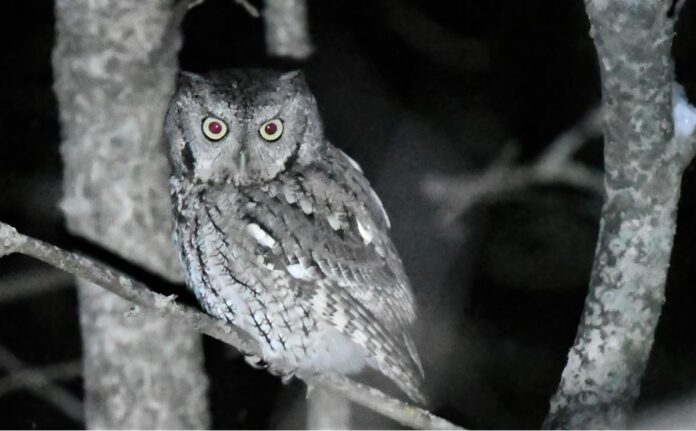
An Eastern Screech Owl. Photo by Ed Poropat.

Birders around Minden faced stormy weather and mild temperatures during a record-setting Christmas bird count. More field observers than ever, 32, scanned the skies, trees and waterways for winged creatures on Dec. 18 in a search area north of Minden. Along with those watching backyard bird feeders, 4,238 different birds were counted. The 20-year average sits at 4,282. Organizer Ed Poropat reported 51 species were recorded, up from the average of 45. Snow, which began to fall mid-morning, made it difficult to find birds due to decreased visibility and poor driving conditions. 

That meant many birds passed on backyard feeders in favour of seed crops in the shelter of the forest. “Once again in 2021, most feeder watchers lamented the lack of birds on count day,” Poropat said. 

He added bumper seed crops from spruces, tamaracks, hemlocks and yellow birches were a big draw for hungry finches. Some field observers noted “this was the best winter finch year they could remember.” 

Birders spotted 867 Common Redpolls, 354 American Goldfinches, and smaller numbers of Pine Siskins and Purple Finches. Open water meant it was challenging for participants to spot spread out birds on lakes within the search area. 

However, astute observers found four Common loons, 54 Common Goldeneye ducks, 51 Hooded Merganser ducks, and 28 Common Merganser ducks. 

Five Red-breasted Mergansers were spotted on Canning Lake, and six Buffleheads near Minden. Poropat said birders documented a record number of 16 Ring-billed Gills, along with 33 Herring Gulls. Some birds commonly hunted, such as Wild Turkey and Ruffed Grouse, likely found shelter throughout the storm, making them harder to spot.

 Observers spotted 107 and 11 respectively. Other birds showed up in decreased numbers, for example, 632 Black-capped Chickadees marked a decline from previous years. 

Poropat said Ontario-wide monitoring could help determine if the population is declining. Rare finds “As always, one of the interesting aspects of Christmas counts is the discovery and/ or documentation of uncommon or rare species,” Poropat said. 

An Eastern Screech Owl might be this year’s celebrity. It was the 109th new species discovered in the 55 years of the count. It is a “rare, prized find anywhere on the Canadian Shield,” Poropat said. “Despite its name, Eastern Screech Owls do not normally screech and instead make a distinctive whinny-like whistle or quiet trill.” 

This year, observers also spotted a single male Black-backed Woodpecker near Kinmount, and a Canada Jay was found near Dena Lake. 

A pair of Red-bellied Woodpeckers visited feeding stations near Minden Lake and two rare Cedar Waxwings were found. Two White-throated Sparrows and a single female Northern Cardinal made an appearance too. 

Poropat thanked volunteers for participating in the count. “Our collective efforts help contribute to knowledge of avian populations and conservation across the continent.” 

Huskies fall to Canadiens, league pauses until Jan. 26

0

The Haliburton County Huskies dropped a 2-1 decision to the Toronto Jr. A Canadiens Jan. 2, two days before the OJHL announced it’s suspending all operations until Jan. 26. 

Commissioner Marty Savoy said Jan. 4 that all games will be postponed for the next three weeks in light of Ontario’s return to lockdown. He said the OJHL has developed a plan that will allow the league to complete a full regular season and playoff schedule this year. 

Huskies head coach and general manager Ryan Ramsay isn’t happy about the suspension. Some “elite level” amateur sports leagues such as the OHL and Ontario Junior Lacrosse League have been given the green light to continue; Ramsay said he sees no reason why the same rules shouldn’t apply to the OJHL.

“I have 18 out of 22 players that have been drafted to the OHL, and three or four of them that have played in the league. Then we have other high-end players like Oliver Tarr, Patrick Saini and Isaac Sooklal who were offered contracts, but have decided to go [the NCAA] route. I’d say that’s pretty elite level competition,” Ramsay said.

The Huskies had a scheduled game against the Caledon Admirals called off over the holidays after the GTA team experienced a COVID-19 outbreak. 

Sunday’s loss to the Canadiens was the Huskies’ first matchup in almost two weeks. Now, Ramsay’s players will be forced to take another break. 

“It’s frustrating. I just feel for the players. They listen to the government and get their vaccine, their boosters and everything else and they still get screwed in the end,” Ramsay said. “There’s such a short window for junior hockey. These guys have already missed so much time. They’re getting the short end of the stick here, for sure.” 

Controversial call ends Huskies’ run

It hasn’t been a good week for the team, which found their defeat to the Canadiens a tough pill to swallow. Playing in front of a reduced crowd at S.G. Nesbitt Memorial Arena, the Huskies gave a good account of themselves, dominating much of the game.

Even without star goaltender Christian Cicigoi, top forward Christian Stevens and defencemen Sooklal and Will Gourgouvelis, missing through illness and injury, the Huskies controlled the play through the first two periods, generating several good scoring chances. It wasn’t a surprise when Tarr finally gave the blue and white a lead 9:02 into the second period, capitalizing on a bad turnover from the Canadiens. 

The lead held up until midway through the third period, when Matthew Wilde scored on the powerplay. He sent a gorgeous shot up over Huskies’ netminder Christian Linton’s glove, with the puck hammering the post on its way into the net.

Christian Catalano added a quickfire second two minutes later, firing past a helpless Linton after a two-on-none breakaway.

“I think we started to run out of gas a little bit in the third period. A lot of our players had only really skated once in almost two weeks, so some mistakes started to creep in,” Ramsay said. 

Ramsay called a time out. It seemed to work when, with 21 seconds left on the clock, the Huskies appeared to tie the game. 

A scramble in front of the Canadiens’ goal ended with Tarr jamming the puck past a prone Shelby Warren. Referee Dylan Rodgers waved off the goal, believing the Canadiens’ net to have come loose before the puck crossed the line. Ramsay was livid.

“When he (the ref) went to put the net on again it was already in place. He didn’t have to push it back on, because it never came off. It’s a [bad] call,” Ramsay said. “That would have tied the game and then maybe we would have gotten at least a point, if not two out of it. Again, very frustrating.”

The Huskies don’t have a game until Jan. 26, when they’re slated to face the Mississagua Chargers on the road. 

Their next home game is scheduled for Jan. 28, against the North York Rangers. 

We shouldn’t need foodbanks

0

December showcased the Highlands’ giving mentality. 

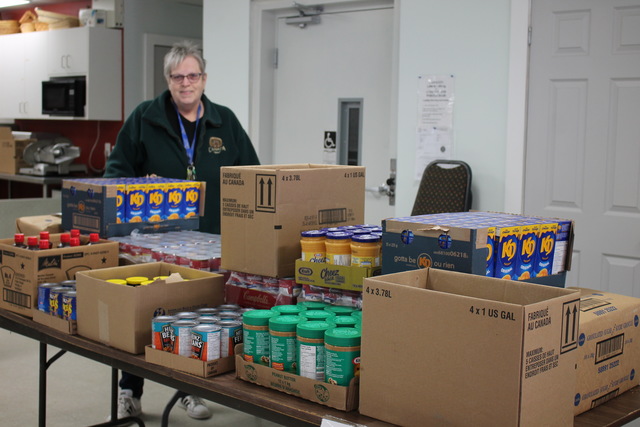
Our editorial schedule was peppered with community food drives, toy collections, gift-giving and countless other events hosted and attended by people who want to help. At the 4Cs food bank, one donor even spent more than $900 on food donations. 

Those donations helped feed Highlanders. But it’s unlikely donations made during the Christmas season will keep bellies full for long. A study by three Canadian universities estimates food costs will rise a further five to seven per cent in 2022, and inflation is surging to levels not seen for nearly 20 years. 

Dr. Valerie Tarasuk, who has spent decades researching food insecurity, argues that the federal and provincial governments miss the mark if they think food banks are a solution for food insecurity and food drives an effective method to end it. 

Jamie Schmale, Laurie Scott or Justin Trudeau (and nearly every elected official) advocate for food drives, food banks and the volunteers who staff them. We applaud Scott’s support of the hardworking volunteers, Schmale’s questions in parliament and his research into the rising cost of living. 

However, Tarasuk, and other research groups and food bank workers say one cause is clear: people in Ontario aren’t making enough money. 

Schmale’s Conservative Party has been a staunch opponent of basic income initiatives, which Tarasuk said could be a valuable step in the right direction; Scott’s provincial party has approved a minimum wage that sits nearly $5 below what’s needed to support a family of four in the County. 

When people with full-time jobs (as over 60 per cent of Ontario’s food bank clients have) cannot afford to feed themselves, or those living with disabilities must choose between rent or dinner, our politicians need to recognize their food drives, grants, and congratulatory social media posts seem like slapping a Band-aid on an injury that requires emergency surgery.

To say Haliburton County is facing difficulties now seems like an understatement. 

We are a spread-out community, with a minuscule rental stock, sky-high energy prices, and an aging population that will soon rely on services provided by a younger demographic who may struggle to afford to live here. 

It’s our job as a community newspaper to unpack that big ball of challenges and make it understandable. To do that, we need your stories. 

While I understand the difficulty in discussing these hard topics, we need the voices of those directly impacted. 

You see, the hard part of this argument is convincing the powers to be that the ‘hidden’ homeless, hungry and poor truly exist in the Highlands. 

We urge you to share your experiences, to help us change the narrative about the issues of homelessness, hunger and poverty in the County