

Home Blog Page 273

A ‘reset’ for Minden Hills Cultural Centre

0


Minden Hills is set to partner with the Minden Hills Cultural Centre Foundation (MHCCF) on some aspects of the cultural centre’s (MHCC) operations.

At a May 26 meeting, council voted to transfer the running of the centre’s gift shop and membership program to the MHCCF.

After the departure of Agnes Jamieson Art Gallery curator Laurie Carmount in March, the MHCCF suggested on April 28 it take control of the centre or have increased involvement.

Director of community services Craig Belfry presented a 32-page report on the MHCCF proposal.

He said he and CAO Trisha McKibbin have experience with independently-operated cultural centres, a model which would see the art gallery, Nature’s Place and the Heritage Village run separately with funding from the municipality and province.

He said that often means constant struggles for funding and staffing, and is a relatively rare practice in comparable galleries.

Since the MHCCF was dormant for years before being revived in 2019, Belfry said he was hesitant to recommend transferring governance to it while in the process of raising funds and membership.

Belfry also referred to a 2020 report from Lord Cultural Services in which “it was not recommended… that the [MHCCF] take on a governance role, but more to re-establish itself and work as an arms-length partner with the municipality to strengthen the centre.”

The report said Minden Hills’ financial support of the centre is one of its strengths, with an operating budget of $360,000, which Belfry said is extremely high.

Belfry also concluded changing governance could be a timely and costly process.

Belfry said the centre “operated in a silo” for multiple years, and the township is aiming to create new avenues to relay information about the centre as well as strengthen its advisory committee.

For example, Belfry said there is room on the advisory committee for more members, and the committee is set to discuss its function at an upcoming meeting.

He said the goal should be “to work together with the foundation to strengthen it, strengthen the advisory committee, strengthen the programming and strengthen each other and move this centre to a new phase and new development this community can be very proud of.”

Changes needed

MHCCF president Neil Briggs said he is “cautiously optimistic” about the centre’s future after council’s decision.

He and Belfry met in May and he’s confident Belfry recognizes the areas the township’s administration of the centre could improve.

Briggs said the MHCCF membership program will help boost engagement with the community, and help get new volunteers.

Belfry said the membership transference is “a win-win for both the foundation and the municipality. The foundation, to become strong, needs a good membership. Strengthening the foundation, which strengthens the cultural centre, is very important,” he said.

Briggs said running the shop allows the foundation to help support local artists and increase revenue.

Currently, Belfry said the centre’s admissions and program revenue is around three per cent of its revenue while the usual target is 20 per cent.

“This is extremely low… this is something the foundation can help with,” Belfry said.

Coun. Bob Carter implored continued discussions with the MHCCF, but encouraged residents to take the usage of the entire facility into account, not just the art gallery.

“We, right now, have very little attendance, a lot less usage of this facility than at the level we are supporting it,” he said.

Mayor Brent Devolin described the partnership as “the great reset” of the cultural centre. “Although it started with a bumpy re-engagement with them, I think there’s sincere interest on both sides to move this forward,” he said.

Briggs said the foundation and others in the arts community consider the upcoming appointment of an MHCC manager of cultural services, and cultural programming position a milestone. Both positions are expected to be filled this summer.

The MHCCF also advocates for the restructuring of the advisory committee to ensure its input is valued and represents the wider community’s stake in the centre.

“It’s very, very critical that gets restructured,” said Briggs.


Provincial housing plan ‘complicates’ Minden Hills building process

0

Minden Hills building officials and councillors say provincial legislation aimed at fast-tracking residential construction will complicate the township’s application approval process.

Implemented in April 2022, Bill 109, the More Homes for Everyone Act, aims to clear red tape blocking housing developments. Steve Clark, minister of municipal affairs and housing, said in a March 30 media release, it’s meant to “help more Ontarians realize the dream of homeownership.”

The bill received royal assent April 14, though the province was initially set to solicit municipal feedback until April 29.

It penalizes townships such as Minden Hills for late decisions on zoning bylaw amendments.

“I believe the majority of the planning profession is quite concerned with the fallout of this legislation,” said Darryl Tighe, a planning consultant for the township, at a May 26 council meeting.

“The planning process needs public consultation and input. That, combined with technical studies and even a public meeting, makes meeting the timeline tricky.”

If Minden Hills building officials don’t provide a final decision on a file within 30 days, three times as fast as previous legislation required, the applicant will receive 50 per cent of the application fee back. The penalties increase based on the time needed to reach a decision.

Bill 109 also allows the Ontario Land Tribunal to intervene in local official plan amendment decisions at a municipal level, such as the approval of an apartment building.

A March 30 press release states that it’s an effort to address the “politicization” development projects can prompt.

“It can lead to delays in getting housing built, which holds back supply and drives up home prices,” stated the province.

It contains multiple other changes to the planning act, which governs how municipalities and counties monitor building and handle re-zoning applications.

Mayor Brent Devolin said the plan was, “noble in intent but it’s going to create a bigger challenge than we’ve already had.”

Coun. Pam Sayne added, “part of this was proposed as a solution to our housing crisis. It’s outrageous that it’s being taken punitively out on municipalities. There’s a lack of understanding of how municipal governments work.”

In order to comply with the regulation, Tighe proposed council strengthen requirements for building applications. All reports and required materials must be submitted prior to the application being considered complete, which he said will enhance staff’s ability to process the applications quickly.

Devolin said the other lower-tier municipalities and Haliburton County, which has jurisdiction over subdivision planning, will also be impacted.

“We’re not done hearing about this in the least,” he said.

Destruction of beaver dam ‘shocks’ landowner

0

A beaver dam, draining a wetland in Highlands East, has been damaged, sparking concern for nearby endangered species habitats.

Landowners near Legacy Road first reported the damage May 8. The dam is on Crown land, though much of the adjacent wetland is on private land.

Photos captured by a nearby landowner, provided to The Highlander, show a person who appears to be extracting sticks from the top of the dam in late May. As of May 12, large piles of sticks appeared to have been removed and stacked on either side of the dam.

“I’m in shock,” said Robert Hood, a landowner on nearby Dillman Trail, when he first saw the damage. He and others suspect it’s a deliberate effort to lower water levels in the wetland to reconnect Legacy Road and Dillman Trail. “I didn’t think the damage was this bad. This has all the hallmarks of being done by a concerted group of individuals who have very little respect for wildlife in general,” Hood said.

The area above the dam is a Blandings’ turtle habitat, an endangered species, which means the damage falls partly under the Ministry of the Environment Conservation and Parks (MECP).

Ministry spokesperson Lindsay Davidson said “exactly what the person is doing cannot be determined from the photos,” but cautioned that intentional destruction of the dam could be a violation of the Fish and Wildlife Conservation Act (FWCA)

Previously, the MECP said “the ministry will follow up and gather information about the circumstances that led to the breach and determine whether the Endangered Species Act (ESA) applies. We are also working to determine who owns the property, so we can reach out to the property owner to obtain more details.”

It’s an offense under the Endangered Species Act to destroy the habitat of a threatened species, with penalties ranging from fines up to $250,000 or up to one year in jail. The Fish and Wildlife Conservation act is legislation falling under the Ministry of Natural Resources and Forestry.

Brian Alexander, an MNRF conservation officer, said he was unable to comment at this time.

Hood said he’s worried the lowered water levels clear the way for ATV traffic through the wetland. Fallen trees blocking the wetland have been sawed and cleared off the trail.

“Everything is fine except ATVs. They damage the environment. It’s a small group, but unfortunately, the bad apples ruin it for everybody,” Hood said.

The Haliburton ATV Association said it’s not aware of the situation. Previously, the association told The Highlander it was not pursuing trails in the area.

The Highlands East Trails Committee voted to request Highlands East approach the MECP for a report on the wetlands to see if the trail could be routed through the area.

“We will enquire about what, if any, provisions could be made for creating a multi-purpose trail from South Wilberforce Road to Legacy Road. With that information, we can proceed with planning to create walking trails, or more, as permitted,” reads the committee’s May 18 minutes. The next Highlands East council meeting is June 14.

Chair of the Trails and Outdoor Tourism Committee, Coun. Cam McKenzie, said it would be important to get an MECP evaluation of the area before pursuing trail options. “We’d follow that direction. It doesn’t mean we’d go ahead with a multiuse trail. We might go ahead with a walking trail only,” he said. The trail was previously considered in 2016, but put on hold due to concerns over protected species in the area, such as Blandings’ turtles in 2019.

A May 23 social media post from the Township’s official account read “preserve wetlands, protect turtles… wetlands purify the water that drains into our lakes, sequester carbon, provide habitat for many species, and mitigate floods. ATVs don’t belong in wetlands.”

County to help youth hub with transportation

0

Youth hub employee Zee Weiss now has to rely on family or work colleagues to get to and from work in Haliburton.

Living on County Road 21 closer to Minden, it can be a juggling act and also restricts her from doing other things she would like to do while downtown.

Weiss is one of many looking forward to expanded transportation to and from the hub thanks to a $20,000 commitment from the County of Haliburton to a Point in Time-led pilot project.

Weiss said she can’t afford the cost of getting a license, vehicle and insurance and a cab ride would be $50 one way. Most days her mom drives her over the lunch hour but sometimes things come up “and I can’t get to work at all.”

The option for extended transportation “will be super helpful,” Weiss said.

Manager Mary Sisson said “it’ll be huge … for a ton of youth that don’t have transportation” and will provide more flexibility. For example, students can schedule all of their appointments for a day they know they can get a late bus.

Point in Time executive director Marg Cox made the pitch to council at a May 25 meeting, saying the money will go towards wages and benefits for a driver.

She said there had been a “huge” uptake for services provided by the hub, where youth aged 12-25 can get psychiatric, nurse practitioner and peer support, as well as have fun, to better protect themselves from risk.

Cox said 656 youth have utilized the hub in 2021-22, up from 201 in 2020-21, an increase of about 220 per cent.

She said they’d been able to cope with the demand by using a variety of strategies. One is buying a small fleet of vehicles for transporting youth. They have also partnered with the Trillium Lakelands District School Board (TLDSB) to run late buses from the high school and youth hub to take students home.

However, Cox said they are having human resource challenges and can no longer afford to have staff driving clients due to huge demands for their services.

She added the partnership with the school board “has been great but there are still a number of youth not on the late bus route that require transportation.” She noted one of the gaps is Highlands East and other areas that fall between late bus routes.

Now, the late bus only picks up at the hub on Tuesdays and Thursdays, dropping off in West Guilford, Carnarvon and Minden. They also have a late bus that picks up at the hub and takes youth to Wilberforce, Harcourt and Cardiff on Thursdays. Before COVID, about 45 caught the late bus from the hub with about 30 doing so now.

“There are still gaps that we see, that limit the amount of youth using these supports. The late bus only drops off at three locations, so most youth still need someone to pick them up from that location and they may not have transportation to do that. Many youth have expressed that they would access services and activities at the hub more or at different times and days if they had transportation. For example, on the Saturday that we are open or on Monday, Wednesday or Friday, when the late bus is not available,” she said.

“We are also aware that during the summer break there will be no opportunity to utilize the late buses,” Cox said. She said this will require the hiring of a dedicated driver, that in addition to providing youth hub rides and shuttles, could also help transport children and families to Point in Time’s offices in Minden and Haliburton as needed, as well as providing outreach.

Staff travel as far as Kinmount, Dorset and Cardiff and all over Haliburton County to provide outreach, she said, including food security, toiletries, and in-home appointments. She said staff often do the driving but there are limits as to what they can do.

“This would help provide transportation and also allow the County and ourselves to start collecting data critical to addressing the larger transportation issue in the County,” Cox said.

County CAO Mike Rutter said this pilot project tied in nicely with a project recently approved for SIRCH to transport its trainees.

“The ridership/demand data gathered from this initiative will be useful in the future as County council reviews options with respect to transit service delivery,” he said. “This is another model which can be evaluated should County council provide that direction.”

Crown land rules need updating: Moffatt

0
Residents of Koshlong Lake have raised complaints over firearm activities on a plot of Crown land nearby.

Algonquin Highlands mayor Carol Moffatt has heard multiple stories about Crown land across Haliburton County in the past couple of years. 

Residents have contacted her about people shooting down trees, using assault-style weapons and leaving garbage and spent cartridges.

 “These are serious and sharply-increasing concerns about public safety due to the amplified growth of incompatible uses of specific Crown land parcels in proximity to private property,” she wrote in a letter to County council in June 2021. Some general use Crown land preserves that were once quiet camping spots next to lakes are seeing increased recreational vehicle traffic or people using firearms for prolonged target practice.

 The rules governing them or enforcement protocols haven’t changed. Ontario’s Minister of Northern Development, Mines, Natural Resources and Forestry (MNDMNRF), Greg Rickford, declined an interview. However, a ministry spokesperson said they receive complaints about Crown land use regularly, including from the Highlands. 

The ministry did not directly respond to a question on whether a review of Crown land access would be feasible.

 “Crown land is available to the public for many wide-ranging activities and this includes hunting so long as all laws are met. The (ministry) generally does not prescribe site-specific hunting or firearms restrictions on Crown land,” an email stated. 

When asked if Rickford believed current Crown land legislation adequately protects nearby landowners and other users, the spokesperson pointed to Canada’s existing gun legislation. 

In some cases, Crown land reserves have been closed due to unsafe conditions.

The MNRF closed an area near Burleigh Falls in Peterborough due to “complaints involving liquor consumption, parking violations, littering and COVID-19 and social distancing violations.” 

Judith Monteith-Farrell, NDP ministry critic, said the complaints seemed disturbing. 

“I’d encourage (Haliburton Kawartha Lakes Brock) MPP Laurie Scott to take an active role in problem-solving, to ensure this region is enjoyable for everyone,” she said in an email. 

Scott described the situation as a “balancing act,” but did not directly address whether she would support a review of Crown land rules. 

She said, “Crown land is for use, and many uses are allowed on Crown land. With the pandemic, there are more people looking for outlets and more people that come up to the area that really isn’t used to… the neighbours that are by Crown land, the use of Crown land, and how it affects other people.” 

Scott added, “going forward, as this persists, we’re going to have to look at what could possibly be done.” 

She insisted the provincial government is taking the issue seriously. 

‘Somebody may get shot’ 

Peter Franzen, a councillor from the Municipality of Trent Lakes, disagrees with Scott. In 2021, he tabled a motion calling on the province to review rules regarding target shooting on Crown land, which resulted in a letter being sent to the province demanding action. In one area near Bobcaygeon, he said walkers are often spooked by close-by gunshots and spent cartridges littering the road. In another spot, a trapper showed Franzen bullet holes in trees lining a forested hill behind his house.

“We’re talking about egregious and potentially life-safety issues”

Algonquin Highlands Mayor Carol Moffatt

Propane tanks and garbage were strewn across the nearby Crown land area. He met with the MNRF and Scott to discuss Trent Lakes’ concerns in 2021. 

“They didn’t take it seriously at all,” Franzen said. 

He said Scott told him the complaints likely mean newcomers aren’t used to the way people use land in rural areas. Franzen worries neglecting the issue could be dangerous, especially with a suspected increase in the use of Crown land due to rising migration to rural areas.

 “Somebody may get shot,” he said. 

Since June 2021, Moffatt and Minden Hills Mayor Brent Devolin have been attempting to get the issue in the provincial spotlight. 

County council assigned them the role of communicating Haliburton’s Crown land concerns with the province. It’s been a difficult process. “The way Crown land is being used now is not necessarily keeping with the philosophy of the Lands Use Act when [the public land act] was created. Like everything, it probably needs to be updated,” Moffatt said.

 She presented a delegation to the ministry at the Rural Ontario Municipalities Association’s annual conference in January. 

Moffatt said she asked deputy minister Monique Rolf von den Baumen-Clark four questions: “Will the ministry commit to staff taking affirmative action on the identified problem areas?

 Will you commit to working alongside OPP to fill in the existing jurisdictional gaps so that someone at the provincial level can and will take responsibility for what’s been going on out there? 

Will you commit to an ongoing rolling review of the general use definitions for the identified problem areas that we know of and will come to know in order to evaluate the suitability of what’s happening on them and potentially stop those uses? 

Would the ministry consider updating the public lands act to better reflect and control what’s happening?” 

She didn’t receive any answers but was assured other municipalities in Ontario are dealing with similar issues. 

Moffatt insisted it’s not about limiting firearm use, ATV trail access or Crown land enjoyment. “Our efforts to have some conversations with the province around Crown land use is not some idle complaint by people who don’t like their neighbours. We’re talking about egregious and potentially life-safety issues on certain parcels of land where incompatible uses are occurring.” Moffatt secured a Zoom meeting with the MNRF in March 2022.

 On the call, MNRF staff said the ministry, post-election, will raise the issue, but they didn’t give a timeline. Moffatt is entering her last months as mayor, as is Devolin. Their official work on the file is likely coming to a close.

 “There’s no question that the ministry hears these folks’ [complaints] loud and clear. The question is what are they going to do about it?” Moffatt asked. 

She’s compiling a folder of Crown land correspondence for future councils, with the hope others take up the cause. “You never want to start a new term and think you’re at day one,” she said.

Voting in Haliburton: Elections officer calls on Highlanders to cast ballots

0
Voting locations such as the Haliburton Legion are open from 9 a.m. to 9 p.m.

The returning officer for the Haliburton-Kawartha Lakes-Brock electorate district is reminding eligible voters to head out and cast their ballot in today’s provincial election.

Kirk Williams noted there are 82 voting locations open June 2 in the riding, including 11 in Haliburton County. 

Stations will be open from 9 a.m. to 9 p.m. Locations in Dysart include the West Guilford Recreation Centre, Eagle Lake Community Church and the Royal Canadian Legion on Mountain Street. There will also be three stations open in Highlands East: the Robert McCausland Memorial Centre, Lloyd Watson Memorial Community Centre and the Cardiff Community Centre.

 Voters in Minden will be able to cast their ballot at the Minden Community Centre and Royal Canadian Legion on Hwy. 35, while Algonquin Highlands will have three voting stations – the Oxtongue Lake Community Centre, Knox United Church and Stanhope Firefighters Community Hall. 

“Our electoral district is one of the largest in Ontario, as well it’s the second largest in terms of elector count… So, it was important to us that we provided several locations that made it easy and convenient for [our residents] to vote,” Williams said. Elections Ontario reported May 30 that more than one million people cast their ballot during advance polls. 

While he didn’t have any official numbers, Williams intimated that advanced polls at the Minden Curling Club, Dysart Legion, Keith Tallman Memorial Arena and Stanhope Firefighters Community Hall had been popular. 

Mail-in ballots were also available for local voters, although the deadline to register for that method passed at 6 p.m. May 27. 

There are seven candidates listed on the ballot: incumbent Laurie Scott, representing the Progressive Conservative Party of Ontario; NDP Barbara Doyle, Liberal Don McBey; Green Party rep Tom Regina; Libertarian Gene Balfour; Kerstin Kelly of the Ontario Party; and New Blue Ben Prentice. 

The 2018 election saw Scott record a comprehensive victory, securing 56.71 per cent of the local vote. A total of 57,143 valid votes were cast in 2018 out of an eligible total of 92,570, putting voter turnout at around 61.7 per cent. 

Williams estimated, unofficially, the number of eligible voters in the riding has since climbed to around 100,000. 

He encouraged everyone to exercise their democratic right and get out and vote. “As a voter myself, it’s the number one way that I can help influence the outcome of the future of my country… This is the one chance that citizens can directly influence the outcome of the leadership [of our province],” Williams said. “It’s much easier to complain about leadership if you participated in the vote… If I vote and my person wins and things don’t go my way, I can make a stink. If I don’t participate and just complain about what’s going on, then I’m losing my one ability to really do something about it. 

Burton running for mayor in Highlands East

0

By Lisa Gervais

The only incumbent mayor seeking re-election, Highlands East’s Dave Burton, has filed his nomination papers.

Burton made it official May 26. Algonquin Highlands mayor Carol Moffatt, Dysart et al mayor Andrea Roberts and Minden Hills mayor Brent Devolin have all announced they are stepping away from public office.

Burton said he put a lot of thought into the decision, consulted with his family, and talked to ratepayers.

“My health is good so I decided that I would seek another term,” he said.

Burton is finishing his fourth term, or 16 years with the township. If elected and serving to 2026, it will be 20 years of public service.

Burton said the changeover at County council, since Dysart deputy mayor Pat Kennedy is also not running, factored into his thinking.

“We need the continuity there. We need the experience there,” he said.

Burton is now deputy warden and is also on the board of the Ontario Good Roads Association. In the past, he has been a warden, and served on the Ontario Eastern Regional Network and Eastern Ontario Wardens’ Caucus boards. Burton added he had established relationships with members of other levels of government and believes he is a proven leader.

Burton noted he served for six years on another council before Highlands East and County Council.

“It’s been a lot of my life and it’s been dedicated to municipal service and working with the people and enjoying what I do,” he said.

Burton said another reason he decided to run is he feels COVID “cheated” Highlands East out of some projects and opportunities “and I want to see some of this stuff come to fruition that is sitting out there possibly half done because of our setback we had.”

He is looking forward to being part of the recovery, now that the worst of COVID is behind the township, “and moving forward in a gentle, creative manner.”

For example, he would like to see the new Herlihey Park completed and better and quicker high-speed internet.

He said the lower-tier council has shown it thinks Centre Lake is a gem in voting the province selling the Crown land reserve around the lake for private development.

At the County level, he said he honestly does not know where councillors are going to land with the shoreline preservation bylaw. He said a decision on short-term rentals is looming. As for amalgamation, “it’s going to take somebody pretty strong to convince me that amalgamation is suitable for Haliburton County.”

Burton said he is excited about running again.

“I’m revved up to go and looking forward to it.”

Haliburton County wraps up first climate change survey

0

There are only a few days left to contribute to the County’s first of two community climate change surveys. 

The online questionnaire, closing May 30, polls Highlanders on which areas the County should prioritize as it develops a Community Climate Action Plan.

 “Your input will help to determine what issues related to climate change are important to our community, and this will set the stage for developing a plan that focuses on local priorities and creates local benefits,” states the survey introduction.

 Some local environmental groups such as the Haliburton Highlands Land Trust (HHLT) are urging Highlanders to take part. 

“A healthy environment is a healthy economy,” said HHLT board member Sheila Ziman.

 She said the Land Trust’s work on the Highlands Corridor directly relates to the climate concerns.

 “We need to look at the big picture and protect large corridors for wildlife and habitat,” she said. Wetlands absorb greenhouse gases like methane and carbon dioxide.

 A second survey will be available later this summer, which will focus on how Highlanders would like to see the County lower greenhouse gas emissions. 

The survey can be found here.

Whose way of life?

0

The Highlander’s series on Crown land is a project I’ve been working on for more than a year, since first reporting on firearm use near cottages on Koshlong Lake.

 This series digs deeper than that original June 2021 article, and I was motivated by the response it got. “Get over it and go back to your condo in the city,” read one Facebook comment.

 “Anyone with half a brain would say no safer place to target shoot than a sandpit,” someone else posted.

 If I used Facebook comments to guide my reporting, I’d have switched careers already. But I wanted to know: did I miss something? Was it really just “millionaire cottagers” who were complaining? Were they the only ones worried?

 They’re not. 

The three primary sources for this series are concerned too. They’ve lived in Haliburton County for decades. They own guns. Wayne Parker and Mike Buss are experienced marksmen who often shoot on Crown land. 

Neither they nor Algonquin Highlands mayor Carol Moffatt, also featured in the series, are against firearms, or concerned about far-off gunshots interrupting martini hour.

 It’s precisely because of their experience sourcing safe shooting areas, riding ATVs or hunting around the County that they’re urging the province to review whether all general use Crown land areas should still be designated as such. 

All three suspect most of the allegedly inappropriate firearm use is from people who hail from outside of the County. 

The complaints aren’t about a local hunter sighting in a rifle for deer season: it’s hours of shooting on summer afternoons, skeetshooting, traversing private property and destroying trees with explosives.

 I couldn’t find people who shoot in these specific areas to talk to, but they’re not the focus of the story: safe shooting in these areas and other general use Crown land spots is completely legal. The conversation is about something bigger.

 It’s about how Haliburton County and Ontario will handle the increased burden of use on our natural areas and in our communities, whether it’s short-term rentals, shorelines, or the capacity of our parking lots. 

The Highlands, like many rural areas in Ontario, is experiencing growing pains. I understand how some could perceive the complaints over firearms in particular, or ATVs, as newcomers’ naivety or “millionaires” trying to ruin a way of life, but from what I’ve seen, it’s the large influx of people using Haliburton County as an outdoor playground that’s sparking these conversations. The ones raising questions don’t seem to be advocating for an end to rural traditions such as hunting, enjoying a day out on a boat, or camping on public lands. 

They’re long-time community members concerned about how uncontrolled shooting ranges next to homes, over-crowded lakes and the toilet paper, beer cans and human waste left behind on public lands threaten the long-term health of our County.

New Blue seeks social conservative return

0
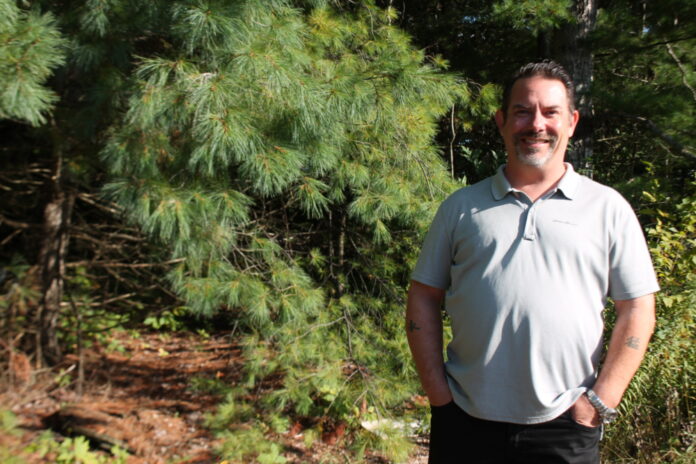
Ben Prentice, New Blue Party of Ontario candidate for Haliburton, Kawartha Lakes Brock
Ben Prentice, New Blue Party of Ontario candidate for Haliburton, Kawartha Lakes Brock. Submitted.

Ben Prentice said his decision to run for the New Blue Party of Ontario “boils down to principles.” 

He said the Ford government’s fiscal record points to a shift away from traditional conservative values of keeping a balanced ledger.

 “Even before COVID came in there was higher record of spending, but for a conservative government it’s always been about less oversight,” he said.

 Prentice lives in Millbrook, and owns an HVAC company specializing in industrial piping and installation, which operates across Ontario and Quebec. 

He was the riding president for the new party, before jumping at the chance to run in its first provincial election. The New Blues favour lower taxes and condemned Ford’s approach to the COVID19 pandemic. They said lockdowns and mask mandates disproportionally impacted small businesses. 

The party, formed in 2020, said its mission is to “get our province working again by empowering individuals, strengthening our democracy, defending taxpayers, promoting small businesses, and standing up for faith and families.”

 Prentice said he is concerned about aspects of Ontario’s school curriculum, which the party said shouldn’t contain information on diverse gender identities, critical race theory or in-depth sexual health topics.

 He’s chatted with people who feel schools shouldn’t teach certain health or social history topics. “I want to raise my family as I want to raise them and have less government oversight,” he said. On healthcare, Prentice said, “a lot of the blanket regulations really detracted from what people need.”

 He said money injected into the healthcare system throughout the pandemic should be accounted for, and he suspects rehiring unvaccinated staff would help with staff shortages. He said the pandemic has underscored “the real need for people in these positions to be well taken care of.”

 Prentice said he’s not concerned over the chance new conservative parties such as the Ontario Party and New Blues might split the vote, or decrease Progressive Conservative power in Queen’s Park.

 “I think governments we have now are extremely left,” Prentice said. He said the current Ontario majority isn’t pursuing conservative policies, so alternative, “principled” parties are filling the gap. 

Candidates bow out 

Two candidates won’t be on the ballot June 2. Grant Dewar of the None of the Above Party of Ontario and Fred Fischer of Consensus Ontario are out of the race. 

Dewar said he decided not to run because he was concerned about splitting the vote.

 According to party leader Brad Harness, Fischer did not acquire enough endorsement signatures to run for election.