Editor’s note: The original copy of this story, which appeared in the Nov. 11 edition of The Highlander, stated the Sleeping in Cars event was to take place on Nov. 21. The event will actually take place on Nov. 19. The Highlander apologizes for this error.
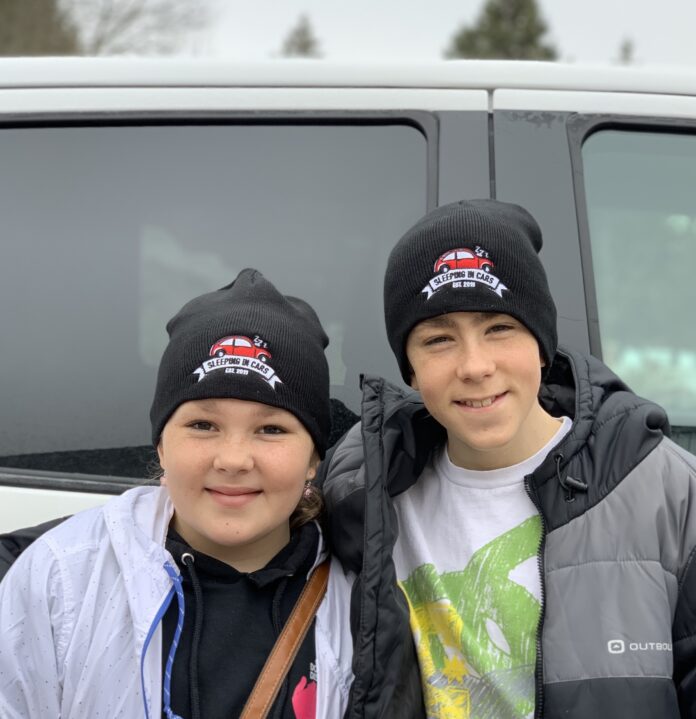
Places for People is bringing back a unique fundraiser designed to both raise money for its proposed housing projects in Haliburton County and shine a light on the growing issue of homelessness in our community.
Last held in 2019, the Sleeping in Cars event is exactly as advertised – participants gather and spend a night slumbering in their vehicles.
“The idea is that the experience will show people how uncomfortable it is to sleep in your car on a cold night,” said Nataly Mylan, one of the event’s organizers. “This is a reality many people in our community face. Homelessness in rural communities is really difficult to see, but it is out there.”
Mylan said there are more people than ever before at risk of homelessness right now in Haliburton County, largely due to the effects of the COVID-19 pandemic. Major spikes in the value of local real estate haven’t only priced potential homebuyers out of the market, it’s had a trickle-down effect on renters too.
“People who, traditionally, would have been seen as fairly stable and being able to maintain a home are finding that properties they rent are being sold out from underneath them, and there are no other rental properties available. Even the ones that are [available] can be outside of a lot of people’s reach,” Mylan said.
Her chief concern is that many of the community’s elderly residents could soon have no option but to leave Haliburton County if the situation continues to worsen.
“A lot of these people are our grandmothers, our older family members. These are people that have solid roots within the community and are faced with the reality of having to move outside of it to be able to find secure housing. If that happens, not only do they lose, but our community loses too,” Mylan said. “These are the people that volunteer, that show up to events, that are there in our churches and when they start to disappear because they can’t afford to live here, then we’re in real trouble.”
Places for People is doing what it can to bridge the gap. The organization is currently working with Dysart et al and the County of Haliburton on a new development that will bring up to 48 new “affordable” living units to the Highlands. All money raised through this year’s Sleeping in Cars event will go towards that project, to be located on Wallings Road in Haliburton.
The event will take place overnight on Nov. 19 at Haliburton Highlands Brewing, beginning at 7 p.m. Mylan said there will be a doubleheader movie shown, with snacks available. There will also be a campfire, where she hopes participants will gather and discuss the situation surrounding homelessness in Haliburton County.
To help facilitate those talks, Places for People are bringing in people who have been in those situations to share their stories.
The first fundraiser in 2019 raised $6,000, while a virtual event held last year brought in just over $1,000. Mylan said she doesn’t have a total she’s aiming to hit this year, she just wants to see people participating.
“The more the merrier. We’re an outdoor event and kind of self-contained, so no worries there. If we hit 100 people, I’d be super happy,” she said.
For more information or to register, visit placesforpeople.ca
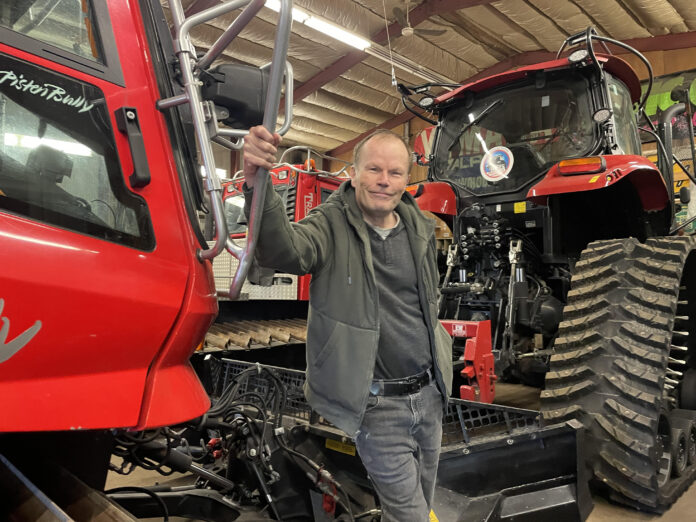
A Wenona Lake Road resident says she “doesn’t know what she’s going to do” this winter after many small-time snow plow operators have shut down, leaving her and dozens of other homeowners in limbo.
Phyllis McCulloch has lived east of Haliburton for more than 20 years. Every winter, she has had someone clear her driveway. Many of her neighbours have done the same, some even going so far as to have private plows clear their roads, which are considered seasonal and not tended to by Dysart et al township.
Almost all of those long-standing arrangements ended earlier this year, McCulloch said, after a massive increase to insurance rates made it unfeasible for many operators to continue.
“It’s unbelievable what’s happening. We know the situation out here, that many of these roads were put in some time ago and aren’t up to standards today to even be able to hold the big municipal snow plows, so we’ve always taken care of it ourselves. We had to if we wanted to get in and out of our homes during the winter,” McCulloch said, speaking of close to 20 homeowners surrounding Little Dudman Lake. “Now, insurance rates have gone through the roof, so a lot of these guys just can’t afford to do it anymore. The numbers involved would make your ears ring.”
In speaking to her local operator, McCulloch said she was told costs had gone from around $5,000 in 2020 to as high as $70,000 for 2021. The Highlander was not able to obtain numbers relating to insurance costs when talking with local operators.
Having usually paid $35 per plow for her driveway, McCulloch said that, for her usual operator to continue, that price would have to increase four or five times.
“Initially, we were all in favour of paying a little more money to keep things going and help cover the increased costs. Then we found out what the amount was and there was just no way we could do it. We would have all had to mortgage our homes to pay it,” McCulloch said. “So, right now, everyone is in a bit of a panic, especially some of our older residents. A lot of us are having to make the decision whether we leave our homes for the winter, or basically be stuck and [snowed in] for months on end.”
One local insurance provider said it’s not an uncommon problem in today’s market, noting many insurance providers are taking a harder stance on snow removal operations. In many cases, the increased premiums far outweigh the income most smaller operators could expect to receive.
McCulloch says she’s been in contact with between 10 and 15 operators that are continuing services but none are taking new clients.
At a Nov. 9 council meeting, Mayor Andrea Roberts said it was a big issue many community members have never had to face before.
“The timing of this is pretty dreadful,” she said. “It may be a sunny day right now, but [the snow] is definitely coming.”
Ward 4 Coun. John Smith felt it was the municipality’s responsibility to offer some kind of respite or support for homeowners given the township owns those roads.
“It is late now to rearrange our snow removal crews for the winter, but I’d like to see us get a report,” Smith said. “We have about 30 kilometres of public roads that are not maintained during the winter … if it’s a public road, how did we arbitrarily decide that certain roads aren’t going to get plowed during the winter? Those people are paying the same taxes as people on public roads that do get plowed during the winter. To me, it is not clear as to why we don’t provide year-round maintenance service on these roads.”
McCulloch added it poses a significant problem for property owners relating to home insurance. If roads or driveways are not cleared to a point that emergency services such as fire and ambulance, and utility workers can get access, they would be in violation of their insurance agreements.
“I would love to be here for the winter, but if I can’t get anybody in to do my driveway, I’ll have to think twice. A lot of these people don’t have that option. They’re going to be here. They need some level of service.”
Haliburton’s Greg Freeman and Jeff Papiez are comfortably ensconced in Port Charlotte, FL after making the drive south this week, including crossing the Canada-U.S. border when it reopened Nov. 8.
“Beautiful drive. Lovely weather and not too much traffic,” Freeman said via e-mail.
They were concerned about crossing wait times because of the hype about the border reopening so got up early Monday morning to get there as soon as possible.
Freeman said, “We looked at the app Border Wait Times at 4 a.m. and the wait times were very short … 15 minutes or less. The live webcams at the crossings had very little activity so we felt pretty confident that we would not have much of a wait.
They arrived at the Peace Bridge at 5:45 a.m. to find a back-up to the highest point of the bridge and it looked like there were not very many kiosks open. There were many trucks moving right along in their lanes and the cars were jockeying for position to try and find the fastest line. “We all know what that is like – reminiscent of standing in line at the bank. The other line is always faster.”
Checking the app once again, it said the wait time was 35 minutes, but it took them an hour from when they arrived at the bridge to clearing customs.
“In all fairness, it was not bad and many were expecting it to have taken much longer,” Freeman said.
They had four friends cross before 8 a.m. and none of them waited more than 20 minutes; two at the Rainbow Bridge and two at the Peace Bridge. Judging from the Border Wait Times app, they said the busiest time was between midnight and 2:30 a.m.
The two had originally planned to fly and have their car transported but changed their minds when they learned the land borders were reopening.
“Some of our friends chose to do the same thing and many other Snowbirds, once they heard they were able to drive south, solidified their plans and firmed up dates about driving to their winter home.”
Although Freeman and Papiez went to Florida during the height of COVID last winter, many others did not.
Mary and John Anderson stayed on Little Redstone Lake last winter but are preparing to return to Florida at the end of the month. They enjoy being able to stay more active in the warmer climate.
“This year will be different for us as we will be very cautious, keeping COVID prevention in mind at all times,” they said. “We do not plan to participate in any indoor activities or those where many people are together in close quarters.”
In terms of preparations for travel, they generally take three days for travel with two nights in a hotel on the road.
“That will require extra care and caution as well this year as we will not be eating in restaurants but rather we will take a lot of our food with us and maybe order-in for other meals. We are both eligible for the third COVID booster shot, but the six-month waiting period is not up until mid- December and we will be in Florida by that time and as a homeowner, we will be able to arrange for it when we get there.”
Ilsemarie Tarte and her husband, Rainer Hentschel, remained in Haliburton last winter as well.
They have rented a home in St. Petersburg, FL for January to March 2022.
Tarte said they are looking forward to their three-month stint south and feeling better about the pandemic outlook.
“Naturally, we are looking forward to being able to spend more time outdoors in warm weather. Also, as we are going to a place we have been a number of times in previous years, we’ll enjoy reconnecting with friends there.
“Now that we are fully vaccinated, we feel safer and will be driving down. We are lucky to have good insurance from our previous employer and are covered (including COVID) for 90-95 days respectively, so no concerns there.”
The Canadian Snowbird Association said on its website Nov. 5 that U.S. Customs and Border Protection is requiring proof of COVID-19 vaccination and a verbal reason for travel. Fully vaccinated land travellers don’t need a negative COVID-19 test result.
Travellers entering the U.S. by air are still required to present a negative COVID-19 test. They must also provide proof of vaccination and contact information.
“As travel begins to resume, travel volumes and wait times are expected to increase,” the association said. “Travellers should plan for longer than normal wait times and long lines at U.S. land border crossings when planning their trip.”
After arriving in the U.S., the Centre for Disease Control is recommending travellers get tested three to five days after travel.
As for coming home in the spring, the association said travellers are required to provide a negative test taken within 72 hours of their departure flight or arrival at the border if they are entering Canada at a land crossing.
See travel.gc.ca/travel-covid for more information.
With capacity restrictions eased, The Mill Pond Restaurant in Carnarvon is having no problem finding customers to enjoy homecooked comfort food. The issue is getting staff. “Nobody’s applying, every restaurant you talk to is looking for servers too. It’s crazy right now,” said owner Brad Archer. “I need to have four servers on staff. Right now, I have two full-timers and one part-timer.” During the fall, Archer couldn’t find anyone to take the shifts so he and his servers often worked 50-hour weeks. In industries from childcare to hospitality, businesses across the Highlands are having trouble finding employees.
“You open up the newspaper or you go to any online job platform: there’s a lot of jobs out there,” said Haliburton Chamber of Commerce executive director Amanda Conn.
“A lot of our members are saying they’re having a really hard time filling those roles. The roles may be skilled or entry-level, they’re having a difficult time filling both types of roles.”
The question is, why?
Archer guesses CRB, which ended in late October, might be a major reason why it’s become more difficult to find staff. “Everybody is on CRB, nobody wants to work, and nobody’s applying for jobs,” Archer said.
He doesn’t personally have staff who have stayed on CRB, however, he’s spoken to customers who have said they took the summer off. Federal MP Jamie Schmale agrees: “I do believe, with CRB gone, our businesses may start to see more people coming through their door [looking for work],” Schmale told The Highlander.
While the federal opposition has linked CRB to the current labour shortage, economists such as Karl Skogstad from Lakehead University are slower to jump to that conclusion. Skogstad pointed to Canada’s workforce participation rate, which fell from 65 per cent to 59 percent at the start of the pandemic. “If this CRB story was true, we’d expect to see that this participation rate has fallen.”
However, labour force participation has risen back to the 65 per cent level. “The data shows people are participating just as much, if not more, than they were pre-pandemic,” said Skogstad. While individual stories of people defrauding the CRB and the old CERB system — choosing to stay home rather than work — abound, Skogstad said it would have to be extremely widespread in order to distort job participation numbers. “My gut tells me there’s more going on than just that,” he said.
Skogstad, Lakehead’s Robert Petrunia, University of Winnipeg’s James Townsend and Lakehead Master’s student Derek Patterson have been studying the economic impact of the pandemic in Northern Ontario since early 2021.
In a community such as Haliburton, where heavy summer traffic increases the need for hospitality workers, Skogstad reckons there can also be a “mismatch” of skills to what’s actually needed.
He and Archer both say it’s likely the number of people qualified or equipped to handle jobs such as being a line cook don’t match the demand for their services. “There are 40 restaurants in the area, and there’s probably 40 cooks,” Archer said. “There’s a very small pool of people who do that sort of thing up here, it’s been going on for years.” Sean Dooley, a labour market information analyst with the Workforce Development Board, said the employee shortage could be reframed: “It’s important to recognize the difference between a labour shortage and a skills shortage,” said Dooley.
He said programs such as the Trillium Lakelands District School Board’s Start Me Up initiative is focused on equipping youth with skills and knowledge about the trades. It could be a good first step in addressing this skills gap in growing industries, he added.
Gena Robertson, SIRCH Community services regional director, wrote in an email there are routes employers and trainers could take to eliminate barriers to this kind of training.
“Typically trades and other post-secondary training requires local residents to go for extended periods to another city,” wrote Robertson. “…even when registration fees are waived or subsidized, there are still costs involved, which many people may not have. Could the training be brought locally?”
Robertson said employers also could refer potential hires to soft skill training programs, such as one SIRCH offers, to get prepared for new roles. “But we have yet to receive a referral from an employer,” added Robertson. Living in the Highlands “It’s hard for people to come work here when they can’t find a place to live,” said Conn.
That’s a reality Archer knows all too well: he said staff in the hospitality industry especially struggle to find affordable places to live. “All the rentals are so expensive and they’re so hard to find, and you don’t get any new people coming into town,” he said.
A quick search on Facebook Marketplace or Kijiji turns up few rentals. While certain developments in Haliburton County have been approved as “affordable,” this classification means they are priced at market rent: in Haliburton it means $979 for a one-bedroom apartment, nearly half of a minimum wage worker’s pre-tax monthly income.
The generally accepted rent to salary equation is 30 per cent.
Even workers in established roles such as Lisa Paterson, a cook at Extendicare Haliburton, are having difficulty calling Haliburton home. “I spent months looking for something,” said Paterson, who commuted for six months from the GTA while looking for an apartment. When she found a place, “it was just a room. I had a roommate, it wasn’t even my own place.”
Now, about to re-start her job after maternity leave, Paterson said she’s unsure how she’ll handle the drive. SIRCH Community Services has also experienced potential hires declining positions partially due to rental prices. “The person offered the job would have loved to have taken it, but the person’s partner had little chance of getting employment in her profession and they couldn’t live on one income,” wrote, Robertson.
Rental scarcity is paired with one of the highest costs of living in Ontario, with a living wage estimated to be $19.47 in 2019; undoubtedly higher now, with an updated figure expected this year. Add high transportation costs due to a disperse rural community and the Highlands could look like a difficult place to make a go of it to many lower wage workers.
In an Oct. 22 regional small business summit, Business Development Bank of Canada (BDC) accounts manager, Heather Halihand, told business owners from Haliburton and surrounding areas that the issue “doesn’t look like it will be solved anytime soon.”
According to BDC research, the aging baby boomer population will be a major contributing factor to decreasing labour force participation until 2036. Sixty-three percent of Haliburton’s population is over 50.
In 2016, Haliburton’s average age was 52, over 10 years higher than the Ontario average: as a population ages, the workforce can shrink.
While the reasons for a labour shortage are multi-dimensional, with COVID-19, inflation, housing, and demographics all taking a toll, Dooley of the WDB said the phenomenon has precedent in Haliburton County: “It’s a very complex topic with a lot of regional factors at play.
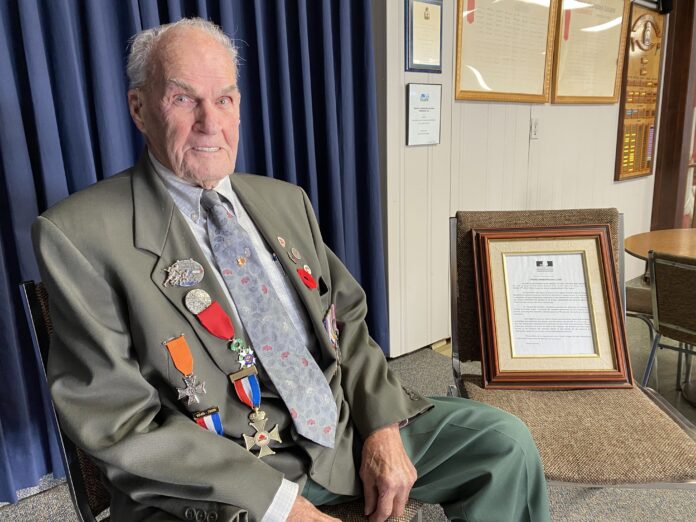
Haliburton resident and veteran of the Second World War, Harold Rowden, says Remembrance Day is a special time for him.
Photo by Mike Baker
While he will never tell you this, Haliburton resident Harold ‘Rowdy’ Rowden is the very definition of a war hero.
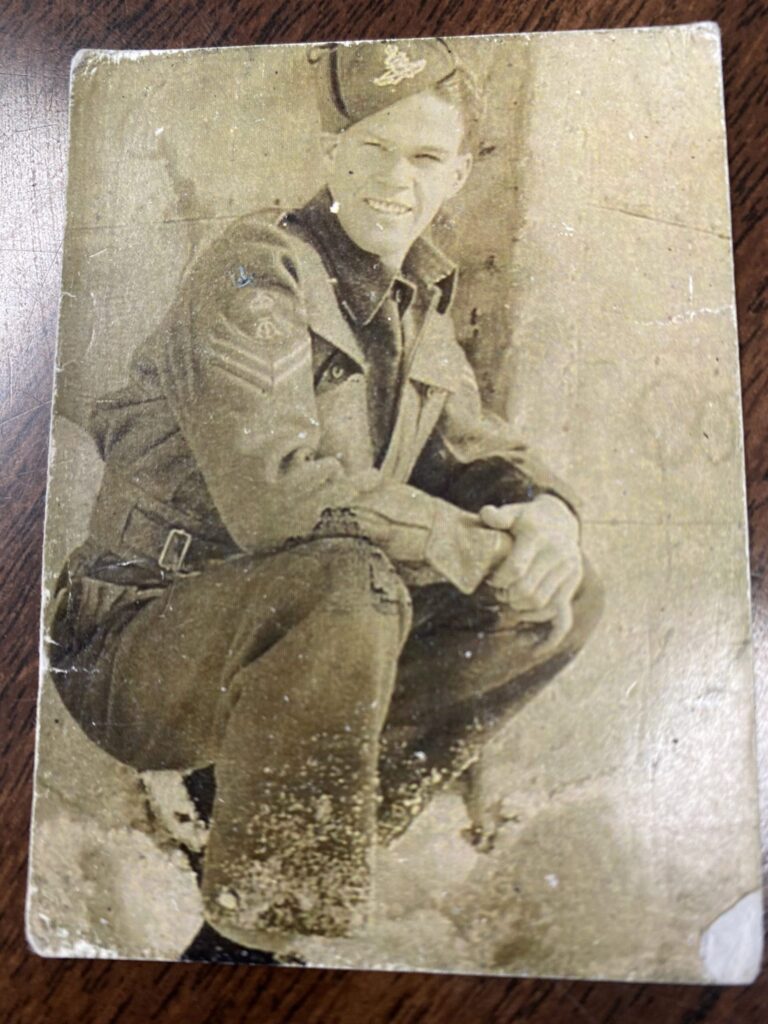
Serving with the 3rd Division of the 13th Field Regiment during the Second World War, Rowden was there the day members of the Canadian military went where no Allied soldiers had gone before, pushing the Nazis out of their beach-front strongholds and sending them into retreat.
The Normandy landings, and in particular the Canadian affront on Juno Beach, have long been considered the catalyst for the Allies’ eventual victory. The sacrifices of the men who stormed the beach on June 6, 1944 will be honoured Nov. 11 as part of our Remembrance Day rituals. Rowden was 19 when he stepped on the ship in Portsmouth, England bound for France.
Harold Rowden was a member of the 3rd Division of the 13th Field Regiment during the Second World War.
He remembers that daunting journey – the eerie silence among usually rambunctious troops, the sickening sway of the boat, the dread that set in as soon as land came into view. “Everything was on fire,” Rowden said of the scene that greeted him when the landing ramp dropped. Within seconds, he lost dozens of comrades, friends he had come to know and love during his years of deployment in the UK.
As a dispatch rider, Rowden’s orders were to collect messages from one point and deliver them to another. Equipped with a Norton motorcycle, he was one of the lucky few to escape Juno Beach unscathed.
D-Day was Rowden’s first overseas mission. He had spent years training at various sites across Canada and the UK since signing up for the war effort at 15. Still, nothing could have prepared him for the horrors he would face that day, and the many that followed. “If anybody says they weren’t scared, then they weren’t there,” Rowden said. “It wasn’t nice. I had never seen anything like that before. The Germans were up there picking us off. The beach was covered [with dead bodies].”
After safely getting out of the water, Rowden found a tank he could strap his bike to and crawl on top of. He was carried away from the action. Once settled he got to work on delivering messages between command and gunners.
His orders were often top secret. Just days after the landings, Rowden’s regiment came under direct attack. His unit was bombed while stationed in a small town called Courseulles-sur-Mer. Four of his comrades were killed, while his commanding officer was badly wounded.
Knocked unconscious, Rowden eventually came to and, noticing a gaping laceration in the officer’s neck, did what he could to patch him up. Equipped with only a field dressing he had stuffed into his helmet, Rowden covered the wound and applied pressure until medics arrived. “I guess they told me that I saved his life,” Rowden said.
Years later, once the war was over and having returned home, Rowden and his then wife bumped into the officer again on the main street in Orillia. His wife knew the man from school so went over to say hello. “She gave him a bit of a hug, and then he turned to me and said ‘you look familiar.’ I thought ‘it can’t be,’ but it turned out it was. I said ‘you old fart, you’re still alive!’ At the time, I didn’t know if he had lived or not.”
After recovering from a serious concussion sustained at Courseulles-surMer, Rowden participated in the Battle for Caen. During intense enemy shelling, he was hit by a blast that threw him into the air and against a truck. His left leg was damaged so badly doctors initially wanted to amputate.
He also injured his back and right leg. He was transported back to England where he spent months recovering in a hospital in Watford, near London, before being put on a ship to Canada. His service was over. Rowden spent several months recovering at a military hospital in Kingston.
After months of rehab, he re-entered the workforce, became a truck driver, married and had nine children, including three sets of twins.
Rowden has received eight medals, including France’s highest honour, the rank of Knight of the French National Order of the Legion of Honour. Consequently, Rowden should be referred to as Sir Rowden. Even when talking about his experiences, Rowden displays a tremendous amount of humility, saying that, deep down, he doesn’t believe his actions merit any special attention or recognition.
“I am proud, but you would have done the same things as I did back then. Anyone would. You don’t have to be a hero to patch someone up when they’re hurt. The way I see it, if you see a dog down in the ditch, you help it,” Rowden said. “And the medal … I’m doing alright right now, I lived a life. That should have been given to one of the boys that lost his life.”
Rowden said Remembrance Day is a time for careful reflection. “I’m proud, but I’m sad. I was only a kid back then, but the whole Canadian army was pretty well just kids. So many people died on both [sides]. Many times, it was kill or be killed, but I took no glory in any of that. I lost a lot of friends over there. Remembrance Day is a time I can remember them.”
The Haliburton County Snowmobile Association has won Ontario’s top annual snowmobile honour.
The Ontario Federation of Snowmobile Clubs named the association “club of the year” at its annual awards ceremony in Barrie, Nov. 9.
Association president John Enright thanked the Haliburton community, which he said made the award possible.
“It’s about the landowners and it’s about 49 years of previous hard work and dedication from the volunteers of the HCSA who got us into this place so we could win,” he said.
The association is responsible for the grooming and maintaining the area’s 370 Kilometres of trails that stretch across the west and central parts of the County.
The club boasts over 2,500 members and a reputation that draws riders from across Ontario.
“We’re in a very fortunate geographic position. We’re two and a half hours out from the most populated area in Canada,” Enright said.
The club, on Oct. 22, also won regional club of the year.
In the past year, HCSA encouraged downtown Haliburton businesses to post “welcome snowmobilers” signs in their windows, installed a webcam showing snow conditions in real time, and also hosted a fundraiser that donated one dollar per hour groomed on its busiest trail to The Kelly Shires Breast Cancer Foundation, raising $500.
More to come in next week’s edition of The Highlander.
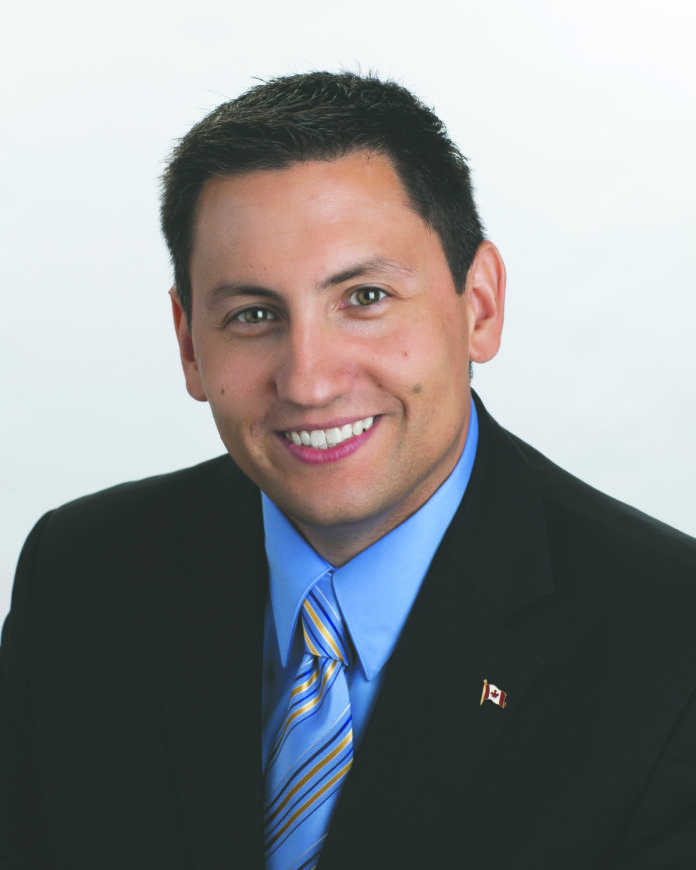
Local MP Jamie Schmale has been appointed as the new Shadow Minister for Indigenous Services in Canada’s 44th Parliament.
The news comes as part of a team of critics announced today by Conservative Party Leader Erin O’Toole.
Schmale said, “I’m looking forward to my new role as Shadow Minister for Indigenous Services. This presents an opportunity to expand on the experience I gained while in Crown-Indigenous Relations.”
Schmale added he looks forward to working with Indigenous leaders and communities to address issues including: clean drinking water; adequate healthcare and housing; public safety issues on reserves through increased Indigenous-led restorative justice measures and increased powers for First Nations policing services.
The House of Commons is set to begin sitting on Nov. 22
The Haliburton Highlands Detachment of the Ontario Provincial Police (OPP) are currently investigating a drowning that occurred on Sunday morning.
On Nov. 7, at approximately 10:26 a.m., members of the detachment responded to a report of a capsized canoe on Moose Lake in Dysart et al. It was reported that three adult males entered the water.
Officers attended the scene with Haliburton County Emergency Services and the Dysart et al Fire Department. One of the adult males was able to safely make his way to shore and was uninjured. The other two parties were unable to make it to shore and they have since been confirmed as deceased.
This investigation is ongoing and the detachment is being assisted by the Underwater Search and Recovery Unit, as well as Technical Collision Reconstruction investigators.
The identities of the deceased will not be released until next of kin have been notified. Further information will be released as it becomes available. Investigators are asking anyone with information to call Haliburton OPP at 1-888-310-1122.
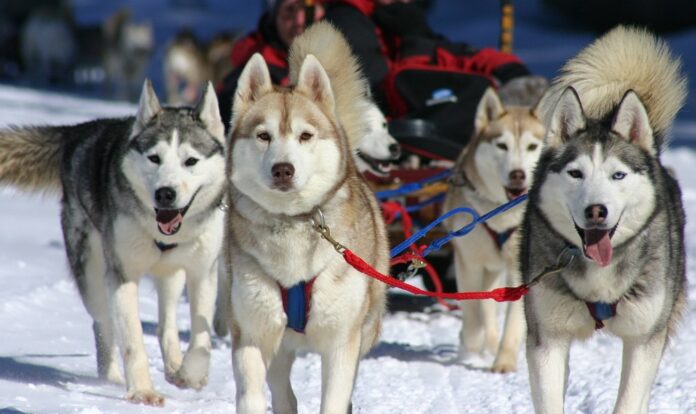
Dogsledding will return to Haliburton County next month with Winterdance Dogsled Tours announcing they plan to reopen for the season on Dec. 10.
Tanya McCready told The Highlander it will be “business as usual” for the local operation, who are set to usher in their 23rd year in the community.
“We are beyond excited to get going again – us and the dogs!” she said.
The news follows Haliburton Forest and Wild Life Reserves recent declaration that it would be shutting down its dogsledding operation effective immediately. On Oct. 21, the organization issued a letter to the community outlining its reasons for exiting the business.
“There are numerous challenges facing the dogsledding business, including unpredictable winter weather patterns, changing group experience profiles, shortages of professional animal care staff and rising health care costs for dogs,” the letter reads.
Tegan Legge, general manager of the Forest, said the organization would now be prioritizing self-guided, low-impact outdoor experiences such as hiking and fishing. She also mentioned the Forest intends to “replace” its dogsledding operations with a different portfolio of experiences in the coming winters. Haliburton Forest had maintained a dogsledding program for more than 20 years.
McCready said she and partner, Hank DeBruin, have adopted 11 of the dogs Haliburton Forest owned for its dogsledding program.
As she looks ahead to the upcoming season, McCready said Winterdance will continue to offer much of the same tour options as in past years.
“We will have half-day, two-hour, moonlight and full-day tours. The half-day is our most popular offering, while the twohour tours are great for young families or folks on tighter timelines,” McCready said. “The programs and systems we have built over the past 22 years have worked really well for us. We normally welcome over 2,000 guests from around the world every season.”
Last year was a bit of an anomaly for Winterdance and the McCreadys. Due to the COVID-19 pandemic, they had to drastically reduce their offerings, leading to a 70 per cent reduction in usual winter income. The couple helped to offset that loss through the release of Journey of 1,000 Miles, a sequel to the previously published Iditarod Dreamer. The book became an international bestseller, and helped McCready and DeBruin to establish a popular virtual speaking tour.
Over the past eight months, the couple have led dozens of presentations that have streamed virtually to audiences across Canada, the U.S., Central and South America and Europe focusing on overcoming challenges, leading through times of change, teamwork and chasing dreams. All of those stories, McCreary says, were inspired by lessons the pair have learned through their many adventures in Haliburton and beyond.
To learn more about Winterdance Dogsled Tours and their offerings, visit winterdance.com.
“They shall grow not old, as we that are left grow old. Age shall not weary them, nor the years condemn. At the going down of the sun and in the morning, we will remember them.”
The iconic words of Laurence Binyon, penned in his poem For the Fallen, are often revisited at this time of the year as people look back on and commemorate the sacrifices of our Canadian veterans.
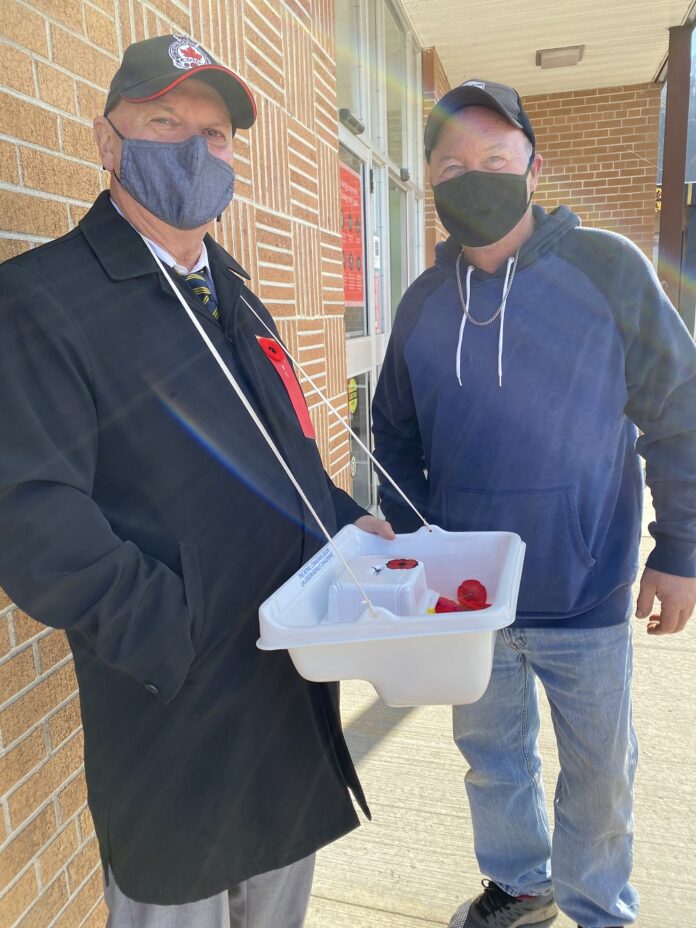
Haliburton Legion president Don Pitman recited them as he helped to kick off the annual poppy campaign in town Oct. 29.
“Why do we do this? It’s the three classic words, lest we forget,” Pitman said.
From now until Nov. 11, poppies will be available in more than 100 businesses across Haliburton. While donations are not required, Pitman said any money given goes directly towards supporting and helping veterans. In 2020, the Haliburton Legion raised around $24,000 through its poppy campaign.
All of that money was sent to the Ontario Legion’s central command and divvied up from there. Pitman says he knows of several local veterans who received money to help with one-time and ongoing costs, while the community’s cadet group and ‘Vet to Vet’ support program was also backed.
“This community has always been very, very supportive of the poppy campaign. We had one of our best years last year, and we’re definitely hoping for another strong campaign this year,” Pitman said.
Volunteers will be on hand with poppy boxes at Foodland, Todd’s Your Independent Grocer, Napa Auto Parts and Tim Hortons all day Nov. 5-7.
Remembrance Day has always been a big deal for Pitman, who had several family members involved in the First and Second World Wars.
“I had two grandfathers, my father and my uncle who all saw time in the military. My grandfathers saw action in the First World War, while my uncle served during the Second World War,” Pitman said. “But this day is as much about new veterans as it is remembering those [who served in the Great Wars]. The perfect example of that is Afghanistan and everything that went on there.”
With the Asian nation recently falling back into Taliban control, Pitman said many veterans who completed tours during Canada’s involvement in the War on Terror have been left questioning their service.
“There are a lot of veterans who lost a lot of friends over there. We lost 165 Canadians over there … Some of the people that came back, who have already been dealing with things like Post Traumatic Stress Disorder, have needed additional resources to help them get over the fact that all those lives have been lost, and yet the country fell back to where it was,” Pitman said.
He added, “Remembrance Day is important, number one so that we never forget. Because if you forget, then history will repeat itself.”