
Home Blog Page 306

New program lifting up Haliburton youth

0

An innovative new pilot program designed to connect troubled youth in Haliburton County with meaningful employment has seen some success in recent months.

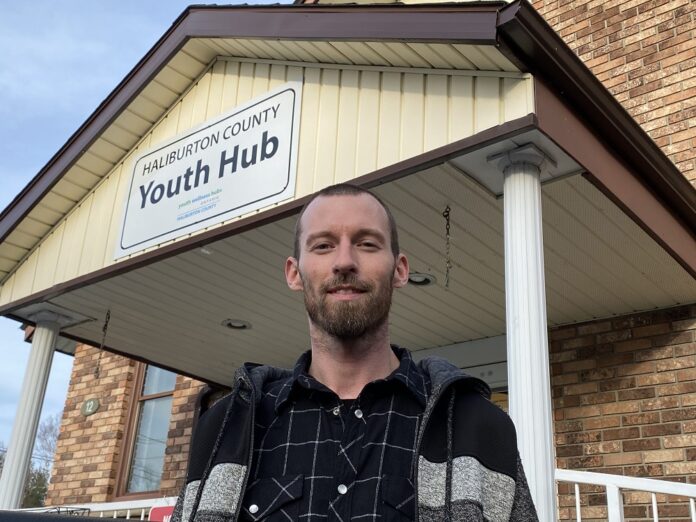
The Haliburton Youth Hub was selected as one of six locations across Ontario to lead the Lift initiative last spring. The program, launched by the Canadian Association for Mental Health, provides integrated employment supports for individuals aged 14 to 25, helping them with a wide variety of job-based skills and connecting them with potential employers.

Ryan Martin has been running the program in the Highlands since September. He has around a dozen clients he’s actively working with, some of whom he’s already helped place in jobs.

“One of the really cool things about Lift is that it’s an individualized program. We really tailor our services to the needs of the clients,” Martin said. “Once we’ve connected with someone, we’ll meet with them, work on long-term career planning and get as much information as we can to get to know them and come up with ideas for what we can do for them.”

The most important component, Martin says, is figuring out a client’s preferences.

“They’re not going to be interested and properly apply themselves unless it’s something they really want to do,” he noted.

“Once we learn where their interests lie, we can take things to the next level, so to speak.” Once the ball starts rolling, things can develop quickly. One of the principals of Lift is rapid job searching, Martin said, meaning clients are, ideally, placed into a job within a month of signing up.

“Within that first month, I’m helping people do resumes, write cover letters, going out and actually applying and then helping them with the interview process,” Martin said. “The idea is that everyone should at least have been interviewed within 30 days of seeking out our services. I think we’ve been pretty successful in maintaining that so far.”

One of the interesting parts of Lift is that services don’t end as soon as a youth is matched with an employer. Martin says there are no timelines in place, so, theoretically, he could work with an individual for the entirety of the three-year pilot.

Job coaching has already become a key part of his job.

“The first goal is to get them a job. From there, we work to solve any performance issues, and just making sure they’re comfortable in the work place,” Martin said. “For the most part, our employers have been very supportive, and they’ve been happy with the youth we’ve matched them with.”

Martin is also available to offer supports and advice to employers throughout the process.

Lift operates from a zero-exclusion policy, meaning anyone is welcome to access services, regardless of the severity of their mental health, disability or substance abuse issues.

That policy is one of the main things that drew Martin to the job.

“The only criteria for engaging in this program is having a desire to work. We believe people can improve their situations by having a job,” Martin said. “Research shows that 60 per cent of people with serious mental illness report wanting to work, but only about 20 per cent are employed. So, this policy is all about recognizing that, regardless of their issues, these people are capable of being in the regular workforce.”

Highlands teen to play Div 1 NCAA lacrosse

0

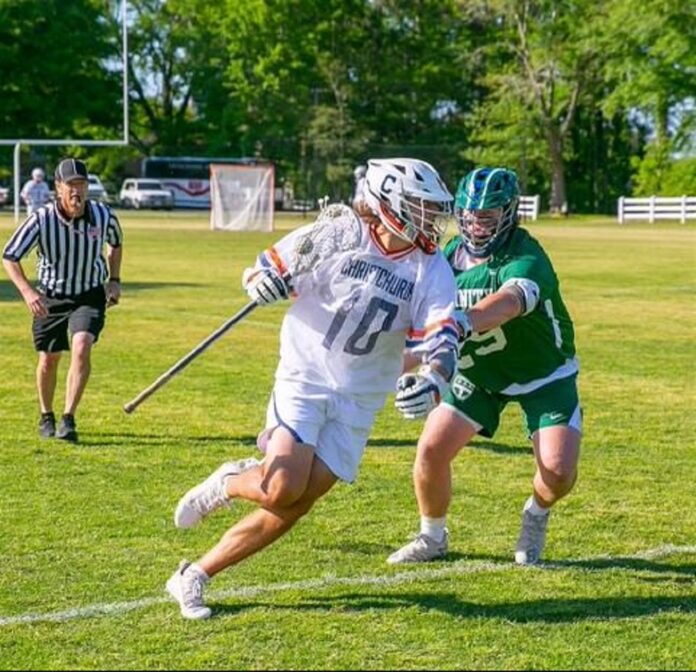
Haliburton County’s Jaxon Gill has spent the past 18 months chasing his sporting dreams stateside, with eyes firmly set on forging a career in lacrosse.

The high school senior is doubling as a student athlete at a private boarding institution in Virginia, where he plays a key role on the Christchurch Seahorses varsity lacrosse team. A talented forward, Gill tallied 75 points in just 15 games during the 2021 season.

A string of impressive performances put him on the radar of several top ranked NCAA programs across the U.S. In October, he committed to playing Division 1 lacrosse with Quinnipiac University, based in Hamden, Connecticut.

“A dream come true,” Gill told The Highlander of his signing. “I love lacrosse, and now to have the opportunity to play it at a really high level, I’m really excited. Just the whole aspect of playing on a Division 1 team, that’s a really big deal for me.”

It’s certainly a far cry from the environment he grew up in, playing box lacrosse in Lindsay as part of the Kawartha Lakes Fury. He was 10 years old when he picked up his first spoon, joining some of his friends on the ‘local’ team.

According to Gill, it was pretty much love at first sight. He took to the sport quickly, and before long made lacrosse his primary focus, even ahead of hockey. He started playing field hockey in Newmarket when he was 12, which opened his eyes to a completely different style, and level, of play.

As his skills developed, Gill considered his options. He had been told by coaches that he was good enough to play at a higher level. Last year, right before the onset of the pandemic, he made the decision to transfer from Haliburton Highlands Secondary School to Christchurch. Since there was no school team at HHSS, and Gill was restricted to playing solely box lacrosse during the winter, he felt the only way he could keep progressing was to move.

It was a shock to the system the first time he took to the field in Virginia.

“Even though I had played field lacrosse before, it wasn’t the same as American field. Down here it’s a different game. The biggest change was I started to use both hands [on the stick] instead of just one, which is a typical Canadian thing that most people do,” Gill said. “It was a jolt, definitely. A big adjustment. But my coaches and teammates were really supportive. Since then, I feel I’ve elevated my game to a whole new level.”

Christchurch went to the Virginia state championships in 2021, and Gill hopes he can lead his team to a title in what will be his final season.

He admits he’d be lying if he didn’t already have one eye on the future, though. He’s already met with his future coaches at Quinnipiac, and has decided to major in communications. He and his dad visited the campus in August.

“It was great, sort of like seeing what my future would be,” Gill said.

“I know I’m going to have to work really hard if I’m going to play in my freshman year, Quinnipiac has a great program with a lot of good players, but this is just the next challenge for me. Since I started playing lacrosse, it’s almost like everything has been leading to this. I can’t wait.”

COVID-19 puts Storm season on ice

0

Highland Storm players won’t hit the rink again until Jan. 27.

The season was paused due to provincial COVID-19 restrictions barring indoor sports and the use of indoor training facilities.

“We understand this is a disappointment for everyone at the moment. We want to thank everyone for making hockey their sport of choice this season and we look forward to returning to the ice as soon as possible to get back to the game we love,” said the Ontario Minor Hockey Association in a press release.

Tony Prentice, Highland Storm president, said it was tough news to break to players and families after the club’s executive met on Jan. 5.

“We hate to see kids miss any hockey,” he said.

During the shutdown he said he’s heard of coaches sending training material to players, however, there won’t be practices or outdoor training sessions.

“We all support the healthcare system,” he said.

“At the same time, we feel sorry for our kids who want to be on the ice to play hockey.”

Shutting down the organization temporarily isn’t hard, Prentice said. It’s rescheduling games and making up for lost time that he suspects might pose issues in February.

Prentice encouraged players and parents to “stay positive. There’s got to be better times ahead of us,” he said.

“We can all celebrate hockey but we all gotta’ do our part.”

Pond hockey falls through the cracks once again

0

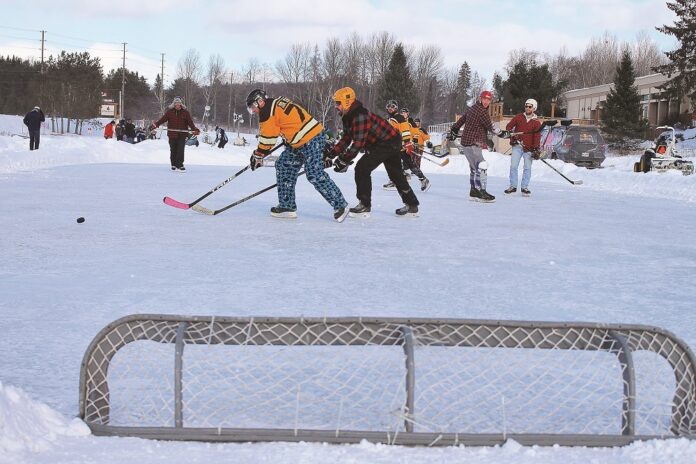
It’s worst case scenario once again for John Teljeur, who for the second consecutive year has been forced to cancel the Canadian Pond Hockey Championships.

Slated to begin Jan. 28, the event was expected to bring around 500 visitors to Haliburton. With Ontario in the midst of another lockdown, and COVID-19 cases continuing to soar, Teljeur said he and his team of volunteers could not see a clear path forward.

“There’s no way we can be confident of hosting the event properly, and that the restrictions currently in place won’t get worse,” Teljeur told The Highlander. “I know there’s a lot of players that are not going to be very happy with me, but the event really would have been a pale imitation of what we have done in the past, even if we were allowed to go ahead with it.

“In the end, we decided we did not want to take any risks with anybody’s health. I hate the fact we’re making this kind of decision again, but it’s the responsible thing to do,” he added.

The championships were to take place at Pinestone Resort, with games on the pond in front of the facility and other activities inside. Pinestone has hosted the event several times since it was first brought to Haliburton in 2013.

Teljeur said he was unsure what things will look like next year, and could not confirm whether the championships would ever be back in Haliburton.

“It’s tough to say what the future holds for the event. Maybe we need to look at other venues going forward. There’s no way I could put the event on at the size it was [at Pinestone] now, and I’d like to grow the event,” Teljeur said. “We do want to come back to Haliburton in 2023, but there’s a lot of work that needs to be done, and a lot of things to figure out.”

Stevenson has eyes on Div 1 scholarship

0

Rookie forward Lucas Stevenson is making a big impression during his debut OJHL season.

The 18-year-old, two-way forward has been an ever-present for the Haliburton County Huskies, suiting up in 29 regular season games and establishing himself as a force to be reckoned with on the team’s top line.

With 16 points on the year, Stevenson has fitted in seamlessly with regular line mates Oliver Tarr and Patrick Saini; his defensive prowess proving to be a perfect foil for two of the team’s top scorers.

“I’m having the time of my life playing in Haliburton. I love everything about it – the team, my billets, the community,” Stevenson said. “I’m just grateful for the opportunity.”

Stevenson is living in Minden with Caroline McEathron and John Stark.

The teenager, born and raised in Ajax, has really had to work to get to where he is today. His path to junior hockey has been different to most; as one of only four Huskies not to have been drafted into the OHL, Stevenson has scratched and clawed his way to the big time – taking nothing for granted, and treating each and every shift out on the ice as if it were his last.

Stevenson was introduced to hockey when he was four. He played AAA with the Ajax Pickering Raiders for several years, before moving on to represent the Markham Waxers at the U16 level. He played two full seasons with the Waxers, becoming a standout on the team.

During the summer of 2020, while preparing to return as one of the locker room leaders, Stevenson received a call from Ryan Ramsay, then head coach and general manager of the Whitby Fury. It took him by surprise.

“He explained to me how he’d like me to fit into the team, what he thought I could bring,” Stevenson said. “I was pretty excited. I wasn’t sure I was going to [get the chance to play] junior hockey.”

The COVID-19 pandemic shot down his chances of playing in Whitby that year. Stevenson wondered if that was it, his chance having come and gone. But he heard from Ramsay again last summer, this time with a bit of a different proposition.

It was a big deal for Stevenson moving to Haliburton County – his first time away from home. He was familiar with the area, with many of his childhood friends having cottages in the Highlands. Still, it was an adjustment over those first few weeks.

Now completely settled in, the forward is excited about what the Huskies can achieve this season. Challenging for top spot in the OJHL’s East Division, the blue and white are looking a solid bet to make the postseason. Once there, Stevenson believes the team has what it takes to challenge for a championship. “

I think our team is unbelievable. We’re strong all over the ice. We’re going to go really far and have a deep playoff run this year,” Stevenson said.

He expects to return to the Huskies next season, but looking long-term Stevenson is hoping to emulate Tarr, who recently signed a commitment to play Division 1 NCAA hockey with Buffalo’s Canisius College.

“I’ve talked to a couple of schools. It’s been a cool experience – I didn’t get drafted during my minor midget year, so this has been new for me. It’s nice to be recognized and gives me good motivation to continue improving my game,” he said. “A Division 1 scholarship is definitely the goal.”

Families welcoming Huskies into the fold

0

It’s been a remarkable debut season in the Highlands for the Haliburton County Huskies, backstopped by a group of 12 unsung community heroes.

Junior hockey is a competitive environment, with a professional feel. Players are recruited from all over the province, and sometimes beyond, to represent teams like the Huskies. Of the 22 players currently on the blue and white’s roster, only two are homegrown.

So, what happens to the rest?

Enter Jess Jackson, volunteer billet coordinator with the Huskies. Since the organization arrived in the County last summer, Jackson has been hard at work recruiting families willing to welcome players into their households for the season.

“We’ve been so lucky,” Jackson said. “We’ve had so many great families come forward to take players in; without them, we really wouldn’t have been as successful as we’ve been this season. Having a strong billet program makes such a big difference.”

There are 12 billet families across the Highlands. Many agreed to take in two players – something that has helped build team camaraderie, Jackson said.

Kim and Kevin Hodgkinson live on a rural property in Gelert. When they learned Haliburton County would be gaining a junior hockey program, they immediately started to think about billeting.

“My brother has been a part of junior hockey for a long time, so I know the drill,” Kevin said. “We thought it was a wonderful opportunity for us to open up our home. My wife and I never had the chance to have kids, so it was a nice idea for us to get involved with this and experience what it’s like to have some kids around.”

Forward Sam Solarino has been living with the pair since last fall. Defenceman Jonah Cochrane joined him in November, after he was acquired from the Wellington Dukes.

The Hodgkinsons have loved the experience so far.

“It’s been great. They’re kids, but they’re also adults at the same time. They help out with stuff around the house and they’re very self-sufficient,” Kevin said. “It’s not hard to get attached to these guys; they’re wonderful people and they’ve got a lot of drive.”

Don and Julie Pernerowski were one of the first families to sign up. Having seen their son, Taylor, travel out west to play junior hockey in the late 2000s, they saw this as an opportunity to do their part and give back to the hockey community.

They have forwards Nick Athanasakos and Patrick Saini living with them on Horseshoe Lake.

“We’ve been involved in hockey all of our life, but since our kids have been done, we’ve really missed it,” Julie said. “Because people have stepped up and provided a home for our kids in the past, we thought it was our time to help out. It’s been an awesome experience so far. We couldn’t have asked for better kids. They’ve just become a part of our family.”

All billets receive a monthly stipend of $475, paid by the players’ families, and a pair of season tickets supplied by the team. The expectations are that they will provide a bedroom for the players, have food in the house, and cook an evening meal. Transportation to and from the rink for games and practices is the responsibility of the team.

Jackson said she’s still on the lookout for potential billets, both for this season and next. Anyone interested can message her at huskieshousing@hotmail.com.

“There’s no perfect fit, no ideal scenario as to who can be a billet family. Anybody from a single working professional, to a family with children, to a retired senior can take a player in. I think anyone can be a candidate for the program,” Jackson said. “I don’t think we can ever have too many families on board.”

Connect online with Algonquin Highlands

0

Algonquin Highlands has launched a new public engagement platform it hopes will encourage township residents to provide feedback and share ideas on key municipal issues.

‘Let’s Connect Algonquin Highlands’ is a multi-faceted portal that staff will use to consult and communicate with community members on a variety of themes on an ongoing basis, according to communications coordinator Chad Ingram.

The website went live on Dec. 20.

“Heightened, two-way communication is really the goal here,” Ingram said. “One of the great advantages of the platform is that it houses a number of tools all in one place. We can conduct polls and surveys, but there are also opportunities for residents to share stories and engage in more open forums.”

There are two projects currently open for discussion on the portal, one concerning Algonquin Highlands’ zoning bylaw update – with discussions around cannabis cultivation, backyard hens, backyard beekeeping, and septic system setbacks ongoing – and a public survey seeking input that will be used in the creation of a new municipal communications plan for the township.

Mayor Carol Moffatt says she’s excited to offer a new way for residents to interact with council and municipal staffers.

“This [is a] more robust way of engaging with the community,” Moffatt said. “We’ve had a lot of success with social media over the years, but this is very different and will allow a more focused and issue-specific way for the public to participate in local government.”

There are already more than 80 registered users on the site. The portal cost $7,632 to set up. It can be accessed at letsconnectalgonquinhighlands.ca. Ingram said one of the key selling points of the software is its versatility.

“The potential applications are limitless, really. If there was a controversial planning application before council, for example, the portal might be used to conduct a poll to provide council with a snapshot of public opinion on that project. At a recent meeting, one member of council suggested it might be used to gauge reasonable thresholds for fee increases. Once events are up and running again, we could use it to ask for suggestions for added features to those events,” Ingram said.

“You can also do fun things with it – photo contests, for example, or a poll asking residents to vote for their favourite Algonquin Highlands landmark,” he added.

Ovell looking for long-term prosperity for community

0

In one of his first moves as the County’s director of economic development and tourism, Scott Ovell asked council Jan. 12 to approve a request for proposals for an economic development strategy.

In a report to the committee of the whole, Ovell said he’s been hired to develop a more diverse and resilient economy, while still recognizing the importance tourism plays in the Highland’s continued growth.

He said while there is an overarching tourism plan, the Destination Management Plan, that has stalled during COVID-19, there isn’t a plan for the broader economy.

“An economic development strategy is essentially a road map for economic transformation, growth, and yields longterm prosperity for a community,” he said in a report. “It includes action steps that will require the participation of the business community, institutions and citizens.

“While the County has had tremendous success developing and marketing tourism, the challenging realities of today’s economy call for new directions, ideas and approaches to enhance economic growth, attract investment and ensure that opportunity continues to be a significant part of the County’s quality of life.”

Ovell said in an interview it’s about creating a vision and how to get there with a five-year departmental budget and business plan.

With two months under his belt, Ovell said “it’s been a bit of a whirlwind.” In addition to finding his feet, he’s helped the County hire its new tourism manager, Tracie Bertrand, who started Jan. 3.

Bertrand is coming from Peterborough and the Kawarthas Economic Development where she was director of tourism. Ovell said she is familiar with the area and provincial and federal tourism organizations. He said she’s also knowledgeable about some of the County’s larger tourism stakeholders. [The Highlander will profile Bertrand at a later date].

Having her onboard means Ovell can now concentrate more on the wider economic development side of his job. However, he said it will inevitably overlap with tourism.

“Tourism’s probably one of the two or three driving economic forces in the community so, it’s about developing and cultivating a more diverse and resilient economy, and trying to reduce the peaks and valleys,” he said.

“On the economic development side, it’s more about working with the other industries in the County and helping them grow and communicating with them and finding out the issues from them and how the County can better support them to overcome those obstacles and develop programs and initiatives that are going to help them achieve their objectives.”

He said another initiative they’re in the process of is developing a business survey that they plan to release annually to start collecting data on the economy and establish some baseline information. He said that will help them identify trends, “to better feel for what the pressure points are and then identify whether it’s a specific program initiative that we need to bring to County council for consideration.”

He added they will go beyond an online survey and will call businesses to hear their stories. It’s something that is already beginning.

“I’ve been pleasantly surprised. They’re saying ‘you need to talk to this business or that business. They’re doing great things’. It’s about making people more aware of what’s going on in the County and what’s more unique and highlighting those businesses and showing the rest of Ontario, and in a perfect world, Canada and the world, that here’s what you can do in Haliburton County. Here are the businesses that have been successful. And you don’t always have to look to Southern Ontario or other parts of the province if you’re looking to grow or expand.”

Ovell said along the way they will look at the area’s challenges, everything from internet problems to workforce housing. “And work collaboratively with council, townships and stakeholders to try and implement some solutions to those problems.”

Fire chief advises residents to check the ice

0

January is often when winter activities kick into high gear. In Haliburton County, that means using the vast lakes as hockey rinks, snowmobile tracks and ice fishing locales.

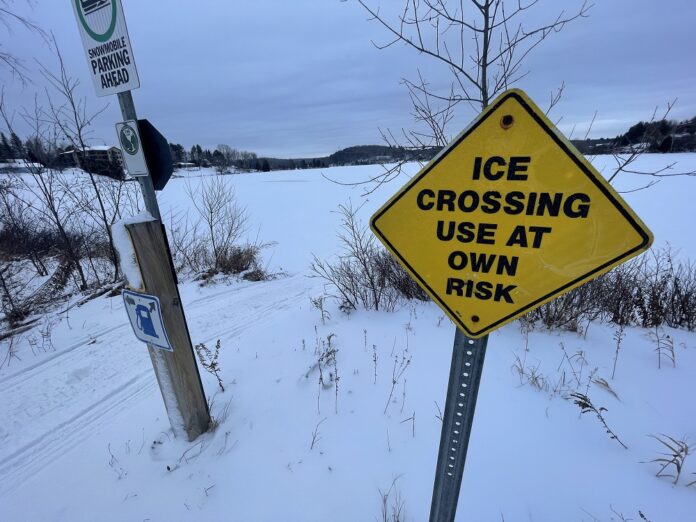
Minden Hills fire chief, Nelson Johnson, said he personally doesn’t recommend anyone venture out on the ice. Each year, his department responds to one to two icerelated emergencies. That’s not a lot, he said, but the ideal number is zero.

“There’s a lot of factors to why ice is good,” he said. “You can’t just go by thickness and you can’t just go by temperature.”

He said air temperature, along with the flow of water under the ice, recent snow, and temperature changes all play a factor on how ice develops.

Thick ice, said Johnson, doesn’t necessarily mean safe conditions.

“We have lakes, rivers and streams with ice that has flowing water underneath,” said Johnson.

It’s estimated ice with moving water under it is 15-20 per cent less strong than normal lake ice. The amount of snow can also change the danger level. Snow insulates ice and can cause it to deteriorate.

A deep lake, such as Kennisis, as opposed to Kashagawigamog, will take a lot longer to freeze to a safe level, Johnson said.

“That’s kind of a problem we have here,” said Johnson. “We have all different sizes, shapes and depths and amounts of water in these lakes.”

He said the only safe way to access ice is to test to know what the ice is doing.

Blue ice is usually thicker, and if it’s eight10 inches thick, it’s safe for fishing and taking a vehicle across.

However, Johnson said understanding how ice forms is key. Ice can form at about four degrees celsius. Ice particles drop into the water, sink and then become buoyant as they freeze into ice crystals and rise back up to the surface to form an ice surface. Abrupt temperature changes can interrupt this process.

“When it starts to warm, it always warms up close to the shores. That’s where a lot of people do their skating, close to the shores.”

On still bodies of water, Johnson said he recommends four inches or thicker. “Four inches is for one person sitting,” he said. “Six inches for a group.”

Johnson recommends those who head out on the ice bring a cell phone in a waterproof bag, as well, to “always let someone know you’re going out there.”

HCSA recommends

The Haliburton County Snowmobile Association maintains 74 kilometres of lake routes. The ice on each lake is continually monitored and routes are staked at 100 metre intervals at optimal crossing locations. Members drill test holes to ensure ice quality and thickness.

“The criteria is different for each lake,” said association president John Enright. The association has rarely opened water crossings this early in the year.

Once trails open later in winter, he said riders should stay within the set routes, with the compressed snow from snowmobile tracks packing down frost.

“You really have to know your ice and where you’re going,” Enright said. “I would never randomly go out on any lake in this County exploring.”

OPP driving tips

With the onset of winter weather, members of the Haliburton Highlands Detachment of the Ontario Provincial Police (OPP) are urging drivers to drive safely this winter.

• Before starting out, prepare yourself for safe winter driving by planning your trip. Check road conditions by visiting Ontario 511. Carry a fully charged cell phone to contact emergency services if you experience trouble.

• In bad weather, reconsider unnecessary travel and stay home. If you do need to drive, adjust accordingly. Slow down and leave ample space between you and the vehicle in front of you. If you experience trouble, park your vehicle well off the roadway, if safe to do so, and stay in your vehicle until help arrives.

• Make sure your heater, defroster and all lights are working. Clear your vehicle of snow and ice, fill up the windshield washer fluid, and keep your fuel tank at least half full.

• Drivers are also reminded to stay back from working snowplows with flashing blue lights and give them space to safely do their jobs. These vehicles travel slower than regular traffic and will be active on roadways before, during and after a snowfall or storm. Do not pass them as visibility can be significantly reduced by blowing snow created from the operation of these vehicles. Learn more about safe winter driving: ontario.ca/page/winterdriving

Putting out a call for farmers big and small

0

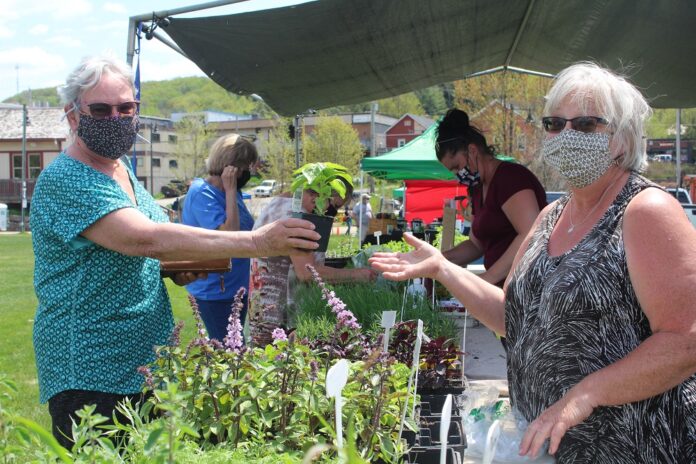
Whether growing mushrooms in a backyard greenhouse or partnering with bees to craft golden honey, the Haliburton County Farmer’s Market (HCFM) is inviting producers to apply for a spot in this year’s market.

“We’re always trying to make our market the best it can be, and have a diverse range of products and vendors,” said coordinator Lauren Phillips.

The HCFM operates markets in Haliburton, Minden and Stanhope, with Minden also hosting an artisan’s market.

The year’s application window closes Jan. 31 and Phillips said while they welcome artisan applications, the market is focused on attracting agricultural sellers this year.

She said selling to local customers connects food growers directly to a local market.

“They bring the community together, people from near and far. It’s a great destination for tourists and locals. Generally, it’s a social gathering.”

To encourage local growers, Phillips said the market will offer a community agriculture table, which vendors share at a reduced fee.

“A lot of our vendors come from south of here,” she said. “We want to see more local agricultural vendors.”

A shorter growing season and less farm land in the County, compared to southern locales around Buckhorn or Lindsay, can make producing in Haliburton a bit tricky. Nonetheless, Phillips said she’s excited by the possibility of locally-made goat cheese, mushrooms and other foods that can easily be made in backyards.

“It never hurts to apply. We’re always trying to make our market the best it can be, and have a diverse range of products and vendors,” she said.

While it’s unclear what health protocols will be in place come summer, Phillips said “most of the vendors and customers are cooperative and supportive and compliant with public health issues.”

Apply to be a vendor by visiting this address: form.jotform. com/203544943276258