Home Blog Page 305

Ontario opens business rebate applications

0

Highlands businesses required to close or limit capacity due to COVID-19 rules can apply for financial assistance.

The Ontario Business Costs Rebate program opened for applications Jan. 18.

Restaurants, gyms and bars can receive 100 per cent rebates for property taxes and energy costs. Indoor businesses currently limited to 50 per cent capacity can get up to 50 per cent of energy costs and property taxes covered if eligible.

“We recognize that these necessary public health measures are impacting businesses, and as we have been since the beginning of the pandemic, we are there to support them,” said Peter Bethlenfalvy, minister of finance, in a Jan. 18 press release.

Highlands restaurants have been forced to offer outdoor and takeout-only service at four different periods during the pandemic.

Shannon Brown, of Till Death BBQ in Fort Irwin, said his restaurant doesn’t qualify for the rebate. He likely won’t need it. He has developed a thriving takeout business serving signature smoked meat dishes. “We were so busy that first weekend I could barely even keep up,” he said.

His partner Joy said the success has also been a community effort. “In the few weeks we have been open we did build some really strong relationships with some of the people up there,” she said. “They are really pushing for friends and family to come and support us because we have built those relationships. We consider them friends and family now.”

For more information visit: app.grants. gov.on.ca/obcrp/#/

Grants connect shops with locals online

0

You can buy nearly everything online with a couple of clicks. But buying local? That’s often trickier.

Thanks to funding from the Haliburton County Development Corporation (HCDC), Local Initiative Project (LIP) grants might make it easier for local shops to get online.

The money partners Haliburton County sellers with free access to ShopCloseBuy. ca, an online local vendor platform.

It’s an online store with an interface similar to Amazon where local sellers can flaunt their wares.

“I love the local part of things,” said Kyla Grexton, who owns knit and crochet company Keep Me In Stitchez. “I’m a firm believer in shopping local, I try to be conscious of where I spend my money.”

Grexton received a grant that helped launch her products on ShopCloseBuy.ca. Funding includes coaching from SIRCH, as well as a spot at their Haliburton Village storefront.

“Businesses that apply and are selected will receive a multitude of benefits,” HCDC said, “including social media coaching and promotion, enhanced online marketing and much more.

” Christine Hewitt of ShopeCloseBuy.ca said the grant “is really going to allow new and emerging businesses to have a leg up,” in efforts to share products. “This platform is a unified one-stop community hub for consumers anywhere.”

Grexton said applying was “fairly easy. The tech support with ShopCloseBuy.ca is amazing.”

Eric Wolfe, marketing and sales coordinator for SIRCH, said he’ll work with businesses who receive the grant on their marketing and produce a video they can use online.

“We’re also here to provide answers for any questions asked,” he said.

Grexton said she’s “really excited” about the future of the online platform. “I really hope the word gets out and we get more vendors.”

Ten out of 20 grants are available. To qualify, businesses must have been operating for a year or less and have earned less than $35,000 in the year prior to applying.

Applications close at the end of February. To apply or find out more visit shopclosebuy.ca or email info@ shopclosebuy.ca or call 705-457-9977.

Roberts want staff savings to help budget

0

Coun. Andrea Roberts would like a projected 3.24 per cent tax rate increase at the County whittled down using 2021 savings from payroll that went unused due to staff changeovers.

During a committee of the whole meeting Jan. 12, director of corporate services, Andrea Bull, presented a third draft of the 2022 budget.

The second draft was brought to the December committee of the whole meeting and included a total levy of $20,825,738, which equalled a 3.21 per cent tax rate increase.

Changes since then have included $40,000 for a new library website, which would be funded by Safe Restart money so have no impact on the budget. There has been an increase in OCIF-formula based funding from $284,000 to $630,334. Bull said that could cover the potential costs of a traffic light project on County Road 21. She had no details but said a report would come to a future council meeting. Other changes included a decrease of $11,967 in social services and housing and an added $2,500 for website licensing.

During a verbal presentation, she added she would like an extra $15,000 to cover anticipated insurance increases this year. Warden Liz Danielsen noted the library board looks to be trimming $15,000 from its projected budget so that timing was good on the insurance ask.

Roberts then said they’d have more information when they knew how expenses shook out in December – to have a better handle on where the 2021 budget came in at.

“We did have quite a staff changeover at the director’s level so sometimes in my mind, savings in that area, they don’t necessarily need to be carried over,” she said. “I would like to see a more fulsome report of where we’re at.

“I know we don’t have to make a decision right now but there are opportunities for savings from the 2021 budget. Generally, we get this big, long report ‘and this amount goes to this reserve and this amount goes to that reserve’ but why would you put savings from staff in a reserve?

“I know it was a difficult year but I would like to see if there’s an opportunity to even bring the levy lower than what it is if there are savings in that regard.”

Warden Liz Danielsen agreed it would be good information to have before finalizing the budget. Bull said she could provide a report.

Coun. Carol Moffatt added, “I don’t think there’s any rush. I think if we can just continue to cross some T’s and dot some I’s then I think we have a little bit of time to make sure that those things are done. It’s fine by me.”

Big-ticket budget items:

• Replacing two data center servers used by County and local municipalities; the County administration core switch; the public works administration copier; upgrading five staff laptops; one-third cost of a new IT technician emergency services.

• Purchase of two ambulances; replacing eight public access defibrillators; ambulance laptop and server contribution; upstaffing the Tory Hill base to 24/7 yearround and development of a master plan for paramedic services planning.

• Addition of funding for two bylaw officers and one plan examiner (six months) to enforce the shoreline preservation bylaw if approved.

• Continuation of the enhanced flood plain mapping project (LiDAR); implementation of climate change mitigation and adaption projects.

• New director of economic development and tourism

• Public works: 33.6km of road projects; six structure projects; purchase of 1/2 ton pick-up, a tandem plow and grad-all; salt storage shed at Highland Grove; roof repair and storage bin at Ingoldsby; garage windows for Eagle Lake buildings; renovations and roof replacement at the registry office.

• Increase in affordable housing target program funding; contribution for the Hwy. 35 development; addition of a procurement coordinator, community safety and wellbeing position (nine months); waste management study; implementation of electronic records management system; finishing implementation of new financial software for the library and the addition of 1.5 FTE staff and sick benefits for part-time staff.

‘Long road back’ says MP Jamie Schmale

0

MP Jamie Schmale has hope life will return to some semblance of normality in 2022, though he warned Canada’s postCOVID-19 recovery will be a difficult one.

During an interview, Schmale said as we move into a third calendar year of the pandemic, the long-term impacts of provincial lockdowns, “lavish” federal spending, and burnout of thousands of health care and education workers would be felt for years to come.

“This pandemic has certainly been challenging, and there are many obstacles we will have to overcome,” Schmale said.

“We need to get our inflation crisis, our labour crisis, our housing crisis under control. We need to bring a sense of fiscal sanity back to Ottawa.”

Late last year, inflation hit a three-decade high – up to 4.7 per cent in November – with many industries looking to recoup money lost during the early stages of the pandemic. Schmale feels the Liberal government has exacerbated the issue through its spending habits, forcing the Bank of Canada to print money at a recordbreaking rate.

Since February 2020, the government’s printing press has created north of $370 billion.

“This is a problem,” Schmale said. “The longer we keep printing, the more the dollar becomes worth less, the more the savings accounts of our working class becomes worth less. It’s a dangerous cycle, and the fear is that once this starts happening, businesses might have to close, we might see more dependence on government. Life is going to become more difficult for everyday Canadians.”

While he agreed with the rollout of programs such as the Canada Emergency Response Benefit and several businessrelated supports during the early stages of the pandemic, Schmale feels the Liberals are taking advantage of the current situation to push through several self-serving initiatives he says will be deficit financed.

In its 2021 budget, the federal government promised to spend $30 billion over the next five years and $8.3 billion per year after that to create and sustain a national child care program, while $17.6 billion was set aside to aid Canada’s “green recovery”, with a target to cut the nation’s emissions to 36 per cent below 2005 levels by 2030.

The calling of an early election still rankles with Schmale too, a $610 million expense he feels nobody wanted and changed very little.

That money would have been better spent addressing issues such as housing, Schmale said. According to the Canadian Real Estate Association, house prices in Ontario increased by more than 15 per cent in 2021, pricing many out of the market.

Schmale said it’s an issue he’s all too familiar with.

“Housing is not affordable now for many Canadians. I think those trying to get into the market are feeling like they’re never going to be able to do it,” he said. “They just don’t see an opening.”

The feds have promised to build, preserve or repair 1.4 million homes over the next four years, but even that may not be enough to keep up with current demand, Schmale fears.

It’s not all bad though, Schmale said, as there have been some positives over the past 12 months.

“We’re one of the world leaders in terms of vaccinations, and we didn’t tip our hospital capacity at any point during the pandemic. There have been a lot of successes,” Schmale said.

“Looking ahead, we have much to do. We need to look after our tourism and hospitality sectors, which have probably been the hardest hit over the past two years. We need to get more people back into the workforce, and really kickstart our economy,” he added. “We have to rebuild our health care sector, address the affordability crisis. There’s a lot of work to do for us to get back on track, it’s going to be a long road back.”

Lack of skilled labour, housing hurting County

0

County councillors discussed a skilled labour shortage and a lack of housing when they approved staff going forward with finding a consultant to create a county-wide economic development strategy during a Jan. 12 meeting.

Director of economic development and tourism, Scott Ovell, said “it is essentially a road map for economic transformation, growth, and yields long-term prosperity for a community.”

He said the final report will have action steps involving the public, businesses and institutions that can be initially implemented over a five-year period.

“While the County has had tremendous success developing and marketing tourism, the challenging realities of today’s economy call for new directions, ideas and approaches to enhance economic growth, attract investment and ensure that opportunity continues to be a significant part of the County’s quality of life,” Ovell said.

In debating the recommendation, Coun. Cec Ryall said for five years now, and exacerbated by the pandemic and explosive growth, a lack of skilled workers has been identified.

“We’re finding we just don’t have enough skilled people. Are there other line items in this strategy, a way to start working with the skill providers, be it the colleges or apprentice board or whoever?” he asked.

“Also, with a high unemployment rate in Haliburton County to put some of our people back to work for businesses that are currently growing and thriving. I just didn’t see that in the report as a line item.”

Ryall noted that businesses said with sufficient staff they could increase sales 15 to 20 per cent.

“And I think that is going to be something that we need to deal with.”

Ovell said the RFP will be designed to be “fairly broad” however “if that is a priority, we can definitely drill down and include that in there.”

Coun. Brent Devolin said one strategy might be encouraging colleges that teach things such as construction and hospitality to come to the Highlands. Coun. Carol Moffatt said “semi-facetiously” it may be a matter of bussing apprentices to Peterborough. But Ryall said what’s needed is qualified instructors, not bricks and mortar to come to the County.

Coun. Andrea Roberts raised the housing issue.

“How does housing equate into something like this because to me that’s one of the biggest obstacles,” she said. “People can’t move here because there is no place to live. So how does housing tie into an economic development strategy?”

Ovell said the lack of housing for potential workers will no doubt be identified in the final strategy but he wants a document that is within the County’s power to take action.

“I don’t want a document that says we need to expand broadband or housing. I want a document that has tactics or objectives that utilize what tools are at the County’s skillset or the townships’ skillset so something in our toolbox so we can actually make a difference.”

Moffatt said, “I wonder what happens if or when we come across something that is beyond our current toolbox. Hopefully there’d be something built-in that would allow for us as a community to go and get or somehow acquire something that we’re missing to move us to the next level to feed the growing needs as opposed to saying we don’t have those skills or skillset or toolbox so we can’t go there. Sort of looking for the biggest blue sky possible. Here are our problems. How are we going to build back to get there so hopefully that would be part of it as well? We don’t have this so we have to go and get it.”

It’s ok to tax growth

0

Now is the time for the County of Haliburton, and the four lower-tier municipalities, to seriously consider implementing development charges. 

In May 2019, the province launched a five-point plan to increase the supply of housing. It included a mechanism to make the cost of development more predictable. 

The More Homes, More Choices Act 2019 and COVID-19 Economy Recovery Act changed a bunch of statutes, including the Planning Act and the Development Charges Act. 

The result is a new and improved funding framework for municipalities to make the cost of building more predicable (for example, my development needs a turning lane and it is going to cost X amount of dollars); and erect new housing faster to provide more housing options.

Basically, townships can help pay for local infrastructure in our growing communities via development charges, community benefit charges and parkland dedication.

Most importantly, municipalities have a Sept. 18, 2022 deadline to change to the new framework.

Former County planner, Charlsey White got the ball rolling in the spring of 2019. County council included $50,000 for a development charges study in the 2019 budget with a plan to release an RFP. It’s been shelved ever since.

Consequently, no local government body now collects development charges but they can apply them on a new development to help pay for the capital costs of infrastructure to support new growth.

Development charges are discretionary. Municipalities can choose whether to use them and, if they are used, which services or infrastructure they want to include from an extensive list of eligible services, such as water supply; storm water drainage and control; specified services related to a highway; electrical power; transit; waste diversion; policing; fire protection; ambulance; library boards; long-term care; parks and rec; public health; child care and early years programs; and housing and emergency preparedness. 

All the municipalities have to do is pass a bylaw to set development charges for different types of development. First, though, a municipality must prepare a development charges background study as set out in legislation. 

We urge our townships to get the ball rolling now as they’ll likely need outside help as municipalities have to calculate development charges separately for each eligible service, or class of service, detailed in their development charges bylaw. 

Community benefits charges are another option but likely would not be that beneficial locally since they are aimed at developments with 10 or more residential units and five or more storeys. The parkland dedication is also likely not to be used as we shouldn’t have to fight for parkland as our County grows. 

However, the time for development charges is long past due in the Highlands.

While they’re at it, municipal staff and councillors should begin to think about a municipal accommodation tax or MAT on rental revenues. This will tie in nicely with work about to get underway on a short-term rental review. 

In many parts of the province, short-term rental operators must collect and remit a four per cent municipal accommodation tax on rental revenues. So, if there is a complaint that 10 people are squished into a two-bedroom cottage and taxing the septic, the MAT could pay for a municipal bylaw officer to go and check it out rather than coming on the backs of taxpayers. On the same subject, it’s time for some serious consideration of short-term rental licensing fees.

Prior to the pandemic, and certainly since, we’ve seen growth put added pressure on our County’s infrastructure. However, there are ways for the growth to give back.

Hike Haliburton winter edition cancelled again

0

By Lisa Gervais

The County of Haliburton is cancelling its Hike Haliburton Winter Edition for the second year in a row.

Director of economic development and tourism, Scott Ovell, cited COVID-19 protocols and regulations in forcing his department, and the County’s, hand.

The decision was made at a Jan. 12 committee of the whole meeting.

The first-ever edition made its debut on Feb. 8-9, 2020 across the County but has not been back as a result of the pandemic.

Ovell said, “the unknowns related to when restrictions will be lifted has impacted planning for the event and staff do not feel it is prudent to market or promote the festival given the current circumstances.”

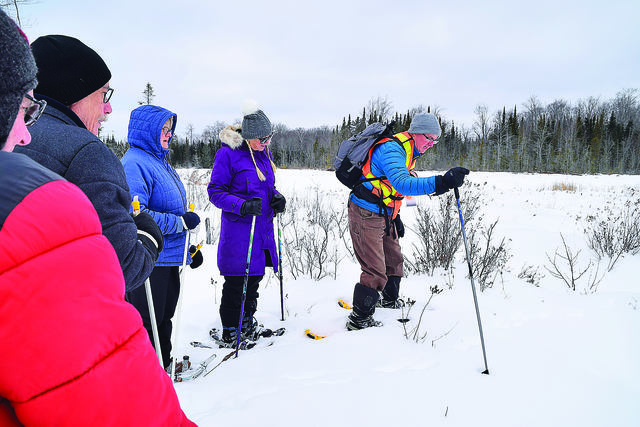
Instead, he said in February and March, pending COVID-19 safety protocols, staff will promote the County’s snowshoe page along with content regarding self-guided hikes to help augment the cancellation of the event.

“Staff still plan to proceed with the Hike Haliburton Festival in the fall of 2022 and will begin planning the program this Spring,” he added. “Should government protocols change again, a report will be brought back to committee (of the whole) from staff to identify alternative options.”

He said his department plans to include the Hike Haliburton Winter Edition in the 2023 operational budget. With plans to spend $10,000 this year, he asked that the money be placed in a reserve for an enhanced winter festival next year.

Ovell said the inaugural version was comprised of 20 guided snowshoe hikes. Three-hundred people  participated for an average of 15 participants per hike. The hikes were spread around the County, with each municipality included and varied in length from 1.5 to 10 kilometres. Five hikes took place on private land. The full hike program and registration occurred entirely online, which saved printing costs.

A few events highlights included: 97 per cent of participants rated the festival as ‘excellent’ or ‘very good’; all indicated they would participate again in future years; 83 per cent (249) of participants were seasonal or permanent residents; 17 per cent (51) were visitors; 58 per cent said they spent money at restaurants during the festival; 26 per cent at retailers and 16 per cent at restaurant and retailers.

Warden Liz Danielsen said, “sadly, it seems to be a bit of a no-brainer. You hate to have to make this kind of decision but it’s definitely in order.”

Mixed bag as students return to virtual learning

0

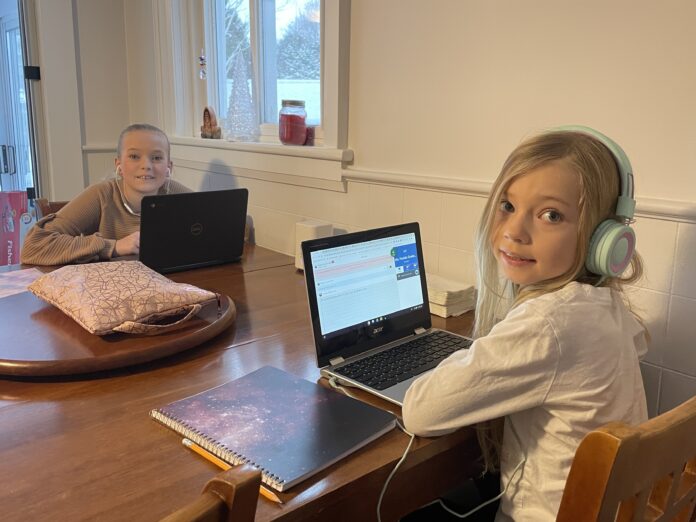
Haliburton resident Cody Sprague decided enough was enough last week, granting his two step-children an extended Christmas break after refusing to once again put them through the “torture” of online learning.

 Attending Stuart Baker Elementary School for in-person learning since September, the kids – a five-year-old in senior kindergarten and a seven-year-old in Grade 2 – were among millions of students forced to revert back to virtual learning after Premier Doug Ford closed all schools in the wake of the latest wave of COVID-19. 

It was announced on Jan. 11 that schools would reopen Jan. 17. Sprague didn’t know that when he pulled his kids. After watching his step-son struggle massively with virtual learning last year, he wasn’t prepared to let that happen again.

“He’s on the autism spectrum, so does need a lot of extra help and guidance. And he easily gets frustrated, which is compounded when he’s sat staring in front of a screen not really knowing what’s going on,” Sprague said.

 “Sitting there on a computer, the kids aren’t involved like they would be in-person. It’s not interesting for them. It’s not engaging whatsoever.”

He said the methods used for virtual learning were akin to torture for young children, criticizing Ford for once again closing schools. “100 per cent schools should be open. They have everything in place. They wear their [masks] all day, they have social distancing, the cohorts. It should be safe,” Sprague said. 

High schoolers’ grades suffer

It’s not just young children who struggle to keep up with the demands of virtual learning, says Lisa MacPherson. 

Her 16-year-old son, a Grade 11 student at Haliburton Highlands Secondary School, has seen his grades fall off a cliff ever since reverting to online in 2020. 

MacPherson said she’s been forced to keep her son home since the onset of the pandemic due to people within the family’s immediate bubble being immunocompromised. “It’s definitely taken a toll. It’s been a struggle for him doing online because there’s very little help. He’s given his assignments and left to it,” MacPherson said. “When he was in Grade 9, he was getting 90s in math. His average now is around 55 per cent. This whole online learning has completely stunted his development.” 

It’s a similar story for Grade 12 student Darian Maddock, who said he was “pretty down” about returning to school this week knowing he’d be doing so virtually. “Ninety per cent of my friends were like ‘great, here we go again’,” Maddock said. 

The high schooler says he’s seen a significant drop in his grades, and an uptick in stress, since the province introduced online learning almost two years ago.” He said he’ll likely return to HHSS next year to retake classes with the hopes of getting better grades before pursuing postsecondary programs, if he wants to move on to post-secondary. 

Maddock said he’d like the provincial government to know that “this really isn’t as easy as it is to say ‘oh well, kids can go back to online school for two weeks’. You’re ruining the flow of everything.”

What’s online learning?

Nicky Parish wishes her children had an opportunity to participate in virtual learning. Living just outside of Haliburton on Harburn Road, Parish said her internet service is so bad it won’t allow even one of her children to log in to their Google Meet stream, never mind all three. 

In fact, prior to the pandemic, Parish didn’t have internet service at her home at all. Having initially been told she was located in a connectivity dead zone, Parish signed up for a $155 a month satellite internet package with Xplornet last summer.

Now, 18 months later, she wishes she never bothered. “It’s a disaster. It’s supposed to be high speed internet, I’m supposed to get 25mbs, but it’s impossible to run any streaming service,” Parish said. 

Instead, her three sons, in Grades 5, 7 and 8 at J.D. Hodgson Elementary, have completed paper assignments whenever they haven’t been allowed to be in school. 

That involved Parish driving to Haliburton twice a week to pick up and drop off work. It’s not a perfect system, but it’s allowed her children to keep up with their classmates. Issues have arisen whenever one of the kids runs into a problem they can’t solve. 

“It can be difficult contacting teachers – if they have an issue with something, it’s all done through email. Then some of the teachers will call once a week to check in,” Parish said. “I have a learning disability, so I struggle and can get frustrated trying to help them. That can definitely lead to issues if we don’t hear back.” 

It’s not all bad

Tiffany English has two elementary-aged daughters who thrived in virtual learning when it was introduced in 2020. 

Now in Grades 3 and 7 at Archie Stouffer Elementary School, English said her kids have shined academically since returning to the classroom in September, something she owes to the “amazing” work of teachers carrying out virtual learning during the pandemic. 

“They had great first report cards after being away from public school for so long, and now excel in some areas at school that they didn’t before we did the online learning,” English said. “For virtual, they are completely self-sufficient. This is very familiar to us, and the girls are excited they get to keep their in-school teachers. Things have went off without a hitch so far. “I would say both settings work for us,” she said


ERs staying open but at a premium

0
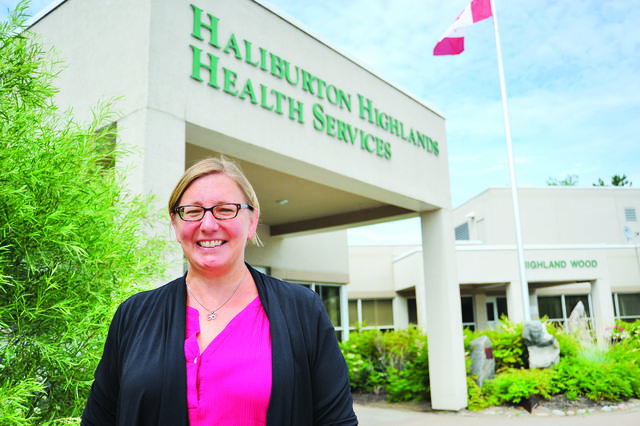
HHHS CEO Carolyn Plummer

The emergency departments at Haliburton and Minden hospitals continue to operate as normal thanks to agency nurses covering staffing gaps, Haliburton Highlands Health Services (HHHS) president and CEO Carolyn Plummer says.

 In a Jan. 7 community update, followed by a Jan. 10 interview, Plummer said, “It’s not something that we want to be doing for the longer-term, but I’m thankful we have that option right now to help get us through this tough time.” 

In a Nov. 22 letter to the community, Plummer said that HHHS’ continued challenges around staffing and nursing capacity meant that it was very likely they would need to reduce service at one of their emergency departments, including closures during certain hours and days. 

Despite Omicron forcing eight per cent of staff to isolate since Christmas Day, Plummer said they’ve been able to stay the course. 

She said they are working with various agencies across Canada to recruit mostly Ontario-based staff for short-term coverage. She stressed that staffing challenges are not new to HHHS and pre-date the pandemic, but COVID-19 has exacerbated it.

 “In the past, it may have taken time but we were able to recruit people to replace folks retiring, for example. Now the pool of available nurses for recruitment is basically non-existent. So it’s become increasingly difficult to find staff to come here and it just isn’t here, it’s everywhere.” Plummer noted in her Jan. 7 community update that major urban hospitals such as Willian Osler Health Systems in the GTA have seen demand for services outpace available staffing recently and Campbellford Memorial Hospital had to close their emergency department overnight on Dec. 24 as a result of insufficient staffing. 

Plummer said the agency nurses “are coming from all over the place. We have some from the GTA, and other parts of the province. We’ve even contracted with an agency out of British Columbia.” She said in some instances, nurses may work at another setting and are coming to earn some extra money. 

HHHS is having to provide accommodations and Plummer said they have been working with AirBnBs, particularly ones close to both hospital sites.

 Asked for an estimated cost to date, the CEO said she was still waiting on that but it will likely be made public at the board’s Jan. 27 meeting. According to Indeed, as of May 1, 2021, the average salary for an agency nurse is $41.56 per hour in Canada. Another employment site said the cost of nursing service provided by an RPN ranges from $45 to $60 per hour, while the rate for a RN is $55 to $80 per hour. Companies can require a minimum number of hours per visit, and discounts may also be offered if organizations hire a nurse for more than a certain number of hours. 

Plummer said the agency nurses do come at a “premium.” She added that every time someone new arrives, although they have nursing skills, they do not know the organization and other staff have to continually assist with onboarding. 

She said the long-term solution continues to centre on recruitment, although they have not had a lot of luck recently. HHHS will be hiring student nurses in future, which have resulted in permanent, full-time hires in the past. 

They’re also having a nursing fair later this month. However, she said they are competing with hospitals across Canada. Plummer is grateful they have not had a problem finding agency staff. She’s also hopeful the provincial government will help HHHS – which is already in a deficit position – to cover the added costs. 

“The direction we’ve been hearing from Ontario Health is we’ve got to do what we’ve got to do to remain open and avoid reducing services and that’s what we need to do for this community as well so we’re hopeful that the incremental costs associated with all of this will be covered, that we will get help with those costs.” 

However, Plummer encouraged the community to stay safe and follow all public health advice. “Things are still precarious. It wouldn’t take much for Omicron to have a real effect on our staffing. So, we’re not saying we’re out of the woods by any means, but we’re doing what we can to stay open and avoid service reductions. 

We are also at the same time preparing for what has to happen if we’re not able to (adequately staff).”

Folk society says thanks to Canoe

0

The Haliburton County Folk Society is saying “thanks” after a bingo-funded cash injection. CanoeFM donated $5,000 to the society from its weekly radio bingo.

After nearly two years of cancelled concerts and reduced ticket sales, society president Walter Tose said the donation will help “keep some live music going in the Highlands during this pandemic and will allow us to keep doing so when we are able.”

The society’s open stage concert was booked for Jan. 8 but was the latest in a long line of concerts cancelled by COVID19.

A Feb. 19 concert featuring local musicians Jess Knights and Cassidy Taylor will likely be postponed too.

In the past, they’ve presented concerts virtually, including a monthly open stage for local musicians.

“We have been able to carry on the open stage in one form or another,” Tose said.

While the CanoeFM donation along with a three-year federal grant, Tose said the society is financially “sound.”

“If we didn’t have the CanoeFM money we’d end up losing income or losing revenue,” he said. “It assures us we’ll be able to continue to do these things once we get out of this current situation.”