
Home Blog Page 269

Lake grapples with Crown land complaints

0
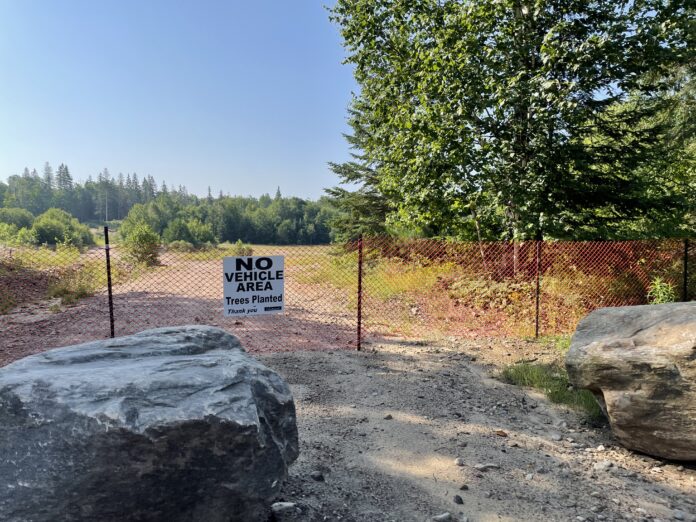
A sandy section of Crown land near Livingstone Lake has been the source of noisy vehicle use and firearms complaints. It was blocked off for reforestation in 2021. Photo by Sam Gillett

ATV racing, firearm use and noisy RV camping on Crown land near Livingstone Lake is alarming residents who live close by. 

It’s an issue that’s been going on for twenty years said Wayne Parker, whose property neighbours the lot. Lately, it’s been getting worse.

 “We’ve had as many as 22 campers in that pit – we’re talking about full RV campers that pull in,” Parker said. He and other residents report loud generators, ATVs running at all hours of the night and firearm target practice less than 200 meters from houses on the lake. 

“That seemed really inconsistent [with the purpose of Crown land use] and disruptive to a whole lot of people.” As vice-president of the Livingstone Lake Association (LLA), Parker said he and other residents don’t want to curtail people’s enjoyment of the land. Parker said he’s an advocate for Crown land, and the public’s enjoyment of Canada’s wilderness. 

An avid outdoors enthusiast and hunter, he’s lived full-time on Livingstone Lake since 2003. “Our primary goal has never been to police our ‘private preserve’,” Parker said. It’s “working together to advocate for responsible use.” 

Multiple LLA members point to firearm target practice as a chief concern, since the slice of Crown land borders a cottage road, only removed by a thin line of trees. 

Parker suspects most people who shoot at the pit, or camp there, aren’t aware of its proximity to residents. “It’s simply a pit as far as they’re concerned,” he said. 

Parker took Algonquin Highlands Councillor Jennifer Dailloux for a tour of the area while people were racing ATVs on the land. Since first becoming aware of the issue in 2018, she says reports have increased. “There’s a true detriment to their enjoyment of the space,” she said in a fall 2021 interview, referring to residents disrupted by noise and scared of the nearby target practice. “[It’s at] the point where there are parents and grandparents who don’t feel comfortable sending their kids along the lane.” 

Just like Parker, Dailloux said she’s not against ATV use or firearm target practice on Crown land. She said it’s an issue of determining which area of Crown land is suitable for these uses. 

MNRF fields complaints 

The Crown land at Livingstone Lake is designated for general use. That means camping, off-road vehicles, firearm use and more is permitted. The Public Lands Act, The Game and Fish Conservation Act and the Criminal Code of Canada legislate hunting and firearm use, such as ammunition protocol and transportation rules. 

It also prohibits other activities on Crown land, like littering. It’s difficult to gauge how many people break the rules. Even camping on Crown land, free to any Canadian or permanent resident, is limited to 21 days per year, however, compliance must be checked by site visits. 

The Ministry of Natual Resources and Forestry (MNRF), handles Crown land complaints such as litter or natural resource damage. Officers have been called to the Livingstone Lake Pit multiple times. 

Amanda Vincent, Parry Sound district resource management coordinator said “complaints received have been investigated and no unauthorized activities on Crown land were confirmed.” In 2021 the area was temporarily blocked off. 

The pit was under contract with Westwind Forest Stewardship, a company that manages contracts for sand and gravel excavation. They used fill from the area for logging roads. Since the contract ended in 2021, Westwind was responsible for reforesting the area. In order to protect seedlings, they placed boulders in front of plastic fencing bordering the pit.

 Westwind Forest Stewardship confirmed it was involved in rehabilitation but declined to comment. 

Joel Bocknek of the Haliburton ATV association put up signs discouraging use of the pit. “Our club has spent considerable time to ensure trail signage, including signage on road links between the trails, is in place and visible. 

This assists riders in navigating the trail systems as well as helping deter riders from going where they should not be,” he said. 

Parker said “we as an association were thrilled. That is exactly the responsible use of this piece of Crown land. To use it as a meaningful resource but not just to take from it, but to put back.” 

Changes needed 

While fences, stones and signs protected seedlings from destruction in the pit in 2021, Parker said restricting access to Crown land isn’t the goal. 

The goal, he said, is long-term access and freedom to enjoy Canada’s outdoors. If complaints continue to rise, he theorizes that access could be taken away. 

Dailloux said it’s time to consider redefining what areas of Crown land are safe to use for what purpose.

 “Ideally what we want across the province is to make sure that Crown land everywhere can be regulated in a way that ensures it doesn’t get degraded and there’s peace and tranquility and enjoyment for all,” she said. 

Parker insisted he supports the use of Crown land and its use by Haliburton residents and tourists alike. However certain properties aren’t suitable.

 “When you see this as a property that is so close to a residential area, it comes into clear focus: this is not an appropriate place to have those completely unrestricted uses.”

Kennedy not running for Dysart re-election

0
Pat Kennedy and Andrea Roberts.

Dysart et al’s deputy mayor Patrick Kennedy will not seek a second term in office in 2022. He said the decision comes with “mixed emotions.”

Kennedy served as deputy mayor and a member of Haliburton County council since 2018.

“It has been a distinct honour and a true privilege to serve the people of Dysart and Haliburton County,” Kennedy said in a May 19 letter to The Highlander.

He said the choice was also a “family decision” which will allow him and his partner, Cheryl Kennedy, time to invest in other areas of their lives.

“It is also a chance for Cheryl and I, who has been my rock throughout this journey and who has been by my side, to spend more time with our four grandchildren and do some travelling while my health allows it,” he said.

Kennedy was diagnosed with cancer in 2021.

“I have been blessed with a health team who have worked hard to provide me with the best care and ongoing treatments.  Support from family and friends as well as from the community has been incredible,” he said.

Kennedy grew up in the Highlands and previously served as chief of paramedic services for Haliburton County until retiring in 2014.

“I want to thank Mayor Andrea, my fellow councillors, and staff at both Dysart and County levels for their patience and support these past four years,” he said.

 Trainee builders’ bunkie up for auction

0
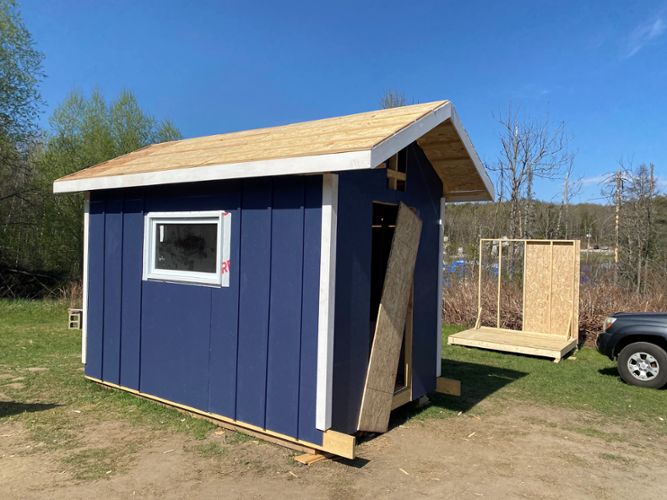
Photo submitted by SIRCH Community Services

SIRCH Community Services’ Basics of Carpentry Trainees tested their skills by constructing a bunkie complete with a cedar door, glass windows, and a steel roof.

Now Highlanders can place a bid on the building. 

Student Marhti Crowley said it was challenging but rewarding to build. 

“It is surprising how capable a group of people who have never touched a power tool in their lives can get with a little bit of training and the right kind of training,” she said. 

The auction is live on shopclosebuy.ca and will run until the end of May. The bunkie has an estimated value of $7,999.00. It’s 104 square feet, small enough to be placed without a building permit. 

Instructor Doug Norris said he’s proud of the students in the program who have spent months honing fine carpentry, framing, finishing, sanding, measuring and cutting skills. 

“Watching the whole thing emerge out of little pieces of materials and skills. How do you cut something, how do you fasten something, and then the whole structure rises up,” he said. “It’s very satisfying to see that.” 

The program was also unique, Crowley said, because it enrolled slightly more women than men, and many of the participants were older. 

SIRCH will host a Basics of Carpentry graduation Thursday May 19 at the SIRCH Bistro on Highland Street, starting at 5:30 p.m.

Haliburton County showing its age

0

The average Highlander is more than 10 years older than the average Ontarian, according to recently-released 2021 Census data.

Compared with the provincial average of 41.8, the average Haliburton County resident is 52.8 years old.

Statistics Canada data released April 27 shows the Highlands’ older age groups

are growing, with 35.2 per cent of the population, or 7,250 people, over 65. In 2016, 32.9 per cent of the population, 5,940 people, were 64 or older.

Some age groups didn’t see much of a bump.

There were 1,720 kids aged 0 to 14 years in 2016, and 1,915 in 2021. Other key demographics in the Highlands’ workforce shrunk, when compared to overall population numbers.

For example, there were 675, 20-24 year- olds in 2016 and 680 in 2021, a 0.7 per cent increase. Haliburton County’s total population has increased 13.9 percent since 2016.

People observing sectors of Haliburton’s economy say the data reveals what life in the County may look like in coming decades and highlights issues already at the forefront of public planning.

HHHS plans for aging residents

Haliburton Highlands Health Services CAO Carolyn Plummer said her team is planning for the future with the County’s population and age distribution in mind.

“We’ve been looking at both of those statistics as we look towards the future,” she said. She points to HHHS home care services and its long-term care homes as “critical” to an older population that’s expected to grow. She said the services will complete planning exercises to figure out how HHHS might need to evolve to handle a growing population.

“Community consultation will be part of that.”

She added that many Highlanders have come to rely on HHHS emergency rooms for primary care. Local family doctor waitlists can exceed 1,000 people. Part of the planning process, Plummer said, will be considering “are there different service models we can consider recognizing the resources are definitely not unlimited?”

She said staffing shortages present a more immediate challenge than demographics or population growth. She added finding housing seems to be a primary barrier to young healthcare workers coming to the area.

Finding a place to live

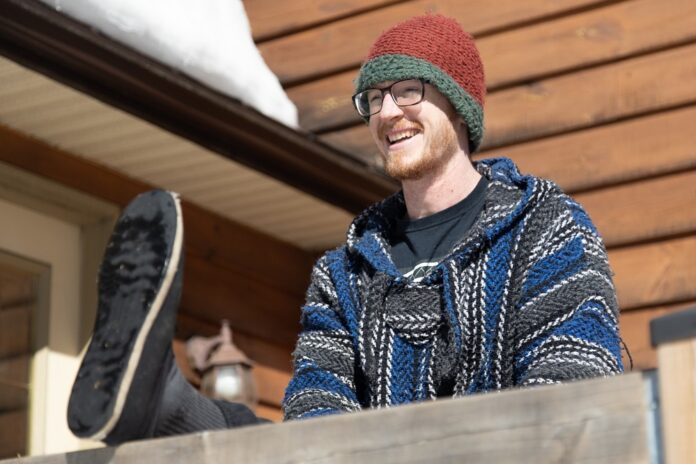
Alexander Dacunha wanted to leave Hamilton behind. The 25-year-old part- time paramedic wanted to be closer to the outdoor areas where he leads outdoor education trips.

“I came up here to look for a better quality of life and cheaper rent,” he said. But he couldn’t find a place to live for months, now renting a room in a retired couple’s home with his partner.

“There needs to be some sort of incentive to rent long-term. It’s completely saturated by Airbnbs,” Dacunha said.

The County of Haliburton is beginning to recognize the challenge and is looking into regulating things such as Airbnbs.

Dachunha said it seems Haliburton’s housing market is monopolized by an older generation who often live in under-utilized homes or rent them out to vacationers. According to the Census data, 77 per cent of single-detached houses in Haliburton County are occupied by fewer than three people, compared to 50 per cent of single- detached homes in Ontario.

He’s frustrated by the resistance to developments in places such as Haliburton village, which he said are often sparked by landowners.

“It is just preventing change in the community,” he said.

Workforce challenges

Haliburton Highlands Chamber of Commerce executive director Bob Gaudette said he suspects the Census data may not capture all the new faces to the Highlands.

“We know a lot of people moved up here during the pandemic,” said Gaudette, mentioning how work-from-home employment makes moving to Haliburton County from urban areas more viable.

Based on the Statistics Canada data, he said “it looks very much like we’re a retirement community — there’s a lot of truth to that.”

He said the Highlands’ expanding leisure economy paired with a hot real estate market could drive up the percentage of younger families moving to the area.

“This is one direction it could go. If we stay on the track of property values increasing and more investment … that aging population might be pushed out to an area that’s more affordable to live in.”

However, he said the labour shortages widely reported across the Highlands have been holding chamber-connected businesses

back from expanding or fulfilling the sky- high demand for construction services. “There’s this resource that is finite,” Gaudette said. “That’s the amount of locally available labour.”

At an April 28 Haliburton Highlands Secondary School (HHSS) job fair, Home Hardware district manager Glen Rickerby said it’s been “extremely tough” to hire seasonal and full-time staff since 2020, with both County locations seeking to fill a combined 40 positions. He received approximately 300 resumes in 2019 and 40 in 2020, and said they’ll likely be understaffed this summer.

It’s likely the labour shortage won’t disappear anytime soon. Some of the issue is generational: the Baby Boomers are exiting the workforce across the country.

“Never before has the number of people nearing retirement been so high,” stated Statistics Canada in an April 27 website post.

The percentage of the County likely to be in the workforce (aged 15-64) has shrunk to 55.4 per cent, from 57.6 per cent in 2016. According to the Workforce Development Board, retail, accommodation and food services are the biggest employers in Haliburton.

The number of people in the County’s workforce who are most likely to seek those roles, such as jobs at camps, restaurants or lodges, hasn’t grown at the same rate as the population as a whole.

Fewer high schoolers

Indeed, at HHSS, the population has declined.

“In all schools across Ontario and at Haliburton Highlands Secondary School, there are empty classrooms,” said long-time HHSS principal and current board trustee Gary Brohman. According to Trillium Lakelands District School Board data, there were 589 kids enrolled at HHSS in 2011. In 2021, there were 450.

Brohman said he suspects it’s access to good paying jobs that might prevent young families from moving to the area, or bolstering high school numbers. “The jobs are the jobs, but there are only so many building jobs, hydro jobs, and social services jobs. I would say the school system gives you a good indication of the economic parallel between people coming here to work and retirement people coming.”

Green Party’s Regina the ‘musician politician’

0

A familiar face in Haliburton County is running for the Green Party of Ontario in the June 2 provincial election.

Tom Regina has lived in the Highlands for more than 30 years. Many would know him from teaching music and being the head of arts at Haliburton Highlands Secondary School. He’s also a founding member of two community choirs, a local music festival for students, and the Highlands Summer Festival.

“I guess I’m the musician politician,” Regina said during a recent interview.

Now retired, Regina said he was always interested in politics, especially at election time. And he was a Liberal Party supporter for more than 40 years. However, he said he felt abandoned by the party when the federal Liberals dropped electoral reform, an issue near and dear to his heart.

“I looked around and I thought ‘where do I really exist?’ and I can see that the Green Party policies are built on environmentalism and equity and respect in a way that I don’t see in all of the other parties so that really made me feel like ‘yeah, that’s something that I want to do a bit more’.”

With time on his hands, he contemplated volunteering, thinking he could put up some election signs or go door-knocking with a candidate. Then the local Greens formed a constituency association. He joined the executive and they started looking for candidates. He said the small group started looking at each other as potential runners.

Regina said he saw the appeal of running a local candidate. Opting for university students with some link to the area, as has been done in the past, he found lacked “gravitas.” So, he said, “fine, put my name in, let’s go and see what happens.”

He said he has some goals.

“If I’m going to put my name down and put signs up and knock on doors, I’m going to look at the possibility that I could be the MPP so it’s not fair to not think that for the electorate,” he said.

Regina added he’d like to see the association grow in size, attract more young people, increase donors and get a higher percentage of the popular vote than any other Green candidate in the riding before – “that would be enormous.”

As for the Green Party of Ontario platform that focuses on jobs, people and planet, he said, “without an environment, and without taking care of the planet, there’s nothing else. There’s no business, there’s no food, there’s nothing for us on a burnt planet. It is very much at the heart of all the planning and all the policies.”

But it isn’t the only thing. Going door-to-door, he said, “people are really concerned about affordability, housing, what’s happening with health care, and about being able to feel secure. Those things have to be dealt with. If you’re going to be in government and you’re going to govern you have to deal with a lot of different things. You can’t be a single policy party and get anywhere.”

He added that for him, government through consensus is key.

“You need to walk away from a decision in which everyone might not get exactly what they wanted but can live with. We don’t have enough of that.”

NDP focusing on core values: Doyle

0
Haliburton-Kawartha Lakes-Brock NDP candidate Barbara Doyle. Photo submitted.

Barbara Doyle hopes to build on the NDP success of the 2018 provincial election, when the party captured 26.5 per cent of the vote, finishing second locally to the Progressive Conservatives.

“I’m in it to win it,” Doyle said. “I absolutely would like to unseat our incumbent Laurie Scott.”

The director of the Old Gaol Museum in Lindsay added she thinks it’s time for a change in the riding, which has been historically Conservative “with no real measurable changes in improvement and services other than basic normal budgetary issues that go across the board.”

Doyle said the area is changing and growing “and we need to grow with it but we also need to take care of the people who are already here and have been living here for years and not being taken care of in the way they should be.”

She said her goal is to reflect voter viewpoints about the changes and the need for core stability around issues such as housing, health care, educations and day-to-day affordability. She panned the Progressive Conservative budget, saying there is not a lot of support in those sectors. She keys on housing and the high cost of living as major local issues.

The Highlander asked about the province’s role in housing, offering an example of how the Ministry of Transportation (MTO) is holding up an affordable housing development along Hwy. 35 in Minden.

“It’s interesting to me that large developers can get MTOs’ push-through really quickly … why are we giving preference to big dollar developers rather than for supportive housing that property would provide for?

She said Bill Switzer was generous in donating the land to Places for People and now it’s just sitting awaiting MTO approval when “we need shovels in the ground right now and infrastructure right now. We have 1,700 new units needed in Haliburton County with housing waitlists of seven to 10 years. That is unacceptable.”

She said the provincial government has to work with municipalities to create supportive housing but has to take the profit out. She added there needs to be action on housing affordability, such as help to make larger down payments for first-time home buyers, rent assistance and rent controls.

Asked by The Highlander about the province funding an expansion of the privately-owned Extendicare Haliburton, Doyle – who co-founded the Kawartha Lakes Health Care Coalition – said although more long-term care beds are needed, “I definitely don’t support for-profit long-term care beds. We have to take the profit out of health care. We have to make sure that nobody is, at the end of the year, worried more about their dividend share than our loves ones.”

The NDP are proposing to phase-out private long-term care facilities within eight years, and provide more and better paid full-time staff. They also want to provide proper supports so more people can age at home. That means more full-time PSWs with a $5 an hour wage increase. They’re looking at caregiver credits, and relieving burdens on municipalities so they don’t tax people out of houses.

Other NDP platform items include an immediate 20 per cent increase for ODSP and OW clients, gradually increasing minimum wage to $20-an-hour, regulating gas prices, reducing Hydro costs, better public transportation and expanding universal health care.

“We’ve learned that when people are supported in their communities, when they are secure in their housing, in their ability to put food on the table, that they have good jobs, the whole community does better. We want to bring our focus back to those core values.”

Time to register for Ontario Senior Games

0

Haliburton County’s district 11 is looking forward to hosting Ontario Senior Games Association (OSGA) 55+ events this summer.

Spokesperson Mary Johnson said the games are open to men and women who are 55-plus years of age as of Dec. 31, 2022.

Men’s’ and ladies’ walking will kick things off on Wednesday, June 1, starting at 9 a.m. from the Haliburton docks.

The locals will host golf for men and women at Blairhampton Golf Course on Wednesday, June 8. The rain date is Tuesday, June 14. It features a shotgun start from 9 a.m.

Next up will be men’s’ and ladies’ doubles and mixed doubles tennis. This will be held at the Stanhope courts starting at 8:30 a.m. on Tuesday, June 14. The rain date is June 16.

The ever-popular pickleball is set to be played via men’s and ladies’ doubles and mixed doubles at the Stanhope courts, also an 8:30 a.m. start, on Wednesday, June 15. The rain date is June 20.

The deadline to register is May 18. Johnson said the games are about being active and getting involved in the community.

“Do you have the time to have fun in a competitive, non-threatening setting? Are you seeking opportunities to socialize and meet new friends? Do you feel young and energetic?” she said of the OSGA mission.

People can qualify to go on to regional games and Ontario 55+ games. There are 36 districts across the province, with 9,000- plus participants and 500-plus volunteers.

The games were incorporated in 1997 and there are traditionally 18-plus summer events and 10-plus winter events. District 11 comprises Muskoka and Haliburton.

Inquiries: Mary Johnson at 705-754-1884.

Mental health program ‘empowering’

0

A new program designed to connect people with lived experience of mental health issues, with others that are actively suffering, has been a big hit in Haliburton County.

The Canadian Mental Health Association Haliburton, Kawartha, Pine Ridge launched the H.O.P.E. Learning Centre in April, offering a wide variety of recreation and educational courses to local residents that promote recovery, empowerment, possibility and connection.

Shellie Preston has been working on the initiative since the beginning of the year. Based on the organization’s recovery colleges model, Preston said she sees a lot of potential in the venture and called on people from across the Highlands dealing with mental health concerns to reach out, share their experience and get involved.

“This whole thing is about collaboration and communication … We bring people with lived experience together with mental health professionals and those looking for help to build programs and an overall curriculum that caters to everyone’s needs,” Preston said. “Everybody gets their say.”

Around 45 people across the region signed up for H.O.P.E. Learning Centre’s initial intake last month.

“We ran a program on experiencing the power of music, we helped build facilitation skills. We had one, which was quite popular, on challenging isolation and loneliness, another on conquering negative thoughts, being more assertive and self-expression,” Preston said. “They were quite thought-provoking.”

Looking ahead to the summer semester, Preston said there will be courses focusing on art therapy, peer discussion, photography, and sports.

CMHA has struck a partnership with area resident Kelly Outram to run a movement and meditation class outdoors at Rotary Park, something Preston said she’s particularly excited about.

“Being outside, in a positive environment like that can do so much for someone’s mental health. We’ve partnered with Kelly, and we’re looking to collaborate with others from Haliburton County to build on our options and offerings to our community,” she said. “Our hope is to have something for everyone. So, if you’re feeling like you’ve lost connection and are wanting to be involved in something with likeminded people, who are non-judgmental, in an environment where you’re supported and valued, this is for you. We want to empower people and build them up as much as possible.”

Worth noting too, all programs run through H.O.P.E. Learning Centre are free. Participants need only register, which Preston said can be done over the phone or online. There are options for both virtual and in-person participation.

Jack Veitch, community engagement and education manager with the local CMHA branch, said this new venture is a long-term commitment.

“For years we’ve been involved in peersupport delivery and helping people with lived experience share their voice. Now, this is sort of like an evolution. We’re ensuring these people have the opportunity to help others on their same journey of recovery,” Veitch said.

Preston added, the real goal is to have this program running full circle. Start off by getting these courses up and running, have people sign up, join in, learn and then, eventually, be kind of like that next generation who can share their knowledge and lived experiences with other people. Almost like an ongoing, never-ending cycle.”

To learn more, visit cmhahkpr.ca/h-op-e-learning-centre, or email hopelc@ cmhahkpr.ca.

Rising Thymes continuing Minden local food ‘tradition’

0

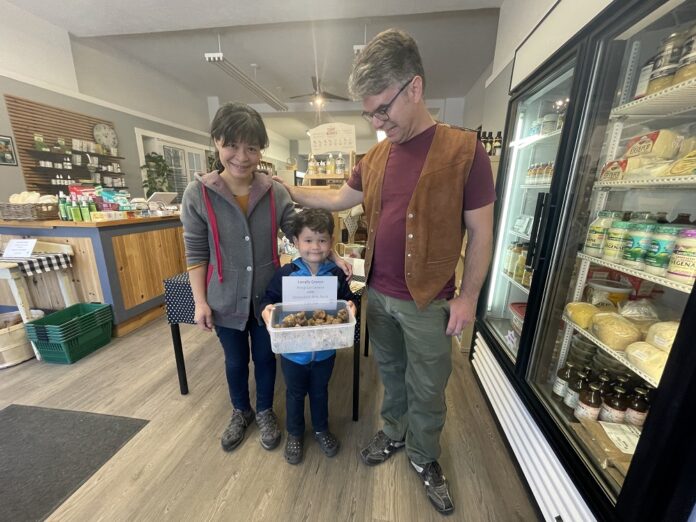
Rising Thymes has replaced Organic Times on Bobcaygeon Road in Minden.

Owner Yuki Renel said she’s keen to “keep the traditions” of the wholefoods shop, while adding new local food and snack options too.

Rising Thymes’ shoppers can expect to find local olives, dozens of bulk food bins, kombucha, fresh sprouts, fairtrade coffee, organic soy sauce and more.

Renel hosted a grand opening May 7. She worked for previous owner Deborah Lyons in 2020. Lyons now operates the Organic Times Emporium in Haliburton, but has helped Renel with the transition as she expands the store’s food offerings.

Also operating Rising Sun Gardens, an organic farm, Renel said she brings a deep appreciation for local produce to the store.

“I couldn’t find the vegetables I used to eat in Japan, so I started to grow my own,” she said.

“I truly believe vegetables from the soil have the best nutritional value and taste.”

Whether sweet potatoes from Kinmount or artichokes from her own garden, Renel said it’s important to know where and how food is grown.

Her partner Sebastian Renel, who has been helping around the store, said much of their produce “comes from local people, from their heart.”

She hopes to bring in more local producers too, perhaps adding fridge space.

“I was hoping to put my vegetables in a store, but it was not easy,” she said. “I didn’t expect to be the one to provide the space to others.”

Renel said she’s gotten support from customers, many of whom have been longtime regulars.

Alongside organic food, the store has become a destination for gluten-free and lactose-free products.

Sebastian said, “we’ve made some very nice connections through this. It’s great, you get the feedback from the community.”

Community celebrates S.G. Nesbitt’s facelift

0

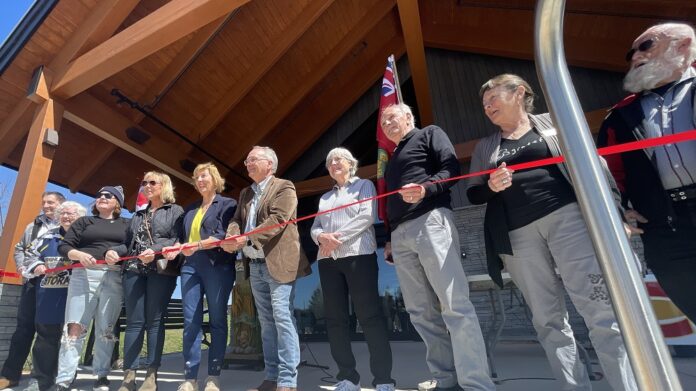
With a snip of his scissors, Mayor Brent Devolin officially welcomed the Highlands to the S.G. Nesbitt Memorial Arena.

Devolin, councillors and government representatives were on hand May 7 for the arena’s grand opening, cutting the red ribbon two years after the project was finished.

COVID-19 restrictions kept the arena closed for months. The township decided to hold off on a formal celebration until capacity limits were lifted.

“I didn’t want to do this without all of you here,”

Devolin told the crowd outside the arena.

Devolin thanked the Rotary Club of Minden and others who volunteered to deliver vaccines at the arena before it was open to the public. He also handed out mementos to community members who played key roles in the refurbishment.

“Facilities like this don’t get built without help from a lot of people,” he said.

MP Jamie Schmale said, “there has been a lot of challenges … the community and council and staff had to push through, and they did a fantastic job. I think the whole community can appreciate what this arena does for the present and also for the future.”

MPP Laurie Scott said she was happy to have a chance to celebrate the community hub, adding that the Haliburton County Huskies have been a highlight of its early history.

“When you needed a boost, it was great to have a hockey team and it was great to have a facility to host them,” she said.

Rotarians served hotdogs and hamburgers while staff hosted a free-throw contest, the gym echoed with the sound of pickleball and the Minden Skating Club showcased ice dancing routines.

The Highland Storm hosted a boisterous scrimmage before the Huskies took to the ice with community members.