
Home Blog Page 282

Celebrating 15 years of Rail Trail community

0

It was a blustery winter night at Camp Wanakita in February 2007.

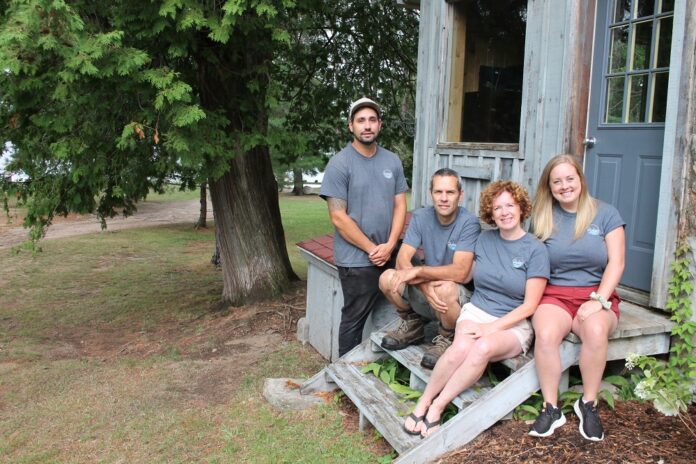
Eighty-five people attended a community supper that sparked a new Highlands organization, The Friends of the Rail Trail (FoRT).

Chairperson Pamela Marsales described the night 15 years later at another community supper, this one to celebrate the group’s 15th birthday.

“We just came up with the slogan ‘connecting community and rail trail,’ and that’s what we’ve been doing ever since,” she said,

The dinner at SIRCH was titled “It Takes a Village,” a name which Marsales said is the theme of FoRT’s anniversary year.

The “village” has been a central part of FoRT’s history.

“We try to animate our community public green spaces by bringing history to life, and encouraging an appreciation of our natural habitats,” said Marsales in a prior interview.

The group made two documentary films sparked by an open mic at the first dinner at Wanakita. FoRT recorded people’s accounts of the railway’s history. DVDs of the documentaries quickly sold out.

“Every time we screen them it’s been to a standing-room audience,” Marsales said.

Inside a thick blue binder, Marsales has collected notices and flyers for dozens of FoRT events throughout the past decade and a half.

“Dark skies in the Lochlin Flats,” for instance, brought more than 77 people to a sparsely populated section of trail late at night in 2010. Alongside retired astronomer Dr. Carl Bignell, attendees gazed at the fiery Perseid meteor shower, sipped coffee and munched on desserts.

“It was a huge success,” said Marsales. FoRT has held art walks, countless bike rides, farm tours and even a canoe outing beside the IB&O rail bed during its 15 years.

Ute Wright, who helped found the group, said the trail has been a way to meet people in the community and relax amid nature.

“It was a link to the wider community,” she said at the March 6 event. “I learned about railway history, nature, community and pioneer history.”

Throughout its history, FoRT has been supported by the Haliburton County Development Corporation local initiative program.

“It’s one of those really great examples of a community resource that continues to need a bit of a [financial] injection. The energy Pamela has put in over the years is very admirable,” said HCDC program coordinator Heather Reid.

For the group’s 15th year, they’re planning 15 “Sunday Rambles,” starting March 27 at the town docks on Head Lake at 11 a.m. They’re suitable for families, pet owners, and people of all physical abilities.

Grant gives Land Trust new view of nature

0

During COVID-19 shutdowns, many Highlanders ventured out to the Haliburton Highlands Land Trust’s two public nature preserves, the Dahl Forest and Barnum Creek.

Thanks to the Ontario Trillium Foundation, the Trust is equipped with a revamped website and a new video to introduce the public to these ecologicallyrich natural areas.

At a virtual event March 3, HHLT chairperson Shelley Hunt explained how the grant helped the organization “rebuild, recover from and adapt to the impacts of COVID-19.”

A new website makes navigating HHLT content more streamlined.

For example, there is a new section detailing the Trust’s efforts to protect the “Highlands Corridor” of sensitive wetland habitats.

Hunt said the site is “vastly improved” and will enhance the HHLT’s community outreach.

On the new website is a video, produced with Ontario Trillium Foundation funds.

Conservation in Action is a seven-minute production crafted by videographer Brad Brown. It showcases the two areas and includes interviews with HHLT members, trail users, Dysart mayor Andrea Roberts and more.

MPP Laurie Scott attended the virtual event and said “community engagement and education is so important to the mission of the Haliburton Highlands Land Trust and I’m glad this funding can help support local initiatives community members are passionate about in Haliburton County.”

The Trust also debuted Wonder in the Woods, a video in which Hunt delves into Haliburton’s forest ecology.

“Like any good story, nature is messy and complicated,” Hunt said in one scene. Produced by Sticks and Stones Productions, it takes viewers below the forest floor to explore fungi, ancient plants that dot local meadows and even the unusual food storage habits of birds.

She said both videos will act as an introduction to HHLT.

“It’s something that will live on our website and a way to connect with us if they’re not getting to an in-person event,” Hunt said of the video.

Both videos are live on the HHLT’s new website: haliburtonlandtrust.ca

Barnes retiring but heart will never leave food bank

0

It’s a Monday morning at the Minden Community Food Centre and five-year-old Jack is the boss for the day, his grandmother Joanne Barnes jokes.

She’s watching the toddler while his mom and newborn baby sister are at an out-oftown appointment.

Barnes, who officially retires as manager of the food centre after 18 years March 30, is looking forward to spending a lot more time with Jack and her five other grandchildren, not to mention getting to her mountain of brand new books she’ll have the energy to finally read. She said Jack is already delighted at the prospect of having sleepovers any time as well as a summer at the pool.

“I know in my brain it’s the right time because the job is exhausting me,” Barnes said. “After a hard day here, I go home and I fall asleep at 5 p.m. until 7.30 p.m.” However, she added “My heart will never let go because I’ve helped people since I was a kid. So, it’s mixed feelings.”

She gave her notice in October, wanting to fulfill the centre’s Christmas hamper obligations first, and ensuring replacement staff. The new manager is Jean Munroe and assistant manager Victoria Lawson. Barnes said they’re keen “and I think will form a good leadership team.”

She added her daughters often tell her she’s lived her life backwards. She stayed home to raise her children and then cared for three senior grandparents. It wasn’t until after they died that she returned to church and accepted a call for help at the food bank. She quickly became the manager.

She recalled there were not a lot of systems in place so she began creating them and putting them on paper.

“When I first started, people came in and we handed them a couple of bags of food and that was it.”

Much has changed and grown since.

For example, Barnes said they have found many other ways people need help. Over the past five years, they have accepted donated wheelchairs, walkers and bath chairs, which are loaned to community members who wouldn’t be able to afford to rent, let alone buy them. They’ve found and repaired hearing aids, eyeglasses and teeth. “Any extra major expense they had no way of handling. I would advocate on their behalf with other agencies and we would all come together and pool our resources to come up with funds to help people with these things.”

During the pandemic, they worked with the County’s food banks as a distribution centre, utilizing donations from places such as CanoeFM. She can’t say enough about the community, and the food centres’ workers and volunteers over the years.

She was also instrumental in setting up Fuel for Warmth after visiting a mother who said her children had to wear their snowsuits inside because the family could not afford to both heat the house and feed itself. She heard of seniors wrapping up under several blankets with a pet to keep them warm.

Barnes was asked to describe a good day and a challenging day.

“When somebody out of the blue that you assisted years ago comes back in and says, ‘you really helped me when I was at my lowest. And I’ve just come in to tell you and to thank you for what you did’.”

She does not get into details of bad days, simply saying, “Some days are horrific and you just want to go and cry. And that’s part of why it’s time for me because I don’t get over things as quickly and it weighs heavy on my heart.”

Barnes said the work has been more like a calling. Growing up she recalls her family was not well off but if there was a family with young children in need, her dad was there either with a few dollars or some food and never expected it to be repaid.

“So, I learned that very early on. I was always taught to help, especially the underdog, the kid that’s picked on … in adult life, I’ve always felt great when I can help somebody.

Upside Brown turning the lens on local

0
submitted

Some say Camp Rock, filmed at Camp Wanakita in 2007, launched the careers of Demi Lovato and the Jonas Brothers.

It inspired Brad Brown’s career too.

It was the local videographer’s first job in the film industry, thanks to a connection with Tammy Rea of Sticks and Stones Productions.

Fifteen years later, after a couple of years traveling regularly from his home in Minden to the GTA as part of his production company, the pandemic halted most of his work.

But there was a silver lining.

“It let me take a step back and reassess and see what I wanted to do,” Brown said.

What he wanted to do became clear: working closer to home in Haliburton County.

He said a video with a friend who led ice fishing tours “reintroduced himself to the County.”

Since then, he said one project has led to another. Throughout the pandemic, he’s worked with musicians, dancers, businesses and non-profits through his company, Upside Brown Production Services.

“It’s been really awesome, I can’t be happier to be working locally. I love that aspect of it,” he said.

That’s gotten easier over the years. Previously, it was faster to drive footage to Toronto rather than upload large files, with Haliburton County network speeds painfully slow.

All that’s changed, clearing the way for an efficient workflow within the Highlands.

“As I came back and started doing these video jobs, that’s an aspect of the job I like,” he said. “I get to learn about these things I didn’t necessarily know were here. There’s so much going on here.”

If you’ve watched videos from the Haliburton Sculpture Forest, Abbey Retreat Centre or musicians Nick and Benton, along with numerous other community mainstays, you’ve likely seen Brown’s work.

He said grants that emerged throughout COVID-19 might have equipped businesses and local groups with the funds to pivot to video, a decision that even a few years ago might have seemed daunting.

“People are realizing how important video is. Not that people didn’t know that before, but everyone’s a lot more aware of it now,” he said.

As a high schooler in Haliburton, Brown said he couldn’t wait to leave. Now, he said working in the County has shown him the community’s diversity.

“There’s a lot of great organizations and people passionate about what they do,” he said.

As the County’s population spiked by nearly 14 per cent in the past years, it’s likely Brown’s work is viewed by people who might be eyeing the Highlands as a tourist destination or even a place to live.

“I think it’s a responsibility I don’t take lightly. I think it’s important to show everything in the best light,” he said.

The Wolf Moon rises over the Highlands

0

Reed Sacharoff needed a break when he left Toronto for his northern British Colombia home about two years ago. Then, COVID hit, forcing him to stay longer than planned. However, it gave him time to think about what he wanted to be doing with his life.

Once he got back to Toronto, he said he was speaking with one of his female friends who had just had a child and was also going through big life changes.

“I was telling her ‘I really just want to find a house in northern Ontario somewhere with commercial zoning on the main floor. I can open up a shop and live above it’ and that afternoon or evening I went on to Realtor.ca and saw this house was available.”

This house is at 15 Newcastle St. in Minden. In its most recent incarnation, it was Carole Finn’s artist centre before she left for B.C.

Sacharoff was familiar with the Highlands, having friends on Boshkung Lake and in Eagle Lake. Although he had not spent a huge amount of time in Minden, it was still somewhat familiar.

“I ended up coming up a couple of times after reaching out to the realtor, fell in love with the place, exactly what I was looking for and Carole had pretty much set it up for me.”

He has painted the interior and made it his own thanks to thrift shop finds, Facebook marketplace and IKEA.

When he moved, he had the security of still working remotely for Loblaw Digital so had an income while he created The Wolf Moon.

He describes it as “a queer-owned gift shop in Haliburton County focused on supporting Black, Indigenous, People of Colour (BIPOC), 2SLGBTQ+, femme and female-owned small businesses.” In January 2021, he launched an online shop and opened the storefront in June 2021.

He said while opening a new business during a global pandemic has had its stresses, he also incorporated it into his business plan.

“I knew there was a lot of people coming up here. I knew people were spending more time at cottages and such. I knew there was going to be a larger market up here for the products I was selling.”

His original idea was skincare and wellness as well as household products, but it has expanded. He believes in ecoconscious brands. He is also a supporter of local businesses, with Living Libations, Woodsmoke and Lore and Wallings Studios having places in his store. “

As I’ve been having people come in, I’m just asking them what they are looking for in this area,” he said. “I’m tying to figure out what’s missing up here while trying not to step on other (competitors’) toes.”

He said his products range in price from $2 to $150 because “I wanted it to be accessible to everyone. I know this area is not one of the wealthiest areas. It’s nice for someone to come into here and be able to find something. Anyone can come in here and find a lovely gift for someone.”

He also wants it to be a safe space, “a space I would have loved to have growing up in a small town. I am wearing that queerness on my sleeve and making sure people understand my political views.” He has a sign outside that reads, ‘stomp out racism, stomp out homophobia, stomp out transphobia’. “There’s no space for that kind of talk in my world.”

For more, see the online shop thewolfmoon.ca or on Instagram at instagram.com/thewolfmoonshop/. For now, he is open Friday to Monday.

Epilepsy fundraiser hoping for last big year

0

For a decade, hundreds of Highlanders gathered at HHSS each summer to run and walk for epilepsy research.

Now, the Woudstra and Pogue families are bringing Katie’s Run to a close. “It’s an emotional ending to a big thing we’ve done for the last 10 years,” said Katie Woudstra, whose epilepsy diagnosis inspired the event. 

The family made the choice due to a recent move to Nova Scotia, the uncertainty of the pandemic and Katie’s ongoing health challenges. 

The Woudstras expressed thanks to attendees, event sponsors and prize donors who have made the event possible.

 “The Haliburton community has been so supportive of this run in the last 10 years and stood by us,” said Katie. 

She and her family put out a call to all attendees, asking for one last donation before they cease fundraising for the initiative at the end of March, which is epilepsy awareness month. So far, they’ve raised $399,700. “The beauty of what we’ve been able to do is we’ve partnered with other organizations over the years. We’ve been able to follow where every donation goes,” said Katie’s mom, Geri. 

Katie and her family have had the chance to visit research labs and learn about cutting-edge neurological studies from leading medical professionals. Geri said one of the achievements of the fundraiser has been “the connections with other families, the community that was built through this, and the networking that’s come through it.” 

Katie added how they started making professional connections in the medical community too, to help inform people living with epilepsy and their families. ‘We were able to help connect those two worlds,” she said. 

Running for answers 

Katie’s Run began in 2012, two years after Katie’s first seizure and ensuing journey to an epilepsy diagnosis. 

“We started this run at the worst of the worst time, and we had no answers,” said Geri. “We still don’t have many answers for Katie. That’s the thing with epilepsy. They can’t often target why it’s happening, or the cause. Or the solution is often not there for families either.” 

Many who came out to the fundraiser didn’t know about epilepsy. Afterward, people often approached Katie or her family to thank them for sharing about the neurological condition. “That would mean a lot to us,” Katie said. 

The Woudstras encourage people to follow Epilepsy Canada online to learn more about the condition and to take part in Purple Day on March 26. At each run, Katie spoke to the crowd about her personal experience living with epilepsy. 

“It’s been hard, to share such personal things,” she said. “But I felt it was a necessity. I don’t know exactly why but I felt it was an absolute necessity to share.” 

Katie said at each event after she gave her speech, she would absorb the atmosphere.

“There was a moment of “I just can’t believe we did this,” she said. “And there’s a double-edged sword to that: I can’t believe we have to do this. I have this brain disorder that shouldn’t be. It makes me sad but it also makes me proud to look around and see that we’re doing something about it.” To donate to Katie’s Run, visit katiesrun.ca.

Home and Cottage show is returning

0

After a forced two-year hiatus, the Haliburton Home and Cottage show is returning to the Highlands in June.

Put on by the Haliburton Curling Club, the three-day extravaganza is one of the largest and most popular events in the community according to organizer, Dave Taylor. It has been running since 1977.

The show will take place during the first weekend in June.

“It’s definitely nice to be back. We haven’t been able to run a show since 2019,” Taylor said. “Traditionally, this has been one of the big community kick-offs to the summer season. We have lots planned for this year’s show – lots of familiar faces will be involved, while we’ve also seen a lot of new vendors jump on board. I think it’s going to be a great event.”

The show will be taking place at the Haliburton Curling Club and A.J. LaRue Arena.

Taylor said he’s around 80 per cent booked up as far as vendors go, with around 160 local businesses and community groups to be featured. There will be businesses specializing in docks, indoor and outdoor furniture, sporting goods and water toys, sheds, gazebos, septic systems, building and contracting, and landscaping on hand over the course of the event.

Also returning is the popular doggy daycare service that debuted in 2019. “That was a big hit when we introduced it. It’s something we do at no charge,” said Glenn Scott, who has helped organize the show for several years. “Basically, we’ll take care of your pet for a couple of hours while you’re browsing around. We have a couple of ladies that provide the services, and they’re really great at what they do … People liked it because they could bring their pets, and then others enjoyed stopping by to see all the dogs.”

While the event has typically drawn between 2,500 and 3,000 visitors in the past, Taylor said he expects the recent surge in new residents in Haliburton County to have an impact on attendance.

There will be several non-profit groups with booths, including Haliburton Rotary and Haliburton Highlands Health Services Foundation.

“We think this could be a great way for those new to the area to come out and learn about some of the services, some of the groups we have in our community … We strive to make sure this show has variety, that there’s lots of different things for people to check out,” Taylor said. “It’s also a pretty big [economic] driver. It brings people into town.

“We’re just excited to be putting on a show again. It’s been a rough couple of years for everyone, so having something like this to look forward to is really nice,” Taylor said.

Show hours are 4-9 p.m. June 3, 10 a.m. to 5 p.m. June 4 and 10 a.m. to 3 p.m. June 5. Admission is $3 for adults, while kids can get in for free. For more information, visit haliburtonhomeandcottageshow. com. To enquire about becoming a vendor, contact halibhomeshow@gmail.com.

Dorset Tower reopening for May holiday

0

One of the Highlands’ most iconic landmarks, the Dorset Tower, will be reopening to the public in a couple of months.

Having been closed since the onset of the COVID-19 pandemic in March 2020, the facility should be open in time for the May long weekend, says Chris Card, parks, recreation and trails manager with Algonquin Highlands.

“COVID regulations have changed and a number of restrictions relative to recreational programming and these type of attractions have been eased recently. We asked members of the Algonquin Highlands Emergency Operations Centre to review the possibility of the tower reopening, and they gave their blessing,” Card told council March 3.

Some clean-up is required at the site before it can be reopened. Card says township staff will be tending to ditches and culverts in the area, and resurfacing part of the road into the site as soon as the ice has melted.

A new pre-sale ticketing system has been established, in partnership with Camis Inc., so staff can track and, if necessary, limit the number of visitors at the site on any given day.

Council was unanimous in its support of reopening the tower, with deputy mayor Liz Danielsen particularly enthusiastic over the decision.

“I really like to see that the tower will be reopening. I know everybody has missed being able to go up there and enjoy the facilities,” she said. “This is good news.

” Some recreational programs were also approved to start up again, with Card saying specific details over activities and locations would soon be posted to the township website.

2022 budget approved

Home owners in Algonquin Highlands are facing a 2.33 per cent increase on the municipal portion of their tax bill this year after council signed off on its 2022 budget March 3.

That equates to an increase of approximately $8.20 per $100,000 of assessment for residential properties. In total, the township expects to spend just shy of $6 million this year. The biggest departmental expense is transportation, coming in at just over $2.4 million. Protective services, including fire and police, will cost around $2.1 million, while the parks and recreation budget came in just north of $1 million. Waste management will set the township back around $763,000 this year.

Municipal reserves will take a battering over the next 12 months, with the township drawing just under $4.3 million to offset several expensive capital expenditures. Treasurer Jean Hughes projects a 30.5 per cent decrease in total reserves this year, with a projected end-of-year balance of $6.3 million – down from over $9 million by the end of 2021.

There was a clear pattern during last week’s meeting, with the township’s elected officials opting to use reserves to pay for some last-minute projects tagged onto the budget. They decided to draw an additional $25,000 for the Stanhope Airport accessibility project, having already allocated around $200,000 to the initiative. A further $85,000 was dedicated to an ongoing cultural plan, AVL system upgrades, and dock replacements at the Raven Lake Landing.

At an earlier budget meeting, held Feb. 16, it was noted the township would use reserves to pay for the reconfiguration of the Maple Lake landfill ($1 million), repairs at the airport ($638,700), public works vehicle replacements ($202,000), new firefighting equipment ($130,000), upgrades at the township office ($135,000) and the installation of a new lightning strike system at the Dorset Tower ($129,000).

Mayor Carol Moffatt commended staff and her fellow councillors for toeing the line again this year and delivering a budget with what was described as a modest tax increase for area ratepayers. “It’s quite remarkable, really,” Moffatt said in response to the final numbers reported by Hughes.

Climate change challenging townships

0
Goodyear winter tire testing at the Automotive Enviro Testing Facility in Baudette, Minnesota. Photography By LewStampPhotography.com

As County climate change coordinator Korey McKay makes the rounds with her recently-released corporate climate change adaptation plan, Dysart et al discussed some of the impacts of new weather norms at its March 8 meeting – including two heavy duty snowplows sliding off of icy roads.

Director of public works Rob Camelon said the trucks sustained significant damage, with one likely being a complete loss and another out of service pending repairs.

The first incident occurred Feb. 17 when a truck slid off of Haliburton Lake Road. The second happened Feb. 18 on Ridgeview Road when a truck slid backwards into a ditch and flipped onto its side.

Camelon said the first incident produced minor injuries and no injuries were reported in the second.

As a result, his department is short two trucks but has borrowed one from the County to ensure full coverage of routes. He added they have a new truck scheduled to arrive in the summer so will be back to normal once it’s delivered.

“February was a particularly challenging month for road crews,” he said. “Along with nearly 90 cm of snow that accumulated, the roads network experienced two sustained rain events of 10 mm and 20 mm.”

He added, “Ice build-up and frozen culverts along roadways are becoming a concern for the travelling public and staff. Ice build-up from 75 mm to 250 mm has been observed in areas where ice has been removed. There are 23 frozen culvert sites being monitored.”

According to charts he presented to the committee of the whole meeting Tuesday, the use of sand tells an emerging climate story. Since Jan. 1, the township has used 5,707 tonnes of sand, or a 47 per cent increase over last year. In February, it was a 65 per cent increase. He assured council while he doesn’t have final numbers there is not going to be a big surplus in winter maintenance costs this year.

Mayor Andrea Roberts said it has been a “busy, stressful and very challenging” winter.

She asked Camelon about the condition of culverts going forward. “We’ve had this up and down crazy weather, some warmer temperatures, the concern of course is if we get a lot of precipitation or a lot of melt and the culverts are still frozen, water goes over the road as opposed to through the culverts. Where are we at with that?”

Worst year ever

Camelon said they had worked on the problem March 4-5. He said they have anywhere from three to 10 inches of ice on some roads, so culverts have to be checked regularly. “This is the worst year from frozen culverts that I certainly remember.” He added there is so much snow, the water does not quit running.

Camelon further told councillors, “We’ve used chains more in the last two-and-a-half weeks than we have in the last 20 years.” He added he’s never seen anything like the conditions of late.

He said he is hopeful it is a “one and done” season and they will get back to “nice easy winters.” However, Coun. Larry Clarke said he does not think that is going to happen. “This is going to be more frequent than what we’ve seen in the past. It may not be every year but we have to be geared up to deal with this kind of winter going forward,” he said.

Camelon said they have been doing things such as deepening ditches and upsizing culverts or the situation could have been much worse. He said they also have a public works administration assistant to help forward calls to the road crews quicker.

McKay presented her report to County council Feb. 23 and is now taking it to the townships.

It outlines some of the challenges municipal operations and services will face as weather patterns shift, while including some suggested mitigation measures.

She is highlighting how the weather is changing in Haliburton County. It is trending towards higher temperatures, resulting in more heat waves and less snow. It also means increased precipitation, with rainfall concentrated in more intense events with longer dry spells in between. That will result in increased flood risk, as well as lake levels that experience higher highs and lower lows. There will also be more frequent and intense storms of all kind, including ice and thunderstorms.

Clarke said the changing climate is challenging residents, too.

“Individual homeowners trying to keep ahead of the ice … layers and layers of sand and still not going into it, so it’s a challenge.”

McKay will next shift her focus to climate impacts to private property, business operations and community wellbeing in the development of a community climate action plan.

Is it time to change government?

0

When voters go to the municipal election polls Oct. 24, 2022, they’ll find not much has changed since they cast their ballots four years ago.

The names of people vying to represent them may have altered, but they will still be voting for 24 people, of which eight will automatically become County councillors, for a total of 32 elected officials for a County estimated to have 20,571 people over 4,000-square-kilometres.

By contrast, the City of Kawartha Lakes will again elect eight councillors for its population of about 75,000 people over 3,000 square kilometres.

The need for a governance review was discussed in the lead-up to the 2018 municipal election.

However, more than three years later, nothing has been done on that front. Instead, councillors have opted for a service delivery review, which will take until at least 2023 to complete. Some in the County, such as Glenn Evans of the Haliburton County Home Builders Association, Terry Moore of Environment Haliburton! and outspoken Minden resident Patrick Walshe think that isn’t good enough.

Nor do some County councillors, most notably Minden Hills mayor Brent Devolin. However, many others, including prominent political science professors and a number of councillors say the service delivery review must be completed first.

There can be no cart before the horse. They say its implementation may, or may not, lead to a look at governance. Examining the City of Kawartha Lakes’ forced amalgamation of 20 years ago offers some insight into what can be gained by becoming a single-tier municipality. It isn’t about cost savings. However, it’s greater efficiency with better customer service. Or so we’re told.

We have yet to see any studies that back that up. A majority of County councillors believe implementing recommendations in the service delivery review will result in cost savings and efficiencies.

It’s certainly been worth looking at what Strategy Corp. is suggesting and making changes. But the question becomes, is that going to be enough? The provincial government, for now, says it won’t force amalgamations in Ontario.

In fact, it’s the province that supplied the money for the service delivery review and is pleased it’s been spent and a report tabled. It doesn’t appear to have much interest beyond that.

We’re not hearing words such as amalgamation or annexation. The will for change – if the community wants it – will have to come from Haliburton County’s elected officials. The community needs to start asking some tough questions: is the service delivery review and its expected efficiencies and cost savings enough? Or is it time for one level of government or a hybrid model?

It’s been 20 years since the last local amalgamation created the four townships we now have. Is it time for a serious look into what governance will best suit us going into the future? We’ll be asking these questions in a series of stories that kicks off today. If you have strong opinions on the subject, email editor@thehighlander.ca