Home Blog Page 294

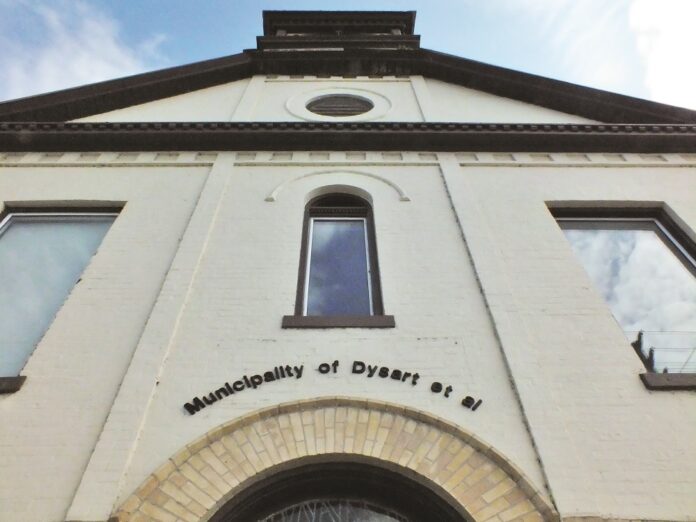
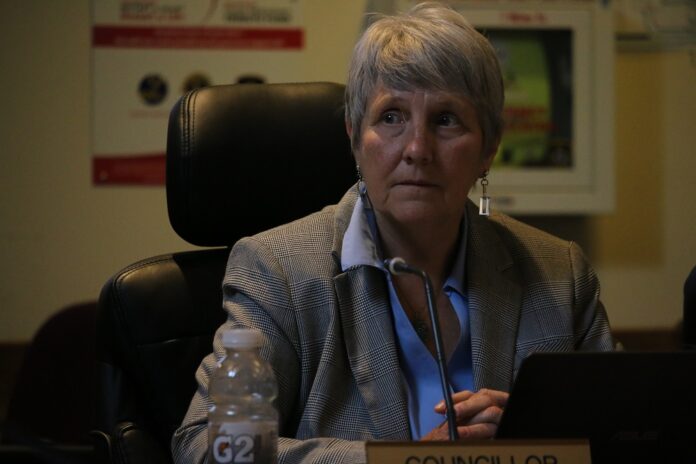
Dysart budget second draft sitting at 5.5 per cent increase

0

Dysart et al council has trimmed some fat from its proposed 2022 budget, with a second draft proposing a 5.5 per cent tax levy increase for area ratepayers.

Municipal officials discussed the budget Jan. 14, removing several items that were included in the original document. Presented in December, the first draft included a tax increase of 7.56 per cent.

The new rate, presented before discussions began Jan. 14, is offset by around $130,000 in increased revenues and a decrease of $82,000 in operating and capital costs. Council would shave off an additional $35,000 through their later discussions.

Treasurer Barbara Swannell noted the proposed increase would see residential property owners pay an additional $16.35 per $100,000 of MPAC assessment in 2022, with commercial owners set to pay an extra $24.24 per $100,000 of assessment and industrial owners to pay a further $28.09 per $100,000 of assessment.

Despite the proposed increase, Swannell said Dysart still had, by far, the lowest municipal taxes in Haliburton County.

“The cost per $100,000 of assessment for residential property in Dysart was $297.44 in 2021. In Algonquin Highlands, at $344.10, the ratepayer is paying $36.66 more than if they lived in Dysart, or 12.3 per cent more,” Swannell said. “The trend continues in Minden Hills, who pay 29.1 per cent more. In Highlands East, residents pay 70.6 per cent more.

“A 5.5 per cent levy increase in 2022 still results in Dysart being the lowest tax rate within member municipalities in Haliburton County,” she added.

During the meeting, council signed off on hiring a new summer bylaw officer at an undetermined cost; to increase services at the Harcourt, Kennisis Lake and West Bay landfill sites ($6,133); increase volunteer firefighter pay by $2.50 per hour; and dish out approximately $70,000 in grants and donations to community organizations.

They decided against spending $10,000 on a new digital sign at the Haliburton welcome centre; said no to the Haliburton Highlands Museum hiring a summer employee at a cost of $11,100; and deferred decisions to hire new full-time staffers in the planning and parks and recreation departments at an annual cost north of $100,000.

In 2022, Dysart is projecting to spend just over $18.5 million. Municipal reserves sit at $3.6 million. Council will meet again to discuss the budget on Feb. 11.

Arts Centre Foundation casts first corporate sponsor

0
From left to right: Nigel Milne, assistant store manager, Dan Moulton, owner, Glen Rickerby, district general manager, Paul Walker, assistant store manager, Dan Manley, HHACF president, Drew Allen, board member and Michael Clipperton.

Haliburton County’s Home Hardwares are helping build a Highlands arts hub.

The Home Hardware Building Centre of Haliburton and Minden has donated $25,000 to the Haliburton’s Highlands Art Centre Foundation (HHACF), becoming the foundation’s first corporate sponsor. 

“We are very pleased and committed to supporting the HHACF in its mission to build and operate a world-class performing arts centre in Haliburton County,” said dealer-owners Dan and Emily Moulton in a press release. 

“We believe strongly in the economic impact that this project will bring to our region, and we would like to encourage all local companies and individuals to pledge their support in the coming year.” 

The money will help fund follow-up steps to an ongoing feasibility study that will lay out the what, where and how of a large-scale performing arts centre in Haliburton County. 

Nationally-acclaimed theatre consultants Janis A. Barlow & Associates are conducting the study, expected to be published by Spring 2022. 

“Word of the foundation is spreading, but in these early stages, it’s donations like this that take our fundraising campaign to the next level,” said foundation president Dan Manley. “We hope that fellow business owners share in Dan and Emily’s economic vision for the Haliburton Highlands.”

Housing a big theme as rural mayors meet

0

Haliburton County is not alone in facing a “trifecta” of challenges – affordable housing, employment and transportation – delegates to the Rural Ontario Municipal Association (ROMA) conference heard Jan. 24.

ROMA chair Robin Jones, who is the mayor of The Village of Westport, said the association was looking to the future with a new plan for action, but still advocating for the immediate needs of its member municipalities.

One issue is affordable housing. To that end, Jones said ROMA was pleased to meet with the Ontario government just prior to the conference about the association’s desire for a full spectrum of housing options.

“Lack of affordable housing has hit our communities hard,” Jones said. “And unlike some urban markets, this is a new phenomenon for rural communities. And it is tough on our residents.”

She said that every time ROMA has discussed the issue in recent months, the “trifecta of affordable housing, and in particular reasonably-priced rental accommodation, employment and transportation” comes up.

“So, in my community, which is similar to many of yours, we have a large tourist industry and we have lots of jobs but we don’t have rental accommodation. So, to get staff to come take the job, they have to go to the closest municipality, which is 25 km away, and guess what? There’s no transportation. I’ve heard that from many of you.

“The challenge of affordable rental accommodation for employees is tough without transportation. This is just one aspect of the complexity of the housing needs and requires a full spectrum of housing approach.”

Jones said the meeting with the province was just the start of a conversation. She added the solutions will require commitment and flexibility to reflect rural circumstances and how current government policies constrain progress.

While Premier Doug Ford met with the rural leaders Jan. 23 prior to the conference starting, there have been no public announcements, as there have been for larger centres. However, in his address to the conference this past Monday, he said, “it’s an issue that affects rural Ontario just as much … the lack of supply that makes home ownership slip further from people’s reach every single year.”

He blamed “the crisis” on previous governments which he said “put ideology over the needs of Ontarians and allowed the supply of needed housing to fall behind what’s required.

“We can’t and won’t wait any longer to address this crisis and deliver the housing options that all Ontarians need.”

During the conference, there were three plenary sessions on housing. Homelessness in Rural Ontario: Challenges and Opportunities was chaired by Minden Hills Coun. Pam Sayne, who sits on the ROMA board. One of the research team during a presentation was Fay Martin of Minden Hills.

The other two sessions were: Filling the Housing Information Gap in Rural Communities and Innovative Housing Solutions in Rural Ontario.

Martin and her research partners found that compared to city dwellers, a higher percentage of people from rural Ontario reported they had experienced homelessness or hidden homelessness at some point in their lives, with the rural number 9.7 per cent and the urban 7.5 per cent.

They added hidden homelessness was also more prevalent in rural areas. They included: staying in tents or RVs; in substandard housing; couch surfing or overcrowding; survival sex [offering sex in exchange for housing] and staying in motels or single rooms. This was in addition to: squatting or sleeping outside; living in bush camps; sleeping in vehicles or staying in shelters.

Some of the other themes at this year’s ROMA conference included: working with Indigenous Peoples, poverty reduction, community safety and well-being, improving connectivity, opportunities for post-COVID recovery, health care and climate change.

Omicron forces temporary daycare closure

0

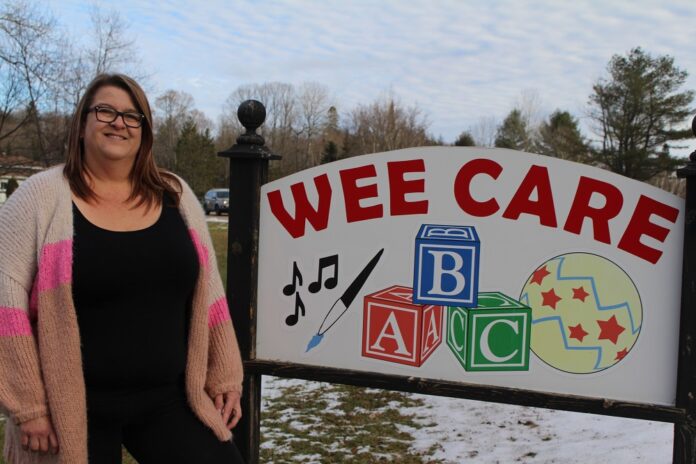
Haliburton Wee Care administrator Denise Wolm said the community has been “understanding” in the wake of the daycare’s decision to close temporarily effective Jan. 26 after seven positive COVID cases and the need for others to isolate.

Wolm contacted The Highlander this week to say, “after almost 22 months, COVID has now touched us personally. Yes, we have not had one single case … until now. One case or 10, or anywhere in between, it is overwhelming and stressful for everyone involved,” she said.

She added knowing the severity of the spread of the Omicron variant, they understood that opening schools could accelerate community spread.

Wolm said she and staff felt it was “inevitable” that this would happen “given how people are feeling ‘done’ with this and want to just live their lives.”

She said the last two pandemic years have brought “ups and downs” and been stressful but the daycare is a family that is there for each other.

She expressed some frustration in saying, “As everyone is probably aware, child care has rarely been mentioned throughout this pandemic except to say that, after the first lockdown, we must remain open no matter what, we are essential to keep the economy rolling.

“We get thrown little tidbits of how valuable we are but when it comes to our well-being and protection, we are pretty low on the list. Information is doled out for us to decipher, sometimes two to three, even four times a week. It’s ever-changing and often makes no sense, but we soldier on and do the best we can with the information we are given.”

She added government rules and regulations are difficult in a childcare setting. “Our little ones can’t and don’t wear masks, social distancing isn’t even fathomable in the under four-year-old set, and when they are hurt, sick or even just sad, we can’t stop and think about COVID, we just do what we always do and give them our love and undivided attention.”

Wolm said to top it off, new cleaning protocols were put in place to stop the spread, adding another layer of responsibility to those already stretched to the limit.

She said rather than it being a news story, she wanted to emphasize. “We have an incredible community I can say I’m proud to be a part of. Our Haliburton Wee Care family includes our staff and their families, our children and their families, and our supporters such as Point in Time, City of Kawartha Lakes Children’s Services Department and Public Health, which she said are “short-staffed, overwhelmed and expected to provide all of the answers to the community in all different settings.”

Wolm said, “Once the announcement was made that we have COVID in our centre, there was no judgement, there were no harsh words of derision, there was no blame. What there was is staff pulling together to support each other through an even more stressful time, even while they were fearful about bringing it home to their loved ones. There were parents and family members offering words of support, encouragement, and even praise as to how we have been handling everything previously and currently.

“There has been nothing but compassion and understanding from everyone and from the bottom of my heart, with tears of appreciation in my eyes, I thank everyone for this. We will get through this together as we always have.”

Dysart receives $23,618 in gas tax funding

0

MPP Laurie Scott announced Dysart et al will receive $23,618 in gas tax funding this year, with the money supporting the municipality’s Dymo bus accessibility program.

Funding for the gas tax program is determined by the number of litres of gasoline sold in the province during the previous year. Municipalities supporting public transit services receive two cents per litre of gas tax revenue collected in their community, Scott noted.

This funding can be used to extend service hours, buy transit vehicles, add routes, improve accessibility or upgrade infrastructure.

This year, the province is dishing out $375 million to 109 municipalities. To make up for reduced gas sales last year due to COVID-19, Scott noted this year’s gas tax pool includes one-time additional funding of $120.4 million to ensure municipalities can support their transit systems.

The Dymo bus has been operating in Dysart since 1989, said CAO Tamara Wilbee. It is designed to assist individuals with mobility difficulties, or those who require the assistance of a wheelchairaccessible vehicle to move around. The vehicle is equipped with a lift and automated ramp. The service provides transportation to individuals on a temporary or permanent basis, depending on the user’s eligibility.

The bus travels to five areas within Haliburton County, and makes regular trips to Lindsay, Peterborough, Bracebridge, Barrie, Oshawa, Toronto and Kingston. It also assists with long-term care facility and medical transfers.

Fees to take the bus range from $6 to $47 depending on where you live and your desired destination. Anyone wanting to travel outside of Haliburton County is billed $1.50 per kilometre. Trips to Lindsay, Peterborough or Bracebridge cost a minimum of $300, while trips to Barrie, Oshawa, Toronto or Kingston cost a minimum of $200, plus $50 per hour while in use. Dysart’s website notes these trips typically only take place when six or more people sign up, bringing the per person cost down to between $50 and $100.

Wilbee said caregivers, attendants, guide dogs and service animals are welcome to accompany someone taking the bus at no extra charge.

Affordable housing build to front onto Halbiem

0

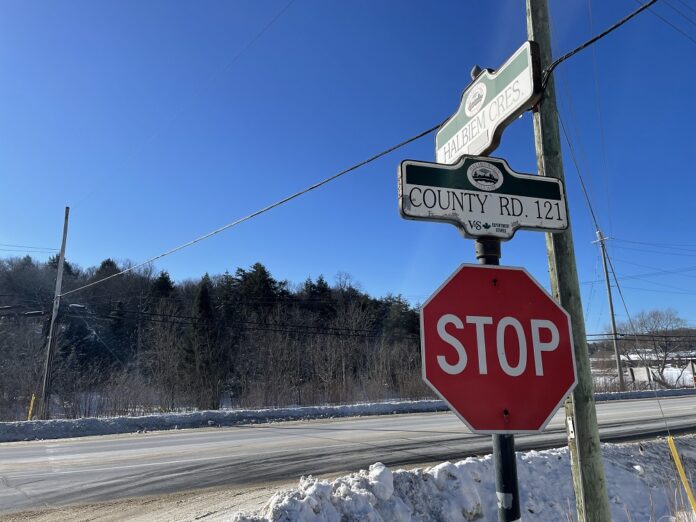
Dysart et al council has supported a new plan that would see a reimagined affordable housing development originally slated for Wallings Road temporarily front onto Halbiem Crescent.

The project, proposed by Places for People (P4P) in September 2020, has been in a state of delay for months, with a dispute between Dysart township and the County over the ability of the Wallings/County Road 21 intersection to handle increased traffic.

A suggestion to close off the Wallings/CR 21 intersection and create a new two-way road into Halbiem was proposed last fall. Land owners along Halbiem voiced their opposition to the plan on Nov. 23, 2021, citing various safety concerns.

Mayor Andrea Roberts noted at the Jan. 25 meeting that council’s preferred position was to maintain access to Wallings directly from CR 21, but that decision ultimately lay with the County. A new traffic study of the intersection has been commissioned by County staff, with results expected later this year.

In an attempt to get the project moving, P4P president Jody Curry suggested a new plan for the site, which includes a temporary solution of providing driveway access to the site off Halbiem. Addressing other concerns brought forth by council last year, she also suggested P4P could lower the number of units. Originally, Curry said the project was only viable if P4P could construct 48 units, but said this week they could move ahead with a plan to build fewer.

Jeff Iles, Dysart’s planning director, informed council those units would be situated on a .92 acre plot along Wallings Road. The land is being sold to P4P for $2 to support the project.

Development is still a long way off. The latest approval from council allows P4P to come up with a new site plan for the .92 acre plot. Other items, such as building permits and connection fees, will be discussed at a later date. A public meeting will also be scheduled in the near future.

Coun. John Smith wasn’t happy about that. He wanted council to clearly outline what other contributions the municipality would be making to the project, pointing out a letter of intent previously signed by the township and P4P was vague.

“Some of us are concerned about the amount of municipal contribution to this project. The municipality is already providing the property for $2, which is a tremendous contribution. Any additional contribution in terms of waiving fees, like we typically do when a developer shows up with their own land … would be inappropriate,” Smith said.

He also sought assurances future residents would come from Haliburton County. He spoke to an agreement P4P has with the Kawartha Lakes Haliburton Housing Corporation, which provides housing to those in need across the region. It could see individuals from Lindsay moved to Haliburton and into the new development.

“We need to remember this is a part of the affordable housing target program, which is a County initiative. We have the right to choose our tenants,” Curry responded.

She clarified that not all units will be classified as affordable. She expects 30 per cent will be made available to lower-income individuals, with the remaining offered at market, or above market rent.

Coun. Larry Clarke was keen to point out that Smith’s comments and surmizations were his own, and not a reflection of the rest of council.

“I see the role of our council to look at the longevity of this community, and we need affordable housing. There has to be an investment from the township to make that happen. It may cost a few extra dollars, but it benefits the entire community and our future,” Clarke said.

Protesters objecting to habitat destruction

0

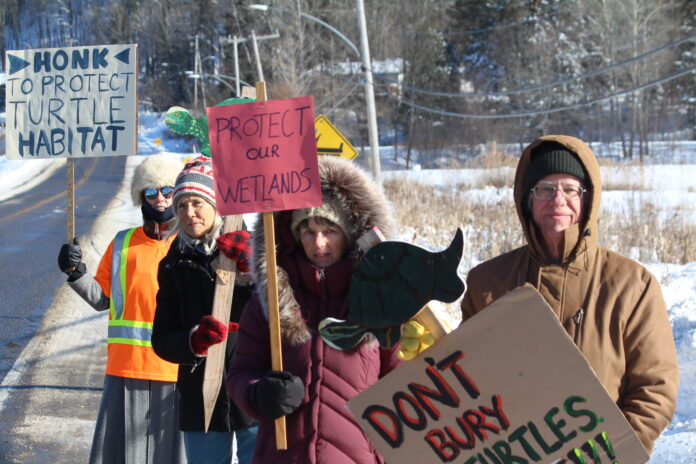
Environmentalists claim the filling of wetlands on a Gelert Road private property has threatened habitat of at-risk species and Dysart et al’s infrastructure.

Leora Berman of The Land Between said filling at the property near Haliburton Highlands Health Services could kill fish and threatened species that have been recorded in the area.

The Land Between said the property is likely home to Grace, a century-old turtle, and an at-risk species. Berman said she

cannot disclose the specific species due to regulatory agreements between the Land Between and the Ministry of Environment, Conservation and Parks (MECP) and the Ontario Ministry of Natural Resources and Forestry (MNRF).

The 2007 Endangered Species Act prohibits damaging habitats of endangered or at-risk species.

The MECP has since become involved, with spokesperson Gary Wheeler saying, “our objective is to ensure that no species have been harmed from this incident. Investigators from the MECPs

species-at-risk branch and environmental investigations and enforcement branch

are working as quickly as possible to complete an investigation into how and why this event occurred, along with possible solutions for remediation,” he added.

Wheeler said the landowner has stopped filling, agreed to complete a habitat assessment for ministry review, and is following guidance about species-at-risk.

The landowner has so far declined to comment to The Highlander.

Since sounding the alarm on The Land Between’s Facebook page on Jan.14, the

public has held intermittent protests at the location most days since the filling was noticed. More than 3,400 people have signed a petition online that states its goal is to “save this wetland and the amazing turtles that many in Haliburton know and love.”

No enforceable bylaw

Berman and multiple residents who submitted comments to Dysart Council said the township has a responsibility to clarify and enforce rules pertaining to wetland and species protection.

The area where the filling was noticed falls under environmental protection zoning in the township’s official plan. The official plan prohibits site alteration except for “flood control, other water management, or erosion control structures or works, docks and marine facilities.

However, policies set out in the official plan do not represent enforceable bylaws, Dysart et al municipal law enforcement officer Robert Mascia said.

In an email, Mascia said, “Dysart does not currently have a site alteration bylaw in place or any regulation within the zoning bylaw to provide for enforcement.”

Berman said the township should have stronger zoning bylaws to prevent habitat destruction. In an email, she said “there

are gaping holes in the tools and processes within our own municipality that led to this situation in the first place … and could lead to many more. If this isn’t fixed, our hunting heritage, fishing, and wildlife

are at stake. The proper tools are non- existent here, and that takes power away from the people and puts it in the hands of developers alone.”

However, building developments such as a proposed condominium on Grass Lake are reviewed by council and the public can weigh in. Site alteration does not require an approval process.

On Jan. 21, Coun. Nancy Wood-Roberts said, “If there’s no bylaw to do any sort of enforcement then everyone’s hands are tied.”

Dysart council regularly passes bylaws, changes previous rules and establishes new ones. So does the County of Haliburton.

At a Jan. 25 council meeting, Dysart mayor Andrea Roberts said the County’s

shoreline preservation bylaw is set to help enforce wetland protection.

“We all are in the same geographic area and we all have the same concerns to protect our water,” she said.

The bylaw in its current draft would prohibit the site’s alteration due to its proximity to wetland, but multiple councillors indicated the bylaw isn’t likely to be implemented soon.

Director of planning Jeff Iles and

clerk Mallory Bishop said developing a municipal site alteration bylaw may end up redundant or contradictory if the County’s shoreline preservation bylaw is passed.

Roberts said public outrage took off like “wildfire” online, and council received numerous written submissions from residents worried about habitat destruction or flooding.

Roberts said some online posts “make it sound like Dysart doesn’t care, of course, we do.”

Wood-Roberts said council needed

to discuss other developments nearby, including the state of the County- maintained Gelert Road, which may have increased flood risks too. “I think they need to look at the historical factors in the property itself and how it became

a wetland,” she said, prior to council discussions.

Coun. John Smith said he was frustrated it may appear that Dysart council hasn’t acted quickly enough.

“How long should we wait for the County to reach a conclusion on something they’ve been evaluating for three or four years before we as a local municipality take action to protect wetlands in our community?” asked Smith.

Council directed Iles to contact the Ontario government to find out what provincial allowances or restrictions may exist on the land. 

Increasing risk of flooding 

If wetlands aren’t protected, the County could face increasing flood risks, said Paul Heaven, a senior wildlife biologist and environmental consultant at Glenside Ecological Services Limited.

“Every wetland plays a significant role in flood attenuation so it’s definitely having an impact,” Heaven said.

In an area such as Gelert Road near Haliburton Highlands Secondary School, wetlands act as a sponge for water that would otherwise flow over the road.

Heaven said wetlands should be a key concern for County council and its townships.

“Any further loss in wetlands will result in greater flooding potential all throughout the County. We really have to start paying attention to wetlands large and small,” he said.

Heaven has worked with the Haliburton Highlands Land Trust to map two provincially-significant wetlands in the Highlands.

“Most of our wetlands in our County have not been evaluated, and the issue we have in the County is we don’t know where the wetlands are, or they’re not properly mapped and defined,” Heaven said.

Zoning a wetland as provincially significant means it’s protected from development on a provincial level.

Barring a Ministerial Zoning Order, which the Ontario government has recently attempted to use to overturn such embargoes, Highlands wetlands deemed provincially-significant would be protected from site alteration or development.


“Promising” signs prompt easing COVID-19 rules

0

Highlands restaurants, gyms and bars have been cleared to re-open at 50 per cent capacity on Jan 31. 

“The evidence tells us that the measures we put in place to blunt transmission of Omicron are working,” said Premier Doug Ford in a Dec. 20 press release. “We can be confident that the worst is behind us and that we are now in a position to cautiously and gradually ease public health measures.”

Along with easing business restrictions, indoor gathering limits will raise to 10 people indoors and 25 people outdoors. The Minden arena and other sporting or performance venues will be able to run at 50 per cent capacity. 

On Feb. 21, capacity limits in restaurants and bars will be lifted completely, as well as most indoor public settings where proof of vaccination is required. 

In March, all indoor public spaces won’t have capacity limits, and private indoor gatherings will be capped at 50 people, with no capacity limit outdoors. 

Find a full list of updated rules at the bottom of this article.

Local signs of hope 

HKPR Chief medical officer of health Dr. Natalie Bocking said she sees “promising indicators” the region’s COVID-19 infection rate is close to plateauing.

The region’s test positivity rate, at about 13.3 per cent, is down from a peak of 21 per cent seen in early Jan. 

While PCR COVID-19 testing is limited to high-risk people or those who work in high-risk settings, Bocking said the infection number and positivity rate can still indicate a falling caseload. 

On Jan. 19, the health unit reported an incident rate of 254 cases of COVID-19 per 100,000 people, down from over 400 on Jan. 4.

“We could see a peak at the end of the month, or fingers crossed, potentially a bit sooner than the end of the month,” said Bocking at a Jan. 19 media information session. “We do have reason to have some optimism and looking forward to coming out on the other side of this wave.”

Haliburton has recorded 315 lab-confirmed cases of COVID-19 since the start of the pandemic, with 10 cases currently unresolved. 

Dr. Bocking said that while the unit is recording more hospitalizations due to COVID-19 than ever — 22 patients on Jan. 20 — the Omicron variant is often less dangerous than previous waves of COVID-19. 

“We are not seeing the same level of illness in the first wave,” she said. 

Roadmap to reopening 

The following rules will come into place Jan. 31 at 12:01 a.m. 

  • Increasing social gathering limits to 10 people indoors and 25 people outdoors.
  • Increasing or maintaining capacity limits at 50 per cent in indoor public settings, including but not limited to:
  • Restaurants, bars and other food or drink establishments without dance facilities;
  • Retailers (including grocery stores and pharmacies)
  • Shopping malls;
  • Non-spectator areas of sports and recreational fitness facilities, including gyms;
  • Cinemas;
  • Meeting and event spaces;
  • Recreational amenities and amusement parks, including water parks;
  • Museums, galleries, aquariums, zoos and similar attractions; and
  • Casinos, bingo halls and other gaming establishments
  • Religious services, rites, or ceremonies.
  • Allowing spectator areas of facilities such as sporting events, concert venues and theatres to operate at 50 per cent seated capacity or 500 people, whichever is less.

On Feb. 21, the following rules will be in place: 

  • Increasing social gathering limits to 25 people indoors and 100 people outdoors.
  • Removing capacity limits in indoor public settings where proof of vaccination is required, including but not limited to restaurants, indoor sports and recreational facilities, cinemas, as well as other settings that choose to opt-in to proof of vaccination requirements.
  • Permitting spectator capacity at sporting events, concert venues, and theatres at 50 per cent capacity.
  • Limiting capacity in most remaining indoor public settings where proof of vaccination is not required to the number of people that can maintain two metres of physical distance.
  • Indoor religious services, rites or ceremonies limited to the number that can maintain two metres of physical distance, with no limit if proof of vaccination is required.
  • Increasing indoor capacity limits to 25 per cent in the remaining higher-risk settings where proof of vaccination is required, including nightclubs, wedding receptions in meeting or event spaces where there is dancing, as well as bathhouses and sex clubs.

On March 14: 

  • Lifting capacity limits in all indoor public settings. Proof of vaccination will be maintained in existing settings in addition to other regular measures.
  • Lifting remaining capacity limits on religious services, rites, or ceremonies.
  • Increase social gathering limits to 50 people indoors with no limits for outdoor gatherings.

‘Righting a wrong’ – murals to go up in June

0

Two new murals depicting esteemed local athletes Taly Williams and Lesley Tashlin will soon be added to Haliburton’s sports wall of fame.

The siblings, who grew up in the area and excelled in sports at Haliburton Highlands Secondary School before going on to make a name for themselves professionally, will be recognized after a group of Grade 7/8 students at J.D. Hodgson Elementary School lobbied for their inclusion to the mural wall.

Last spring, the students, flanked by teacher Marina Thomazo, approached Dysart council to ask why the pair of Black athletes hadn’t been acknowledged in the same way as hockey stars Bernie Nicholls, Ron Stackhouse, Cody Hodgson and Matt Duchene, and footballer Mike Bradley, who all have images emblazoned on the side of A.J. LaRue Arena.

Tashlin represented Canada at the 1996 Summer Olympics, participating in the women’s 4×100 metre relay, while Williams played two seasons in the CFL during the mid 1990s.

“It just goes to show the power of children,” said Jim Blake, chair of Dysart’s cultural resources committee and one of the figureheads behind the mural movement.

The murals will be installed in June, Blake said. Montreal-based artist Annie Hamel has been commissioned to complete the works. She visited Haliburton in early December, and has met with Tashlin and Williams virtually to find inspiration for the pieces.

The athletes will play a pivotal role in the process, Blake said, with Hamel set to complete three concepts that the pair will choose from.

“Annie’s work is absolutely extraordinary. She was one of two artists we were considering for the project, and it was Lesley and Taly that made the final choice,” Blake said. “All artists that applied had to create a concept, and Annie’s work really exemplified what they were looking for.”

The trio will meet again virtually over the coming weeks to narrow down a final version of the murals. Hamel will need several months to complete the finished works, which will measure 12 foot high and 18.5 foot wide and be done on aluminum panels. The pieces will then be transported to Haliburton and placed on frames on the side of the arena.

Blake said it was important that the murals be mobile in the event that they need to be moved.

All in, the project is expected to cost $35,000 and will be fully funded through donations. Blake said around 90 people had contributed, most of them local.

An unveiling ceremony is being planned, with Blake aiming to have it take place the same weekend as the grand opening of the new Haliburton Sports Hall of Fame. He hopes to have Williams and Tashlin in attendance.

Thomazo, and many of her students, will be there too.

“This has demonstrated what young people are capable of doing when they want to push for actions and changes that reflect the world they live in,” Thomazo said. “I look up to this young generation. Their voices make sense and they matter. This journey has taken us on a much grander path than we anticipated … now these beautiful murals are only a few months away from being unveiled.

“This heartwarming, feel-good journey has made us all question ourselves on what our present and future world should look like … I couldn’t be any prouder of my students,” Thomazo added.

Parenting in pandemic times

0

Learning on Zoom, canceled trips and sports tournaments, and not seeing friends for months. For many kids and teens, COVID-19 has been tough.

Some studies show worrying mental health trends among younger Canadians.

SickKids published a study in 2021 showing more than half of 758 kids aged eight to 12 years old and 70 per cent of 520 adolescents reported depression symptoms during COVID19’s third wave in Canada.

“For kids already experiencing preCOVID mental health challenges, we know the pandemic has in some cases ratcheted up anxiety for kids, and made it more impactful,” said Marg Cox, executive director of the Point in Time Centre for Children, Youth and Parents.

“It seems like there’s an increase in stress related to meeting practical needs, emotional needs,” added child youth and family therapist Rachelle Stephens. “I would say a lot of things coming up for people and causing stress is lack of predictability. No one knows what things might look like, which causes a lot of stress for parents and youth and children.”

Cox and Stephens dove into some ways parents and caregivers can help their kids and teens navigate the stress and uncertainty of the continuing pandemic.

Viewing things differently

Stephens said kids often view issues such as the pandemic in black and white. It can seem like it will go on forever. “It’s hard for them to understand the nuances and complexities,” she said.

Cox added that “right across all development stages, including youth, kids take their cues from parents.” Cox said teens lacking peer-to-peer “sounding boards” in classmates and friends can mean they process the events of the pandemic differently than other crises.

Since social activities can be so central to a kid’s development, cancellations of hockey or dance class can have an outsized impact on mood and mental health.

Cox said teens are left “without the same space they would normally have, in trying to be safe and not seeing many people. [It’s] the reverse of what should be happening at that stage of life developmentally.”

Tough talks

“How do you say ‘I don’t have all the answers’?” Cox asked. “You say ‘I don’t have all the answers’ and you make sure as you’re describing things it’s developmentally appropriate,” she said.

Parents might consider creating a time to check in on their kids and teens, suggested Stephens, “to say how are you doing today, how are you feeling right now’?” She encourages parents to ask specific questions about what feelings a kid might have, as opposed to broader questions such as ‘how was school’?”

She said being “non-judgmental” in responding to a kid and teen is important. “Validating the feeling regardless of what that feeling might be for them,” she said.

Safe spots

Without many extracurriculars and with snowy weather, family living can feel a bit cramped.

Stephens said it’s important for families to respect each other’s “need for alone time.” That also means trying to get outdoors each day for a bit of extra space.

Cox mentioned headsets can be a way for teens to find privacy, or trying a schedule for alone time when bedrooms are shared.

“People do better when they have regular meals, when they have enough sleep and regular exercise.” She encouraged families to talk about “what the structure of a day can be.”

Caring for the carers

“We’re all doing the best we can,” Stephens said. “By caring for ourselves we’re also caring for others.”

By regulating a parent’s own emotions and mental health, that can help support kids too.

“As adults getting our own support is an important piece of that,” she said.

Cox added that ensuring parents have the time and space to treat themselves, even for half an hour, to something restful. “Netflix, reading, giving yourself a bath, whatever it is,” she said.

Warning signs

A child or teen’s mental health sometimes calls for expert help. Stephens said parents should keep an eye out for a change in a child’s “baseline. When you’re noticing a change in their behaviour in their social functioning in their emotional functioning.”

Cox added that changed sleeping and eating habits can be a sign there are more serious mental health issues at play, as can more anger, or having trouble playing with friends like they once did.

“I would add that there’s never a wrong time to reach out for help,” Stephens said.