Home Blog Page 6

Lost Oshawa plane located in Wolf Lake near Minden

0

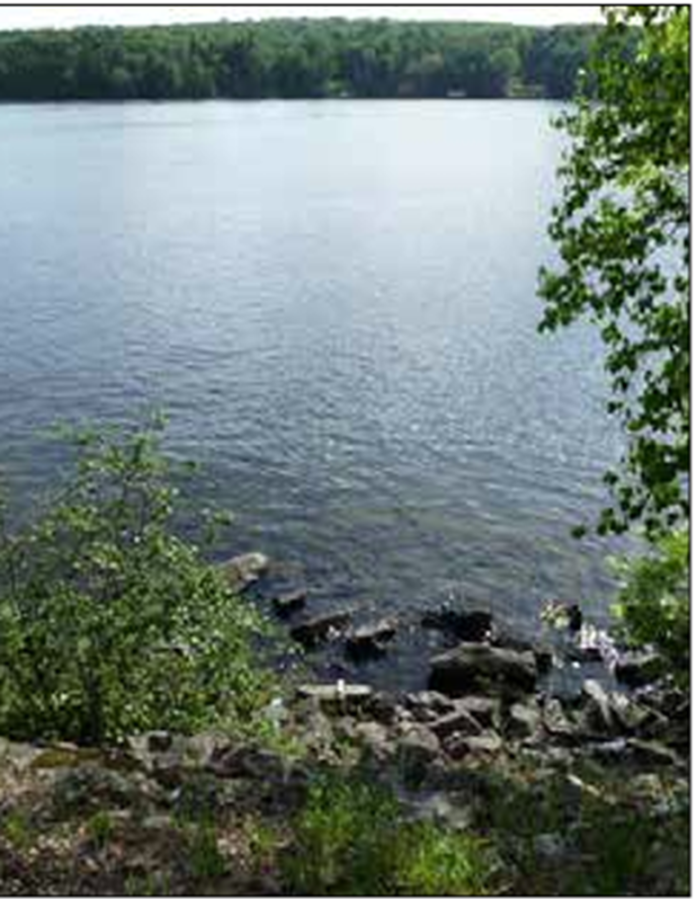
Ontario Provincial Police confirmed Wednesday (Aug. 19) that the body of a missing 73-year-old Oshawa pilot had been recovered from Wolf Lake near Minden.

Search efforts for David Douglas had been underway since Friday (Aug. 14). Military personnel spent three days scouring forested areas around Haliburton and Peterborough counties and the Kawartha Lakes, looking for signs of a home-built blue and yellow aircraft Douglas flew out of Oshawa Executive Airport around 8:30 a.m.

Durham Regional Police said the pilot was heading north towards the Balsam Lake area and was expected back around an hour later. When he didn’t arrive, a search began, with the military deploying its Lockheed C-130 Hercules over the weekend. Debris from the plane was located on Monday (Aug. 17) near Wolf Lake.

In a post to social media on Tuesday morning, the joint rescue coordination centre (JRCC) out of Trenton confirmed their work had ended with the matter now becoming a search and rescue investigation, led by the OPP.

Officers with the Kawartha Lakes detachment assisted with the search, as well as the underwater search and recovery unit (USRU), aviation services and other partners to extensively search the area.

After recovering debris on Tuesday, police said they located the rest of the missing plane submerged in Wolf Lake later that day. They confirmed the pilot’s body had also been found. As of Wednesday, an extraction plan was being co-ordinated by investigators.

The incident is now being investigated by the Transportation Safety Board of Canada, the independent federal agency responsible for advancing the country’s transportation safety policies and legislation. Police said they will continue to assist as required.

Dysart gives boat races the all-clear

0

By Adam Frisk Local Journalism Initiative Reporter

The return of the annual Toronto Outboard Racing Club (TORC) powerboat regatta to Head Lake over the weekend (Aug. 15-16) reignited a long-standing debate on how Haliburton balances economic activity with environmental health at its local fixture.

While an inquiry into shoreline residue triggered a provincial pollution report on Monday (Aug. 17), municipal field tests, event organizers, and regulators have confirmed surface sheens at Rotary Beach were the result of natural organic decay rather than petroleum runoff from a weekend of heavy boating activity.

The 11th annual, two-day, event brought high-speed hydroplanes back to Head Lake over the weekend, and was dedicated to late Dysart et al mayor, Murray Fearrey.

Acting mayor Walt McKechnie paid tribute to Fearrey’s pivotal role in establishing the event while highlighting its ongoing support for local health care.

“Eleven years ago, Murray Fearrey stood on the beach of Haliburton Lake watching a sample of this sport,” McKechnie wrote in a statement published in the event handbook. The acting mayor noted Fearrey worked alongside event organizer, Barb Hammond, to present the proposal to council.

“Murray would be proud and happy to welcome the Toronto Outboard Racing Club back. Every dollar raised is one more dollar our hospital did not have yesterday.” Organizers said $6,000, including a $1,000 donation from TORC, was raised for Haliburton Highlands Health Services (HHHS).

Concerns about lake health came up Monday morning after sheens were documented along the beach and on surface water near the visitor centre. It prompted an inquiry to the Ministry of the Environment, Conservation and Parks (MECP) Spills Action Centre (SAC), which logged an incident report and referred to the municipality for investigation.

Municipal staff conducted an on-site assessment of the beach Tuesday morning. The Highlander witnessed the physical testing of the water, which consisted of disturbing the surface film with a stick, which showed the sheen breaking into rigid sections.

What that means in water science is that an oily-looking layer that breaks into sharp pieces when poked is usually a natural, organic slime cluster from rotting plants or bacteria. Should the greasy layer be petroleum or oil, the substance stretches like rubber and swirls into shiny rainbow ribbons.

Provincial officials have said that these organic sheens are often mistaken for petroleum-based spills, resulting in members of the public reporting what are often called bog sheens to environmental authorities.

Ashley Dembinski, Dysart’s environment manager, confirmed to The Highlander supplemental laboratory water sampling and spill containment measures were deemed unnecessary following consultation with the province.

“As we did not observe a gas smell yesterday or this morning and the matter on the water broke up both times rather than sticking together, [MECP] deemed our review to be the presence of organic matter decay,” Dembinski said, adding photos forwarded to the ministry raised no concerns with officials.

In a statement, TORC said the club follows “strict environmental standards” across all racing sites and suggested other watercraft on the lake over the weekend could have contributed to general lake activity. The club said Head Lake is a relatively shallow body of water and natural organic processes frequently produce film-like surfaces.

“Marsh waters often show a colourful, oil film that looks like a gasoline spill. This was created by a harmless anaerobic bacteria in the mud,” the club said. “When disturbed, this natural bacteria push a shimmering metallic or rainbow-like colour to the surface.”

Economics versus environment

While physical testing ruled out fuel contamination from weekend activity on the lake, the presence of high-speed motorized events on Head Lake continues to generate broader discussion about the economic and environmental impact they have on the village.

According to the Haliburton Business Improvement Area (BIA), the event brings mixed results for downtown businesses, with several reporting a general slowdown while others see benefits through sponsorship of the event.

BIA chair Brandon Nimigon said membership polled over the years had generally shown the event to be a “downturn” for shops due to parking limitations, noise, and the tendency for racers and attendees to remain near the lake.

“From the downtown business point of view, it’s not generating more revenue; if anything, it’s taking it away,” he said, speaking on behalf of the broader BIA membership. He added nearby establishments like Hook Line & Sinker frequently report slower weekend traffic.

But business response varies depending on direct involvement with the regatta. Maple Avenue Tap & Grill reported a solid weekend after taking on a formal sponsorship role, Nimigon said of his follow-up with downtown businesses.

Despite individual success among sponsors, the loss of public parking and noise concerns continue to prompt questions among BIA members regarding the event’s location.

“What’s the benefit to the town if we’re losing parking for a weekend… is it worth having it, or is it maybe worth looking at a different lake potentially?” Nimigon asked.

Environmentalists have expressed concern about the impact.

Leora Berman, chief operating officer of The Land Between and founder of Turtle Guardians, said high-speed boating disrupts environments by forcing warm surface water into deeper zones, which accelerates the loss of critical fish habitats. The noise and waves disturb wildlife during breeding seasons, she said, pointing to distress calls heard among resident birds.

“The boat races coincide with loon fledgling… the babies are only about a month old,” Berman said. “I’ve never seen any kind of consideration or mitigation for the impacts to loons, but certainly there’s a lot of distress.”

Berman also questioned the location.

“Head Lake is just too small a lake to accommodate the waves [and] the mixing of the water,” she said. “You need a very large lake to accommodate that.”

Town hall meetings on affordability and governance

0

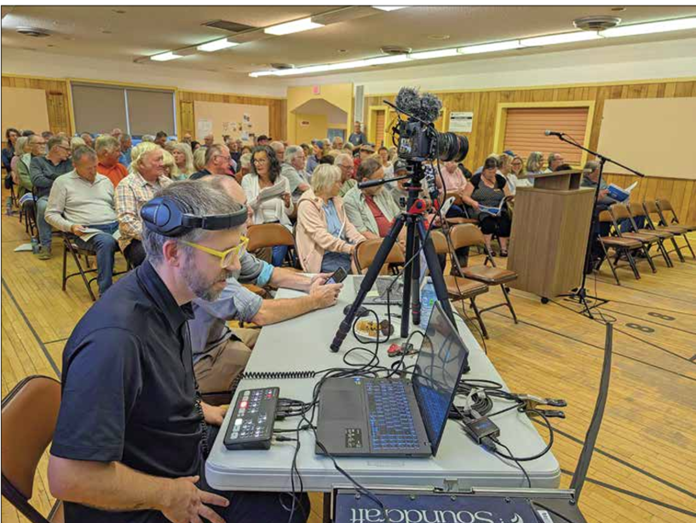
People can learn more about options for a potential restructuring of the County and its four lower-tier municipalities – as well as provide feedback – during a series of town hall meetings from Aug. 25 to 31.

The gatherings follow the publication of the final report for the County’s communitywide affordability and governance structure study, completed by independent, thirdparty, consultant the Eastern Ontario Regional Network (EORN).

Undertaken to address mounting financial pressures on the County and its lower-tier municipalities, the report provides options for what the County said is “enhanced long-term sustainability and analyzes four potential governance models.”

They are: the status quo, amalgamation, and two hybrid models that would see the County take on much more responsibility; one with four townships maintained, and one with two townships maintained (Algonquin Highlands and Minden Hills merging and Highlands East and Dysart et al combining forces).

County warden Dave Burton said, “I encourage all residents of Haliburton County to make a point of attending one of the upcoming town hall meetings. This is, ultimately, a discussion about the community’s future, and we’re hoping as many people as possible will get involved, learn about the options, and provide their input.”

The town hall meetings will take place: Aug. 25 at the Haliburton Legion from 6 to 8 p.m., Aug. 26 at the Minden Hills Community Centre from 6 to 8 p.m., Aug. 27 at the Lloyd Watson Centre in Wilberforce from 6 to 8 p.m., and Aug. 31 at the Stanhope Firefighters’ Community Hall from 6 to 8 p.m.

Registration is not required. Residents are welcome to attend any of the meetings, regardless of where they live. People can view the report on the agenda for the Aug. 12 meeting of Haliburton County council: https://bit.ly/countycouncilagenda-aug12

Done to date

At the Aug. 12 meeting, council voted 7-1 to receive the report and have County staff work with EORN on a financial and structural analysis of all four governance models. This would be at a cost of up to $100,000. Already, $200,000 has been spent on consulting fees. The further findings will be presented to the 2026-30 council. Coun. Cec Ryall voted against.

He thought council should eliminate model four from further analysis. Addressing what he called “the elephant in the room” he asked, “does Highlands East want to be a subset of Dysart et al? … I think I can categorically say, for most of the people in Highlands East, the answer to that would be no.”

Coun. Liz Danielsen felt there needed to be more discussion on the model. “I’m fairly confident in saying that I don’t believe the municipality of Algonquin Highlands wants to be lost in the shuffle and become part of the Township of Minden Hills.” She said it was about identity.

With regards to the process being rushed, County CAO Gary Dyke said, “the pace of process and the style of process is the decision of the new council.” He added examples of services being moved around were ideas, but council would make the decision.

Coun. Tammy McKelvey was conscious of the process not taking too much time as, “it’s really difficult on staff when it’s spread out over four years…they are going to feel like it’s a black cloud hanging over their heads.” Dyke thought an amalgamation, for example, could occur in 14-18 months.

Dysart coun. Nancy Wood-Roberts asked how reserves and debt would be handled. Consultant Maureen Adams said ratepayers of each township would be responsible for reserves and debts. Adams said it could mean different tax rates initially, then stabilization.

Dysart mayoral candidate, Greg Bishop, said if they are bold enough to amalgamate; the province would be involved. He suggested council leverage the province for things such as a better OPP funding formula.

Ryall said he will want to see financials on the cost of restructuring.

Coun. Jennifer Dailloux agreed they would want to “include short-term pain, followed by longer term-gain. It is going to hurt… taxes are going to go up…gently? fast? now? In the future? Or vice versa?”

Adams said it is not just about taxes, but capacity building. For example, she said a township experiencing flooding could have more resources to call upon, and more services could be brought in-house, versus contracting out.

Sculpture Forest marks 25 years

0

Reflecting on 25 years of the Haliburton Sculpture Forest, longtime curator Jim Blake believes the local attraction has become one of the most popular and recognizable outdoor art exhibits on the continent.

The 15-acre site, nestled within Glebe Park, draws approximately 40,000 visitors a year. It launched in 2001 with three commissioned pieces of art designed by Canadian artists and now houses 40 sculptures and six one-of-a-kind memorial benches along its trails.

Blake said there will be two new installations this summer, with both expected to be in place before the weeklong ‘Sculpture Forest Alive 25’ celebration that runs Aug. 24-30.

Things kick off Monday (Aug. 24) with a Q&A and workshop with artists Scott Walling and Rose Pearson at Art Hut 3 from 4-6 p.m.; Tuesday (Aug. 25) there’s a free guided tour of the forest from 10 a.m. to noon; while Wednesday (Aug. 26) will see the launch of a new musical exhibit by Nicholas Russell from 7-8 p.m.

“That was all inspired by the sculpture ‘Atmopshere’, which is a stone dome. Russel used sounds around the sculpture and in the sculpture, while composing music featuring violin, viola and some lyrics,” Blake said. “If people go inside the sculpture and sit down, the sound will be really great.”

There will be an Oddysey-themed tour, featuring Greek myths and more, next Thursday (Aug. 27) from 10-11:30 a.m. On Friday (Aug. 28), Lynda Shadbolt and Myra Stephen will lead a quiet walk, stopping at various sculptures to practice Qigong.

The weekend will be busy, with Saturday (Aug. 29) featuring the induction of five new sculptures installed since 2024, from 2-4 p.m., and refreshments at HSAD from 4-5 p.m.

Sunday (Aug. 30) will see the debut of Sculpture Forest ALIVE – an immersive sensory and performing arts journey through the sculpture forest. There are two shows scheduled, from 11 a.m. to noon and 2-3 p.m. It will feature singer-songwriter Shannon Kingsbury, dancer Mairead Filgate and other artists Russell, Walling, Bethany Houghton, Andrea Lithgow, Wendy Lingard and Brad Brown.

The history

It was 1999 when the late Al MacPherson, a former HSAD instructor, visited Grizedale Forest in the Lake District in England. It contained a small sculpture forest that he couldn’t wait to tell people in Haliburton about.

Blake and fellow sculpture forest founder, Barb Bolin, were among the first to hear about it. It took two years to formalize – the team had to figure out where the forest would be located, and how to fill it without any base funding. It was tough going at first, Blake admitted.

Now, the forest operates like a well-oiled machine, the curator said. It raises $25,00030,000 every year to cover insurance and maintenance costs and hire a summer student.

Bolin said the forest puts Haliburton County on the map. She met a family from Texas while walking the trails this summer, who told her they visit sculpture forests all over the world.

“They said ours ranks right up there with the best ones,” Bolin said. “You don’t know when you start something like this whether it’s going to work, if people will get behind it. But this has been a tremendous success story.”

Now 72, Blake is preparing to retire as curator. Recruitment for the volunteer role is already underway, with an announcement expected later this fall.

“If you want to have something sustainable, you need to have succession plans in place and let younger people have opportunities to take over,” Blake said. “This is an incredible chance for someone to come in and put their own stamp on the place.”

For more information, visit www. haliburtonsculptureforest.ca or search for it on the Bloomberg Connects app.

Radiothon raises $183,000 for health care

0

While there was no premier equipment upgrade or program enhancement to centre the 2026 Radiothon fundraising campaign around, Haliburton Highlands Health Services Foundation (HHHSF) lead, Kathryn Quick, said last week’s event was still a major success bringing in $183,000 and counting.

Celebrating its 20th anniversary this year, Radiothon is one of the foundation’s cornerstone summertime fundraisers. It’s now brought in more than $1.5 million and has helped facilitate the purchase of a new CT scanner and mammography machine at the Haliburton hospital in recent years.

Running last Thursday and Friday (Aug. 13-14), Quick said volunteers were stationed at MooseFM to answer calls and also out in the community at Tim Hortons locations, Todd’s Independent, Haliburton Foodland and Dollo’s Foodland in Minden to accept in-person donations.

As of Tuesday evening (Aug 19), HHHSF had collected $83,794 – with Quick saying The WB Family Foundation, which initially agreed to match donations up to $100,000, has decided to gift the full $100,000.

“I think this was a year of educating and engaging. We made inroads with a lot of people in the community to help them understand what local-level health care is about,” Quick said. “We didn’t have a big, sexy piece of equipment that people could visualize this year. It’s more raising money for general hospital and community needs.”

One of the biggest benefactors will be HHHS’ community supports services programs, like Meals on Wheels and patient transportation. Quick said the money will also support seemingly mundane, yet needed and expensive, purchases.

“We’ve got a capital list to work with – if they tell us they need a bathtub for longterm care and that tub is $20,000, now we have the money to be able to pay for that,” Quick said. “Things like ER stretchers, those are $5,000 and have a lifespan – they break and deteriorate and then you have to replace them. It’s never one and done.”

Asked if there were any memorable moments this year, Quick said it was nice to welcome Klara Oyler, Dale Walker, Rick Lowes and Brian Daoust – the organizing team from the very first Radiothon in 2006 – into the studio last Thursday (Aug. 13).

She was also touched by the story shared by longtime HHHSF volunteers John and Judy Skinner, who were one of several interviewees over the two days. They told how, when dropping off meals with an older local couple, Judy discovered they were low on wood, which they used to heat their home. Later that day, volunteers from the Haliburton County Heat Bank stopped by with a load that saw the couple through winter.

“The message there is that this is not just about health care – HHHS’ services touch all community resources, it’s the food banks, SIRCH, clothing resources, the heat bank. Knitting everything together is what makes this community special,” Quick said.

Federal and provincial governments do not provide regular funding for equipment upgrades, forcing the community to fundraise itself. She said it’s a vital effort.

“The hospital is not a service you think about every day, until the day you need them or someone you loves needs them,” Quick said. “For a community of 21,000 to do this over and over again, is phenomenal.”

Provincial investment

Earlier this month, MPP Laurie Scott announced the Ontario government was investing an additional $866,400 to support improved operations and reduced wait times at the Haliburton hospital.

In an Aug. 5 press release, Scott said the funding is part of an $11 billion investment into Ontario hospitals in the 2026 budget. It represents a four per cent increase in support for HHHS. The local organization received a further $58,880 to complete upgrades and repairs in Haliburton and Minden.

“We are grateful for this investment… into our local health system. This funding will ensure we continue to deliver high-quality care to our communities while improving our infrastructure, all while delivering on our goal of being a model of excellence in rural health care,” said HHHS president and CEO, Jack Hutchison.

Highlands East touts ‘friendly’ art tour

0

For the past 24 years, artists in Highlands East have been forging their own path when it comes to opening their studios and inviting the public for a peek behind the proverbial creative curtain.

The Highlands East Studio Tour returns this weekend (Aug. 22-23). There will be eight artists stationed at four studios in Irondale, Tory Hill, Highland Grove and Wilberforce from 10 a.m. to 5 p.m., with creators showcasing their methods and techniques via live demonstrations. Art will also be available for purchase.

“We pride ourselves on being the ‘friendly tour’,” said chair, Jan Simon. “There’s no high-pressure from the artists pushing you to buy our works. We’re usually in our own unique settings and it’s more personal – we can talk about how we do what we do and then actually put it into practice. It’s great for learning.”

Simon said talks about starting a Highlands East-specific tour began in summer 2002. It was sparked by Evelyn Saxby, a fabric artisan, who had tried for years to join one of Haliburton County’s existing tours. When she was turned down, she reached out to her friend, Elva Bates, to help launch a new one.

Other prominent local artists, Jack Linkert and Sabina Lohrbach, also joined the effort. After months of planning, the inaugural tour ran in August 2003.

“It was daunting going out on our own, but there are so many talented artists in Highlands East who felt like they were always being shunned by the other tours,” Simon said. “Now, we have this great event we get to call our own.”

The longest-tenured artist on the tour, Simon will be at Studio J, which is her Dreamweaver Country Boutique location, located at 1151 Dark Lake Rd. in Wilberforce. A mixed media artist, Simon specializes in making clothing for children and infants.

Joining Simon at Studio J is Chuck Lewis, a self-taught artist with 40 years of experience in sepia drawings and oil paintings.

There will be three artists at Studio E outside Irondale (9076 County Rd. 503). Elaine Beetison will offer mobile and in-studio beginner to advanced art classes and flower arranging workshops for adults and children; Deborah Ann Morris will encourage people to “embrace the artist within” by choosing from earth paint, clay and found/natural materials to create their own piece of art; and Alex Mark will show off his pyrography, which is all about burning images into wood.

Multi-disciplinary artist Biljana Banchotova will be at Studio H (18378 Hwy. 118 in Tory Hill) alongside John Tatham, who specializes in portraits and caricatures of pets and people.

The final stop, Studio K (1105 Rowley Rd. in Highland Grove), will bring people faceto-face with George Calfas, who recently retired from his contracting career to open his “dream shop” selling artisanal end grain cutting boards, charcuterie boards, lazy Susans and more.

“It’s a great spread of mediums. Some tours are too heavy into featuring just painters, so everybody is vying for the same attention. We try to arrange things so that the artists complement each other,” Simon said.

For more information, visit highlandseastartour.com.

A confident drive to capture that next victory

0

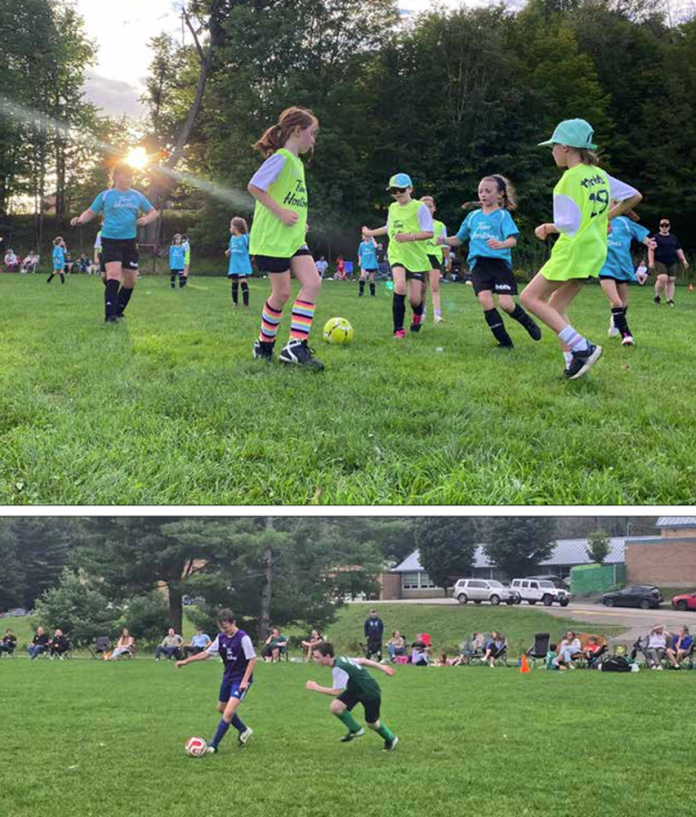
It was another stellar week of action out at the Hal High fields. With the summer air turning cooler and the sun dipping lower each evening, the playing conditions have become ideal for high-energy, competitive matches.

Player development is surging forward at a remarkable pace, with the kids eagerly stepping up to meet every new drill and tactical challenge their coaches throw their way. Parents watching from the sidelines are constantly marveling at how fast the action on the pitch has become from one week to the next; punctuated by crisp passing, powerful shots on goal, and amazing saves.

Any early-season hesitation or self-doubt has officially evaporated, replaced by a confident drive to capture that next victory.

Here we go, again

0

I was cc’d on an email last week that I found disturbing.

A volunteer with Pride in the Highlands had sent out a mass email to folks on the Pride email list. They were seeking helpers for another community event: Minden RotaryFest, which was held this past weekend in downtown Minden.

What a nice thing to do: calling on an already-established volunteer list to help out another community group in the Highlands. One person who got that email replied, in part, “f*** off with your freak show alphabet community BS.” He used the word “faggots” and said he was “definitely not a supporter of your mental illness.”

I was quickly cc’d on two responses.

One rightly said it is both sad and alarming to read hate speech directed at a community whose members are simply seeking to live their lives openly, peacefully, and with the same dignity and respect afforded to everyone else.

Regardless of the person’s beliefs, he said there is no justification for language that seeks to intimidate, or target people because of their sexual orientation or any other protected ground. He said LGBTQ+ people posed no threat to the writer, or the broader community.

Again, spot on. They are our neighbours, families, business owners, professionals, volunteers, and residents – entitled to live without being subjected to hate, hostility or demeaning rhetoric.

The other person who cc’d me said it’s quite horrendous to see how homophobic the community continues to be, and just how egregious their disgusting, discriminatory behaviour continues to be. It’s Pride Week. And although I wish I didn’t have to write my annual editorial on why it is still needed, emails like the one from this man make it essential that I do. Pride volunteer chair Chris Hewson told TheHighlanderhe’s seen an increase in homophobic-fuelled actions, including a banner in Minden promoting Pride Week twice being cut down in recent weeks.

He told us they see, and experience, more divisive verbiage and behaviour than in the past. He thinks it’s because they have become more visible, present and engaged with the community.

Hewson added being out is what Pride is about; being closeted is no place for someone to live, survive or thrive.

Funny, when the anti-vaxxers were running rampant in Haliburton County, hijacking the Canadian flag for their cause, I don’t recall anyone reaching out to me to tell me their flags had been interfered with.

People have always had strong differences of opinion. That’s okay. That’s how a healthy society works. It is okay to disagree. However, it isn’t okay to attack someone because they have different beliefs than you do.

We all know there are some great folks in Haliburton County. However, there remains a deep and dark pocket of homophobia.

It usually festers quietly away from the public – though thrives behind closed doors. Occasionally – as in the case with this email – it rears its very ugly head for all to see.

Haliburton County, and its residents, need to do far better.

County considers significant changes

0

Consultants, the Eastern Ontario Regional Network (EORN), have presented four governance models for Haliburton County – with the 2026-30 councils tasked with choosing one of them.

However, in its affordability and governance structure study, EORN supplied financials indicating taxpayers can no longer afford the current two-tier governance structure of the County and local townships (model one) – leaving three viable options.

They are model two: a singletier governance model. Essentially amalgamation, it would consolidate responsibility for all municipal services, decision-making, taxation, planning and administration into one municipal government.

An example is Prince Edward County; created in 1998 through the amalgamation of the Town of Picton, villages of Bloomfield and Wellington, and 10 surrounding townships. Another is Quinte West, bringing the former City of Trenton, village of Frankford, and townships of Murray and Sidney together.

Model three is an ‘enhanced County – four local municipalities.’ Under it, the County would assume responsibility for a majority of services that benefit from scale, specialized expertise, consistent standards, and regional planning.

Concerns about affordability

That could potentially mean: planning and development, building and permitting administration, public works and infrastructure, waste and environmental services, IT and digital services, procurement, HR, communications, finance, asset management, economic development and tourism, libraries, and facilities all County responsibilities.

The four local councils would focus on community-based services, local representation, customer service, recreation programming, community events, local heritage, local bylaw matters, and neighbourhood-level priorities.

Model four is referred to as ‘enhanced County – two local municipalities.’ It would see the County take on similar responsibilities as model three, but also, potentially, fire administration and emergency management, policing oversight, airport management and health centre services.

The four existing local municipalities would be consolidated into two larger local municipalities, each with its own council and streamlined staffing structure. For example, Minden Hills and Algonquin Highlands could align, with Dysart et al joining forces with Highlands East. They would have similar roles to model three. Some examples of these models are Oxford County, and Wellington County in Ontario.

Consultant Jim Pine told The Highlander, “the models are pretty significant in terms of potential change, other than staying the same. There’s a lot for everybody to consider. The good news is there’s time to do that in a very reasoned, and rational way. It will require more work but nonetheless, the way it’s been structured in terms of the study process is going to give future council an opportunity to decide what change, if any, that they prefer.”

Affordability

EORN said it did in-depth community engagement in June and July; including a survey and open houses, as well as consulting all councils, staff and stakeholders.

Affordability was the number one theme. Eighty-two per cent of respondents expressed concern about affordability, and 80 per cent about rising taxes and costs. More than three-quarters said governments could work more collaboratively and efficiently. More than half thought significant changes may be needed to improve overall governance.

EORN found that property taxes are supporting $70.6 million of $102.4 million in expenditures in all five municipalities in 2026.

In addition, all five are relying on reserves to support dayto-day operations. From 2023-26, the governments only contributed $19.7 million to reserves, while withdrawing $47.1 million.

This is not considered good business and should only be done when the offsetting expenditure has a defined end, or there is an approved financial plan to eliminate the need for reserve funding over time.

EORN also found that cumulatively, $29 million in additional debt was taken on over the past four years to support capital expenditures.

EORN stressed in its 178-page report that, “experience from comparable municipalities demonstrates that governance restructuring does not, on its own, guarantee lower taxes or immediate financial savings.

“Long-term benefits are more likely to result from improved organizational capacity, coordinated planning, reduced administrative duplication, strategic investment, and continuous improvement in service delivery.”

Work not done

The study is not complete. Pine said, “there’s a lot more that needs to be done in order to give people all of the information they might need.

“The details take time because you’ve got to figure out how you want to deliver the service, how much staff do you need, who do you need, where do you want to put them … those things take time and careful analysis.”

To see the full report, go to wadein.haliburton.ca

Councillors wade in on governance report

0

Deputy warden, Liz Danielsen, told County council Wednesday (Aug. 12), she recalled a Haliburton Highlands Chamber of Commerce meeting 12 years ago in which two or three “very well-respected local folks were stamping their feet saying there’s nothing but amalgamation to be done.”

A single-tier government is one of just four models the Eastern Ontario Regional Network (EORN) presented to County and local councillors. The others are status quo, or hybrid models.

Danielsen said back in 2014, she thought “no way” to amalgamation at that chamber meeting, factoring in things such as losing local identity.

“Over time, you start to see the true need for change. We truly do need to do something because we cannot sustain ourselves financially without massive increases in taxes, or doing something different.”

Danielsen, looking around a County table that had not just County councillors, but local councillors as well, added they had to work closer together. “More partnerships, more discussion, we need to play nice in the sandbox in order for us to improve things and keep life the way we want it to be in Haliburton County.”

She questioned if there was any room for the current council to have further input, despite already deferring the decision to the 2026-30 councils. For example, she wondered if it made sense to have a deeper dive only into models palatable to councils.

Coun. Walt McKechnie said he’s passionate about Dysart et al and would do what is best for its taxpayers. He’s worried about loss of identity.

“I just feel that this process right now is being really rushed, especially for the new council coming in.”

He said he couldn’t understand why the report did not mention amalgamations that had resulted in higher taxes. He said he would expect single-tier to produce lower taxes and better services.

Referring to something sent to him when he was driving to yesterday’s meeting, McKechnie read out examples of post-amalgamation figures from his phone; that City of Kawartha Lakes employee compensation had jumped 52 per cent and spiked property taxes; Haldimand County property taxes rose by 50 per cent … and other examples The Highlander was unable to verify as of press time.

He said he was unaware of good stories around amalgamation.

Counsultant Maureen Adams said she did not think County council wanted to commit to lowering taxes, but to building capacity, so, for example, there was not a need to do five audits, fives sets of financial statements, five budgets, five asset management plans, etc. so they could put more money into infrastructure and capital.

Pine, who was involved in the Quinte West amalgamation, urged councillors to look at what levy increases would look like going forward if they don’t change.

In the case of their four municipalities, he said, “we all came to the recognition we could stay the same, but what we wanted to do was more. And we realized on our own, we couldn’t do more. If public service is about the public and service, what can we do differently that will improve things … ?”

He said from 1995-96 to where the city is today, “it’s growing … they were able to hard top all the gravel roads in one year …”

They were able to open an industrial park.” He said it is an example of a success story.

Burton said there were differences in assessment base and population.

Coun. Pat Casey said the models were akin to a merger-acquisition, “and we need very solid financial data and efficiency data as to how much will be saved.

“Show us the money. Show us the efficiencies and then walk through the process of how we are to collectively vote on it or implement it. We need a crystalclear picture of its benefits.” He suggested they continue to work on service delivery review suggestions.

Danielsen asked Pine what his choice would be.

“Single-tier offers the greatest opportunity for reduction in duplication, the most opportunity around building capacity.”