
Home Blog Page 399

Firefighters stop brush blaze

0
Amber MacDuff and Quinton Sedore spray water at hotspots after a brush fire north of Gooderham. Photo by Joseph Quigley.

Highlands East firefighters put out a bush fire north of Gooderham today after a fallen tree knocked down a power line.

Acting fire chief Chris Baughman said that led to the blaze along County Road 503 July 28. Firefighters had to wait until Hydro One temporarily shut down power to ensure any electrical wires were dead before spraying water.

“As far as grass or brush fires, this is very typical,” Baughman said. “Had the conditions been drier like a couple of weeks ago, it certainly would have been a lot worse. There was a house up on the hill, so we had to make sure it didn’t get there.”

The County lifted a fire ban July 17. Baughman said the improved conditions meant the blaze could not get out of control once firefighters arrived.

Hydro One was also on scene to address the downed power line.

Fire causes $350K in damages

0

By Lisa Gervais

A residence on Autumn Lane in Dysart et al sustained $350,000 in damages following a structure fire July 27.

Dysart et al fire Chief Mike Iles said they got the call at 8:23 p.m. and didn’t clear the scene until 7:35 a.m. the next day.

Iles said that upon arrival at 8:31 p.m., “the north end of the residence was fully engulfed in flames.” He said firefighters were able to contain the fire to the north end of the structure but smoke and water damage was throughout the residence.

Iles aid the residents safely evacuated and firefighters were able to rescue one pet. There were no injuries.

Iles said seven fire trucks and 23 firefighters responded to the call. He added that mutual aid was activated and the Minden Hills fire department assisted with three fire trucks and eight firefighters.

SUB: AH department call-out

Algonquin Highlands’ fire department also responded to a structure fire on July 26.

Fire Chief Jonathan Wilker said they received a call about an active smoke detector at a residence on St. Peter’s Road about 10:30 p.m. this past Sunday night.

Upon arrival, he said there was smoke coming from the second floor.

The Stanhope station ran a hose up the stairs, containing the fire to a single bedroom.

Wilker said the homeowners were not home at the time and no injuries were sustained.

He said the cause of the fire was still under investigation.

New COVID case in Haliburton

0
This transmission electron microscope image shows SARS-CoV-2—also known as 2019-nCoV, the virus that causes COVID-19, isolated from a patient in the U.S., emerging from the surface of cells cultured in the lab. Credit: NIAID-RML via Flickr creative commons.

The Haliburton, Kawartha, Pine Ridge District Health Unit has reported its 13th confirmed case of COVID-19 in Haliburton County, with five high-risk contacts associated.

In an update July 27, the unit reported a new case, along with an additional probable case. Five others are high-risk contacts, meaning asymptomatic individuals who are known to have been in contact with a confirmed or probable case.

All other confirmed cases of COVID-19 in Haliburton have been previously resolved, including two reported last week.

Total cases across the district are now up to 213, with 22 active in the City of Kawartha Lakes and one active in Northumberland.

Folk Society to lend musicians a helping hand

0

The Haliburton County Folk Society (HCFS) says it’s created a new musical subsidy program for County residents.

In a July 17 news release, it said the purpose of the program is to support and maintain the Haliburton Highlands vibrant music community during COVID-19.

The implementation of the program enables local musicians to use their downtime effectively by supporting them to enhance their performance skills, while providing an income for selected instructors, the society said.

“Subsidies are available to local artists who may appreciate financial assistance to pursue their musical training and knowledge,” the society said, adding that training may include, but is not limited to, instrumental, vocal, song-writing, performance presentation and music technology.

“Each musician is able to evaluate their own personal needs and select the instructor who can assist them with their development. All forms of physicallydistanced instruction will be considered and may include instructors who do not live in Haliburton County. Recommendation of appropriate instructors can be requested but the final decision rests in the performer’s hands,” the society said.

Subsidies will cover up to 80 per cent of costs. The applicant is free to propose any qualified professional instructor.

Applications will be open until Aug. 15. Anyone interested in applying for a subsidy is encouraged to complete the application form found on haliburtonfolk. com. Questions can be directed to: haliburtonfolk@gmail.com.

“The closure of performance venues has severely impaired the ability of performing artists to earn a living and taken away a source of pleasure and relaxation for the listening audience,” the society said last Friday.

The HCFS has risen to the challenge, launching a successful online concert series that provided a source of revenue for artists and in-home listening pleasure for the public. A series of concerts was livestreamed from the Dominion Hotel.

As the community opens back up, the HCFS said it continues to look for innovative ways to support musicians while enhancing the vibrancy of the community.

The society said additional programs to support musicians and the listening public are in development and will be announced in the near future.

HHHS making recruitment inroads

0

A new full-time emergency department physician has begun working for the Haliburton Highlands Health Services (HHHS), while another is in the works for the fall, HHHS CEO and president Carolyn Plummer told the board during its annual general meeting July 16.

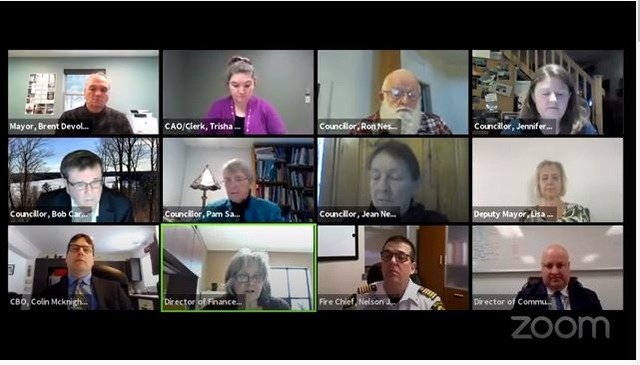
On a day when the Haliburton Highlands Health Services Foundation should have been staging its annual Matt Duchene Charity Golf Classic, the board held its first-ever AGM via Zoom due to the COVID-19 pandemic.

Board president Jeff Gollob said it was the 24th AGM and, “I’m pretty sure this is the first time we’ve held a virtual annual general meeting.”

Plummer told the board they’d collaborated with the physician recruitment coordinator that was hired by the County of Haliburton and had been able to recruit two emergency medicine physicians, one of whom has officially started and the other expected to start this autumn.

“And then a couple of additional locum physicians who have expressed interest in settling in this community. So, we’re on a great path when it comes to physician recruitment and I think that’s a huge accomplishment,” Plummer said.

Chief of Staff, Dr. Keith Hay, also acknowledged the work with recruiter Cheryl Kennedy “and many other individuals in the community,” in getting the full-time ER doctor, as well as anticipating other physicians joining the medical community in the near future.

“Having a new full-time emergency physician has reduced the number of emergency room shifts filled by Health Force Ontario’s emergency department locum program which we’ve depended on for some time,” Dr. Hay said.

Although COVID-19 has dominated the health scene locally, the AGM was for the fiscal year ending March 31, 2020 so was not the main focus of the meeting, although management and staff were praised for their reaction to it.

Plummer said the pandemic had delayed work on the Ontario Health Team (OHT) initiative but it was expected that process would resume, with a meeting scheduled for July 17. The province has mandated the creation of OHT’s and HHHS and its partners have been deemed to be ‘in development.’

Plummer said the OHT team had quickly changed focus, to become the Haliburton County Pandemic Planning Task Force.

Fiscally, despite its many challenges, including repairing the Highland Wood long-term care roof at a cost of $247,267, HHHS recorded a surplus of just over $20,000.

Auditor John West, of Grant Thornton, said “To realize a surplus on a $27 million operation is a significant achievement.”

It was acknowledged that the services could not have done that without the support of the Haliburton Highlands Health Services Foundation, and the Haliburton and Minden Hospital auxiliaries, which brought in $750,000 worth of equipment combined.

In her lengthy report, Plummer said it had been a busy year, with more than 11,000 visits to the Haliburton Hospital ER and close to 15,000 in Minden. She added that acute care numbers were on par with last year. Telemedicine received close to 1,500 visits, saving more than 465,000 kilometres, and more than 6,600 hours of travel time.

She said they’d put in a privacy screen in the palliative centre; added new beds in Haliburton thanks to the auxiliary; and new cardiac telemetry equipment thanks to the Foundation.

Plummer also highlighted the importance of HHHS volunteers, saying they had well over 300 active volunteers who had put in nearly 30,000 hours.

For more information on the AGM, visit the HHHS website.

Ugly haircut on Minden roads

0

Craig Gordon headed home from work last week, only to find a Minden Hills brushing contractor “doing a hatchet job” on the roadside trees and foliage.

“It’s a horrendous job,” Gordon told The Highlander via email.

He said he was given various reasons as to why the township needed to do the brushing and he understands it has to be done.

“But it doesn’t have to be done the way it’s being done,” Gordon said.

“We live in a beautiful part of the country and it’s hard to believe that this is how they treat our roads. People pay a lot of property taxes so they can have some curb appeal to their property and I’ve seen (the County and its four lower-tier municipalities) do this all over the county.” Hydro one also does brushing.

Travis Wilson, the township’s director of public works, said that to his knowledge there wasn’t much, if any brushing taking place on Minden Hills’ roadways prior to him starting with the township.

“From that, you can imagine our entire road network has become overgrown and in some situations overtaken the travelled portion of the road,” he said via email.

He said they started a brushing program five years ago, although it didn’t really become adequately funded until 2017.

The township has now placed its roads on an eight-year cycle, so that every eight years they will be brushed.

He added there is typically one or two residents every year that find mechanical brushing to be “ugly”; however, most are surprised that within a month or two of completion you wouldn’t be able to tell the equipment was through with the exception of not having to drive down the center of the road or hitting branches with your mirrors.

He said mechanical brushing is not special to Minden Hills and is widely used outside of the County as well.

“It is the most efficient and costeffective form of roadside brushing and is necessary for daylighting, ensuring adequate width of road platform and in the case of many roads, allowing access to the ditch with equipment for ditch maintenance.”

Warden Liz Danielsen also brought up brush removal at the July 22 County council meeting.

“Just a comment from a tree hugger, some of the brushing work is a little brutal looking,” Danielsen said. “I know that’s the case when its first done, but it’s just brutal.”

Left to Tell: Part 2 – Life in Canada in 1939

0

By Mabel Brannigan

In late August, 1939, Canada was still in the grip of the Great Depression with about 900,000 of Canada’s total population of 11 million still unemployed.

Life in Haliburton County wasn’t much different from other rural areas. On Saturday night, the boys stepped out in black and white Oxfords to dance to music made famous by big bands such as Benny Goodman and Glenn Miller, whose aircraft would be shot down in the Black Sea in the Second World War. At the Golden Slipper in Haliburton, Al Perrin interpreted big band music.

Roll out the Barrel was the favourite polka. Jitterbugs cut a rug to In the Mood, while Keith Brannigan got everyone on the floor to square dance when he called Darling Nellie Grey or Redwing and the girls showed off their pleated butterfly skirts in the swing.

People chuckled at the antics of Popeye and his spinach or Wimpy and his hamburger. Pork and beans cost three tins for 19 cents. Two tins of salmon cost 23 cents while a pound of coffee cost a quarter. In the rural areas in summer, mail arrived three times a week. Because of lack of telephone lines, it would take four or five hours to get a call to Toronto. Record crowds turned out at the Toronto Exhibition to see demonstrations of the coming of the incredible television.

But, while the building blocks of war were being put in place in Europe, most Canadians did not believe the future included a war scenario. Since it was reported that Prime Minister Mackenzie King had already recorded in his diary that Adolph Hitler may rank with Joan of Arc someday, there seemed to be no need for pessimism. Their optimism was shaken when the British government transferred $60 million in gold to Canada for safekeeping. But, when the explosive news came that the Nazi regime had bombed Warsaw, and that 52 army divisions had rumbled into Poland in September 1939, war was inevitable.

As in all of Canada, the shock wave hit Haliburton County. In West Guilford, 86-year-old great grandma Jane fretted that Frankie and Hazel’s boy would have to go overseas. This was Frankie Barnum and Ray Scott. They did along with seven of grandma’s grandchildren, two of whom did not return.

On Sept. 10, 1939, Canada declared war on Nazi Germany, not knowing that this war would last six years, a war that at the end of six years, would have claimed the lives of 50 million of the world’s people, and would leave countless others wounded in body and mind – a war that would change our maps and history, our lifestyle and our destiny forever.

Harp in the Dark – chapter 1: Mummy

0

By Hope Thompson

Doug Benner’s shift was nearly over. Two more shovelfuls and the site would be cleared. He brought up the arm of the backhoe, tilted the basket then lowered it, teeth first, into the earth. But earth didn’t fill the basket. Instead, the claw pulled up a white box. Benner eased the thing further out of the ground then locked off the arm and climbed out of the cabin.

“Gord!” Benner shouted, pointing at the thing.

Gord Patz sat at the wheel of a dump truck parked next to the backhoe—the receiving end of the excavating operation. He shut off his engine and joined Benner and they both peered at the discovery.

“Looks like a fridge,” Patz said brushing dirt off the white object.

Benner scratched the gray stubble on his chin. “Yeah, one of those old propane fridges.” He felt around in the dirt for a handle. “Wonder if it’s got a cold Billy Beer in it?” He heaved open the door. “I could sure use a—OH GAWD!”

Seven minutes later, Detective Harry Harp and Constable Terry Becker sped past Crystal Cove, a new development of townhomes perched on one of the largest lakes in Spruce County. The land sloped up sharply giving most units a view of the water and all were finished in a nautical theme—dove gray with white siding.

“I wish my mom would move into a place like this,” Harp said as they raced past the development.

“Where does she live?” Becker said.

“In the city. Same house I grew up in. My dad died two years ago and she refuses to move. In my opinion, the place is too much for her. Anyway, my sister lives nearby and checks in on her.” Harp winced at the thought of his mother and the time that had elapsed since his last visit.

“Where are your parents?” Harp asked, changing the subject.

The road turned to gravel and the car swerved. Becker slowed and regained control of the vehicle, then sped up again. “My mom lives in town. She’s on her own, too, but, well, she’s a little younger.”

The view out of Harp’s window turned to dense forest until the car rounded a corner and an open pit construction site appeared. A couple of pick-ups stood next to a pair of cop cars. Harp and Becker pulled up, cut the engine, and joined four men who were standing beside a backhoe.

“Sir.” A cop with red, tight cropped hair said, stepping forward. “These guys found it.” He gestured to Benner and Patz—then pointed at the ground.

Benner said, “It came up in my shovel. Thought we better call you guys when I seen inside.”

“Looks like a Servel,” Becker said.

“Servel?” Harp looked confused.

“It’s a brand of propane fridge that was popular here in the 60s and 70s. Some offgrid cottages still use them,” Becker said.

Silence filled in and the group looked at Harp, waiting.

The detective took a pair of surgical gloves from his pocket and pulled them on then he took a breath, reached forward and pulled up on the handle. The latch released and he heaved open the door. The lines in his forehead deepened and the muscles in his face tightened. What looked like a man’s body, dark green in colour and partially mummified, was stuffed into the fridge’s cavity. His clothes had disintegrated except for bits of waistband and the baby blue remnants of a V-neck collar. As the men gapped at the corpse, a pea-green cloud of death and decay rose from the fridge’s interior like a putrid belch.

The two cops recoiled. Becker’s eyes widened and he stumbled backwards.

“Get Williams!” Harp coughed.

“We called him!” the redheaded cop blurted out through his hand-covered mouth.

As if on cue, Coroner Boyce Williams’ vehicle pulled up. The little man walked purposefully towards the group with his two assistants trailing behind him.

“What’s this I hear about a man in a fridge?” Williams snapped then peered down at the contents of the appliance. His nose wrinkled. “I see,” he said, coolly, as he, too, pulled on surgical gloves.

After telling Harp that he would need some serious slab-time with the corpse and that he’d get them a report when he was good and ready, the coroner and his team set to work.

A gust of wind blew across the construction site where majestic pines once stood.

“What’s being built here?” Harp asked looking around.

“Condos,” Benner said and pointed at the forest. “Part of Crystal Cove.”

“With a forest between them? Nice.” Harp said.

Benner shook his head. “Nope. She’s all coming down. Once we get approval we’re leveling the forest and the old lodge, too.”

“Wait, what lodge?” Again, Harp looked confused.

Becker cut in. “You can’t see it from here because it’s so overgrown but there’s a lodge in there.”

Harp stared at the wall of forest, his eyes narrowing.

A few minutes later, the two men pushed their way through the undergrowth. Narrow trails zigzagged through the woods and Harp pointed them out.

“From animals—or kids,” Becker said. “I used to hang out here actually.”

Becker held back a large branch and Harp stepped forward into a clearing. An imposing two-story building loomed up before them.

“Pines End,” Becker said, grandly.

Weathered by time and neglect, the building still held a hint of its majestic past. In front, a large stone terrace, cracked and overgrown with weeds, spanned the length of the building and Harp could imagine couples lounging in the sun and dancing under the stars. The building’s cedar-shingled roof slanted low in the front and was interrupted by a series of dormer windows. And in the centre, a stone chimney towered above the roof.

“We used to party here after it closed,” Becker said. “When I was a teenager.”

The constable crossed the terrace and pulled at the door. It opened with a loud creak.

The two men stepped into a large room with a stone fireplace in the middle. Graffiti marred the walls and a couple of logs had been dragged inside and used as benches in front of the fireplace. Beer cans, food containers and an old blanket lay abandoned on the floor. Harp and Becker looked through the rooms. They were empty of furniture and some of their windows were smashed and others had plywood nailed across them. Leaves and twigs were strewn across the floor. The place gave Harp an uneasy feeling, just like the corpse in the fridge and the more he explored the abandoned lodge, the more he was sure the lodge and the dead body were linked.

The two men emerged from the derelict building and stood on the terrace. Situated on the same sharp rise of land as Crystal Cove, Harp could see the lake sparkling in the distance through the veil of trees that had grown up over time.

He turned to Becker. “Somebody knows that man in the fridge. Someone must have reported him missing. He’s someone’s son, husband, father.”

“Someone’s victim, too,” Becker added.

Missing man found dead at Minden Lake

0
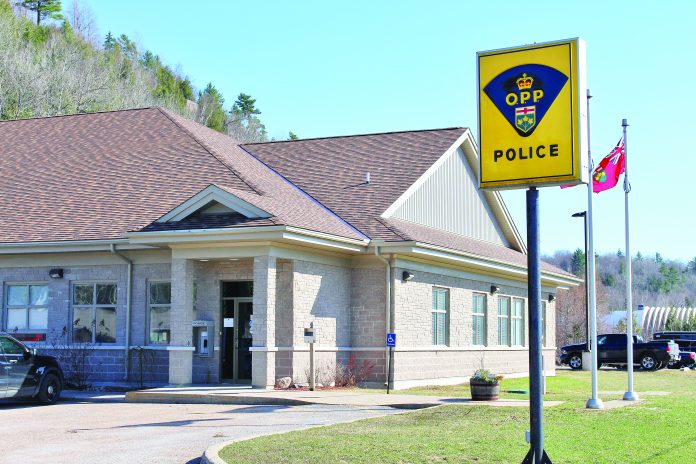
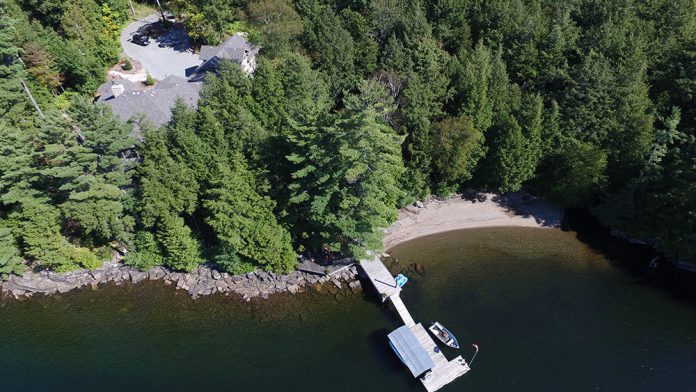
Robert Smith, reported missing last week, was found dead in Minden Lake July 26.

Haliburton Highlands OPP have confirmed Robert Smith, reported missing last week, was found dead last night.

OPP said in a press release it was called July 26 to the north end of Minden Lake where a resident had located a male body near their dock. They confirmed it was the 55-year-old Scarborough man, who last seen riding a motorcycle that was found in an overflow parking lot off Horseshoe Lake Road.

OPP said investigators do not suspect foul play. A post mortem examination will be scheduled at the Ontario Forensic Pathology Service in Toronto.


Lake associations push for speed limit signs

0
Haliburton Lake Cottagers’ Association president Glenn Scott (left) and Fort Irwin Residents’ Association treasurer Joe DiFrancesco stand next to a new (slow down) sign put up at Haliburton Lake Road July 4. Photo submitted.

Community organizations banded together to put up custom road signs to dissuade speedsters in the Haliburton Lake area July 4.

The Haliburton Lake Cottagers’ Association (HLCA) and Fort Irwin Residents’ Association (FIRA) partnered with Dysart et al to put up “slow down” signs at Hodgson Road, Dunn Road, Curry Road and Haliburton Lake Road.

The effort came out of concerns about pedestrians potentially getting hit. FIRA president Andy Valickis said there are issues with traffic and the roads’ limitations.

“A few people have had some close calls, so that’s been raised,” he said. “There still are concerns but this is a great step forward. Getting some signs, getting it in everybody’s heads to slow down.”

A County speed survey backs up the concern on the Haliburton Lake Road south of Ross Lake Road, which has a speed limit of 50 km/h. From April 4 to 14, 53 per cent of drivers travelling north went over 60 km/h, with another 32.2 per cent going between 50-60 km/h. Going south, 36 per cent of drivers went over 60 km/h, with 38.9 per cent going between 50-60 km/h. It has prompted calls from the associations for enforceable speed limit signs. But Valickis said the township is awaiting the completion of a road and speed study first, which they anticipate will be next year.

“We still need that enforceable, ‘here’s a speed limit, the cops will get you for doing over the speed limit.’ Right now, (drivers) don’t know what the speed limit is,” Valickis said.

But the municipality agreed to let the slow down signs go up in the meantime and paid for the poles used for them. Ward 5 Coun. Walt McKechnie said it is great the associations are doing this.

“They’re trying to educate the people to slow down and that’s what it’s all about. We’re all driving too fast. I think we’re all guilty of it at one time or another,” McKechnie said. “We’re trying to accommodate them.”

Valickis said they hope to put up a couple of more signs to address other problem spots, such as a difficult sharp corner. Besides that, they plan to eventually have speed limit signs put up.

“It’s a good compromise but we’re still not finished,” he said.