Home Blog Page 396

Good internet our basic right

0

Joe Mukherjee and his family live on Haliburton Lake, close to the Fort Irwin Marina. He works from home so internet connectivity is pretty important to him. Add COVID and the need to stay virtually connected with loved ones and the essentialness of good internet intensifies.

Joe’s with Bell and they have two DSL internet lines running to their house. That’s right. DSL … over the phone lines. He says the speeds are terrible, way less than the advertised 5MB/s, instead averaging about 400 KB/s.

After many calls to Bell, Joe said he went with a technician to the pedestal box behind the marina. Inside was a note dated 2018 saying the area is severely congested so not much can be done about customer complaints.

Sadly, there are a lot of Joes in Haliburton County.

Over the last couple of years, we have heard about service improvements coming to the region. Some believe NFTC has brought relief to people in the villages of Haliburton and Minden. The rest of the County is still waiting.

We are not unique. The Canadian Radiotelevision and Telecommunications Commission (CRTC) says only about 40 per cent of rural households in Canada have access to 50/10 Mbps, compared with 97 per cent of urban homes.

There are three projects on the books that we are keeping an eye on. On Aug. 18, The County of Haliburton supported two proposals that could provide thousands of people with better internet. Councillors directed staff to prepare letters of support for Bell and Xplornet for them to apply to the first intake of the provincial Improving Connectivity for Ontario program (ICON).

Both are proposing to build more fibre connectivity in the County with help from a $150 million grant funding pool. The Bell proposal would service approximately 4,000 homes in the County. The Xplornet project would assist 5,400 underserved premises.

The other projects include The Eastern Ontario Regional Network (EORN) proposing a new $1.6 billion project to deliver faster internet across eastern Ontario, including Haliburton County.

EORN is also working on a project to improve mobile broadband coverage in the region, a $213 million public-private partnership that is funded and has a request for proposals process underway.

With an estimated 18,000-20,000 households, many rural, we remain a little skeptical about how widespread these improvements will be.

Without federal, provincial or municipal money, the big internet players in Canada have not been all that interested in improving internet in rural and regional Canada. Many Highlander readers have shared stories of how a technician or someone at head office has told them, ‘sorry, it doesn’t make economic sense to run that fibre to your house.’ In other words, getting so-called last mile service down every gravel road is a major challenge.

With all three levels of government now prepared to pony up money, however, we can only hope that the promises actually come to fruition and that residents of Haliburton County can finally get the type of Internet that the CRTC says is our basic right.

If companies such as Bell and Xplornet, which have a very stable oligopoly in this County, cannot deliver the goods, the federal government has to lift restrictions on foreign ownership which prevents new companies from coming in and competing.

Highland Storm returning to the ice

0
The Highland Storm are planning to return to the ice in the fall with many changes due to the pandemic. File photo.

The Highland Storm is preparing for a new hockey season this fall with significant changes to allow for play amidst the pandemic.

The organization discussed the season during its AGM Aug. 17. They are preparing a plan for approval by the Ontario Minor Hockey Association (OMHA) under the Ontario Hockey Federation’s (OHF) Return to Hockey Framework. The Storm appointed a new COVID lead onto its executive and formed two subcommittees to address return to play.

President Jason Morissette said they will follow recommendations from the OHF and health officials to make it as safe as they possibly can.

“To not try, that’s really not good. We’re not just going to quit on it,” he said.

The OHF is planning to open on-ice activity starting Sept. 1, according to the Storm’s OMHA Rep Amanda Manning. She reported after two weeks of on-ice training – with a maximum of 30 people on the ice at once – games could start. But games will be limited to the public health unit area and either 3-on-3 or 4-on-4 with no physical contact, according to the OHF framework.

With a limit of 50-people inside a facility, there will be no local league or rep programming, no tryouts, and no tournaments. Team rosters are tentatively nine skaters and a goalie, with a coach and a trainer.

“It’s certainly going to be a different year,” Manning said.

She added although ice training will open in September, the Storm does not expect to be ready by then, and an October start is more likely. Morissette said it is an opportunity to give kids something positive for their physical and mental wellbeing in the pandemic. But he added people will have to dial back competitiveness.

“Our Highland Storm adult partners, as competitive as many of them are,” Morissette said. “We have to basically take a step aside this year to make this work. We really want to have fun … It’s not about winning games and trying to make the NHL and that sort of thing. This is the new normal for now.”

The organization will be working out more details in the coming weeks. Local arena partners will also have to make safety plans for the facilities, Morissette said. He added they will need more volunteer support for both coaching and COVID protocols.

“We’re going to need adults to step up,” he said.

Manning said they have about 130 registrants so far, with the deadline extended to Sept. 1. She said it is important for parents to register by then for organizing purposes.

Morissette said he thinks players will be eager to return. He said people should ask questions as more details are released.

“You don’t really realize what you have until it isn’t there,” he said. “There’ll be a new appreciation for the sport and some of the things we maybe took for granted.”

Puzzling over Heaven on the Hangdog Channel

0

Puzzle makers Michael Bainbridge and Brigitte Gall say they craft for “art geeks and science nerds” so it seemed only natural to do a Canadian Artist series. They will kick it off at their business, The Occurrence, Aug. 21 with first artist, Wendy Wood, on hand to sign puzzle boxes.

Until now, they have focused on earth sciences and Canadian cultural images but, according to Gall, “we chose the umbrella of ‘Canadian Artist Series’ to capture a diverse range of art that we also wanted to include.”

Wood, who has a studio in Carnarvon, is a landscape artist, and the first artist in the series.

“We really love her work, and asked her last year if she’d consider working with us. Heaven on the Hangdog Channel is a gorgeous image that we all thought would make a beautiful puzzle,” Gall said.

From there, Gall said they are keen to cast the net far and wide for other artists.

“We’ve got a couple of other Haliburton County artists in mind that we’re talking with, but we’ve also reached out to artists in Toronto, Newfoundland, and BC. We’d like to include tag artists, Asian and Indigenous artists, as well as text and graphic artists.”

She said the images not only have to be compelling, but also have to make a great jigsaw puzzle.

For her part, Wood said it’s a completely new experience. She said Gall approached her with the idea and she didn’t hesitate in saying yes.

“I’m really looking forward to it,” she said. “It’s good exposure for me and will hopefully be a good seller for them.” She added that she likes doing puzzles so it will be “kind of cool” to do a puzzle of one of her own paintings.

Gall said The Occurrence, at 130 Industrial Park Rd. in Haliburton, really got started this past July 1. She said although they took possession of the space last October, due to COVID-19 they didn’t get their new machine delivered and wired in until nine months later.

Initially, they were only focusing on fossils, minerals and gems but when shelter-in-place started to happen, they saw a huge upsurge in jigsaw puzzle sales. They decided to start designing and exploring Canadian historical pieces such as Dutch Bulbs, and Uncanny Robot. Dutch Bulbs is the cover of the Steele, Briggs seed catalogue from 1905, and Uncanny Robot (1943) is the cover of Canada’s first pulp fiction magazine.

Gall said it’s been going well.

“Being located on Industrial Park Road has been a huge bonus. Everyone has to go to the landfill. We’ve had really fantastic response from lodges and lake associations looking for custom puzzles, local and seasonal residents stopping in because they can’t believe there’s a jigsaw puzzle manufacturing company here in Haliburton, and online sales. No one knows what’s going to happen this fall, so people are starting to stock up and getting ready to hunker down,” she said.

She added that with COVID turning the world upside down, jigsaw puzzles offer a way to make order out of chaos that doesn’t require Netflix, competition, or a Zoom meeting. It’s also something people can do alone, or with family.

“Australian Prime Minister Scott Morrison referred to jigsaw puzzles as essential, and allowed people to leave the house to buy them during lock down. Three cheers for Mr. Morrison!,” Gall said.

The Occurrence also offers tours of the factory.

“When we show people how we make puzzles from start to finish, people ask ‘how the heck did you learn how to do this?’ It was a lot of trial and error, sheer stubbornness, mentoring from local business owners Jenn and Terry Craig of Artech Studio, and financial help in the way of matching grants and government programs offered through HCDC. None of this would have been possible without the outside help of family, friends, and HCDC,” Gall said.

The puzzle signing is Friday, Aug. 21, from 1-5 p.m.

Majority of families opt for back-to-school

0
Local parents had to decide this week whether to send their kids back to school or have them do remote learning starting in September. File photo.

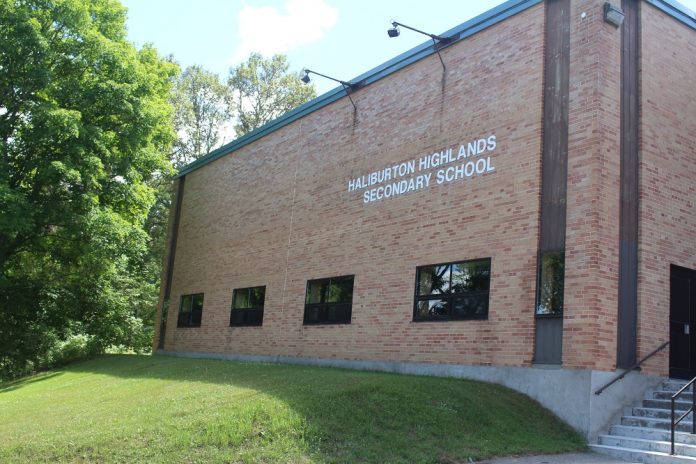
The Trillium Lakelands District School Board (TLDSB) is preparing for the school year with 85 per cent of its students so far opting for in-person learning.

Director of education Wesley Hahn spoke to the board of trustees Aug. 18 about back -to-school plans. After the board received a 92 per cent response rate for re-registration, Hahn reported that 85 per cent of those responses across the district are choosing in-person learning.

Hahn said the virtual school will be fully staffed with the expectation for much more rigorous learning compared to remote classes this past spring.

Superintendent Katherine MacIver said staff will learn from improvements made during virtual summer schools.

“We’ve made great gains in delivery of remote learning and we’re going to use those learnings,” MacIver said. TLDSB is one of the boards that will be returning to full-time in-person learning in September. Hahn said they are planning for issues, including washroom procedures, schedules and outbreak protocols.

Vice-chair David Morrison thanked staff for their efforts but added there is concern around crowded classrooms and buses. He said the number of students returning will make that challenging and asked whether the extra funding provided by the province for back-to-school could help address that.

“Social distancing is pretty difficult with 25 kids in a classroom,” Morrison said. “That’s a reality.”

Hahn said staff are examining all areas for that funding, but it will go quickly towards extra staffing, procedures, and supplies.

“We’re going to be looking at those hotspots or areas requiring additional attention or staffing,” he said.

The board of trustees voted to write a letter to the province addressing their frustrations with how it has handled back to school.

Morrison said it is important that boards speak out about issues in the plan. He said the government has failed to ensure class sizes are within parameters recommended by public health officials.

“What our kids and our families and our staff deserve is a situation where they feel absolutely safe because they know we’re following things that the health people have recommended,” he said. “This government has just not managed it that way.”

Trustees were also critical of the province unlocking board reserves for back-to-school, versus providing more funding. The province has allocated $309 million for additional staffing, cleaning and equipment. They added another $50 million for improving ventilation and $18 million for online learning Aug. 13. But education workers’ unions have criticized the plan as not being enough to ensure safety and reduce class sizes.

Trustee John Byrne said rural boards should have had the option for the adapted model – with students attending in-class instruction on alternating days – that designated schools in urban centres are doing.

“My frustration as a trustee, and probably as staff will attest to, is they keep changing the yardstick they’re using to whip you with,” Byrne said.

Trustee Louise Clodd said she agreed with sending a letter, but added it is important to recognize the help the province has provided.

“I’m looking to say we appreciate your support,” Clodd said. “But I would like to also ask, keep us better informed and ask us for our opinions.”

“We do have to compliment where it’s due,” chair Bruce Reain said. “But we also have to suggest shortcomings we see as a board.”

Continue livestreaming meetings

0

While it is a bit early for research data on how electronic council meetings are impacting Haliburton County there are some interesting discussions currently underway in terms of the use of technology, not just now but going forward.

Algonquin Highlands councillors kicked around the topic Aug. 11 when they held a special council meeting to discuss amendments to their procedural bylaw for electronic participation in meetings.

You may remember that on March 17, Ontario declared a state of emergency over COVID. A couple of days later, they made some changes to the Municipal Act so townships could meet electronically since they weren’t allowed to meet in person.

For months now, the County and its four lower-tier municipalities have been meeting on Zoom and livestreaming to YouTube.

Overall, these meetings have been successful.

On July 21, the province shuffled the cards again, opening the door to meetings of council, local boards and committees, on an ongoing basis – no longer tied to an emergency declaration.

Many townships here still have to decide about advisory committees – when and how they can resume their work. Some have been stalled for months. Could they be held electronically in this current state of emergency?

Some of the talk includes a hybrid model, in which council could meet in person in the future and the meeting still be livestreamed to the general public if it’s not deemed safe for the public to be in council chambers.

There are also discussions about continuing livestreaming council meetings once councils are able to meet in the chambers and be open for public attendance.

In Haliburton County, the majority of elected officials have put their hands up knowing that they are expected to attend council meetings in person. It means they are not wintering in Florida and Zooming in, gin and tonic just out of the laptop frame.

What councils are trying to do now is figure out under which unusual circumstances they may be allowed to Zoom in: such as if they’ve broken a leg, or just had surgery, or there’s a pending threeday blizzard. From what I’m hearing, the exceptions have to be pretty exceptional. And, they should be.

I’d like to see meetings resume in-person when safe to do so. However, I’d also like them to continue on YouTube and be available to the general public for a week after each meeting is held.

We live in a County where all five governments meet during the day. This makes it very hard for working people to attend council meetings. In other jurisdictions, municipal council meetings are held in the evening to allow the general public better access.

One alternative to that would be a continuation of livestreaming. I’ve attended my fair share of Zoom/ YouTube council meetings since the spring. Sometimes the numbers of people watching are in the 20s and 30s. Rarely, if ever, do 20 to 30 people attend a council meeting in person unless there is a decidedly controversial topic on the agenda and word has gotten out.

Having the meetings livestreamed and available for seven days would allow for greater transparency and greater public input.

Duchene reflects on season after Preds eliminated

0

Haliburton’s Matt Duchene said it had been an “up and down” first season for him with the Nashville Predators.

Speaking to Preds TV after being knocked out of the Stanley Cup qualifiers by the Arizona Coyotes Aug. 7, Duchene was asked to assess his first season with Nashville overall.

“Up and down. Obviously, we went through a lot of adversity this year, myself included. I think every adverse situation you get put in is a chance to grow and a chance to learn and move forward,” he said. Like all players and all teams, the Predators season ended in mid-March with the outbreak of COVID-19 and only resumed in the bubble in early August.

Duchene added that he had a lot of years left to play in Nashville.

“I’m proud and so happy to be here. I love this team. I love this group. And I believe in this group. Better days are ahead for sure.”

Duchene was traded from the Columbus Blue Jackets, on the heels of another short stint in Ottawa. For years he had been a stalwart with the Colorado Avalanche.

He scored his first playoff goal in the Aug. 7 game four of the series when he tipped in a point shot on the power play. Despite the Predators scoring late to tie the game and take it into overtime, the Coyotes prevailed 4-3 in the game and 3-1 in the series.

“Going forward, I think we just build on the process of what we did this series,” Duchene said of a series the Predators statistically led, and at times dominated, yet fell short.“I think sometimes you have to take a step back before you move forward,” Duchene said. “And I think this year we had to make some changes in how we played and I think this is some of the best hockey we played.

“So, obviously, It would be nice to be sitting here, series over 3-1 for us, unfortunately, we’re on the losing end but I think … this sting that we feel right now, we’ve gotta’ keep that in the back of our minds.”

Dry start to summer crashes lake levels

0
Pine Lake is one of many in Haliburton County that experienced low levels throughout early summer due to dry conditions. Photo submitted by Sharon Brinkos.

Drought conditions throughout the region caused abnormally low water levels at many Haliburton lakes and beyond, according to the Coalition for Equitable Water Flow (CEWF).

The Trent-Severn Waterway (TSW), which manages water flow throughout the region, reported rainfall amounts for May and June have been 25 to 50 per cent below normal for the area. That left lakes below long-term levels throughout the early summer, causing them to be impacted more by the TSW’s annual system drawdown. It has continued to reduce water levels in lakes throughout Haliburton, with decreases projected until at least Aug. 9, as of its July 26 update.

CEWF chair Ted Spence said they are also reducing water flows in the Otonabee River at the south end of the system, to match the reduction in flow elsewhere.

“Our group is very happy they’re looking very basin-wide in terms of water management,” Spence said. “If they hadn’t done that, we’d be much lower.”

The drawdown is done based on factors such as lake storage capacity, fish spawning, flood mitigation precipitation and maintaining flows downstream, according to the TSW.

Spence said the drawdown helps the TSW fill its reservoirs and bring them to a normal level come fall. The lower water levels caused by the drought and drawdown impacted boating and docks throughout the system. However, recent rainfall has reduced the drawdown rate, according to the CEWF. Spence said climate change is creating more seasons with extreme weather and people will have to adjust expectations accordingly.

“What we are seeing is more periods of extended droughts and more extreme rainfall events,” he said. “Everybody needs to adjust their own shoreline to adapt more to changing circumstances.”

That includes flow-through lakes accustomed to consistent water levels, such as the Maple, Beech and Cameron Lakes and Area Property Owners’ Association (MBC), which Spence said he has heard concerns from.

“We’re trying to manage for everybody’s benefit and it’s unfortunate. If you’re on a river or a flow-through lake, you are susceptible to significant change,” he said.

But MBC vice-president Charlie O’Connor said people in the area are frustrated by how the waterflow is being managed, to the point of writing a letter to MP Jamie Schmale addressing their grievances. In the letter, they said members are worried about declining property values and whether the waterflow needs might be due to Peterborough’s increasing size and water demands. They asked for a review of TSW’s processes.

O’Connor said periodic low lake levels have hit the area hard this year – his own beach receded about 25-30 feet earlier in July – and there is confusion about the reasoning behind the drawdown. He said the powers at be also need to communicate better about it and give people more forewarning to address their boats and docks.

“Common courtesy of letting us know they’re doing something that does affect us,” O’Connor said.

Still, Spence said the TSW’s approach is sound. He noted the success of TSW’s system-wide approach to help prevent extreme floods – as Minden experienced in 2013 and 2017 – by leaving more room for rain in its reservoirs during spring. It is a complex system to manage, Spence said, and people should consider it as a whole.

“We do understand the approach they’re trying to take. If it doesn’t rain for threeand-a-half months, I don’t think anybody has the right answers,” he said. “The right answer is we would have liked to have our normal climate and rainfall, but we don’t.”

Minden Pride needed in difficult times

0
Evan and Debbie Natale stand together at the end of an ad hoc Pride march in Harcourt July 22. Minden Pride organizer David Rankin said Evan Natale’s experience – being harassed for his sexuality while walking – shows why Pride is still needed. File photo.

Minden Pride chair David Rankin said forging ahead with the event was important despite the pandemic.

Rankin said a recent incident in Harcourt exemplifies the need for Pride, where gay teen Evan Natale was harassed while walking and the community responded with an ad hoc Pride march. Before that, Rankin said the family was not aware Minden Pride existed.

“It is important that youth who are younger, may not have the same social supports, may even be questioning at this point, understand that it’s safe for them to come out within this community,” Rankin said. “This is a way they can be made aware, and that we have a very strong, vibrant and supportive community for people of all ages.”

The weeklong celebration is going ahead Aug. 24-30, with primarily virtual events. But some events will be held in-person, such as a drive-in movie night at Abbey Gardens.

The planning committee had to change plans due to the pandemic, Rankin said. But he added they wanted to continue and provide something to celebrate in a difficult year.

“Things took a drastic change. We were uncertain what to do,” Rankin said. “We put together a plan that we thought we might be able to convert into real life, but looked at planning most of it virtually … We thought we could add a little bit of festivity to people’s lives.”

This will be the first Minden Pride without one of its co-founders and pillars, Sinclair Russell, who died in May. The organization is preparing a rainbow bench in Minden dedicated to him. Rankin said although Russell had stepped away from a primary organizing role, he left a big impact and still offered plenty of help for this year’s event.

“His big persona and his big ideas, he always shared those,” Rankin said. “He was still really a big part of the planning process.”

A full listing of events is available at mindenpride.ca. Rankin said it is a significant year, with the event’s fifth anniversary.

“We’re hoping it really solidifies our presence here within the community,” Rankin said. “That people really understand we are here, through thick and thin.”

Left to Tell: Part 5 – Hitler’s biggest military blunder

0

Hitler was Germany’s Fuhrer for 12 years, loved by some, hated by most. He and the Gestapo were monstrous, evil men without conscience. But he was also a genius. In three years, he had cured Germany of unemployment and inflation. It was how he did it. Hitler’s goal was to wipe every Jew from the face of the earth. In the span of the war years, approximately six million of the Jewish people were slaughtered. The unheeded shocking beginning of such cruelty began with small signs on park benches, ‘Jews unwanted’.

“Thou shan’t not kill.” The most sacred commandment to many Jews as well as to other faiths meant nothing to Hitler and his Gestapo as they euthanized more than 100,000 of his own German people who had disabilities or were terminally ill. In Hitler’s view, these people contaminated his Master Race. In 1942, public outcry stopped the practice.

But, the ultimate of the Nazis unforgiveable sin was reserved for the Jews. To the Nazis, the Jews were non-people. They worked first until dying of starvation. At the concentration camp of Majdanek, shoes were moved from Jewish feet before extermination in the gas chamber. The shoes were then distributed to German people.

We must conclude then that the unforgiveable sin lies in the denying of another person’s humanity. It is not the techniques used to complete the denial. When the decision is make to commit the unforgiveable sin, what does it matter if it is extermination in the gas chamber, Canada’s shame of residential schools, genocide in Rwanda, or the horrible things we have heard from Syria? No matter how cruel and evil the technique is, the unforgivable sin has already been committed.

It is not surprising then that in 1941 Hitler and his Gestapo broke a non-aggression pact with Joseph Stalin by stabbing Russia in the back and attacking Russia. This had to be Hitler’s most regrettable military error. I will never understand why he didn’t first invade Canada. We had no equipment. Our men were all in Europe. We could get no help from the Americans. They were busy with the Japanese who ruthlessly attacked Pearl Harbour on December 7, 1941.

But, Hitler was used to terrorizing and capturing European countries. He thought Russia would surrender. He underestimated the power of the Loyal Russian Bear. He underestimated the devotion to their county as the Russian people continued to pour out tanks and war equipment for their endless armies.

The Nazis reached Leningrad on September 8, captured Kiev on September 19 and continued on to Moscow. At Stalingrad, an entire Nazi army was wiped out. This was the first time that Nazi Germany ever faced defeat. On December 12, the Nazis began to retreat. Nevertheless, by the end of the Second World War, 20 million Russians had died, the largest human sacrifice of any of the allied nations during the war.

Harp in the dark: Chapter 4 – Whatnot

0

Detective Harry Harp and Constable Terry Becker sat in front of a computer looking at a bearded, ruddy-faced man named Brett Penzler. Penzler had contacted the Spruce County Police Hotline and stated that he had been at Pines End on the weekend of Rand Carlyle’s disappearance. He lived on a farm near Airdrie, Alberta and was speaking to the detectives through a video link.

“Mr. Penzler—,” Harp said.

“Call me, Brett.” The man interrupted. “Even the cows do.”

Harp forced a smile. “Brett, what do you remember about the night of August 1, 1970?”

“I remember getting wasted.” Penzler grinned widely. “These twin brothers were staying at the lodge and they’d scored some booze and well, we were all partying hard.”

Becker cut in, “Who’s we?”

“Let’s see, the twins—I think their last name was Moort—me and my brother, Cat and her sister. Actually Cat Wilson and I had a little fling that summer.” Penzler smirked. “Some sweet memories there!”

Becker said, “What about Carlyle’s daughters? Were they with you?”

The man shook his head. “Don’t think so.”

“What about Rand Carlyle? Do you remember him from that night, or at any time?” Harp said.

After stretching each of his elbows behind his head and producing two clearly audible cracking sounds, Penzler said, “I remember him being taken out fishing. It was funny because he wore a lot of white. He always looked clean, you know? Not like he’d be interested in fishing.”

After discussing Penzler’s memories of Pines End for a few more minutes, Becker severed the video link and the two detectives sat in silence.

Finally, Harp stood up.

“Let’s go back to Pines End,” he said with more enthusiasm than he felt. “That’s where the murder happened. Hopefully, that’s where the answers are, too.”

Half an hour later, the two men walked across the terrace and stepped inside the abandoned lodge. Sunlight slanted across the empty great room and Harp could see dust hanging in the air. Climbing the stairs, they inspected the five guest rooms on the south side of the building and on the north side they found moldy bathrooms and closets filled with mice droppings—but no clues to Rand Carlyle’s murder.

Maybe the answers aren’t here, Harp thought as he felt the case slipping from his grasp. He looked around for Becker and found him in an alcove off the great room.

“Right there …” The constable said wistfully, pointing at the floor.

“What’s right there?” Harp said, confused.

“Me and Jeanine Kluggen. Right there.” He turned to Harp. “My first time—and sorry if that’s too personal.”

“You’re starting to sound like Penzler,” Harp said.

“Hey?” The constable pressed his hand against his heart. “For Kluggs and I, it was love!”

Harp smiled. “So where’s Kluggs now?”

“Working at Food World in town. I see her all the time. She’s married and has a couple of kids.”

“What is it about this place?” Harp said shaking his head.

“Before it got so wrecked we used to have a lot of fun here. Drinking and whatnot.”

Harp looked around the damaged interior and the lines in his forehead deepened. “There’s something more. There’s something about people’s desires or maybe—holiday desires …”

The detective let the half-formed thought hang in the air then he turned and walked outside. Becker stared after him, puzzled.

A few minutes later, the two men pushed their way through the undergrowth to a small building with boarded-up windows. Its double doors were padlocked.

“Shall I?” Becker asked, his face lighting up. Harp nodded then watched the young constable pick up a rock and smash it against the lock. On impact, the ancient security device broke in two and fell to the ground. Becker swung open the doors and the two men looked inside. Like the lodge, the building had been stripped of most of its contents except for a heavy wood workbench, some rusted bed frames and a couple of tires.

“According to the old case files, this was the caretaker’s workshop,” Becker said.

Harp was silent for a moment then he said, “Kluggs works in town, eh?” Becker turned to the detective, eyebrows raised. “Like I said, she’s married.”

Harp disregarded the comment. “You grew up in Spruce County and you stayed in Spruce County. She grew up here and stayed here …” Harp spoke slowly teasing out a thread.

But Becker was already rolling it into a ball. “Lots of people born here stay if they can find work. It’s beautiful here! Why wouldn’t you stay? But work’s the problem. Lack of it drives people away.”

Harp raised a finger in the air. “We’ve only been hearing from the guests. What about the staff?”

Becker’s eyes brightened. “I see what you mean. If they’re alive, they could be right here under our noses. And they were probably all locals!”

Harp’s phone played the distinctive sound that indicated a text had arrived. This time, the missive was from Brigitte Cave, the librarian. It read: I have something for you, Harry.

Reading the sentence, the hammers in the detective’s heart could not help but knock together and he told Becker they had to get to the library—immediately.

Half an hour later, Brigitte Cave greeted them at the front desk and handed Harp a 9×13 envelope.

“All the local newspaper articles I could find on the Rand Carlyle case,” she said. “So, I guess he didn’t drown after all.”

“No,” Harp said. “This was definitely murder.” He thanked her then hovered for a moment.

“Er—Brigitte?” He said and felt some heat in his face. “What do you look for in a vacation? R and R? Rest and relaxation?”

Brigitte Cave’s mouth curved into an inviting smile. “Add another R, Harry.”

“Huh?” Harp resisted the desire to pull at his collar.

“Rest, relaxation—and romance,” she said. “A change of scene can be, well, stimulating, don’t you think?”

August 1, 1970 – 11PM

On the lodge’s sprawling lawn, Cat Wilson lay curled up beside Brett Penzler. Across from them sat Brett’s brother Brock, Beth Wilson and the Moort twins. The twins were surreptitiously pouring out shots of rye and a couple of empty bottles lay nearby.

Cat said, “I need more ginger ale. I will barf if I drink this straight.” She looked around for someone to solve her problem. Through the lodge windows, she saw people with drinks in their hands. But she decided against walking inside and requesting ginger ale at the bar. For Cat, being a guest and demanding service was an exquisite thrill—especially from the local boy called ‘Dogsbody’.

Where is that hick? She thought, her head filling with malice like a glass under a tape.

“Dogsbody! I want ginger ale!” She screamed and her eyes sparkled with hate. “Let’s all whistle for him—like a dog!”

The drunken teens whistled crazily—then stopped suddenly when they noticed a woman standing on the terrace wrapped in an orange silk dressing gown. It was Trudy Carlyle and tears glistened in her eyes.

“Have you seen my husband?” She said. “I—I can’t seem to find him.”