
Home Blog Page 300

Birders flock to Christmas count

0

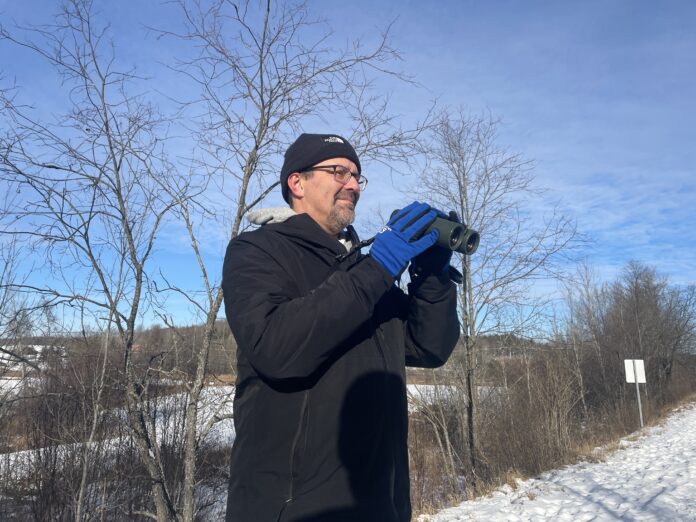
Ed Poropat looks up at the frosty evergreens lining the Haliburton County Rail Trail. With binoculars in one hand, he makes a “pish pish pish” sound that carries through the trees.

 With any luck, the birds will answer.

 An avid bird watcher, Poropat administers Haliburton’s portion of the 55th annual Christmas Bird Count. On Dec. 18, birding experts and novices gathered south of Haliburton to record the bird population. 

The results aren’t tallied yet; but in some respects the year was already a success. “We had more field counters than we’ve ever had,” Poropat said. This year, there were 32 field participants, along with many others who recorded winged visitors to their bird feeders in the area. 

He said there were quite a few new birders this year, paired up with one of the many experienced birders who have made the Christmas bird count a yearly tradition. “We try to build confidence and familiarity with the protocols,” he said. 

The Christmas bird count is Canadawide, with Birds Canada tallying up the total results from each 24-kilometre-wide monitoring zone. “Over time you get a picture of what’s going on, because of counts like this,” Poropat said. 

For instance, he’s seen an increase in the count of birds of prey in recent years, however overall counts dipped last year to 3,724, down from the 20-year average of 4,280. Some bird populations, he said, are more flighty: depending on the quality of food, such as pine cones, the populations of smaller birds can fluctuate year to year. 

Where it gets tricky, said Poropat, is determining how to count birds only once.

 Depending on a birder’s location, on which side of the Gull River, for instance, they might accidentally count a bird that is in another counter’s section. 

“There’s a lot of phone calls and emails,” he said, as he sorts through the results of the study. It’s a lengthy process and Poropat estimates he’ll be able to paint a clearer picture of the Highland’s count results in January. 

He’s noticed an influx in birding interest over the past two years. “Especially during COVID-19, people want to find ways to be outside,” said Poropat. On the rail trail, he points ahead off the trail; a warbling call echoes from the thick bush.

 “We’ve got a raven there,” he said. Poropat loves birding for “a whole bunch of reasons. I love being outside; the challenge of looking for stuff and finding things that are unusual,” he said. “I love the camaraderie, the guys that I go out with. 

And from the other perspective, it’s citizen science, it contributes to science.” Poropat also leads birding excursions through the Haliburton Highlands Land Trust.

 It’s a way for people, Poropat said, to “make a connection with the land around them, and what lives there. Once people develop that connection, they’re way more apt to connect with it.” 

HHSS going back to regular semesters

0

Regular four-class semesters will be reinstated across all TLDSB secondary schools in February, says the board’s director of education Wes Hahn. The decision was announced Dec. 9, with Hahn providing additional details at a Dec. 14 organizational meeting of the board.

He said strong vaccination rates of secondary school students was a key factor, with a significant number of the board’s Grade 9-12 student body having received a first and/or second dose of the vaccine. 

While students have been engaged in the quadmester system since September, Hahn noted co-horting at the secondary level has not been taking place. 

Students have been mixing, and participating in extracurricular activities – sometimes with students from other schools and boards. 

Despite this level of interaction, TLDSB has had only five cases of COVID-19 across its seven secondary schools and six alternative and adult education centres between Sept. 1 and Dec. 14. Superintendent Kim Williams said principals and teachers have been engaging with students since the start of the year over the pros and cons of the quadmester system. “While many students enjoyed quadmesters, many others preferred the semester system where they could spend more time learning key concepts to help with the retention of material for future use. The benefit of having more time to learn and retain information was echoed by teachers and principals,” Williams said. 

“Our principals work with students and staff every day in our schools. They believe the semester system is best for student learning.” 

A quadmester is a condensed schedule where students participate in two classes daily over a 44-day period. Regular semesters see students engaged in four classes over the course of several months. Haliburton trustee Gary Brohman supported the decision.

 “I think students in Grade 9 and 10 that have never felt semestering will love it. They will feel it’s like a high school,” Brohman said. Williams noted lockers will be made available to secondary school students beginning Feb. 7.

 Annual report

Despite challenges over the past 12 months, Hahn said TLDSB had made “great strides” on several fronts in 2021. 

Continued investment in technology ensured all students from Grade 7 to 12 had access to a device they could take home for virtual learning, while around $17 million has been spent bringing school facilities up to new health and safety standards, with the installation of HEPA filters in classrooms and improvements to central ventilation systems taking centre stage.

TLDSB’s four-year graduation rate increased by one per cent, while the graduation rate for students enrolled in “specialist majors” increased from 48 per cent in 2019/20 to 58 per cent in 2020/21.

Each department head provided updates, with Williams saying the board is expecting to see a decrease in credit accumulation rates for students from Grades 9 to 11. “Despite a strong start, students struggled as the year ran on and COVID fatigue settled in,” Williams said. 

“Although we have a number of credit shy Grade 9 and 10 students, we are confident we will be able to help them graduate on time through programs like School Them in a College, dual-credits, specialist high skills majors, Ontario Youth Apprenticeships and summer school co-op.”

Director’s update

Hahn said the board has yet to receive any information from the ministry regarding potential school closures in the wake of a fifth COVID-19 wave. 

The provincial government announced new restrictions Dec. 17, with the number of daily cases exceeding 4,000 for the first time since April. 

The Omicron variant, considered to be a super spreader by health care professionals, is prevalent in many parts of the province, including the Haliburton, Kawartha, Pine Ridge district. Should there be any changes to the school schedule, Hahn said TLDSB staff will be ready. “If there are changes over the holidays, as we have done in the past, we will take a very measured approach to allowing people to come back into the building, get what they need to ensure we can start up in a different mode of learning,” Hahn said. 

“There is no panic here. We are going to continue on in the way we’re doing things right now, and hoping we will be back in-person after the holidays. But if there are changes, we are ready to go.”

Handing the mic to Highlands stars

0
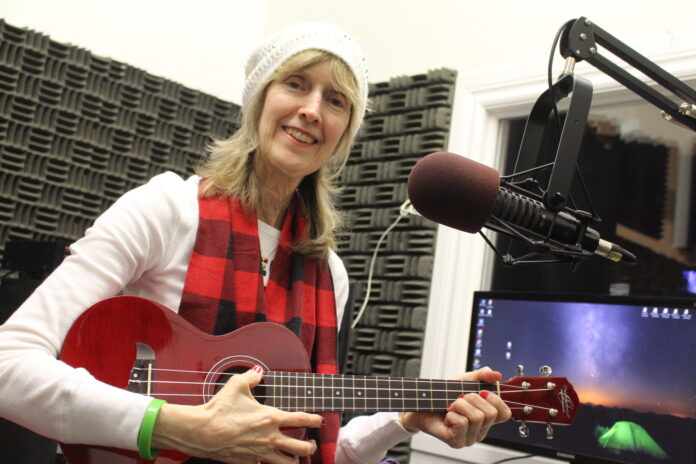
Penny Randall-Mowbray hosts Locally Sourced on CanoeFM

Penny Randall-Mowbray wants to play your music on her new show, Locally Sourced, which landed on CanoeFM airwaves the first week of December. 

Airing each Wednesday from 7-9 p.m., Randall-Mowbray features local music and musicians who visit the studio to play live. “If you look locally in every small town, in every hamlet, there are musicians; there has always been musicians,” she said. 

The show aims to illuminate Haliburton’s talent which many may overlook. “We just don’t recognize it: we think we have to leave our community to find music and we do not: it’s all right here if you just look around,” she said. Local up-and-coming songwriters like Cassidy Taylor belted out original tunes live and Annabelle Craig brought her cello into the studio for a show; their music played right alongside tracks from seasoned voices such as Carl Dixon. Randall-Mowbray said she opens each show with a song by an indigenous artist to honour the original stewards of the land.

 “I think people really love it,” RandallMowbray said.

 She’s been volunteering at the station for four years. Throughout that time, she said she’s come to appreciate the community of musicians in Haliburton who encourage each other to play no matter their skill level.

 “If others in your circle have told you you’re not good enough, you’re not this, you’re not that, you can reach out to other like-minded individuals.” 

She’ll play just about any music locals send in, and always is on the hunt for performers who may want to strum a few tunes.

 Beginners are welcome. “I couldn’t play ukulele, I couldn’t play anything: everyone starts out at zero but there’s no way to go but up,” she said. 

She hopes listeners might be encouraged to pick up an instrument themselves. 

“I think whatever age we have playing: somebodies going to resonate with that,” she said. “I’m an older musician and not very good, but people might say ‘hey, she just started playing a few years ago. If she can do it, I guess I can do it too.’” 

Hunter Creek rezoning a ‘tearing apart’ issue

0

Minden Hills council unanimously rejected a rezoning application for a multi-unit longterm residential development on Hunter Creek Road Dec. 9. 

Contracted planning consultant Darryl Tighe said that long-term multiple-unit residential use does not conform to the township’s official plan, which directs that planning suit surrounding development and landscape.

 While the property is currently zoned as a waterfront, neighbours who addressed council said the property is already occupied by multiple long-term tenants. The commonly accepted definition of waterfront zoning refers to single-occupant residences. 

Tighe’s report also claims the property was part of a larger land parcel that was severed with an agreement declaring “that the ‘motel’ was not to be utilized for commercial purposes.” This means the current use seems to be in violation of the township’s zoning rules. The applicant did not submit any technical reports.

 Jeffrey Streisfield, a lawyer representing the property owners, said disallowing the rezoning would be “draconian.” He said the plan to turn the building into residences geared to seniors means “long-term residential housing in a county and municipality that has not been able to address the housing crisis that exists.” 

Melissa Markham, the applicant’s agent, said evaluations of environmental impact are noted as being the biggest factor in determining suitability. Since the property wouldn’t change if rezoning is allowed, Markham said the environmental impact would be negligible. 

She did not provide or refer to an environmental impact report. Luigi Centurami, who said he owns the property, declined to comment. 

Mayor Brent Devolin said he was “very comfortable” taking the planners’ recommendation to disallow the rezoning. “It’s not housing under no conditions,” Devolin said.

 Deputy mayor Lisa Schell said the applicant “asked for forgiveness rather than permission,” since there are “six units” currently being rented at the property. 

Coun. Pam Sayne said she was “very angry” at the divisive situation and that the application represents a “tearing apart issue.” Sayne said “poor landlords can create situations that make the residents look bad.”

 Nearby property owner Dan Martel said council approving the rezoning would “portray the wrong message” since a 2016 agreement seemed to block the landowner from using the property for multiple longterm units.

“I think it’s wrong, and I’m definitely against it,” Martel said. 

Multiple other neighbours reported deteriorating road conditions, due to increased traffic on the private, unpaved cottage road. Others said they’ve seen trucks parked on septic beds and tenants trespassing on neighbouring properties. 

Nearby resident John C. Law wrote in a letter to council he was concerned issues with people who appear to live at the property would only “escalate” if the rezoning was approved. Coun. Sayne said the file points to a much larger issue. 

“What we need to do here is address our housing concerns in a much larger way than we have,” she said. Devolin said he couldn’t discuss specifics about how apparent zoning infractions at the property are being addressed but said “there are things going on, on multiple fronts.” 

Townships respond to new Omicron business rules

0

Haliburton’s four municipalities have announced new restrictions and safeguards as COVID-19 cases in the province rise. Minden Hills’ offices closed Dec. 21, with staff booking in-person meetings on an individual basis. 

Landfills will operate as usual, and building and planning applications will continue to be processed, as well as building inspections carried out on a case-by-case basis. 

The Agnes Jamieson Art Gallery and Minden Hills Cultural Centre are closed until further notice, along with the gymnasium and walking track at the arena. Public skating and ice programs are limited to a maximum of 25 participants. 

Algonquin Highlands and Highlands East have announced similar restrictions. Anyone visiting municipal offices has to have an appointment.

 Dysart et al encourages all visiting municipal offices to book an appointment, and will only be allowing one person in the township offices’ lobby at a time. CAO Tamara Wilbee said the arena and Haliburton Highlands Museum will run at 50 percent capacity. There will be no new bookings at the arena auditorium. The Head Lake welcome centre and public washrooms will remain open. The rules come after the HKPR health unit asked businesses to re-instate work-from-home when possible and limit in-person contact. 

A different kind of ice at River Cone

0

This year, winterizing Minden’s iconic River Cone didn’t mean unplugging fridges, locking doors or shuttering windows. 

Instead, new owners Monica Bolton and Ben Scott have been hard at work crafting the Cone into a winter destination for locals, snowmobilers and perhaps even skaters. 

They aim to open five days a week in January, a first for the location they’ve been operating since May 2021. 

That’s in large part due to the heavy snowmobile traffic that runs right by their back door. “We thought if we could somehow serve that community, it would be great for them, it would be great for us, but it meant we had to reinvent a lot of things in the process,” Scott said. 

With a background in construction, Scott has been ensuring the fibreglass cone, traditionally just a summer spot, is ready to dish up quality meals in the cold. Scott said they’re excited to offer hearty meals like stews, soups or house-made mac and cheese, “things that really fill you up,” he said. 

Bolton presented a vision for a River Cone skating rink at Minden Hills council Dec. 9. She said it could be a big draw for tourists who might hit the ice before grabbing a hot beverage at the River Cone or perusing downtown shops. “Taking a public space like this and offering added features; it’s quite a draw,” said Bolton. 

While the rink wouldn’t be operational this year, the River Cone’s received broad support on social media and councillors seemed receptive to the project. “It sounds dreamy, frankly,” said deputy mayor Lisa Schell. 

Mayor Brent Devolin called the idea “novel” but cautioned there are “nuts and bolts” associated with constructing and operating a rink on the area, which is an unused municipal road. Bolton and Scott said they’re excited to continue to explore how the project could proceed in future years. “I think this idea has some legs,” Bolton said and addressed the many who’ve voiced support for the project online “don’t lose patience or faith that we can work with the municipality so we can do something cool with these unused spaces.” 

In the summer they strung up a pickleball net on the road, and local youth often play basketball there while hanging out around the eatery. “We feel really strongly about the need for kids, and youth especially, to have someplace they can go,” Scott said, “where they have freedom to be themselves but there are lots of eyes on them so they’re accountable for their actions or behavior.” Skating rink or not, Bolton and Scott said creating a community hub is a central value. “We enjoy that sort of vibe,” Bolton said.

Library lockers coming to Dorset

0
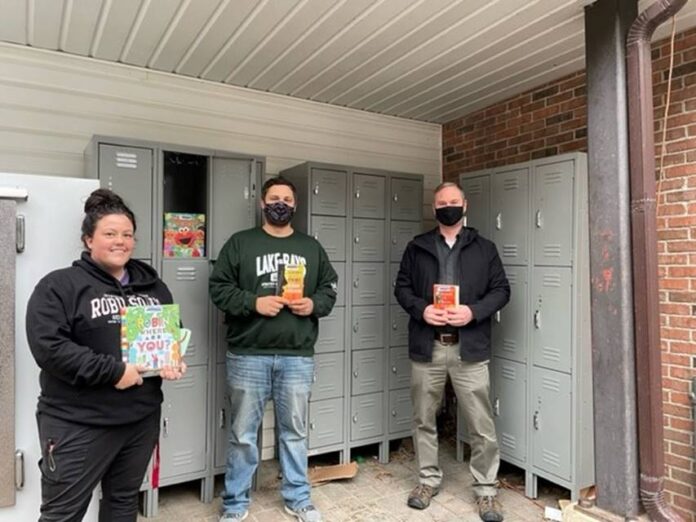
Library CEO Chris Stephenson, right, with Robinson’s owner Mike Hinbest (centre) and employee, Lee Ross. Submitted

After nearly a year without service, Algonquin Highlands readers will soon have local library access. 

Three lockers are being installed outside Robinson’s General Store in Dorset where patrons can pick up reserved library items. 

Library CEO Chris Stephenson said he’s excited to have found an interim solution. It’s a fairly innovative service,” he said. “It’s an out-of-the-box solution to a challenge.” 

Once the lockers open, likely within weeks, patrons can reserve books and materials online, using combination padlocks to pick them up.

 Stephenson said the library is rolling out an educational campaign, letting local users know when the lockers will be usable and how the system will work. Despite a small population, Stephenson said there are many steady users of the library in the area, and there will likely be deliveries to the lockers twice weekly. 

“The location couldn’t be any better,” he told the library board in a Dec. 8 meeting. Mold has closed the Dorset community centre since spring and service at the Stanhope branch is still offline, as accessibility improvements have blocked off the front entrance. 

Library staff must be vaccinated

 HPL workers must soon be vaccinated or face employment termination. The vaccination stance is “based heavily off the County draft policy,” said Erin Kernohan-Berning, branch services librarian. Patrons will not need to be vaccinated. 

Warden Liz Danielsen asked how staff felt about serving unvaccinated patrons. Kernohan-Berning said the library lacked human resources to check vaccination status, and the current policies follow suit with libraries across Ontario. 

Stephenson said “we just maintain the same practices we supported through other stages of the pandemic but said the library is ready to pivot if things turn for the worse.” That includes plexiglass partitions at counters, sanitizer, mandatory masking and spaced seating areas. 

Rebrand coming 

The library board approved funding for a HPL rebranding initiative that will result in a new logo, as well as changes to the visual appearance of the library’s literature, website, signs and more. Kernohan-Berning said an “appropriate time to do a rebrand is when you’re rolling out a new look.” Mugo Web, a company hired to build the site, will also be contracted to complete the rebranding at an estimated cost of $5,000. The company will provide the library board a chance to approve designs, fonts and more throughout the rebranding process.

Safety and well-being plan ‘incredible opportunity’

0

Strategy Corps’ draft Community Safety and Well-Being Plan is headed to County council in the new year. The steering committee made the decision during a Dec. 15 meeting in which the draft was presented by consultant Lauren Wyman. 

Wyman said that in consultation with Highlands’ service providers, about 30 organizations, as well as a community survey of more than 100 respondents, they’d identified four priority areas and a number of goals under each.

 “The success of this plan lives and dies by community engagement and making sure the solutions that are developed are done so with the beneficiary citizen in mind,” Wyman said. Strategy Corps’ John Matheson said they were mindful of presenting the committee with “a useful addition to what you already had, not a replication,” which would put demands on a system already overtaxed. 

The priority areas have been identified as: housing and homelessness; poverty and employment; mental health, substance use and addiction; and healthcare system access. Each has specific goals, with a total of 12. 

Wyman noted many of the areas are interconnected. “Someone who is experiencing housing and homeless challenges may also, or likely is also, dealing with issues surrounding poverty and employment and some may also be trying to navigate the mental health or substance use supports in the community as well as [experiencing] medical conditions.” 

She said they kept in mind that one issue can be compounded by another and none exist in isolation. For example, under housing and homelessness, goal two is to “develop wraparound support for community members struggling to access housing through greater service integration, communications, and outreach.” 

Wyman said that could be achieved in part by developing a housing website that builds on existing platforms or sites to centralize information. 

She said it sounds somewhat basic but there was “overwhelmingly a sense that there’s all these different services and resources and it’s really hard to understand where to access them so a basic first step of centralized information was something that people were interested in seeing come out of this.” 

The report also noted enablers and risks to the plan. Enablers include a lack of public transportation and internet connectivity issues. Risks are funding and capacity, geographic distribution, population and demographic-based challenges, climate change and public health threats. 

Minden Hills Mayor Brent Devolin said the elephant in the room was money. “Who’s going to pay?” Steering committee chair Carol Moffatt said everybody at the table was aware of that. 

She thought the County creating a navigator position to help stitch the plan together will help. Matheson said it might be about the County and lower-tier municipalities helping out where they can, but also finding efficiencies in what is already being done, and ultimately lobbying the province for more money. 

Warden Liz Danielsen said the other challenge is the County has “no real ability to make anybody do anything.” 

However, Moffatt said the people around the table who helped craft the plan were “skeptically enthusiastic” and willing to collaborate. 

“Build the data set that provides for going forward. Is it going to be easy? Not on your life. Is it an incredible opportunity? Absolutely.” She said the navigator is key. “We can be the little train that could but we have to believe in it.”

Council defers retreat centre rezoning

0
Post House owners Joel Baker and Heather Milstein

Minden Hills Council voted to defer approval for a corporate retreat centre on the shores of Lake Kashagawigamog. At a Dec. 9 meeting, Mayor Brent Devolin said council had received “dozens” of community responses on the matter. 

Haliburton Post House is a 16-room lakefront cottage complex that applicants Joel Baker and Heather Milstein said mainly caters to corporate retreats.

 While they approached council for permission to rezone the property from shoreline residential to resort/tourist establishment, nearby residents raised concerns over how the retreat centre seems operational before being designated for its current use.

 “The public consultation of this whole development appears to be the cart before the horse,” said Lake Kashagawigamog cottager Richard Guyatt. Post House’s planning consultant said the renovations were needed “in order to advance the proposal and gain interest from prospective clients.” 

In a Dec. 21 interview, Milstein said they began the rezoning process more than a year ago, and submitted the application to Minden Hills six months prior. 

“This wasn’t something we just started recently,” she said. 

Nearby resident Debbie Fitzsimmons told councillors she was worried that Post House may draw loud visitors who could disrupt lake life. 

Baker said he understood residents’ concerns. “We want to reassure them we’ll be responsible community members. It’s also a small venue, it’s not a hotel.”

 There won’t be any motorized boats or other loud outdoor activities on-site for guests, and Baker said a welcome package will outline regulations about limiting outdoor noise after 10 p.m. and all guests and staff will be informed about noise bylaws, “not to disturb their neighbours.” Baker and Milstein said the project reflects their appreciation for the area. 

“We feel really passionate about the Highlands. We’re really passionate about this opportunity to bring folks there,” Milstein said, mentioning a focus on hiring local and buying local food.

 Emily Stonehouse of Yours Outdoors and the Haliburton Tourism Action Committee said the “unique venue” is likely to “bring business to the area on a year-round basis.” 

Nearby Cedar Grove Cottage rental owner Len Henderson said he supported the project. “I’ve seen what the new owners have done and I think it shows an incredible commitment on their part,” he said, mentioning approving the rezoning would mean “Haliburton and Minden are open for business.” 

A scientific review from Hutchinson Environmental Ltd. concluded that the new use for the property is unlikely to increase any phosphorus loading on the lake, in part due to a recently-installed septic system that is estimated to control 97 per cent of phosphorous from entering the lake. 

While the property’s shoreline has been grass, the planner said the owners plan to renaturalize the shoreline with native vegetation. “It was very important for us to maintain the natural characteristics of the property,” Baker told councillors. 

Council voted to defer the application, and have staff gather more information on the file and property. “It’s somewhat precedent-setting,” Devolin said. “I’d like to know the process to this point with respect to what’s happened there has complied.” Baker said “we’re going to keep working with council respectfully through the process, and answer any questions that may come up.”

Dysart identifies 2022 road projects

0
Joseph Quigley

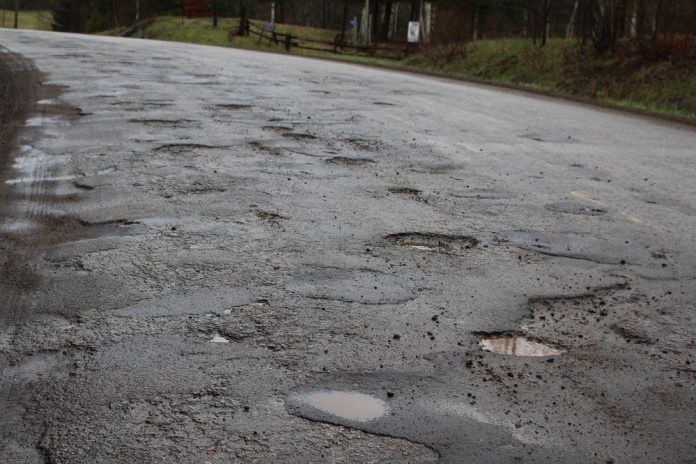
Dysart et al has extended its road resurfacing contract with Miller Paving Ltd. for another year, with public works director Rob Camelon saying the deal represents good value in 2022. Miller committed to completing work next year for the same rate it charged in 2021. 

All in, the municipality has budgeted just over $1.5 million for road resurfacing projects in 2022. “I do think it’s a good idea to extend on our side, just given what costs are doing as of late. 

If we do back out, I’m pretty confident we will see increased costs on this,” Camelon told council. 

He said there were some issues with work Miller completed last year, mostly surrounding how long the company took to resurface roads once they’d been pulverized. Part of the new agreement includes defined timelines outlining how long each specific road project should take to complete.

 There are 40 roads set to be treated in 2022, with the most notable being a 2.4 kilometre stretch of Watts Road, which will be getting ditching and base improvements, pulverizing and double surface treatment; a 1.4 km piece of Boomerang Road and 1.1 km of Fred Jones Road, which will both receive the same scope of work. In terms of re-graveling, Moose Lake Road (2.4 km), Cranberry Lake Road (2.1 km), Precipice Road (1.5 km), Pine Point Road (1.4 km), and Klondike Road (1km) will all see attention in 2022. Paradise Cove (0.8 km), Packard Road (0.5 km), Ella Court (0.4 km) and Outlet Bay Road (0.3 km) will receive double surface treatment overlay. 

Camelon noted almost all of the projects included on this year’s list were identified through the new DOT software the municipality started using in 2020. “The only ones we had to identify ourselves were Boomerang, Winkler, and Eastview [roads]. 

Those projects were all postponed last year, so we brought them back,” Camelon said. “The software came up with the rest. It’s working quite well.” Municipal action Ward 4 Coun. John Smith called on council to take action against a private landowner that has built a dirt bike track on public land near Kennisis Lake.

 The land, referred to as the Soap Pond lands, is in the process of being transferred to the Kennisis Lake Cottage Owners’ Association. Prior to that transfer, the group requested that Dysart investigate what they believe to be a violation of the municipality’s encroachment bylaw. “I have walked these lands myself. 

A bulldozer has been in there and created a trail that’s probably eight feet wide and hundreds of metres long. This is a property that is still owned by Dysart. It seems like a violation,” Smith said. The land transfer has been on the table since February, with township staff seemingly eager to close the file. 

CAO Tamara Wilbee suggested council could sign off on the agreement and leave the lake association to deal with the trespassing. Smith felt that would be a cop-out. “I don’t think the municipality has a role when a dispute occurs between two private landowners,” he said. 

“Once the transfer takes place, it will be up to the lake association to police activities on the land … Would it not be appropriate given our encroachment bylaw, to actually have a penalty or demand some restoration for the damage that has taken place?” 

Mayor Andrea Roberts said she didn’t see any harm in having the municipality’s bylaw officer investigate in the new year. Council signed off on the land transfer, with the proviso that township staff follow up on the file and take appropriate action against the offender.