
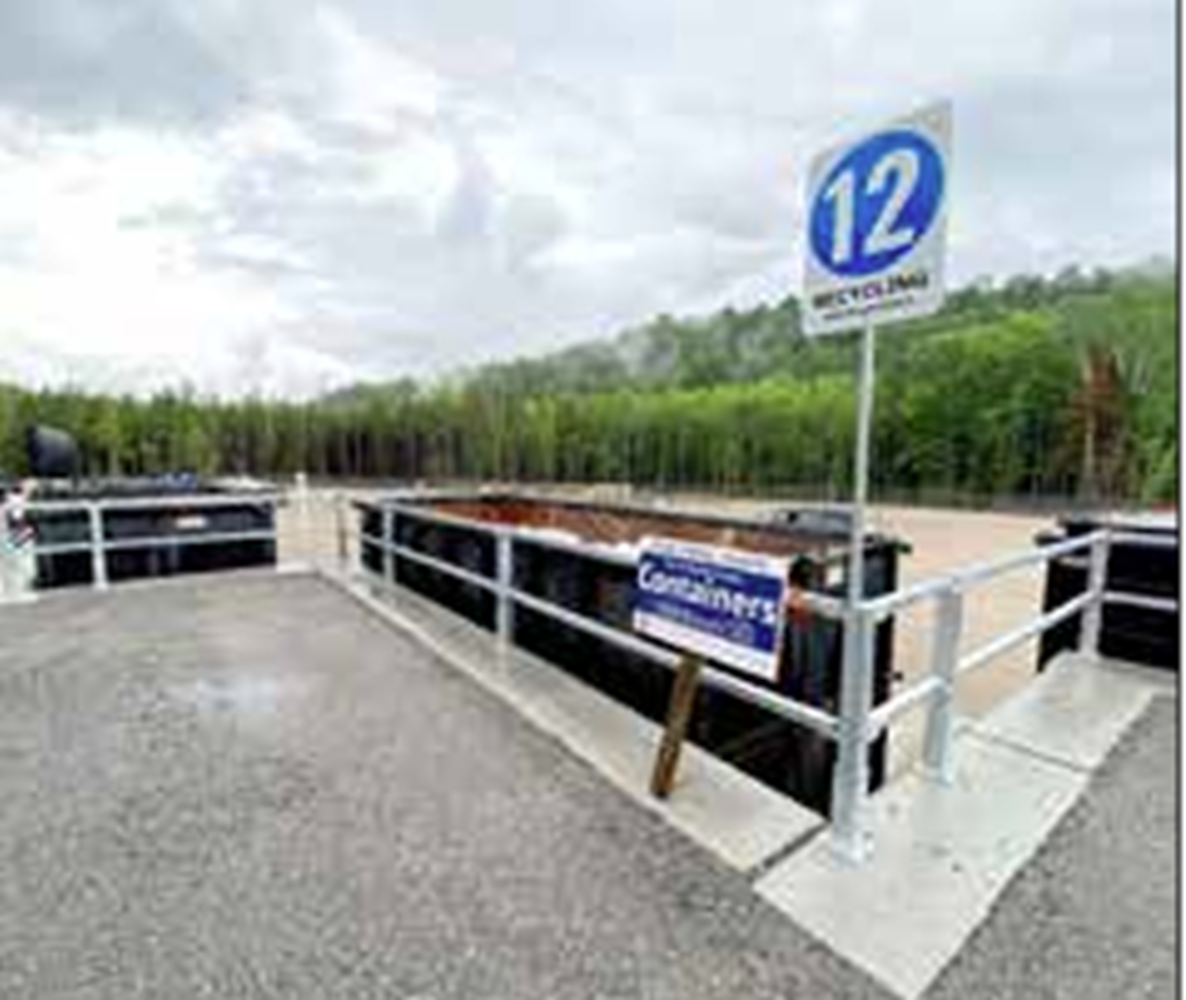
Water samples from new locations at the Maple Lake waste disposal site will be analyzed this year to help Algonquin Highlands township understand the extent of landfill impacts to surface water at the site.
Environmental manager Melissa Murray said this was one of the recommendations engineering firm, Cambium Inc., made in its 2025 annual monitoring report, submitted to the township in February.
“We have met one of the trigger mechanisms in place as part of the monitoring process. There are different limits set when a site is developed… to ensure appropriate actions are taken in response to any potential degradation of environmental quality beyond acceptable limits,” Murray said.
According to Cambium, there is an east-west groundwater divide along the southern edge of the waste mound at Maple Lake, with water flowing north and south underground from the divide.
“Discharge to surface is possible for portions of the year, particularly in the autumn… results in 2025 indicated a dilute leachate plume extended to the north and south from the waste mound, decreasing in concentration within a short distance from the mound,” the Cambium report reads.
Murray said the plan for Maple Lake assumes groundwater isn’t discharging to the surface, hence the need for more testing. She said two new drive-point monitors will be installed, costing around $2,500.
“These aren’t dug wells, they’re points that are inserted into the ground to give an idea of the level of water and direction water is travelling underground,” Murray said. “This will allow us to look at the two locations, north and south of the site, to see if groundwater is coming up to the surface – which is possible.”
Cambium said there were elevated concentrations of contaminants in surface water tested at Maple Lake last year, though non-waste sources such as road salt and saturated organic soils were the primary influencers. They said there’s no indication of any adverse impacts to down-gradient groundwater users off-site.
Murray said the township has never mapped out where the watercourse that flows under the landfill goes, noting the additional testing will help “see where the surface water is and whether we have to look at future [permanent] sampling… or if there’s a waterbody that requires monitoring.”
The engineer also recommended the removal of three surface water monitoring points at the old landfill site at Oxtongue Lake, south of Hwy. 60, that had been in place for 10 years.
“Data collected since 2015 indicates stable water quality at these locations and that the historical landfill has not adversely impacted the nearby unevaluated wetland,” Murray said.
Deputy mayor Jennifer Dailloux asked if there was any benefit in continuing to monitor the sites to ensure issues don’t arise in the future, but Murray said it would be an unnecessary cost.
“Landfill waste becomes more stable over time… leachate and other impacts don’t increase if there’s no continued landfilling [which there isn’t in that area],” Murray said, highlighting the Dorset transfer station as another area the township could scale back as “it hasn’t been an active landfill for some time.”
By the numbers
Vehicle counts at Maple Lake increased more than five per cent last year, to 31,769 in 2025 versus 30,147 in 2024, while the number of garbage bags collected went up almost 11 per cent, to 49,797 from 44,927. That accounted to 380 tonnes of waste being landfilled, up from 368 tonnes in 2024.
Murray estimated the landfill has another 50 years of life left, with an anticipated closure date of 2075.
The site also collected 202.59 tonnes of blue box recyclables, 10.75 tonnes of electronics, 84.66 tonnes of scrap metal, 1.03 tonnes of household batteries and 79 CFC appliances.
Oxtongue Lake saw a slight decrease in usage in 2025. Vehicle counts dropped to 4,220 from 4,352 (3.03 per cent) and the number of garbage bags collected fell from 5,555 to 5,465 (1.62 per cent). Murray said that amounted to around 40 tonnes of residential waste.
The site also collected 27.65 tonnes of blue box materials and 5.67 tonnes of scrap metal. There was nothing to report at the McClintock Lagoon, with Murray saying it’s been two years since anyone utilized the facility.
“That’s up to the haulers in the area to decide what facilities they want to use. We do have an obligation to keep the site available,” Murray said. “It’s still being monitored, it’s still available. We keep everything up and running just in case and our monitoring shows we’re not seeing any impacts on the surface water around Fletcher Bay and Harvey Lake Creek, which is always a good thing.”