Home Blog Page 439

Seniors seek long-term financial support

0
Seniors are looking for more long-term financial support due to COVID-19. Above, MPP Laurie Scott and MP Jamie Schmale address seniors at a seminar in 2019. File photo.

Seniors advocates are welcoming a $500 one-time payment from the federal government but are seeking more support to ensure long-term security.

The government announced May 12 that seniors eligible for the old age security pension would get a $300 payment, with an additional $200 for seniors eligible for the guaranteed income supplement (GIS).

But the Canadian Association for Retired Persons (CARP) said although these are positive, they do not address the organization’s concerns with how COVID-19 has hit retirement security. The organization is advocating for measures such as waiving mandatory registered retirement income fund (RRIF) withdrawals and eliminating the withholding tax on registered retirement saving plan (RRSP) withdrawals this year.

“The official statement of the supports today for seniors are welcome, but they don’t directly address many of the concerns relayed to the government on retirement security and access to liquidity,” CARP Chapter 54 Haliburton Highlands president Jon Dannewald said. “We’re looking to have as many tools as possible to maximize cash flow and protect our retirement. A onetime payment is welcome, but it’s not a solution.”

The federal government also highlighted other help it has provided during the pandemic, including a payment through the GST, as well as funding for community organizations providing seniors programming. In the Haliburton area, that’s included the likes of the Central Food Network, Rotary Club of Haliburton’s Good Food Box and SIRCH Community Services, each receiving between $3,000-$5,000 through the New Horizons for Seniors Program.

The government has also lowered RRIF withdrawals by 25 per cent.

“The Government of Canada will continue to monitor and respond to the health, social, and economic impacts of COVID-19. We stand ready to take additional actions as needed to support all Canadians, including seniors, and stabilize the economy,” the prime minister’s office said in a press release.

Dannewald said he does not know if the government will be receptive to CARP’s proposals. CARP has said stock market plunges have hurt retirement savings and rising costs for things such as groceries will hurt seniors in the long-term. Dalhousie University and the University of Guelph have not changed their forecast of a two to four per cent increase in grocery prices for 2020, but said in a March 31 update factors such as more safety practices at grocery stores and online purchasing could drive costs up over time.

“Our costs are going up but our retirement income is not,” Dannewald said.

But Dannewald said other government measures have helped ease the burden, such as the province keeping hydro rates to off-peak pricing. He added local programming is also helping, such as food banks, which the local CARP chapter has donated to.

“Locally, I think we’re in pretty good shape,” he said.

Libraries plan for reopening

0
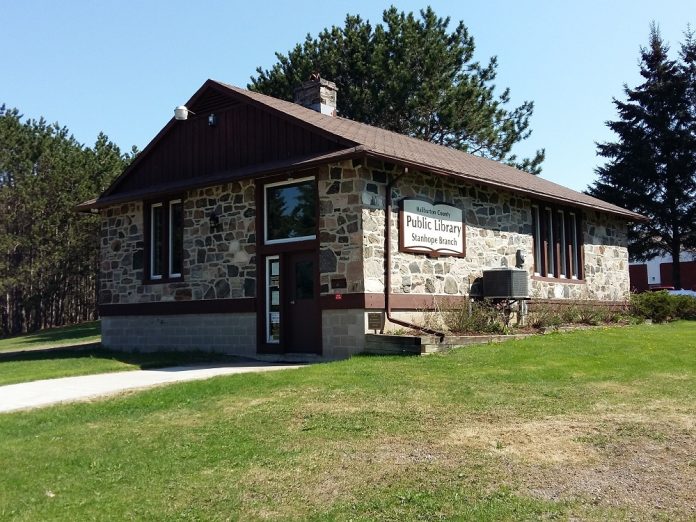
The Haliburton County Public Library is planning for reopening but will not yet offer curbside pickup services. File photo.

The Haliburton County Public Library (HCPL) is planning for reopening but staff are uncertain how it will unfold.

The province has declared that libraries could begin offering curbside pickup May 19 as part of the first phase of its reopening plan. However, HCPL announced it is still developing the service and it is not yet ready to launch.

“Developing a curbside pickup service that is safe for staff and patrons is a large endeavour and we are working on a way to safely provide this service. However, there are many unknowns, and we will provide this service only once we can do it safely,” HCPL said in a Facebook post. “We miss all of you. But we also want to make sure that when we can increase our services, we are keeping our patrons, our staff, and our communities safe.”

The library board discussed the reopening process during its May 13 meeting and what will eventually be required, such as personal protective equipment, additional cleaning supplies and plexiglass shields. Library CEO Bessie Sullivan also said protocols will be needed for maintaining distance, computer usage, and possibly locking down books for some time after use.

However, she said there is not yet much provincial guidance on what libraries will have to do and uncertainty around what
additional funding there might be due to the situation. She also said there is uncertainty about how much decontamination books will require due to COVID-19.

“I still feel like we’re in a great abyss of non-information,” Sullivan said during the meeting.

Councillors on the board spoke to municipal willingness to help. Since local library buildings are owned by municipalities, capital expenses would have to go through them.

“What we are basically prepared to do is take our guidance from the library board and the County,” board member and Highlands East Coun. Cec Ryall said. “It’s going to take all of us to make this work.”

Warden Liz Danielsen said municipal CAOs are working on the issue and the municipalities would need to figure out if they would bear individual costs or if it would be shared with the County.

Board member and Algonquin Highlands Mayor Carol Moffatt said it is important to collaborate and ensure costs can be accommodated in municipal budgets.

“We want to be careful that we don’t have a splintered approach,” Moffatt said.

Vice-chair Andrea Roberts thanked staff for their efforts in keeping libraries going with online services.

“Thank you for adapting, to try to keep the library services going in these strange and unusual times,” Roberts said.

The library board has scheduled a special meeting May 27 at 4 p.m. to discuss curbside delivery.

Haliburton County getting back in business

0
Up River Trading Co. co-owner Mike McKeon prepared the outside of his store May 19 for a reopening the next day. Photo by Joseph Quigley.

Haliburton County’s construction and retail sectors began further reopening May 19 after the province lifted some restrictions.

Ontario launched stage one of its COVID-19 reopening plan. It means if proper public health safety protocols are followed, all construction can proceed, and retail stores with street-front entrances can open with limited capacity.

G.J. Burtch Construction Enterprises Ltd. owner and Haliburton County Home Builders Association representative Gary Burtch said although the health restrictions will be in place for a long time, starting more construction will be a boon for the County.

“At least we’re able to get going,” Burtch said. “That will help the economy of the town and the County, so I’m happy about that.”

The province is also allowing businesses such as vehicle dealerships, marinas, golf driving ranges, pet care and more to start reopening. Burtch said working with new restrictions around sanitation and distancing takes some getting used to. But builders have dealt with those restrictions in recent weeks, having been allowed to continue ongoing projects and do some work such as site grading.

“For us up here, we’re working in the bush,” Burtch said. “There’s enough space.”

The County’s four townships are again issuing building permits.

Up River Trading Co. is one of the retail stores opening this week. It’s been closed since March 22 due to the pandemic. Owner Paul Roy said they are following government safety guidelines, adding screens, touchless pay and limiting capacity.

“We’re very excited. Looking forward to seeing all of our customers back,” Roy said. “We feel very comfortable opening.”

The business ran an online shop while it was closed. Roy said it did not compare to having a physical space but they were very pleased with the support they received.

“We’re happy to be able to open in more of a limited capacity and hopefully, as it progresses, it will become a little bit more like normal again,” Roy said.

Meanwhile, governments and agencies are still offering businesses support due to the crisis.

The Haliburton County Development Corporation (HCDC) rolled out the federal Regional Relief and Recovery Fund May 15, aiding “main street” businesses such as retailers and restaurants with new loans of up to $40,000.

“Sole proprietors, social enterprises and small and medium-sized businesses have been particularly impacted by the COVID-19 pandemic,” HCDC executive director Patti Tallman said. “We look forward to delivering this critical program to our local community.”

Burtch said it should be full steam ahead for the construction sector. Thus far, he said he has not heard of any local construction projects getting held off due to economic circumstances, though he acknowledged that could happen.

“Let’s get rolling,” he said.

Harp on the Water: instalment one – The Faceless Lady

0

Editor’s note: This is the first installment of a series entitled Harp on the Water. It’s written by Hope Thompson, who lives in Algonquin Highlands. Thompson writes for theatre and television and has had plays produced in Toronto, Vancouver and Los Angeles. She recently wrote for the CBC’s Baroness von Sketch Show and is currently working on a collection of crime stories. Her series will run over the next eight weeks.

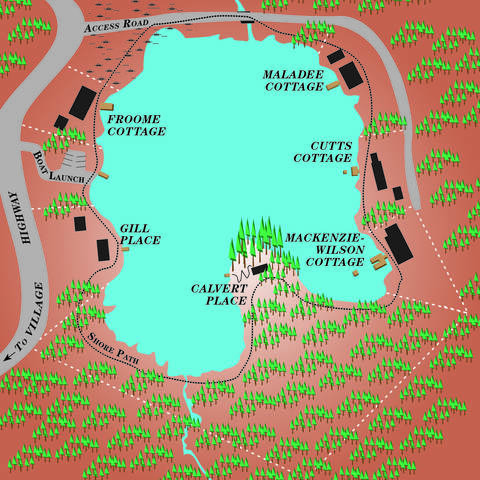
Spruce County Police Detective, Harry Harp, panted up the crisscrossing path that led from the dock to the top of the point. He was tall with dark eyes and at 47, had a creased forehead, giving him a quizzical look. Three weeks earlier, he had relocated to Spruce County, grateful for the escape from Toronto and the bitter aftermath of his failed marriage. For his first case in Spruce County, Harp had chosen a business suit but could already feel his dress shirt clinging, damply, to his skin.

Mistake number one, he thought.

Trotting behind Harp was Constable Terry Becker. A tanned local, he looked enviably comfortable in his cargo pants and shortsleeved cop-issue shirt.

Nimbly leading the trio up the path was Frank Gill. He looked to be in his 70s and was wearing work pants held up by suspenders over a checked shirt. About forty minutes earlier, Gill had called the police station in town and told the desk clerk that there was trouble at the Calvert place. He had met Harp and Becker at the boat launch to ferry them across the lake. During the boat ride, Gill explained that the Calverts lived off-grid. They also didn’t have a phone. Gill’s place was across the lake from the point and he’d woken to the sound of screaming.

The path from the dock ended in front of a wood-sided cottage. Two rotting chairs stood in front of it and Harp noticed that they were turned away from the lake, as if purposely ignoring the view.

That’s odd, Harp thought, catching his breath.

But there wasn’t much to see, anyway. A wall of trees blocked out the view of the lake, and, he guessed, hid the point’s inhabitants from prying eyes below.

Frank Gill stepped forward and knocked on the front door of the cottage, then without waiting for a response, pushed open the door. Harp and Becker followed him into a narrow room. The detective adjusted his eyes to its dim interior, lit by a single wick lantern and smelling strongly of dust and kerosene. The main feature of the room was a long display shelf of natural objects—a turtle’s shell, birds’ nests, a pair of deer antlers, varieties of dried leaves, desiccated berries, a piece of shelf fungus, the abandoned skin of a snake. At the far end was a small kitchen with a woodstove, cupboards and a length of counter. Across from the room’s only window was a pair of threadbare chairs and a sagging sofa. Sitting on the sofa was a woman and her eyes were fixed on Harp.

Frank Gill closed the door behind Harp and Becker. “Grace,” he said gently. “These men are police. They come to help—about Ida.” The woman wiped her eyes with a piece of cloth she pulled from her shirt pocket. It was then that Harp noticed something in her hair.

Pine needles?

She was wearing faded cotton pants smudged on the knees like she’d been kneeling in dirt and her flannel men’s shirt was caught with burrs.

“Ms. Calvert, I’m Detective Harp and—.” Cutting him off, she said, “My dead mother is in her bedroom.” She gestured to a narrow hallway then added. “They finally got what they wanted.”

Harp said, “They?”

“The cottagers!” She cried. “They hate us—.” Her face crumpled into tears.

Frank Gill stayed with Grace while Harp and Becker walked down the hallway to a closed door. Gently pushing it open, they were met with the smell of floral perfume, mothballs and blood. Ida Calvert lay on her bed under a flowered eiderdown, her grey-hair fanned out over her blood-soaked pillow. Liver-spotted hands were folded over her chest. Serene, almost, except that something had struck the woman’s face with enough force that her features—eyes, nose and mouth—were gone. Bits of bone mixed with wood chips and dirt lay scattered around.

“Becker?” Harp said.

The constable looked up and Harp noticed he’d lost some of his tan.

“Walk around the place, check the doors, windows, make note of anything out of order.”

The young man nodded.

A moment later, Harp was alone with the faceless woman.

To the right of the bed stood a chest of drawers and on it, was a collection of combs and lotions. The curved vials and tubes looked like they’d been sitting there for decades, grease darkened with dust and time. His gaze followed back over the woman’s thin body to the left of the bed where a side table had been placed. A glass of water stood next to a flashlight. Harp positioned himself between the wall, the side table, and the woman’s bed then raised his hands over his head and swiftly brought them down towards the woman’s missing face.

He frowned, thinking.

The room had one small window. Taking a step towards it Harp banged his knee against the sharp corner of the steel bed frame. Cursing, he gripped his kneecap and hobbled to the window. From the flakes of varnish in the corner of the frame, it was clear that it hadn’t been opened in years.

Harp looked back at Ida Calvert, his brain turning over.

After his inspection, Harp returned to the cabin’s main room. Grace Calvert stood at the counter ladling water from a bucket into an aluminum coffee pot.

“All we ever wanted was nature and quiet,” she said and pushed her hair back from her face. Her features were smooth, even patrician and Harp felt himself strangely drawn to her.

“I just never imagined they’d go this far.” She placed the pot on the woodstove.

“You say the other cottagers—hate you?”

A mosquito buzzed around his head.

“Because we’re different. We’re not like them. We don’t race around in boats screaming our heads off and blowing up firecrackers—.” She squished shut her eyes. When she opened them, anger had replaced her tears. “That’s why they hate us. That’s why they killed my mother!”

Harp tried to loosen his tie then thought better of it. “For the record, where were you last night, Ms. Calvert?”

At that moment, Harp noticed movement from the corner of his eye and turned his head. A scene unfolded through the front window as if a movie director had yelled, “Action!”

From the east side of the point, Becker ran into view waving dirt-covered hands. From the west, Spruce County Coroner, Boyce Williams, followed by two assistants, paraded up the path. And at centre stage, Frank Gill sat on a swing hung between two pine trees. The old man was swinging back and forth like a child.

Harp blinked.

Behind him, Grace Calvert was speaking. “I was in the forest, Detective. Sleeping. I walked to the village to buy a newspaper and when I returned, my boat was gone. They do that to us.”

“Wait—the forest?” Harp turned to her. Grace sighed. “With no boat, I had to walk around the lake. It became dark—so I lay down. I feel quite safe in the woods. At least you can trust the animals.”

Just then, the door burst open.

  • To be continued

Covering COVID from the garage

0

I remember when the coronavirus pandemic first hit home for me.

It was Thursday, March 12.

I recall it because Minden hockey player Hunter Hamilton was scheduled to be a Scotiabank skater before the Toronto Maple Leafs-Nashville Predators game at the Air Canada Centre that night. I was texting back-and-forth with his mom, Cheryl, as to whether the game was going to be played. It was cancelled. Having National Hockey League games shelved due to COVID-19 was the big wake-up call that we were dealing with something we had never dealt with before.

While sinking in on a personal level, we also had a newspaper to plan for March 19 and I knew it was going to be a COVID-19 edition. We swung into action and delivered the first comprehensive series of stories on the continuing health care saga. It is a job that has continued as we go into our 10th pandemic edition.

Pretty early on, we were declared an essential service. There was never any doubt that we would produce the news. We just had to do it differently. That meant we’ve been operating more like a daily, than a weekly, newspaper. We have prolifically published on Facebook and on our website. The newspapers have then provided more in-depth weekly coverage.

These days, we produce The Highlander from four different locations. Head of production Lyelca Rodrigues works from her home near Eagle Lake. I’m based out of my studio garage in Carnarvon. Journalist Joseph Quigley toils from his apartment in Haliburton and publisher Simon Payn from his home on Drag Lake. Our sales team works from home and in the field. Only our business manager, Cindy Campbell, can usually be found at The Highlander office.

Joseph and I research and write our stories from home. We spend a lot of time on the computer and on the phone. We hardly go out to cover anything anymore. For a while there, we wrote a lot about COVID-19. With the resumption of council meetings via Zoom, we’ve been able to expand our news coverage. Thankfully, there have been lots of human-interest stories, too.

One of our bigger challenges has been photography. We’ve been able to get some images, from a social distance, of those who have agreed to meet up. That’s why you are seeing so many file photos in our editions.

As we pass the Victoria Day long weekend, we are less sure about what we will fill the paper with each week. We know there will be continuing COVID-19, council, and people stories. However, with so many events being cancelled, there won’t be typical Highlander summer newspapers, filled with pages and pages of photos and write-ups from events. It is forcing us to be more creative.

Today, we are kicking off a newspaper serial, entitled Harp on the Water. It’s written by Hope Thompson, who lives in Algonquin Highlands. Thompson writes for theatre and television and has had plays produced in Toronto, Vancouver and Los Angeles. She recently wrote for the CBC’s Baroness Von Sketch and is currently working on a collection of crime stories. Her series will run over the next eight weeks. We’re also kicking off a series called The Armchair Traveller and are inviting readers to submit travel stories and photographs throughout the summer.

And, by all means, if you have story ideas, don’t be shy about reaching out to editor@thehighlander.ca or joseph@thehighlander.ca.

A trek to the roof of the world

0

I am slowly, steadily making my way along the Everest Base Camp trek when Nic, who is trudging behind me, suddenly gasps for air.

Her panicked partner, Paul calls out to our Nepalese guides. They rush to Nic’s side, along with Brisbane doctor, Simon Arndil.

They examine Nic and find she is now okay. Nic tells them she had a stomach cramp and simply lost her breath – not hard to do at nearly five kilometres up with about half the oxygen at sea level.

As Nic struggled, I felt panic overcome me. My vision seemed to shimmer and for the first time, I realized how dangerous trekking at altitude can be.

I forced myself to calm down . . . breathe in through my nose, breathe out through my mouth.

We all began to walk again, towards Lobuche, where our camp that night would be pitched at 4,930 m amongst the Khumbu Glacier moraine.

Yeti Airlines

On our Yeti Airlines flight from Kathmandu to Lukla, where the trek begins, our stewardess offers us a mint and cotton for our ears as the small, twin propeller aircraft takes off, providing amazing views of the Eastern Himalaya. We experience a rather hairy landing on a very short airstrip at 2,800 metres and are awe-inspired by the huge, snow-capped peaks surrounding the village.

We are soon joined by throngs of people along a well-marked trail; local porters and dzopkos (a yak-cow crossbreed) carrying supplies for the villages higher up and trekking parties.

We head downhill, passing Buddhist stupas, chortens, prayer flags and prayer wheels, through villages with pretty stone houses and flowers, shops and terraced fields of potatoes and buckwheat. We come to a suspension bridge and make the first of many crossings of the Dudh Kosi, a raging river that flows from the highest peaks.

The trek

Our Nepalese guides wake us up early by bringing tea to our tents, followed by a hot bowl of washing water. We pack and head to our mess tent for breakfast. We then walk for a few hours before a hearty lunch and a few more hours’ walking before we are back in the mess tent for afternoon tea, followed by another wash and then dinner. Most nights we are tucked up in bed early after a vigorous day’s walking.

The pace is slow and steady as we make our way up. We are advised that the best way to avoid altitude sickness is to go slow and to drink plenty of liquids, hot liquids preferably, and we endeavour to drink three litres a day even though it means we rarely sleep through the night as we need to get up and use the toilet.

We hike through pine forest and cleared areas reveal terraced fields and a variety of crops, while spectacular mountain peaks unfold above us and seem to hover above the tree-line as they rise above the deep river valley. We pass Mani Walls, carved with “Om Mani Padme Hum” (Hail to the jewel in the lotus).

Namche Bazaar

“No, they don’t have cars,” the woman with the New Zealand accent explains via mobile phone to someone on the other end of the world.

However, they do appear to have internet everywhere. In fact, I send an e-mail from Gorak Shep, at 5,288m, where the proprietor of the internet café uses a petrol generator and satellite dish to ensure communication with the outside world.

At Namche Bazaar, we run into Willie Benegas, an Argentinian living in the USA who is a professional Mt. Everest guide. Willie has climbed Everest eight times and this season will make his ninth attempt.

We ask him about the danger and he shrugs it off saying: “Flying into Lukla is extremely dangerous. You’re playing the odds all the time.”

He concedes the commercialization of Everest but believes it is the low budget expeditions that account for the accidents.

We wind our way up to Thyangboche Monastery where we arrive in time for the Buddhist monks’ afternoon chant. The light is dim and there is a rank smell of trekkers’ socks but the deep, melodic chant invades my chest.

At Dingboche, at 4,360m, the snow arrives with a vengeance, covering our tents. Our Nepalese guides thwack the sides to knock the snow off as we huddle for warmth in the mess tent, only venturing out to the toilet tent. We are now getting just 60 per cent of the oxygen we would at sea level. We are losing our appetites, not digesting our food or sleeping very well. The conversation in the mess tent inevitably turns to altitude sickness. There are now eight people on Diamox, a drug used to treat acute mountain sickness. We retire to sleep, our sleeping bags crunching on the snow and ice. The nights are about -20C. I am wearing just about everything I have packed but still shiver. I can’t get my feet warm.

At Gorak Shep we find a tiny village teahouse, where we gather around a potbelly stove and enjoy steaming cups of hot chocolate. Outside the snow continues to fall, covering everything, including the yaks. Tomorrow is the big day.

Everest Base Camp

We awake to 360 degree views of snowcapped mountains: Everest, Lhotse, Nuptse, Tawatse, Ama Dablam, Kantega and Thamserku, Khumblia and Kongde Ri.

We set off early, the Khumbu Glacier to our right as we slowly ascend and descend over rocky terrain.

Hour after hour, I concentrate on walking slowly and steadily, breathing in through my nose and out through my mouth, and carefully placing each step, only glancing up occasionally to see Everest poking her head through her sister mountains.

And, then, a sea of yellow tents appear in the snow ahead and then a second camp of multicoloured tents further on.

We pass a tent advertising an Everest Base Camp German bakery and, after 10 days’ walking from Lukla, we are here.

The camp itself is nothing special, just a bunch of tents pitched on icy, rocky ground. But the view is extraordinary. We can see the Khumbu Icefall, where Sherpas each year install fixed ladders and ropes so climbers can make their summit attempts.

I reflect on the effort it has taken to get here and marvel at how these people will stay at this very inhospitable place for months in their quest to climb Mt Everest.

In less than an hour, we are on our way back to Gorak Shep, struggling the last few kilometres as a wicked head wind blows up the glacier. We arrive, exhausted, about 5 p.m.

The next four days are a blur as we rapidly descend back to Lukla with all-day walks.

Near the end, we celebrate our ascent with our team of 23, under the leadership of Harka Rai. We sing and dance together and distribute our tips. Before we know it, we are on a Nepal Airlines flight back to Kathmandu, Everest this time on our left, and we bid her thank you and goodbye.

Councillors punch idea of counting garbage bags

0

Visitors to Minden Hills’ waste disposal sites won’t be getting a new landfill pass that tracks the number of garbage bags they drop.

Councillors rejected a recommendation from staff to make a change at the May 14 committee of the whole meeting. They are expected to formalize the decision when they next meet May 28.

Public works director Travis Wilson said it’s now a bit of an “honour system.” He said households are allowed three bags per week, but there is nothing stopping them going back, or to another landfill site, in the same week, thus dumping more than permitted.

“It is impossible for a site attendant to remember who has attended the site each week and there is no method of cross referencing who has attended each site,” Wilson said. He added that in order to ensure users stay within weekly bag limits, most have to go once a week, which is time consuming and an undesirable task for some.

Staff suggested a new waste pass be printed with numbers that would be hole punched by site staff to help track how many bags of garbage have been disposed of by the resident.

Wilson conceded it was difficult to determine what the reduction in waste transfer/landfilling costs would be or how much increased tipping fee revenue would be recovered from users paying for additional bags of waste. However, he said they could encourage residents to make fewer trips to the landfill.

“If every household in Minden reduced their trips to the landfill by just two visits per year, 23.27 tonnes of CO2 emissions could be prevented (the equivalent of taking six vehicles off the road for an entire year),” Wilson said.

Coun. Jean Neville said she saw a lot of problems with the proposal, particularly now when the township is trying to limit contact between landfill attendants and the public due to COVID-19.

She said she only generates one small grocery bag a week, while others are bringing theirs and their neighbours. “So, they’re going to being passing their cards back and forth.” She added she’d already had several emails about garbage being dumped on the side of the road, and new punch cards would exacerbate this. She also thought there’d be a backup of vehicles with the hole punch system.

She asked what other municipalities are doing, since “We seem to throw more obstacles in the way than anybody else and I don’t see that this is necessary myself.”

Coun. Bob Carter asked why they would change anything with no data to show savings or increased revenue. He added COVID-19 isn’t going away any time soon. As a visitor to Ingoldsby waste disposal site, he anticipates it would cause congestion. Nor does he want people storing garbage that could attract vermin.

“I applaud the effort but I see this as a solution looking for a problem.”

Deputy-Mayor Lisa Schell thought the timing was off with social distancing. She added, “has it (excessive dumping) really been that big of an issue?”

Minden Hills records large 2019 surplus

0

Minden Hills has an estimated surplus of more than $900,000 at year end 2019, CAO and treasurer Lorrie Blanchard told the May 14 committee of the whole meeting.

She told council it was “a very significant number” and the largest one they’ve had. She added, “of note, every single department experienced a surplus in 2019.”

She said that more than half of it, or $503,480, is attributable to unspent wages and benefits.

“For various reasons, we were not able to either hire the staff that council had approved for us to hire, or vacancies that had occurred that we were not able to fill, or positions that we were successful in filling but they just didn’t happen in the timeframe that we had hoped and the timeframe we had budgeted for them to start,” Blanchard told councillors.

In addition, there was $86,700 from supplemental taxes, amounts retained from school boards and write-offs; $184,700 in additional gas tax top-up and legacy funding; and $137,600 in bank interest income, for the remaining surplus of $409,000.

Blanchard said the savings represented 10.72 per cent of the 2019 levy.

In her report, she also provided a summary of potential capital projects, mostly roads and landfills, but also water and sewer and property. For example, she said council could spend the money to remove or renovate the old fire hall in the downtown. She said another idea was reducing the amount of the Minden arena project loan, or apply to value-added items there.

Coun. Pam Sayne said she’d like to see compliance with accessibility prioritized. “I think we could do something with our downtown, which makes it accessible,” she said. She added they could help downtown businesses and look at what other downtowns are doing.

Coun. Bob Carter said he felt the township was going to be criticized for having a nearly 11 per cent surplus. He said he understood why it happened, including projects not proceeding, as well as hirings. He wanted to know if the projects would be done.

He added, “I think it’s very, very important for us to recognize that this isn’t found money. This is taxpayer money and putting it towards a list of projects that might be somebody’s favourite or might be ‘nice to haves’ or something like that, I don’t think that’s a valid thing to be doing.” He said the money would be better spent on emergencies or forecasting need into 2020 and 2021.

Coun. Ron Nesbitt agreed, saying, “it is taxpayer money. It should go to stuff that needs to get done, not happy projects.”

“How it affects our tax increases is also an important issue,” Sayne added. “Make sure we’re not increasing our taxes if we have this kind of reserve from the previous year. Make sure it goes to where we intend it.”

Deputy Mayor Lisa Schell said that “a lot of people in our community during this pandemic are without work. Money’s tighter. So, perhaps we can offset what would have to be a tax increase in 2021 with some of this money to try to help out.”

COVID-19 costly for Algonquin Highlands

0

The Township of Algonquin Highlands could face considerable revenue losses due to COVID-19, particularly in the parks, recreation and trails department, treasurer Jean Hughes will tell a May 21 council meeting.

“At present, and based on the costs to date (April 30, 2020) the cumulative loss in revenue and additional expenses equates to approximately 1.3 per cent of the existing municipal tax levy or approximately $69,105,” her report to the regular council meeting says.

She added that should the closures continue throughout the summer months, losses could easily exceed this amount.

“The duration of the COVID-19 pandemic remains unclear, but we anticipate the economy will return to some normal activities in the coming months and we will head into recovery mode,” Hughes said. “The township will have to consider its options to fund the potential budget deficit which may be offset by drawing on reserves, reducing expenditures or deferring non-essential capital projects.”

The township stands to lose income from camping fees, trail permits, soccer and equipment rentals, as well as revenue from events, memberships and admissions.

Hughes also outlined expenditures incurred to date on the purchase of COVID-19 related supplies, plus costs to the township for overtime hours and self-isolation hours directly related to the pandemic.

Hughes said employee cumulative hours for tasks related to COVID-19 are not depicted on the chart she provided to council as they are performed during regular business hours, but are being tracked accordingly.

“These tasks include disinfection duties, public relations, health and safety meetings, EOC meetings, peer-to-peer meetings, virtual meeting setup and training, and setting up of signage and barricades as required for provincial and municipal closures,” she said.

She added in her report that other potential sources of lost revenue include: a drop in fire permits and inspections; licenses, permits and compliance reports; lease and fuel sales at the airport; tipping fees and planning application fees.

On a positive note, she said Algonquin Highlands’ taxes receivable is reduced in comparison to previous years and they continue to receive payments for the upcoming second installment.

She said penalty and interest charges in comparison to his time last year are down approximately 16 per cent, “which means property owners are continuing to pay their taxes at this time.”

Also at the May 21 meeting, fire chief Jonathan Wilker will table a report to summarize to council the procedures followed by the Emergency Control Group at Emergency Operation Center (EOC) meetings in response to the COVID-19 emergency since this is the first meeting of council since the pandemic struck. They did meet May 14 but only to pass a bylaw allowing virtual meetings.

He will also table a report to provide council with a Health and Safety Planning and Recovery Strategy relative to the COVID-19 pandemic. The report provides a framework for recovery operations in the township.

“Implementation of this framework will require flexibility to adhere to public health guidelines and directions being implemented at the local and provincial levels of government. The township will adhere to all public health in an effort to protect the health and safety of the public and its employees,” Wilker’s report states.

See next Thursday’s Highlander for more coverage of the May 21 meeting.

Some reopenings

The township has reopened the Stanhope tennis and basketball courts and sports field, hiking trails (except the Dorset Tower trail), and all municipal boat launches.

In addition, cemeteries have reopened. Gatherings are still limited to five people. For gravesite funeral services, there can be no more than 10 people, not counting funeral staff. Physical distancing is still encouraged.

Cottage kits are not available for purchase at this time.

The building department has begun to issue building permits, effective May 19. The fire ban has been lifted. However, daytime burning remains prohibited between 7 a.m. and 7 p.m. Daytime burn permits remain suspended.

There’ll also be a household hazardous waste date on June 6, in the afternoon, at the Maple Lake landfill site. Residents will not be permitted to exit their vehicles. Staff will retrieve materials directly from vehicles. Place hazardous materials in a distinct and easily accessed location in your vehicle. Be sure all containers are clearly labeled with their contents and securely sealed.

Minden’s pigeons may be running out of time

0

Downtown Minden’s pigeons have been given a stay of execution – at least until council’s May 28 meeting.

Director of public works, Travis Wilson, tabled a report on the mitigation of pigeons at the May 14 committee of the whole meeting. The report stemmed from a letter of complaint by Stan Russell to the township on the March 12 council agenda.

Wilson said staff contacted two contractors, Eco-Choice Pest Control of Haliburton County and Rentokil, the township’s out-of-town current contractor for seagull mitigation.

He said both were knowledgeable in the field and had provided an extensive proposal.

“Both propose placing baited live traps on any flat roof occupied by the pigeons (subject to any requirements for owner permission),” Wilson’s report said. “The traps would be checked regularly, with the pigeons taken off site and euthanized.”

He added that in order to successfully trap pigeons, the birds will need to become accustomed to the traps. This would entail pre-feeding them without having a trap set, and contingent on others not feeding them. The traps would then be set with the essentials for life, shade, water, and feed. Pre-feeding could be conducted on the rooves currently inhabited, or baited on the municipal building, his report said.

Wilson said Eco-Choice has also recommended that if these measurers become ineffective, since pigeons will learn that food leads to traps, that they employ a form of birth control in the pigeon’s food. Wilson said it’s approved and endorsed by the humane society as a humane control option.

He recommended going with Eco-Choice, saying it had provided a price of $50 per visit for a weekly service, for 30 weeks, and a $1,500 contingency for equipment and or birth control feed.

Coun. Jean Neville said she’d only noticed a small number of pigeons and wondered if the issue had been dealt with or if the pigeons had moved on.

However, Mayor Brent Devolin said “there’s in excess of 100 and, no, they haven’t gone away.”

Neville said if they went with birth control feed, it might have to go on indefinitely but Wilson said only until the situation improves.

Coun. Bob Carter had a number of questions, including whether staff had talked to other municipalities with the same problem and received references from the companies about successful pigeon mitigation. Wilson said he had not talked to other townships but what was being proposed was a straightforward process.

Carter also said he’d heard people are feeding the pigeons and he knows of their roosting in abandoned buildings in town.

“Would it not make more sense to cut off their food and shelter and make it seem like they’re not welcome? I’m a little worried that this just seems like another open-ended contract that may go on forever and ever amen,” Carter said.

Coun. Pam Sayne agreed the township should “focus on feeding, and what’s drawing them to downtown at this point, than throwing more money … a better, conservative approach right now.”

Deputy Mayor Lisa Schell wondered about a two-pronged approach, what was being recommended and working with businesses to close off roosting sites. For example, she said the old theatre is a haven for pigeons.

Carter asked if owners could be held responsible.

There was talk of the former theatre changing hands with a possible demolition. Carter said he didn’t want to wait months. Coun. Ron Nesbitt agreed. “At least close it up. Educate people not to feed them. There is disease from the excrement.”

Former owner Rahim Lakhani said he had sold the building but did not know the new owners’ plans.

Council received the report as information and will vote on it at the May 28 meeting.

“They need to be gone,” Devolin said. “It’s getting increasingly worse. Just walk from the bridge by The Dominion every day and observe the excrement that’s there.”