Home Blog Page 433

Cancer retreat launches movement challenge

0
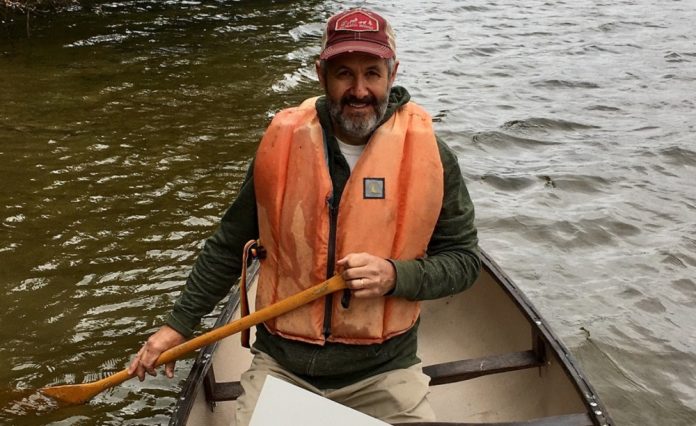
Abbey Retreat Centre executive director Doug Norris. Photo submitted.

The Abbey Retreat Centre is challenging people in the highlands to get moving however they can in support of people with cancer.

The cancer patient retreat is launching a new fundraising campaign in July: The Haliburton Highlands Challenge. The event invites participants to set an achievable movement goal to complete throughout July and August, whether it be running, walking, swimming, biking, paddling or anything else.

Executive director Doug Norris said the event is inspired by the importance of exercise to cancer patients, which helps their healing process and stress.

“Exercise helps liberate the body’s own strength and immune systems,” Norris said, adding it benefits non-cancer patients too. “COVID is a massive source of stress for people who aren’t necessarily dealing with cancer and exercise can be a great source of resilience for us in that stress.”

The centre will ask participants to collect pledges to fundraise.

Norris said the event is completely scalable, with people able to choose whatever exercise and goals they want. Norris said he plans to paddle across his local lake 10 times, representing approximately 10 kilometres, which he said represents the distance he used to drive to see his father, when the man was dying from cancer.

“He taught me how to canoe,” Norris said. “Every person will have their own story and their own goal.”

The Fenninger family is participating and plans to bike a total of 15,000 kilometres, with a goal of raising $15,000. Marianne Fenninger, a facilitator with the centre, said has seen the huge impact the retreats have on people. Their family goal represents the amount needed to cover a four-day retreat for 10 people.

“Cancer does not stop for a pandemic,” the family said on its fundraising page. “The retreat waitlist is growing. We want to do our part to support this program.”

The fundraiser is important for the organization, which has seen its revenues drop significantly due to the pandemic, he said. The organization relies on donations and renting its facility out, and although that is still happening, Norris said it has dropped. Meanwhile, the organization has had to halt its usual free group retreats, particularly considering cancer patients’ vulnerability.

But Norris said they have still been able to provide the occasional retreat for lone families experiencing cancer to get some respite. The organization is also delivering its therapeutic programming online. But Norris said they want to be ready when gatherings are allowed again.

“That’s the whole point of this fundraiser,” he said. “We have a waitlist of 35 people waiting to come on retreat and we want to be ready as soon as conditions permit.”

More information and signups are available at haliburtonhighlandschallenge.com

High school celebrates athletes of the year

0
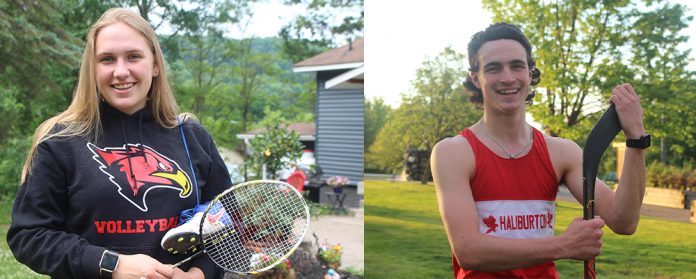
Emma Casey and Isaac Little were named this year's Haliburton Highlands Secondary School athletes of the year. Photo by Joseph Quigley.

Haliburton Highlands Secondary School (HHSS) capped off its two-week celebration of athletic achievement by awarding its athlete of the year awards to Emma Casey and Isaac Little.

The school prepared lengthy video tributes to the star athletes June 18 and 19 to end the online edition of its annual athletic awards. Casey and Little earned the female and male athlete awards, respectively. Little competed in sports such as badminton, hockey and cross country. He was the cross-country team MVP and hockey defensive MVP this year.

“I’m honestly ecstatic. I’m over the moon,” Little said. “I have three family members who are up there on the wall and I always aspired to be as good as them.”

Casey competed in volleyball, field hockey, curling, badminton and track and field throughout her career. She earned a volleyball MVP award this year and said it was a long-held dream to be athlete of the year.

“For it to actually happen is just so exciting,” Casey said. “And rewarding for all the work I’ve put into sports for the last four years.”

Coach Steve Smith, who coached Casey in volleyball and field hockey, complimented her athletic drive.

“She is and continues to be very coachable and is a great leader. She made everyone around her better,” Smith said. “She has won many MVPs; she has been a key player in other championships.”

Cross country coach Karen Gervais presented Little with his award and said he approaches sports with passion.

“He has unyielding determination, incredible stamina and takes challenges head on,” she said. “This Blairhampton boy stays true to himself, his dreams and his own individuality.”

Casey said she has not confirmed her postsecondary plans, but she expects she will always be athletic and pursue sports there. She said sports are an outlet for her.

“I knew I just had to go to four classes and then I can go play the game I love playing, whatever season it was at the time,” she said. “It was the way I could just get some frustrations out.”

Little said he may return for an extra year of high school and add to his tally of two school running records. He said sports have always driven him forward and he plans to pursue them in post-secondary.

“I hate losing so I always just pushed myself to do better,” he said. “Sports kept me occupied and also kept me focused in the classroom as well. It’s just a huge part of my life, I’ve made so many memories, so many friends through sport.”

Scheffee concluded the ceremony by thanking everyone who helped make it happen. “We will get through this pandemic together and move on to bigger and better things,” she said. “This too shall pass. Please stay strong and stay healthy.”

Other individual award winners

Female Rising Red Hawk Award: Ava Smith

Coach Janice Scheffee remarks: “She works hard no matter the sport and she raises the level of play for her team and for the competition.”

Male Rising Red Hawk Award: Nick Phippen

Coach Brett Caputo remarks: “He had a fantastic year as a member of the crosscountry team, where he placed third at Kawarthas and third at OFSAA.”

Colin Hood OFSAA Award Deserving Female: Rebecca Archibald

Coach Janice Scheffee remarks: “Competes for the love of sport and the thrill of the fight. She is committed to being the best she can be and she leads by example with her passion, her enthusiasm and her energy.”

Colin Hood OFSAA Award Deserving Male: Liam Little

Coach Brett Caputo remarks: “Not only does he participate and compete but he raises the level of play for his teams around him … Liam has left his mark at Hal High for being an ambassador for fair play, inclusiveness and school spirit.”

High school students earn $5,000 for local causes

0
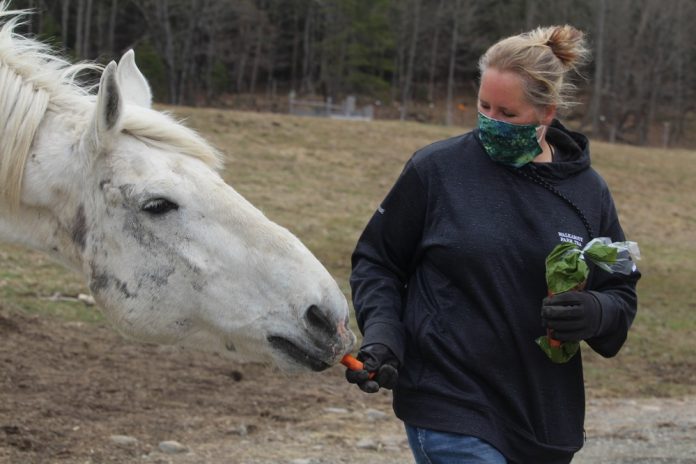
The Walkabout Farm Therapeutic Riding Association is one of the recipients of grant funding form this year’s Youth and Philanthropy Initiative. File photo.

Haliburton Highlands Secondary School (HHSS) students earned $5,000 for local causes through the Youth and Philanthropy Initiative (YPI) despite the impact of the pandemic.

Teacher and co-ordinator Paul Longo announced June 10 that YPI Canada would continue the funding despite school closures derailing its usual competition. The best groups from civics classes would normally compete in spring with presentations about local organizations, with the best presentation earning the $5,000 grant. But with the school year shifted due to the pandemic, YPI is instead splitting the grant between three of the top presentations from the fall semester.

This is the 13th year YPI has partnered with HHSS. Longo said it is wonderful the donation could go ahead.

“They assured me pretty early on they want to be committed to giving the money out this year,” Longo said. “We bounced around some ideas … For our situation, they were very happy to split the $5,000 up between the three teams that would have gone on to the finals in June.”

Two of those teams presented about the non-profit Walkabout Farm Therapeutic Riding Association, which will receive $3,334. Another group presented about Heat Bank Haliburton County, which will receive the remaining $1,666.

Normally, five or six teams across the two annual school semesters would compete, but Longo said the second-semester civics classes did not have much opportunity to get into YPI before the pandemic. They considered another presentation competition as usual, but Longo said it was difficult to work out given internet limitations.

“People’s differing wi-fi capabilities,” Longo said. “A lot of students are working during the daytime and trying to get everybody co-ordinated to make that happen, I just found that was almost too big for us to handle.”

Walkabout owner Jennifer Semach said the funding will go towards capital projects to improve accessibility at the locale with pathways and a shade shelter.

She added it was the first time the organization had been called to participate and she was impressed by the students’ efforts.

“The students did a remarkable job,” Semach said. “We can definitely use the exposure.”

“This has been an amazing program for our community,” Longo said, noting it has donated more than $55,000 to local causes in total over its run. “To have them continue to do that, in the atmosphere we’re in, it was uplifting for me.”

Associations warning speeders to slow down

0
A slow down sign pitched by the Fort Irwin Residents’ Association and the Haliburton Lake Cottagers Association. Photo via Dysart et al.

Dysart et al is backing a community association initiative to fund signs reminding speeders to slow down.

Council voted June 23 to approve “slow down” road signs proposed by the Fort Irwin Residents’ Association and the Haliburton Lake Cottagers Association. The groups will be allowed to install one sign on Hodgson Road, one on Dunn Road, two on Curry Road and two on Haliburton Lake Road.

The signs are not legally enforceable and do not impact speed limits, instead only acting as a public service announcement. Deputy mayor Patrick Kennedy said they came about in response to growing concern about speeding in residential areas.

“Glad to see the associations have sort of run with it and made a solution that will work anywhere if desired,” Kennedy said. “Growing concern we’re hearing about speeding on all of our roads … Any effort to slow them down and stop a tragedy is good.”

The municipality will bear no costs for the signs. The associations will be in charge of maintaining and replacing them as necessary.

The effort comes after several speeding complaints came before council at its May meeting. For instance, Paul Carey of Haliburton Lake Road said he has noticed a rising trend of people going 20-30 km/h over the 50 km/h speed limit, which concerned him as an avid walker.

“Several people have shared stories of close calls with the speeding vehicles and all have expressed a concern that someone is going to be struck and injured or killed by one of these speeding cars if nothing is done,” he wrote to council, asking for more speed limit signs.

Camelon said he does not think the signs are a bad idea but cautioned about limiting the number that do get approved in the future, to ensure they do not overly burden the roads department.

“So they don’t interfere with snow plowing and that kind of thing,” he said.

Coun. John Smith brought up making a well-defined process for people to get these signs up. CAO Tamara Wilbee agreed with the idea, noting not every area with speeding concerns has an association.

“Maybe this becomes a template we could offer,” she said. “If people come forward with a request, we can look at it on an individual basis.”

Council also decided to have future signage requests come before it for approval for now, versus being left to staff.

Board of health pushes for basic income

0
The Haliburton-Kawartha-Pine Ridge District board of health is joining a new push for universal basic income. File photo.

The Haliburton-Kawartha-Pine Ridge District Health Unit Board of Health is joining a push for universal basic income in the wake of the COVID-19 pandemic.

The board voted unanimously June 18 to support a letter from the neighbouring Simcoe Muskoka District Board of Health to the federal government. The letter asks the government to evolve the Canadian Emergency Response Benefit (CERB) into a basic guaranteed income through the pandemic and beyond.

Chair and City of Kawartha Lakes Coun. Doug Elmslie said he would like to see a basic income tried to address poverty.

“We just continue to throw money at the problem and throw our support behind Ontario Works and social housing … keeping people basically with a stipend and making it difficult for them to get out of the poverty loop,” Elmslie said. “I’d like to see us at least try so we can see whether it will make a difference.”

Lindsay was one of the locations of a three-year basic income pilot project, started in 2017 but then cancelled July 2018 by the new Conservative government. Though the pilot was not completed, a Basic Income Canada Network survey of people enrolled found positive outcomes before the cancellation. Elmslie said during the meeting he was disappointed by the cancellation and would have liked to have seen more results at the three-year mark.

Medical officer of health Dr. Lynn Noseworthy said an initiative such as this is important amidst COVID-19, given how it has had a bigger impact on the poor. She said a basic income stands to improve public health.

“Going forward, once COVID-19 is over, they can continue CERB in some other form so people who are marginalized and who would benefit from these programs have the opportunity to enrol,” she said. “It’s a worthwhile investment.”

The health unit has long supported the concept of basic income as a way to improve public health, endorsing it back in 2016 according to the Basic Income Canada Network. The health unit also highlighted a 2018 report from the Ontario Living Wage Network which found Haliburton County had a living wage of $19.42 to cover basic needs for a family of four – $5 more than the $14 minimum wage and still the thirdhighest mark in the province.

Board member Bob Crate expressed concern about the costs of basic income and the letter not addressing that issue. But Elmslie responded the federal government would figure that out if they went ahead with the idea.

Elmslie said although a universal basic income is not likely to happen anytime soon, he thinks the pandemic has made people more receptive to the idea.

“More receptive people in the federal government than maybe have been there before, he said. “I know that’s no guarantee it’s going to happen but I think anything we can do to influence, for them to even look at it as an option, would be a step in the right direction.”

Bear damaging cars, homes at Drag Lake

0
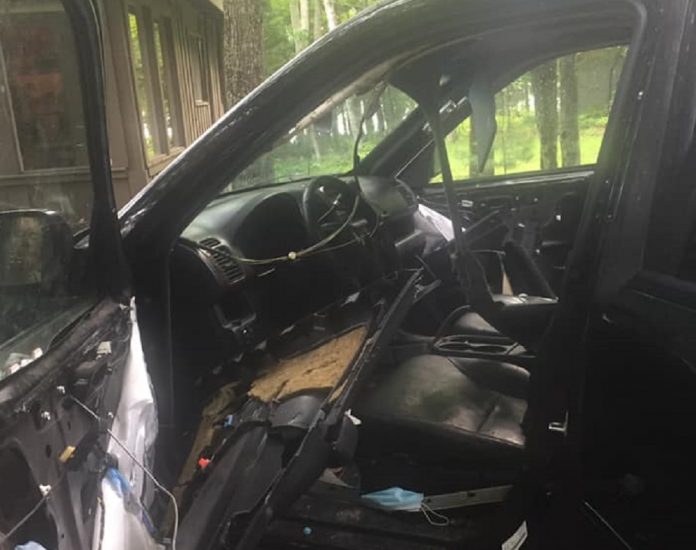
The interior of a vehicle in the Drag Lake area was reportedly destroyed by a bear searching for food. Photo submitted by Susan Meiorin.

Susan Meiorin awoke June 21 to find her car door open, with the perpetrator leaving an unusual calling card: bear paw prints.

The bear has made its way around the Drag Lake area all week, breaking window screens and opening car doors in search of food. In one case, the bear destroyed the interior of a car, which Meiorin said likely occurred when it got trapped inside after the door closed behind it. She said the bear than had to be released out the back by OPP.

The neighbourhood is on alert now, Meiorin said, locking doors, closing windows and posting regular updates. The Ministry of Natural Resources and Forestry (MNRF) put out a live trap June 26 in hopes of capturing the bear, she said

“Everyone’s quite aware and being very diligent,” she said. “Just the sheer shock that a bear can open your car door. It’s amazing.”

MNRF senior media relations spokesperson Jolanta Kowalski said the ministry is working with Haliburton Highlands OPP to be responsive to the situation. He said every year, they receive reports of bear break-ins, including cars, which happen when a window is partly down, and doors are unlocked.

“Bears are quite clever at figuring out how to open unlocked car doors and can do a lot of damage to the interior of a vehicle when the door closes behind them and they are unable to escape,” Kowalski said.

He said the most important step to preventing such encounters is to remove items that attract bears from the neighbourhood: garbage, bird food, barbecue odours and ripe fruit left on trees or on the ground.

“When bears cannot gain access to non-natural foods, such as garbage, they will not stay in the area,” he said.

Meiorin said the neighbourhood is taking those steps now. She said authorities have told her the bear is young – likely one or two years old – and probably struggling as seasonal conditions mean berries are hard to come by.

Her family has also given the bear a name: Lola.

“Trying to make light of it, but at the same time, everyone’s on edge,” she said.

Meiorin said she hopes the MNRF can capture the bear safely and release it somewhere further away.

“I don’t want them to have to shoot,” she said. “Everyone just wants them to be able to capture it, release it and hopefully Lola will not return.”

Harp on the Water – chapter 5: Panic Box

0

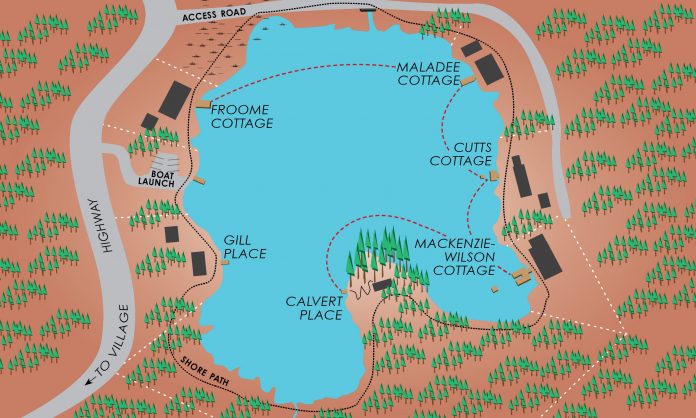
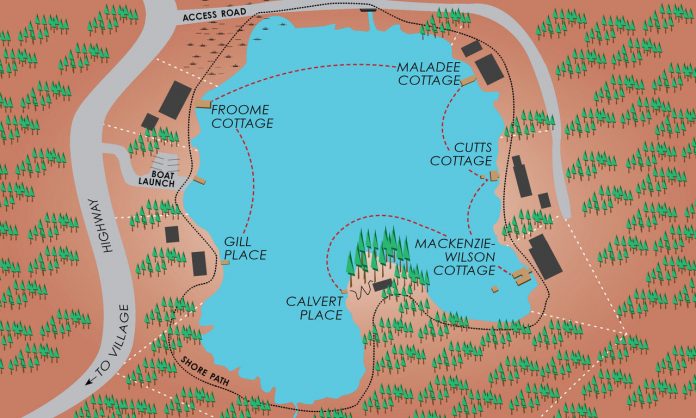
Detective Harry Harp and Constable Terry Becker walked up to a cedar-sided cottage fronted by a neat row of day lilies. They knocked on the door and after a moment, were invited into a large white space – kitchen, dining room and living room blending into one.

The two men took a seat, admiring the home’s eclectic interior – framed movie posters, retro light fixtures, a 1970s shag carpet. Harp said, “I guess you’re wondering why we’re here.”

“You bet we are,” Ariel Froome said, smiling widely and adjusting the wedding band on her finger. She was in her early 40s and had a no-nonsense air about her, conveyed in part by her plain white shirt and blue jeans. Mimi, who looked ten years younger, was sitting cross-legged on a white leather couch. Wearing a Clash T-Shirt and sweat pants, Harp clocked the wedding ring on her finger, too.

“I’ve seen you moving around the lake,” Mimi said. “What’s happened?” She had delicate features under a mop of dyed blonde hair.

Harp said, “Ida Calvert was murdered last night.”

The two women exchanged glances.

“That’s – awful,” Ariel said, pressing the palm of her hand against her cheek.

Mimi sat up. “What can we do to help?”

“Let’s start with last night. What were you doing between 10 and midnight?” Harp asked.

Ariel took the lead. “Sure. We finished dinner about 9:30, cleaned up and took the boat over to Bob and Heather’s for the fireworks show. Pyrotechnics are not really our thing but we want to fit in, so …” She smiled knowingly at Harp. “The show is always 11 until midnight and always the identical series of fireworks. Something wonderfully odd about that, don’t you think?” She laughed indulgently then remembered Ida Calvert’s murder and her smile vanished. “The show ended at midnight – we came home and went to bed.”

Becker leaned forward. “Do you remember anything unusual? Did you see or hear anything out of the ordinary?”

Mimi frowned at Ariel, then the older woman said, “Not that I can think of. But if anything comes to mind, I’ll be sure to get in touch – OH GOD!”

BEEP-BEEP-BEEP!

Ariel jammed her hands over her ears.

“The boat launch drives us crazy!” Mimi said to Becker by way of explaining her wife’s behaviour.

Through the window and beyond a clump of trees, Harp saw a large yellow speedboat being slowly lowered into the water by an SUV with tinted windows. A man stood on the dock shouting instructions at the driver. The beep of the reverse warning system filled the room and so, too, did the odour of engine exhaust. Ariel and Mimi ran around shutting windows.

When the cottage was sufficiently sealed, the women returned to the living room and took their seats. Both looked stricken – and not from the news of Ida Calvert’s murder.

Ariel massaged her temples, “That launch is supposed to be for WAOs only.”

“WAOs?” The lines in Harp’s forehead deepened.

“Water Access Only cottagers. Off-grid types with no road access. But every sports fisherman and party animal in the county uses the launch—because they can!” She threw up her hands.

Mimi said quietly, “We applied to have it removed but, well, because there still is one off-grid cottage ….”

“The Calvert place?” Becker said.

Mimi and Ariel nodded, each working hard to transform their features from bitter anger to sympathetic concern.

Harp said, “So you want them to sell?”

Ariel laughed derisively. “No! All Ida had to do was to allow the road to come to her property. Without off-grid cottages, there would be no need for the launch and our proposal to close it would go through. Simple.” She smiled, cat-like. “We’re professors and, not to boast, but we can write one killer proposal.”

Mimi looked at her admiringly. “We wanted to retire here but this issue has really changed things.”

Harp gestured in the direction of the boat launch. “But surely it was here when you bought the place.”

Mimi’s voice rose up defensively. “Our agent said it was for WAOs only. And since only the Calverts qualify, its use would be minimal. That’s what she said, anyway.” Mimi scowled. “Yeah, we should have done more research.”

Ariel ran a hand through her short-cropped hair. “Wait a minute, Mimi, we can re-submit the proposal. With Ida gone, it has a chance!”

All eyes turned to Ariel and the room fell silent. The only sound was the muffled roar of the speedboat’s twin engines as it took off from the launch.

“What?” Ariel recoiled defensively. “‘Mort change tout. I don’t mean to be callous but there may be some good that comes from this.”

“For you,” Harp noted dryly.

Ariel Froome’s eyes narrowed. “Look— – hat boat launch has taken a toll on us. We just got married two years ago and this place was our wedding gift to each other. It was supposed to be perfect – NOT SOME BLOODY LAKESIDE PANIC BOX!”

Becker turned to Mimi. “Did you ever talk to the Calverts about this?”

“We tried,” she said.

Having recovered from her outburst, Ariel smiled pleasantly. “I talked to them, I wrote letters, I have not yet sent carrier pigeons but I am willing to try anything. I have a file folder two inches thick detailing my campaign to introduce the Calverts to the modern era – and ourselves to the peaceful enjoyment of our property.”

“You have to think of property values, too,’ Mimi muttered under her breath.

Harp chose to ignore the comment. “What did Ida say when you asked her about bringing the road through?”

Ariel turned to Harp and gave him the most austere, professorial gaze she could muster. “Ida Calvert said, ‘Get off my land’.” The older woman shook her head. “I could have throttled that cantankerous old crone.”

“Someone beat you to it,” Becker said.

Ariel looked at him, then down at her hands, contrite, at last.

Harp walked over to the front window. The far shore’s terrain was level until the Calvert point emerged – a shimmering granite promontory topped with towering pine trees. Just then, he recalled something Grace Calvert had said.

He turned to the women.

“It must irritate you to see Grace leaving her boat at the launch when she walks into the village. Must be a constant reminder of how much better things could be if the Calverts would just – get with the program, right?” He grinned.

Ariel smiled. Mimi shifted on the couch.

“I can see how you’d want to get back at them,” he said with a conspiratorial wink. He raised his voice. “Do something, right? Some little poke to remind them what a pain they are. Something to make their lives difficult – nothing criminal – just something annoying to show them how annoying they are to you. Like untying Grace’s boat and setting it adrift, right? RIGHT!?” His voice echoed around the sealed room.

Suddenly, the 1970s shag rug fascinated Mimi. Ariel looked at her wife. Panic filled her eyes. “Mimi? MIMI—?”

Mimi looked up. Fear and defiance distorted her features and she said, slowly, “Other people do it, too. Not just me.”

Virtual runs for real causes

0

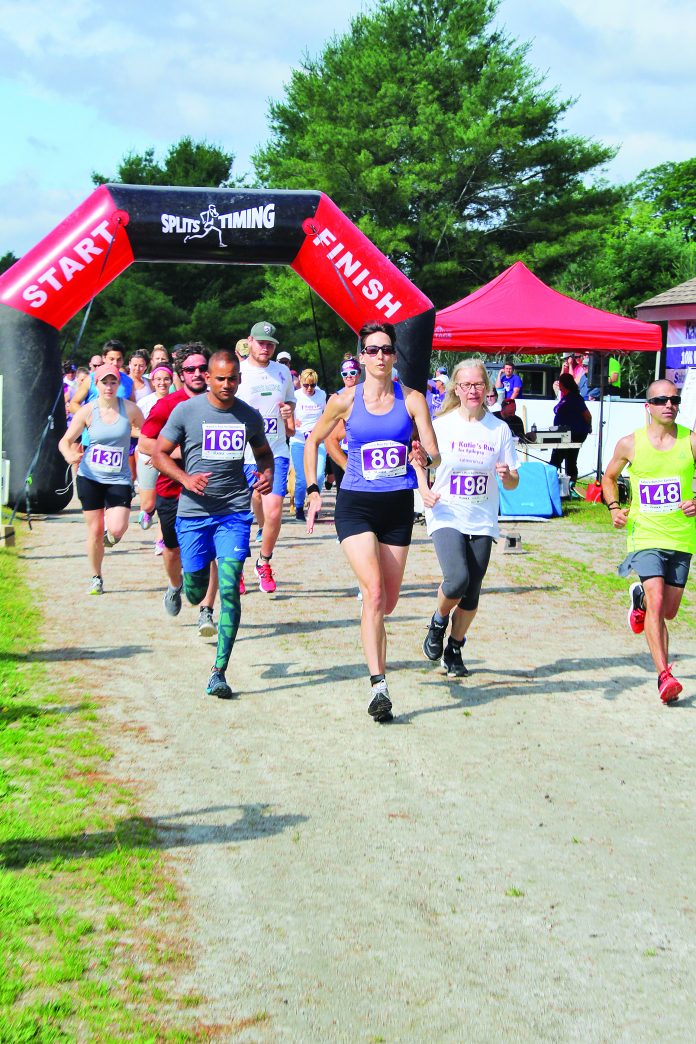
The ninth edition of Katie’s Run will be unlike any in the past.

The annual event to raise awareness of epilepsy, as well as money towards research, has had to go virtual this year as a result of COVID-19, spokesperson Trudy Pogue said.

“But we are working hard to make it a very real experience, and to raise real funds for a very real need,” she said.

Pogue said this year’s theme is about sharing stories of children and youth living with epilepsy. They can be found at katiesrun.ca.

She added the great thing about this year’s event is participants get to choose where they run or walk, and don’t have to travel to Haliburton.

“You can walk or run with your family right in your own neighbourhood. And, you can run your run or walk your walk anytime you like on Saturday, July 11,” she said. “It doesn’t get any easier.”

People are encouraged to register early because organizers are sending race kits by mail. Pogue said once people make the decision to join, they can start planning their route and getting creative. There will be prizes for the most outstanding outfit, the finest finish line, the most ridiculously random route, and the most moJJa purple peace socks in a pretty picture.

People can register for the 5K, 10K or 2.5K at raceroster.com/events/2020/29401/ katies-run-for-epilepsy-2020.

On the morning of July 11, participants can join Katie’s Run on Facebook and/or Instagram for a warmup, special guest appearances and a send-off. Walkers and runners are urged to take photos, post them, tag Katie’s Run and use the hashtags: #KR2020 #stillrunningforepilepsy #stillwalkingforepilepsy. If you like, you can also post your results.

Participants can check in all day long on social media for updates, photos, announcements and guest appearances by: ‘Man in Motion,’ Rick Hansen, Anthony Farnell and Storm the Weather Dog; Cassidy Megan, Purple Day Founder; Matt Duchene, NHL Nashville Predators and Alex Kopacz, Olympic bobsled medalist. There will also be an online auction. For more information, see katiesrun.ca, and on Facebook and Instagram. If you can’t make it, Pogue encourages donations to raceroster. com/events/2020/29401/katies-run-forepilepsy-2020/pledge/participant/9217056.

Katie’s Run was started by Haliburton girl, Katie Woudstra, who suffers from epilepsy, along with her mother Geri.

Terry Fox Run moves online

Meanwhile, Minden Hills Terry Fox Run organizer, Barb Millington, said their event will also be virtual this year.

The date is Sunday, Sept. 20.

On their Facebook page, they said The Terry Fox Foundation had announced that Canadians will continue to support cancer research through virtual runs from coast to coast to coast this September.

They added, “Terry once said, ‘anything is possible if you try.’ Today, now 40 years later, we will have to innovate as well – we can’t think of anything that Terry would appreciate more.

“Help us celebrate the 40th anniversary of Terry’s Marathon of Hope by joining us as you have in the past, just a bit different this year. On Sept. 20, participate wherever you are, around the neighbourhood of Minden, in your own backyard, or just donate to what we all know is a great cause. We will unite in spirit, not in person.”

For more, follow Terry Fox Virtual Run 2020

Highland Yard goes virtual

The 2020 Highland Yard will be a virtual home run/walk where people can pick their race and run it where, when and how they want. There’ll be the usual 2, 5 and 10km runs as well a heritage 7.3k race. It’s in recognition of the original Heineken Yard race distance, run between Camp Onondaga to the Rockcliffe Tavern in Minden, in 1971. However, organizers said there is also a freestyle category this year.

“Want to do a backwards 100 metres, 500 metres worth of laps around the living room, a one-kilometre walk or a 25-kilometre bike ride while wearing a snorkel? This is the race for you.”

For more details, see highlandyard.ca

Church finds ‘silver lining’ in COVID

0

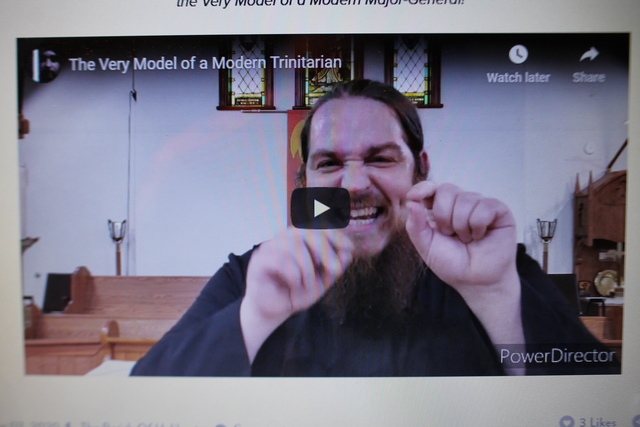
Explaining the Holy Trinity by adapting the words from a Pirates of Penzance song is something Rev. Ken McClure would never have imagined pre-pandemic. However, he recently belted it out his version of the Major-General’s Song during a St. George’s Anglican Church virtual service.

“It’s gone viral with 5,000 views,” McClure said in an interview. “Suddenly, a little Anglican Church in Haliburton is being watched in places such as Australia, America, and Britain.”

COVID-19 has brought challenges to places of worship, but also silver linings.

The province announced May 8 that they could reopen as long as parishoners who are not from family groups sit six feet apart, and only fill 30 per cent of the building’s capacity.

However, Rev. McClure said St. George’s won’t be opening any time soon, and will continue with its Facebook Live and YouTube virtual services for the foreseeable future.

“We won’t be opening our doors until at least September,” he said, adding they’re following directives from church hierarchy. He said it will be onerous to meet the government’s requirements for social distancing, and much has to be worked out about things such as: not exchanging handshakes during the peace; communion and singing.

He added a large part of their congregation is from a vulnerable demographic.

“It’s going to look so very different,” he said.

However, he has thrived on digital infrastructure that has allowed him, organist Bill Gliddon, and his wife Becca McClure to socially distance in front of two cell phones to deliver live or recorded services.

“We’ve been livestreaming since mid-March. We provide visuals of the building, sing, people can sing from home, so we get to have the sensory experience of our worship that is familiar and comforting,” he said.

McClure added that there have been pluses with regards to reach.

“It’s no big secret there has been a decline in church attendance in some denominations. People are coming less and less. But since March 15, and going online, the number of participants has more than doubled what we get on a Sunday.”

He added the platforms has given him a lot of different opportunities to promote the Christian message, such as the Pirates of Penzance adaptation, which he called ‘The Very Model of a Modern Trinitarian.’

“There is an advantage and it draws us into what our calling is, which is to go out and preach the gospel, since gathering is so essentially important to the Christian experience,” he said.

He admitted it is pretty different preaching to empty pews.

“It’s me in front of the altar looking at two cell phones, one is recording it, and one is live streaming it. Bill Gliddon is six feet away on the organ and sometimes my wife Becca McClure is there.”

As for the rest of his ministry, he said he’s been making a lot of telephone calls in lieu of seeing people in person. He added they have a network of the St. George’s family looking out for each other. However, it has been hard with people going into hospital or passing away as he can’t be there in-person.

See haliburtonanglican.org for more.

Harp on the Water – Chapter 6: Hooked

0

After interviewing with the Froomes, Detective Harry Harp and Constable Terry Becker rowed south following the shoreline. They had left the two women inside their sealed, lakeside home with instructions to remain there until further notice.

Becker said, “Since Mimi Froome admitted to untying the boat, Grace’s story holds up. She slept in the woods.”

“But she still had the opportunity to kill her mother. We can’t rule her out,” Harp said.

As much as I’d like to, he thought.

The late afternoon sun cast a slippery haze over the water and insects skated in circles around the rowboat. In the distance, a dock appeared and Harp noticed a man standing on it. The man was Frank Gill.

After tying the boat, he led Harp and Becker up a short path to his small, woodsided cabin. Inside, Harp was greeted with the smell of mould and fried bacon. A smoke-stained fireplace took centre stage in the living room across from a small, grimy kitchen. For decor, Gill had pinned up posters of fishermen in action, a map of Spruce County and an out-of-date calendar.

There was another picture, too – a painting of a woman.

Gill arranged a couple of kitchen chairs and invited the men to sit down, then sat in the chair across from them – the one with a clear view of the Calvert point.

“I didn’t like leaving Grace alone. I sure hope she’s OK. ‘Course, I’ve been watching but I’ve seen no sign from the Calvert place. Not as yet.”

The three men sat in silence for a moment. Then Becker broke it. “Nice place you got here, Frank.”

He shrugged. “She’s old and nearly in the ground, much like myself. I reckon we’ll both go about the same time.”

Harp watched him turn his attention to the point. He asked, “How long have you known the Calverts?”

“Since the summer of ’61.” Gill leaned back, clearly on his favourite subject. “Ida was 16 and I was fishing on the lake that day – but by the end of the afternoon, it was me that got hooked.” He grinned at them then gestured at the portrait across the room. “Her picture was painted about that time.” He stared at it for a moment before continuing. “She came up with her parents every summer and then when she was 24, they died in an accident. Left everything to her, of course, so she had no worries – except grief. That’s when she moved up here.” He looked over at the point again.

Harp had the feeling he spent his days looking at the Calvert point.

“I think she wanted to hold on to the memory of her parents, the happy summers, her childhood. Anyway, she decided to stay, year round.”

Becker looked incredulous. “Is the Calvert place even insulated?”

Gill shook his head. “Nope. But it didn’t matter. She was determined. Anyway, the two of us got prepared for winter as best we could. I tell you, I was never happier – even though I knew it was foolhardy. See, we were together then. That is, until everything fell apart.”

Harp asked, “How so?”

“She got pregnant.”

Becker’s eyes widened then slowly narrowed. He blurted out, “Grace?”

The old man nodded. “I wanted to marry Ida. Make it all proper, you know? But she wouldn’t hear of it. And that’s when she went a bit off. Turned into a recluse. A hermit. Wouldn’t hardly go anywhere. So I set up on this side of the lake to be of help. Taking young Grace to school and back, running errands, you name it.” He sighed bitterly. “Been doing that all my life. Been a loyal servant to Ida Calvert.”

A fly bounced against the window trying to escape.

“Love sure does make a man a damn fool.” He scratched the stubble on his chin. “I think of that summer day back in ’61 and sometimes I wish I went fishing on another lake.”

Harp said slowly. “Does Grace know you’re her father?”

Gill shook his head and whispered, “Ida swore me to secrecy.” The old man leaned forward in his chair, muscles tense, eyes fixed on Harp’s.

The detective stared at him for a moment, then stood up and crossed to the painting hanging on the opposite wall. The artist had captured a smiling young Ida Calvert, her face tilted to the side like she had a secret she was considering whether or not to reveal. Her eyes were sparkling emeralds and she had wavy chestnut hair. Harp was suddenly struck by the realization that he’d seen that wavy hair earlier in the day—but it had been gray and fanned out over a blood soaked pillow.

Becker said, “What were you doing last night, Frank? Between ten and midnight?”

Gill leaped forward. “You think I did it? You think I murdered the only women I’d lay down my life for?” He jumped to his feet, his voice rising. “Sure, I loved her – and I hated her! Sure, she destroyed my life. But I would never ever do anything to hurt her, you hear me?” Using the back of his hand, he wiped spittle from his lower lip, turned and walked out of the cabin.

Silence filled the void—except for the creak of the screen door swinging free of its frame.

A gust of air ruffled the old calendar. Harp clocked the date: 1961. Since then, the old man’s life had been held in a kind of love struck limbo.

He’s right about one thing, Harp thought. Love makes a man a damn fool.

A couple of minutes later, the two men walked to the dock where Gill stood brooding.

“Look,” he said, turning suddenly. “I was here last night! And what are you wasting your time with me? There’s a killer out there!” He took a step towards Harp and in a second, the man’s hand gripped Harp’s forearm and yanked him close. “Useless city cop,” he hissed.

Becker quickly stepped between them. “Hey Frank? What’s – that?” He pointed down the lake in an attempt to change the subject.

“Huh?” Gill’s anger evaporated and Harp took the chance to free himself. He looked where Becker was pointing. In the distance a pale shape bobbed against the shore.

“Ida’s boat,” Gill, said finally. “Figured it would turn up somewhere.”

“We’ll get it on our way back,” Harp offered.

“NO!” Gill swung around. “I take care of the Calverts. Always have and always will.”

Back in the rowboat, Harp watched Gill slowly dragging the Calvert boat behind his outboard.

A loyal servant, Harp thought.

“Do you believe his story?” Becker asked.

“Most of it. But you saw the anger in him. It’s enough to make him commit an act of violence.”

“But to the woman he’s loved for 60 years?”

“Loved – and hated.”

On the Calvert dock, Harp saw that the two officers who had inspected the shore path and he hoped they had news.

Becker asked, “So what’s next?”

Harp rolled up the sleeves of his shirt. “Now,” he said, “We play a game. This bunch has been playing with us. Now it’s our turn.”