
Home Blog Page 391

AH rezones to allow farm, store and cabins

0
The site of the development. Photo by Lisa Gervais.

The family behind a plan to build a farm and market, tourist cabins and a store, is one step closer to achieving its dream in Algonquin Highlands.

The township, on Aug. 13, passed a bylaw to allow rezoning of the property to highway commercial-exception from rural zone.

The Cleroux family wants to establish the businesses at 9734 Highway 118, between Carnarvon and West Guilford. During a public meeting, spokesperson Sylvie Cleroux said they would like a market to serve the general public but the convenience store would be for people using their cabins. She said the cabins would be stage two of the development, and not likely for another two years.

Planner Sean O’Callaghan said it appeared the land was big enough to accommodate the proposed development within the requirements of the zoning bylaw, including compliance with things such as minimum setbacks and parking requirements.

He said there also appeared to be sufficient frontage and area to maintain a natural buffer between neighbours to minimize any potential impacts.

The Ministry of Transportation said it had no objections in a July 16 letter to the township tabled at the meeting.

MTO spokesperson Laurel Muldoon said the Clreoux’ will need to ask for a formal pre-consultation for their site plan prior to the MTO issuing a commercial entrance permit and building and land use permit. It said it would only issue a building and land use permit for the general store at this time.

Three of Cleroux’ neighbours wrote to object to the development.

Dorothy Robb said she’d been living next door for 25 years, and “I enjoy the peace and quiet, and the very last thing I want is having up to 10 cabins with tourists running around right next door.”

She said she is also worried about traffic on an already busy Highway 118, saying “it’s an accident waiting to happen.”

Resident Doug Olliffe also objected due to traffic concerns.

Muriel Jeffrey said she’s also troubled about disruption of her peace and quiet and traffic but is concerned about hemp production on the farm. While legal, she’s worried it will “encourage an undesirable element that the long-term residents in this area do not want.”

Deputy mayor Liz Danielsen said “overall, I’m not in objection to the application.” She said she’s hearing traffic is an issue, but the MTO has no problem with traffic to a store, and had not yet commented on cabins.

Coun. Lisa Barry wanted to know what the site plan would contain, and O’Callaghan said drawings of parking, septic, well and natural buffering. He said council would have to approve the site plan.

Mayor Carol Moffatt said she understands the traffic concerns.

O’Callaghan said the MTO part of the process will likely entail a traffic impact study and discussion about a turning lane. However, he said the township won’t know until the proponents apply to the MTO.

Moffatt asked O’Callaghan, “Notwithstanding any of the concerns, of which there are a number, it meets the criteria of our planning documents?”

“Yes, that is correct. There are a number of policies in our official plan that do support such a development,” he said.

Getting on with it

0

Resilience.

When I think about Haliburton County, its capacity to recover quickly from difficulties and toughness really stand out for me.

And while COVID-19 is still a clear and present danger, there are examples of Haliburtonians overcoming challenges throughout this week’s Highlander.

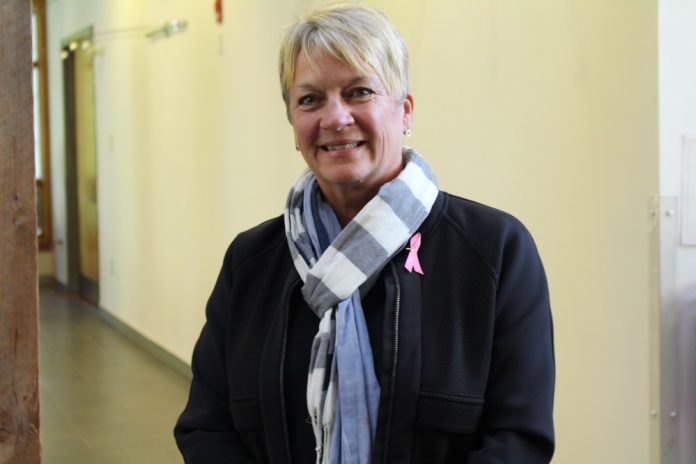
Let’s start with Sally Moore. The Sunny Rock bed and breakfast owner courageously sent out a mass email informing people she is battling breast cancer. However, she is organizing a fundraiser for Minden Rotary and, well, to lift her spirits. How about that?

The folks on Black Lake, as well as the family of Anna Andrews, certainly proved their mettle this past weekend. With Anna turning 100, family and friends weren’t going to let a little pandemic get in the way of celebrating her century. Instead, they jumped in their watercraft, grabbed their noisemakers and cruised by Anna’s dock to wish her a happy birthday. Minden Hills Coun. Pam Sayne showed up with a plaque from the township to mark the accomplishment.

Word came in from Doug Norris at the Abbey Retreat Centre. They are the folks tucked up the back of the Abbey Gardens site who offer free retreats for cancer patients and their careers. Earlier this summer, they launched the Haliburton Highlands Challenge. On Aug. 27, they wrapped it up, raising an incredible $50,000. It will ensure the continuation of virtual retreats for now, and many in-person in the future.

The Highlands Hills United Church outreach committee gave me a call. They wanted to share that they are gathering masks for school children. They were purchasing some but also looking for materials and sewers.

The folks at Volunteer Dental Outreach were delighted to announce that their annual golf tournament had raised $40,000. That is going to lead to a lot of smiles at the free-of-charge dental clinic.

Art on the Dock announced its return for its annual art exhibition on Kennisis Lake and they brought in a tidy $5,000.

The Rotary Club handed its prize-winning cheque of $30,000 to Judy Neimann. The fundraiser this year was highly successful.

The Land Between charity has reached the hatching stage of its new turtle incubation program, with the first of its 1,000 eggs hatching Aug. 7. The program has started releasing turtles, which will continue for another few weeks.

We’re starting to see the arts scene return with a vengeance. We have pop-up art taking place this weekend, workshops and exhibitions being advertised for September and October.

In sports, kids are being registered for Highland Storm minor hockey.

Many other families are preparing to return to school.

And, of course, Minden Pride celebrated its fifth annual event in the County. Like many, it had to hold the bulk of its activities online. However, it staged an inclusive flagraising, a drive-in movie night and a show your Pride colours day. The iconic Pride flag was flown from houses, businesses and vehicles as people did not allow COVID-19 to dampen their week-long celebration.

While the experts are telling us this bug is going to be around until the end of 2020 and into the beginning of 2021, it would seem Haliburton County residents are starting to well and truly get on with it. After all, we are known for our resiliency.

Salute our courageous educators

0

It is not an easy time to be working in the education sector.

With a return to school, we are asking these people to safely plan to take care of our children in a fundamentally unsafe scenario. We are asking our educators to risk their health and safety to take this on, much like we did our health care workers when the pandemic began. The difference is, this is not something educators signed up for when they started their careers.

With that in mind, we need to be kind and celebrate our education workers in the months to come, just as much as we did our health care professionals when the pandemic began.

The provincial government’s back-to-school planning is facing a lot of justified criticism about class sizes. Education unions have filed a labour board complaint that the province is violating workplace safety laws. Labour Minister Monte McNaughton compared school openings to the successful ones at retailers, grocery stores, construction sites and more, but none of those spaces equate to having 20-plus children in a room for hours on end. But our local teachers and boards can only deal with the hand they have been dealt in this case. They cannot necessarily openly criticize the provincial plan if they want to, though Trillium Lakelands District School Board (TLDSB) trustees have made their umbrage with parts of it known.

Online learning is an option for students, but not necessarily for educators, with only so many online spots to go around. Getting online schools running well will also certainly be a challenge and it remains to be seen how well they will work over a full year.

So, our local educators must make the best of what is frankly a bad situation. In many respects, they have done that, with clear plans and regular updates across the board. Mandating masks for younger grades was also a strong step for safety. Teachers and administrators are hard at work planning, regardless of any anxieties they have.

There have undoubtedly been hiccups. It would have been nice for the expanded mask mandate to come before parents made their decisions on online versus in-person learning. A switch from taking two credits at once to one at secondary schools in late August was positive for safety but probably led to some confusion. Details on plans are coming much later than ideal given how close we are to opening, though the provincial rollout is more at fault for that.

But I am willing to give administrators and teachers a lot of leeway given this difficult situation, especially considering the risks we are asking them to take. To get parents back to work, we are asking educators to take greater risks to their health than most other occupations. We are tasking elementary educators to figure out how to teach while enforcing social distancing with young children and asking secondary educators to navigate radically different scheduling.

So, let us cheer our educators on as they face these challenges for our sake. We may not agree about the quality of the back-to-school plans, but regardless, educators deserve a lot of credit for the courage they are showing.

Kudos to them and let us all hope back-to-school unfolds as well as it possibly can.

Finding a new use for an old church

0
The former Zion United Church in Carnarvon will be converted to a restaurant, antique shop and community meeting space if the conditional sale goes through in the fall. Photo by Lisa Gervais.

If the conditional sale goes ahead, the former Zion United Church in Carnarvon will give way to a bakery and cafe, antique store and community meeting space come this fall.

The final piece of the planning puzzle fell into place for Highlands Hills United Church Aug. 13 when the Ministry of Transportation (MTO) gave their blessing to a proposed zoning bylaw amendment.

Algonquin Highlands planner Sean O’Callaghan’s report said, “The MTO is aware of the parking situation and have expressed no concern with the new owners continuing to use the parking area.” There are 15 parking spaces for the building on East Road.

Following a public meeting, the township rezoned the land from community facility exception three to general commercial exception five.

At the meeting, no objections were tabled.

Deputy mayor Liz Danielsen said, “I’m really pleased to see the proposal for this building. I just hate to see churches being sold and then just sitting unused.”

Coun. Jennifer Dailloux said she breathed a sigh of relief at the planned usage.

“I know that in our planning documents, we stress the importance of maintaining the rural nature of our township and keeping that character. And, when I think about little villages across rural Ontario, this is the kind of thing that a lot of rural villages are finding to do with their previous spaces of worship. It’s the little antiques place, it’s the little café, it isn’t become something else. It’s very much in keeping with how Ontario seems to be evolving in its rural spaces where places of worship are coming to an end. And I honestly couldn’t be more delighted. I think that does keep very much in tune with our rural nature and I’m looking forward to visiting the space.”

Mayor Carol Moffatt also paid tribute to the Zion church community.

“I’m glad for the church folks that this portion of their lives is being tidied up. It’s been a long haul for them.”

County councillors opt to keep pay for cancelled meetings

0
County councillors opted to keep pay for cancelled committee of the whole meetings. Photo by Joseph Quigley.

County of Haliburton councillors have opted to receive pay for cancelled meetings during the pandemic due to additional workloads.

At the Aug. 26 meeting, council discussed how staff kept up their per diem payments for the monthly committee of the whole meetings during the pandemic, even though the meetings were cancelled from April to July.

CAO Mike Rutter said council directed that pay continue as normal for staff and he applied that to council as well. He said he understood even though those meetings were not happening, councillors were working.

Warden Liz Danielsen said although there have not been committee of the whole meetings, the past few months have required more work than normal.

“I’m not complaining because it’s all been good work,” she said. “An awful lot more work in the last few months than I’ve ever done before. That probably stands for all of us.”

Although Coun. Carol Moffatt said she had discomfort getting paid for a meeting she did not attend, she decided she did not feel bad about taking the $80 per meeting.

“It’s important for us to acknowledge that, put that out there in the public forum,” Moffatt said. “We’ll keep the money in our bank accounts because of the amount of work we did, but acknowledge we’re not trying to rip off the taxpayer … We worked way harder than the $80 we get for a meeting we didn’t attend.”

Moffatt said no councillor is in the job for the money and it may be worth it to change pay.

“Just because we didn’t go to a meeting doesn’t mean we weren’t working,” Moffatt said. “It’s an opportunity to once again think about how much the positions are paid because they’re pretty darn poorly paid.”

Coun. Lisa Schell said Minden Hills councillors are paid on a salaried system which she said could be worth considering.

“It’s kind of just flat across the board, with the acknowledgement the job is technically – I don’t want to say 24/7 but it pretty much is,” Schell said. “My home is my office and my house phone rings constantly.”

Danielsen said councillors could individually work with staff to return part of their paycheques if they felt uncomfortable.

Organic waste the biggest polluter: Neville

0
Scotch Line and other waste disposal sites and transfer stations in Minden Hills are the biggest polluters. File photo.

Minden Hills Coun. Jean Neville said she wants the County’s climate change coordinator to look into the possibility of getting a biodigester.

She made the comment after County climate change coordinator Korey McKay outlined her plan for the township to reduce its Greenhouse Gas (GHG) emissions.

McKay’s report outlined a number of mitigation measures, including electric vehicles, reducing the garbage bag limit, and installing scales at the Scotch Line landfill.

She also revisited how 81 per cent of the municipality’s emissions come from landfills. She spoke of exploring the potential for food and yard waste diversion; completing a waste composition study at the landfill sites and implementing a backyard composting program.

Neville replied, “You said that you’re going to determine how much organic waste was at the landfill? You already know that 81 per cent of our emissions is coming from the landfill and so I’m thinking that is organic waste. I think that time and money and effort should be put into investigating a biodigester of some sort … even if it was County-owned or purchased, I think that would be a lot more value.”

A biodigester is like a mechanical stomach. It is fed with organic material, which is broken down by micro-organisms in an oxygen-free environment to produce a renewable energy called biogas and other material that is mainly used as fertilizer.

McKay said she had noted Neville’s suggestion for the implementation stage of the project. Coun. Pam Sayne, who is on the Minden Hills climate change committee, thanked the County for hiring McKay. She also thanked the many community volunteers who have been, and will continue to, work on the portfolio.

“We know that our targets that we need to meet are certainly not where we want them to be in this report but I think it’s open to improving,” she said. However, “I’m excited about this direction. I think there’s options to even do better. But it’s on the table and we’re moving in the right direction.”

McKay said the township’s corporate emissions come largely from its landfills (81 per cent), followed by fleet (12 per cent) and buildings (seven per cent). The GHG reduction targets are to cut corporate emissions by 20 per cent; 10 per cent for fleet and 10 per cent for waste from the 2018 baseline by 2030. Coun.

Bob Carter said he’d like to see more of a focus on diversion and public education.

“From my perspective, you’re not going to change the output without changing the input. So, reducing garbage bags to two per week is going to probably lead to more garbage on our roads and streets. Without doing something to help the public to reduce, educate them and reduce the amount of garbage, it doesn’t help just to do it at the end,” he said.

McKay said she will support each municipality to implement the suggested actions. She said a joint municipal climate change working group should be created for county-wide collaboration and ongoing input and support for the adoption of practices and policies designed to reduce GHG emissions.

As for monitoring, she said she will complete corporate GHG inventories annually and report to councils to track progress.

“The plan is a living document that should be updated when major changes occur or at a minimum of every three years,” she said.

AH to survey public on short-term rentals

0
Algonquin Highlands council met about short-term rentals Aug. 31. File photo.

Algonquin Highlands council agreed to go forward with a public survey process to figure out how it will address short-term rentals.

Council held a special meeting Aug. 31 to discuss options for addressing short-term rentals and the community comments received so far. They directed staff to work on a public engagement process and bring back questions that could be posed to the community about how the municipality should proceed.

“We’ve heard what the concerns are, now we need to address the concerns,” Mayor Carol Moffatt said. “I would really like to get quite a fulsome amount of feedback. We’re trying to make a decision that affects the whole community and has passionate positions on both sides.”

Greg Corbett of Bracebridge’s Planscape Inc. provided a report about options council could pursue, including status quo, addressing them in a zoning bylaw, or implementing a licencing system. The report found 216 active listings in the township, the vast majority on Airbnb.

Council also discussed the public submissions received, which they requested be sent anonymously to a specific township email address ahead of the meeting.

Councillors said there were a lot of concerns, with strong opinions for and against municipal action.

Coun. Lisa Barry said some do not want short-term rentals in the community at all, while deputy Mayor Liz Danielsen said others insist the municipality has no place addressing them – and have said so with expletives.

“There are still a certain amount of people that are probably even more adamant that ‘I bought this property and there’s no blank way that you’re going to blankity blank tell me what to do with it,’” Danielsen said.

Corbett’s report also cites the experience of the Town of Blue Mountains, as the first municipality to tackle the matter. They found a program requires significant municipal investment and staff time. Corbett said implementing a licensing system would have a substantial cost and create a minimum of two new full-time positions.

Barry said it is clear people want them to go into some kind of registration system, though Moffatt noted the tax base will have to cover that.

“There might be a whole bunch of people who don’t want to pay to govern the behaviour of others,” she said. “It’s important to hear as much from the public as we can.”

Moffatt also said there are differences between people renting to help afford a cottage they use and those who own a cottage solely to rent it out. Coun. Julia Shortreed said although there may only be around 200 rentals now, rental-only owners will rise.

“This is going to keep growing when people realize the return on their investment is really lucrative,” she said. “The commercial aspect is going to grow.”

Who’s zooming whom at council meetings

0
County of Haliburton Director of IT, Mike March, at the Aug. 25 Dysart et al council meeting. Photo by Lisa Gervais.

It’s early on a Tuesday morning and the Dysart et al council chambers are unnaturally quiet for a regular meeting day.

With COVID-19, only mayor Andrea Roberts is in attendance, seated behind a conference camera and two computers. One screen is for the Zoom meeting she will chair starting at 9 a.m. The other is so she can have a copy of the agenda and its accompanying reports.

At a safe social distance are staff members Alyssa Sisson and Laurie Salvatore. Down the back of the room is IT technician Marc Jones.

While the meeting is still an hour away, it takes time to set up.

Jones is getting ready to start YouTube livestreaming. Sisson and Salvatore are ensuring councillors and staff are online and messaging delegates to make sure they are available to join the Zoom meeting for their part of the agenda.

County IT manager Mike March is lending support, telling Salvatore, “I disinfected my hands before I touched your keyboard.”

The County of Haliburton and its four lower-tier municipalities have been conducting Zoom meetings that are livestreamed to YouTube for months now because of COVID-19.

“We’ve adapted very well,” says Roberts as she removes her mask and takes a sip of coffee.

She said it had been a case of having to adapt on the fly, “or sink or swim.” And for the most part, she said it had been a success.

Jones said there have been the occasional technical problems. For example, the Aug. 27 Minden Hills meeting had to be rescheduled to Aug. 31. During an Algonquin Highlands meeting Aug. 24, Zoom was out for awhile. Jones had to find a “back door” to get in.

He said when the signal looks “wonky” to those watching, it’s usually on the Zoom end of things, not County internet. However, Roberts said some councillors have better internet than others.

As if on cue, Coun. Walt McKechnie enters the building to use a vacant meeting room since his home internet isn’t always reliable.

As for bloopers, Jones and March said there haven’t been many other than the odd dog barking or children running around in the background. Often councillors have to be reminded to unmute their microphones.

Roberts said the County gave councillors some tips, including that lighting and camera angles are important. Backgrounds matter. They were also advised to look professional, treating it as any other meeting.

March said running a Zoom meeting is a partnership between IT staff and the municipal clerk’s department. He said the clerk’s department will typically set up the Zoom meeting, ensure invitations are sent out to the appropriate parties, and will control the Zoom meeting once it begins.

The IT staff person is in charge of the camera equipment setup, ensuring the livestream is functioning properly for people at home, and providing general troubleshooting and technical support to council and staff.

In terms of equipment, March said very little is required. IT staff will usually bring a conference camera as well as their laptop for support, and municipal staff will use a computer that IT has set up for hosting Zoom meetings.

“Behind the scenes, before each meeting, IT will work with council and staff to ensure everyone’s video and audio are working optimally, and that the livestream is functioning properly,” he said. “After assisting with 25-30 virtual meetings, the process runs smoothly now. However, we still have the occasional lastminute scramble. Two minutes before going live seems to be when cameras want to stop working, or computer issues will disconnect council and staff,” he added.

The IT costs to run the meetings have been minimal, the County’s IT director said. The only new hardware that has been purchased were two conference cameras that, along with a third they had in stock already, they circulate among the County and four municipalities. The cost for those two cameras was about $900. Subscription costs for a primary and secondary host to run a Zoom webinar is about $140 per month.

“The municipalities have been wonderful to work with through this process,” March said. “Before the pandemic, very few in the clerk’s department had used a teleconferencing platform such as Zoom. Now those same staff are setting up public meetings, configuring YouTube livestreams, and working with IT to ensure the meetings run smoothly.

“If live-streaming becomes a permanent fixture then it’s likely IT and the clerk’s department will continue to work together to deliver virtual council meetings to the public.”

Harp in the Dark – ch. 6 Prejudice

0

By Hope Thompson

After their interview with 90-year-old Stan Barley, the former caretaker of Pines End, Detective Harry Harp and Constable Terry Becker stopped in at the local café. The two men sat huddled in a corner booth staring down mugs of coffee.

Becker peeled the wrapping off a muffin and took a bite.

“What do you make of Stan Barley?” Harp said.

“He’s grumpy.” Becker pulled a serviette from the dispenser on the table and wiped his fingers. “But that could just be old age talking.”

“Or guilt.” Harp took a sip of coffee. “I’m pretty sure he knows more than he’s saying.” The detective wrapped his fingers around his coffee mug. “Remember what Crystal Corrigan said about antiques?”

Becker nodded. “Sure. They were all over Pines End—even in the kitchen. Muir was so stingy, stuff wasn’t updated and a lot of the antiques were still in use, like the old fridges. So?”

Harp raised a finger. “Crystal didn’t remember the ice pick but it could have been part of the antiques lying around. Look—let’s say it was. Then Stan had the means. And very likely the opportunity.”

Becker nodded. “But what about motive?”

Ten minutes later, the two men were back at their office in the Spruce County Police Department. On a white board, Becker had written the names of all guests and staff and next to each name was a note. “Deceased” was written beside most names.

Fingers clattering over his keyboard, Becker leaned back grinning.

“Thank god for online obituaries!” The constable said.

Harp’s desk was covered in the scrawled pages of his ongoing numerology project. He looked up, blinking.

“Just found Trudy Carlyle’s obituary. She died four years ago. Predeceased by her husband and daughters, Emily and Lily.” Becker jumped up and added the information beside their names.

“Everyone who was an adult at the time of the murder is deceased—except for Stan.” Becker sat down and started typing again. “And I’ve tracked down the teenage guests—just waiting on the Moort twins and Adam Barley to get back….”

Harp squinted at the white board, not listening.

“Is—something the matter?” Becker said.

Trance like, the detective picked up a marker and drew lines between names. Becker grimaced as Harp destroyed his neat list.

“I get it,” Harp said. “I get the numbers thing!” He frantically drew lines between Mr. and Mrs. Muir, the lodge owners, between the Carlyle’s, between Cat Wilson and Brett Penzler. The detective spun around.

“Matchmaking!”

“Huh?” Becker said, walking over.

“If we eliminate the Wilson baby, there are 12 males and 10 females. With the most obvious pairings, the Penzler and Moort dads are left out.”

“Left out of what?” Becker scratched his head.

“Of romance! Remember what Brigitte said? People go on vacation for a lot of reasons and romance is one of them.”

Becker’s eyes narrowed. “You think it was a crime of passion?”

“What if Stan’s wife, Irene, was having an affair with Rand Carlyle? And Stan found out….” Harp gestured a plunging motion. “And killed Rand.”

“Solid motive,” Becker said.

Harp flipped through the original case papers. “Says here, Maclem found empty booze bottles on the lawn. It was concluded that Rand was drunk, stumbled into the water and drowned. But I don’t think Maclem believed that.”

Becker nodded. “Doesn’t the file say Rand was keyed up? Excited? The man was looking for love. Maybe he walked into the woods to find Irene Barley.”

Becker put his fingers together like the preacher in ‘Night Of The Hunter.’ “But instead, he found hate. I mean, in the form of death.”

Harp’s eyes flashed. “Stan could easily have spied on the party at the fire pit and when he saw Rand leave, all he had to do was follow him. And Rand was stabbed in the back.” The detective sat down. “This wasn’t a confrontation. This was the swift elimination of a problem.”

Just then Harp’s phone buzzed and he answered it. The detective looked momentarily confused then thanked the caller and hung up.

He shrugged. “Cat Wilson’s back.”

“And the cat came back….” Becker said, grinning.

A couple of minutes later, the two men sat down across from the tanned retiree. Harp smiled. “What can we do for you today, Ms. Wilson?”

“Call me Cat,” she said brusquely. “Now I want to add to my earlier statement thingy. Just to be completely honest.” She shifted in her chair. “There was a kid called ‘dogsbody’. I don’t know his name, anyway, my sister and I were, well, rather cruel to him.” She threw her head back. “Nothing criminal. Just mean. As kids can be.”

Harp’s forehead creased. “Why?”

Cat was silent. “He was a local kid and we were from the city and we just, well, we felt superior.” She smiled widely. “Of course, I’ve changed, I mean, I live here. I love Spruce County!”

Becker’s eyes narrowed. “His name is Albert Barley.”

“Oh,” Cat said quietly. “Oh, of course! His mother and father worked there.”

Harp leaned forward. “Do you remember seeing Rand Carlyle with either of them?”

Cat shook her head. “I just remember the father—a big man. Gruff.” She shivered.

A few minutes later, the interview ended and the two men sat alone in the meeting room.

“Interesting,” Harp said.

“Prejudice is interesting?” Becker pointed at the door Cat Wilson had just exited through.

Harp said, “No. But think of Stan. He discovers Rand Carlyle with his wife. And Rand is from the city! Rand could have had that same superior attitude.”

Becker looked out the window. “Stan would have hated him even more.”

“Let’s talk to him.” Harp stood up. “And this time, let’s get the truth.”

August 1, 1970 – 10:00 PM

As the fire died down, people drifted into the lodge. Before Rand Carlyle joined the flow, he cast a look over his shoulder at his wife, Trudy. She was deep in conversation with Mrs. Wilson, the flames casting an orange glow over both women’s faces.

Perfect, thought Rand with a sly smile.

As other guests crossed the terrace and entered the lodge, Rand stepped to the left and disappeared into the darkness. The route through the woods to the little meadow was familiar, even in the dark. He’d made the same trip once already that day and many times during the week, ever since the first meeting, the first moments of connection. Yes, it was dangerous but the danger just made the whole enterprise more exciting. He turned at the little building and stepped into the forest as a woodland chorus played around him—a croak and a buzz here, a rustle there. Then another sound: quick footsteps. Rand smiled and started to turn—when sharp metal sunk into his back and searing pain made him freeze. He stumbled forward grabbing at the air, then collapsed on the forest floor. Filling with blood, his throat constricted and he gasped, breathing in the damp scent of moss and pine bark and his mind began to close and as it did, he held on to one image—the face of love—until that, too, was gone.

Diving into services delivery

0
County of Haliburton CAO Mike Rutter. File photo.

A consultant’s final report on a services delivery review for Haliburton County and its four lowertier municipalities is expected this fall – and could eventually lead to a governance review.

County of Haliburton CAO Mike Rutter said StrategyCorp is continuing to work on the evaluation of best practices going forward for the region.

He said the consultant is meeting with CAOs with regards to scheduling interviews with municipal staff, councillors and targeted interest groups.

He said the first step was to gather data, via interviews and looking at financial data and budgets.

“We’re paying almost a quarter of a million dollars for this work and we hired StrategyCorp for its expertise and it is very much them doing the work guided by background information and interviews with people who know the landscape,” Rutter said.

County Warden Liz Danielsen emphasized when it comes to the process, “we haven’t been driving it in any way, shape or form.”

While the initial report deadline was June 12, COVID has forced delay, Danielsen said.

She added, “It’s a big subject. It is service delivery by the County and all four municipalities, and how we can streamline, work better, and offer a better service to everybody. It is so complex that there is still quite a bit of work to do.”

Rutter said ratepayers may not know the volume of work going on behind-the-scenes.

“It’s really about them trying to find out how we do things now, and how much we are spending in all of those areas,” Rutter said. “Then comparing to benchmarks of comparator municipalities. They took all of that and are asking ‘where do we think there is opportunity?’ They have done deeper dives based on their experience. They have an incredible depth of people who understand how services are delivered in other jurisdictions across the province, sort of the best practices.”

Rutter said he expected the final report in October or November. He said they are now working on how that report will be presented. He said it would have been “wonderful” to have a public meeting but that is likely not possible with COVID-19. He said it may have to be done via Zoom.

With the review, Rutter said they had targeted interest groups for input, versus opening up the floor to all ratepayers.

For example, he said when it comes to economic development, Strategy Corp. had talked to the Haliburton Highlands Chamber of Commerce, the Algonquin Gateway Business Association and the Haliburton Business Improvement Association. With planning and development, they spoke to the Haliburton County Home Builders Association and key developers. He said they chose that route as, “it’s important to understand what it’s like to be a customer in Haliburton County.”

However, Rutter said that did not mean the public would not have input.

“Decisions won’t be made in one day. If a service is going to change in any significant way, there would need to be decisions at the local council, County level, and multi-levels of approval to do that. Decisions won’t be made in a back room with a bunch of people smoking cigars. They will be made in council meetings in a transparent way,” he said.

Danielsen said that process won’t be easy.

“We need to reach concurrence among the four municipalities in the County. We need to set our egos aside. We all think that we do very well in certain areas but it may very well be that the services delivery review will determine (otherwise).”

Governance

Rutter emphasized the current project does not talk about governance.

“This is a services delivery review, which is to inform a discussion the elected officials will have about governance once this report is finalized,” he said.

Speaking hypothetically, he said there is time for a governance discussion prior to the October 2022 municipal election.

“If County Council members received the final report in October or November and it said 80 per cent of services could be delivered collaboratively, some might say ‘it really just makes logical sense to go the next step. In late 2020 or early 2021, we could hire someone to look at what that governance model could look like. Lots of things could happen if that was the will of council. It’s not necessarily true we’re running out of runway.”

A spokesperson for the Ministry of Municipal Affairs and Housing told The Highlander, any restructuring for the 2022 municipal election would have to be in place by January 2, 2022. He said any restructuring taking place after Nov. 30, 2022 may be applicable for the 2026 election.

He clarified it could not be a referendum issue on a ballot either.

“Only the Minister of Municipal Affairs and Housing may place a municipal restructuring question on an election ballot. A municipality may request the minister to propose such a question on the ballot. The results of such a vote are not binding,” the spokesperson said.

Danielsen said it might be a bit premature for such a discussion anyway.

She said step one is the services delivery review and, “we hope to see cost savings. That is what the public is looking for. And, we don’t know. It might cost us more if we deliver a better service.”

She said there is no guarantee the current review will form the foundation for a discussion on governance.

“We need to see the results of this study before we go any further. There would have to be a discussion, and another consultant brought in to look specifically at governance. It is not just a matter of us saying ‘let’s go for it’.”

She said the province isn’t necessarily looking for amalgamation, but delivering services in a better, more streamlined way.

“There are many unknowns but we all tried to go into this with our eyes wide open and with no preconceived decision being made. I do know some members of the public have decided what’s best for us to do, with absolutely no notion whatsoever of what’s involved. We’re taking a really deep dive and we hope to come up with the best outcome. Where we’ll land with governance and how that will look, I don’t know.”