
Home Blog Page 370

COVID and Christmas

0

By Dr. Nell Thomas

COVID-19 is not the gift you want to give or receive this Christmas.

Humans are adaptable creatures. Good thing, because a basic evolutionary principle is that without adaptation, a species will perish. It should be pretty simple to make a few changes from your traditional approach to the holidays. This is only one year, for heaven’s sake. Here are some guidelines and suggestions to keep you and your family safe.

High risk holiday activities to avoid:

• attending large gatherings with people from outside your household;

• going to crowded parades, community events, parties;

• shopping in crowded stores.

Recommended low or no-risk alternatives:

• shop online and have delivered;

• make the holidays about you and your immediate family, splurge on fancy treats for an intimate group, choose exactly the things you want to eat;

• find virtual substitutes for family holiday traditions, like Zoom or Skype cooking and meal-time;

• pick recipes to make “virtually together” and compare/compete for best finished product;

• select friends or neighbours to do secret Santa gift exchange and drop off presents in mailboxes, on front porches, or choose delivery if far away;

• form a virtual group to make gifts or food for those in need (contact the Food Bank, The Legion, Rotary, SIRCH, YWCA to find ways to share your gifts);

• order dinners from local restaurants (they need the support);

• divide up dinner menus with neighbours and safely deliver COVID dishes to each other to complete the meal plan.

Reduce risk if visiting:

If you are determined to visit individual family or friends, then do so with masks and with distancing, in large spaces, outdoors, and with testing done as close to the event time as possible, although a negative test is no guarantee because the test can fail to show the virus even when you are infected.

Travel in your own vehicle and avoid airports and train stations, if possible. Avoid crowds and choose places with good ventilation. Keep air circulating. Open windows. Wear a suitable mask properly at all times. Wash/alcohol your hands every time you to return to your vehicle. Wash/alcohol at gas stations, after you touch anything outside your vehicle. Avoid restaurants and indoor establishments, and if you don’t pack food from home then observe caution at fast food venues (food itself is not likely to have virus in/on it but the containers are higher risk).

Using masks, remaining touch-free and six feet apart at all times will reduce risk, but the only way to stop risk entirely is to stay home in your core family unit “bubble.” In other words, the only way to completely reduce risk of infection is to remain separated.

The New York Times asked readers what their Christmas plans were. My favorite is this one from a clever fellow in New York.

“Skipping it. No risk, no harm, no one gets sick, no one dies, no one grieves. Better apart than under. I respect and love my family enough to remain apart so that we are able to enjoy many more years of celebrations.” – Paul Marber, New York.

The government of Canada is advising no non-essential travel. There are sobering thoughts such as penalties if you are found in violation of Canada’s Quarantine Act or if you or someone chooses to break mandatory isolation.

Penalties can include six months in prison and/or $750,000 in fines. If you violate mandatory quarantine or isolation and your actions result in death or serious bodily harm to another person, fines can be $1 million and imprisonment up to three years or both.

Council fights for wetlands protection

0
Highlands East protested provincial changes to conservation authorities. Photo via Crowe Valley Conservation Authority

Highlands East council joined the chorus of voices calling for the province to halt its plans to significantly change conservation authorities.

Council passed a resolution Dec. 1 asking the province to repeal the section in the upcoming Budget Measures Act (Bill 229) which governs the changes. If passed, it would allow the Minister of Environment, Conservation and Parks to make permitting and appeals decisions and add more layers to the appeals process.

The Highlands East resolution – which the Crowe Valley Conservation Authority (CVCA) is providing to all its member municipalities – said the changes hinder the Conservation Authority’s role in regulating development and creating more “red tape” and costs for authorities.

“It allows the province to go against recommendations that the conservation authority makes regarding development,” said Coun. Suzanne Partridge, who serves on the CVCA board on behalf of the municipality. “Could have serious implications on our wetlands and increase flooding potential throughout the province.”

The Highlander reached the Ministry of Environment, Conservation and Parks for comment but did not receive a response before press time.

The changes are receiving criticism from conservation authorities across the province.

CVCA general manager, Tim Pidduck, said authorities are already willing to work with developers. He added since 2017 when the CVCA started keeping track, they have only had eight board hearings and one denial amongst 917 processed permits.

“We’re not here to get in the way of development, but we just want to make sure it’s the right development in the right location,” he said.

Pidduck said the changes also complicate the process by adding more and different avenues of appeal, versus the more linear process that exists now.

The province consulted with authorities and the public for the past year and a half about changes. Pidduck said it was a good opportunity to address concerns – such as the inherent funding inequities with rural residents paying more per person for their authorities.

But he added it feels as though the province ignored a lot of the consultation, based on the changes.

“It’s almost like we never participated, or the province and ministry staff weren’t particularly listening,” Pidduck said.

Highlands East’s resolution asks the province to continue to work with authorities to find “workable solutions to reduce red tape and create conditions for growth.”

“Come to a good compromise or conclusion on how to proceed,” Partridge said. “It’s just the one section that has really, serious long-term implications to all our municipalities.”

Where’s the long-term vision?

0

It was during the first week of December 2018 that Algonquin Highlands, Dysart et al, Highlands East and Minden Hills held inaugural meetings of their newly-elected 2018-2022 councils. As such, it seemed appropriate to look back at what was said, and promised, to see how councils are tracking as they reach their mid-way points.

You’ll see those mid-term reports in today’s Highlander, following these opinion pages. We’ve also done a recap of County council.

Without a doubt, each of our councils has been hampered somewhat by COVID-19. They could never have planned for the bulk of their second years in office to be sideswiped by a global pandemic. It has delayed a number of things on all of their to-do lists. A perfect example is the County of Haliburton’s shoreline preservation bylaw. Best case scenario is it may be in place for the spring. They had hoped to have it operational as of this past summer.

Looking back on the Dec. 5, 2018 Highlander, it is interesting to note that only one council spoke about “a long-term vision” for its municipality. That was Algonquin Highlands Mayor Carol Moffatt. Perhaps one of our biggest criticisms of not just these councils – but all Haliburton County-based councils for years – is the lack of long-term vision and the strategic planning and execution that goes with that vision.

In relationships, and in private businesses, we often sit down over coffee and paper and pen and ask ourselves ‘where do we want to be in five years, 10 years, 20 years and beyond?’ We don’t see enough of these types of discussions in our council chambers.

Of late, for example, we are hearing that our County is changing. We are seeing small, family-owned cottages giving way to large waterfront dwellings by people leaving the GTA due to COVID. Our councils are reacting, in some cases increasing the footprints for structures while also allowing decreases for the tiny homes set.

We are slowly seeing public policy aimed at protecting our lakes. There is talk of making sure all of this development doesn’t harm our trees and lakes. However, the big picture discussions are lacking.

Our councillors need to be visioning about what the County and its townships want to look like in the future. There are a number of challenges this County is facing. While seasonal residents and tourism are a major backbone of our economy, there remains a need to diversify. What type of industries or businesses do we hope to attract?

We keep hearing about better broadband and cell coverage, yet many of us still experience pitifully poor service. Some of the promised changes could take five years. What are we supposed to do in the interim?

Some of the other big-ticket items that need to be hashed out include our lack of affordable housing. While there have been a few developments in recent years, it isn’t enough. We also have a growing senior population that is demanding more and better services. In a community that struggles to have a walk-in clinic, that is another major issue moving forward. It’s great the County has hired someone to work on physician recruitment and retention but more must be done.

At the moment, it feels like our governments are mostly reactionary, little boats bobbing around on the waves, doing their best to keep afloat. Instead, they should be charting a very clear direction, bringing the right people on board, and then sailing full steam ahead.

Raising funds box-by-box to keep youth strong

0

Haliburton Highlands Youth Unlimited (HHYU) is hosting a 1-100 fundraiser “to maintain their programs and to serve the youth in the area,” the organization said in a recent press release.

One hundred boxes, with amounts valuing from $1 to $100, are available to raise funds in support of the ministry.

“Box by box, you will be helping to maintain programs for the young people throughout Haliburton Highlands and also help them to reach their fundraising goal of $5,050.00,” Ian McIntosh, satellite director of HHYU, said.

The 1-100 fundraiser began Nov. 22 and will end Dec. 13. McIntosh said people have the ability to donate online from home or via their cell phones. There is no limit to how many boxes people can choose except if that box has already been claimed by another donor.

“Not only will you be helping to provide youth with safe and healthy programming, you will also be creating opportunities for youth to be mentored and cared for,” McIntosh said.

McIntosh said HHYU has been working one-on-one with students. Under COVID protocols and regulations, he said they have been able to take students out to lunch or for a coffee and guide them through life’s difficulties and changes. He said they often make contact at the Haliburton Junction Skate Park.

He added that HHYU is offering a new program to teach and develop youth to become more creative musically. In October, they began online music lessons for ages eight to 18. Each lesson is 45 minutes, comprising 30 minutes of music instruction and 15 minutes of life lessons and positive conversation. Music lessons are available for drums, guitar and piano, and offered for eight consecutive weeks.

HHYU is also supporting junior youth (Grades 6-8) and senior youth (Grades 9-12) operating out of Lakeside Baptist Church in Haliburton.

See the fundraiser page: givingbox. ca/f/4400 For more information on HHYU, visit: youthunlimitedkaw.com/ haliburtonhighlands/ or contact McIntosh at 905-429-8389, ian@youthunlimitedkaw. com or on Facebook and Instagram.

Water charity nears 2020 fundraising goal

0

Minden-based charity, Help A Village Effort (HAVE), is $5,000 short of its goal of raising $24,000 to help bring clean drinking water to a cyclone-ravaged part of West Bengal, India.

HAVE chair Ron Reid said five community wells, one school water supply, and three water filtration systems for high schools are to be installed. He said HAVE had raised $19,000 of the money needed.

Reid said each well will benefit between 250 and 300 people and each high school filtration system means clean water for 1,200 to 1,500 students.

“We are so blessed to have an abundance of clean drinking water just by turning on the tap and we need to help those who are less fortunate,” Reid said in a news release. “Imagine your children or grandchildren attending a school without having fresh drinking water,” he added. “Please help HAVE by donating whatever you can, to assist communities in West Bengal, who have been devastated by the cyclones. Being able to have fresh drinking water has an incredible impact on their daily lives.”

Local members of the HAVE board, including Reid, Paul Heffer, and Carolyn Langdon, have made visits to India over the years to document HAVE-funded drinking water systems.

HAVE was founded in 1982 in Minden and today has branches in Newfoundland and B.C.

Those interested in learning more can go to HelpAVillageEffort.org or email Reid at re9id@interhop.net. A tax receipt will be issued for any donation of $20 or more; people can also donate using Canada Helps – a link to which is on the website. Cheques can be made payable to Help A Village Effort and mailed to P.O. Box 553, Minden, ON, K0M 2K0. E-transfers are also accepted, see details under “How you can help” on their website.

Board backbone of Storm

0

As the Highland Storm heads into its 20th year in 2021, it continues to be the board of directors that steer the ship of this successful, small town, minor hockey association.

The Storm came into being in 2001 when minor hockey associations in Minden and Haliburton amalgamated to represent a large area that goes as far as Wilberforce to the east and past Minden, towards Kinmount in the south. It stretches north of Carnarvon along Highway 35 and west of Carnarvon along Highway 118 W.

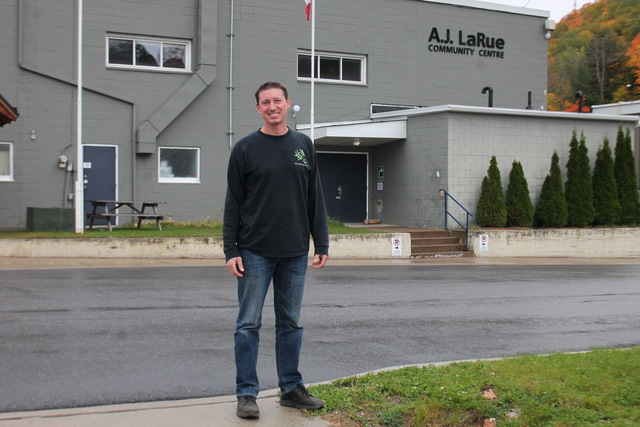
It utilizes the Keith Tallman arena in Wilberforce, the A.J. LaRue arena in Haliburton and the S.G. Nesbitt arena in Minden.

Without a doubt, it is experiencing one of its most challenging years, with a global pandemic, a recent failure of the well at the Haliburton arena and the newly-built Minden arena not yet ready for use.

Despite that, an adaptable and hard-working 16-member executive has not only gotten children on the ice, ranging from initiation to midget, but coaches, trainers, and referees this fall.

President Jason Morissette says he is quite proud of the Storm, not just his board, but the families that have put safety first, which has allowed their children to head to the rink twice a week, putting some normalcy back into their young, pandemic, lives.

Morissette said the board varies in size and roles. For example, they have a COVID lead for the very first time. Amanda Rowden has stepped into that job after being the fundraising representative. Craig Smith had been the tournament convenor, but since there are no tournaments, he has switched to overseeing the initiation group, which are the youngest players. Another example is Jessica Lloyd. She was the local league representative but has taken on the registrar’s role. It’s vast with so much online registration this year, as well as a new season format and new fees.

“It’s always been varying, where we see a need or there’s been a constitutional change,” Morissette said. He added, “some might take on multiple roles as well.” This year, a lot of people are taking on different jobs and responsibilities “to make this whole set-up work and try to get kids on the ice.”

A lot of matching volunteer board members to jobs is based on their skillsets and interests, the executive head added. The executive is elected at the association’s AGM every year and members sit for two-year terms. Morissette said the key to making the Storm work is communication among not just board members, but parents, volunteers and any paid staff, such as referees.

“And you have to look at the big picture, instill in everybody that whole together thing. You can’t let the needs of one particular age group, or player, compromise your whole organization.”

He said they have to keep the interests of all in mind, looking at the longer, and bigger picture versus what is happening at any given moment. He noted departing board members tend to mentor incoming board members, to share their experiences. That said, change is inevitable, as children grow older and leave the organization. Morrissette said there is no doubt they will be looking for more volunteer board members come the 2021 AGM.

“They’re all voluntary, quite time-consuming, but rewarding positions. You meet great people, and you see kids doing what they love to do and families taking part in community events and exemplifying community spirit.”

He added it doesn’t just have to be parents, either. “We’d be more than happy to have a spry baby boomer say ‘I’ve got time, I’ve been involved in ice hockey, I’m a fan of the game, I have coaching skills’.”

Morisette said that for him personally, the job has come with challenges, but ultimately, “I’ve certainly enjoyed it.”

The board: Jason Morissette, president; Tony Prentice, vice president; Amanda Manning, OMHA rep; Ron Hall, teams official; Cheryl Smith-Hamilton, social media rep/public relations; Cory Valentini, local league rep; Craig Smith, tournament convenor; Kori Consack, treasurer; Nikki Latanville, fundraising rep; Amanda Rowden, COVID-19 lead; Darlene Armstrong, secretary; Brad Park, ice conveynor; Jesse Johnson, equipment manager; Ben Decarlo, time clock/gate rep.; Brad Tait, referee rep

A good first two years but more to be done

0

When Algonquin Highlands ratepayers elected an all-female council in the fall of 2018, the township garnered provincial and national attention. In the early days, even Prime Minister Justin Trudeau and then Minister for the Status of Women, Maryam Monsef, held a private 10-minute phone call with the newly-minted council.

Since then, this council has gotten down to business in a mostly efficient and proficient manner. While a small population base, and a municipality that only owns half a town – it shares Dorset with Lake of Bays – AH is a progressive council that definitely punches above its weight.

It is doing a good job with its landfills, for example. Ever heard of the Waste Wizard? It’s an app that helps the public to figure out where it can bring items, with an emphasis on reduce, reuse, recycle. It started at Algonquin Highlands and has spread to neighbouring Minden Hills. It was also one of the first townships to go contactless at landfills when COVID-19 broke out. And when it comes to making the tough decisions, such as closing the Hawk Lake landfill, council stuck to its guns despite the protests of ratepayers because it was the right thing to do.

Veteran councillors, Mayor Carol Moffatt, Deputy Mayor Liz Danielsen and Lisa Barry provide good stewardship for newcomers, Jennifer Dailloux and Julia Shortreed. Dailloux brings a ton of international development experience and asks questions upon questions as she traverses the learning curve of the shift to small town politics. While less talkative at council meetings, Shortreed is clearly taking it all in. When she does pose a question, or offer an opinion, it is always something that has not been covered by one of her peers.

Dailloux sometimes rattles the status quo, such as suggesting the township sell Stanhope Airport, which was defeated but was food for thought.

It’s been a logical term of council so far. They have taken care of the paperwork, passing an updated Official Plan and reviewing bylaws, policies and procedures. They have also done some physical lifting, such as work at the Dorset Heritage Museum, the Dorset Recreation Centre, the Stanhope Museum and the township office. They’ve made some progress on bridge and road works.

That being said, there is always more work to do, with North Shore Road a perfect example. Having a quick look at the recent asset management plan, the municipality has a lot of infrastructure, including 111 kms of roads to finance. A consultant recommended they should be increasing taxes substantially from historic rates to meet the need. Herein lie some of the challenges. There are others. For example, they need to figure out what to do about docks and landings in future. They have to see the airport start bringing in a bit more revenue to offset what they are spending on it and they must decide if they are going full steam ahead with an airport business park or not.

For the most part, factoring in a worldwide pandemic that has brought unexpected revenues to the Haliburton Highlands Water Trails, the council and township has had a good first two years. However, there is still work to be done.

Algonquin Highlands looking to hire in 2021

0

Staff told Algonquin Highlands councillors Nov. 26 they need some help for 2021 in the form of some new hires.

The additions were just one part of the annual, pre-budget, projects and priorities discussion.

CAO Angie Bird said despite COVID, which created logistical and financial challenges, the township was able to complete many planned projects in 2020. However, she said as Mayor Carol Moffatt often says, the community is changing, even more so with the pandemic. She said staff are mindful of those changes and are planning accordingly.

“We continually strive to find efficiencies while providing the best possible service to the public. But we are now at a point where that is not sustainable for the long-term. Additional staff are needed in a variety of different areas to support the increasing workloads,” Bird said.

Some of the staffing requests included a communication coordinator on a contract basis. Treasurer Jean Hughes said the person would do website upgrades including modernizing it for fillable forms and online payment options.

Building and bylaw’s David Rogers is asking for an increase in hours for himself and the deputy chief building official to 40 hours during the busy summer months. They currently work 35 each.

Parks, recreation and trails’ Chris Card has asked for an increase in trails-related staffing and training to accommodate the continued jump in user attendance. He would like one new seasonal trails technician/by-law officer position added. While presenting his report, Card said “we’re now well over 150 per cent higher in attendance in all of our areas with the same staff base that we had back in 2006.”

And director of public works, Adam Thorn, said his department is also stretched. He said they currently hire one seasonal roads operator annually from May to November, but he’s proposing to hire two seasonal operators for annual operations. He said when poor winter weather comes, it is not unusual for staff to work 14-16 days in a row. He said in 2018, staff worked 27 days out of 31 in December.

No dollar figures were attached to the staffing asks but will be presented during 2021 budget talks.

Some other key projects discussed at the meeting included a basement renovation at the municipal office to create three new offices and a new columbarium for cremations. Planning is looking to do a development charges study and bylaw in conjunction with the County and further examine short-term rental regulations. Building and bylaw hopes to complete year three and four of its septic re-inspection program and buy two tablets and software to modernize permitting. Parks, recreation and trails wants to update signage at the Frost Centre trails, campsites, put up swings at the Oxtongue Lake Community Centre, implement better software for water trails reservations, install new lightning protection at the Dorset Tower, possibly replace the peekaboo rock stairs with landscaping, do work at the Skin Lake landing, possibly buy a mobile event stage, and replace a snowmobile and canoe. Public works hopes to do reconstruction on North Shore Road and do work on Bear Lake bridge, the Buckslide Dam bridge and possibly St Peters bridge. It’s looking to purchase three trucks. Thorn also wants to complete a lift for Stanhope library, among numerous other projects at community centres and museums, the airport and landfills. The full lists of projects and priorities can be found on the council agenda for Nov. 26.

Danielsen, Devolin square off for warden’s chair

0
Brent Devolin and Liz Danielsen are vying for the warden's chair for next year. File photo.

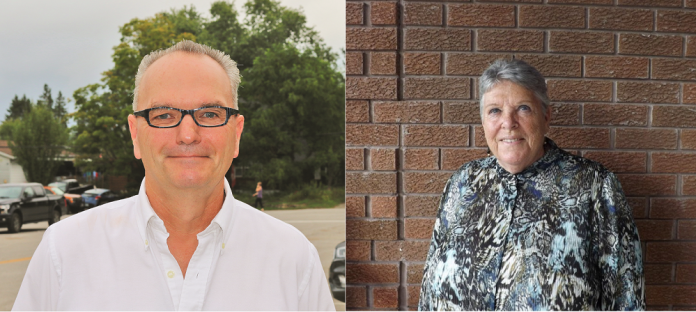
The position of County warden will be contested this year as both incumbent Liz Danielsen and Coun. Brent Devolin are vying for the position.

The two councillors delivered speeches at the Nov. 25 council meeting about their candidacy for the role. Deputy warden Andrea Roberts and Coun. Cec Ryall backed Devolin’s nomination, while councillors Carol Moffatt and Dave Burton backed Danielsen’s. The final vote by councillors and swearing-in will occur Dec. 15.

Danielsen is attempting to break recent historical precedent. Hers was the first multi-year warden term since Murray Fearrey in 2011-2012, and there has not been a three-year warden since at least 2004. Danielsen said her attempt may seem extraordinary but argued for the need for continuity in a time such as this.

“I just have tried to remain steadfastly available every single day since the pandemic began,” she said. “I believe that continuity is vital. We do remain under a state of local emergency and I’ve been working closely with a lot of the department heads since early March. And continuity in such times brings consistency in decision making.”

Danielsen went unchallenged for the position last year and beat out Burton for the role in 2018. Before that, there had been a one-year cycle for warden since 2013. Devolin, who served as warden for one year in 2017, said the County would face significant changes in the second part of council’s term, with COVID-19, population growth, and diminishing upper government funding.

“Changes that will need to occur in Haliburton will involve municipal, County, City of Kawartha Lakes and Eastern Ontario governing bodies to achieve the best possible outcomes. I have a keen interest in nurturing these relationships to achieve outcomes that cannot be achieved alone,” Devolin said.

He added he is not an unknown quantity to anyone on council.

“By now, all of you pretty well know my strengths and weaknesses that I would bring to the position of warden,” Devolin said. “I wear my heart on my sleeve as you know and I’ll put time and energy to fulfill the role.”

Danielsen also recognized the change to come with the County services delivery review.

“I can honestly say that I have no preconceived bias or thoughts on the outcome of the services delivery review other than a willingness to work hard to see improvements made,” Danielsen said. “I’d be proud to continue as your warden. I believe I have good community support and a good rapport with all of you.”

Correction: The print version of this story stated that Andrea Roberts and Cec Ryall supported Danielsen’s nomination, while Carol Moffatt and Dave Burton supported Devolin’s nomination. In fact, it was the other way around – Moffatt and Burton backed Danielsen, Roberts and Ryall backed Devolin. The Highlander apologizes for the error.

Councillors question algae bloom responsibility

0

Minden Hills Coun. Bob Carter, at a Nov. 26 council meeting, was critical of the local health unit’s response to a recent blue-green algae bloom on Bob Lake.

CAO Trisha McKibbin said the bloom was recently detected by a property owner. That person alerted the Ministry of the Environment Conservation and Parks. The MOECP inspected and took samples. It took about a week for results to come back. The MOECP then contacted the individual, the lake association, the township and the local health unit. At that point, McKibbin said the municipality reached out to the health unit to find out what it should be doing next in terms of communicating the results to the public. She said she was advised there is information on the health unit website, and the health unit directs the public there. She said by then, the bloom had dissipated and the test results determined it was small and isolated with a very low detection limit.

Blue-green algae blooms were also discussed at the Nov. 25 County council meeting, where health unit board representative Andrea Roberts said the health unit’s job “is to show what it looks like and what you should do if you see it. The health unit is doing what they’re supposed to be doing in terms of warning what blue-green algae looks like, what to do if you see it. But it isn’t their responsibility to then contact Mrs.Johnson in Grass Lake to tell her she has it near her property.”

Carter said he thinks health units should do more since blooms are dangerous to animals and humans.

“When we have a bloom, we get the MOECP involved. It takes them a week or so to do the testing after they arrive. And then what do we do once we get that information? There’s now a bloom. If that bloom is on Kashagawigamog, we have about 1,000 or so people that we should notify because there’s an awful lot of people who are living on the lake and rivers, who are taking their water directly from those lakes and rivers and not taking them from wells. And it’s not enough the health unit would send you something if you asked for it. Who’s going to tell the people and how? What is the communication process by which people are going to be notified and then who is responsible for it because if we’re talking death … there’s probably something here that should be codified and put into a process that can alert people,” Carter said.

At County council, it was determined that a delegation will be made to the MOECP at The Rural Ontario Municipal Association (ROMA) conference. Carter said it should go to the Ministry of Health and Long-Term Care (MOHLT), however Mayor Brent Devolin said they only get one delegation and the MOECP is the overarching authority for the chain of response.

Devolin said, “I think it’s about responsibility so when these things happen in our community, from individuals to municipalities, to the provincial government, we all have a role to play in this and need clarification on who is responsible in these matters.”

He added the situation reaffirms for him that the County is doing things within its control for lake health, such as the shoreline preservation bylaw and septic re-inspections.

What other County councillors had to say:

• Warden Liz Danielsen: “Health units aren’t consistent in their treatment of this. There are some health units that do communicating to the public and some that don’t … I’m just afraid someone is going to consume too much green algae bloom and sue the municipality for not letting them know there’s a problem. It’s pretty hard to deal with something if they don’t know there is a problem.”

• Coun. Carol Moffatt: “Fully understand the desire of privacy and secrecy in preventing any effect on property values. But I would like to think preservation of life trumps that … Municipalities represent all taxpayers. That’s what I can’t quite reconcile. The right to know versus the need to know, who delivers the message. It’s a little bit more complicated than one might originally have thought.”