
Home Blog Page 359

Residents pass declaration to fix long-term care

0
More than 50 local residents from across Haliburton County and the City of Kawartha Lakes came together online Jan. 29 and unanimously passed a declaration detailing changes to fix long-term care in Ontario

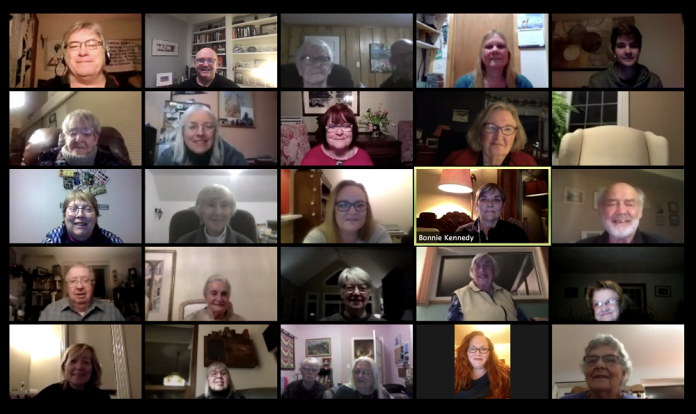
A Jan. 29 Zoom town hall meeting brought Haliburton County and City of Kawartha Lakes residents together to share stories and ideas on how to fix long-term care.

“We have known there have been problems with the long-term care system for years,” said Bonnie Roe of Haliburton, co-chair of the new Haliburton-CKL Long Term-Care Coalition.

She added, “COVID-19 has really shed a tragic light on the crisis, the issues across our communities and across our province and throughout Canada,”

At the meeting, participants unanimously supported a list of measures they feel are needed to fix long-term care in Ontario, including:

• Putting long-term care under the Canada Health Act to ensure public funding and applying national standards;

• Increasing staffing to ensure at least four hours per day of direct care per resident immediately, not in 2024; raising wages of front-line workers; improving workloads, working conditions, and conditions for care; increasing infection prevention and control and nurse practitioner expertise in care; and enhancing specialized expertise in LTC leadership;

• Reinstating thorough annual Resident Quality Inspections of all Long-Term Care homes, with consistency in enforcement when inspections yield rule violations, including unannounced inspections;

• Changing the culture of long-term care to being more attentive to the value of elders, and increasingly resident and rights-based, including ensuring consistent implementation and safe expansion of the government of Ontario’s long-term care essential caregiver (visitor) guidelines;

• Exploring new models of care including from other countries that will make LongTerm Care feel more like home such as the Butterfly Model of Care and other income-inclusive models; and

• Ending using private sector, for-profit companies for new nursing homes in Ontario.

Mike Perry, whose late mother Mary was a resident of a nursing home in Lindsay, is the Kawartha Lakes co-chair of the coalition.

Perry said he was “thrilled” residents affirmed specific, concrete measures.

“This is about how we as a society value and care for our elders. We want local voices to be part of the solution provincewide and to make sure we support our frontline workers while working to fixing things. With so many people coming together and on the same page, there really is room to keep working with some hope,” Perry said.

The meeting included a presentation by Cathy Parkes of Canadians 4 National Standards.

She said the new coalition, “represents an important part of Ontario and hopefully all rural communities will follow their lead. We need to hear more from regions outside of major cities in Ontario, as long-term care affects the whole province. The awareness and dedication of this local coalition will help boost awareness for much-needed reform in long-term care,” Parkes said.

Natalie Mehra, executive director of the Ontario Health Coalition, was also a guest speaker. She said the percentage of LTC COVID-19 deaths in Canada is the highest in the world.

More information is available online at: ltcneedsyou.ca; email: hckllongtermcarecoalition@gmail. com; or call Bonnie in Haliburton (705- 286-2414) or Mike in CKL (705-934-2704) to get involved.

Gull Lake cottagers fear for wetlands in rezoning

0

Minden Hills Council heard concerns about a wetland in front of four properties, whose owners came before the township Jan. 28 seeking rezoning.

Planner Ian Clendening said the ask was to remove the existing hazard land zoning, implemented by the former Lutterworth Township in 1992, to shoreline residential.

He told a public meeting that the planning department had a lot of public input, including from the Gull Lake Cottager’s Association.

“The predominant concern identified in those comments is the protection of the wetland and highlights the excellent work of Paul Heaven, who has worked with the Haliburton Highlands Land Trust to do extensive mapping,” Clendening told council. He said Heaven had identified a wetland in the flooded land area of the subject property.

However, Anthony Usher, representing the landowners, said they’ve interpreted the hazard land zoning as a long-standing planning error.

Further, in their opinion, Heaven’s mapping had not been recognized by the planning system as of yet.

“My clients now have these properties on the market,” Usher said. “The township has inadvertently put a red flag on these properties and on these properties alone. That red flag will be obvious to any buyer doing due diligence and checking the zoning bylaw. The hazard zoning may not actually make any difference but like a quarantine sign, it scares people off,” he said.

He concluded that, “The existing erroneous zoning harms my clients. Fixing the error will help my clients and it will not harm Gull Lake or its wetlands in any way.”

Mike Thorne, lake steward for Gull Lake, said he and his membership opposed the rezoning for a number of reasons.

He said the water body fronting the properties had been a shallow marsh supporting birds and aquatic species for at least the last 40 years. He said it was the only water body on Gull Lake that is naturally protected from motorized boat wakes, making it idea for loon nesting. He also spoke of ducks and turtles and fish.

Thorne said in his opinion, the designation was not a mistake but to protect the wetlands. He added he believes it’s an unevaluated wetland, which is an approved methodology by the Minden office of the Ministry of Natural Resources and Forestry and it is a valid designated unevaluated wetland.

Thorne said the issue was also about supporting lake health from development. He said there needed to be further studies before re-designation.

Mayor Brent Devolin said a significant report would come to a future council meeting before a decision is made. Murdoch Road access Although a staff report is pending regarding year-round signage and maintenance options, councillors voted Feb. 1 that the municipality will maintain an historic public access to Gull Lake at the end of Murdoch Road.

The site is used by people to put ice fishing huts on the lake in winter and then to remove them.

However, it had been in dispute since the location traditionally used was actually on private property.

In arguing access not be closed on township land, deputy mayor Lisa Schell said, “that access to Gull Lake has been there for decades.”

However, councillors acknowledged the need for better signage and that the township do any maintenance, not members of the public taking it upon themselves.

Diversion key to expanding life of Scotch Line

0

With an estimated lifespan of 10-12 years at the Scotch Line landfill, manager of waste facilities, Tara Stephen, told Minden Hills council Jan. 28 diversion will be the key going forward.

Council approved an updated draft design and operations report for the landfill, now submitted to the Ministry of Environment, Conservation and Parks (MECP) for approval.

The township has been working on the report to remedy the final outstanding compliance issue of leachate seeps on the south slope and redesign the transfer station layout to accommodate increased traffic and waste volumes.

In the short-term, the report calls for adjustments to operations while the new transfer station is constructed and includes: installation of solar power, construction of new access roads that will be paved or hardtopped, acceptance of textiles, application of final and interim cover where required, and allowances for new diversion programs.

In the long-term, it outlines how the site will operate once construction of the transfer station is complete, and how landfilling will occur in new phases of the site. It further adds a leaf and yard waste composting pad to allow for on-site composting of brush and leaves and the option to distribute the processed material to the community. It also adds a second scale in the new transfer station and redesigns the transfer area.

Stephen said the township is looking at $1.59 million in capital costs over the next couple of years and an extra $100,000 in operating costs over the next few years. Money is in the proposed 2021 budget. She said if the MECP seeks changes costing $10,000 or more, the department will come back to council.

Stephen said in her report the updated plan gives the site a 10-12-year lifespan.

Coun. Bob Carter asked, “Are we actively looking at ways that we can either utilize more of the site or use some other techniques to expand this beyond that timeframe?”

Stephen said they are, although they are restricted by geography. She said it may not be possible to physically expand the site further than the current footprint.

She said the key is diversion, or limiting the amount of waste on site.

“Right now, we have an extremely low diversion rate. We’re in the 30 to 40 per cent range for waste diversion. There is a lot of opportunity there for us to improve on that and the more ways we divert from landfill using our waste diversion programs, the longer that 12 years gets,” she said.

Coun. Jean Neville said she still wants the township to look into transferring waste outside of the township.

“I’m concerned. Ten to 12 years is not very long.” She added it was a lot of money to put into 10-12 years.

However, public works director, Travis Wilson, emphasized the transfer station will extend well beyond that timeframe.

Stephen reiterated that they are creating opportunities for increased diversion in the plan.

“Once we start investing in these diversion opportunities and educating the public about them, that’s when we’re going to start to see the lifespan of our landfill increase,” she said. She added if the public improves its habits, the life could extend to 15 to 20 years.

Give credit where it’s due

0

While the Haliburton County community is relieved that no residents or staff have so far tested positive for COVID-19 at Hyland Crest long-term care home in Minden, some have questioned whether the health unit was overly alarming in pronouncing it an outbreak Jan. 31

Haliburton Highlands Health Services (HHHS) confirmed in a media release Feb. 1 that the Haliburton, Kawartha, Pine Ridge District Health Unit had declared the facility to be in outbreak. HHHS attributed that to two positive cases among essential caregivers – who are not staff.

Caregivers are a type of essential visitor who are designated by the resident and/ or their substitute decision-maker and is visiting to provide direct care to the resident. Examples include supporting feeding, mobility, personal hygiene, cognitive stimulation, communication, meaningful connection, relational continuity and assistance in decision-making.

If you look at Public Health Ontario websites, the health unit was technically correct in declaring it an outbreak.

However, it wasn’t really until Feb. 3 that acting medical office of health, Dr. Ian Gemmill, suggested it was more of a “situation” at Hyland Crest. He said it was distinct from larger spreads in other longterm care homes affecting staff or residents. He also elaborated that the two essential caregivers who tested positive had no symptoms and were not ill.

However, as asymptomatic people can still spread the virus, he said they couldn’t take any chances.

It was only late on Feb. 3 that the public was informed no residents had tested positive and late on Feb. 6 that it was announced no staff had tested positive – as of now.

What this meant is that residents and their families, and no doubt staff and their families, were left in a fearful state for the better part of a week. It might have been good had the initial release been done jointly by HHHS and the health unit to explain some of the fine detail, for example, that it was visitors, that they had no symptoms, and that it was considered more of a situation than an outbreak.

Of course, hindsight is 20:20 but what we have to keep in mind is that the health unit exercised extreme caution and it is hard to fault them for that. Along the same lines, we can do nothing but praise HHHS for having so far kept COVID-19 away from residents and staff at its two long-term care homes, Hyland Crest and Highland Wood.

While it seems like years ago now, it was only in the late winter and early spring of last year that Pinecrest Nursing Home in Bobcaygeon was in outbreak, costing 28 lives.

Here in Haliburton, we have had zero cases among residents and staff. Zero.

Looking around Ontario as of Feb. 8, 2021, 213 homes were in outbreak, compared to 413 that were not. Since April 24, 2020, there have been 21,234 cases, 14,809 residents and 6,425 staff. There have been 3,680 deaths, mostly residents but 11 staff.

While in some ways, we are lucky to live in a rural setting not a hot spot, we have to give credit where credit is due. It is because of the work of management and staff at HHHS that our long-term care homes have remained COVID-free with the exception of the two essential caregivers.

And we know from talking to family council members that this scare has only seen management and staff double down even further with COVID-19 protocols. And for that, we thank them all on behalf of our frail, elderly and vulnerable loved ones.

Concerns over fire college closure

0


An Ontario government decision to close the Ontario Fire College in Gravenhurst, effective March 31, should be of concern in Haliburton County, Algonquin Highlands Mayor Carol Moffatt indicated during a Feb. 4 council meeting.

“There’s a little bit of fuss out there,” Moffatt said. “There was no consultation by the province to any organized group about it.

” She said while online training for firefighters can be easily handled, there is concern about what practical training is going to look like “because there’s two sides to fire training.”

She said some are saying it is “downloading by stealth … because someone’s going to have to pay for it.”

Moffat said the province has suggested there are going to be some regional training centres but she’s also heard talk of mobile units.

She said she reached out to other mayors in Haliburton County about the issue but had only heard back from Dysart et al Mayor Andrea Roberts as of Feb. 4.

However, she said there are questions such as, “are there any concerns about liability if there are any delays in training and meeting standards, safety of firefighters, and most importantly, our continuing service to the public by fully-trained fire personnel?” She said the situation is “kind of a stay tuned.”

She also questions whether local townships should be doing something, such as passing resolutions opposing the closure.

“The impacts are unknown. There could be budgetary impacts at a time when we’re just talking budgets but they remain unknown. Whatever they do get set up could come back to bite us later in the year.

“It’s on the radar, much conversation to be had, it could be a done deal, it might not be a done deal.”

Outgoing Algonquin Highlands fire chief, Jonathan Wilker, said it is being talked about by chiefs.

He said in his opinion, “I wouldn’t be surprised if this gets pushed back also, based on past history when they tried to push the same thing forward.”

Highlands East council passed a resolution Feb. 9, in support of a resolution from the Township of Augusta, asking the province to reverse the decision.

New fire chief

At the meeting, it was also announced that the township has hired a replacement for Wilker, who resigned earlier this year.

Moffatt said they’ve hired Michael French, who will start in a couple of weeks. She confirmed that French is the former fire chief for the Rama Fire and Rescue Services.


Hyland Crest residents get COVID vaccine

0

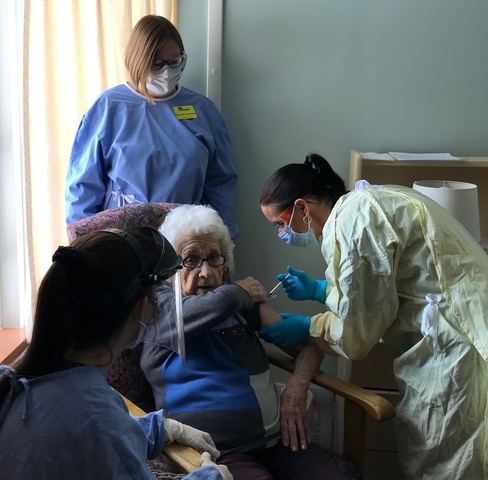
Haliburton Highlands Health Services (HHHS) said residents of Hyland Crest Long-Term Care home received the Moderna COVID-19 vaccine Feb. 10. The first resident to receive the vaccine was Elizabeth (Betty) Inglis. Betty moved to Haliburton in 1946 to raise her family and became a very active member of the community. At 98, she is an avid lover of nature and conversation.

“The fact that this first round of vaccinations has been completed at Hyland Crest and Highland Wood has certainly helped lift the spirits of residents, staff, and families,” said Carolyn Plummer, president and CEO of HHHS.

“We know we must keep up our strict infection prevention and control measures, but we could all use this dose of hope.”

Dates for the second round of vaccinations for Highland Wood and Hyland Crest residents will be shared with families once that information is known.

First COVID-19 vaccines at Highland Wood

0

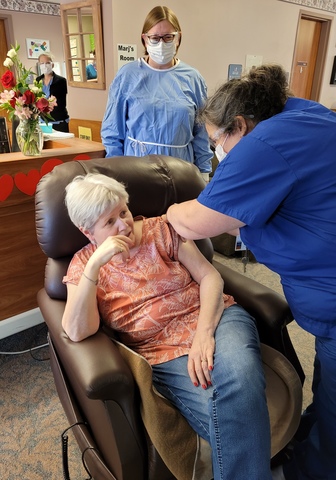
Haliburton Highlands Health Services (HHHS) says residents of Highland Wood Long-Term Care are receiving the Moderna COVID-19 vaccine Feb. 8.

The first resident to receive the vaccine was Nancy McElwain, who was an ICU nurse during her career in health care. She was known for her dedication to her patients during her career, and as a resident at Highland Wood, she continues to watch over the nursing staff daily to ensure they are doing a good job, HHHS said in a media release.

HHHS added it’s hopeful that residents of Hyland Crest will receive their vaccines later this week and will communicate with families of residents once a specific date is known.

The HHHS team is also continuing to work on vaccination processes for healthcare workers, as well as working with community partners on broader community immunization strategies, they said.

Connecting through a community cookbook

0
The Central Food Network is fundraising with a community cookbook. File photo.

With the pandemic separating people, the Central Food Network is planning to share communal recipes with a cookbook fundraiser.

The charity launched the initiative Jan. 25, calling for recipe submissions of any type. It will later place the entries into a book that will be sold in the area. Central Food Network acting director, Tina Jackson, said the proceeds will go towards the community cook program, which is making free prepared meals.

“I hope that this is a fun way for people to get involved and look back through family recipes,” Jackson said. “And to be able to feel connected to the rest of us, even when we’re all in our own houses and trying to stay safe. I hope it ends in a sense of community.”

Volunteer Gail Gotter came up with the idea. She said the food bank is always looking for more funding and this seemed like a good way to offer that.

“We just hope that it’s all-inclusive with people in the community – and even outside the community,” Gotter said. “Who can share some of their tried-and-true recipes.”

Jackson said they have put some traditional fundraisers on hold due to the pandemic. But she added donations are going strong.

“Just completely floored by the support we have received, which has meant we have been able to ramp up and respond to the increases in the need for food,” Jackson said.

The demand in the summer, as well as their Christmas hampers, were 10 per cent higher compared to 2019 last year, Jackson said. She added there was a lull in demand after the holidays, but there has been a noticeable increase at Highlands East food banks in the past two weeks.

“What I’m hearing is a lot of people that have been laid off in this specific lockdown and are in the midst of waiting for EI (employment insurance),” Jackson said.

Jackson said she hopes individuals, groups and businesses can participate.

“A great way to bring the community together in a safe way,” she said. “Everybody’s doing a little bit more cooking, a little bit more baking and it’s a great way for people to dust off those recipes.”

To submit or ask questions, contact recipes@centralfoodnetwork.org or call 705-448-2285.

Video showcases diversity of arts in County

0
Tiffany Howe from the new promotional video from the Haliburton Highlands Arts Council. Photo via Haliburton Highlands Arts Council.

As the Arts Council Haliburton Highlands’ new promotional video begins, viewers witness a blend of art and nature: carving in motion, trees and the Rails End Gallery.

“We thought we’d just stay here for a little while and then we realized quite quickly it was a pretty vibrant community. Established artists were here as well as a big resurgence of new artists coming,” potter Lisa Barry says near the start of the video, that is filled with testimonials from local artists across the CoAunty.

The council released the commissioned video on its Youtube channel Feb. 1. It features interviews with artists talking about the Highlands, with images from last year’s studio tours. Project co-ordinator, Scott Walling, said it was a way to showcase the diversity of arts in Haliburton County.

“Everyone knows about potters and painters and we love them. But there’s this whole vast network of other people who should have the spotlight shone on them as well. We wanted to include as many people as we could,” Walling said.

The video features a range of different types of arts – including pottery, painting, music, sculpture and drama. It was funded by the Haliburton County Development Corporation and the County of Haliburton. The production team included Camexicanus and Upside Brown.

Walling said it is difficult to promote tourism during the pandemic. But he added the initiative also gives locals a chance to see more of their community.

“We felt this video kind of allows our artists in the area to get to know each other a little bit more. To see the depths of everything within Haliburton,” Walling said. “But then it also shows out-of-towners this is something they could come do.”

“It’s to promote both our artists and our members, and Haliburton Highlands, as a whole. It might interest some to come live here and start their art practice here,” he added. “We’re trying to hit a lot of bases with this.”

The project took six months to complete. Walling said he is trying to circulate the video as widely as possible locally. “Just trying to get it out so everyone can see how much arts and culture and heritage is in Haliburton County.”

“Come to Haliburton,” potter Wayne Rose says to cap off the video. “We’ve got it. You can. It’s here.”

Opioids not the biggest challenge now

0

Stimulant use disorder is the big issue in Haliburton County now, more than opioid use disorder, says Dr. Nell Thomas of the Haliburton Highlands Family Health Team.

“That’s methamphetamine, crack, cocaine, etcetera,” she said. “Sadly, there’s no treatment for it.”

Opioid use disorder, on the other hand, is treated with substitution therapy such as methadone and suboxone.

Haliburton County residents can be referred to the Ontario Addiction Treatment Centre (OATC), located inside the Haliburton Highland Pharmacy. It’s one of more than about 50 across the province.

OATC CEO Sonya Lockyer said they currently have 50 patients on their program in Haliburton, a number that has been consistent over the years.

She added they are not seeing a lot more people seeking treatment. However, that does not mean that there isn’t untreated opioid use disorder in the community.

“Treatment is the best option for people addicted to opioids, so anything we can do to raise awareness on this topic is welcomed in light of the fentanyl crisis,” she said.

Dr. Thomas said since the air traffic has been all but shut down during COVID, cocaine smuggling was hugely affected and dealers have resorted to manufacturing stimulant drugs.

“One of the major risks for the stimulant users is the contamination of their product with opioids [narcotics],” she said.

“Because the crack and cocaine users have no tolerance for opioids, when fentanyl is mixed in with cocaine, it is deadly for these opioid naïve individuals. That is also resulting in deaths because of the impure products.”

According to the OATC website, while the goal may be abstinence for some, it focuses on a model of harm reduction.

“Quite simply, it promotes the notion that left untreated, drug addiction causes many harmful outcomes including victimization, overdose, incarceration, relationship and financial struggles and even death.”

The site says harm reduction principles seek to engage individuals in therapy using a non-judgmental approach in an attempt to motivate them to a healthier lifestyle.

In addition to treating opioid addiction (painkillers such as codeine, morphine, oxycodone, heroin, fentanyl, etc), they have taken steps to also address use of other addictive substances by patients (nicotine, cocaine, alcohol, marijuana) as well as offering therapy for some of the consequences of addiction, such as Hepatitis C and HIV care.

“We are proud of what we have accomplished over the last two decades,” the website says. “OATC has helped save the lives of many who might have otherwise become victim to untreated addiction. We are grateful to our community supporters as well as the many social agencies that have helped to promote our long-term existence.

“Above all, however, we are especially encouraged by those who have attended our centres and have climbed that often unforgiving mountain, reclaiming the life that was so ruthlessly stolen from them while in the throes of addiction.”