

Home Blog Page 349

County jumpstarting electric vehicle stations

0
The County of Haliburton is planning to install several electric vehicle charging stations throughout the municipality. Photo via Flickr

The County of Haliburton is preparing to install electric vehicle charging stations throughout the municipality.

County council reviewed a proposal from its climate change co-ordinator March 24 for seven or more stations spread in all four townships. The proposal included options for municipal ownership using grant funding or paying a service fee for chargers owned by service providers. Council voted to keep both options open and provide information for lower-tier townships to decide later.

Coun. Brent Devolin said they might need to do both options to meet future demand.

“This metamorphosis … it’s going to happen in the next couple of years, faster than most people are foreseeing,” Devolin said. “The need is coming.”

The County is included in a federal grant funding application for the project. The municipality could either pay an annual service fee of $3,300 per dual-port station with no upfront cost, with stations owned by Hydro One and Ontario Power Generation. The County could also own stations itself using federal grant dollars to cover up to half the up-front costs, which could be $15,000-$25,000 per station, plus ongoing annual service fees of $500- $1,800.

Coun. Andrea Roberts said it is something Dysart et al has wanted to do.

“We weren’t ever able to do this on our own financially,” Roberts said. “I totally agree the time is now to start working on something like this.”

The proposal is not definite on locations, though recommends one dual-port station at each township office to be used for future municipal vehicles. Director of planning, Charsley White, said those hook-ups could be reserved for municipal vehicles during the day and then utilized by the public in off-hours and weekends. Other ports are proposed for mostly public use at the S.G. Nesbitt Memorial Arena and Dysart library.

Climate change coordinator, Korey McKay, said she would recommend an hourly fee to incentivize people to move vehicles.

Presently there is only one public charging station in Haliburton County at the Rhubarb restaurant in Carnarvon, meant for Tesla vehicles.

If the initiative is approved, installation could happen in the summer or fall of 2021 for provider-owned chargers, or between September 2021 and 2023 for County-owned.

Council opted to present options to lower-tier townships given they would contribute to the costs. Warden Liz Danielsen said discussions there should happen as quickly as possible so the initiative can proceed.

“It’s an exciting direction for us to be taking,” Danielsen said.
Victim speaks out on impaired driving

0
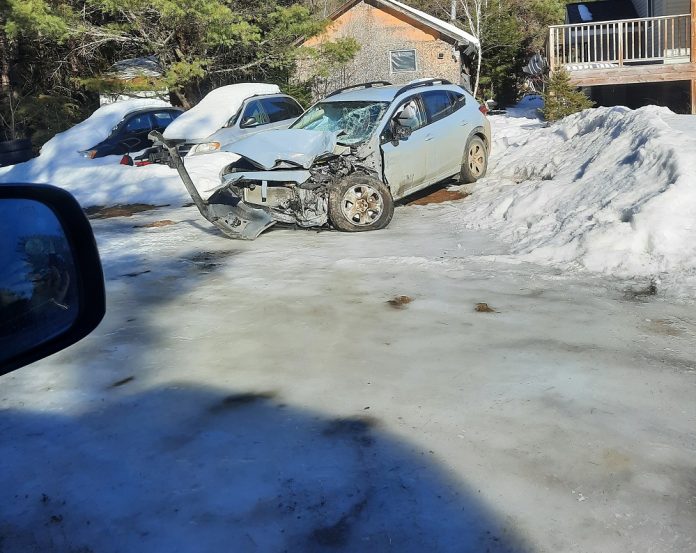
Marena Wigmore said her vehicle was destroyed in the collision March 19. Photo submitted.

Marena Wigmore said there was no way she could have avoided a collision with an allegedly impaired driver when she was driving home March 19.

Haliburton Highlands OPP said it responded to a scene on Kennisis Lake Road around 3:12 p.m. Both involved drivers sustained minor injuries. Police officers arrested and charged a Huntsville man with impaired operation of a motor vehicle and refusing to comply with a demand.

Wigmore said the other vehicle drove head-on into her, in the wrong lane.

“I’m pretty angry. There was nothing I could have done.” Wigmore said. “There was no reason for it to have happened. It was completely avoidable. Now, I have to deal with injuries that I have and losing time off work.

“He’s really lucky he didn’t kill me,” she added.

The accused is scheduled to appear in the Ontario Court of Justice in Minden May 5. Wigmore said the collision destroyed both vehicles.

She said the emergency response was fantastic.

“They got there pretty quickly,” Wigmore said. “Which was great for me, because that was probably the scariest part for me, was waiting.”

Wigmore said impaired driving is a problem in the area. She added she is glad the incident did not turn out worse.

“Any number of my co-workers come down that road. One of them is pregnant, several of them have small kids. What if it had been one of them?” Wigmore asked.

“Impaired driving remains the leading cause of criminal death in Canada,” Haliburton Highlands OPP said in a press release. “If you plan on drinking or consuming drugs, plan to not drive.”

OPP also responded to a complaint on Eastern Avenue in Haliburton March 27. Police said a woman drove onto a lawn and collided with a tree. They charged a Maynooth woman with impaired driving, dangerous operation of a motor vehicle and operation while impaired with a blood-alcohol concentration of 80-plus. She is also due in Minden court May 5.

OPP asked for people to continue calling 911 to report impaired driving. Police said signs include quick acceleration, erratic braking, turning abruptly or illegally and drifting between traffic lanes.

Wigmore said she intends to pursue a civil lawsuit against the driver who struck her. She added she hopes the courts might prevent him from driving for good.

“This man should never drive again.”

Police busy with collisions

Haliburton Highlands OPP reported responding to two other vehicular incidents over the weekend.

Police said they charged a 42-year[1]old with careless driving March 26 after responding to a single-vehicle collision into a hydro pole on Twelve Mile Lake Road. The pole was heavily damaged and required replacement. Later that day, officers responded to another collision where a pickup truck struck a deer. The driver did not report injuries, but the truck sustained more than $2,000 in damages

Haliburton trustee wants staff vaccines

0

by Kirk Winter

As far as Gary Brohman is concerned, staff working in Haliburton schools are essential workers and he cannot understand why the province has not made the vaccination of teachers, administrators and support staff a priority.

At the March 23 Trillium Lakelands District School Board (TLDSB) meeting, Brohman advocated forcefully for staff vaccines.

“This has been on my mind for a long time,” Brohman said. “The ministry stand that staff vaccines will be given as soon as possible is not acceptable. How poor a statement is that? The vaccines could come too late. It could be summer. School staff are frontline workers and unfortunately the health units and the ministry do not see it that way. That is simply not good enough.”

Brohman asked his fellow trustees what they could do to make this issue a priority with the province. The Haliburton trustee wondered why firefighters are receiving their vaccinations ahead of teachers “when educational staff are face-to-face with kids every day. These people should be getting their vaccinations now. As soon as possible is not good enough. As a former educator this decision sucks.”

TLDSB deputy chair David Morrison applauded Brohman’s intent saying, “educational workers are on the frontline every single day. The province holds up the school system as a very safe place to be while at the same time expressing caution about COVID variants of concern. This topic has been brought up with the minister (Education Minister Stephen Lecce) on a weekly basis at our videoconferences. The minister says he is pushing for change but a change will only come if supply increases.”

Trustee Louise Clodd added, “We all feel the same way (regarding staff vaccines) and I would like to send a note to the Ontario Public School Board Association to have them continue pushing for this.”

The board asked Clodd to do that at the earliest possible opportunity.

U-Links focuses on environment

0


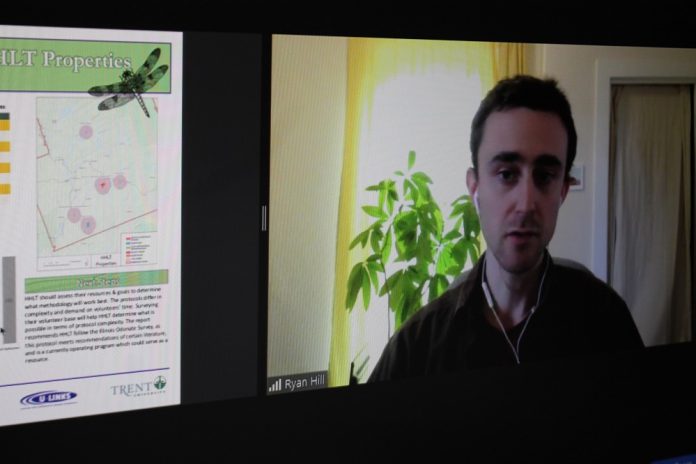
Finding a way for the Haliburton Highlands Land Trust (HHLT) to monitor dragonflies and damselflies on its properties caught the interest of student Ryan Hill, who partnered with the Land Trust for his U-Links research project.

Hill was one of a number of students who presented their work at the U-Links virtual celebration of research March 27.

“Basically, they were interested in beginning the first steps for starting their own monitoring program for dragonflies and damselflies,” Hill explained in one of the breakout rooms.

He said his work focused around finding what had been seen on and around their properties; what species would be possible to see; what monitoring protocols are out there; and what recommendations he could make for them starting their own program.

Hill said he concluded, “If HHLT had the resources, the best approach would be to use a program similar to the Illinois (dragonfly and damselfly) survey which uses a protocol that was developed for monitoring butterflies.”

The Land Trust’s Greg Wickware complimented Hill for his “great work.” He added, “The HHLT has many volunteers who are interested in participating in our long-term monitoring program. Training the volunteers will be a top priority.”

ULinks program coordinator, Amanda Duncombe-Lee, said themes of environmental stewardship and sustainability featured in this year’s U-Links projects.

“While the COVID-19 pandemic has been dominating the news and our thoughts, it’s especially important to maintain our focus and commitment to environmental monitoring, research and advocacy,” she said.

The more than 100 people heard numerous presentations, including Samantha Dunlop, who worked with The Land Between on biodiversity planning and protection. She looked into municipal policies.

Mystaya Touw spoke on shoreline stewardship, using the Love Your Lake program as a case study. She said concerns included water quality, septic systems, blue-green algae, invasive species and development. She said one impediment was limited time at the cottage, but said that could be countered by focusing on ‘no mow’ lawns and natural regeneration.

There was also a Benthic Program Overview by Kiera Schweighardt and Leanne Matthews.

Samuel Duah collaborated with Abbey Gardens to look into food waste composting. He said one hinderance was the fear of attracting bears and other wildlife. He found people would support a centralized composting facility, especially if it had a drop-off centre with flexible hours.

In its 30th year, Duncombe-Lee said it was “amazing” to see the community come together every year to mark the accomplishments of students, and community partnerships.

She honoured the students for juggling full course loads and part-time jobs along with the stressors of a pandemic. She was also “proud” of staff and the U-Links management committee. She thanked the Haliburton community for its participation with Trent University and Fleming College students over the past 30 years.

Jim Blake, co-chair of the U-Links management committee, paid tribute to Leopoldina Dobrzensky during his opening remarks, calling her “our local hero of community-based research.”

See the U-Links website for more information ulinks.ca.

If you have a project idea, contact U-Links, before June 30, 2021, at admin@ulinks.ca or 705-286-2411.

Almost time for another 6-Minute Escape to the arts

0

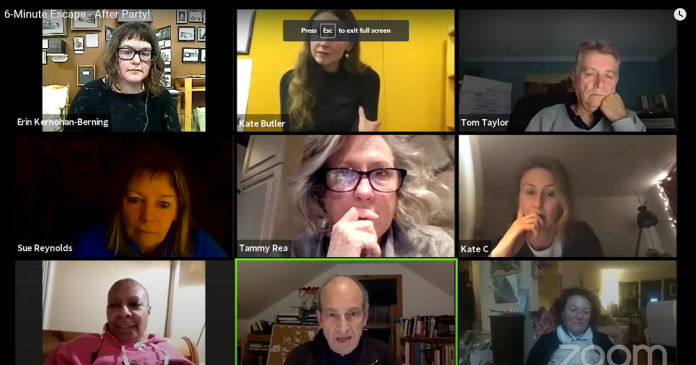
The Arts Council Haliburton Highlands and Haliburton Reads & Writes committee is inviting anyone curious about the arts to save May 14 in their calendars and join them for their upcoming 6-Minute Escape on YouTube.

Spokesperson Kate Butler said building on the success of last fall’s inaugural event, the committee is delighted to host its second video premiere on the theme of transformation.

Butler said audiences can join in the multimedia extravaganza from anywhere in the world.

“This season’s collection will feature an entertaining mix of visual art, music and literary performance,” she said. “Each short video will allow viewers to experience firsthand the transformation of each artist’s creative practice.”

Marie Gage of the Haliburton Reads & Writes committee said: “The past year of lockdown, restrictions and uncertainty has affected us all. The Readers & Writers Committee of the Haliburton Highlands Arts Council hopes the creative imagery you will experience will lift your spirits and allow you to escape into another dimension.”

Organizers added the 6-Minute Escape will remind viewers that new experiences are waiting for us, while at the same time helping to raise much-needed funds to ensure support for the vibrant cultural community in the Highlands.

Visit youtu.be/9wtkHmqMzbU on May 14 at 7 p.m. There’s no cost to attend the launch but any donations would be greatly appreciated at gofundme.com/f/6-minuteescape.

Radio Playhouse coming to a wireless near you

0

An upcoming Canoe FM show will not only allow theatre folks to get back in the saddle after a one-year intermission but provide a different kind of experience for listeners.

The Haliburton Highlands Arts Council’s Kate Butler said Canoe FM Radio Playhouse will air its pilot April 7 from 6-7 p.m.

From there, the plan is to continue the first and third Wednesday of every month, even post-COVID.

Butler said listening to radio dramas used to be an important piece of entertainment in people’s daily lives.

“I think that in the last while, with everyone spending so much time on Zoom, and other similar programs, people are looking for a bit of a different kind of experience. Radio theatre really encourages you to slow down and be present with a story as it unfolds. No matter our age, human beings love to be told a story,” she said.

Meanwhile, Rita Jackson said as on-air hosts and community theatre performers, she and her husband, John, have been discussing radio theatre for a number of months.

At Christmas, they were involved in Charles Dickens reading of A Christmas Carol on Canoe and said they knew immediately it was a program to pursue.

“With unanimous support from the Canoe program committee, and enthusiastic support from the local theatre groups, Canoe FM recognized it would be an exciting fit in its diverse and expansive program schedule,” she said.

Jackson, who has been involved in singing and community theatre every year for 25-plus years, added “my heart and soul missed this outlet so much. When all the Haliburton Highlands theatre groups gave a rousing yes to this opportunity, I knew that they all felt the same. I can confidently speak for the whole Haliburton Highlands theatre community when I say it is very cool.”

Butler said Highlands Summer Festival, Highlands Little Theatre and Rural Rogues Productions are looking forward to this “whole different kind of exciting opportunity.”

Butler said the local troupes will be involved in one of the shows every month while Canoe has purchased radio plays for the second monthly offering.

The first two plays in the pilot are Quotation is a Suitable Substitute for Wit, which Butler wrote, and Too Much Doubt, which Michael Clipperton and Butler penned together.

“Both plays are inspired by Haliburton County mysteries,” Haliburton Highlands museum director, Butler, said.

She said Quotation is a Suitable Substitute for Wit was inspired by a story she came across even before she started working at the museum. It was an account of a woman who had vanished from Eagle Lake in 1892 while visiting her daughter and her daughter’s family.

“There was no evidence as to what had happened, so I decided to let her enjoy an adventure. To say much more would be to give too much away, so people will just have to tune in.”

Too Much Doubt was inspired by another mystery – this one with its roots in 1917, when Jack Laking, the son of the owner of the Laking Lumber Company disappeared along with the company payroll, on Drag Lake.

“It’s important for listeners to remember that these are plays and creative works inspired by historical events, especially since both mysteries remain unsolved to this day,” Butler said.

Butler said each theatre group has a slightly different mandate, so they’ll be presenting different types of pieces, “which will make the show really exciting, as there will be such a variety. After the shows air, they’ll also be archived on the Canoe website, so listeners will also be able to check them out at their leisure (or catch-up if they missed a show),” Butler said.

She said doing radio plays is different.

“Radio theatre is a totally different way of performing, because, of course, everything has to be communicated through sound alone. That’s meant the scripts have gone through an editing process to ensure that everything is as clear as possible in the absence of the visual.

“We needed to think carefully about cast size and structure to ensure that we could adhere to current COVID guidelines and keep everyone involved safe. The plays actually don’t feature narration. We’ve decided to let the characters speak for themselves but there will be sound effects, thanks to Ron Murphy, the wonderful head of production at Canoe.”

Butler added while the show was spurred into action by the current situation, it will continue long after the pandemic is over and live theatre is happening again.

“Because it’s a whole different way of connecting with audiences and sharing stories.”


Phase 2 vaccines candidates

0

by Dr. Nell Thomas

Ontario has announced the anticipated Phase 2 vaccine rollout from April to July, 2021. This phase included mass vaccination to approximately nine million residents, targeting: High-risk congregate (shared living) settings (such as shelters, community living); individuals with high-risk chronic conditions and their caregivers; those who cannot work from home and at-risk populations.

Vaccines will be provided through mass vaccination clinics, pharmacies, primary care doctors’ offices, site-specific clinics, mobile sites and public health units.

To find out if you meet the criteria, you can revie the Ontario vaccine website for a more detailed list of who’s eligible. I offer the following description of candidates here:

HIGHEST RISK: organ transplant recipients, hematopoietic stem cell transplant recipients (bone marrow or blood cell, used for leukemia and lymphoma patients), people with neurological diseases (stroke, MS, traumatic brain injuries, cerebral palsy) that affect breathing, cancers of the blood system diagnosed within the past year, kidney disease.

HIGH RISK: obesity (body mass index greater than 40), treatments that suppress immune systems such as chemotherapy or some rheumatological or psoriasis medications, intellectual or developmental disabilities (Down Syndrome).

AT RISK: immune deficiencies (diseases affecting bone marrow, lymph nodes, spleen, thymus), stroke, dementia, diabetes, liver disease, cancers, respiratory/lung diseases, spleen diseases, heart disease, high blood pressure, mental health disorders, substance use and addictions anemias, pregnancy, disabilities and immunocompromised conditions requiring direct support.

PRIMARY/ESSENTIAL CAREGIVERS FOR: organ transplant recipients, hematopoietic stem cell transplant recipients, people with neurological diseases with damage to lung function, blood cancers diagnosed within the last year, kidney disease with estimated glomerular filtration rate (eGFR) under 30. 

PEOPLE WHO WORK AND LIVE IN GROUP SETTINGS: supportive housing, developmental services or supported independent living, emergency homeless shelters, homeless populations not in shelters, mental health and addictions group settings, homes for special care, violence against women shelters and anti-human trafficking residents, children’s residential facilities, youth justice facilities, indigenous healing and wellness facilities, provincial and demonstration schools, farm workers who live in group settings, including temporary foreign workers, bail beds and Indigenous bail beds, adult correctional facilities.

CAREGIVERS IN THE FOLLOWING SETTINGS:developmental services, mental health and addictions group settings, homes for special care, children’s residential facilities, indigenous healing and wellness facilities. 

ESSENTIAL FRONTLINE WORKERS WHO CANNOT WORK FROM HOME: elementary and secondary school staff, police, fire, compliance, funeral, special constables and other workers responding to critical events, childcare and licenced foster care workers, food manufacturing workers, agriculture and farm workers, high-risk and critical retail workers in grocery stores and pharmacies, remaining manufacturing labourers, social workers, including youth justice, courts and justice system workers, including probation and parole, lower-risk retail workers (wholesalers, general goods), transportation, warehousing and distribution, energy (propane, hydro), telecom (data and voice), water and wastewater management, financial services, waste management, mining, oil and gas workers.

COMMUNITIES AT GREATEST RISK: Black and other racialized populations, Hot spots with historic and ongoing high rates of death, hospitalization and transmission.

What you need to know:

Provincial booking system: Ontario.ca/bookvaccine; phone 1-888-999-6488

COVID-19 vaccination clinics – Haliburton, Kawartha, Pine Ridge District Health Unit (hkpr.on.ca)

Follow the prompts to see if you are eligible and where you can receive your vaccine.

Well done, U-Links

0

Over the past year, like many of you, I’ve attended numerous online meetings and events. I love the platform because I can cover these events from home. I hate it because you don’t get the personal touch and hours behind the screen are mindnumbing. I find them challenging when my internet, or my host’s, isn’t up to speed. Council meetings, for example, are often paused for 10 minutes so that someone who has dropped out can re-connect or call back in by phone.

I attended the virtual U-Links celebration of research this past Saturday, March 27 and I can honestly say it was the best online presentation that I have seen to date. The folks at Trent University in Peterborough really strutted their stuff in a seamless two hours that attracted more than 100.

The introductory speakers were brief. Three students were chosen to share their research projects with the entire audience. Then there were three sessions of breakout groups whereby attendees could pop into a research project of their choice and listen to a short presentation from the student before being able to ask questions.

There was not one glitch in the entire operation. My only complaint – and it is a mild one – is that I wish the breakout sessions were longer than 15 minutes because I had to pick one, and maybe two projects at most, to pop into.

I was disappointed by that aspect since, as usual, I was overwhelmed by the number of very good projects that students from Trent and Fleming College worked on with Haliburton County organizations.

There was a decided focus on the environment in a lot of this year’s projects.

Lots of people popped into the ‘benthic’ presentation. Benthics are aquatic, spineless organisms that live on the bottom of water bodies. The use of benthics as an indicator of water quality is now used throughout the world. The students looked at a number of County lakes.

Other topics included: biodiversity planning and protection in The Land Between; Planet Haliburton radio show ideas; a Kennisis Lake history book; a number of projects with the Land Trust, including GIS database migration and development, and bird, frog, moss, dragonfly monitoring; natural shoreline stabilization and shoreline stewardship and blue-green algae mitigation strategies. There was research into a composting project at Abbey Gardens.

There were also a few social servicetype projects, including sustainable procurement and factors securing employment in Haliburton County and the City of Kawartha Lakes as well as diabetes and dental decay.

It wasn’t just the technology that blew my mind (and I have to say, I liked the midway mark stretch). The work the students do with County partners provides valuable information every year that can lead to real change in the Highlands to make this a better place to live, work and play.

So, we congratulate the U-Links team, including committee members, faculty and students for the work they continue to do and offer kudos to the first-ever virtual celebration of research, the 30th, for tackling the challenges of delivering students’ finding in a pandemic world – and acing it.

Creating a comforting space for victims of crime

0

A former Toronto police officer is now using her design expertise to help victims of crime and the people investigating them.

Andria Cowan Molyneaux of ACM Designs is currently working on a “passionate project” to redesign the soft interview room at the detachment in Minden.

ACM Designs is donating the $15,000 project.

They have created a storyboard and are now working to complete the space.

“After 22 years of policing in Toronto, a large portion as an investigator, I remember how uncomfortable, non-functional and unwelcoming those spaces are,” Cowan Molyneaux said.

“I think they rarely get a line in a budget and I remember sitting on furniture that someone dropped off because they were throwing it out.

“It is difficult enough for a victim to tell their story in a comfortable space, let alone one that looks like an afterthought.

“Then you add the detective’s experience, trying to write notes during the interview on whatever they can find as a tabletop or sit in a chair that you can barely get your firearm into.”

She and detachment commander, Liane Spong, were on the same page.

“The OPP promotes the use of a soft interview room as a means to make the sharing of difficult, often embarrassing or traumatic stories less challenging,” she said. The commander added one of the steps in ensuring trauma-informed care and a victim-centered approach to investigations is that the room “will have a more comfortable environment to help make the process easier.”

Cowan Molyneaux said the overall intention of the project is to make the very important space feel safe and comfortable for the victims and witnesses retelling their stories and making the same space functional for the investigators while they are conducting those interviews.

First, they used the science of colour to help them with picking the right hue and that took them to blue. She said the colour blue makes people feel safe even though it is a cool colour. Next, they looked to the outside and the beautiful countryside and by using browns were able to create a serene complimentary colour scheme.

She added the space is pretty small and they were limited with furniture options. Two things they knew were that the textiles had to be able to be cleaned and very durable and that the investigators are usually wearing all their use of force options when sitting in the chairs taking notes. She said the seating for the detectives is generous and swivels so that they can reposition during the interviews without being imposing. “We actually had them come into the studio and try the chair out,” Cowan Molyneaux said. She added the acoustics were extremely important in the project because generally speaking, the interviews are video and audio recorded and the furniture plan had to support that critical element.

The designer said many other people and companies are saying thank you to our first responders, and this is ACMs way.

“Everyone at ACM Designs played a role in this project and even had to consent to criminal record checks. They were committed to making a difference for both the officers and victims.”

Spong had a huge thank you for the ACM team.

“They worked with our crime unit to meet specific needs in relation to the acoustics during an interview. I think it is a wonderful testament to the talent and compassion found within the County of Haliburton Highlands. We thank Andria and her team for greatly enhancing our safe place for victims and witnesses.”

Haliburton entering four-week shutdown

0
A poster outside a retail store in downtown Haliburton. Photo by Joseph Quigley.

The County of Haliburton is going back into a shutdown alongside the rest of the province April 3 for four weeks.

Premier Doug Ford announced the move April 1 in response to rising cases of COVID-19 cases and people going into intensive care units. Measures include: prohibiting indoor organized events; limiting outdoor public events or social gatherings to five people except within the same household; implementing a 50-per cent capacity for food stores and 25 per cent for all other retail; prohibiting personal care services; closing all restaurants except for takeout and drive-through; prohibiting the use of sports facilities with limited exceptions and requiring day camps close.

“We are facing a serious situation and drastic measures are required to contain the rapid spread of the virus, especially the new variants of concern,” Ford said.

The province said case rates rose 7.7 per cent between March 26 to 28, to 101.1 cases per 100,000 people. ICU admissions are over the peak of the second wave and are projected to exceed 650 beds in a few weeks. The province said the rise is driven by more infectious COVID variants.

Other measures include limiting capacity at weddings, funerals and religious ceremonies to 15 per cent indoors. Museums and cultural amenities, theatres will also close. However, schools will remain open, with spring break still planned to happen April 12. Childcare spaces will also remain open during the shutdown.

Minister of Health Christine Elliott said the province wanted to avoid the same stay-at-home order from Dec. 26 due to mental health harms. She said the province wanted to encourage people to enjoy the outdoors while still following public health protocols.

“Implementing a province-wide emergency brake was not an easy decision to make and is not one we take lightly,” Elliott said. “As we continue to vaccinate more Ontarians, the end is in sight, but right now these necessary measures will help to stop the spread of variants.”

Vaccinations ongoing

Government officials say the local region will continue to receive a steady supply of vaccines in the coming weeks.

The Haliburton, Kawartha, Pine Ridge District Health Unit has received 26,910 Pfizer vaccines and 4,800 Moderna vaccines to date, with more than 28,000 doses administered.

Another 11,700 Pfizer and 5,900 Moderna doses are expected from April 5 to April 12.

Haliburton’s COVID vaccination clinic at the Haliburton Highlands Health Centre has closed. Acting medical officer of health Dr. Ian Gemmill said mass vaccination centres will open at the S.G. Nesbitt Arena in Minden April 6 and A.J. LaRue Arena in Haliburton April 12. Appointments are available for anyone 70 and older.

To book a vaccine, use Ontario.ca/bookvaccine or call 1-888-999-6488.

Region remains steady on cases

Haliburton County has one new COVID-19 case April 1, the only confirmed active case.

Colour-coded restrictions are on hold during the shutdown. The district was in a yellow zone under the provincial COVID-19 response framework, the second-least restrictive. Gemmill said that was probably correct based on the local data.

“I’m hearing people say the pandemic is out of control in some parts of Ontario, it’s not true here,” Gemmill said. “But I still want to reinforce over and over again anything can happen.”

He said people need to understand the importance of the measures – and that just because vaccinations are starting, does not mean people can be lax.

“One dose of vaccine, it’s a great first step, but it doesn’t mean we necessarily got the population base protection. We got to get enough people immunized to do that,” he said.