Dysart et al Mayor Andrea Roberts said the public will have many opportunities to respond before any development plan for Wallings Road apartments is finalized.
A petition signed by 89 people opposing the development was circulated during an April 26 council meeting at which councillors discussed a revised letter of intent, a preliminary roadmap for a development agreement, between the township and Places for People. The not-for-profit wants to build 15 apartments outside of Haliburton, with an estimated 30 per cent classified as affordable.
Roberts said some concerns outlined in the petition, such as water and septic capacity, must be addressed in development plans. Those plans will be publicly available once the organization applies to rezone the land.
“We’re getting preemptive letters of concern when the file hasn’t come to council,” Roberts said.
The petition, circulated by the Haliburton by the Lake Community Association, claims the development’s location in the subdivision would negatively impact local ecosystems and gifting the land for the affordable housing project is an “inefficient use of taxpayer dollars.”
Roberts said there will be a public meeting where the people will be able to respond to any plan that may be proposed.
“Any member of the public can speak about any zoning. It may affect them in ways we can’t necessarily see,” she said.
Before Places for People can put shovels in the ground, there are several development milestones to hit, such as submitting a rezoning application, site development plans and an environmental assessment. The file will come back before council multiple times.
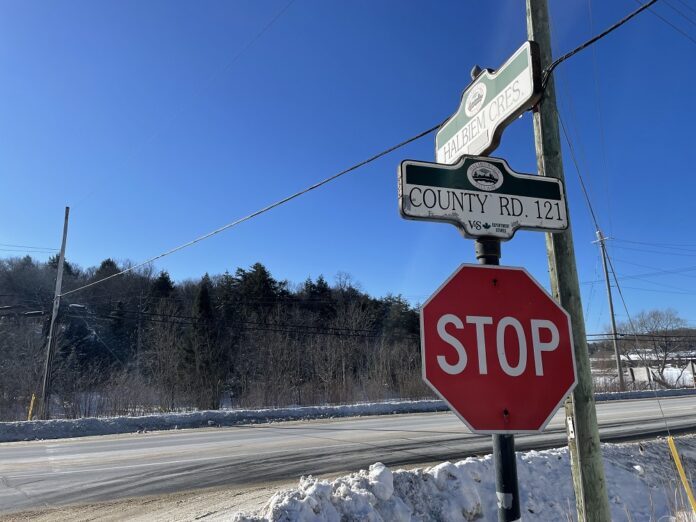
The project has been delayed for months, with a dispute between Dysart township and the County over the ability of the Wallings/ County Road 21 intersection to handle increased traffic.
However, director of planning Jeff Iles said the township is “getting down to the details” of a letter of intent.
A letter of intent does not mean the development will be built. In fact, Places for People requested revisions to a previous draft of the letter, which limited the period of exclusive access to the site.
They claimed COVID-19 delays and the petition against the development means a longer timeline is needed to develop the site. The new deadline is Dec. 31, 2023, with council retaining the option to extend the exclusivity period. Places for People also concluded that the reduced property size will only accommodate 15 units, down from the previously set target of 45. “If the Township [is] not willing to commit to providing additional property at this location (once the roadways have been established), 48 units is an impossible goal,” wrote Places for People.
Staff will prepare an agreement of purchase and sale for the property. Council will vote to approve the letter of intent and agreement of purchase and sale at a future meeting.
As it appears time is running out for County council to adopt its shoreline preservation bylaw before the end of its term, Coun. Brent Devolin said he fears anti-shoreline bylaw candidates will run in this fall’s election.
At an April 27 meeting, Council resolved to continue refining the draft bylaw and hire a solicitor to review it. However, they fell short of passing it.
If council does not adopt a final bylaw, Devolin said, “I think that this is going to be a singularly hot list item in the municipal election.”
He added, “what I always don’t like to see in any level of politics is single-issue candidates and my fear is this will be a polarizing thing that if we don’t make some decision or institutionalize where we go forward with this, that is what’s going to happen.”
He said he lived in Muskoka when something similar occurred in Port Carling and “it’s a mess.”
With nominations opening May 2, Devolin added, “Do I suspect in some wards and jurisdictions there will be cottage associations and or others that are going to put single-issue candidates up? I fear for what can happen if we don’t make some decisions about foundationally where we can go with this.”
No so-called slates have yet filed for nomination.
Warden Liz Danielsen said there would always be single-issue candidates and, “I would hope the work we have done so far has formed a bit of a foundation. I know it’s not adopted but the fact is we need to have a legal review before we can adopt the document.”
She and Coun. Pat Kennedy said the file can progress until new councils begin in November. For example, they said there would have to be changes to official plans and lower-tier bylaws. Kennedy said they could still hire staff to get ready for implementation, establish baselines and goals for the bylaw, and do public education.
Coun. Andrea Roberts suggested hiring one additional person to advance the portfolio, and provide public education this summer about shoreline health.
Moffatt says shoreline should be a ‘bad apple’ bylaw
She said she would vote ‘no’ to the bylaw not because she disagrees with it but because she is not ready to pass a bylaw at the end of the term when it appears four councillors will not be running for re-election. Devolin, Roberts and Coun. Carol Moffatt have all announced they are not running.
Moffatt said she harboured similar fears to Devolin.
“There’s already talk out there … the anti-shoreline people are going to overturn council and rule the world.” She said it would be, “the worst possible thing to the progress of the last 20 years not in just this one item but across all sectors and fronts of the work that has been done and achieved so I think everybody needs to be well aware of the danger of one issue candidates should they come forward.”
However, she said she didn’t want to make a decision on the bylaw just because there’s an election coming.
“We will never satisfy the people who are simply just mad about it, but they can’t articulate why and we’ll never capture the bad apples who are going to do what they’re going to do no matter what we do or don’t put in place,” she said.
“I almost feel like it should be a bad apple bylaw. For the average property owner and the majority of contractors, this bylaw won’t even touch their lives and people are continuing to misbelieve that they’re going to have to take down their bunkie and remove their fire pit, and their kids can’t play on the shoreline. It’s all nonsense. I don’t know where that stuff comes from. It’s all been really frustrating.”
In the last couple of weeks, people have begun to speculate that single issue candidates are going to come forward in this fall’s municipal elections.
Outgoing mayors Brent Devolin of Minden Hills and Carol Moffatt of Algonquin Highlands openly discussed the possibility at an April 29 County council meeting.
They aired their concerns during a discussion on the shoreline preservation bylaw. Devolin felt if the County does not adopt the bylaw, it will open the door to anti-bylaw candidates running a slate of mayors and deputy-mayors in the Oct. 24 polls. He predicted if that happens, similar to something he witnessed in Port Carling, it will be a mess.
Moffatt expressed similar concerns.
County warden Liz Danielsen said there will always be single-issue candidates.
In my six years in Haliburton County, I have not witnessed this. No doubt the shoreline preservation bylaw is polarizing. However, whether council adopts the bylaw before it ends its term or not, I believe it will be an election issue.
By that I mean, if the current council passes it, there is nothing stopping a new council from axing it. That’s politics.
While I appreciate the passion of those who have fought the bylaw, I caution them to reconsider a slate of anti-bylaw candidates, if that is in fact what is contemplated of planned.
The County and its lower-tier municipalities deal with a myriad of issues and would-be councillors have to have a general knowledge of a number of matters, not just strong opinions on one particular thing.
For example, the service delivery review and short-term rentals are hot issues at the County table. Then there is the day-to-day stuff of working with the OPP, emergency services including ambulances and firefighting, recreation, parks, cemeteries, landfills, sewer and water, a raft of social services, such as housing, and the list goes on and on.
I would hazard a guess that mayors are working full-time and most councillors part-time, at least 20 hours a week. I say that because I read council agendas and their sometimes hundreds of pages of reports for each and every council meeting. It’s one thing to run because you are disgruntled at something. It is a completely different matter to do the actual job and do it well.
The role of a councillor involves not seeing things as black and white. It is about relationship building and compromising to get a result that is as close to what you want as you can get.
For voters, the allure of a single-issue candidate may be strong. They may be willing to ignore a host of other issues to get their candidate across the line.
But I would argue that using your vote to push a single issue is irresponsible because it does not allow for compromise. It also means a number of other issues may be ignored.
I believe single-issue voting ends up being detrimental in the long run.
A broader consideration of a wide variety of political issues may allow for better-informed and more effective voting.
And that’s what we need in Haliburton Country right now, not divisive single-issue politics.
The Minden Hills Cultural Centre Foundation (MHCCF) proposes transferring governance of the Agnes Jamieson Gallery, Minden Hills Museum and Heritage Village, and Nature’s Place to its board of directors.
The request, raised at an April 28 council meeting, comes two months after news former curator Laurie Carmount was no longer employed at the gallery. That sparked concern about the gallery’s future.
Neil Briggs, MHCCF president, told councillors transferring responsibility of the Bobcaygeon Road facility would “reduce township administration and staff costs and increase economic benefits to the town from more events.” The proposal would see a chief curator oversee day-to-day operations, reporting back to the board.
Briggs compared the model to the Rails End Gallery and Arts Centre and the Haliburton Sculpture Forest. He said board governance would result in expanded programming, enhanced marketing and more social events.
The centre would be funded by grants from Minden Hills, the province and the federal government. Currently, it’s governed by the township’s community services department.
The Minden Hills Cultural Centre Advisory Committee offers feedback and suggests ideas, but isn’t able to make hiring decisions, direct staff activity or implement programming changes.
“We do not believe continuing the status quo is viable and the Cultural Centre will continue to drift and will be an additional burden on the council,” said Briggs.
The Minden Hills Cultural Centre Advisory Committee has not met since November 2021 and didn’t hold meetings between March 2020 and Sept. 2021.
The MHCCF reports it had “no input” on the township’s 2022 budget. Mayor Brent Devolin said he supported investigating the plan further. “I think this is the potential of a good start,” he said. Devolin said he was encouraged by the opportunities presented by Briggs and Jack Brezina, the latter who recounted a history of the gallery and Nature’s Place.
Brezina said recent “turmoil” at the MHCC prompted reinvigorated support of the MHCC. “In every challenge there are opportunities, and seizing on this moment the foundation rallied the supporters of the MHCC to explore ways to make the centre resilient and more viable.”
Council voted to accept the presentation as information and requested a staff report be presented at an upcoming meeting.
“I look forward to the dialogues and where this may go,” Devolin said.
After the presentation, supporters applauded from their seats behind Brezina and Briggs at Highland Hills United Church.
Briggs said he was encouraged by the council’s response. “We’re looking forward to working with council going forward.” Director of community services Craig Belfry said he will bring a report back to council by the end of May.
He said that will involve speaking with MHCCF board members about the plan.
“There’s a lot of information gathering that needs to happen over the next month,” he said. He’s received emails and phone calls from people voicing concerns over the centre’s future.
“The municipality supports the cultural centre as it always has,” Belfry said. The Minden Hills Cultural Centre Advisory Committee is set to meet May 10 for the first time since November 2021.
The person behind the proposed Harburn Holdings in Dysart et al has come forward for the first time to tell his story.
Paul Wilson and his plan for a possible 88 units off of Peninsula Road have come under scrutiny by a grassroots organization calling themselves Friends of Grass Lake (FGL).
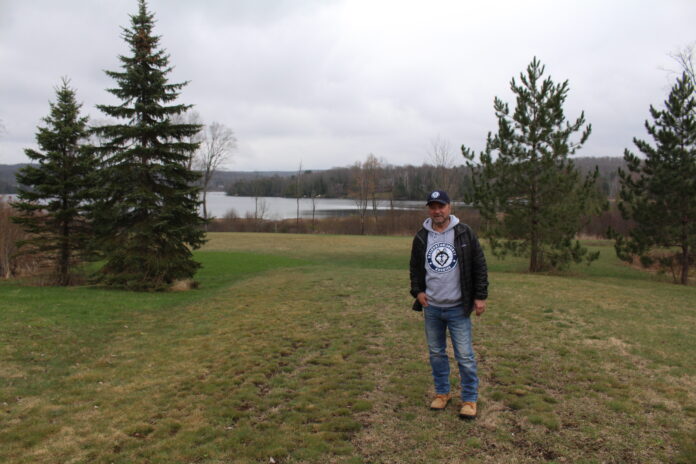
Wilson, who brought the Haliburton County Huskies to town, said, “I’ve lived here all my life. I’m a community-minded person.”
He purchased the property in 2003 and said that he had filled land in and dug a pond, “making a pretty nice piece of property out of something that was not very desirable.”
However, he said he had permission from the Department of Fisheries and Oceans, the Ministry of Natural Resources and the Ministry of the Environment at a time pre-dating the County’s tree preservation bylaw.
He added that detractors need to realize it is a two-phase planning process so things they believe are missing are premature but come in the second phase. He’s not even sure he wants to build the actual condos or apartments himself. “I’m not a condo builder.” He said he might sell or partner with somebody. But before that, he said they need to get official plan and zoning approvals.
So, it’s too early for a design because they are determining the design specifications such as the maximum number of units, setbacks, and steps to protect the wetlands, for example. “So, all the guy has to do that wants to build the condos is prepare a site plan and a site plan agreement … he will show the exact size and location of what he proposes.
He will have to do a stormwater management, grading and probably an erosion control plan. Those are all things that are normal at the building stage.” “If I knew exactly what we were going to build right now, then we could do that, but this is only step one of two steps. This is to get it so the land has been approved for such development but the specifics of the development have to occur in phase two.”
Wilson said he wants to control what happens with the property and “be proud of whatever goes there so (if I do sell) I’m not selling it to somebody until they show me what they’re going to do generally speaking and convince me that they’re going to do it properly.”
As far as timelines go, if he can get municipal approvals, “it could happen in a few years.” And while he’s hoping for that, he added if the township says no, he won’t fight it. He feels he has been unfairly targeted, being called a “greedy developer” on social media.
However, he pointed to a number of concessions that he has made including his donation of one of the lots to Places for People, estimating the property is probably worth half-a-million dollars.
He said he is also concerned about the lack of housing in the County, and its effect on the ability of businesses to attract workers. “I talked to some restaurant owners, one in Minden and one in Haliburton, who both say they can’t stay open the hours they want because they can’t find anybody to work.
I talked to a guy at a lumber store the other day, he said he really likes the job, he just started there, but he’s driving from Lindsay. I asked him ‘why are you doing that?’ and he said ‘there’s no place I can live up here’.”
Wilson said plans such as the one he is proposing have to be on municipal sewer lines and there is not a lot of that developable land in the Highlands.
Places for People Haliburton Highlands Inc. president Jody Curry said they’re “incredibly pleased” that Paul Wilson has donated one of the lots of his proposed Harburn Holdings to the not-for-profit affordable housing organization.
Curry said while it is dependent on Harburn Holdings getting its official plan and zoning bylaw approvals from Dysart et al, it could equate to 15 new affordable housing units one day. “We’re incredibly pleased.
We’re desperately trying to provide affordable housing within the County,” Curry said. She added, “it’s come to the point where we really can’t afford to buy anything any longer. The numbers don’t really work. So, to have someone make such a generous offer is pretty outstanding.”
Dysart et al has also offered a piece of land on Wallings Road and an affordable housing project is in the works for that site.
“Between the two, if the Paul Wilson piece happens, we’re pretty excited about being able to provide more affordable housing in the County,” Curry said.
She added that with their architect, they have been working on standardized plans that can still be tweaked for lots, rather than starting from scratch every time they have a proposal.
“We’ve been preliminarily planning all along for the lots on Wallings Road. Our plan always was to create one pod of 12 units and then replicate that pod as many times as possible so that we wouldn’t constantly be reinventing the wheel,” she said.
The model they are looking at is based on being powered by solar energy, to attain efficiency. And while more expensive upfront, she said in the long-term it will pay itself off.
Places for People will continue to own and rent the units. In the case of the Wilson lands, Curry said they could take a pod of 12 and add something to it. The lot has sewer connections and a drilled well and is on a road, all of which are “huge,” according to Curry.
It’s “massively generous,” she said. Curry added the lack of housing in the Highlands, and affordable housing in particular, is now clearly on the radar as a huge problem that is preventing employers from being able to find and keep workers and students from coming to Haliburton School of Art + Design.
“It just goes on and on,” she said but added if Harburn Holdings gets its approvals, “there’s 88 new units that weren’t there before so I only see that as good. “I just pray the approvals go through and it happens because he’s (Wilson) done so much work up front … we could be developing a lot sooner than we thought we would be. “We’re very happy about it. Very thrilled. We believe in environmental issues as well, but we also believe very much in affordable housing. We have to wait and see what happens but all of us are bowled over by the generosity, too.
Harburn Holdings has written to nearby residents of its proposed condominium development on Grass Lake with an update of its plans. It’s also replied to a Friends of Grass Lake (FGL) consultant’s report panning the plans.
Anthony Usher is the planning consultant to Paul Wilson who is behind the condo project. Usher sent the letter and response to D.M. Wills Associates Limited’s report on April 20.
FGL hired the firm for a planning opinion. In late March, the FGL issued a media release saying the planner had submitted a letter of objection to the proposal to Dysart et al on March 16. “Planners with the firm say we have very good reasons to be opposed to this development and have itemized a laundry list of major deficiencies,” said longtime resident and FGL member Carolyn Langdon in a media release.
She added the FGL feel the applications before the township are premature and incomplete “as they do not provide the necessary plans and studies to determine if the proposed condo and commercial development is appropriate and can be accommodated on the site.”
For example, they said a site development plan, concept drawings and an analysis of the floodplain were missing.
But Usher replied some of D.M. Wills’ report “represents straight differences of planning opinion. I continue to believe the development is appropriate and represents good planning, and would have minimal adverse effects as demonstrated by the supporting studies.”
Further, in the letter to Grass Lake residents, he cites “several improvements in our proposal, mostly in response to comments from the public.” He also said there should be a public meeting in the next couple of months.
Concessions
The letter says Blanding’s turtles will be protected via added mitigation measures, such as temporary fencing on the lakeward side of construction, species at risk training for construction contractors, permanent fencing on the lakeward side of all parking lots and a stewardship brochure for all future residential owners.
He provided new estimates of forest clearing, reducing the forest to 48 per cent but said over time cleared buffer lands will be re-naturalized back up to 69 per cent “almost as much as at present.” They are increasing setbacks to a pond to 30 m from 20 m; and a new 30 m setback from a stream.
They also say no clearing will be allowed to encroach into buffers. Further concessions, they say, include no longer proposing a dock or pond viewing platform and any patio or deck reduced to 20-square-metres from 64.
Usher added there’ll be a traffic study for the intersection of Peninsula Road and County Road 21; they “will make good” on any impacts on the well at Haliburton Veterinary Services; and will comply with municipal rules for exterior lighting.
Another major move is donating one of the lots to Places for People. (see page 3) The FGL, though, still feel, “until such time as the applications provide details on the form and function of the proposed development including location of buildings, structures, parking, access, landscaping or travel paths, the applications are considered premature.”
They are looking for 12 additional studies, such as a site plan. However, Usher said Harburn Holdings is applying for the first of two stages so not all documentation is now required.
For example, he said they haven’t had to submit a site plan yet as they are only looking for official plan and zoning bylaw amendments at this stage
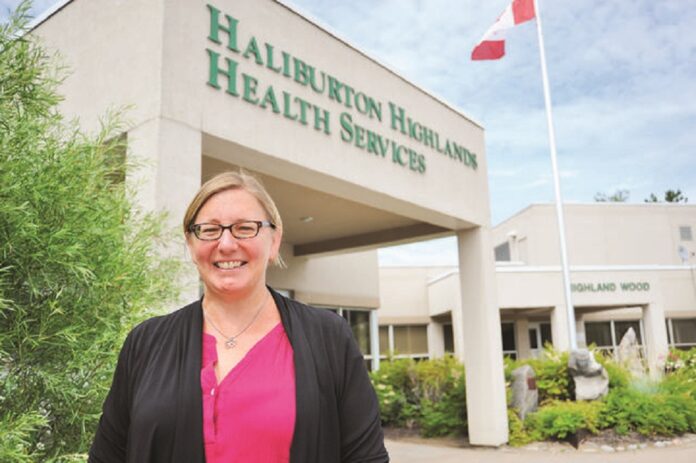
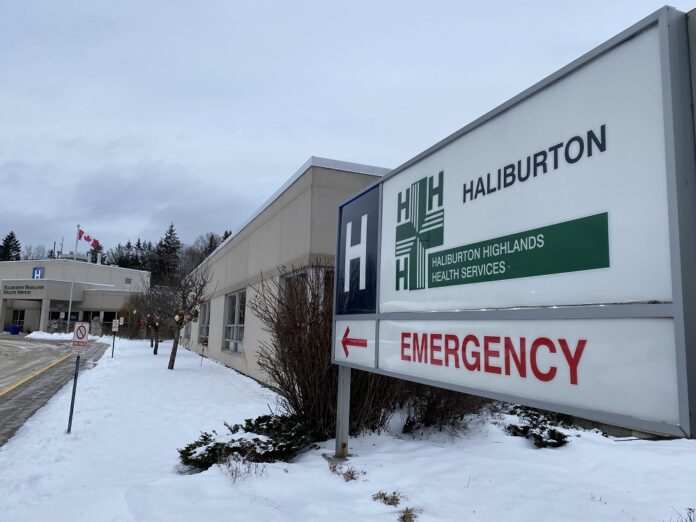
In response to concerns heard through the community, Haliburton Highlands Health Services (HHHS) shared today [April 29] that no decision has been made about which Emergency Department might need to close or reduce services as a result of staffing shortages.
As well, no target date has been set for an Emergency Department closure or service reduction.
Since first announcing the impact of staffing shortages on HHHS in November 2021, the organization has been hard at work to keep both Emergency Departments open, while exploring options and alternatives.
This includes:
• Accessing provincial programs to fund recruitment of internationally-educated nurses and nursing students, and working with Ontario Health to identify other recruitment strategies
• Engaging in virtual career fairs to attract nursing students and new graduates
• Enhancing the organization’s social media presence
• Hiring a dedicated recruiter to work on other recruitment activities
• Meeting with local municipal leaders to identify possible collaborations and ways to support recruitment and current staff/physician retention.
• Collaborating with the Haliburton County Physician Recruitment Coordinator
• Focusing on retention by supporting education opportunities for current staff, expanding scopes of practice, upgrading and expanding technology, engaging with staff to improve practices, creating a Professional Practice Leader/Educator role to support the onboarding of new staff and professional development of our current team, and supporting the work of the Staff Wellness Committee and their efforts to address stress, burnout, and well-being.
“The fact that both Emergency Departments have remained open so far is a testament to the incredible dedication and commitment shown by our local teams, as well as the staffing support we have received from agency nursing staff and HealthForce Ontario Emergency Department Locum Program physicians” said Carolyn Plummer, President & CEO of HHHS.
“Though this is a very challenging situation to manage, HHHS will remain focused on our mandate of delivering essential, high-quality health services to the residents, cottagers, and visitors of Haliburton County and the surrounding area.”
HHHS will continue to communicate with the community directly about the staffing situation in the Emergency Departments.
Haliburton Highlands Health Services (HHHS) put out a notice April 28 saying the HKPR District Health Unit had declared a COVID-19 outbreak in the in-patient department of the Haliburton Hospital.
As of last night, there were three confirmed, asymptomatic, patients.
As a result, HHHS said all in-patient department patients had been isolated, the department closed to further admissions, and visitors limited to only those receiving end-of-life care. Volunteers were restricted from entering the department.
The release said although HHHS was already maintaining important Infection Prevention and Control (IPAC) measures, including mandatory masking, vaccination, regular surveillance testing, and active screening before entry into all facilities, enhanced cleaning will now be conducted in the department and staff will monitor themselves for symptoms.
“We know that COVID-19 is still circulating in our community,” said Carolyn Plummer, President & CEO. “HHHS will continue to put the health and safety of our patients, residents, and staff first, through our rigorous infection prevention and control measures.”
Services in the Emergency Department remain unaffected by the outbreak and community members in need of emergency care should not hesitate to seek assistance, the release said.
HHHS has also been in contact with its neighbouring partner hospitals, including Peterborough Regional Health Centre and Ross Memorial Hospital, in case an admission is needed to an in-patient department.
The use of e-cigarettes and vaporizers among teens is on the rise, reports the Haliburton, Kawartha Lakes, Pine Ridge District health unit (HKPR).
“Warnings and charges have gone up dramatically,” said Robert Hewitt, an HKPR tobacco control officer, at an April 21 board meeting.
The unit has issued 270 warnings for noncompliance and conducted 267 inspections so far in 2022. In 2018, they completed 742 inspections and issued 49 warnings.
Infractions include selling tobacco or vaporizer products to underage people, smoking in prohibited areas or using tobacco or cannabis products while underage.
“Vaping is our predominant concern right now,” said Hewitt.
There isn’t long-term research on the health impacts of e-cigarettes and vaporizers, but early data shows chemicals they emit can cause lung disease, as well as cardiovascular (heart) disease.
Many vaporizer products contain nicotine, the extremely addictive chemical found in cigarettes.
Hewitt pointed to Canadian studies which show 15 per cent of youth aged 15-19 have accessed vaporizer products in the last 30 days. He said teens report it’s “extremely easy” to acquire vapes.
Dysart et al mayor Andrea Roberts asked how adult vaping habits might influence a teen’s choice to smoke.
“If the youth are watching adults and think it’s ok because it’s legal for them.. what more could we be doing?” she asked.
Hewitt said, “Health Canada kind of missed the boat. These devices have been around for several years, and went unregulated.”
Even now, he said high schoolers report that it’s easy to acquire vaporizers while underage.
Pandemic work remains
HKPR chief medical officer of health Dr. Natalie Bocking said COVID-19, “is not something that is going to end.”
Instead, she said that means incorporating COVID-19 responses and activity into regular programming.
“At some point in time we need to plan how this is going to look in the future,” she said.
Bocking said Ontario governmental funding, covering extra staffing costs, COVID-19 personal protective equipment and more, won’t sustain a long-term pandemic response.
Some funding is yet to arrive, such as a $165,200 provincial injection into COVID19 programming retroactive for the 2021 calendar year.
COVID-19 case counts in the region are now “just the tip of the iceberg,” Bocking said, since most cases go unrecorded. She urged HKPR residents to receive their third or fourth COVID-19 shot to increase protection against severe illness.
Nursing incentives raise funding issues
Bocking said a new provincial retention bonus for nurses who worked through COVID-19 points to gaps in health unit funding.
“We absolutely acknowledge the role nurses have played in our response,” she said of the up to $5,000 bonus for nurses.
But she added, “in some ways it challenges the health unit and management as we have a number of other professions who have helped with the pandemic response.”
Bocking said the unit must continue to “demonstrate the tremendous role health units have … in [COVID-19] response.”
The Haliburton County Huskies may have been knocked out of the OJHL playoffs on April 20 but their inaugural season playing out of Minden’s new arena can be judged a success.
Standing along the boards last Wednesday taking photos and notes for a game report, I couldn’t help but notice the atmosphere around me.
The stands were full of people, some brandishing homemade signs. The upstairs warm viewing area was equally packed. People stood or sat in the lobby to look through the glass. I was joined around the rink by excited kids, and some big kids with a massive air horn.
During the break, there were volunteers everywhere. There were folks at the front door checking people in and others posted at other doors. The people selling the merchandise were doing it on their own time and dime. The ones dispensing the non-alcoholic beverages and snacks were also donating their efforts.
Some in the stands – many in fact – had offered to take players into their homes for the season.
The atmosphere in the arena was loud and very parochial. The crowd, not just from Minden but all points of the Highlands, have clearly gotten behind Paul Wilson’s team.
While playoff hopes were high, it was no small feat to relocate a team from Whitby and have it win its first playoff series against the Trenton Golden Hawks. Would the Cobourg series have been a best of five or best of seven, the Huskies might well be playing on.
The owner and staff frequently commented on visiting other arenas this season and there being far fewer fans at the games. We also heard from the players that there was something special about coming north to cottage country. They became country lads for awhile, enjoying the outdoors, and it allowed this team to forge a unique chemistry.
Does it mean everyone now backs a decision to build a $14-million arena on taxpayers’ backs. No.
Does it mean people have forgotten the County would dearly love to have a public swimming pool? No.
Have some people stopped grumbling about their perception the Huskies got too much of a sweet deal from Minden Hills? No.
However, those same grumblers have to concede that the more than $100,000 the Huskies spent making the former Scouts room their own has been a generous donation to the township’s new arena. Further, they can’t argue that local businesses have benefitted from having the Huskies in town.
It has certainly given many something to do on a weekend in the County. They have embraced the team. As a result, it looks likes the Huskies will be here for many years to come.
In making the announcement in May 2001, the Huskies brass said the move was a “no-brainer” with the County being a hockey and sports town.
“We think it could really be something special for fans, the community and our players,” they said.
Turns out they were right.
And as the township’s seven-year-deal with the Huskies progresses, it stands to make more money off of the club every year to make it all a little more palatable for taxpayers