

Home Blog Page 291

Adoption can be a ‘torturous process’ that brings the greatest gift of life to families

0

Erin Neimann and Doug Rowe were desperate when they contacted Durham Children’s Aid Society in 2006. Approaching their 40s and having exhausted all possible ways of biologically expanding their family, the couple turned to adoption.

Living in Whitby at the time – but now residents of Haliburton County since 2012 – they set out on their journey. Feeling unprepared, they hired a social worker to help them navigate the system.

“The first three months were spent just filling out paperwork. Then CAS came in and did their investigating. After that, it was months and months of training,” Neimann recalled. “At that point, we really didn’t have any idea what we were doing, or what to expect.”

Karen Kartusch, regional adoption program manager with CAS Durham, Highland Shores and Kawartha-Haliburton, said the initial vetting process is extensive. It can take up to a year. Home studies, criminal record checks, financial inspections, health check-ups – all a necessary part of the process, she said.

The Kawartha-Haliburton region approves around 20 new families per year. At any one time, the organization has around 175 children under their care. Kartusch noted only a small number of those, between 35 and 40, are considered to be in Extended Society Care, which means CAS has become their legal guardian.

The organization’s primary goal, Kartusch said, is to have children return to their birth home when possible. Only when that poses a safety risk to the child, and often after several years of going through the courts, does that transfer take place.

“We do not have many very small children. People, when they’re considering parenting, think of scenarios where they’ll adopt a baby through CAS. I can tell you, that is incredibly rare,” Kartusch said.

Based on numbers from 2019 and 2020, 78 per cent of children placed in new homes by CAS Kawartha-Haliburton were aged three and older, while almost 25 per cent were at least eight.

The search begins

When Neimann and Rowe started, they wanted an infant. As time went by, they relaxed their expectations. They attended CAS adoption resource exchange conferences in Toronto, where they made connections with social workers representing children. There were video presentations showcasing children available for adoption. Those events were difficult for Neimann.

“Some of the most emotionally draining experiences I’ve ever been through in my life,” she said. “Sitting there and watching kids talk about themselves, and almost trying to sell themselves. Talking about how all they want is a family of their own. It just broke my heart.”

They came close to adopting three sisters, but were passed up for another family. Refusing to put herself through that experience again, the pair considered alternative options.

Going private

Neimann and Rowe asked about private adoptions.

“Very difficult to find, and you can be waiting a lot longer,” Neimann said.

Families are asked to fill out a profile outlining why they would be good parents. It’s shared online and available for adoption caseworkers to share with clients.

Deciding to go domestic rather than international, Neimann submitted a profile in spring 2008. Several months went by without a word. Then, on Thanksgiving weekend, Neimann got the call she had been waiting for.

“Our worker became aware of a girl who was pregnant in Thunder Bay. The family that had agreed to adopt her baby changed their mind at the last minute, so she was looking for a new family,” Neimann said.

Neimann and Rowe flew to Thunder Bay to meet the woman and her case worker. It was agreed they would adopt the baby. Freyja Neimann-Rowe arrived on Nov. 11, 2008.

Neimann and Rowe opted for an open adoption, and have been honest with Freyja about her background.

Other avenues

Georgia Shank’s experience with CAS, while “beyond invasive” was quite straightforward, she said.

The Minden resident was contacted in 2014 after her biological nephew was taken into CAS custody. A single mother with a two-year-old daughter, she wasn’t sure she could handle another toddler while juggling a part-time job and college. She agreed to visit with one-year-old Jacob and take things from there.

“We started off with short visits, where I would travel from Haliburton to Lindsay to see him. Then they started letting me have him for weekends. We did that for two months, then I got temporary custody and he started to live with me part-time,” Shank said.

CAS remained heavily involved even after the handover had taken place.

“All in, it took two and a half years for the adoption to go through. It was a lot of paperwork, a lot of stress on me, on my friends, and it prevented me from having any privacy,” Shank said. “They basically had control of my life.

However, she added, “It was all worth it. Jacob is my son, and that’s never going to change. It was one of the best days of my life when it became official.”

Money and other considerations

Despite a misconception private adoptions are expensive, Neimann estimates they spent around $7,000. When briefly looking into international adoption, fees were in excess of $40,000. Shank says she spent around $3,000, with CAS subsidizing half of her total bill.

Kartusch said anyone interested in adopting needs to be aware of the realities before becoming too emotionally-invested.

“Adoptions are a lot of work, particularly through CAS. The main driver for us in terms of matching is the needs of the children. We’re looking for families to meet the needs of the children, not the other way around.

“Ideally, we’d like families to open their minds and hearts to what adoption from CAS looks like. Most kids are older and have relationships with biological family. Being open-minded to various possibilities greatly enhances a family’s chances of finding a successful adoption.”

Richardson: ‘We’re playing for the County’

0
MINDEN, ON - FEBRUARY 11: Bryce Richardson #11 of the Haliburton County Huskies during the pregame warm-up at the S.G. Nesbitt Memorial Arena on February 11, 2022 in Ontario, Canada (Photo by Tim Bates / OJHL Images)

Huskies forward Bryce Richardson gets goosebumps every time he steps out onto the ice at S.G. Nesbitt Memorial Arena.

The 18-year-old has taken to life as a Highlander, and while there’s much he loves about living in Haliburton County, hearing the roar of the hometown crowd on game day ranks among his favourite things.

“We have the best fans in the league,” Richardson said. “It’s great for us walking out of the dressing room. Those first steps, you’ve got kids lining up giving us high fives, and then stepping into the arena and seeing all the fans … We’ve played all over this season, and you just don’t see that. The community has really gotten behind us. When we go out there, we’re playing for the whole County.”

Richardson has tallied nine goals and 10 assists in 39 games with the Dogs this season, his first as a full-time OJHL player. While he enjoyed a nine-game audition as an affiliate with the old Whitby Fury in 2019/20, Richardson feels he’s taken his game to a whole other level this year.

The Toronto native likened himself to former Maple Leafs’ favourite Zach Hyman.

“I’m a guy who likes to get in the corners and make plays happen for my teammates. I think I’m more of a pass-first kind of guy, I try to keep my head up when I’m out there and keep the puck moving as much as possible,” he said.

Richardson started the year playing on the Huskies’ top line alongside Lucas Stevenson and Oliver Tarr. As the season developed, he’s shifted around the lineup. While also seeing third-line minutes skating alongside Cameron Kosurko and Sam Solarino, Richardson has seen the bulk of his ice time come on the second line, playing alongside close friend Patrick Saini.

“I’ve known Patrick for a long time. We played AAA together at major bantam with the North York Rangers, where we were coached by Ryan Ramsay, so we have good chemistry playing together in this system,” Richardson said.

The biggest eye-opener has come off the ice. Having never lived away from home, Richardson said it’s been an interesting few months venturing out on his own. He’s billeting with Dan Roberts on Lake Kashagawigamog alongside teammate Kolby Poulin.

Loving his new life in the Highlands, Richardson is hoping for a strong finish to the season as the Huskies vie for a playoff berth and extended post-season run.

“Everyone in that locker room is playing for each other right now. We’re a brotherhood,” Richardson said. “We’ve missed a lot of hockey the past couple of years, and being a new team in a new community, what better way to kick off a new era than to win a championship. That’s something we’re really working for right now, for ourselves and for the community.”

Author remembered as gifted storyteller

0

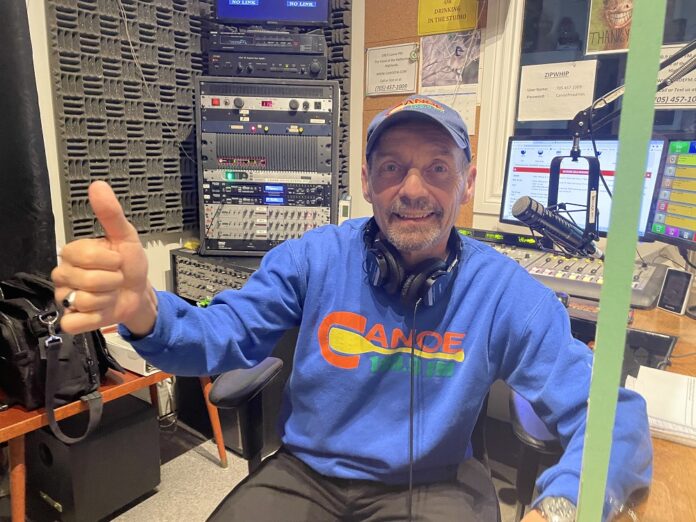
“The happiness of every country depends on the character of its people, rather than the form of its people,” rings out the voice of Kenneth Bagnell in a CanoeFM radio vignette.

It’s a quote from Thomas Haliburton, the County’s namesake and the focus of one of the dozens of short reflections Bagnell broadcast over the community radio airwaves for half a decade.

Bagnell, a former journalist, celebrated author and devoted United Church of Canada minister, died Feb. 15 at age 87. Bagnell was known around the County for his short recordings, written with care and recorded at CanoeFM with producer Ron Murphy.

“He was an excellent writer,” said Murphy. Bagnell would arrive at the station in the summer with stacks of written papers, some about history some about the present day, all geared towards the seasons.

“Bagnell moments,” as Murphy said they became known, were played nearly every day until a couple of years ago when Bagnell’s Alzheimer’s disease progressed.

Bagnell’s cottage on East Moore Lake was his introduction to the County, said his son Paul Bagnell. He arrived after a lengthy career at Canada’s top news outlets such as the Toronto Star and Globe and Mail, as well as editing the United Observer, the Imperial Oil Review and the Globe Magazine. He also anchored a CBC news show.

“He was a gifted storyteller, and he had a great capacity for the English language,” Paul said.

As the assistant to the editor of the United Observer, Bagnell had the chance to interview Dr. Martin Luther King Jr. who spoke on the civil rights movement sweeping across the United States in 1962.

Later in life, Bagnell penned multiple books. The Little Immigrants: The Orphans Who Came to Canada told the story of 100,000 impoverished children from the UK who were sent overseas, many to Canada. Bagnell’s investigation shone a light on a slice of Canadian history that had rarely been discussed. Paul said many of the immigrants, who at that point were elderly, found the book to be “essential reading all these years later, for Canadians interested in that part of our history.” Paul said it’s likely that book was one of Bagnell’s proudest achievements as a writer.

Family and Haliburton

Dave Bagnell said his father wasn’t much of a cottage person, coming from downtown Toronto. However soon after the family purchased their cottage, it became a fixture in their family’s life.

“We never thought dad would take to it: as soon as he got a taste for it, he really fell for it,” said Dave.

Paul agreed: “I think he understood smalltown life. He found Haliburton County a very, very relaxing place to be,” Paul said .

In 2014, Bagnell approached the station with the idea for “Ken Bagnell moments.” In the years following, Murphy helped him record dozens of vignettes, as Bagnell was diagnosed with Alzheimer’s disease. As his memory declined, Murphy continued to receive recordings.

Dave said Bagnell enjoyed researching and preparing topics for the radio stories. “Anything dad would do he would research it. He would give a lot of thought, and that was his style, very retrospective,” he said.

Many radio listeners will remember Bagnell’s contemplative views on Haliburton life, history and holidays, broadcast throughout the Highlands.

His family said they will remember a man with a strong faith and integrity, who always devoted time to family.

Bagnell’s funeral was held in Toronto Feb. 18. He is survived by his wife Barbara (nee Robar), sons Paul (Diana Cafazzo), David (Carolyn Swift) and daughter Andrea Crawford (Philip). Bagnell has three grandchildren: Sidney and Bretton Crawford and Mark Bagnell and a brother, Claude, who lives in Hawaii.

“He was the best father we could have asked for,” said Paul. “He never gave short shift to his family

Emerging pop talent ready for live return

0

Cassidy Taylor is framed by a black background and lit by flashing lights in her latest original music video, Pretty, released in 2021.

Pretty, like many of the tunes Taylor writes or covers, is full of emotion, lilting melodies and a soulful voice.

A well-known local talent, Taylor has performed across Haliburton County and was a contestant on The Shot, an emerging artist contest at the Mississauga Living Arts Centre.

Currently based in the Highlands, Taylor’s experience of the pandemic mirrors many who work in music: cancelled performances.

“It was pretty hard. I had seen a lot of other shows being cancelled that weren’t mine. Then it happens to you and it kind of hits harder,” she said.

That didn’t mean her career went on hold. She said she’s been figuring out how to elevate the experience of a live show rather than waiting for something to happen.

She’s also spent time and money crafting new ways of presenting her music online. Her YouTube channel is full of recent music and behind-the-scenes glimpses into how she crafts songs. She said live gigs performed virtually will likely be a big part of her career moving forward.

“We’re now hoping to livestream every show going forward, as well as being in-person,” she said.

Taylor said she’s been listening to many of pop’s exciting talents: Bleachers, Dizzy, Lorde and others whose music inspires her own.

The HHSS graduate said the County’s landscape has influenced her songwriting as well. “That’s what I had access to,” she said. “I think it had a huge influence on how I write: I write a lot of metaphors about nature, and it helps me make sense of the world in a new way.”

In the lyric video for Before Daylight, a song about lost connections and longing, Taylor stands in a Haliburton lake at dusk as the lyrics scroll across the page.

“In the past, it’s been really personal experiences,” she said, talking about songwriting. “I’m finding a new way to stay creative. I found ways to kind of take my experiences and what I’ve been through and turn them into fictional stories.”

She’s been writing new music too, and said she’s excited to release it.

Her first show of 2022 in the Highlands will be March 19, at the Folk Society’s Women of Song concert.

“It feels like I’m starting to perform for the first time again, but I have more experience this time. That’s very exciting,” she said.

Activists tell province ‘no’ to private health care

0

A seemingly off-the-cuff remark made by Health Minister Christine Elliott in early February has seen several activist groups, including the Haliburton-City of Kawartha Lakes Long-Term Care Coalition, sound the alarm over fears the province may be favouring a move towards privatization of health care in Ontario.

During a virtual press conference Feb. 24, Sarah Labelle, OPSEU region three vice president, expressed her concern over Elliott’s statement Feb. 1 that indicated the province would be looking to independent health facilities and private hospitals to help clear the backlog of non-emergency surgeries and procedures.

“That is a complete departure from what we have historically done in Ontario, and in fact goes against the legislation that banned private hospitals back in 1973,” Labelle said. “This is further privatization, and they’re doing it under the guise of telling people that they’re going to get rid of the backlog … It’s not right.”

While Elliott could not be reached for comment, local MPP Laurie Scott said any procedures redirected to privatelyoperated health facilities would still be publicly-funded.

“OHIP already funds procedures in other facilities … Right now, it’s all about ramping up for more surgeries. It’s an all hands-on deck situation for us to try and catch up with the backlog, so even if someone is [referred to a private facility] it will still be an OHIP-funded procedure,” Scott said.

She added that, as far as she was aware, there are no plans to expand independent health care facilities and operations in Ontario.

Labelle remains unconvinced. She said that rather than rely further on private hospitals, albeit temporarily, the provincial government should instead be working to outlaw them.

“The quality of care is not the same. The independent health facilities are not covered by the same legislation and regulations as our public hospitals,” Labelle said. “These facilities poach valuable health professionals away into the private sector, which leaves an already beleaguered public sector short.

“There’s just so many reasons why it’s not a good idea [to rely on private facilities]. What we need to do is push for more professionals and more beds and more funding for our existing public hospitals,” she added.

Bonnie Roe, co-founder of the Haliburton-CKL LTC Coalition, also spoke at the conference, bringing attention to the recently announced $41 million 128-bed long-term care facility Extendicare plans to build in Haliburton County by 2025.

She criticized the provincial government’s decision to partner with Extendicare, a privately-owned corporation, on the project.

“That could have been used for notfor-profit beds,” Roe said. “This was a key opportunity to have changed the way we look at long-term care, and to try to do things differently. Unfortunately, this government just has no political will to do that.”

Among the local coalition’s chief mandates is to lobby the government to outlaw for-profit companies from opening new nursing homes in Ontario.

Scott said the province entered into an agreement with Extendicare because it was the only service provider in the Haliburton region to apply for funding to increase the number of long-term care beds in the community.

“We made the commitment to add 30,000 net new beds in Ontario by 2028 … We put the call out in 2021 for another round of applications for extensive developments and Extendicare is who applied from our area,” Scott said. When asked if there had been any other applications made by service providers in Haliburton County, she responded “none to my knowledge.”

It’s unclear how much of the $41 million needed to complete the project is coming from the province. Scott said the funding is determined on a per bed basis and that negotiations are still being finalized.

“They’re certainly a partner on this thing though,” Scott said, indicating the new build won’t be fully funded by the government.

Sign-up time for new Dysart home composters

0

Dysart et al has kicked off a new home composting pilot project, and is looking for local households to take part in the 12-week initiative.

FoodCycler is a portable in-home food recycling machine designed to transform food waste such as vegetables, meat, poultry and bones into a nutrient-rich soil amendment that can be used for gardening, landscaping and farming. Each unit is designed to divert at least two tons of food from landfills and prevent up to 2.6 tons of carbon monoxide from being released into the atmosphere.

Each unit retails at around $500, but Dysart has entered into an agreement with manufacturer Food Cycle Science to offset costs for those interested in the program. Units are available for $150 plus HST. Dysart is investing $10,000 through the initiative.

Interest in the program has been strong, said John Watson, Dysart’s environmental manager.

“I suspect we’ll definitely have more than 100 applicants for the FoodCycler pilot, so will end up using a lottery system to select the participants,” Watson said. “This really speaks to a willingness of Dysart residents to manage their food waste through an in-home composting solution.”

Watson noted the FoodCycler is designed to work alongside a backyard composter or digester, and not completely replace it. Approximately the size of a bread making machine, the unit can hold up to 1 kg of food waste and takes between four and eight hours to complete a cycle.

The machine has been piloted in more than 20 municipalities Canada-wide according to Christina Zardo, manager of municipal solutions with Food Cycle Science. She said 83 per cent of people who have participated in the program would recommend the FoodCycler.

Algonquin Highlands ran a pilot of its own beginning in October 2021, though results have not yet been made public.

“From an economic standpoint, FoodCycler offers return on investment by reducing waste management and disposal costs,” Zardo previously told Dysart council. “From an environmental standpoint … it represents an approximate reduction in greenhouse gas impacts by 95 per cent compared to sending food to the landfill.” Dysart’s pilot will run from April 10 to July 2. Participants are required to track their usage of the machine through online weekly logs and provide feedback via online surveys. Anyone looking to take part must be a permanent or seasonal resident of Dysart.

The deadline to register is March 31. To learn more, visit dysartetal.ca/foodcycler.

A new service for Dorset readers

0

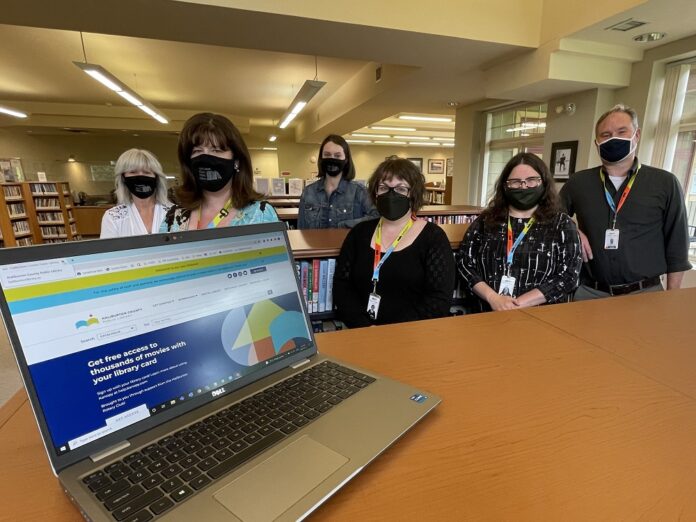
After nearly a year without library service, Dorset residents will be able to pick up library materials in their own community starting March 12.

That’s thanks to a newly-installed row of lockers outside Robinsons General Store that will soon be full of reserved books from across the library system.

“We’re really excited about this launch and getting library materials into the hands of community members,” said Library CEO Christopher Stephenson in an email.

Mike Hinbest, owner of Robinsons, said he enthusiastically supports the projects. For him, it was a simple decision to lend the space.

“The town needs the help, we have space for [the lockers] so we help out the town,” he said.

“If we have the ability to help when someone is in need then that’s what we’re going to do.”

Dorset residents can now call or email to secure their lockers. They’ll be assigned one of 36 lockers and then will set a fourdigit combination.

Any holds that are placed before the end of the day Friday will be couriered to Dorset Saturday morning.

The Dorset Community Centre has been closed because of mold since spring and service at the Stanhope branch is still offline, as accessibility improvements have blocked the front entrance.

To sign up for a locker call 705-457-2241 or email illo@haliburtonlibrary.ca

Libraries move to stage three

As of Feb. 22, all HCPL branches will be open for in-person browsing and borrowing during regular hours. Public computers, printing and photocopying services are all available.

Curbside service will continue to be available, and masking rules are still in place.

County eyes municipal climate resilience

0

The County’s climate change coordinator outlined some of the challenges municipal operations and services will face as weather patterns shift and presented a plan to deal with it during council’s Feb. 23 meeting.

Korey McKay, in a 44-page report, highlighted how the weather is changing in Haliburton County. It is trending towards higher temperatures, resulting in more heat waves and less snow. It also means increased precipitation, with rainfall concentrated in more intense events with longer dry spells in between. That will result in increased flood risk as well as lake levels that experience higher highs and lower lows. There will also be more frequent and intense storms of all kind, including ice and thunderstorms.

Gleaned from the plan are some examples of what this means for municipal operations.

For example, she said staff working outdoors will have more health risks due to more extreme heat.

“What can be done is updating health and safety policies to incorporate climate change considerations and continue to provide education, resources and training to outdoor staff to reduce heat stress,” she said.

She added there will be disruption to outdoor events and programming for winter-based recreation due to the increased snow melt. “What can be done is developing alternative programming for low snowpack conditions.”

She noted an expected disruption to transportation and emergency services due to the closure of roads and bridges from flooding.

“What can be done is ensuring new or replacement infrastructure is designed to reflect future climate conditions, including increasing culverts and bridges in size and height to reflect increased precipitation.”

During the meeting, McKay noted this plan focuses on climate impacts to municipal operations and services. Broader impacts for the community, including effects to private property, will be included in the Community Climate Action Plan, which will be the third and final comprehensive plan McKay is working on.

She is working on it now and the newly-created advisory group held its first meeting Feb. 16 and is scheduled to next meet in April.

According to Coun. Andrea Roberts, who sits on that group, “there’s a very enthusiastic group of people on that committee.”

McKay told council this plan “is to provide a first step for understanding the climate-related risks that impact our municipal operations and services, as well as providing steps to embed resiliency across our operations and infrastructure.”

She said she looked at parks, public works, water and wastewater and administration.

She noted her work piggybacked on a lot of things the townships have already been doing to address things such as severe rainfall, extreme heat and intense storms.

There is a strong business case for the plan as it is, she added, noting it is, “cost effective to proactively plan ahead. The Insurance Bureau of Canada estimates that for every dollar invested in risk mitigation measurements, $6 is saved in future damages.”

Coun. Pat Kennedy said it was important to share the plan with emergency planning and management at councils.

Coun. Carol Moffatt added there was no question climate change is impacting reservoir lakes. “The water levels that are already going up and down quite a bit is going to be significant more in the future.” She encouraged McKay to liaise with the Coalition for Equitable Water Flow, which is doing its own monitoring.

Coun. Brent Devolin said Minden Hills has probably suffered more from the negative effects of climate change than other municipalities due to its flooding history. He agreed they must continue to lobby the provincial and federal governments for assistance. He also noted the strong link to emergency planning. He encouraged McKay to continue to “thread the needle” through all of the existing planning across the County and other jurisdictions.

“I’m excited to see this go forward.”

County investigating development charges

0

The “timing is right” to launch a development charges study for the upper and lower-tier Highlands municipalities, County Coun. Andrea Roberts told a Feb. 23 meeting.

The Dysart et al mayor said, “we’re seeing growth like none of us have ever seen before. I know at Dysart’s planning department, it’s just phone calls coming in of potential applications. It’s going to be a little bit overwhelming.”

The recently-released population census for Haliburton County found 13.9 per cent growth between 2015 and 2021.

County director of planning Steve Stone updated a report by his predecessor, Charlsey White, calling for a development charges study a couple of years ago.

He said the cost, estimated at $50,000 in 2019, was too low so it was “put on the backburner.”

This time around, if Algonquin Highlands, Dysart et al, Highlands East and Minden Hills all sign off on it, Stone is recommending a budget of $100,000, with a request for proposals going out in the hopes of finding a consultant to do the work by October 2022.

Roberts asked if development charges would affect every building permit and Stone clarified they would be for new dwelling units only.

Stone’s report outlined that development charges are one-time fees imposed by municipalities on land developers, home builders and institutions.

The fees are intended to offset the cost of increased municipal services and infrastructure required due to population growth within the municipality, resulting from new development.

The municipality can use development charges to pay for hard services such as water, waste management or roads, and soft services such as recreation centres and libraries.

“Development charges can only be imposed on development that is subject to a zoning bylaw amendment, minor variance, part lot control bylaw, plan of subdivision, application for consent, plan of condominium and building permit,” Stone said. “They cannot be imposed for applications related to the enlargement of an existing dwelling unit or creation of up to two additional dwelling units.”

Stone, in an analysis, added, “development charges are recommended to be used to finance growth-related capital costs for some of the services provided by the County of Haliburton such as roads, emergency services and library services.

“It would be mutually beneficial for the County and local municipalities to consider collaborating with regard to development charges. Almost all services provided by the County are eligible for development charges, provided they can meet the test of a service which will incur capital costs as a result of increased development,” he said.

Stone added there are some identified ineligible services, which include cultural or entertainment facilities, tourism facilities, land for parks, hospitals and headquarters for general administration.

The process

• A development charge bylaw is effective for five years after the date it comes into force.

• Before council can pass a bylaw, it must: complete a development charge background study. The bylaw must be passed within one year after the study is completed; complete a municipal asset management plan; and hold at least one public meeting with appropriate notice.

• Notice of adoption of a bylaw must be given within 20 days and is subject to a 40-day appeal period.

Council slashes parking fees for new business

0

Dysart et al council signed off on giving a pair of new entrepreneurs a break Feb. 22 after municipal officials found an application to increase capacity at the old Baked and Battered restaurant violated township parking bylaws.

Veronica and Taylor Van Leeuwen had spent months coming up with ideas to grow their new business after taking ownership in late 2021. After discontinuing the bakery, they decided to change the layout of the downtown eatery. They submitted a building application to allow for more seating inside, but days later their hearts dropped after being hit with a municipal bill for $27,000.

Planner Kris Orsan informed council the restaurant did not have enough on-site parking to justify the number of seats the Van Leeuwens wanted to add, as per municipal bylaws. The bylaw states there must be one parking spot per nine sq. metres of floor space. With a proposed seating area of 369.1 sq. metres and only 16 on-site spots, Orsan said the restaurant was 27 spots short of the 43 required to meet standards.

Given the lack of space available, Orsan said the business qualified for a program where they could pay a one-time fee in lieu of providing parking. This would, theoretically, give the municipality the option of upgrading existing parking options in the area, or develop new parking space of its own to offset the overflow. The payable rate is set at $1,000 per deficient space.

This was news to the Van Leeuwens, who said they were not aware of this bylaw prior to purchasing the business.

Mayor Andrea Roberts asked if this issue had ever come up at the site before, under previous ownership. Jeff Iles, Dysart’s director of planning, told council there was no record of any prior issues.

“Then the seating capacity must not have been calculated properly prior to [the Van Leeuwens] purchasing the restaurant,” Roberts said. “Even if they were to reconfigure, there isn’t enough space inside to add that many new seats to all of a sudden [exceed the bylaw].”

Iles said the township’s most recent documents permitted seating for 30 people at the restaurant. The Van Leeuwens’ new application sought to increase that to 100. Veronica estimated when she bought the business, there was seating for around 60 customers.

“How can the previous owners have no payment, then this huge, unexpected amount be charged to the new owners? It doesn’t make sense,” said Coun. Tammy Donaldson.

In an effort to help the new business owners, Coun. Nancy Wood-Roberts suggested council reduce the bill by 50 per cent, bringing the total owed to $13,500. Council voted 5-2 in favour of that option, with John Smith and Walt McKechnie opposing.

Patios to return

Restaurants along Highland Street will be permitted to transform parking spaces in front of their businesses into patios to support outdoor dining again this summer.

In a report to council, CAO Tamara Wilbee said seven spots in front of McKeck’s Tap & Grill, Maple Avenue Tap and Grill and Kozy Korner would be culled to make room for the patios. The space will be offered to businesses free of charge.

“I very much think we should be supporting this. It’s going to be years for businesses to recover from what’s been happening [with the pandemic]. Anything we can do to enable them to get back on track, we should,” said Coun. Larry Clarke. “It will cost us in terms of a few parking spaces, but those spots don’t mean anything if we don’t have businesses there for people to go into.”

Treasurer Barbara Swannell said there could be an opportunity for Dysart to use federal Safe Restart funding to offset any losses by the township.

Museum lauded

After spending months compiling information for a new book documenting the history of Drag Lake, area resident Charles Wheeler told council he believes they should do more to support the Haliburton Highlands Museum.

“The museum is a great asset to this community, but we think it needs further investment by Dysart,” Wheeler said.

He suggested the municipality create a digital archive of all the information the museum has on-site, while also improving signage along Hwy. 118 providing directions to the facility. He also recommended the museum boost its online presence, and provide options for people to make donations through their website.

“George Santayana said that those who fail to learn from history are condemned to repeat it, but for history to be learned it has to be visible and accessible,” Wheeler said.