

Home Blog Page 252

A troubled bridge over IB&O trail waters

0

A bridge often used by snowmobilers, hikers and cyclists in Highlands East will be closed after it was deemed unsafe by an engineering firm.

At the recommendation of the trails and outdoors committee, Highlands East hired an engineer to assess the wooden bridge in April 2022.

The firm, Greer Galloway, recommended the IB&O bridge be shut immediately due to structural issues. The inspectors said it was beyond saving.

“There are no suggestions to repair the bridge as it would be cost-prohibitive..” said economic development coordinator Joanne Vanier at a Sept. 13 meeting of council.

Jon Cumming, president of the Paudash Trailblazers snowmobile club, which has a trail over the bridge, said “an unsafe bridge is an unsafe bridge. We’re disappointed it’s gotten to this point but we’re hopeful Highlands East council will come up with a solution.”

He said the group has no current plans for a bypass of the bridge since snowmobiling across the creek below it would be unsafe and temporary bridges are costly.

“We’re a volunteer-based organization – we have limited numbers of people to help us do the work,” Cumming said. “Losing any link in our system is definitely a difficulty we have to spend time working around.”

CAO Shannon Hunter said the township is aware of the impact of the closure to snowmobilers and other users.

“But we’ve had an engineer’s report that says we shouldn’t be using it… we have to think about the liability,” she said.

Staff presented two options to council: close the bridge completely or just to vehicle traffic.

Vanier said it would be difficult to stop vehicles, such as dirt bikes or bicycles, even with barricades that would permit pedestrians.

Initially, mayor Dave Burton said he’d favour allowing pedestrians to use the bridge, however, Hunter said she’d caution against that as it would leave the township open to liability if anyone injured themselves on the bridge after it was deemed unsafe.

Councillors unanimously voted to close the bridge.

“I hate to say that, and I know that snowmobilers are the lifeblood of our community in the winter… I do not want to take the chance of the municipality getting into any sort of liability trouble,” Coun. Suzanne Partridge said.

According to a staff report, council can direct staff to seek quotes for a replacement bridge, to be incorporated into the 2023 budget.

Listen: What are we doing? About shorelines

0

Some people love it, some people hate it – but one thing remains true. We all want to see our lakes stay healthy. Our townships recently enacted a shoreline bylaw, and today we’re going to talk all about it. 

Join us as we figure out what we’re doing about shorelines!

You’ll hear from some of the supporters and opposition to this bylaw as well as from council and how they reached these decisions! You’ll also hear some background on the science behind this project and what we can be doing better to ensure the future of our lakes. 


______

Join our next episode by sending a voice note! Visit: https://anchor.fm/whatarewedoinghighlands/message or email us at whatarewedoinghighlands@gmail.com.

Created by Justin van Lieshout in partnership with The Highlander, featuring Mike Baker, Lisa Gervais, and Sam Gillett.

Music by Mackenzie Robinson AKA. Kashaga‘. Find his music here: https://linktr.ee/Kashaga 

Artwork by Jason Yates @jy.ink

New bivalent COVID-19 boosters available for Haliburton County

0

A new vaccine targeting the Omicron variant of COVID-19 is available for at-risk people in Haliburton County. 

The Haliburton Kawartha Lakes Pine Ridge District Health Unit announced Sept. 12 that people aged 18 and older can book a dose of the bivalent COVID-19 booster through the provincial booking portal or by calling the Provincial Vaccine Contact Centre (PVCC) at 1-833-943-3900.

A bivalent COVID-19 booster means it targets both the original strain of COVID-19 and the new Omicron variant, which has become the dominant kind of COVID-19 spreading around the world. 

As of Sept. 14, only the following populations can book a shot, with more availability incoming: 

  • Residents of long-term care homes, retirement homes, elder care lodges and individuals living in other congregate settings that provide assisted-living and health services.
  • First Nation, Inuit and Métis individuals and their non-Indigenous household members aged 18 and over.
  • Moderately to severely immunocompromised individuals aged 12 and over.
  • Pregnant individuals aged 18 and over.
  • Health care workers aged 18 and over. 
  • Individuals aged 70 and over.

“I would like to encourage all residents aged 18 and over to receive the bivalent booster dose as recommended by the Ministry of Health,” said Dr. Natalie Bocking, medical officer of health for the HKPR district health unit. 

“We know that vaccine protection decreases over time, and now is the time to better protect yourself for the upcoming fall season with the bivalent booster.”

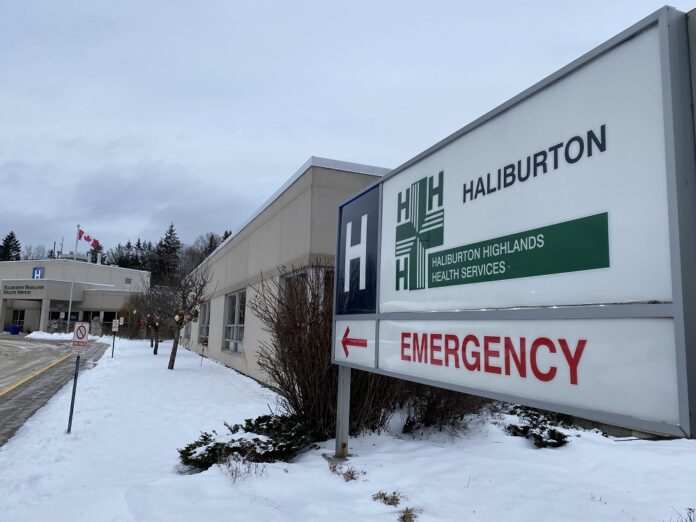
The health unit currently doesn’t have vaccine clinics located in Haliburton County.

Clinic dates and locations include:

Sept 13, 15, 21, 23: Lindsay Office (108 Angeline St S, Lindsay), 10 a.m. to 5 p.m., by appointment only
Sept 19, 20, 26, 27: Knights of Columbus Community Centre (232 Spencer St E, Cobourg), 10 a.m. to 5 p.m., by appointment only
Sept 28 and 29: Lindsay Exhibition Centre (354 Angeline St N, Lindsay), 10 a.m. to 5 p.m., by appointment only

The HKPR said the bivalent booster dose will also be available through pharmacies beginning September 19, 2022.

“Individuals are recommended to receive the bivalent booster at an interval of at least six months from their previous dose (and are eligible to receive the bivalent booster at a minimum interval of 3 months), regardless of how many boosters they have already received,” the health unit said.  

Haliburton resident was brakeman for 1959 royal tour

0

By Hope Thompson

My sister finds some old letters while cleaning out our parents’ possessions collected over 60  years of marriage. Some of the possessions, like these letters, belonged to our grandparents and ended up mixed in with the piles of things that were looked at once, deemed too important to discard, and never looked at again until now. Written in the spring and summer of 1959, the letters are addressed to “Trainman H. A. Elstone.” Three are from officials at the Canadian National Railways, and one is from a representative of the royal family. Slipped inside this letter is a photograph of Queen Elizabeth and Prince Philip.

Harry Anthony Elstone was my grandmother’s second husband. A child when they got married, I have only dim memories of Harry. I was surprised to learn that he was both a brakeman for the Canadian National Railways, and that he played a role in the 1959 royal tour.

The job of the brakeman is to set the train’s brakes, oversee switching tracks and lines, and to be an extra pair of eyes on the tracks. There’s a brakeman at both ends of a train but the letters indicate that Harry was at the head of the train. On July 1, 1959, and after Dominion Day speeches at Rideau Hall, Harry Elstone was the chosen brakeman on the train that transported Queen Elizabeth and Prince Philip from Ottawa to Toronto, arriving at 10:05 p.m. at Union Station.

The tour was designed around the official opening of the St. Lawrence seaway and was the longest Canadian royal visit to-date, lasting a grueling 45 days starting in late June and finishing in early August. No doubt making matters worse was the fact that Queen Elizabeth was pregnant with Prince Charles, a secret which was only made public upon her return to England.

The royal couple visited every province and territory and attracted cheering crowds along their cross-country route. Sixty-three years later and much has changed in the world, including for the royal family and the commonwealth. During their recent Caribbean tour, Prince William and Kate Middleton faced more protestors than pleased crowds.

What interests me is, if Harry, who was born in Haliburton, was working on the royal train in 1959, when did he return to Haliburton and marry my grandmother? No one in my family remembers the year, let alone the precise date of their marriage, and the memories they do have are contradictory. I contact the Anglican Diocese Archives and a few days later, I get a call from an archivist who finds a notation in a Vestry Book. On Oct. 1, 1971, a nuptial eucharist service was conducted at St. George’s Church in Haliburton village. Twelve years after performing his duties on the royal train, Harry married my grandmother, Agnes Appleby.

I know more of her side of the story. Agnes moved to Haliburton with my grandfather in 1959 (coincidentally, the same year as the royal visit) and moved into a little white house on Highway 121 (now County Road 21) just west of the village of Haliburton. The house was next to a Jehovah’s Witness Kingdom Hall, which has since moved across the road, and closer to Minden. Agnes was a nurse and worked for the Victorian Order of Nurses and drove around the County in an orange Buick Skylark providing outpatient services. A few years after my grandfather died, Harry and Agnes met and married—and lived together in the same little white house.

Both are long dead now but walking in the Evergreen Cemetery on Haliburton’s Pine Street, I locate Harry’s gravestone and am surprised to discover that he died on Dec. 1, 1971—only two months after he married Agnes. The gravestone states that Harry was the “Beloved Husband of Agnes Appleby.” He was 63 when he married my grandmother and I wonder if she was his first wife. Despite their short time together, I am happy they found each other.

From the honour of being a chosen brakeman on the royal train to finding love late in life, the letters fill in some of the gaps in the story of my family in Haliburton and provide a window on events both personal and regal, from over half a century ago.

NB: If anyone can contribute more information to this story, I would be happy to hear it.

How we’ll cover the election

0

With just over six weeks to County municipal elections, we wanted to let readers know our plans for coverage this time around.

As readers already know, there have been a number of acclamations. 

Murray Fearrey is back as mayor in Dysart et al. Walt McKechnie will return but now as deputy mayor. Tammy Donaldson retains her ward three seat and Barry Boice is the new councillor for ward five.

Naturally, then, we will focus on covering the races for ward one, in which there are four candidates, ward two, with three vying for the seat, and ward four, which also has four contenders.

In Minden Hills, we again know the mayor-deputy mayor tandem of Bob Carter and Lisa Schell have been acclaimed. Bob Sisson also got a free pass in ward three.

So, we will look to have in-depth discussions with candidates for councillor at large, ward one and ward two.

There will be mayoral races in Algonquin Highlands and Highlands East.

In a rematch from 2018, incumbent Dave Burton will be squaring off against Cheryl Ellis. We plan to provide readers with some perspective when we meet up with these two candidates. There is also a race in ward two we will place a spotlight on. 

And, finally, we will chat with Algonquin Highlands mayoral wannabe Liz Danielsen and her competitor Mike Lang. Ward two is also shaping up to be interesting with four candidates.

We will be interviewing each of the candidates to get a feel for where they stand on some big-ticket items that we have been reporting on in our podcast, What are we doing?

That means we will ask them about our lack of affordable housing, poverty, amalgamation, health care, the recently passed shoreline preservation bylaw and the soon-to-be adopted short-term rental plan. 

We will also glean what sets these candidates apart and if they are qualified for office. We’d like to find out their visions for the future, not just for their townships but the entire County.

Our newspaper coverage will go hand-in-hand with our podcast, offering two venues for people to learn about this election’s candidates, the challenges they face, the solutions they plan to bring to the table.

Gone are the days when candidates are offered free space in the newspaper to write what they want to write. It’s time to up the game. They want a job to represent taxpayers. It’s our duty to treat them as job candidates. Do they have the right stuff to represent their townships and the County?

In the meantime, we encourage any community groups who are looking to set up in-person or online candidate debates to let us know about them. If your organization is sending out questionnaires, we’d also like to know. As a community, we can work together to ensure voters know everything they need to know to make the best choices come Oct. 24.

And, most importantly, we encourage everyone to ensure they are on the voter’s list for their municipalities. With so much online voting [only Minden Hills has a paper ballot option this time around] there is no excuse for not casting your ballot.

OPINION: What are we doing about housing?

0

“Crippling, dire, critical, grossly unaffordable” – all terms used by people asked to describe Haliburton County’s housing situation in a single word or phrase. 

It’s no secret we have a housing problem in the Highlands, both in terms of availability and affordability. While a recent surge in inflation has exacerbated the issue, this is something low-income families have been dealing with for many years. 

Over the past several weeks, Highlander staff have been digging into some of the biggest hot-button topics heading into October’s municipal election. While our focus shifted from poverty to health care, transportation to the labour force, there appeared to be one key theme bubbling under the surface feeding into the others. 

Haliburton County has experienced tremendous growth since the turn of the millennium, with our population increasing by 25 per cent since 2001. But housing development has not kept up. As a result, house prices have spiked – more than doubling over the past 10 years – leaving many in the County fearing for their futures. 

Gord Polhamus and Diane LePage moved to the Highlands in 2007. Both working professionals, they wanted to lay down roots in the community. They dreamed of, one day, owning a home of their own. Fast forward 15 years and the couple, along with their three young children, are preparing to leave Haliburton County for good. 

They feel they’re being forced out due to “crazy” rental rates. When they moved into their current four-bedroom house on Mountain Street in 2011, their rent was less than $1,000 a month. They have been given until April to find new accommodation, with their landlord looking to sell. After making some enquiries, they found that a similar place would cost them between $2,500 and $3,000. 

“How do people afford that?” Polhamus asked. 

Michelle Corley is a housing manager in the human services department of the City of Kawartha Lakes. She helps in the operation of the Kawartha Lakes Haliburton Housing Corporation. The organization provides supports to low-income families and the homeless. Demand has skyrocketed in recent years, with Corley estimating around 2,300 households are on a waitlist for subsidized housing. She indicated the average wait time to receive assistance is 10 to 14 years. 

This all comes back to a lack of inventory. Corley said the housing corporation developed a 10-year plan with the County in 2019 to build 750 new homes in the Highlands by 2029. Three years in and we haven’t seen a single new unit. 

In his 2021 report Baby Needs a New Home, Canadian economist Mike Moffatt said, to keep up with current demand, there would need to be 1,200 new homes in Haliburton County in the next decade. 

Liz Danielsen, in her capacity as County warden, said the regional municipality is trying to bolster the local housing stock. While acknowledging a lack of action at the County table had contributed to the issues we’re seeing today, Danielsen said they are investing $500,000 annually into a fund to bring more affordable units.

That’s a start, but given how far behind the eight-ball we appear to be, is it enough? People are struggling. Services designed to provide emergency assistance cannot keep up. 

We need to be better. This isn’t a problem unique to Haliburton County, so we should look at what other communities are doing. Maybe tiny homes, a new feature in communities across the GTA, is the answer? Perhaps businesses should look to invest in residential properties so they can house desperately-needed workers, as is done in Banff. 

The solutions are out there. More onus should be put on our elected leaders following this election to find them. 

Haliburton County Huskies sweep Panthers in pre-season tilts

0

With the intensity of a playoff game, the Haliburton County Huskies ousted 2021-22 league champs, the Pickering Panthers, 4-1 in an exhibition tilt at home Sept. 4. 

They also mauled the Panthers 3-0 Sept. 2, preparing the team for its regular season home opener, Sept. 10. 

Head coach and general manager Ryan Ramsay said with players fighting for a spot on both teams, he wasn’t surprised at the level of play. 

“We have too many D (defencemen) and too many forwards. Every night you have guys sitting out so, if guys are in the lineup, they’re trying to stay in the lineup so it’s a good, competitive atmosphere. It just challenges the players to be better,” he said. 

On Sunday, the Dogs opened the scoring when Christian Stevens fired one home at 6:37 of the first period, assisted by Alex Cunningham and Patrick Saini. 

The Huskies were the first on the board in the second as Saini put in an early one, at 3:12, from Myles Perry. 

The Panthers answered back, with Ryan Johnstone potting one at 7:54 of the second, assisted by Mitchell Ferras. But the Dogs came out on fire in the third and took advantage of a steady Panthers’ parade to the penalty box to close this one out.

 Haliburton was two for 10 on the powerplay. The Panthers did not score on their lone attempt with the man advantage. At the 3:31 mark, Cunningham scored on the powerplay, from Saini and Isaac Sooklal and then Josh Sordo potted one with the man advantage, unassisted, at 11:57. 

Christian Linton was solid between the pipes, turning away 19 of 20 shots. On Friday night, Linton picked up the shutout. 

After a scoreless first, Stevens got the home side on the board at 12:57 of the second, with an assist from Saini. Perry was next up at 13:44, assisted by Lucas Stevenson and Nicholas Dowling. Nathan Duplessis padded the lead at 6:39 of the third, with Cunningham getting the helper. 

The Huskies end the pre-season with a record of three wins and one loss. On Aug. 25, they beat Stouffville 4-3 and on Aug. 28 lost 2-1 to the Spirit. 

Ramsay said although it was pre-season, and the Panthers are not the same team that hoisted the cup in the spring, “the way we played gives our team confidence … I think we played the right way, in the right style that I want to play.” 

He said he did not feel the same way in the Stouffville back-to-back. This weekend, “the guys responded well and they were really working hard.” 

The coach prefers intensity, hard work, and competitiveness every night, not taking games or shifts off. However, Ramsay conceded they have 11 new players this year. 

He noted skaters are getting used to a different system, teammates, and some are away from home for the first time. It’s been a busy couple of weeks. “Once they get comfortable on and off the ice, that helps as well.” 

The general manager doesn’t think he’ll shuffle the playing deck as much as he did in the fall of 2021.

 “We’re a better opening day roster team than we were last year.” He said he liked the way they played in the Cobourg playoff series in the spring and, “I’m confident. I like our style. I think the guys have really come together in the last couple of weeks and worked hard so I like it. I think we have a really good team this year.” 

Puck drop Sept. 10 against the Cobourg Cougars is 4 p.m. at the S.G. Nesbitt Memorial Arena.

Filmmaker worked on Summit hockey doc

0

County-based filmmaker Helen Parker is excited about the release of Ice-Breaker, a documentary that pays tribute to the 50th anniversary of the historic Canada-USSR hockey series.

It debuted Sept. 6 and 7 in Perth, ON and is now on a month-long film festival and theatre circuit. It will eventually air on Bell TV. A subsequent television series is planned with Parker saying one episode will be devoted to hockey player alumni interviews she filmed in Moscow in 2017. For now, some of that footage appears in the end credits of Ice-Breaker.

With the release coinciding with the famous series of September 1972, which culminated in Canada beating Russia four games to three on Sept. 28 that year, Parker said the documentary focuses on Canadian diplomat Gary Smith. While just 26 at the time, Parker said he was the only person to have access to both teams’ dressing rooms. She added the documentary celebrates other behind-thescenes individuals.

“I’m excited for Canada. Especially right now with all of the awfulness that’s going on with Russia. It gives us hope that enemies can become friends and that countries that behave badly, figures that behave badly, can be turned around by sport,” she said.

Parker added, “How good is Canada? While the rest of the world was pointing missiles at each other, Canadians strapped on their ice skates and ended up being at the frontline of the Cold War. It’s incredible’.”

Parker said she was also impressed with Smith and his wife, Laurielle Chabeaux.

“I think it’s good for this generation to think about that. I think this generation, even though they grow up fast with the Internet, are kind of slow to make it into adulthood. So many young people in that 19-30-year-old age group live at home with mom and dad for various reasons. You think back to this previous generation who did things in their 20’s. It’s not better, just a different way of living.”

She said the story of Smith is, “this remarkable 26-year-old posted to Moscow, Russia. And they recognized very quickly he was very calm, considerate, and had diplomatic ways about him, so he became the centre of talking between the Russians and the Canadians and he was the only person who had a pass to both changerooms. It’s amazing.”

Parker had extraordinary access to the 45th anniversary celebration of the series in Moscow in 2017.

She spent five days and nights in the Russian capital interviewing former Soviet and Canadian hockey players who had been invited to the commemoration, which included an audience with Russian president Vladimir Putin.

Parker did not get to meet Putin but did have an opportunity to interview some of the Russian legends. They were en route to meet up with the Canadian veterans before boarding a plane to a function being hosted by Putin.

“Very poignant, very interesting, they were very excited to meet the Canadian players,” Parker recalled in a 2021 chat with The Highlander. “Nobody else had interviewed those Russian players – so that was amazing.”

During a talk with the late Pat Stapleton, she said she asked him if he was proud to be back. He said, “I carry pride where ever I go. I don’t have to be here to feel it.” Parker said Stapleton wanted the documentary to be shown around the nation. “Now, that’s what will happen.”

To commemorate the 50th anniversary, two award-winning filmmakers, Robbie Hart of Adobe Productions International and Peter Raymont of White Pine Pictures teamed up to produce Ice-Breaker – The ’72 Summit Series.

Wilberforce bursary makes a difference

0

The Wilberforce FUNraising committee is once again stepping up to the plate to assist local youth in achieving their post-secondary dreams.

Since 2020 the group has been offering bursaries to qualifying students looking to enrol in college and university programs outside the community. The idea, says Joan Barton, is to help offset some of the high costs associated with moving, and purchasing expensive materials such as books and computer programs.

“Rural students have to overcome an extra hurdle if they want to go out and get a post-secondary education, because more often than not they have to leave their community. We don’t have much of a choice in Haliburton County for post-secondary education, so that means these students are having to incur massive costs to pay for accommodation and food, without even thinking about their schooling costs,” Barton said. “That’s why we started this, to be able to offer some support to our youth who are looking to go out into the world and make it a better place.”

To qualify, students must reside in or come from the Wilberforce area, or have graduated from Wilberforce Public School.

Haliburton Highlands Secondary School alumni Nikita Watson and Ezra Hill each received $500 through this year’s bursary. Watson is heading to the University of Ottawa to pursue a degree in social science, with a focus on criminology. Hill will be studying environmental engineering at the University of Guelph.

Watson said she learned about the bursary through former schoolmates Sydney Little and Chelsea Flynn, who each received money from the FUNraising group in 2020.

“Coming from a small town, there aren’t many opportunities like this. When you start thinking about the cost of post-secondary education, it can be overwhelming so I’m incredibly grateful to receive this bursary,” Watson said, noting she’ll be putting the money towards purchasing textbooks and other school supplies.

Hill said it felt special to be recognized and thanked the FUNraising group for establishing the bursary.

“I am very grateful for the hard work and dedication put into raising the money that allowed me to receive this bursary,” Hill said.

Barton said this year’s bursaries were largely funded by proceeds raised at a community sale, held in Wilberforce in May. The group also continues to receive private donations from community members to support the program.

“We want to keep this going for as long as we can. It’s a great initiative, and it helps our young people out during a time of great transition in their life,” Barton said. “There’s a lot of people in the Wilberforce community that thinks this is great and supports it… That’s why we keep doing it.”

Author inspired by family lore

0

Marie Gage has a nose for a good story. An intriguing whiff of her in-laws’ past inspired her latest novel, Promise of the Bluebell Woods.

It’s a story about Rod, a Canadian laboratory technician stationed in England, and Pearl, an English woman who’s contributing to the war effort through her work in a factory.

It’s a story about their love, but it’s also a dive into a unique slice of war history.

“I didn’t understand the contribution Canada made in a medical sense to the Second World War,” Gage said.

The novel unravels the pair’s story with fact mingling with fiction.

“I have this need to know the answer to the unanswered questions. I think that’s the researcher in me… there’s no way with a non-famous person like members of my family would I find the actual fact. I’m driven to resolve it in my own mind by making up a story. I think the stories work for other people and they’re grounded in reality as well.”

She said she was drawn to their love story because of how it shows the small ways people sacrificed for the war effort.

“There were a lot of ordinary people who had to live through the war. They might not have been heroes but they did their bit,” Gage said. “It’s the accumulation of a lot of ordinary people that really makes a difference.”

The pair met at a dance in Watford, a suburb of London.

“The romance is the same way my motherin-law told it when I interviewed her,” Gage said. Pearl was at a dance “fulfilling her civic duty,” said Gage, to help provide entertainment to the men stationed in the town. They hit it off, but it was only when they were later separated and Rod deployed that they realized the extent of their feelings.

In some sections of the novel, Gage details the work of a laboratory technician and what medical life on the front lines was like. “It was really hard to be sure that I was getting that right. There wasn’t a training program for lab techs at that time,” she said.

Gage’s passion for spinning stories from family lore first hit the page in her first novel, A Ring of Promises. It was inspired by her grandfather’s journal.

It told a story of a canoe trip, and upon deeper inspection, it emerged he undertook an epic canoe trip to Port Nelson on Hudson Bay, a ghost town.

“Grandpa had actually travelled a fur trading route from Hudson Bay to Winnipeg, trying to escape the company.”

She wanted to know more: why was he driven to flee? How did he make the trip?

“How do I verify these things?” said Gage.

“I started looking at our family and more deeply at artifacts. That ignited my passion for these stories.”