
Home Blog Page 215

New storefront focuses on healthy homes

0

A chance meeting between two entrepreneurs has led to a new collaboration that has taken Haliburton County by storm.

Deborah Lyons and Avril Copestick have combined their two businesses, Organic Times Emporium and Rowan & Oak Bath & Body, under one roof, setting up shop in the building previously frequented by ACM Designs on the corner of County Road 21 and Industrial Park Road in Haliburton.

The new space is jam-packed with products that adhere to the pair’s environmentallyfocused, community-minded mantra – from handcrafted soaps and candles, to mineralbased paints, homemade jewellery and reclaimed art.

“There’s a little bit of everything here,” Lyons told The Highlander. “After I sold my previous business in Minden, I decided to open a store in Haliburton that would take care of the home, with a focus on creating a healthy home. There’s a lot of eco-friendly products in here, most of them using upcycled and reused materials.”

Lyons has been operating a storefront in the community for around 18 months, previously located on Industrial Park Road. She felt limited in that space, though, and started to look for a new home last summer. It was around that time she was introduced to Copestick. Having just moved to the Highlands from Nova Scotia in December 2021, Copestick was looking for a retailer that would sell her soap and candle products. The pair immediately hit it off.

After a successful soft launch at Organic Times, and the continued popularity of her stall at the Haliburton Farmers Market, Copestick pondered branching out and opening a retail operation of her own. In the end, a partnership with Lyons made more sense.

“We complement each other so nicely. We have the same approach to business, and the same sense of community… we are trying to build this space and support local as much as we possibly can. All the materials I use for my soaps, candles and other products are sourced locally, or at least within the province,” Copestick said.

“We are all about Canadian, Canadian, Canadian. If there’s anything inside this store that says it was made elsewhere, that’s because it’s a reclaimed piece created by a Canadian artist or designer,” Lyons added.

After a busy first few weeks, the pair are preparing themselves for a hectic summer. Lyons said she hopes to grow her product line in the coming months, while Copestick said she plans to maintain a presence at the Haliburton Farmers Market once it reopens.

Lyons said she hopes to use the space to inspire the community’s next generation of entrepreneurs.

“I’m not sure if I can see myself here still doing this 10 years from now,” she said. “In Minden, I had someone young, energetic, and enthusiastic who wanted to take the business on… that’s what I’d like to see happen here one day. We need more younger entrepreneurs to step forward and keep the spirit of business alive in Haliburton County long after people like me have fully retired.”

Organic Times Emporium and Rowan & Oak Bath & Body is open six days a week, 10 a.m. to 4 p.m. Monday to Wednesday and Saturdays, and 10 a.m. to 5:30 p.m. Thursday and Friday. For more information, visit rowanandoakco.ca, or search ‘Organic Times Emporium’ on Facebook.

Family and friends celebrate life of Lisa Kerr

0

“She was just so good at life,” Lisa Kerr’s daughter, Loretta, told a packed Pinestone Resort room Feb. 18 as family and friends gathered to say farewell to the Minden woman who touched so many Highlands lives since 1998.

Kerr died Feb. 15 after an eight-month battle with brain cancer.

Looking around the Pinestone ballroom, her husband, Bill Kerr, said, “Lisa would have loved this. She would be having the best afternoon with all you people.”

He recalled how he first laid eyes on Lisa at a University of Toronto lecture theatre in Scarborough in 1982 and almost immediately fell in love with her. They married in their last year of university. He said Lisa was a bright and gifted lawyer but sacrificed “and became a great mom” to their four children.

When he wanted to move from Scarborough to the family cottage in Minden Hills, Lisa thought it would be best for the children and agreed to the shift. Bill said she always had his back. “She’d take a bullet for me, basically.”

When he had the dream of starting Volunteer Dental Outreach for Haliburton County, despite Lisa already being extremely busy, her response was, ‘let’s do this.” He said she did “everything” along with the VDO’s board members. It was the same way she handled the dental trips to Honduras.

After her diagnosis, Bill said, “she was just peaceful and calm. We were all a mess and she was just the strength of our family. And her faith kind of flourished at that point.”

Bill said his wife felt people of all religions were praying for her. She thought God might be using the disease to bring religions together. He added she had an inner peace, was never afraid, and remained optimistic. “She was just amazing. She was fearless through this battle. She just wanted to live.”

After brain surgery, they went to the Sound of Music in Haliburton. She went to see Elton John in concert and attended TIFF with her girlfriends. The family made a trip to Turks and Caicos. She wanted to make a magical Christmas for the family in case it was her last. Bill said she was always thinking about other people. “She was just so selfless.

“She was the most amazing thing that ever happened to me. I only got 40 years but I wouldn’t trade them for anything. I will always love her…” Kerr was also remembered for being part of the Those Other Movies, Doc(k) Day and HIFF family, and playing in the Highlands Chamber Orchestra.

Daughter Loretta recalled introducing the term yolo (you only live once) to her mom – and Lisa saying ‘Oh, I definitely have a yolo attitude’. She had a contagious zest for life and really did live to the fullest…” Loretta said even after the diagnosis, her mother said she had no regrets and just wanted to live, radiating joy and kindness, and having fun.

Lisa’s brother, Michael, said growing up she was his go-to person, his accountability, a natural born leader, who was reliable and trustworthy.

He said she was hopeful and optimistic in her journey. He spoke of her faith in the last months of her life, realizing God was in control and she was drawing closer to him. She believed there was a purpose to her illness, to bring others closer to God. He said reading devotionals to her drew him closer to the Lord, fulfilling her purpose.

“We know she’s at peace. There’s no more tears. There’s no more sorrow.”

See the full celebration of life at livestream. funeralscreen.com/gordon-a-monk-funeralhome/lisa-marie-kerr.

AH happy with ‘reasonable’ 3.7 per cent tax increase

0

Ratepayers in Algonquin Highlands are looking at a 3.7 per cent hike to the municipal portion of their tax bill in 2023 – an increase of $12.63 per $100,000 of MPAC assessment.

Council ran through its budget deliberations Feb. 15 and 16, with discussions on the Dorset Recreation Centre, Stanhope Municipal Airport, the township’s docks and landing sites, and parking taking centre stage.

Treasurer Jean Hughes said the township is projecting to spend around $6.26 million this year – a 4.38 per cent increase to the levy. The total dollar increase from last year’s budget is, so far, $262,885.

Breaking down expenditures by department, transportation costs are the biggest line item coming in at just under $2.5 million – approximately 40 per cent of the budget. Protective services, including the Algonquin Highlands Fire Department and contributions to the Haliburton Highlands OPP, are pegged at $2 million (32 per cent). Administration costs come in at just over $1.3 million (21 per cent), parks and recreation are projecting to spend $1.14 million (18 per cent), waste management around $853,000 (13 per cent), planning and development $116,000 (two per cent) and health services $53,000 (one per cent).

Council costs are estimated at $181,000 (three per cent) for the year.

Waste management costs are up 16 per cent from last year, with health services up 14 per cent, parks and recreation up 12 per cent, transportation up three per cent, and planning up two per cent. Spending on general government, including administration and council, is down almost eight per cent, with protective services costs down by approximately four per cent.

The municipality’s operating and capital reserves are expected to drop to $6.9 million this year, down from $8.5 million – with the bulk of that money funding several big-ticket items in 2023.

Top of the list is the rehabilitation of the Dorset Recreation Centre. The facility has been closed since March 2020 after staff found extensive mold and moisture damage in a downstairs bathroom. Further investigation showed the issue was prevalent throughout the building. The township has set aside just over $366,000 this year for repairs, which public works manager, Adam Thorn, has pegged at north of $1 million.

Road resurfacing and reconstruction is coming in at $2.1 million, with repairs to McPhail Road a key focus this year. Money has also been set aside for a new design plan for North Shore Road.

A new design plan for the terminal building at Stanhope Municipal Airport is in the works, with council allocating $147,000 to future upgrades at the site. Fifty thousand dollars has also been set aside in a new reserve fund that council says will be used to address parking issues across the municipality.

Other projects supported this year include: the development of a new strategic plan; commissioning of a fire master plan and community risk assessment; new uniforms and equipment for firefighters; upgrades to the library, community centre and museum in Stanhope; the purchase of a new tandem truck with plow and sanding equipment; the installation of a weigh scale at the Maple Lake landfill; completion of the Skin Lake landing project, with property surveys commissioned for sites at Fletcher Lake and Russell Landings; and the installation of a lightning strike protection system at Dorset Tower.

After a first draft of the budget called for a 14 per cent increase to the levy, mayor Liz Danielsen commended staff and council for delivering a budget she believes is “more than reasonable.

“We should be pretty darn happy with where we’ve landed. Given how much everything is costing, the cost of living increase [we’ve given to staff], money added to everything we have to buy, I think this budget is in a good place,” she said.

A bylaw to approve the budget will be brought back to council in March.

New Abbey Retreat Centre program offers guiding hand through end-of-life care

0

Terminal illness can be an extremely lonely and isolating experience, but Abbey Retreat Centre (ARC) is trying to flip the script on that and show there can be a positive path forward for people dealing with an end-of-life diagnosis.

Since opening its doors in 2017, ARC has assisted hundreds of cancer patients and their caregivers through their cancer journeys, offering free in-person programming to support people on their path to healing, recovery, and acceptance.

After adding online programming to its portfolio during the pandemic, the facility is bolstering its in-person options this month through a new pilot, Death: Charting Unknown Territories Together. The initiative is more than two years in the making, says ARC executive director Barb Smith-Morrison.

“Some of the comments we were hearing from people attending our retreats was ‘this has been phenomenal, but I’m at a place in my cancer experience where I am… facing end of life. Some of the other people at the retreat might not want to talk about that, but I need to’,” Smith-Morrison said. “That really hit hard and made us think about the types of things we were providing.”

The program, she says, will provide a safe space for people and their caregivers to discuss a variety of difficult topics surrounding death. There will be four facilitators on hand, working on issues surrounding grief and gratitude, love, and legacy. There will be opportunities for people to share their stories, with further programming designed to “reduce stress and anxiety, and deeply nourish the body, mind and spirit.” The pilot will feature eight people and is running Feb. 24 to 26.

Arlene Stiles recently joined ARC as a program coordinator. She knows firsthand how impactful these services can be, having attended a retreat with husband, Bob, in 2019. She said that experience helped change the pair’s perspective, helping Bob on his eventual road to recovery. It was a massive eye-opener for her, too.

“This was the first place that cared for me the same way Bob was cared for. It’s natural that the cancer patient is the focus, but the support person is going through the same thing. They have their own journey,” Stiles said.

A big year ahead

Smith-Morrison said ARC is returning to pre-COVID retreat sizes this year. There are six offerings planned, each including 10 people. The organization is continuing with its online supports too, with its two main programs to each run five times in 2023.

To sustain this growth, the organization is ramping up its fundraising efforts. Smith-Morrison said she hopes to bring in $250,000 this year, up from just over $100,000 in 2022.

“Our in-person retreat applications have increased 500 per cent from January 2020, so we’re trying to do what we can to make sure those that need our services get them,” she said.

It costs approximately $1,700 a day for someone to attend a four-day ARC retreat. The total cost of this pilot is approximately $1,400 per person – so less than $500 a day. Services have always been offered to people free of charge, and that won’t be changing, Smith-Morrison said.

When someone is dealing with a serious illness, usually they have to stop working. Their finances are stretched to the max,” she said. “We hear from people that having the opportunity to experience something like this and not have to worry about the cost is such a restart, it’s a reboot. It’s a piece of hope.”

Affordable housing projects in limbo

0

At least three affordable housing developments in Haliburton County and the City of Kawartha Lakes are at a standstill after local service provider, KLH Housing Corporation, said a combination of rising interest rates, increased construction costs, and a lack of financial support from federal and provincial partners has made it “impossible” for new build projects to proceed.

Kirstin Maxwell, CEO of KLH, told The Highlander Feb. 21 that projects in Minden, Lindsay and Fenelon Falls would not be completed until the organization has found a way to make them more affordable.

“When interest rates started to climb, we redid our financials, and the numbers just weren’t working out anymore,” Maxwell said. “The financial realities of today are quite different than when we originally planned these projects.”

Minden Hills mayor Bob Carter, who also sits on the KLH board, said the formula traditionally used by entities like KLH to determine the final bill of a project, and subsequent cost recovery, has been thrown off by inflation.

Explaining the process, he said KLH will add up all expenditures involved with a project, including purchasing land, servicing it, and building on it, and then go about sourcing a mortgage. Once all operating costs have been accounted for, rents are determined on a cost-recovery basis.

“Our problem right now is that the cost of building is so high, and the cost of borrowing is so high, that the total operating cost to run the building is far greater than the income the building would generate,” Carter said, noting these types of operations cannot run at a deficit. “You must charge rents that will keep the building from going into debt. But, in this situation, the rents would be way higher than anyone could reasonably afford.”

Maxwell noted KLH receives “very little” funding from the federal and provincial governments. Referencing the build in Lindsay, Maxwell said the cost, prepandemic, was pegged at just under $16 million, with 24 per cent covered by KLH, 22 per cent by the City of Kawartha Lakes, eight per cent by the province, and six per cent by the feds. Around $6 million, or 40 per cent, is unfunded, meaning KLH will have to source a mortgage.

She has called on the two upper-level governments to increase their financial contributions to affordable housing projects, noting municipalities cannot afford to take on the burden alone.

When approached for comment, MPP Laurie Scott said the province will provide the City of Kawartha Lakes – the local service manager – with $4.4 million to support various housing and homelessness prevention programs this fiscal year, with a further $9.15 million paid out in social services relief funds.

“Service managers… have the flexibility to choose how to best use provincial funding for programs and services that address and prevent homelessness in their communities, such as rent supplements, homeless shelters, and supportive housing,” Scott wrote in an email.

MP Jamie Schmale did not respond as of press time.

Carter said one possible solution could be for government agencies that back these mortgages, such as Infrastructure Ontario, to extend their amortization period by more than the current 30-year limit to allow service providers to spread their repayments over a longer period.

‘We’ll do what we can’

Maxwell said KLH will continue with predevelopment work for the Minden project, which is slated to bring 35 units to the corner of Hwy. 35 and County Road 21, in the hopes that more government funding comes down the pipeline. She noted the organization is still listening on future development proposals, too.

“Our plan now is to get the permits we need, figure out exactly how much a project will cost, and then assess the situation from there. If we’re able to move forward with a project, we will. If the province or feds springs a surprise and opens a new funding stream, then great, we’ll be first in line,” she said.

Demand for services and supports through KLH is greater than ever, Maxwell said, with 2,198 households on the waiting list for community housing, including 438 in the County. The average wait time for new applicants is 10 to 14 years.

“It’s a sad situation… but the reality is things need to change [before we can bring any new units online]. Everybody at the municipal level here in the City and County are doing whatever they can to make it happen. This is purely a financial matter, it’s not a matter of political will,” she said

HKPR: 10.9 per cent face food insecurity

0

The cost of maintaining a balanced, healthy diet was about $1,103 a month for most area households in 2022, according to a new report on food insecurity and poverty published by the Haliburton, Kawartha, Pine Ridge (HKPR) district health unit.

Sarah Tsang, a registered dietician and health equity coordinator with HKPR, told a Feb. 16 meeting of the health board the study found food insecurity was rife across Haliburton County, Kawartha Lakes and Northumberland County. It draws from Ontario’s ‘Nutritious Food Basket’, which consists of more than 60 commonly purchased, healthy food items. It doesn’t include non-edible essentials such as soap, toilet paper, toothpaste and other personal care items.

The report highlights the cost of healthy eating when compared to different household income scenarios.

“When families don’t make enough money, food is often the first thing they cut, so they can pay for other basic necessities such as rent, utilities, transportation and childcare,” Tsang said.

The report estimates 10.9 per cent of households across the region were food insecure in 2022. Tsang said food insecurity is defined as, “worrying about food running out, not getting the variety of foods needed to create a balanced diet, and going hungry by eating less, or skipping meals altogether.”

She said a surge in rental prices throughout the region was one of the main contributors. Running through the scenarios in the report, she said a family of four in Haliburton County with one adult earning minimum wage would bring in $3,973 per month. With rent coming in at $2,500 a month – covering 63 per cent of their monthly budget – and food costing $1,103, that leaves only $370 left for other basic needs.

The situation was bleaker for those living on OW and ODSP. Single adults on OW receive $863 a month. With rent for a onebedroom apartment averaging $950 in the County, and food costs pegged at $397, this leaves people $484 in the hole without accounting for other essentials.

Those on ODSP receive a maximum of $1,309 a month. With similar rental and food costs, that leaves them with a negative monthly balance of $38.

“From this, it’s clear to see that food cost is not the issue. We see how big a difference one’s income makes to their living situation… the lower the income a household makes, the more vulnerable they are to suffer food insecurity,” Tsang said. “Research shows that children living in food insecure households are more likely to have poor health. Adults are also more likely to report poor mental health, higher stress, and anxiety, and have higher risk for chronic conditions like diabetes and heart disease.”

Tsang said 25.9 per cent of households living in rental housing are food insecure – also true for 63.1 per cent of Canadians relying on social assistance.

While food bank usage is up in all communities across the HKPR region, Tsang noted those facilities and other operations, such as soup kitchens, do nothing to address the primary cause of food insecurity.

The HKPR board approved her request to write a letter to Premier Doug Ford, urging the provincial government to adopt income-based policy solutions to effectively reduce food insecurity. She noted it has been more than 20 years since Ontario has made major changes to its social assistance programs, while pegging the living wage across HKPR as $19.05 an hour.

County delays decision on Grass Lake condos

0

Haliburton County council was unanimous Feb. 22 in wanting more information before deciding on an official plan amendment for a proposed 88-unit housing development near Grass Lake in Dysart et al.

The project, fronted by developer Paul Wilson and his company, Harburn Holdings, would repurpose 2.5 hectares of land along Peninsula Road into four lots that would each house multi-storey apartment and condo buildings, with one unit also featuring a commercial component.

Dysart et al’s previous council expressed support for the build last September, but yesterday was the first time it had been discussed inside County council chambers. In his report, planner Steve Stone recommended council approve the application, feeling it conforms to the upper-tier’s official plan and policies. Some council members, though, had doubts.

Coun. Bob Carter felt he hadn’t had enough time to properly digest the 400-plus page dossier Stone distributed on Friday, with Coun. Cec Ryall saying he too wanted to do some more research before landing on a decision.

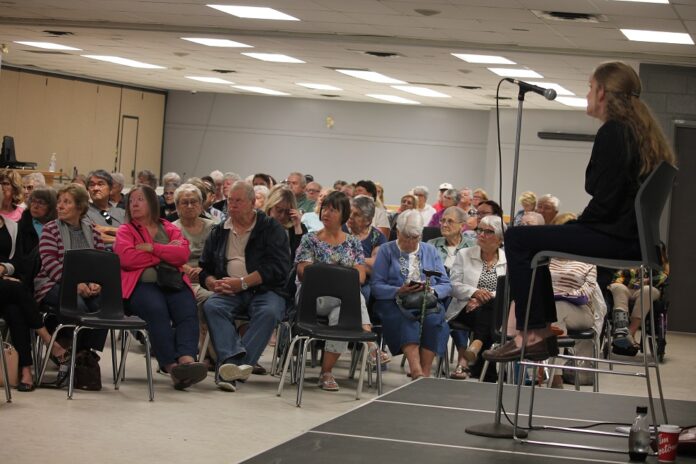
Council heard from multiple speakers. Advocacy group, The Friends of Grass Lake, represented by Carolyn Langdon and Catherine Swift, called on the County to turn down the proposal, saying it would change the landscape of Grass Lake and the surrounding area forever.

Swift noted a petition launched last year to protest the project had garnered more than 900 signatures, although it’s not known how many are local.

Councillors were informed of an ongoing dispute between Wilson and a neighbouring property owner, Dr. Aimee Filion – who owns and operates Haliburton Veterinary Services. Her lawyer, Raj Kehar, said there was concern over the long-term impacts the development would have on her well water quality and quantity. After crews carried out a hydrogeological study on the site last spring, Filion reported seeing water, “coming out of the tap with the consistency of mud” at her business.

Kehar noted Filion had retained Kitchenerbased hydrogeology group MTE to carry out further testing at the site. He asked council to consider deferring the proposal until after MTE has completed its work. Kehar further noted that, during their preliminary investigation, MTE had found nine potential issues with the Grass Lake proposal – though most surrounded a lack of technical analysis that Anthony Usher, Wilson’s lawyer, previously told The Highlander would be completed after the official plan amendment has been granted.

Kehar noted Filion wasn’t against the project, but wanted to make sure it wouldn’t negatively impact her business.

Coun. Murray Fearrey suggested deferring for a month, until March 22, to give Wilson and Filion time to work out their issues, and his fellow councillors a chance to properly review the proposal.

Waiting until last to offer her thoughts, warden Liz Danielsen said she had some “serious concerns” about the impact the project could have on the surrounding wetlands, though was conflicted as it would bring much-needed new housing inventory to the Highlands.

Usher was confident of striking a deal with Filion, while maintaining the issues brought forth by the Friends group and some councillors regarding impacts to wetlands and water quality of Grass Lake had already been addressed through months-long correspondence with Dysart et al staffers.

“I’m not going to speak to some of the things… brought forward today, as that information is included [in Harburn Holdings’ application package]… if we are able to have some direct dialogue between [Wilson and Filion], we should be able to make progress quickly. I think both sides seem to be committed to trying to resolve this and go down a path that, if it isn’t the same yet, it’s at least parallel,” Usher said.

Minden man leads quake response

0

Minden’s Jacques Larroude was on the fourth floor of an apartment building in Gaziantep, Turkey when a major earthquake struck on Feb. 6.

Working with CARE International, the wake up was “violent and unprecedented.

“It was terrifying, especially as it lasted between 60 and 80 seconds, but felt like an eternity,” Larroude told The Highlander.

He was “wobbly” as he got up and stood under his bedroom door frame to avoid ceiling debris, something he had been taught 13 years earlier when responding to the 2010 Haiti earthquake.

“It felt like the end of the world and I was expecting the building to collapse at any moment, but it held, and turns out, with little to no damage.”

Last September, Larroude was hired as a change management consultant by CARE Turkey to design and implement a transition plan for CARE’s area office in Syria. He was based in Gaziantep, with frequent trips to northwestern Syria.

His contract finished Feb. 4, and he was booked to fly out Feb. 5. But as fate would have it, a snowstorm cancelled his flight. He was rebooked for Feb. 7. He didn’t mind, as he planned to use the extra days for sightseeing and shopping for souvenirs. “And then, Feb. 6, 4:17 a.m. came,” he said.

Larroude is no stranger to disaster. He’s made a career as a humanitarian aid worker. More recently, in 2016 until the end of 2017, he was the emergency response coordinator (region of the Americas) for a German INGO, deployed regularly to the U.S.A., Haiti, Mexico, Colombia and Ecuador, responding to disasters there. From December 2017 until July 2022, he was managing CARE International’s humanitarian rapid response team.

Twenty-three years experience in hardship response

Although his contract with CARE ended Feb 4, he contacted his ex-manager on the day of the earthquake and offered to extend his services for a month. She accepted and put him in charge of the CARE response as Turkey earthquake response coordinator.

He’s been working 18 hour days ever since the quake that has claimed nearly 50,000 lives in Turkey and Syria, and caused large aftershocks Feb. 20.

While leading logistics, he noted about 90 per cent of staff were unable to work the first day as they were caring for their families and seeking safety.

Some of the things he has been doing include drawing up a scale up plan and calling for external assistance to the CARE regional office and headquarters; writing proposals and concept notes and submitting them to institutional donors for funding to be released for immediate response; using the emergency funds allocated; starting the local procurement process of relief items and services to distribute in response to the disaster according to needs; coordinating with the authorities and other agencies there (INGOs, U.N., Red Cross) to avoid confusion, overlaps and gaps; reporting daily through situation reports; “and much much more.”

Larroude said he is coping well as he was not located in the worst of the destruction.

“Also, I have 23 years of experience in hardship responses both for man-made and natural disasters,” he said. This has included the Democratic Republic of the Congo in 2000 and 2003, the Pakistan-Afghanistan border in 2001-2002, the Iraqi invasion in 2003, Myanmar in 2004, the North Sumatra tsunami in 2005, the Haiti earthquake in 2010, Mali in 2014, and the Ecuador earthquake in 2016, among others.

“My colleagues on the other hand have had a hard time because this is their home and where family and friends live, so they don’t have that luxury of emotional detachment that I benefit from, and am trained for like any first responder, so I avoid psychological damage.

“They are torn between their instinct to respond and their priorities to their families. Many have lost family members, friends, property or the ability to go back to their homes as they are either damaged or the utilities have been cut. Their children are badly shaken and scared to go back home, and so are the adults. The psychological trauma is very real and palpable.”

He is currently in Hatay on an assessment mission.

If all goes according to plan, he will finish March 3 and fly to Amsterdam to meet up with his wife, Wil Andrea, for the rest of the month. “And recuperate. I’ll need it.” He will also visit his mom in France for a few days and then fly back to Canada April 1.

Community vision starts now

0

Watching consultants tell County councillors what they should do with their paramedic service over the next 10 years was an eye-opener last week.

I knew the County was growing. The 2021 Census pegged that expansion at just under 14 per cent. I also knew that the Highlands was old. However, I didn’t know that it is projected to be the oldest County in Ontario by 2046. We’re well on our way now.

It got me thinking about all aspects of our community as we continue to have more newcomers who are getting older. Has anyone planned for that over the next 10, 20, 30, 40 or 50 years and beyond?

There is a lot of talk, but not much action. For example, there have been copious discussions about housing, but very few shovels in the ground. There has been discussion about public transportation, but as recently as this month, it’s been nixed. There is endless chatter about worker shortages but nothing concrete to address that problem.

I started to wonder about other towns and cities. While it is very difficult to find apples to apples comparisons, I had a look at the Elliot Lake Retirement Living website. Let’s start with that very concept, shall we? There is no Haliburton County Retirement Living website.

When the Elliot Lakes uranium mines were slated for closure in 1996, some in the town began to plan for the future and that future was retirement living. Unlike Haliburton County, Elliot Lake was blessed with an abundance of mining homes left by miners. If only we had the housing stock they did and still do. It allows one-bedroom apartments to be rented for as little as $705-a-month up to a three-bedroom house for $1,200-a-month. Imagine.

Let’s look at health care. Elliot Lake has a complete continuum of care, from acute hospital care to assisted living and home care services. They have not only doctors, but surgeons. St. Joseph’s Hospital has 54 beds. They do surgery and deliver babies. They host specialists’ clinics. They even have a portable MRI machine.

The community has an excellent local public transit system. Bus service is provided throughout the city at very reasonable prices. However, to their favour, 95 per cent of Elliot Lake’s residents are within five minutes’ walking distance of a bus stop.

So, Elliot Lake had a community with a problem – its main industry was closing – and found a solution so it would not become a ghost town.
Here in Haliburton County, if we don’t have a vision of a healthy, resilient community in mind, we won’t know how to plan for it.

The first question is, do we want to continue to grow, and to get older, or are we happy with where we are at now? If the answer is stand pat, then we don’t have to trouble ourselves with building oodles of housing stock. Let’s just concentrate on ensuring we have the infrastructure to support the people we have now, and into our decidedly grey future. In which case, the answer is some sort of worker housing.

Then, we can talk about things such as better health care, and maybe even public transit.

If our vision is continued growth, then the planning becomes a whole lot more complicated.

Undeniably, this visioning should have started long before now and time is of the essence. It is imperative we begin now, today, to determine what kind of a community we want to be – and plan accordingly – or be left a skeleton of our former selves.

It’s time to work together

0

It’s not often I find myself at a loss for words during an interview.

A couple of weeks back, I had a Zoom call with Tom Regehr to discuss the work he is doing in the County through his new movement Voice Haliburton. Launched in tandem with a small working group committed to addressing issues surrounding homelessness, mental health and substance abuse in the Highlands, Voice is designed to show some of the community’s most disassociated and disenfranchised people there is a way back from a life of despair and addiction.

I sat for an hour as Regehr outlined his vision, explained his working methods, and went into detail on the circumstances and situations that led him down this path. He spent years in the late 80s and early 90s living on the streets in Brampton and Toronto, addicted to alcohol and a myriad of other substances (see last week’s edition for the full story).

While his story wasn’t unlike others I’ve heard before, I was impressed by the way he was able to not only bring himself back from the brink but launch a successful career advocating for people just like him.

He’s made a difference in just about every community he’s worked in. He got things started here this week, holding an inaugural Voice meeting in Haliburton Feb. 8. Another is scheduled for tonight in Minden. A third will be held via Zoom Feb. 13. He plans to run sessions every two weeks for the foreseeable future, bringing people together in a non-judgement, supportive setting to help them collectively work through their issues.

The more I thought about Tom, Voice and the working group, which features representatives from Point in Time, SIRCH, the Haliburton Highlands Chamber of Commerce, and the Haliburton County Public Library, the more I realized the current system we have in place to deal with these concerns is broken.

Most supports and programs today are funded by the province. Maybe it’s time that we saw our lower-tier governments take more of an interest in this kind of work.

I was chatting with a local the other day about a recent story I wrote on Dysart’s 2023 budget. He queried why I hadn’t broken down and provided further analysis on some of the key numbers included. He focused on the $20,501 the township is planning to spend on social and family services this year, saying that was shamefully low when compared to the $2.9 million earmarked for recreation and culture.

And to be honest, he’s right.

While it’s not in a municipality’s mandate to provide the kind of mental health and addiction supports Regehr is focusing on, all our lower-tier councils should be concerned with, and trying to find solutions, for this kind of thing.

It’s not easy work, and there’s no quick fix. It takes time and care to help someone turn their life around.

Credit to Regehr and the Haliburton Mental Health and Substance Use Working Group for recognizing this and guiding people on those first steps towards possible redemption.

It’s hoped our municipal leaders follow suit and get involved too.