

Home Blog Page 151

Aging well committee now retired

0

After 15 years of advocating for seniors’ issues across the Highlands, the Aging Well Haliburton County volunteer committee has ceased operations.

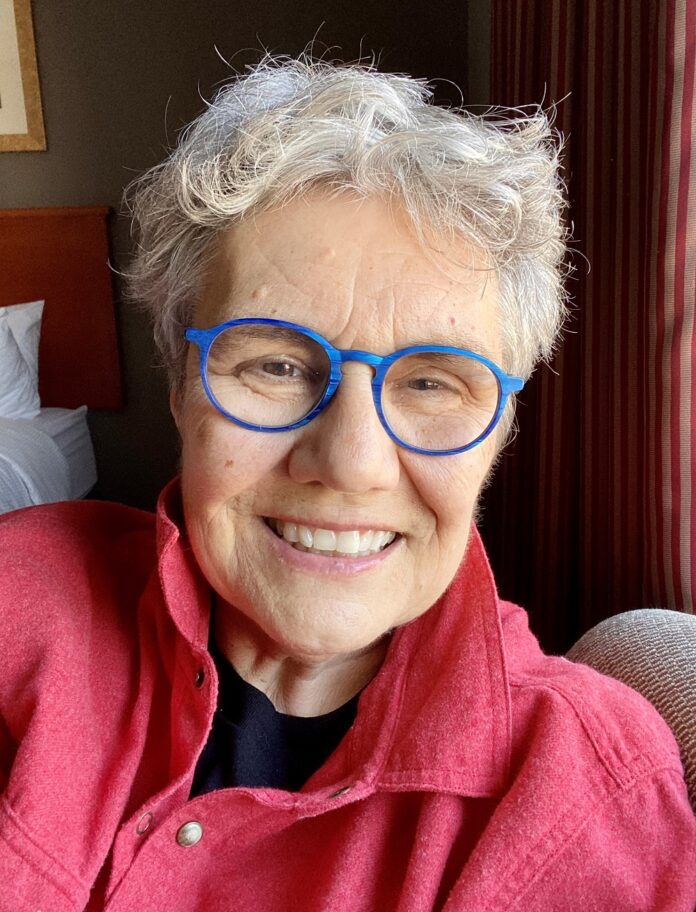
The organization has struggled to attract new members in recent years, forcing the executive into a decision it didn’t want to make, says long-time volunteer Margery Cartwright.

“It’s been a struggle these past few years. Through the pandemic, we’ve been down to five or six members. We knew this was coming unless we could find some new people to join, who could bring some fresh ideas to the table,” Cartwright said. “We’re hoping the fire will go on elsewhere now, for someone else to pick up the baton.”

Aging Well Haliburton County was formed in 2008, and was initially a collaboration between the Haliburton, Kawartha, Pine Ridge (HKPR) district health unit and the Haliburton Highlands Family Health Team. Its mandate was to tackle fall prevention in the community, but quickly morphed to include a slew of senior-related issues.

Cartwright joined in 2009, shortly after the group published a community survey looking for feedback on local issues that needed to be addressed. Even back then, a lack of housing was identified as a primary concern.

The organization made connections with non-profit Places for People (P4P) to see what work could be done collaboratively to boost the Highlands’ housing supply. The two groups joined forces to host a housing forum in Minden in 2018, which Cartwright believes was a success.

Because of that connection, Aging Well decided to donate the remaining balance of its bank account, almost $1,000, to P4P to assist with ongoing housing projects. President Jody Curry said the money would likely be used to pay off some of the organization’s debt.

The money was originally earmarked for a retirement workshop Aging Well was planning to host in the fall of 2020, but the event had to be cancelled due to the COVID19 pandemic.

Heather May has been an active member since 2009, telling The Highlander the organization led various educational and fundraising campaigns over the years, helping to bring money in to pay for outdoor rest benches in downtown Haliburton, encouraging organizations like LifeLabs to install automatic doors, and advocating for ‘stop the gap ramps’ and ‘assistance request’ buttons for downtown businesses.

The group is also responsible for the installation of handrails at the Northern Lights Performing Arts Pavilion, while Cartwright has helped shape new “senior-friendly” policies at the Haliburton County Public Library.

“We had our fingers in so many pies because the pie was broken,” May said. “We did what we could over the years to serve this community, and suggest improvements that would benefit everybody.”

While saying the dissolution of the group was bittersweet, Cartwright felt it was inevitable given the lack of community engagement in recent times.

“The community is moving on. There has been some backsliding with some of the things we’ve done, but I still look back at many, many things with a lot of pride. This community is full of movers and shakers, I have full confidence things will go on, and important issues will continue to be addressed,” she said.

Opioid overdose rates ‘skyrocketing’

0

In July, the health unit reported six suspected drug-related deaths in the County of Haliburton, City of Kawartha Lakes and Northumberland County.

In addition, in the second week of August, on the border of Haliburton County, the HKPR health unit also issued a media release in response to increased drug poisoning activity in the City of the Kawartha Lakes.

Katlin Archibald was in Head Lake Park Aug. 31 as part of international overdose awareness day.

While she could not provide statistics related to Haliburton County directly, she said the Highlands, CKL and Northumberland are part of a trend of skyrocketing global overdose rates in the last 25 years.

In 2020, an estimated 184 million people worldwide had used a drug in the past 12 months, a 26 per cent increase from 2010.

Archibald said the intent of the now annual day is to remember those who have died or suffered due to drug poisonings and overdose.

She added it, “seeks to create a better understanding of overdose, reduce the stigma of drug-related deaths, and create change that reduces the harms associated with drug use.”

Community members were invited to pay their respects and commemorate those lost to drug poisonings.

“By holding an event this year, the people of Haliburton County have joined themselves to a global movement for understanding, compassion and change,” Archibald said.

She added, “we stand together to say that more needs to be done to end drug poisonings in the community. We encourage members of the community to speak up and to stand in solidarity with anyone who has been personally affected by overdose.”

The day came about thanks to Penington Institute, an Australian not-for-profit. This year, for the first time, they announced a campaign theme; recognizing those who go unseen.

The institute said, “we honour the people whose lives have been altered by drug poisonings and overdose. They are the family and friends grieving the loss of a loved one; workers in healthcare, first responders and support services extending strength and compassion; and all the true folks out living on the front line.”

Former HSAD dean off to Loyalist College

0

Sandra Dupret has left Fleming College to become the new senior vice-president, students at Loyalist College.

Dupret started her new role Aug. 28.

She was with Fleming for 17 years, including 12 as dean of the Haliburton School of Art + Design. After that, she worked at all three campuses as a vicepresident of student services.

While maintaining a home in West Guilford on the weekends, Dupret said she is renting in Prince Edward County for work during the week.

“It’s a nice college and the people and community are great,” Dupret said.

She added she made the career shift as she felt it was time for a change.

“I’ve been at Fleming for a long time. Of course, I’ll always have a piece of my heart at the Haliburton campus but it was just time for a change, and it’s an exciting time for Loyalist.

“They have a new president that just started this past spring and he’s got some really great community-focused ideas for the college.

She added the work itself has not changed; other than the way it gets done post-COVID.

“It’s changed for sure but it’s not like I’m learning a new job from scratch.”

She concedes it’s bittersweet.

“The campus in Haliburton is an amazing campus. I know the college is truly invested in keeping the campus here, alive and vibrant. And they’re starting to build a residence, which is a sign of their commitment to continue to offer programming here.”

Dupret added HSAD is lucky to happy Xavier Massé as dean.

“He’s got great experience and is a great people person. He has a design background but is excited to work within the visual arts and craft field as well.”

She said she’ll miss all of the staff at the Haliburton campus, saying they are some of the best people she has ever worked with.

“They’re really invested. It’s not just a job. They really care and they’re members of our community. Those are the fondest memories. But also, the way the community has really invested in Fleming, having a college campus here, donating the land, putting the infrastructure in and now extending those donations so the college can now build a residence.”

Dupret added, “that example of true community and college partnership is something that I think I’ve learned a lot from.”

She looks forward to many more years of great activity and arts happening in the Highlands. She’s looking forward to taking some courses herself.

“I learned so much about how to be a leader that embraces not just your workplace, but the community that surrounds where you work. I’m really looking forward to bringing all that I’ve learned into my new role.”

Loyalist president, Mark Kirkpatrick, said in a communique, “with a passion for fostering a nurturing and inclusive learning environment for all students, Sandra looks forward to working collaboratively across the college to support learners on their journey from application to graduation.”

Food drive supports ‘huge need’ at 4Cs

0

Judy MacDuff, manager of the Haliburton 4Cs food bank, said after a bounce-back year in 2022, demand for service is on the rise again as inflation and high interest rates continue to hit Highlanders where it hurts most.

The food bank served 185 households in May, and MacDuff expects similar numbers for June and July once her reports are completed. That’s unusually high, especially when compared to pre-pandemic levels, she said.

“Normally, during the summertime, our numbers go down quite a bit. This year it hasn’t gone down an awful lot, and we’re starting to see our numbers climb again,” she said. “Before COVID, we used to help about 80 households per month. Now we’re way more than double that.”

Because of the need locally, the 4Cs moved to a twice monthly model. That has substantially driven up food costs, and demand, while bills such as gas and hydro have also creeped up.

“Until now, we’ve been able to get by on donations that come into the food bank, and money raised at the Lily Anne Thrift Store to cover our regular ongoing expenses… Now, with demand going up, we have no choice but to turn [to our community],” MacDuff said.

She was at Todd’s Independent Grocer Sept. 2 to support a food drive organized by Haliburton resident Mark Savin. He partnered with Purolator, his employer, to run ‘fill the truck’ events at Todd’s and Haliburton Foodland Sept. 1 and 2. The event was a “tremendous” success, Savin said, bringing in 4,246 pounds of non-perishable food and $2,104 cash to the 4Cs.

Savin told The Highlander he organized the event after watching a dozen or so people queue in the rain to get into the Haliburton food bank in April.

He reached out to MacDuff to see if she was interested in the event. The answer was unequivocally yes, Savin recalls, so he applied to Purolator to have the food drive sanctioned. The company sent two delivery trucks to Haliburton over the weekend to carry and store the donated food.

Such is the current need, MacDuff and other 4Cs volunteers unpacked donations received on Friday in time for people to stop in on Saturday.

“We had seven clients through on Saturday before noon, which is busy for us… they took some of the stuff we had just stocked home. We’re seeing that a lot now, as soon as something comes in, we’re sending it right back out the door,” MacDuff said.

While Savin is hoping to make this an annual event, he isn’t finished yet. Again, partnering with Purolator, Savin will join volunteers in dropping off red bags at 660 homes in Haliburton village Sept. 23, encouraging locals to fill the bag and then leave it on their porch for pickup Sept. 30. That’s part of a nationwide Purolator Tackles Hunger effort.

“When you hear from Judy how great the need is, we just have to keep going. It’s been overwhelming already seeing the response to this first drive. I’m excited to get out there and do it all over again,” he said.

Treehouse builders have lofty resort plans

0

When Cam Green spent summers at the family cottage on Balsam Lake, he and his friends built tree houses using found materials.

“That was something that was a big part of my childhood,” the co-owner of Fort Treehouse Co. says.

Now, he and wife, Lauren, are embarking upon building a multi-unit treehouse lodge in the Haliburton Highlands.

Minden Hills council approved their rezoning request at an Aug. 31 meeting. The Greens can now apply to build three tree houses around a lobby building that is close to completion. The lodge is on Geeza Road, abutting the Dahl Forest. It will be off-grid, with a propane back-up generator.

“All the sites have been chosen, and we’ve done advanced tree assessments for all the trees we’re building in, so we’ve got everything set up and ready to go,” Cam said. The Greens hope to start construction this fall, with the lodge being slated to open Autumn 2024.

Cam said it is a different concept that will bring great benefits to County tourism.

“It’s unique in that they are tree-supported structures of significant size, which is uncommon, especially in Canada. We’re placing these structures in the forest canopy with special care taken to avoid damaging the natural landscape and ecosystem. Rigging and mechanical advantage pulley systems are used in place of heavy machinery to help protect the trees.

‘You’re in the canopy of trees’

“We can’t risk damaging the roots by using heavy machinery, or anything that might compact the soil. There are some challenges that come with that but finding creative solutions is something we enjoy. We really have to think through how we’re going to get the materials, the building, and the people working on it, safely into the trees.”

Cam added they view the lodge as an access point to everything that Haliburton County has to offer.

Cam moved to the Highlands permanently in 2007, and he and Lauren bought a home in 2011. They’ve since had two children. They completed their first treehouse build in 2020 and have maintained full occupancy ever since.

After moving to Minden Hills, their friends came from the GTA year-round to visit, and in winter were surprised at how much there was to do outdoors. “That really sparked a realization that this is something that could be beneficial to everybody. As much as treehouses are a passion of ours, they’re truly an access point to everything else we have available here. We’re building unique places to stay but from the treehouses you can get out and hike, bike, ski and get onto the lakes.” Cam said.

Two of the units will be one-bedroom, the other twobedroom. Two will be accessed via ramp or bridge and another by spiral staircase. They will range from 15-feet to 40-feet above the forest floor. There is also the 900 sq. ft. ground level lobby building.

Cam said they’re excited about the modern design they’ve developed with architects from Toronto. They’ll feature single story green roofs, with rooftop decks, “so you’ll be right up in the canopy on the open-air deck.” He added that they will incorporate abundant glazing and openness, sunken living rooms and the main viewpoint will offer floor to ceiling windows.

“They are architecturally-fascinating structures. The most unique and exciting component is that you’re in the canopy of the trees, immersed in nature, wholeheartedly. It’s a pretty wild experience. I think people walk away with a feeling of calmness and having had the chance to slow down and relax.”

OPP creating more victims

0

When The Highlander was sent surveillance video of a person saying ‘f*** off, you faggot” to a cottager on Maple Lake, we didn’t think we should take it lightly.

We were told OPP had charged the person, and his wife, with criminal harassment.

We were cognizant it was the result of a long neighbourhood dispute, so ensured the cottager was not made out to be an angel. We reported on how his actions, including development on a shore road allowance he does not own, had upset many people.

Unfortunately, although OPP confirmed a text saying they’d charged a “Ray” and “Katrina,” they would not provide any more information. They would not release the full names, ages, or address, to protect the victim. Yet, it was the victim who came to The Highlander and his name and photo were in the paper. Protecting the identity of the victim was not an issue anymore.

After the story came out, another set of neighbours said we had defamed them because we had not printed the name of the accused. We went back to the OPP to ask them to reconsider, as surely, they did not want to create any more victims due to possible misidentification. Again, they declined, saying they stood behind their mandate of protecting victims of crime. They said they could not control whether victims independently made a decision to identify themselves to the media. We were told we could file a complaint through the Office of the Independent Police Review Director.

Consequently, it was left to The Highlander to get the names.

We contacted OPP media to see if they could tell us what their policy is on releasing names. We’re still waiting for a reply.

However, a quick online search revealed they have stopped giving out names in certain circumstances, such as accident victims. On the surface that seems a reasonable course of action. However, it can lead to misidentification and widespread rumours in communities. Once next of kin are notified, it is still prudent to release names.

Another policy switch appears to be not releasing the gender of people charged with crimes. They’re saying “the individual” or “the accused” instead of gender specific pronouns such as “he” or “she”.

One wonders what’s going on. An Ottawa Human Rights lawyer, who specializes in human rights and policing law, told CBC recently, the OPP seem overly cautious, possibly a result of pre-emptively trying to avoid legal liability. He suggested training officers to understand the human rights code and how to deal with people, as opposed to being overly administrative.

The City of Kawartha Lakes recently had a discussion about not releasing names of anyone carged so as not to stigmatize them.

Chief Mark Mitchell said it’s about balancing priorities. He said police agencies should be open and transparent with the public, which would favour releasing as much information as possible. However, that has to be balanced with the risk of unnecessarily stigmatizing and shaming individuals. He said for him the question is ‘is this a matter of public interest or is the public just interested?”

For example, he said police should say when someone is arrested and charged for impaired driving, but does the public need to know the name? Some would argue they do. It acts as a deterrent to other would-be drunk drivers.

It’s not only the OPP and other police services that struggle with naming. At The Highlander, we have opted more towards not naming. We do this because we cannot possibly follow every court proceeding to see if a person has been convicted – or exonerated – of an offence.

But we believe there are times when local OPP should release names, such as in the Maple Lake case. Another example is, if there is a fatal car accident, and wrong names of victims are circulating on Facebook or in the community, they need to notify next of kin first, and then release the names. Failure to do so simply creates more victims, public confusion and anxiety and is irresponsible.

Our uninhabitable planet

0

PROBLEM:
Despite the 2015 Paris Agreement to limit global warming to 1.5 degrees Celsius above pre-industrial levels, the current trajectory has Earth reaching 2.7 degrees by 2080 (Climate Analytics and NewClimate Institute, 2021).

The eight hottest years recorded are 2015 to 2022. The Lancet reported 489,000 people worldwide died directly from extreme heat in 2019.
Five years ago, climate scientists forewarned parts of the world would become uninhabitable.

North Africa and the Middle East suffer record breaking 47-53 degrees Celsius.

Spain and western Europe forecast 45C this week.

Temperatures in Asia are replicating 2022’s summer when 900 million Chinese suffered temperatures in the 40’s and 50’s for two months, killing crops, drying rivers, causing wildfires, and sending people underground.

In India and Pakistan, extreme heat kills, with 96 deaths in India this June, 46C with severe humidity.

Thirty-one straight days over 110F in Phoenix, Arizona last month; people hospitalized with third degree burns from the sidewalks.

At 4,000 feet in the Andes, South America is currently clocking one of the most extreme heat events: 38.9C in the Chilean Andine winter season.

With every one-tenth degree Celsius warming, another 140 million humans will be outside the “human climate niche” (zone of tolerable temperatures). Currently, nine per cent of humans (> 600 million) live outside this niche (Nature Sustainability, May 2023).

Humans cool down by sweating. Internal body heat is moved to the surface via blood vessels and cooled by sweat evaporating from our skin. The more humid the air, the less our sweat evaporates. Above a wet bulb temperature of 95F (high air temperature and humidity) we can no longer cool by sweating, and body temperatures rise steadily. When humid, air temperatures of 34C can speed heart rate. This cardiovascular strain occurs even before a person’s internal temperature increases.

More than 100 migrants have died from heat this summer along the U.S.-Mexico border. They report 226 rescues for dehydration and heat-related illness in the American Southwest in one week.

On Aug. 1, global sea surface measured 20.96 C, breaking documented records. Marine heatwaves in the UK are five degrees higher than normal. Other marine heatwaves: the North Atlantic (first ever), the Mediterranean and the Gulf of Mexico. Florida sea surface temperature is 38.44 C (normal 23-31C, NOAA).

Additional broken records this summer: the hottest day globally, the two hottest months in human history (June and July), record-low Antarctic sea-ice.

As our planet warms and sea levels rise: the 30 per cent of Americans and the 20 per cent of Canadians living coastally are moving, joining millions of climate refugees globally; melting Arctic permafrost releases dormant viruses; by 2030, Arctic waterways will be navigable, risking North American security.

Heat domes and heat waves increase because the physical boundaries for the jet stream are changing. The jet stream helps circulate warm air from the tropics to the poles and bring cool air from the poles to the tropics. Because the Arctic is warming four times faster than the rest of the planet, the temperature difference between the poles and the tropics is changing, creating “wobbly” jet streams, pushed beyond normal parameters. Climate-related changes to the jet stream could trigger multiple simultaneous extreme weather events, threatening global food security.

“The onset of El Niño will greatly increase the likelihood of breaking temperature records and triggering more extreme heat in many parts of the world and in the ocean.”

Smile because it happened

0

Marching onwards through the fog – more than just a simple, quirky motivational message to Patrick Monaghan; they are words he fully embraced, embodied, and lived his life by.

The charismatic, long-time host of CanoeFM’s weekly Buckslide Blues Cruise show, which aired on Tuesday nights, passed away peacefully at his home July 25. He was 64.

Monaghan had known for some time that the end was coming. Diagnosed with pancreatic cancer in 2019, he eventually learned the disease he was fighting, which later spread to his lungs, was terminal. Rather than allowing that news to consume him, and wallow in self-pity, Patrick used it to keep pushing himself forward. He was never afraid to talk about his journey, or his eventual destination. But he also wasn’t going to let that ruin the ride, so to speak.

I first met Monaghan in the spring of 2021. He was one of the first people I interviewed in-person in Haliburton, coming out of the second wave of COVID-19 shutdowns. Going in, I was aware of his illness, but wasn’t sure how I was going to bring it up.

We were due to chat about his lengthy tenure on Canoe’s airwaves, and what he considered to be the culmination of five years of work after receiving the award for best Jazz and Blues Programming from the National Campus and Community Radio Association a couple of months earlier.

He took the pressure off right away by saying, with his trademark smile, that his cancer diagnosis had helped him appreciate his successes. He told how, when sitting through gruelling chemo treatments, he’d pass the time by thinking intently about his next interview – the questions he’d ask, how he’d ask them, what he thought his subject might say.

As someone who has conducted well over 1,000 interviews in my time, the one with Patrick still stands out. He had a way of making you feel comfortable, even in potentially uncomfortable situations.

I remember asking him to recall his favourite interview. Expecting to hear a story about an encounter with a Blues megastar, Patrick surprised me when he said, “this one. Right now.” I chuckled, but he was adamant. “I make an effort not to live in the past – every new experience is a gift,” he said.

That was a big teaching moment for me. I left with a bit of a different perspective than when I’d sat down.

Patrick loved his ‘job’ on the radio. He was a true pro and just had a way with people. That’s been the one constant I’ve heard over the past week while talking to those who knew him best. I didn’t have the chance to reconnect before he passed or tell him how much our interview had helped me. I wish I’d taken the time to do so while I could.

Monaghan’s legacy will live on in Haliburton – through the Buckslide Blues Cruise, which station manager, Roxanne Casey, has confirmed will live on, and through his efforts with organizations like the Highlands Buckslide Blues Society.

Dr. Seuss wrote the famous quote, “don’t cry because it’s over, smile because it happened.” I’ll always think of Pat, now, when I hear that.

Just a little respect

0

Every year, when it’s announced there will be a drag queen reading to children at a Haliburton County Public Library there is some form of backlash. Often it is an anonymous comment left on the library’s phone message system.

The Toronto District School Board (TDSB) has garnered criticism for giving parents the option of opting their kids – aged six to 13 – out of a similar event there. While the TDSB decision has been decried by some, one could argue that tolerance is a two-way street. I would counter there is nothing hateful in choosing not to have your child attend drag storytime.

In June, the York Catholic District School Board voted 6-4 against flying the Progress Pride flag outside its headquarters in Aurora. The decision was because the rainbow banner does not align with the Catholic faith.

Unlike the choice to skip drag storytime, this school board decision is a bit whiffier. But is it hate? No, since the school board claimed it would focus its attention on systemic changes to support marginalized students.

Closer to home, there is nothing debateable about a decision by two people who live on Maple Lake to call their neighbour a “fing faggot” on video. It is hateful. We acknowledge the victim of the act is no saint. He has admitted to being at loggerheads with neighbours over property issues since moving to the Highlands in 2020. The disputes have become downright ugly on both sides. The victim has shouted at his neighbours. So, it is not a black and white story of a sainted gay man being attacked by his neighbours. However, those neighbours have crossed a line. Choosing to use the word ‘faggot’ elevates this to something more. Had they chosen to call the man a ‘fing idiot’, it would have passed with a lot less fanfare.

Tolerance. It appears to be something we see less and less of in the Highlands these days. Neighbourhood disputes seem to be much more prevalent; verbal and other threats more common. People want to protect their patch at all cost, regardless of what effect it is having on their neighbours. That is what started something that led to a homophobic slur being hurled.

I acknowledge the Highlands is not alone.

A recent Statistics Canada hate crimes report notes that in 2021 there was a 64 per cent rise in crimes against people identifying as LGBTQ2+. In 2020, Canadian police reported 2,669 criminal acts motivated by hate – the largest number recorded since comparable data became available in 2009. CTV news has reported that, in Ontario, hate crimes based on sexual orientation are up 107 per cent.

The Ontario government is investing up to $2.6 million over two years through the Safer and Vital Communities grant to help cities and towns combat hate-motivated crime.

One way to tackle hate crime locally is to attend – and show support for – Minden Pride celebrations the week of Aug. 21-27. As chair Allan Guinan says in today’s paper, Minden Pride isn’t asking for much – just for its members to be respected and a welcome part of the community.

The laws of nature

0

Earth’s destabilizing climate with escalating extreme weather events is attributed to human behaviour. Carbon dioxide level increases in Earth’s atmosphere appears vertical on graphs since 2022 – now at 420 parts per million. The last time the planet saw 400 ppm C02 was three to four million years ago during the Pliocene period when global sea levels were 10-20 metres higher, and temperatures globally were two to three degrees Celsius higher. But those changes occurred over millions of years, not over two centuries. Scientists are now tracking increasingly faster changes with interconnected cumulative effects at only 1.1-1.2 degrees of global warming.

The warming planet exponentially increases melting (permafrost, Greenland ice sheet, Arctic Sea ice, Antarctica’s Thwaite’s glacier and western ice sheet), droughts, wildfires, floods, and extreme heat on land and in oceans. Sea level rise means even more devastating storm surges.

At a time when humans (and all life forms) are being pummelled by the violence of natural phenomena, we must reframe our relationship with nature. We must stop Ecophobia, “an ethical undervaluing of the natural environment that can result in cataclysmic environmental change.” We must love nature, respect and nurture it.

Respecting our place in the natural world means we “love not man the less, but nature more” (George Byron).

WHAT YOU CAN DO:

  • Reframe your actions from the perspective of frogs, insects, birds, fish, trees, water systems, air.
  • Drive less. Drive slower. Mow less. Eat less meat. Grow more fruits and vegetables. Waste less. Buy less. Consume less. Toss out less. Fix more. Share more. Grow more flowers and trees. Compost. Avoid pesticides and herbicides. Buy local.
  • Allowing your lawn to grow for at least one full month can provide enough nectar for 10 times the number of bees and pollinators than does a regularly cut lawn, and provides insects, frogs, and snakes their habitats, plus conserves water. Use native drought resistant plants and you will enjoy a colourful landscape. Birds also benefit from less noise and gas pollution.
  • See the Haliburton County Master Gardeners website for ideas to naturalize your garden. Abbey Gardens offers gardening and ecology-based workshops with a sustainable and reclaimable focus.
  • Be sure to use rainwater and gray water.
  • Build bird boxes and bird baths. Protect birds from hitting your windows. Vertical blinds work. Draw vertical lines with a bar of soap or hang ribbons.
  • Support the Haliburton Apple Tree Identification Project, SIRCH Apple Sauce Project, U-Links and Master Gardeners Heritage Apple Project.
  • Support local farmers markets (Haliburton, Minden, Stanhope, Abbey Gardens).
  • Try the Fork Ranger App to learn the environmental impact of your food choices from seed to table.
  • Try indoor tower gardens (see Minden Mercantile options), smart gardens and garden kits.
  • Get political. Push for local public transportation. Send messages to our members of parliament urging rapid phase out of oil and gas.
  • Use the Haliburton County Waste Wizard App and follow reuse, reduce, recycle practices.
  • Choose sustainable products or eco-friendly products having cradle to a grave approach.

    Simple actions to protect mother Earth include buying local and seasonal produce, closing curtains on hot days, surrounding your home with native greenery, turning off all electrical appliances instead of putting them on standby when not in use, using carpools whenever possible and avoiding plastic bags.