

Home Blog Page 437

Donald chemical building partnership breaks down

0
Joseph Quigley

The future of the historic Donald chemical building is now in doubt with the non-profit co-operative trying to restore it contemplating litigation against the structure’s owner.  

The partnership between a local co-op and owner Jim O’Connor is no more.

After the co-op invested more than $90,000 in grant funding and donations to help restore the building, the planned lifetime lease of the property to the group never came to pass.  

Co-op member, The Land Between, received a legal opinion on a potential lawsuit May 29.

Co-founder of The Land Between, Leora Berman, who has also managed the project for the co-op, said legal action would be a last resort.  

“I’m hoping Jim sees the light. Sees the importance of the building,” Berman said. “No one will fund a private individual for their personal gain. It should be in public hands.”  

The Highlander reached out repeatedly to O’Connor. He declined an interview and did not provide any answers to a submitted list of questions. He instead said to refer to a story published in the June 18 edition of The Haliburton Echo. 

The only comment from O’Connor in the story was indirect, and stated: “O’Connor said as the owner of the building, he wanted to move forward with the restoration and was working on it himself now.”  

The partnership between the co-op and O’Connor began in 2010.

With the structure decaying, Berman gathered organizations out of a desire to preserve the historic building.

It is the last remaining from the Standard Chemical Company Plant, at one time the largest producer of iron coke in North America.  

The informal co-op, which also included the Haliburton Highlands Outdoors Association (HHOA), the Haliburton Highlands Stewardship Council, the Architectural Conservancy of Ontario (ACO) and the Canadian Industrial Heritage Centre, signed a memorandum of understanding with O’Connor.

The lease agreement stated that once the Donald Innovation Centre Cooperative had been created, a “life-time lease” would be drafted and come into place. 

 About $92,000 was invested by the co-op towards the initiative, according to Berman. She planned to utilize the space as a marketing hub for the local construction sector.  

After the co-op formally came into being in March 2015, Berman said she tried repeatedly to get a new contract signed.

But nothing had been settled by the time the original agreement expired in July 2015.  

“He had indicated to me he felt the property was valuable,” Berman said. “That’s why the tide seemed to turn.” 

 Between 2010-2013, the co-op invested grant funding to stabilize the building, which had major portions of its roof leaking and collapsing.

In 2013, it was deemed safe and secure, according to Berman.  

Conflict over work done 

Berman said O’Connor did irreparable damage to the facility when he renovated it for use as part of a private storage business.  

“We still thought there was hope until we saw the building,” Berman said. “We realized the brick was destroyed, the rust was not removed and the concrete did not match.”  

The legal opinion from Lindsay’s Whitford and Nagel Associates states it is unlikely a lawsuit based on breach of contract would succeed, given the previous agreement expired in 2015 and lacked in some details.  

However, the opinion said a case for unjust enrichment would have more merit.  

“As a result of the actions by DIPC (Donald Innovation Project Collaborative), the owner has benefited in that the building is now structurally safe and secure which should result in a direct increase in property value,” Garth Lee Whitford wrote. “The court would be sympathetic to your plight and would not want the owner to benefit from public funds that were intended for an entirely different purpose.”  

None of the claims made by Berman or Whitford have been tested in court. HHOA president Eric Christensen said they are trusting Berman to handle the situation. 

 “We are very disappointed that the owner has gone back on his verbal and written agreements.,” Christensen said. 

ACO chief operating officer William Coukell said although they still support the co-op, they have “not had any direct connection to this particular site in a long time.”  

But any legal effort against O’Connor will need consultation with stakeholders, Berman said. She added a new public fundraising campaign would be necessary to pay for it. 

 “This is too important a building to give up hope on. I wouldn’t still be here if this building wasn’t that important,” she said. 

County progresses on merger talks

0
Joseph Quigley

The County of Haliburton is edging toward a process to decide whether to amalgamate its lower-tier townships. 

Council had a lengthy debate on the matter during its June 26 meeting. Councillors voted to have Haliburton’s chief administrative officer draft a report outlining a process to follow should council proceed with a governance model review.  

Coun. Brent Devolin called the dialogue a watershed moment. 

 “This discussion we’re going to have, for the balance of this term, for all councils,” he said. “This is the biggest thing.” 

 Talk began with a staff report highlighting the current county-wide municipal collaborations and where more could be done.

But the report went largely undiscussed to focus on the bigger-picture issue.  Coun. Carol Moffatt said in a February discussion, no county council member indicated they were “married” to any specific outcome on the amalgamation debate. 

She said although hard facts about efficiencies and funding are important to the discussion, so too is community identity. 

 “While they are critically important to our existence and our growth, equally important is what we could gain and what we could lose as communities,” Moffatt said. 

 Warden Liz Danielsen agreed but noted that idea got shot down at a Haliburton Highlands Chamber of Commerce breakfast in May. 

 “The assumption by the public is that we’re going to save money if we move toward amalgamation,” Danielsen said. “I don’t see any evidence that that’s the case and I think we’d have to have that evidence before we move too much further.”  

However, Devolin said there is need for structural change. He highlighted the struggle to fill staff positions across all five municipalities.  

“Not sure going forward we can continue to populate those positions with four or five of a particular skill set,” Devolin said. “We’re going to hit a wall.” 

He added asset management would also require significant change, given the number of similar facilities across the five municipalities. C

AO Mike Rutter said it would make sense to leave the discussion on collaborations until governance is decided on.

He added there is a reason not to wait to pursue an answer.  

“The longer these questions drag on, the more difficult it will be to attract or maintain staff,” Rutter said. “If someone doesn’t know if they’re going to have a job in a year or two years, why would they leave their job to come here?” 

Council also discussed preparing an RFP for a governance review and seeking qualified third-parties for guidance on how the process should go.  

Moffatt said she does not expect job losses with amalgamation, other than CAO positions. She added it was good to make progress on the topic. 

 “This is a great discussion, I’m pleased to have it and I think it’s exciting,” she said.

HCSA: Sledders spent $29 million last winter

0
Joseph Quigley

The Haliburton County Snowmobile Association (HCSA) is pushing to make the area more snowmobile-friendly by highlighting its multimillion-dollar contribution to the economy. 

 The Ontario Federation of Snowmobile Clubs (OFSC) released a new economic impact study June 13, its first in five years. Based on the report’s data, the HCSA is estimating that snowmobilers spent approximately $28.843 million in Haliburton in the 2018-19 season, contributing a total of $8.276 million in taxes across all government levels. 

 HCSA director of community relations John Enright said it is an important indicator for snowmobiling in the county and a reason why the tourism sector needs to support it.

 “The tourism industry here should bear down and focus on this as the top outdoor experience in this county because of the huge dollars snowmobilers deliver,” Enright said.  

County of Haliburton director of tourism Amanda Virtanen complimented the work of the HCSA and its economic impact.  

“The amount of work that the Haliburton County Snowmobile Association does to ensure that visitors and residents have some of the best sledding in Ontario, is pretty incredible,” Virtanen said.  

She added establishments do cater to the snowmobile community and the county is working on a special section of its tourism website dedicated to snowmobile promotion.  

The HCSA figures are based on the OFSC’s district statistics. In District 6, made up of 14 clubs including Haliburton, snowmobiling visitors spent approximately $99.458 million and contributed $28.5 million in taxes.

HCSA’s stats for Haliburton County are 29 per cent of those figures, based on the HCSA having 29 per cent of the total snowmobile club memberships in the district. 

It is not an exact calculation. Enright said the club suspects the HCSA figures may actually undersell snowmobiling in Haliburton.

Regardless, Enright said the club plans to present these numbers to area municipal councils to show why they should introduce more snowmobile-friendly initiatives, such as staging areas. 

 “Staging areas are desperately needed,” Enright said. “That would do so much for us.”  

Across the province, snowmobilers contributed $842 million in expenditures in the 2018-19 season, amounting to $403 million in direct GDP.

District 6 also ranked as the most visited region by snowmobilers this season, capturing 11.8 per cent of total trips. 

 “From job creation to taxation revenue to keeping a small business open all winter, snowmobilers certainly contribute across the board,” OFSC chief executive offer Ryan Eickmeier said.  

Enright said the club has a good relationship with all County of Haliburton municipalities. But he said more could be done to improve snowmobiling promotion without costing many dollars.

This study is a way to help deliver that, Enright said.  

“We’re going to share this far and wide and tell our story to anyone who wants to listen,” he said.

Turtle project shell-ebrates global success

0
Files

What started as a Haliburton Highlands Land Trust project has now gone global.  

Sheila Ziman, a Land Trust member who helped recruit people for the Turtle Project, said it has received a lot of attention from other countries.  

“Paul Heaven, the Haliburton Highlands Land Trust’s project biologist, was contacted by an ecologist working with the U.S. Department of Interior’s International Technical Assistance Program,” a newsletter sent out by the Land Trust said. “He asked Paul for permission to present our project as a case study at a workshop entitled, ‘Highway Crossings for Wildlife’.”  

The workshop took place in Thailand at the end of May and discussed the rapid development of The Delta and surrounding areas and included ministries from Vietnam, Laos, Cambodia and Burma.  

In addition, Montana State University has asked to use the initiative’s data collecting methods. And, most recently, an ecologist from Quebec has requested to build the Haliburton-designed barrier wall.  

The three-year Turtle Project started in 2015 with the hope of reducing turtle road mortality.

According to Ziman, there were more than 100 volunteers and 1,000 hours involved in the project.  In the first year, the Land Trust chose eight monitoring sites based on previously collected data about turtles in the area.

For the months of May and June, volunteers walked the one km routes, for eight hours a day, seven days a week keeping track of the number of turtles that crossed the road and cars that drove by.  

“I think there’s so many people who care very deeply for the environment, that’s why they’re here,” said Ziman. “I corralled a lot of my friends to do it and they all said they were so happy to help because they felt they were making a difference.”  

In 2016, a barrier wall was designed by Heaven to direct turtles under and through a culvert instead of over the road.

It was installed on Gelert Road and monitored through 2017 to see if it would work.  

“So, this was the first one (turtle barrier) that people got really excited about because it wasn’t that expensive, it was very robust and it was doable and it worked,” said Ziman. We proved that where the wall was, no turtles got onto the road.”

Dysart takes on winter plowing in Harcourt

0
Joseph Quigley

Dysart et al is officially taking over winter maintenance in Harcourt township despite some uncertainty about the cost of the change.  

Council decided on the shift during its June 25 meeting. They approved purchasing a new heavy-duty snow plow costing an estimated $265,000 and hiring a new staff person at approximately $73,880 per year to handle additional landfill maintenance and Harcourt road maintenance.

The Harcourt winter maintenance was previously handled by a contractor, but uncertainty in their continuation prompted staff to recommend the change.  

Staff expect this will result in a service level increase in Harcourt. 

 “Having the work done properly, done to our level of service, should be the first priority,” Mayor Andrea Roberts said.  

Director of public works Rob Camelon presented a cost analysis for the shift. He estimated it would cost the municipality $71,101 to do the work, compared to the $82,186 paid to the contractor last winter.  

The gap does not take into account the additional level of service, with the previous contractor out 16 operational days less compared to the rest of the municipal fleet.

Were the contractor to meet municipal standards, it would have cost the municipality at least $107,474.  

The municipally-estimated costs do not factor in the capital expense of a truck, which costs $15,200 per five-and-a-half month winter season, amortized over eight years.

 Coun. John Smith questioned the figures and whether they properly factored in things like fuel and insurance.  

“I’m not opposed to service level adjustment, but if we make those decisions without understanding the costs, I think we’re not doing the job,” he said. 

 Council pushed back and said Smith’s calculations were off and the staff numbers did factor in truck operational costs.  

Roberts said regardless of the contractor’s old cost, if they cannot take on the contract again, the municipality would be hard pressed to find a replacement. 

 “If we put out an RFP, we’d get someone from Bancroft and it’d be expensive,” she said.  

Deputy mayor Patrick Kennedy said even though the cost was disagreed on, the municipality should provide residents with a similar level of service.  

“I don’t feel the people of Ward 3 need to be treated any less than the people of Kennisis Lake when we took that (winter maintenance) in-house or anybody else in the municipality,” Kennedy said.

Red Hawks honour soaring athletes at banquet

0
Joseph Quigley

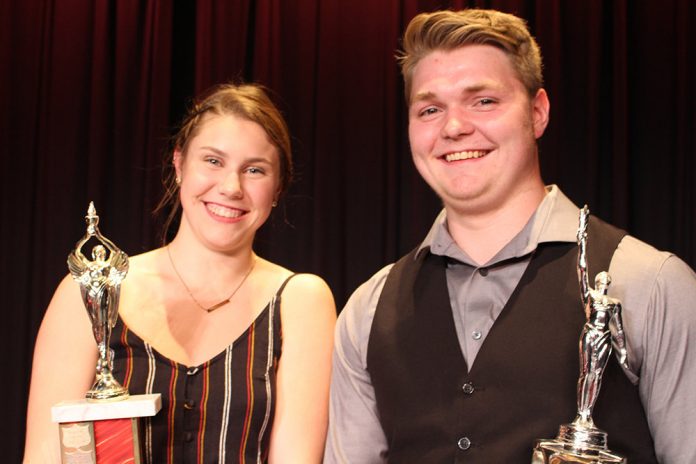
The Haliburton Highlands Secondary School athletic banquet was a crowning night for Natalya Gimon after a winning school sporting career.  

Gimon was named 2019 female athlete of the year at the 41st annual event June 12. The school celebrated her and dozens of other athletes at the awards ceremony.  

Her volleyball coach and father Dan Gimon embraced her after talking about her leading the team to COSSA silver.   

“It has been an amazing four years,” the younger Gimon, who also competed in soccer and badminton, said. “Sport is such a big part of our lives and it makes high school for me. I don’t know what I’d be doing if I didn’t have sports.”  

The male athlete of the year is Aidan Coles, who competed in football and capped off a decorated high school wrestling career with a fifth-place finish at provincials.

Coles said he felt honoured to have his wrestling coach Paul Klose praise him and his career. 

 He credited his teammates for helping him succeed.

“Ultimately, it comes down to the people you’re practicing and playing with. Nothing accomplished this year, or any year, would have been possible without my teammates,” Coles said.  

Teacher and coach Janice Scheffee reflected positively about the year. She highlighted the school’s 21 sports teams, who collectively won five Kawartha titles, two COSSA championships, in boys curling and junior girls soccer, three individual COSSA gold medals in wrestling and two fifth place finishes at provincials, including Coles and boys curling.  

“Way to go, Haliburton,” Scheffee said. “We may be a small school but we sure are mighty.”  

Both Coles and Gimon have plans to continue their sporting in university, Coles in football and Gimon in volleyball.  

Gimon said she is unsure of the legacy she has left at HHSS. But she said was glad to help other athletes in her time at school.  

“I hope other people see opportunities in what I’ve done, like going for club volleyball,” Gimon said. “I really hope others reach out for that opportunity.”


OTHER WINNERS:


Minor Athletic Award: Emma Casey, Tyson Clements, Nicole Cox, Desi Davies, Jacob Dobson, Nik Dollo, Owen Gilbert, Brian Kim, Alex Little, Caden Little, Isaac Little, Maya Meraw, Chloe Samson, Nigel Smith and Owen Smith.  

Major Athletic Award: Aidan Coles, Coleman Heaven, Freya Moran, Carson Sisson and Shawn Walker.  

Award of Excellence: Natalya Gimon, Arden Harrop, Liam Little and Dakota MacDonald. 

OPP investigate boating death

0

Haliburton Highlands OPP is investigating the death of an Oshawa man who was found at McCaslim Lake after his boat capsized June 22.

OPP said in a press release three friends were fishing in an aluminum boat on the lake. Although two were able to grab onto life-jackets floating on the water after the capsize, the third disappeared under the water. The Underwater Search and Recovery Unit recovered his body the next day.

OPP central region media relations Sgt. J.T. Folz said police are awaiting a coroner’s report and toxicology results.

“As with any collision or marine incident, we’re looking at the totality of maybe who was operating the boat at the time, who was in charge of the boat at the time,” Folz said. “Toxicology results will tell us if there was alcohol in the system. Maybe alcohol was a factor. We’re not sure at this time.”

Police have identified the deceased as the 36-year-old Jeffrey Daniel St-Cyr.

The boat did have proper safety equipment on board, OPP said. But none of the people involved were wearing a life jacket as the boat overturned.

Folz said it is important people take proper safety precautions on the water.

“If you’re out boating, then it’s appropriate you wear your life jacket. Much like the seatbelt in a car, you can’t anticipate the crash and put your seatbelt on before it happens. It’s the same with boating,” Folz said. “It might have saved a life in this case.”

Short-term rental survey on the way

0
Joseph Quigley

Highlands East residents will soon have their chance to give their input on the future direction of short-term rentals through a new publicly-scrutinized survey.  

Council went through a draft version of a short-term rentals survey during its June 11 meeting.

It also reviewed the 26 public feedback responses it received about the draft survey. However, council directed staff to maintain most of the 23 draft questions.  

Coun. Cam McKenzie commented on how repetitious some of the feedback was, ranging from concerns about the tone of the questions to a desire to have a neutral third-party conduct the survey.  

“Seems to be the majority of them had the same points, which I thought kind of surprising,” McKenzie said.  

The questionnaire is for feedback about the impact of short-term rentals and whether people are in favour of the municipality regulating them.

Although council agreed with some public suggestions, such as adding comment boxes to more questions, they did not act on many of them.  

The survey asks residents to provide their address. People provided feedback that the survey should be kept more anonymous.

However, council agreed with CAO Shannon Hunter’s justification that the municipality should avoid the risk of duplication.  

“It was felt that if someone filled in a survey and provided their address, then you would not be able to skew the response by having one person fill in multiple surveys,” Hunter said. 

 Public feedback also raised concern about questions being framed too negatively toward owners who rent out their properties. A long list of publicly-suggested questions was also brought forward, but the majority were not considered.

The questions touch on a number of proposals to regulate short-term rentals, including making them a permitted use in all residential zones, regulating a separation distance between short-term rentals and regulating the maximum number of occupants a short-term rental could have.  

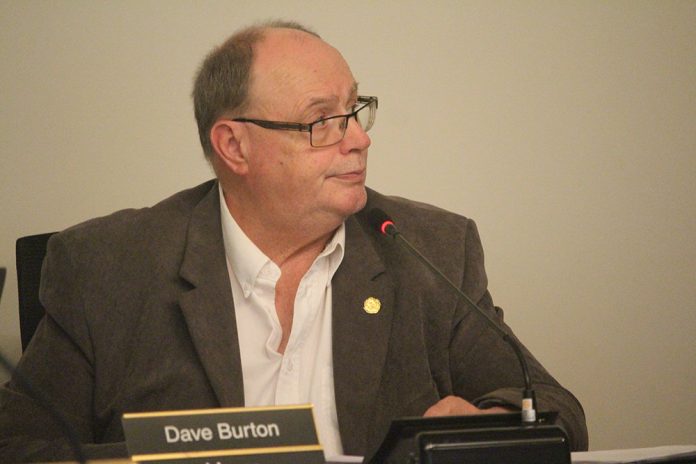
McKenzie questioned a number of the regulatory ideas within the survey and how practical they might be to enforce.  But deputy Mayor Cec Ryall replied they need to separate the survey from drafting a bylaw.  

“This is not to determine the overall framework or content of the bylaw itself,” Ryall said. “We need to find what people who we’re working with believe is important.”  

The township will issue information on the survey in this year’s tax notices.

Staff plan to have it be primarily online, which Hunter said would save thousands of dollars compared to a paper survey. Those without computer access are to contact the municipal office to have a paper copy mailed to them.

Highland Wood families say move hard on loved ones

0
Joseph Quigley

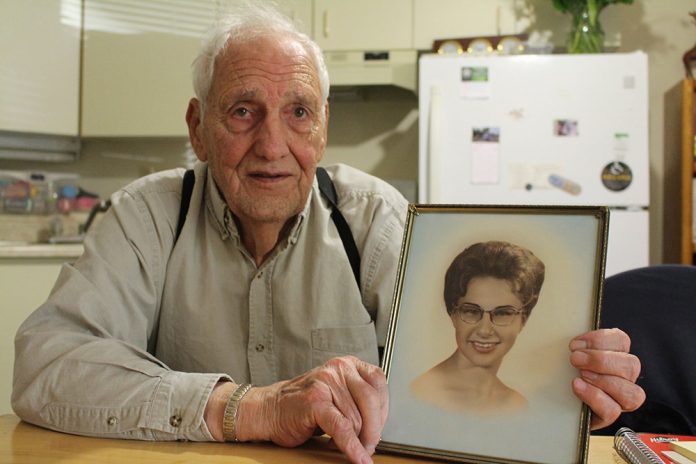
Alan Bangay is busy managing the affairs of his late wife Ute, who died May 24.  Ute, 74, lived at Highland Wood Long-Term Care but had to move out when the building’s roof failed four months ago.

Many Highland Wood residents started returning to the facility June 3 but Ute and at least one other person won’t be coming back.  

Bangay said moving was arduous for Ute. He described her changing locations four times in a three-week span, each move wearing her down.

She came down with pneumonia and passed away soon afterward, he said.  

“I can’t prove that the moves, they of themselves, caused her to die. I can’t prove that. But I think it had a strong influence on her ability to stay with us,” he told The Highlander. 

Haliburton Highlands Health Services (HHHS) vice president of support services and chief financial officer Kathy Newton said the organization does everything it can to support families during difficult times. But she added that long-term care residents passing away in a four-month timeframe is not abnormal.  

“It’s a normal fact of life with our particular population,” Newton said. “That’s not unheard of.”  

She added she could not comment on individual circumstances but family members know their relatives best.  

“Common sense would tell you any kind of change, some people deal with change well and some people don’t,” she said.  

Highland Wood Family Council acting chair Terry Hartwick also lost her mother during Highland Wood’s closure.

Ethel Marinelli, 89, passed away at Peterborough’s Riverview Manor April 22 after a respiratory infection aggravated her interstitial lung disease.  

Hartwick said Marinelli received excellent care there but the move was still hard on her.  

“It was a difficult thing for my mom. It was sudden, it was disruptive,” Hartwick said. “Because my mom had a stroke (before moving to Highland Wood), routines and familiarity of place and people, they were pretty important in helping her feel comfortable and safe.”  

Hartwick did not fault the move as contributing to her mother’s death. But she stressed the importance of keeping things steady for long-term care residents.  

“She was fairly well up there in age,” she said. “For elderly people, these kind of moves are a difficult thing … we have to remember that these are homes for these people and we need to keep them as stable as we can.” 

Expert talks about move 


Dr. Veronique Boscart said although moving to a new facility can be detrimental for long-term care residents, it is difficult to say it would impact their overall health.  

Boscart is the Canadian Institutes of Health Research/Schlegel Industrial Chair for Colleges in Seniors Care and a gerontology researcher.  

She said it can be difficult for a long-term care patient to move to a new care facility with staff who may not know them as intimately.  

“That can lead to awkwardness, and if you have dementia, can lead to anxiety,” Boscart said.  

But it is another thing to say that such a move would affect health outcomes.  

“To have an impact on health outcomes would be a pretty difficult thing to say, just on a general scenario,” she said. 

She noted long-term care patients have a medical assessment and care plan, meaning staff taking on residents from a different facility would have detailed patient information to work from. 

“The care level would have been exactly the same.”  Boscart said unfortunately, people in long-term care are not in great shape.  

“The problem is it’s hard to distinguish what would have happened because of natural decline, compared to natural decline and the move,” she said.  

Lessons to be learned 


Newton said HHHS could not disclose how many of Highland Wood’s 28 residents passed away before June 3. S

he cited privacy concerns and said the facility’s small population could make people identifiable if the number was released. 

 Although HHHS moved residents to Haliburton Extendicare after the closure, most relocated elsewhere due to limited space.

Some went to Hyland Crest in Minden and others were taken from there to facilities outside the community.  

Ute Bangay was moved to Lindsay, where she remained until her family decided to bring her back to Haliburton when space opened.   

“Every time she moved, she would be quieter than normal for a while. That number of moves in that timeframe was just ridiculous,” Alan Bangay said. 

 “She’s in a situation with a whole bunch of new faces and some of what they did was not quite what they did in the last place,” he added.“For people who are in that age group and who are already not as able mentally, that’s far too much without serious effects happening.”  

Newton said residents had to be moved quickly, necessitating nearby facilities be used as transfer points. But Extendicare and Hyland Crest did not have enough room for all of them, requiring further moves.  

“We didn’t have enough physical space here for them without undue risk to everyone,” Newton said.  

Hartwick said there would need to be discussions between families and HHHS to see what can be learned from the evacuation.  

“That’s going to be the positive way going forward. I’m not saying there was anything wrong with their plan, I’m just saying you can always learn something new,” she said.  

Although Bangay said staff performed admirably given the circumstances, he lamented Highland Wood having to close at all.  

“If there hadn’t been a necessity to make any moves, it’s probable that my wife would still be with us, I think,” Bangay said. “The overall circumstances would, if nothing else, accelerate death for some people.”  

The Highlander will have part two of its investigation into Highland Wood, detailing the circumstances around the roof failing, in its June 27 edition.

Eastern wardens push for rural health units

0
Files

Haliburton County is pushing the province to keep the new boundaries for its public health unit rural instead of merging it into Peterborough and Durham.  

Haliburton County council voted at a special meeting June 12 to support a proposal from the Eastern Ontario Warden’s Caucus (EOWC) to establish the boundaries of a new public health unit along the geographic area of the EOWC.

The proposal comes as the provincial government works to reduce the number of units from 35 to 10, with plans to merge the Haliburton Kawartha Pine Ridge (HKPR) District Health Unit into Peterborough and Durham.  

“The EOWC recognizes the importance of being involved in ongoing discussions with the province in order to ensure the boundaries reflect the unique issues and needs of rural and small urban municipalities,given these are likely to be distinctly different from larger urban centers,” chair Andy Letham said in a May 27 letter to provincial officials.  

The HKPR board has criticized the proposed mergers and questioned whether they will maintain the same level of service.  

Minister of Health and Long-Term Care spokesperson Hayley Chazan said the government is trying to respond to the 2017 auditor general’s report, which found health units are duplicating work.

Although the government is bringing forward proposals, it will decide on the new boundaries with consultation, Chazan said.  

“The new regional health units will be finalized in consultation with municipalities through technical working groups, which we expect to launch shortly,” she said. “We will also work with our municipal partners to design governance and delivery models that protect and preserve the voice of all municipalities.”  

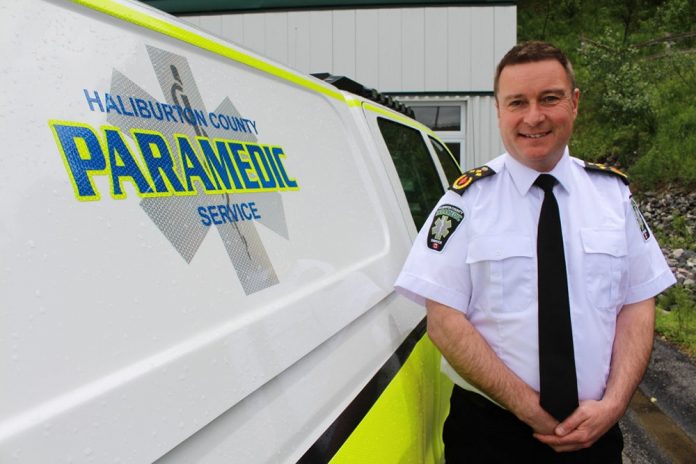
The County of Haliburton is also backing an EOWC proposal to do a comprehensive study of Eastern Ontario paramedic services.  

County council voted to support the EOWC in sending out a two-part request for proposals for the study.

The first phase will be to collect data and key background information.

The second part will examine governance and operational models. 

County staff have previously expressed concern about the province setting its sights on changes to the ambulance model.  

In its budget, the province laid out plans to streamline by integrating Ontario’s 59 emergency health service operators and 22 provincial dispatch communication centres, according to the Association of Municipalities of Ontario (AMO).

The AMO is anticipating the government to consult municipal partners as it explores restructuring paramedic services.