
Home Blog Page 356

COVID-19 taking toll on health unit staff

0

by Kirk Winter

The pandemic’s impact on health unit staff is becoming a “real concern,” medical officer of health, Dr. Natalie Bocking, told the Haliburton Kawartha Pine Ridge District Health Unit’s May 20 meeting.

“Over 80 per cent of staff have been redeployed to support the COVID-19 response, many while also continuing to support other essential/critical services (mandated by) the Ontario Public Health Standards,” Bocking said.

Since March 2021, she said the human resource department has worked with a staffing agency to hire 50 additional temporary staff to support the COVID-19 response.

This represents a 35 per cent increase to the staff complement to support call centre, contact tracing, administration, and mass immunization clinics.

However, “despite the ongoing attempts to bring on additional supports, workloads for health unit staff remain high,” Bocking said.

She added the mass immunization clinics are the most taxing activity, since they require significant human resource support.

Each clinic runs with 12-15 health unit/community partner staff and 15-20 volunteers, depending on the size of the clinic. Based on vaccine supply, one to three clinics are operated each day in addition to a mobile team that offers clinics in vulnerable settings.

Bocking discussed other COVID-19- driven activities that are taxing staff to their limits including contact tracing and responsibility for all aspects of the vaccine roll-out.

“Preventing the ongoing transmission of the COVID-19 virus continues to require significant health unit focus and resources,” Bocking said. “HKPRDHU has divided this virus containment work between four teams. In the past month, the number of newly-reported cases per day have ranged from three to 36 (all of which require tracing). The number of outbreaks occurring at any given time has ranged from one to nine. Staff members are being cross-trained to support multiple teams.”

Bocking reminded board members that staff continue to coordinate the ongoing roll-out of COVID-19 vaccination across all three geographic regions the unit services.

“Demand and uptake of the vaccine has been high, and supply of vaccine has slowly begun to increase,”

Bocking said. “Many municipal, community, and health sector partners are supporting the roll-out through multiple avenues.

“The health unit is currently responsible for managing inventory of all vaccine coming to the region (except for vaccine for pharmacies), supervising cold-chain compliance for vaccine distribution, managing five mass immunization clinics in collaboration with partners, implementing mobile clinics in other congregate care settings and responding to reports of adverse events following immunization.”

Bocking said that the unit was beginning to turn it mind post-pandemic recovery and a gradual, staged transition to regular business.

“Recovery efforts will require dedicated resources.”

Statement of operations presented

The health unit reported on its spending for the first four months of 2021.

It has spent $3.964 million of its’ $11.892 million budget with pandemic response, the Ontario
County down to one vaccination centre

0

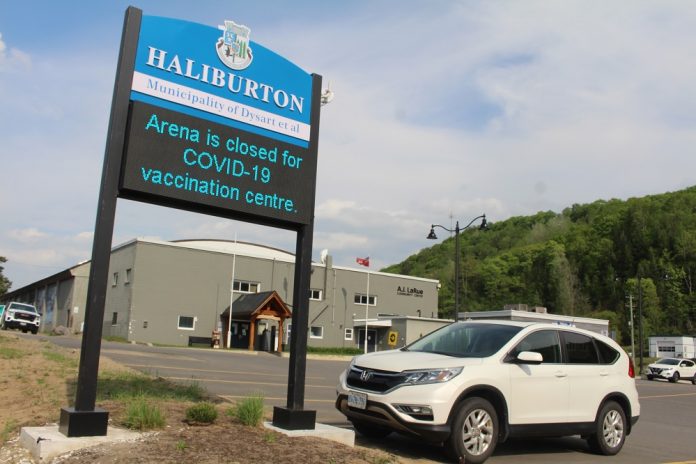
The Haliburton, Kawartha, Pine Ridge District Health Unit has decided that Haliburton County will not receive a replacement for the A.J. LaRue Arena mass vaccination centre after June.

Dysart et al and the health unit opted back in March to limit the time the arena would be used as a centre out of consideration for summer and fall recreation, including hockey. The health unit originally scheduled the clinic to last until at least the end of September but changed that to the end in June in response to public outcry.

Health unit director of health protection Anne Marie Holt said people will have other avenues to get the vaccine, including the mass vaccination centre in Minden at the S.G. Nesbitt Memorial Arena.

“The number of opportunities to be vaccinated will remain the same for Haliburton but will just flow through many potential vaccine locations including the Minden clinic site, hospital, pharmacy and primary care providers,” Holt said. “Where needed, the health unit may also plan ‘popup clinics’ in Haliburton to provide second dose vaccines to people who are eligible for them.”

The last clinics at the A.J. LaRue Arena are scheduled for May 27 and June 5.

The news comes as the province opened vaccine appointments for all people 18 and older May 18. But medical officer of health Dr. Natalie Bocking said there are still issues with local supply, which is not meeting the demand brought by the increased eligibility.

“There is lots of demand for COVID19 appointments across our region and some frustration with not being able to get an appointment right now,”

Bocking said. “Our supply has increased a little bit, and it is slowly increasing. At the same time, eligibility expanded quite significantly. So, we still have a mismatch.” Bocking said more than half of the eligible population has received their first dose within the health unit region, amounting to more than 925,000 people.

When asked why the health unit is not making a replacement mass vaccination centre, Holt said “Haliburton County residents will continue to be well-served and supported.”

“There will also be other ways for people in Haliburton County to get vaccines,” the health unit said. “We are confident this shift will not reduce access to COVID-19 vaccines in Haliburton County.”

Holt also said the provincial government should be rolling out more vaccinations at pharmacies in Haliburton and across Ontario.

People can book vaccination appointments through the system at covid-19.ontario.ca/book-vaccine. People are also allowed to book vaccines outside of their geographic area where available.

Minden Home Hardware owners buying Walkers

0

The owners of the Minden Home Hardware have confirmed that they have purchased the Haliburton Home Hardware from Jerry and Dale Walker.

Dan Moulton said he and wife, Emily, will make Haliburton their eighth store effective May 31.

“We’re so excited to be buying Haliburton Home Hardware,” Moulton told The Highlander on May 25.

He said they have known the Walkers for a long time, adding the well-known Haliburtonians had “built a great new store, but are now at the end of their careers and wanting to move on.”

The Walkers could not be immediately reached for comment.

Moulton added he and Emily feel “very fortunate” to be expanding into the Haliburton community.

He said they’ve built one store, and renovated others, so to walk into a new store is a new experience.

“The Walkers have built such a beautiful store which really has exceeded the expectations of the community.”

He acknowledged that taking over a store during a lockdown in a pandemic in June in cottage country is a challenge.

Already, he said retailers are being taxed by curbside service since it’s not like they have an Amazon warehouse full of staff. Existing staff have had to take, fill and deliver orders. They’ll continue to do so until June 2 at the earliest.

“Our store in Minden, just like their store, has been so busy with curbside. It’s a pretty challenging way to do business. But we’re working hard to keep our community going, with everyone’s home and cottage building and renovation needs.”

However, he added, “we are looking forward to seeing everyone again.”

They are also eagerly anticipating adding Haliburton’s team to theirs.

“We’re so excited and we’re just going to work hard at serving the community.”

The Moultons purchased the Minden Home Hardware in 2017.

Technology of testing – and dogs!

0

COVID KORNER

by Dr. Nell Thomas

COVID-19 diagnostic testing is done to find out if you are, or have been, infected with SARS-CoV-2, the virus that causes coronavirus disease 2019 (COVID-19). There are three main testing technologies used in Canada: PCR, Antigen, Antibody. 

The PCR (polymerase chain reaction) test is the gold standard, with detection close to 100 per cent when processed at one of the 11 Public Health Ontario Labs. It detects the virus’ genetic material (RNA) using a swab to collect fluid from the nose, nasopharynx, throat, or saliva you spit into a tube. Sputum from lungs may also be used. PCR tests are very accurate when properly performed but results may vary depending on collection technique, and the processing lab. Most take one to three days for results, with some in 15 minutes. 

Antigen tests are less expensive and faster (results in 15-30 minutes) but less accurate. These detect viral antigens (“toxin”). Performed on nasopharyngeal or nasal swab specimens, they are not as sensitive as PCR, and earlier in the illness they miss about 20 per cent. They often need confirmatory testing with PCR.

PCR and Antigen tests detect current disease. Antibody tests identify prior infection (or vaccination). Antibodies usually start developing within one to three weeks after infection. They are not used to test active infection and cannot be used to indicate when a person stops being contagious. A prior infection with a different coronavirus can cause false positives.  

Rapid (Point of Care) tests provide quick, cost-effective diagnosis, critical in areas with significant disease. India, with less than 10 per cent of its population vaccinated, developed a test with results in four minutes, and 90 per cent accuracy. It is called RAPID 1.0 (Real-time Accurate Portable Impedimetric Detection prototype 1.0). An electrode detects the SARS-CoV-2 in saliva samples or nasal swabs. Results from the samples are read from a smartphone or a laptop. RAPID is 90 percent accurate for saliva and 87.1 percent accurate for nasal swabs.  

In the USA, the FDA granted emergency use authorization for certain at-home COVID-19 test kits. Most require a doctor’s prescription. You collect your own sample of nasal fluid or saliva at home and send it to a lab. One COVID-19 test provides fast results at home, no lab. 

At this time, in Canada, we haven’t authorized at-home test kits. However, Ottawa and Queen’s Park teamed up to make rapid-testing kits available to workplaces. In Simcoe, Ontario the Chamber of Commerce has thousands of kits and is distributing them to workplaces on a first-come, first-served basis. (Haliburton will also get the kits.)

Zimbabwe is using antigen rapid tests – about 4,000 a day. They have been a game changer. Used in rural areas, results are received in 20–30 minutes, compared to one week when results through PCR testing were sent back to distant laboratories. 

Singapore has provisionally approved a COVID-19 breath test that is greater than 90 per cent accurate with results in less than one minute. Developed by Breathonix, it will be administered by trained personnel, but does not require medically-trained staff or laboratory processing.

And now, the dogs. In under one second, sniffer dogs can detect COVID-19 with 82-94 per cent accuracy. In a collaborative effort in England, scientists completed Phase 1 of a trial showing dogs’ ability to identify COVID-19 on samples of clothing and masks. In six to eight weeks of training, dogs learned to detect the virus in asymptomatic people, and those with low level of illness. 

Accurate as they are, dogs will never replace PCR tests. At airports, dog-identified passengers require a confirmatory PCR test, quarantining while awaiting results. 

That’s better than requiring everyone to quarantine and undergo PCR tests. Finland, France and Lebanon are conducting trials with sniffer dogs as well.

Finding a way to say goodbye

0

As a culture, we are bad at saying goodbye. 

We can celebrate, share kind words, throw a party. But our farewells fall short of fully acknowledging what goodbyes tend to mean. We can do better. 

That is what I hope to do in writing this as I bid farewell to Haliburton and The Highlander. 

There is an undercurrent of expectation in our online world that goodbyes are not entirely that. We promise to stay in touch. We might dream of returning. We think of the bonds we have forged and how they will tie us to a place forever.

But I have said “so long” to many places, things, people, that I did not return to. Seen close connections eroded by time and distance. We can connect online, but the medium is limited. It is never the same as being in a place physically. 

A goodbye like this also represents a change of person as much as place. In bidding farewell, we let go of a part of ourselves. If we do return, we will probably not be quite the same.

It seems strange how much this place has imprinted itself on my heart in just two-and-a-half years. The open spaces and gorgeous landscapes certainly have charm, but they do not compare to the spirit of the people here. Haliburton is a thriving, vibrant community of artists, businesses and families. It is not nearly as peaceful as it might seem on the surface – cultural clashes and controversies abound – but I could even appreciate that discord as beauty. People are conflict as much as people are love and as a reporter, I find fascination in both.

I leave Haliburton not because I have fallen out of love with it. It is because I hope to further my career by taking a position as a municipal reporter in Newmarket. Like many a young person, I know for all its incredible opportunities, there are some things you cannot experience without leaving Haliburton’s borders. Reluctant as we are to do so.

When we bid goodbye, we should recognize it as both a beginning and an end. My relationship with Haliburton will never be the same, and many of the relationships I have made with the people here will change as well.

But I am not making an empty promise when I say I will be back. I truly do love it here. I cannot say when, how often, or in what capacity, but this will not be the last time I set foot here. Maybe I’ll be a tourist. Maybe I’ll have a family. Maybe I’ll come to retire. Time will tell.

Given my short time here, I know my impact was probably limited.  Like the summer, the tourists, the crowds – I was fleeting. I can only hope my words and efforts to tell meaningful stories made a difference to people. I may be a blip in Haliburton’s long memory, but I hope I can be a blip remembered fondly.

Thank you to Haliburton for your kindness, support, and community. Thank you to The Highlander, the finest publication I have ever worked for, for helping me grow. I will never forget you. 

I do not know how strong of a goodbye this is. More than getting better at saying it, I want to get better at fighting it. To tie myself to this place and treasure the mark it has left on me. 

All I can promise is that I will try. Till we meet again. 

Township to partner on indoor composter

0

At least 100 Algonquin Highlands households will get to purchase an indoor tabletop composter as part of a unique partnership between the township and distributors of the product.

At its May 20 meeting, council voted to become an ‘implementation partner’ in the FoodCycler Impact Canada-funded project, which includes $10,000 to the township for distribution and evaluation of the 100 units.

Environmental coordinator Melissa Murray said it is at the sole discretion of the township as to how the $10,000 is distributed, for example, $100 per unit for 100 units or as council sees fit.

She said Algonquin Highlands is required to contribute $2,000 to cover shipping costs of the units since there will be a bulk purchase at a cost of $19,210, of which $17,210 would be recovered in unit sales.

She said cost per unit would average $172.10 (including taxes). However, she said that could vary should council wish to consider alternative distribution of the funding.

“The township would benefit from the opportunity to trial a waste diversion solution at low cost to participants, with support from FoodCycler to conduct program evaluation and potential for further funding for expansion if the program proves to be successful,” Murray said.

Algonquin Highlands will be required, with support from FoodCycler, to collect feedback from residents through a survey at the end of a 12-week trial period. Survey results, but no personally identifiable information, will be shared with FoodCycler and Impact Canada.

“With the estimated diversion of approximately 90 cubic metres (118 cubic yards) of solid waste per year through the use of 100 FoodCycler units in the community, based on current tipping fee of $30/cubic yard (actual landfilling costs are significantly greater), there could be an equivalent savings to the township of $3,540 per year, Murray added.

Details, including who will get units to ensure a level playing field, have yet to be released but are expected in time for council’s June meeting. Mayor Carol Moffatt said it was an “exciting opportunity.”

Coun. Jennifer Dailloux also praised the initiative.

“This just fits so squarely in what I would love to see Algonquin Highlands be, which is at the forefront of the sorts of changes that we want to be a part of and what we want to see happening throughout our world and in our community,” she said.

Dailloux welcomed being part of a data collection partnership to aid in the development of sustainable technology.

“Data is king when it comes to change and to be a part of that in an official capacity is great,” Dailloux said.

Moffatt said logistics are the next step. She said there “has to be a really clean way to figure out who those 100 are.” She added there will likely be a demand for more than 100 units.

If the FoodCyler program expands, Murray said Algonquin Highlands would have a first right of refusal for continued buy-in.

Moffatt said, “It is exciting to step out in the front and bring something innovative to the community,”

Brogden ‘exemplified healthy lifestyle’

0

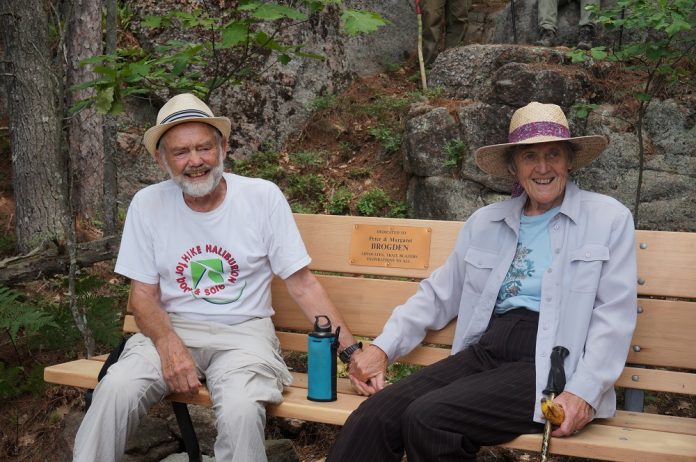
Margaret Brogden is being remembered for her contributions, along with husband Peter, to the trails network in Algonquin Highlands.

Margaret Brogden passed away May 17.

Algonquin Highlands Mayor Carol Moffatt said the Brogdens were a “tag team who were really involved in developing the trail system. They were a matched set, in enthusiasm and outdoors acumen and they separately, and together, contributed a tremendous amount.”

Moffatt said she will remember Margaret Brogden as a “tremendously kind person.”

A former home economics teacher and an accounting clerk for a law firm in Toronto, Margaret Brogden loved hiking, exploring, tennis, cross country skiing, and badminton.

Her family said, “she will be remembered for her enthusiastic humour and nature and most of all for being mom.”

Sheila Ziman of the Haliburton Highlands Land Trust also paid tribute.

She said the Brogdens were both very important to trail development in Algonquin Highlands.

“They were responsible for the development of trails such as the Circuit of 5 Viewpoints. Peter generally took the lead on trails, but Margaret wasn’t far behind.”

She said Margaret originated the Haliburton Trekkers Club.

“She started it with a small group of people who enjoyed snowshoeing. It grew from there.”

She added the Brogdens have been very generous supporters of the Land Trust over the years, and one year won the Land Trust’s enviro-hero award for health, for environmental activities that promote, exemplify or result in healthy lifestyles.

“Margaret exemplified a healthy lifestyle. She had a short career as a home economics teacher before becoming a bookkeeper. Healthy food was always an interest of hers and she was an extremely active, outdoors person. She absolutely loved skiing, hiking, snowshoeing, canoeing and swimming. I have fond memories of doing all those things with her,” Ziman said. She is survived by Peter, her children and grandchildren.

Public will be asked for input on police plan

0

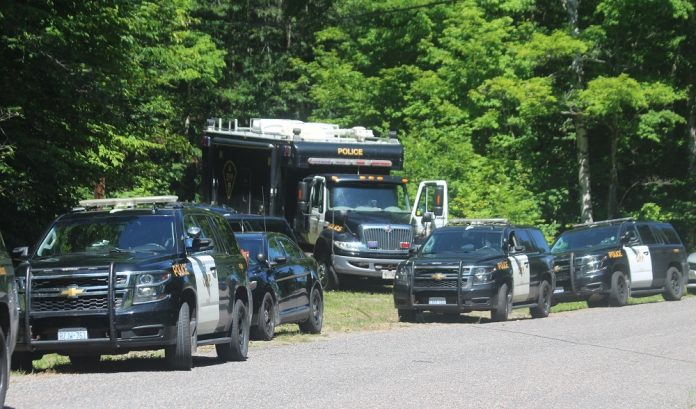
The County has decided on the format of a new police detachment board that will help oversee law-enforcement decisions.

A steering committee for the Community Safety and Well-Being Plan opted for a seven-member board, including up to five elected municipal representatives. The Ontario-mandated board will also feature a provincial appointee and a community representative.

Municipalities must submit detachment board proposals by June 7.

“Seven makes the most sense,” committee chair and Coun. Carol Moffatt said. “It allows the people who pay the bill to have the decision-making authority to keep costs where they need to be. It’s optimal.”

Consulting firm StrategyCorp recommended seven. The board will replace the Community Policing Advisory Committee, which previously connected municipal officials and police.

Moffatt said there is some concern about appointees and the province’s ability to find them.

“We can’t do anything about that,” Moffatt said. “We could probably expect that seat will remain vacant for quite some time.”

Meanwhile, the County is planning to get the public involved for feedback to create the plan. It will involve multiple stakeholder groups helping guide a community approach to safety, including social development, prevention, and risk intervention.

The County will create an advisory committee to help oversee the plan, before working with focus groups, namely the HSPCN (Haliburton County Service Providers Network). There will also be a public consultation, with StrategyCorp interviewing community members through video conferencing.

StrategyCorp manager Lauren Wyman said there will be discussion topics and questions pre-circulated to ensure consultation is on topic.

“If some bring something up and it’s not within the scope,” Wyman said. “Put a pin in it and let them know that’s just not something that’s going to be addressed here.”

The date of the public consultation has yet to be determined.

StrategyCorp principal John Matheson said the plan can do a lot to help improve collaboration between different organizations, but it will take some flexible thinking.

“I look at it as a really positive way to bust up silos that get in the way of serving the public,” Matheson said. “But it’s not going to be an easy task.”

Report: tax hikes needed for Dysart infrastructure

0

Dysart et al is bracing to spend $854,800 more annually to catch up on needed infrastructure renewal, potentially adding a 1.7 per cent increase to its tax levy annually.

Council approved a new asset management plan May 25. The plan provides insight into the state of municipal bridges, roads and other infrastructure, making recommendations on needed capital spending.

The report from Mississauga-based consultant Watson and Associates Economists Ltd. found although the average bridge condition index (BCI) is rated as “fair” with an average of 60.5, seven vehicle bridges are in poor condition, as well as two culvert and two footbridges.

The plan projects the municipality will have to significantly up capital expenditures to meet lifecycle costs of infrastructure over the next 10 years, including an annual 1.7 per cent increase to the tax levy – above and beyond any other reasons for raising taxes.

“This really is holding us to the task,” Mayor Andrea Roberts said. “To make sure we are maintaining our assets.”

The plan also anticipates an 8.1 per cent increase in wastewater billing revenues will be needed annually for the wastewater treatment plant, possibly offset by a growth in the customer base.

The firm found the municipality spent approximately $3,304,528 in capital expenses in 2021. It estimates the municipality needs to increase that to $4,159,314 annually over 10 years – a gap of $854,800. These extra dollars would ensure enough lifecycle funding, including for repairs and replacement.

“We are adding to reserves for our assets,” Roberts said. “But clearly, not enough.”

Coun. John Smith asked how the municipality compared to similar ones.

Managing partner Peter Simcisko said Dysart is ahead of the curve in asset management planning and provinciallymandated deadlines.

“Your asset management plan meets all those requirements now,” he said. “With the tax levy impacts we’re seeing for the tax-supported assets, I would say those came in somewhat lower than many other communities that have historically underinvested significantly.”

However, Simcisko added the wastewater revenues Dysart needs are on the higher end.

“It indicates that historic level of investment in wastewater infrastructure has been lower than it should have been.”

Roberts said the province mandated these plans because not enough municipalities are looking at the long-term picture.

“It’s fabulous that Dysart is ahead,” she said. “A lot of small municipalities are really still doing budgeting like oldfashioned ways, year over year.”

Hipcamp not so hip in Haliburton County

0

Algonquin Highlands’ mayor Carol Moffatt put the kibosh on residents considering listing their properties with Hipcamp during a council meeting May 20.

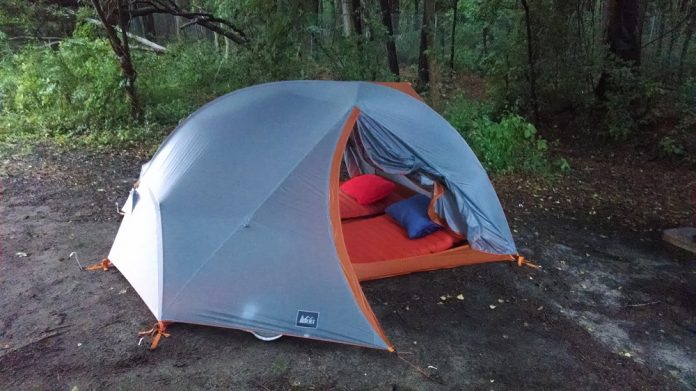
As seen advertised on Facebook, Hipcamp is an online company that offers outdoor stays and camping experiences via a website and mobile app. Private landowners primarily list campsites, RV space and cabins for users to discover and book based on listing type, location, landscape, activities offered, and amenities.

Moffatt said for those who don’t know about Hipcamp, it’s “where you can just rent out your land for people to camp.”

However, she added, “Just so everybody knows, you cannot rent your land out for people to camp on.”

She elaborated that under the township’s zoning bylaws, that would be deemed a camping establishment and is prohibited in the township.

“Unfortunately, some folks in Algonquin Highlands have decided that they’re going to just sign up with Hipcamp and have strangers camp on their land and that is not allowed. It is indicative of people’s desire to be out and about and break chains. I’m just using this opportunity to get out there that Hipcamp doesn’t fly, so don’t bother.”

The Highlander asked Dysart et al, Highlands East and Minden Hills about whether Hipcamp would be allowed in their jurisdictions.

Campsite reservations being flipped

Dysart et al director of planning, Jeff Iles, said, “as per the municipality’s zoning bylaw, camping is not permitted as a principal use on a residential property.”

Minden Hills’ planning supervisor Colin McKnight said he hadn’t had much time to investigate the issue, “but my initial thoughts are the same as the others. his wouldn’t be allowed without some sort of zoning exception.”

Highlands East did not respond as of press time.

The issue was raised during a discussion that also included how some people are selling off campsite reservations across the country, and internationally, during the pandemic.

Coun. Jennifer Dailloux asked parks, recreation and trails manager, Chris Card, about his thoughts on people making multiple reservations for the summer and the possible impact on the Haliburton Highlands Water Trails (HHWT).

She said she knows the township can charge administration or booking fees when people cancel but, “I just wanted to know if you’ve been thinking about those sorts of concerns, too?” Dailloux asked.

Card said he’d been hearing a number of things in the industry similar to Dailloux’s worries.

He said Algonquin Highlands’ policies preclude a person making multiple reservations under the same name for the same time frame. However, he said they could do so for different time frames. But he confirmed the township can charge a cancellation fee. He also thinks cancelled sites would be snapped up quickly.

He said he’d also read about selling off of campsite reservations but “I haven’t seen that, or been made privy to that happening here. I’m not even necessarily aware of how we’d be able to see that happening. But if I do find out about it, or see it happening, we may need to consider some sort of policy about resale or just some working around that,” Card said.