
By Adam Frisk Local Journalism Initiative Reporter
A new summer exhibit is coming to the Minden Hills Cultural Centre that explores the relationship between food, culture, and the land.
Opening June 2, the exhibit, titled Miijim: Traditional Foods of the Anishinaabeg, focuses on the belief that everything provided by the earth is a gift from the creator. The exhibit was created in partnership with Iskatewizaagegan No. 39 Independent First Nation and the University of Manitoba and is on loan from The MUSE: Lake of the Woods Museum in Kenora.
Township cultural services manager Shannon Kelly explained that for Minden Hills, the exhibit represents a step toward expanding the narrative beyond the history of traditional logging and agricultural settlers.
“If you want to know the history of Haliburton County, obviously you have to start kind of at the beginning, and that is with the First Nations people who were here for thousands of years,” she said. “We’re really trying to add that to our everyday programming here.”
Kelly said the exhibit features large cloth banners displayed across the main building and Nature’s Place, which focuses on the collection of food, the processing, and its spiritual importance.
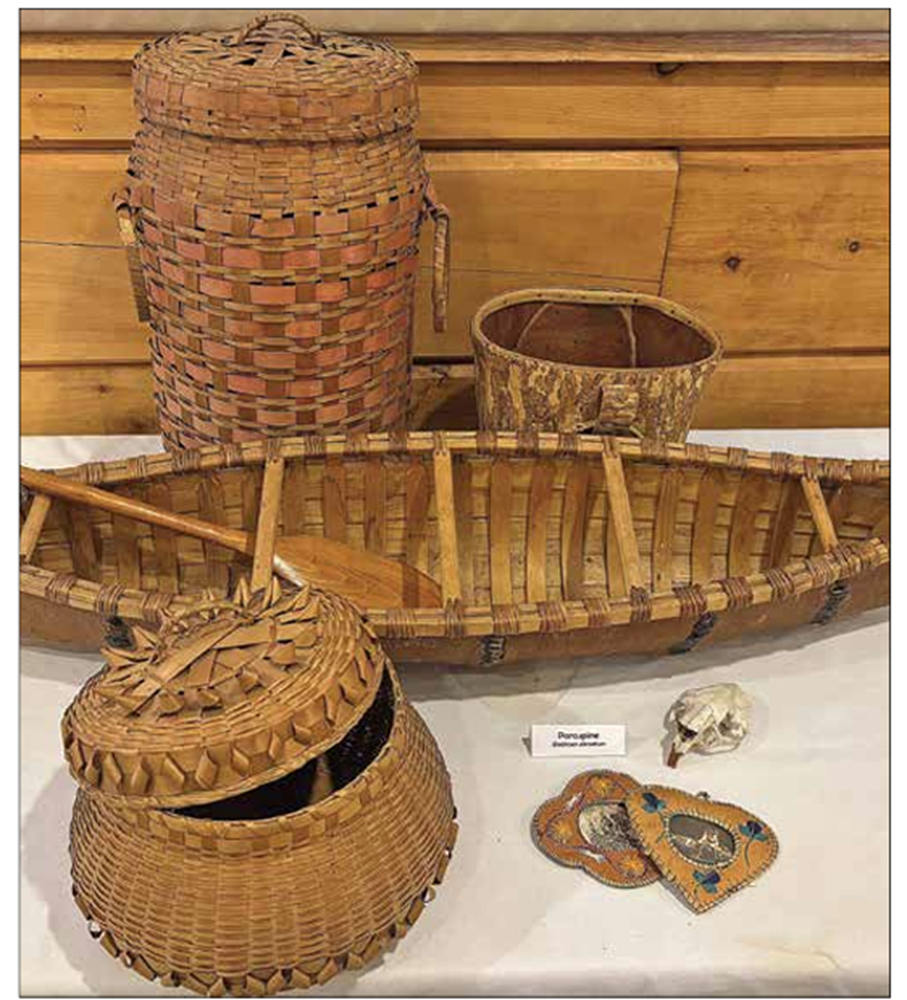
To supplement the exhibit, Kelly said she secured ash-splint and elm bark baskets that were made by elders in the early 1900s, and a birch bark canoe model. These items are also on loan from the Scugog Shores Museum. The exhibit also features a scent station, highlighting four plants sacred to the Anishinaabe: cedar, tobacco, sweetgrass, and sage.
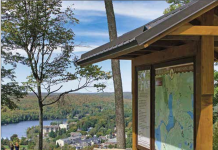
The Miijim exhibit also ties in with the reopening of the Minden boardwalk, where news panels were installed that highlight the First Nations’ use of local flora and plants within the area.
“With the boardwalk leading right up to Nature’s Place, there’s a nice tie-in with that First Nations material as well as the exhibit that we’re having on display,” Kelly said.
Kelly said she hopes Miijim, derived from the Anishinaabeg word for “food,” leaves a lasting impression on how residents and visitors perceive local history and the connection with its Indigenous roots.
“Right now, we hear the land acknowledgment a lot,” Kelly said. “I don’t want people to just hear it and not understand what it’s about. When you hear the land acknowledgement, you shouldn’t just hear the words, but understand the heart and soul behind that, and how the local First Nations felt about mother earth.”