
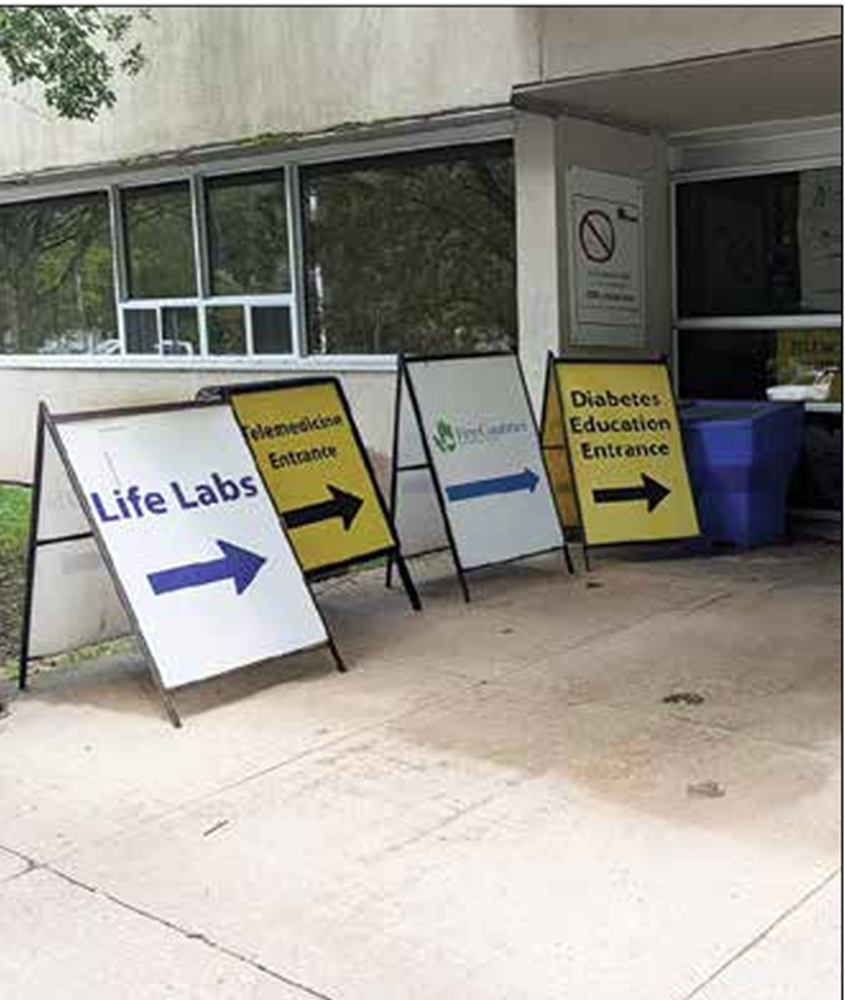
After recently spending three hours waiting for a routine bloodwork appointment at the LifeLabs location in Minden, 83-year-old Mary Hodgins believes the private company should bring a mobile unit to the Highlands to replace its temporarily shuttered Haliburton office.
The Haliburton Lake resident attended the site, located inside the Minden Health Hub at 6 McPherson St., with her daughter July 7. Hodgins said she’s been getting regular tests done in Haliburton for the past four years, with appointments usually done within about 20 minutes.
It’s been a different story for her – and many others – in Minden, though.
“When we arrived, nobody advised you what to do. Other patients waiting told us we had to take a number – we then sat there for half-an-hour before talking to a nurse and figuring out what the routine was,” Hodgins said. “Long and short, we waited three hours.
“We weren’t the only ones… there was a man who arrived at 8:30 a.m. and he brought his lunch with him just in case. He was called in at 11:30 a.m. Many people waiting with me that morning said they usually used the Haliburton lab,” Hodgins added.
LifeLabs closed its office at the Haliburton Family Medical Centre March 25 after Dysart brought a consultant in to investigate air quality concerns. Peterborough-based firm Pinchin Ltd. found limited ventilation to some units within the building and elevated carbon dioxide levels.
Temporary trailer not planned
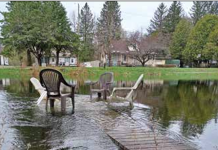
Dysart CAO Tamara Wilbee told The Highlander last week the township spent around $26,000 fixing the issue earlier this summer, with work done by Walker’s Heating and Cooling, She said there are plans to excavate the ground on three sides of the building in the fall to re-waterproof it. At an April council meeting, Wilbee said pooling groundwater, which has entered the rear of the building before, was likely contributing to the bad odour.
In a July 15 email, a LifeLabs spokesperson said the odour issue has yet to be fully rectified and the site would remain closed, with no timeline for reopening.
“Investigation and testing have confirmed there is no mould or gas leak concerns. We are actively working with the municipality and its consultants to better understand the issue and assess potential options to support a return to operations as soon as reasonably possible,” the spokesperson said.
To address the Haliburton closure, LifeLabs said staff have been redeployed to the Minden site. Hours have also been extended, with services available from 8 a.m. to 3:45 p.m. – an extra two-hours-and-45-minutes daily.
Hodgins said she only saw three staff, including two nurses and a receptionist working for Haliburton Highlands Health Services, the whole time she was there.
“They were overwhelmed… the staff are doing what they can do, but they need help,” Hodgins said, suggesting a mobile unit for Haliburton.
LifeLabs did not respond to a question from The Highlander asking if the company had a protocol for office closures in rural communities, or if it would consider bringing a temporary medical trailer. Wilbee, though, said no application has been submitted to the township.
“There has been no further discussion about a trailer. The goal is to get them back into their space inside the building,” Wilbee said.
Testing moving south
In July 2024, it was announced that U.S.-based Quest Diagnostics was purchasing LifeLabs for approximately $1.35 billion. Since then, the company revealed plans to close a Sudbury lab and processing facility – later changed to a partial closure, with some services remaining – and, from January to March, cancelled afternoon hours at the Kenora lab collection centre.
Last month, the Ontario Health Coalition (OHC) went public with LifeLabs’ plans to move non-routine lab test analysis currently being done in Ontario hospitals to the U.S. In March, the company informed Ontario hospitals they won’t be used as an alternate for procedures LifeLabs locations cannot complete. Instead, the work will go to Quest locations in the U.S.
OHC executive director, Natalie Mehra, and board chair, Ross Sutherland, wrote an open letter to health minister Sylvia Jones in June calling on the government to step in.
“For decades, these reference laboratory tests have been performed in Ontario’s hospitals. Shifting them to the U.S. raises serious patient privacy and specimen quality concerns, delays results, harms the efficiency and independence of Ontario’s medical laboratory system, transfers more Ontario health care dollars to the U.S. and reduces income to our hospitals,” they said.
Mehra and Sutherland said some transfers have already taken place, with Quest planning a three-phase process beginning in April. This won’t impact routine samples collected at LifeLabs locations.
“In our view, these actions demonstrate a lack of concern about delivering high-quality medical laboratory services in Ontario,” the pair said, calling on the Ontario government to cancel its contract with Quest and restore all outpatient lab testing to the control of public hospitals.
“Transferring the community laboratory work to the hospitals will make a more integrated health system and ensure public – and Canadian domestic – control over these vital services,” Mehra and Sutherland wrote.
On its website, LifeLabs claims to see more than 15 million patients and perform over 112 million laboratory tests in Canada annually.
With another appointment coming up next month, Hodgins is hoping for a better experience.
“I have a health issue that needs monitoring, so will be back again,” Hodgins said. “We will see if there is any change.”