
Haliburton Highlands OPP announced they are investigating a fatal collision invovling a dump truck and a pedestrian Sept. 4.
Emergency responded to the single-vehicle collision around 12:50 p.m. on the Highway within Dysart et al. The pedestrian, a 59-year-old from Haliburton, was transported to hospital and pronounced deceased, according to police.
“OPP Technical Traffic Collision Investigators (TTCI) attended the scene to assist the investigation,” police said. “No foul play is suspected.”
Police closed down a section of Highway 118, between Kennaway Road and Glamorgan Road, throughout the afternoon Sept. 4, diverting and slowing traffic.
More to come.
OPP investigating fatal collision on Highway 118

Harp in the Dark Chapter 7: Heartbeat
By Hope Thompson
“You cannot see him,” the nurse said to Detective Harry Harp and Constable Terry Becker. “He’s having tests.”
After driving to the Golden Villa Retirement Centre to see Stanley Barley, they had discovered that the old man had been admitted to hospital earlier in the day. Harp asked the nurse how long they would have to wait.
“Take a seat,” she said wearily.
The two men sat down in the waiting area and Becker flipped open a fishing magazine. Harp leaned back and let his thoughts drift to Brigitte Cave, the librarian he’d met two days earlier. He couldn’t get her out of his mind. And then he wondered if that was how Rand felt about Irene Barley.
But did it happen that way? Did Stanley Barley catch Rand Carlyle with his wife and then murder him in a jealous rage?
Goofy music interrupted his thoughts. Across from him, a boy played an electronic device, thumbs jabbing frantically. Next to the boy sat a whitehaired man whose leg was in a cast, and in the corner, two men sat close together, both looking at their phones and talking quietly. Harp considered their neat hair and fitted clothes and the lines in his forehead deepened. Then he remembered the numerology project—begun by the original detective on the case, George Maclem. The gender tally for the night of the murder was 12 men and 10 women. If everyone paired up, two men would be left out. Suddenly, an unmistakable feeling of clarity filled Harp’s mind.
“I have it!” he said.
“Listen,” Becker whispered. The hospital’s public address system crackled through the air: “Repeat: Adam Barley to reception.”
Harp and Becker rushed to the nurse’s station and she looked up at them suspiciously. “So, which one of you officers is Adam Barley?”
Harp said, “Neither. We just want to talk to him.” “First the father, now, the son.” The nurse rolled her eyes. “Make up your minds.”
Suddenly, Harp remembered his revelation and turned to Becker. But at the same moment, a door opened behind where the constable was standing. It was the door to the men’s room and a man stepped out. He was tall and thin with white-blond hair. He walked around the two detectives.
“I’m Adam Barley,” he said to the nurse.
She looked up. “Doctor wants to see you but he’s just this minute been called into Emergency.” She nodded over his shoulder. “And these gentlemen here….”
Adam turned to find Harp holding out his police ID card.
“Mr. Barley?” The detective introduced himself and Becker. “Could we have a word?”
Harp directed him to a private alcove away from the main waiting area.
“What’s this about?” Adam Barley said with undisguised nervousness.
Harp said, “We’re investigating the murder of Rand Carlyle.”
Barley nodded, eyes on the floor, fingers twitching.
“When did you last see your father?” Harp said.
Barley looked surprised. “Years ago. We’re not that close.”
“Why? What happened?” Becker said.
Barley shrugged, “Life, I don’t know.”
The constable frowned.
“Mr. Barley, tell us about August 1970,” Harp said.
“I worked at Pines End. My parents got me the job. And I hated it.”
“What was so bad about it?” Becker said. “I was 16 and I had to wait on guests my own age. It was humiliating.”
“What about Rand Carlyle?” Harp said. “What about him?”
Becker said, “We know you took him fishing. You must have been friendly with him.”
“My job was to do what people asked— get towels, drinks, take them fishing, whatever.”
Harp was silent for a moment. “What do you do for a living, Mr. Barley?”
“I’m an accountant. Why?”
“You’re married?” Harp said.
“No,” Barley said. “I live alone. Now, if you’ll excuse me, I have just driven six hours and I’d like to see my father.”
“And we have a murder to solve.” Harp faced him. “What were you doing on the night of August 1, 1970?”
Barley scowled. “I don’t remember. Probably fetching drinks for people! It was Simcoe Day. There was a bonfire, I remember that.”
“Did you see Rand?”
“No!” Barley cried then took a breath and spoke calmly. “I don’t remember.”
To Harp, the man was somehow incomplete as if something had stunted his growth. The detective wondered if it was the truth. “Mr. Barley,” Harp said. “I believe you knew Rand Carlyle extremely well. In fact, I believe you knew him— intimately.”
Becker’s eyes shot open.
Barley launched from his seat. “I am not going to sit here being accused of— indecency!” He turned to leave but Becker was on his feet blocking his exit.
“We just want the truth, Mr. Barley.” Becker gently touched Barley’s elbow. “Please?”
Barley stared at the young constable’s hand then sat down.
“Look, I knew Mr. Carlyle. And I liked him—though certainly not as you suggested.” He ran his hand over his face. “He was a lot nicer to me than those kids. He was kind.” The man looked up. His face was filled with confused emotion. “He didn’t deserve to die!”
Harp’s eyes glinted. “But his killer thought differently. His killer was filled with so much ferocious hate that he drove an ice pick into Randolph Carlyle’s back.”
Barley winced.
“Then buried his body in an old fridge in a little meadow in the woods.”
Adam Barley’s face softened as if remembering something long forgotten.
“I believe your father saw you and Rand together and that drove him to kill—.”
Barley leapt to his feet. “NO!”
Just then, the nurse rushed towards them. “Mr. Barley? Come with me.” She waved at him. “Your father’s taken a turn.”
A few minutes later, Adam Barley stood beside his father’s hospital bed. A breathing mask covered Stanley Barley’s face and tubes and wires crisscrossed his body. Adam looked down at him and thought about what the detective had said.
Tears stinging his eyes, Adam squeezed his father’s hand as the heartbeat monitor pulsed erratically.
August 1, 1970 – 4 PM
Adam Barley was well aware that guests would be asking for drinks and that the hateful Cat Wilson would be whistling for him and that he had to collect wood for the bonfire and do a million other things. But he didn’t care because, he, Adam Barley, was in love.
Turn at the boulder then over the fallen tree and up the slope. He knew the way to the little meadow by heart. He also knew that Rand was already there because he could smell his cologne.
Pushing aside bushes, he stepped into the sunlit meadow where Rand lay waiting.
Adam joined him and they stared up at the sky. Except for the sounds of insects and rustling leaves the forest was silent. Then a twig snapped.
“What was that?” Adam whispered, eyes wide.
Rand pulled him close. “That’s the sound of my heart beating crazily for you.”
At the edge of the meadow, a woman peered through the bushes. Her face was twisted by horror at the sight of what Randolph Carlyle was doing to her boy— her dear sweet boy.
Irene Barley’s eyes narrowed as she realized what she had to do.
Left to Tell Part 8: Closer to home
By Mabel Brannigan
At home in Haliburton County, the Saturday night thrill was hockey by radio with Foster Hewitt, telling the whole country ‘he shoots, he scores.’ Well, the Toronto Exhibition Park had become a military camp, the Royal Winter Fair had closed, and many hockey players had enlisted, including the famous Boston Kraut line of Bobby Bauer, Woody Dumart and Milt Schmidt. But national hockey continued, and transcripts were sent to the troops overseas.
Hardly anyone locked their doors in Haliburton County at night.
While war ravaged towns and cities on one side of the ocean, we were not immune to fire at home as the east side of Minden’s main street was tragically destroyed by fire in the spring of 1942.
Earl Hewitt and Pat McKay, reaching main street, saw Percy Brintnell, the baker, coming down a ladder in his underwear.
“Where is Ina and Barb?” asked Earl. Ina is getting her purse and Barb has gone to Hartles, he told Earl. Earl brought Percy a pair of pants and everyone started a bucket brigade from the river. Minden had no fire protection. A few had pumpers, the kind that could be laid in the river.
As the flames raced towards the telephone office, threatening to cut off all communications, Earl phoned a friend, Charlie Lamb, mayor of Lindsay. And in 55 minutes the fire department was here. Without this help, all of Minden may have burned.
Mark Snell is also credited with hanging sheets of 12-foot steel roofing from the eaves of Moss Kellett’s Dominion Hotel for saving the west side. Brintnells were the first to rebuild and the Haliburton County Echo relocated in the village of Haliburton.
Most people concluded that the fire was caused by an explosion in the bakers shop, but Earl had his own theory. At 4 a.m., on May 15, 1942, the day of the fire, Earl was awakened by a dog barking at the transport building. A car drove away from the building followed by a loud bang on main street.
Just prior to this tragedy, fires had been set in Gelert and Donald. Needless to say, Earl was convinced for the rest of his life that Minden’s fire was deliberately set.
JoAnne Sharpley’s Source for Sports closing

JoAnne Sharpley said customers are sad and disbelieving as she prepares to close the shop for good.
JoAnne Sharpley’s Source for Sports is closing after 29 years. With no buyer coming forward, Sharpley is working to sell off remaining stock before retiring, targeting Nov. 1 as an end date.
Sharpley said when long-time employees left two years ago, it felt like the right time to call it a career.
“I was tired, and I wanted to spend more time with my grandchildren,” Sharpley said. “That’s when it went on the market.”
Sharpley said she and ex-partner, former NHLer Glen Sharpley, bought an existing sporting goods store in 1991. They moved it around downtown Haliburton over the years, going from a 600-square-foot space to 6,000-square-foot today.
“We just grew it and grew it,” Sharpley said. “We offered always really great customer service. Our selection was always amazing … It was like a city store in a little, little town.”
The Haliburton Village BIA presented flowers to Sharpley Sept. 1 to recognize her forthcoming retirement. President Luke Schell said the store filled an important niche in the community, supplying hockey players.
“We’ve always been quite well-known as a hockey town,” Schell said. “Might quite possibly have been the top supporter of hockey in Haliburton. I think when it comes to the people who are going to miss the business, it’s going to be minor hockey.”
“You can buy clothes online, but you can’t buy a pair of hockey skates online,” assistant manager Cindy-Jo Nesbitt said. “It’s a terrible loss for Haliburton.”
Sharpley has tried to sell the store for two years but has only received two offers, neither of which has worked out. She added she does not know why there is not more interest.
“I wish I could answer that question,” Sharpley said. “Everybody wonders the same thing.”
The life of the store is winding down and though November 1 is the target, Sharpley said it may stay partially open past that to clear inventory.
“I still have that little glimpse of hope that somebody’s going to say ‘this can’t happen’,” Sharpley said. “We still hope there’s a buyer out there.”
Schell said Sharpley has made a huge contribution to the community over the years.
“All the members of the BIA certainly wish her the best in the future. It’s a sad farewell but we want to part showing our appreciation, not our regret,” Schell said.
Sharpley said she has made many great relationships through the store and is appreciative of all the support she has received.
“Thank you for 30 really great years,” Sharpley said. “To all the people that I’ve met that care for me.”
Abbey Retreat challenge raises $50K
Twenty-two people gathered on the grounds of the Abbey Retreat Centre Aug. 27, walking the last few hundred metres with drums and umbrellas to mark the windup of a summer-long program to generate funds for the cancer support programs of the centre.
The Haliburton Highlands Challenge was a choose-your-own-adventure program inviting participants to walk, cycle, paddle, practice yoga or move in any way they wanted to reflect the importance of physical exercise in maintaining health and especially in recovery from cancer or cancer treatment symptoms.
Executive-director Doug Norris said 26 participants took part through July and August, locally and as far away as Montreal and Vancouver. As of the last day of the program, he said the goal of raising $50,000 had been met with more than 350 donors involved.
“These funds will underwrite the costs of cancer support programs through the next year, both once on-site programming can begin again and in the meantime through a growing curriculum of online programs with some 50 people in recent months served by five of the retreat centre personnel and further sessions beginning in September,” Norris said.
The Abbey Retreat Centre is a registered charitable organization located on the grounds of the Abbey Gardens Community Trust and exists to support people with a cancer diagnosis and their caregivers in finding life-enhancing choices on the cancer journey as well as offering meaningful program and a facility for the use of the Haliburton community. Programs are offered free of charge. For more information see abbeyretreatcentre.ca.
Curling Club sweeps through pandemic

The Haliburton Curling Club is planning to carry on its season even with the pandemic taking its toll on how many people are willing to play.
The club is working with the Haliburton, Kawartha, Pine Ridge District Health Unit (HKPR) to start its season in October with new safety precautions, according to president Kent Milford.
Milford said after putting a vote to members, 54 per cent said they were willing to curl even with the additional necessary restrictions. With just over 100 members confirmed, the club’s board decided they had enough to go forward.
“The board has really been put in a difficult position,” Milford said. “We’ll do whatever it takes. We want those people who feel they still wanted to curl to have an opportunity to curl, but not at the expense of safety.”
Across the province, curling will be different. Health units are advising limits on cross-club play, with the Haliburton club not allowing any of its members to play elsewhere this season. The pandemic will impact gameplay as well, with the Ontario Curling Association recommending only one sweeper on all delivered stones.
Milford said masks will be mandatory for the most part and curling equipment cannot be shared. Their lounge area will also require social distancing.
The club has an average age of 65, a more vulnerable population for the virus, Milford said. But despite the hurdles and risks, many members are willing to keep curling.
“People have told me ‘I have nothing else I can do this winter, I want to curl, I want to make sure you do it. I’m willing to live with the risk’,” Milford said.
But not everyone is comfortable with that. Minden Curling Club president Robert Peacock said they put out a similar vote and only 40 of their 205 members – about 20 per cent – were willing to curl. As such, they are delaying their season until at least Christmas.
“Just trying to be safe and not cause any problems,” Peacock said. “Average age of our curling club is 67, so I think they’re just being very cautious.”
Clubs are also facing financial losses, unable to run usual fundraisers or tournaments. Peacock said they expect to lose $20,000 in building expenses, though that would have run up to $50,000 if they ran the season without enough numbers.
Milford said his club is also facing a loss, but it should be small enough to manage.
“It’s difficult,” Milford said.
“Thankfully, the balance sheet of our curling club is in reasonable shape and saved for a rainy day.”
Milford said he is confident members will follow the health protocols needed to carry on playing.
“We’re going to have to rely on the community spirit of our curlers to make sure they abide by these protocols,” he said. “I believe all of our curlers will.”
Bob Lake boaters back before council
Minden Hills council, at its Aug. 31 meeting, approved spending up to $5,000 to assist the Bob Lake Association fund a professional design for its proposed boat launch on Claude Brown Road. The money would also help offset legal consultation costs.
The association’s chair, Laurent Joncas, made a request in writing for the township to fund the entire amount, estimated at $10,000.
Coun. Bob Carter suggested the compromise in a show of “good will” to move the file to the next level. He said it was a difficult situation.
“The location that they have chosen has not only some technical difficulties but also has some difficulties concerning the people who live in that immediate area. I’m a bit concerned that this group does not represent the majority of people on Bob Lake and they certainly do not have agreement from the neighbours who would be most affected by this situation,” Carter said. He added the legal opinion has to do with people launching boats crossing private land.
Coun. Jean Neville noted the township already spent $10,000 to assist stranded boats off of the lake when the historic launch was closed and only 10 boats were removed.
She said she wasn’t in support of the municipality spending money on a future launch “to serve a few boaters on Bob Lake.” She said boats are a luxury and the money could go towards a more deserving project. However, she was okay with the $5,000 spend for now.
Deputy mayor Lisa Schell said council had to consider people living on Claude Brown Road who will be affected to appease the people on Bob Lake.
Coun. Pam Sayne supported the full spend.
She said boaters had used the former launch for generations when it was assumed by all, including the township, that it was on municipal land. It was not until a real estate transaction in 2015-16 that it was discovered the launch was on private land.
Sayne said the municipality had “dropped the ball” and the association had been doing the heavy lifting ever since.
“They’ve emptied their coffers in trying to get this report, hiring consultants,” she said.
She added the location they are proposing is the only feasible site and said access would also be for the OPP and fire department. She said the association had letters of support from anglers and local businesses as well.
“We owe this to the community to follow through with it.”
In reference to Neville’s comment about boats being a luxury item, Sayne said the township supports snowmobiles for tourism and the economy, which is the same thing.
However, a majority of council voted for the $5,000 spend.
Mayor Brent Devolin said, “A file that’s been on my desk for five years. I would like to know whether it’s doable or not. I’m willing to split the cost with them to take it to the next level.”
AH rezones to allow farm, store and cabins
The family behind a plan to build a farm and market, tourist cabins and a store, is one step closer to achieving its dream in Algonquin Highlands.
The township, on Aug. 13, passed a bylaw to allow rezoning of the property to highway commercial-exception from rural zone.
The Cleroux family wants to establish the businesses at 9734 Highway 118, between Carnarvon and West Guilford. During a public meeting, spokesperson Sylvie Cleroux said they would like a market to serve the general public but the convenience store would be for people using their cabins. She said the cabins would be stage two of the development, and not likely for another two years.
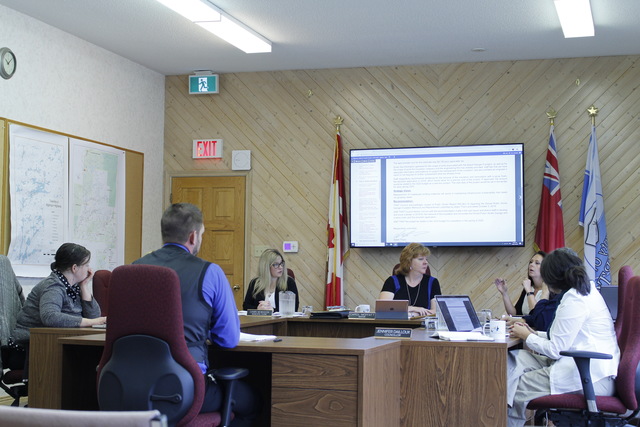
Planner Sean O’Callaghan said it appeared the land was big enough to accommodate the proposed development within the requirements of the zoning bylaw, including compliance with things such as minimum setbacks and parking requirements.
He said there also appeared to be sufficient frontage and area to maintain a natural buffer between neighbours to minimize any potential impacts.
The Ministry of Transportation said it had no objections in a July 16 letter to the township tabled at the meeting.
MTO spokesperson Laurel Muldoon said the Clreoux’ will need to ask for a formal pre-consultation for their site plan prior to the MTO issuing a commercial entrance permit and building and land use permit. It said it would only issue a building and land use permit for the general store at this time.
Three of Cleroux’ neighbours wrote to object to the development.
Dorothy Robb said she’d been living next door for 25 years, and “I enjoy the peace and quiet, and the very last thing I want is having up to 10 cabins with tourists running around right next door.”
She said she is also worried about traffic on an already busy Highway 118, saying “it’s an accident waiting to happen.”
Resident Doug Olliffe also objected due to traffic concerns.
Muriel Jeffrey said she’s also troubled about disruption of her peace and quiet and traffic but is concerned about hemp production on the farm. While legal, she’s worried it will “encourage an undesirable element that the long-term residents in this area do not want.”
Deputy mayor Liz Danielsen said “overall, I’m not in objection to the application.” She said she’s hearing traffic is an issue, but the MTO has no problem with traffic to a store, and had not yet commented on cabins.
Coun. Lisa Barry wanted to know what the site plan would contain, and O’Callaghan said drawings of parking, septic, well and natural buffering. He said council would have to approve the site plan.
Mayor Carol Moffatt said she understands the traffic concerns.
O’Callaghan said the MTO part of the process will likely entail a traffic impact study and discussion about a turning lane. However, he said the township won’t know until the proponents apply to the MTO.
Moffatt asked O’Callaghan, “Notwithstanding any of the concerns, of which there are a number, it meets the criteria of our planning documents?”
“Yes, that is correct. There are a number of policies in our official plan that do support such a development,” he said.
Getting on with it
Resilience.
When I think about Haliburton County, its capacity to recover quickly from difficulties and toughness really stand out for me.
And while COVID-19 is still a clear and present danger, there are examples of Haliburtonians overcoming challenges throughout this week’s Highlander.
Let’s start with Sally Moore. The Sunny Rock bed and breakfast owner courageously sent out a mass email informing people she is battling breast cancer. However, she is organizing a fundraiser for Minden Rotary and, well, to lift her spirits. How about that?
The folks on Black Lake, as well as the family of Anna Andrews, certainly proved their mettle this past weekend. With Anna turning 100, family and friends weren’t going to let a little pandemic get in the way of celebrating her century. Instead, they jumped in their watercraft, grabbed their noisemakers and cruised by Anna’s dock to wish her a happy birthday. Minden Hills Coun. Pam Sayne showed up with a plaque from the township to mark the accomplishment.
Word came in from Doug Norris at the Abbey Retreat Centre. They are the folks tucked up the back of the Abbey Gardens site who offer free retreats for cancer patients and their careers. Earlier this summer, they launched the Haliburton Highlands Challenge. On Aug. 27, they wrapped it up, raising an incredible $50,000. It will ensure the continuation of virtual retreats for now, and many in-person in the future.
The Highlands Hills United Church outreach committee gave me a call. They wanted to share that they are gathering masks for school children. They were purchasing some but also looking for materials and sewers.
The folks at Volunteer Dental Outreach were delighted to announce that their annual golf tournament had raised $40,000. That is going to lead to a lot of smiles at the free-of-charge dental clinic.
Art on the Dock announced its return for its annual art exhibition on Kennisis Lake and they brought in a tidy $5,000.
The Rotary Club handed its prize-winning cheque of $30,000 to Judy Neimann. The fundraiser this year was highly successful.
The Land Between charity has reached the hatching stage of its new turtle incubation program, with the first of its 1,000 eggs hatching Aug. 7. The program has started releasing turtles, which will continue for another few weeks.
We’re starting to see the arts scene return with a vengeance. We have pop-up art taking place this weekend, workshops and exhibitions being advertised for September and October.
In sports, kids are being registered for Highland Storm minor hockey.
Many other families are preparing to return to school.
And, of course, Minden Pride celebrated its fifth annual event in the County. Like many, it had to hold the bulk of its activities online. However, it staged an inclusive flagraising, a drive-in movie night and a show your Pride colours day. The iconic Pride flag was flown from houses, businesses and vehicles as people did not allow COVID-19 to dampen their week-long celebration.
While the experts are telling us this bug is going to be around until the end of 2020 and into the beginning of 2021, it would seem Haliburton County residents are starting to well and truly get on with it. After all, we are known for our resiliency.
Salute our courageous educators
It is not an easy time to be working in the education sector.
With a return to school, we are asking these people to safely plan to take care of our children in a fundamentally unsafe scenario. We are asking our educators to risk their health and safety to take this on, much like we did our health care workers when the pandemic began. The difference is, this is not something educators signed up for when they started their careers.
With that in mind, we need to be kind and celebrate our education workers in the months to come, just as much as we did our health care professionals when the pandemic began.
The provincial government’s back-to-school planning is facing a lot of justified criticism about class sizes. Education unions have filed a labour board complaint that the province is violating workplace safety laws. Labour Minister Monte McNaughton compared school openings to the successful ones at retailers, grocery stores, construction sites and more, but none of those spaces equate to having 20-plus children in a room for hours on end. But our local teachers and boards can only deal with the hand they have been dealt in this case. They cannot necessarily openly criticize the provincial plan if they want to, though Trillium Lakelands District School Board (TLDSB) trustees have made their umbrage with parts of it known.
Online learning is an option for students, but not necessarily for educators, with only so many online spots to go around. Getting online schools running well will also certainly be a challenge and it remains to be seen how well they will work over a full year.
So, our local educators must make the best of what is frankly a bad situation. In many respects, they have done that, with clear plans and regular updates across the board. Mandating masks for younger grades was also a strong step for safety. Teachers and administrators are hard at work planning, regardless of any anxieties they have.
There have undoubtedly been hiccups. It would have been nice for the expanded mask mandate to come before parents made their decisions on online versus in-person learning. A switch from taking two credits at once to one at secondary schools in late August was positive for safety but probably led to some confusion. Details on plans are coming much later than ideal given how close we are to opening, though the provincial rollout is more at fault for that.
But I am willing to give administrators and teachers a lot of leeway given this difficult situation, especially considering the risks we are asking them to take. To get parents back to work, we are asking educators to take greater risks to their health than most other occupations. We are tasking elementary educators to figure out how to teach while enforcing social distancing with young children and asking secondary educators to navigate radically different scheduling.
So, let us cheer our educators on as they face these challenges for our sake. We may not agree about the quality of the back-to-school plans, but regardless, educators deserve a lot of credit for the courage they are showing.
Kudos to them and let us all hope back-to-school unfolds as well as it possibly can.