
Home Blog Page 397

OPP arrest seven in Minden drug bust

0
FIle photo.

Police arrested and charged seven people in a drug bust on Bobcaygeon Road in Minden Hills Nov. 12.

In a press release, police said that the Haliburton Highlands OPP, City of Kawartha Lakes Community Street Crime Unit, Central Region Emergency Response Team and central region canine officers executed a search at a residence on the road.

Police found five people from Haliburton County and two from the GTA in possession of cocaine and fentanyl.

The five people from Haliburton County – three from Minden, one from Haliburton and one from Algonquin Highlands – all face two counts of possession of a schedule one substance for the purpose of trafficking, one count each for cocaine and fentanyl.

The two people from the GTA are also charged with drug trafficking, as well as possession of property obtained by crime. One person from Ajax is also charged with failure to comply with an undertaking.

One of the individuals was held for bail. The remaining accused were released on undertakings and are scheduled to appear at the Ontario Court of Justice in Minden Feb. 3.

Planning for an unusual winter

0

It is going to be a very different winter in Haliburton County and municipal officials, and others, will have to plan prudently for what is to come.

In today’s paper, we touch base with some snowbirds to see what their plans are. Many of them load up vehicles and drive south this time of year. However, with COVID-19 closing the Canada-U.S. border to non-essential travel, their only option is to fly.

Some are choosing to do so. That choice naturally comes with risk. They are exposing themselves to the virus as they head to southern Ontario and Pearson International Airport and then board planes for Florida, Arizona, Mexico and elsewhere. They are arriving in cities where the pandemic continues to spike. Most are banking on the fact their end destination will be away from hotspots and they’ll stick to themselves to avoid risk. They are chasing the sun and checking on properties. For them, it is worth the risk.

Many others are making the decision to stay in the Haliburton, Minden, Dorset and Wilberforce areas. For them, the prospect of contracting the virus supersedes their need for warmth or property checks.

We can add to the mix the anecdotal accounts that we are hearing from cottagers who plan to stay much later into the fall and even into the winter this year. Essentially it means we could have a few more thousand people in the County going forward.

The Haliburton County Paramedic Service is one organization that has already planned for the influx. They’re buying another ambulance so they can cope with the expected increase in call volume.

Some snowbirds who are staying put have said they’re worried about our older population coping with winter conditions, which can include snow piling up between parked cars and the sidewalk in Haliburton Village. They’re concerned about being able to get around with reduced mobility. The four townships will have to plan for a more robust approach to snow clearing this winter, bearing in mind there will be more aged folks trying to get around.

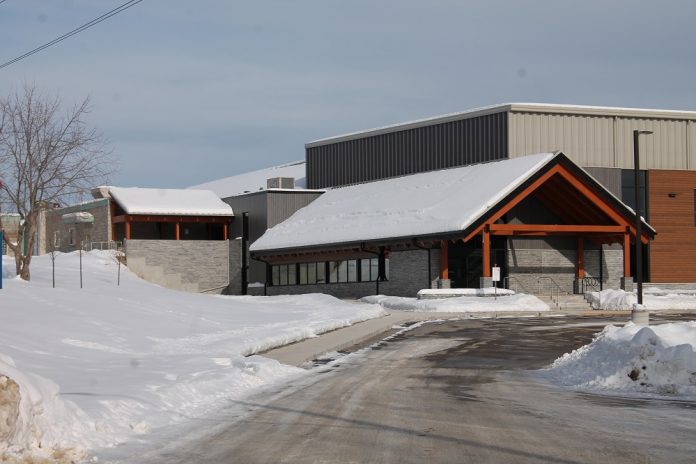
The recreation departments also have a challenge. What, if any, winter programing can they offer seniors while also keeping everyone safe from COVID? Will Minden Hills be able to open its new arena walking track and gym? Will there be winter walking in other arenas? The Township of Algonquin Highlands is working hard to get the Dorset Recreation Centre open for seniors there.

Haliburton Highlands Health Services will have to continue to plan for all eventualities, including a possible surge in its services for both flu and COVID with a larger at-risk population. It will be very tricky, for example, not having a walk-in clinic in the County for those coming down with ordinary colds and flus or non-life-threatening injuries. If they don’t have family doctors, and can’t get in to see family doctors, they’ll simply clog the emergency departments in Minden and Haliburton.

Social service agencies will see an increased demand. Private businesses, too, must now plan for greater demand, whether it is food ordering by local grocery stores or companies that supply oil and propane. The snowbirds will be looking for help to clear their driveways and walkways.

Being Haliburton County residents, we all know we’ll collectively do our best to ensure everyone gets through the winter. Let’s face it, we’re the types that will offer to pick up groceries for shut-in neighbours or roll the snowblower over to help out an elderly shoveler. However, it’s our businesses, municipalities and other organizations that need to plan now for the heavy community lifting that is to come.

Chamber backs call for townships to shop local

0

The Haliburton Highlands Chamber of Commerce has backed Minden Hills Coun. Pam Sayne’s call for sustainable municipal procurement policies.

In a letter to council Nov. 12, chamber executive director, Jennifer Locke, said the importance of supporting local businesses has been highlighted by COVID-19.

“We have never seen conditions like this, and enterprises of all types and sizes across Haliburton County will undoubtedly continue to face the impacts of the virus,” Locke said.

She added the chamber is encouraged by Sayne’s proposal – which received the unanimous support of Minden Hills Council Aug. 29 – to include social considerations in municipal purchasing.

Sayne got her council colleagues to vote in favour of a review of the township’s procurement policy, to give greater consideration to local vendors. At that meeting, she said there are social procurement policies and strategies elsewhere and the City of Peterborough is now working on one.

In her motion, Sayne said “social procurement is when an organization uses its buying of goods and services to also achieve social value in addition to the purchase of those goods and services. As part of its buying of goods and services, an organization could aim to encourage economic development, provide local employment opportunities, or reduce poverty. It blends financial and social considerations.”

Locke said, “this is a wonderful example of forward-thinking leadership and it is to be applauded. As a major purchaser of goods and services, each municipality has the potential to add significant value to the community simply by undertaking its regular operations.”

She said as part of the recovery from the pandemic, and as a key economic development strategy, each of the lower-tier municipalities “would be well-served to use this as an opportunity to undertake a review of their procurement processes to include a social procurement framework.”

She noted other municipal examples include The City of Vancouver, The City of Edmonton and The City of Toronto. Closest to Haliburton County, the City of Peterborough has directed staff to commit $100,000 to hire a consultant to further develop their program.

Locke said the chamber recently proposed a similar idea to the Municipality of Dysart et al’s recovery committee and received positive feedback on the potential for a policy shift. She said that’s why she is sharing the request with the other municipalities.

Council received the correspondence as information only.

Also at the Nov. 12 meeting, the township supported a request from Locke to support the #BuyCloseBy campaign. Council made an official proclamation for a #BuyCloseBy season dated Nov. 15 to Dec. 31, 2020. The other local townships also voted to support the season.

Locke said, “This campaign will serve to encourage all across Haliburton County to support local business in a time when revenues are constrained, expenses are up, and futures remain uncertain.”

Being (T)here focus of wellness group art

0

Francesca Swanson studies an iPad photograph she has just taken of the Truss exhibit at the Agnes Jamieson Gallery.

Sitting in the Welch Room, she picks up an oil pastel and begins to draw her interpretation of the photo and artwork.

Socially-distanced from her, Helen Trinka is inspired to write from the image before her and Jeannette Muise opts for a pencil drawing.

The group members are part of Fay Wilkinson’s Haliburton Highlands Health Services mental health services group in the midst of a six-week program.

“Our theme is Being (T)here – producing short digital stories which will include photographs, writing, spoken word and art work,” Wilkinson said Nov. 12.

“This is a way for them to have their voices heard in a different way.”

She said the short, finished pieces will include their photographs, writing, spoken word and art making.

She thanked curator, Laurie Carmount, for giving them a tour and valuable information, and The Community of Making for lending the iPads.

Swanson said she found the visit to the gallery interesting and inspirational.

“It’s funny how each piece of art offers up a personal experience and different interpretation,” she said. “At the moment, I’m colouring the way I see this particular photograph and artwork and find it is actually unearthing a core concern of mine.”

The Truss exhibit continues until Nov. 28. Artist Carey Jernigan’s work features wood, light, and memory. She explores industrial processes, material culture, and the people and places they shape.

Rethink Haliburton’s name?

0

My fellow Haliburtonians, we are named after a racist by today’s standards with a questionable history. Should we do something about that?

It is not an easy question to answer. Haliburton is our brand and altering a community’s name would be a fraught process. Despite Haliburton’s troublesome writings coming to focus recently, it is not a well-known history and not necessarily doing active harm. We are also in a pandemic, so I cannot fault people for not wanting to have the difficult conversation right now.

Nonetheless, it is a conversation we should have eventually. If we keep Haliburton, it should be with reason, not because it is the easy thing to do. But in my mind, it is a name whose days should be numbered.

The problems with our namesake’s – Thomas Chandler Haliburton’s – writings are many. Though undoubtedly an important Canadian author, racism and sexism does permeate his work – whether in the justification of domestic violence in his satire or describing the Mi’kmaq nation as often drunk and violent in his nonfiction. None of this is to deny the impact and reach of his writings, but if you look, there is enough there to make him unsavoury to associate ourselves with.

Haliburton’s connection to our community is also weak. He never actually lived here. We share his name because he was the first chair of the Canadian Land and Emigration Company which brought settlers in. Though important, it is not as if he really built these communities, compared to those first settlers themselves.

We should ask ourselves whether we really want that name to be reflective of us. Although a name change is meaningless without action towards inclusivity and against discrimination – an issue that is absolutely part of our community – this is still worth considering. If we have this knowledge that we are named after a racist by our standards, but choose not to act, what does that say about us? What does it say if we decide we do not care whether we are named for someone who flies in the face of the values we want to ascribe to ourselves? Nothing good.

The historic figure was important. He should – and will – remain part of the history of this town. But that can be done in places such as museums and classrooms where things can be fully contextualized, versus names that celebrate an individual with a mixed legacy.

Now may not be the best time for the debate, but it could be coming soon. When the service delivery review at the County comes through, it will hopefully lead to a conversation about amalgamation. Should the day come where the County amalgamates, it would seem to me to be the best time to reflect on our name, rather than defaulting to something such as “The City of Haliburton.” If we are going to go through a massive rebranding exercise anyway, that would be the perfect time to choose a name that is both more inclusive of our shared values – and the rest of the highlands as a whole. At that point, we could critically examine it for the township too.

Another alternative could be in rededication. The Township of Russell – named after a slave-owner – launched a search this year to find a better Russell to be named after. There may not be as many historic Haliburtons out there, but it is a creative solution and a good compromise if it is possible. It can be hard to let go of the past and tradition.

In this difficult world, tradition can feel like a critical, stabilizing thing. But as the world changes, clinging too tightly can mean we get left behind in the march of progress. That happens with many things in Haliburton. Maybe we can start changing that with a conversation about the name.

Haliburton Gold trout collection halts

0
The Haliburton Highlands Outdoors Association is losing the support of the province for egg collecting for its annual Haliburton Gold stocking program. Photo via HHOA.

The future of Haliburton’s unique golden trout species remains uncertain as the collection of their wild eggs was cancelled this year at the Haliburton Highlands Outdoors Association (HHOA).

The HHOA has stocked Haliburton Gold in local lakes for 20 years, according to hatchery manager Randy Charter. The Ministry of Natural Resources and Forestry (MNRF) has supported the program with its employees doing the wild egg collection to supply it.

But the MNRF had planned to transition away from that support and train HHOA members to start collecting eggs this year, according to president Eric Christensen. After preparing over the summer, Christensen said they could not come to an agreement with the MNRF on how to proceed amidst the pandemic this fall. He said the MNRF would not provide the collection and the hatchery did not have the resources to do the work, so it was called off.

Christensen said the future of the MNRF’s program participation, which they see as vital, is also uncertain. He said they have tried to negotiate without much success.

“We got nowhere,” he said. “It doesn’t mean we might not get some movement in the future.”

MNRF spokesperson Jolanta Kowalski said staff met with HHOA this September to discuss the feasibility of collection this year.

“The HHOA indicated they would be putting the wild egg collections on hold this season,” Kowalski said, adding they are providing an additional 9,000 Lake Manitou Strain eggs to offset the loss.

Kowalski said the transition plan has been put on hold and will be re-evaluated next year.

“The ministry will continue to provide support and training to the HHOA as detailed in the transition plan.”

The MNRF has worked since 2018 to shift its participation in wild egg harvesting for the Haliburton Gold. They had initially planned to complete the transition in fall 2019 but delayed to 2020. The HHOA has protested the change, concerned about the safety of their aging membership doing the labour. Christensen also said they lack the specialized equipment to do the work, estimated at $15,000-$20,000 which they cannot afford.

The cancellation will not impact the Haliburton Gold stocking next year, as eggs are collected more than a year in advance and raised in a hatchery, Christensen said. Instead, the impact will be felt in 2022. But he added there should be no long-term ramifications – if the program can resume safely after this year.

Dysart deputy mayor Patrick Kennedy said the situation is disappointing. He said there is not much cost to the MNRF to support the program.

“It’s cost-effective,” he said. “We need it as a valuable piece of economic development.”

Pandemic hits group

The HHOA is also feeling the pinch from the pandemic hitting its coffers, Christensen said. Fundraising is slow as a result, which is an issue with some expensive repairs needed due to pump failures.

The HHOA is doing some additional fundraisers at its facility, including a raffle draw and an LCBO Bottle Collection Drive. General donations can also be e-transferred to hhoa@bellnet.ca.

Fleming College restarts in-person classes

0
Fleming College has reopened its doors for some in-person learning. Pictured is a class pre-pandemic. File photo.

Haliburton School of Art and Design student Coyote Newell said after spending half the semester struggling with learning from home, it feels good to return to the classroom.

“It’s been really nice to be back in studio and actually have the space,” she said. “Creating art is really hard when you’re just working from your room … The teachers are working so hard to make sure we are having as much of a standard experience as we can.”

Fleming College has begun offering in-person classes again in Haliburton and elsewhere, with several fall semester courses starting on campus Nov. 2.

Vice president of student experience, Linda Poirer, said it has gone well so far, with many precautions in place, including limited entry, an app for self-screening, PPE and social distancing.

Poirer said classes are being kept small – ranging from around eight to potentially 20, depending on the size of the classroom. She said Fleming planned to start in-person instruction later in the semester and the circumstances allowed for it.

“The region itself was in very good shape, which was what public health was telling us. So, we felt comfortable and safe because we’ve been taking every measure we possibly can,” she said. “We may have had a different discussion if we were in Peel.”

Newell, who is taking a drawing and painting certificate, said she feels very safe with the precautions on campus.

But she added classes have had the occasional communication issue, and some technical difficulties as teachers manage with students split in different rooms and online.

“Everyone is so busy that things are sure to be missed,” she said. “But there are definitely workarounds and they’ve been very understanding.”

Poirer said they are still planning for winter, but she is optimistic about continuing classroom learning.

“It’s really nice to see the students back on campus,” she said. “I know it’s limited, it’s not ideal and it’s not the way we initially planned, but it feels like we’re moving in the right direction.”

Newell said it was hard connecting with classmates early in the semester and it feels good to start doing that on campus. But she added there is a sense of missing out on the complete experience of college years, adding they are supposed to be the best of your life.

“There’s a lot of disappointment to it,” she said. “It’s a loss to be in college and have all the restrictions and no parties … It definitely feels like a struggle sometimes, to get all the material and feel like it’s a full experience.”

Building booms and ecological busts

0

By Terry Moore

By all accounts, the COVID-19 pandemic unleashed a feeding frenzy of recreational property sales and building permit applications across cottage country, including Haliburton County.

It appears that restrictions on foreign travel together with the lockdowns of large parts of the economy caused those with the wealth required to buy, build or renovate second homes, to look to the near-north as a means to reduce viral risk while work remotely at the same time.

Anyone doubting that we’re in the midst of one of the largest building booms in living memory need only check out the growing mountains of construction waste piling up at County landfill sites.

The virus that continues to infect growing numbers of people in Ontario’s densely-populated urban and congregate care centres has done much more than expose the fault lines in health care and public health systems suffering from years of austerity budgeting at the hands of governments of all political stripes.

It’s also exposing the inadequacy of local development and planning rules to protect the natural environment upon which everyone seems to agree all this economic growth is dependent.

Despite the clear warnings contained in the sobering results of the massive four-year-long “Love Your Lake” (LYL) shoreline health assessment project, undertaken by the Coalition of Haliburton Property Owners’ Associations (CHA) and its 50 or so lake association partners from 2014- 2018, development pressure on Haliburton County’s ever-dwindling stock of natural shoreline has escalated.

For those unfamiliar with the LYL assessment conclusions, it found that only eight of 60 Haliburton lakes examined retained sufficient natural shoreline to protect Haliburton’s famous lake water quality. It identified more than 5,000 shoreline properties in need of re-naturalization up to the 75 per cent minimum natural standard, established by healthy shoreline and water quality experts.

With the stock of undeveloped shoreline lots getting smaller and smaller, redevelopment of shoreline structures on existing footprints has increasingly become the order of the day – especially on lakes with a longer cottaging history.

While construction on undeveloped lots across Haliburton’s four townships must be set back at least 30m from the highwater mark, thereby giving ecologically essential shoreline vegetation a fighting chance of survival, such is not the case for rebuilds of shoreline structures constructed under older grand-parented official plan and zoning bylaw rules.

Throughout the past summer, lake association Facebook pages were alive with comments and controversy about the impact of new shoreline property owners’ desire to bring suburbia north along with a party culture that does violence to the getting closer to nature and listening to your brain hum preferences of their often shellshocked neighbours.

Despite the existence of the County’s complaint-based Shoreline Tree Preservation Bylaw, in place since 2012, many instances of tree cutting to the shoreline still abound across the County. Neighbours are reluctant to complain about neighbours and the County lacks any real surveillance capacity. So, the damage goes on and on.

A draft bylaw flowing out of the LYL project to extend Shoreline Tree preservation to shoreline vegetation preservation within 30m of the highwater mark met some heavy resistance from the shoreline landscaping industry just before the pandemic was declared in March and is only now beginning to find its way back into the public consultation phase for possible passage next spring.

In the meantime, there is a growing debate on Haliburton County shorelines about the tension between those holding the view that my property is my property and I have the right to do what I want on it and with it and those wanting to protect the wider community’s interest in protecting lake health from the potential negative cumulative impact of individual property owner actions.

If you believe that natural shorelines are important to defend and restore, call and write your township and county councillors to let them know. Make your voice heard in the upcoming public consultation on the draft Shoreline Preservation Bylaw (haliburtoncounty.ca/ en/living-here/shoreline-preservation.aspx).

Haliburton’s namesake comes under fire

0
Sam Slick Park is named after Haliburton’s character, Sam Slick. But the author has recently attracted controversy for being racist. Photo by Joseph Quigley.

The Uking’s Literary Society, the oldest literary student society in North America, decided Aug. 18 it could no longer abide being named after author Thomas Chandler Haliburton.

It was previously called the Haliburton Society, founded in 1884 at the University of King’s College, Nova Scotia. Haliburton was a famed Nova Scotian politician, judge and best-selling author, the first in what is now Canada.

Society president and history student Lucy Boyd said the group’s members today did not have much knowledge of Haliburton’s history before last year. After committing to researching him in Spring 2019, Boyd said they found his work rife with racism and sexism, which they detailed in a paper. After consulting with students and alumni and receiving overwhelming support, they changed their name.

“We are not turning our backs on our history, but instead opening a new chapter where the values of our society and the King’s community may be more accurately reflected,” the society wrote. “We encourage other groups affiliated with Haliburton’s name to join us in considering his impact, and to rethink the spaces named in his honour.”

Haliburton Village and County share the society’s former namesake. Although Thomas C. Haliburton never lived in the area, he was the first chair of the Canadian Land and Emigration Company, which brought many settlers to the area, according to Haliburton Highlands Museum director Kate Butler. That is why the community bears his name.

There has not yet been any local push to examine Haliburton’s name, but communities elsewhere have reckoned with it. Windsor, Nova Scotia once celebrated the figure and used his famed character, Sam Slick, as the namesake to a long-running festival. But in 2009, an illustration stemming from Haliburton’s Sam Slick writings, depicting a black character, was used in the festival and pointed out as racist, according to a Sept. 22 council agenda. The town subsequently renamed the festival. The West Hans Regional Municipality also passed a resolution Sept. 22 to remove the remaining Sam Slick iconography in the area and write an apology.

Dysart et al Mayor Andrea Roberts said renaming is not something that has come before council and no citizens have yet expressed any concern over Sam Slick Park or Haliburton’s name.

“You have to be really careful of making these judgements based on limited evidence,” Roberts said. “It’s a very fine line because you do not want to erase your history.”

Butler said Haliburtonians do not know much about their namesake. She said the author was renowned and his Sam Slick character became a famed piece of satire. The writings, compiled in The Clockmaker, spread to Britain and the United States. Besides commentating on aspects of American and British culture, the work would popularize several common sayings, including “it’s raining cats and dogs” and “the early bird gets the worm.”

Sam Slick Park was named in the 1960s as a further nod to Haliburton, Butler said. She further said conversations around renaming places tied to racist historical figures are worth having. She added people should consider figures in their historical context, as well as the lens of today.

“We need to have those conversations about what they mean today. In order to tell stories more fully and provide more context today, to give people a better understanding,” Butler said. “That’s really what leads to fulsome discussions about where we move in the future.”

In their paper, the UKing’s Literary Society said racism permeates Haliburton’s work. In The Clockmaker, there are many references to the n-word and an escaped slave longing for his former servitude. The society also described the work as sexist, describing women unfavourably with animals and justifying domestic violence.

Boyd said some of these viewpoints may have been common in the day, but added Haliburton was conservative even by his time’s standards. She said Haliburton is an important author whose work should be taught, but naming is different.

“We feel having a group named after him is sort of a position where we place him on a pedestal,” Boyd said. “Having this group named after someone who, frankly, advocated for slavery and domestic violence, isn’t necessarily the way to make sure this is an inviting space.”

Roberts said it is not a closed subject, but council has a full plate and without public outcry, exploring the issue would not be a priority. She further said it is more important to ensure the community is inclusive overall.

“The most important thing is not to dwell too much in the semantics of history unless it’s glaringly horrific. But to focus on today and make sure that today we are a tolerant community.”

Boyd said it is important to work to get a better understanding of history. She added the goal was not to tear down Haliburton.

“The goal of our project was to develop a better understanding of who we are and what we came from,” she said. “That means looking at all aspects of our history, things that are great and things that are less great.”

HE proceeds on over-budget Cardiff pool repair

0
Highlands East council voted to go ahead with repairs at the Cardiff pool, despite the project going over budget. File photo.

Highlands East council is forging ahead with repairs to the Cardiff pool despite costs ballooning by $177,000 over budget.

CAO Shannon Hunter reported to council Nov. 10 that there was a lack of bids for the project, which includes repairs in the pool and mechanical room, as well as a replacement for the changeroom.

Originally budgeted at $200,000 this year, the only bids received were $130,788 + HST for the changeroom and $246,739 + HST for pool and mechanical room repairs.

Coun. Cam McKenzie read a prepared statement and said the municipality should go ahead with the repairs despite the costs, citing the important social aspect of the facility.

“It is difficult to put a value on a facility that’s taught hundreds of kids to swim over the past 50 years,” McKenzie said. “What is the value of getting our youth out of your home, away from computer screens, video games to enjoy sunshine, fresh air, and exercise?

“We are presented with a choice to continue with these opportunities for another 50 years. Let’s make it happen.”

McKenzie suggested the value looks better than what consultant WalterFedy put forward in a facility review December 2019. It recommended a replaced changeroom and mechanical room structure at a cost of $600,000. The consultant said ideally the pool would get replaced for $2.5 million but recognized that as a steep cost. McKenzie also noted a commercial-grade pool liner is included in the bid, something not considered in WalterFedy’s report.

Deputy Mayor Cec Ryall said he agreed with repairing the pool but questioned if the costs could be broken down.

“We should have a pool there. That’s not the issue here. Is there a way to separate some of the stuff, like the changeroom?” Ryall said. “Or are we faced with an all or none situation?”

Hunter said all three parts are needed – the mechanical room as a safety concern and the changeroom as an accessibility issue.

McKenzie suggested delaying the changeroom for another year. Ryall said it is worth considering if it could save $10,000-$15,000, given inflated material costs this year.

Coun. Suzanne Partridge said the project should move forward and disagreed with delaying.

“I’m not in favour of waiting and going out for tender again. It would be a gamble,” she said. “We have firm figures in front of us right now. If we’re going to do it, I think we really need to do it all next spring.”

Hunter reported contractors were advised the work must be completed by May 21, 2021. To pay for the added cost, council voted to budget the extra $177,527 plus HST in 2021.