
Home Blog Page 352

Haliburton Highlands OPP investigating sudden death

0

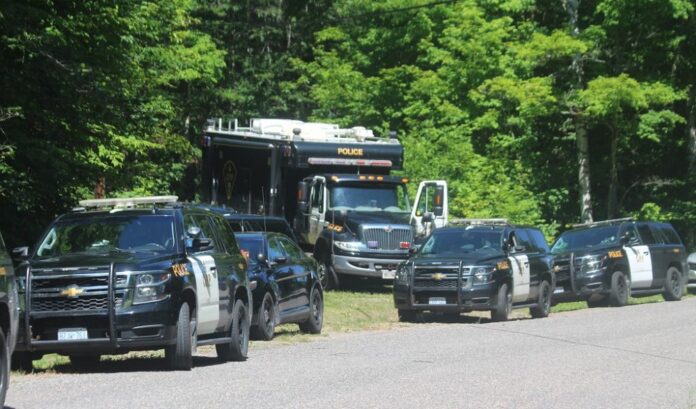
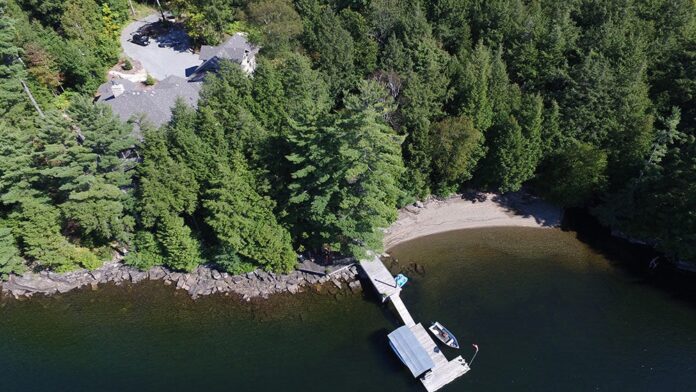
On June 3, at approximately 2 p.m., members of the Haliburton Highlands Detachment of the Ontario Provincial Police (OPP), along with EMS, responded to a call for service regarding a body located in the water of Dark Lake in Wilberforce.

The deceased has been identified as Steven HONDERICH, 60-years-old, of Highlands East Township. A post-mortem examination is scheduled at the Centre of Forensic Sciences in Toronto.

Foul play is not suspected at this time and there is no threat to public safety.

The investigation is being led by the Haliburton Highlands OPP Crime Unit. Anyone with information is asked to call Haliburton Highlands OPP at 1-888-310-1122 or Crime Stoppers to remain anonymous at 1-800-222-TIPS(8477).

Minden artisan’s market to make return this month

0

The Minden artisan’s market will be resuming this year after a pandemic hiatus in 2020.

Township of Minden Hills community development coordinator, Elisha Weiss, said the first market will be held June 19, running to Thanksgiving weekend.

She said it will be at the fairgrounds beside the farmers’ market.

“We will have a limited number of vendors each week (maximum of 10) and there will be COVID protocols in place like a defined entrance and exit, one way travel through the market, social distancing etc.,” she said.

Sara Michelle of Nyx Art Studio is one of the vendors who was unhappy when the markets were not allowed to open last summer. She plans to be there for this summer and into the fall.

She told The Highlander she’s excited about returning.

“It will be so amazing to get back to work and what we as vendors love doing. We need this market back in the community and I’ve been getting such amazing feedback from all of my followers that are so excited to have the market back as well.”

She said it will be good for the community’s mental health and well-being to be able to interact in a safe environment.

“We all need to get back to some kind of normalcy and these outdoor markets may be the first step. It’s been a long 15 months for us all and it’s time to bring some joy and social interaction back to people’s lives.”

Highland Yard running virtually for 2021

0

Registration for the annual Highland Yard charity run is now open.

While participants won’t be gathering in person, they’ll still be able to complete a race and raise money for affordable housing in Haliburton County.

Participants have the option of a 2k, 5k and 10k run or walk. A “freestyle” option is open to anyone who wants to participate however they like: whether it’s laps around a living-room or backyard sprints.

There’s also a chance to dive into local history with the original Heineken Yard race distance run from 1971. It’s 7.3 km from Camp Onondaga to the Rockcliffe in Minden.

Last year, the virtual event raised $25,000 which was donated to Places for People, a not-for-profit focused on Haliburton County’s affordable housing shortage. That’s the highest amount raised to date.

“I think people may have felt more willing to donate, maybe they had more money to donate since they weren’t travelling,” said Jack Russel, the race director and past board member of Places for People.

“It’s also more convenient,” said Russel. “People could define their own activity – I think people enjoyed that.”

No matter what kind of race you run, each registrant gets a pair of Highland Yard socks, and a chance to win a locally-made mug for every $50 raised.

Since 2012, Highland Yard participants have raised more than $140,000 for Places for People. Those funds help the organization to buy, renovate and secure housing for people who need it.

“It’s also given Places for People a chance to move in a different direction now, where we’re looking for multi-unit builds – not just homes,” said Russel. “Now we’re just going to go big; put in more units, provide more housing.”

Registration for the Highland Yard opened June 1 and participants must complete their chosen distance or race style by Aug. 1.

In a year where Canadians have been told to stay home, Russel said the Highland Yard’s mission is even more urgent.

“Some people don’t have a home to stay in,” he said.

You can register for the run at highlandyard.ca

Folk Society to host Canada-wide online concert

0

Live music might still be hard to come by in 2021, but one local group is bringing a country-wide concert to the laptops of Haliburton County music lovers.

The Haliburton County Folk Society is hosting Songs from Coast to Coast, a concert featuring three musicians from across Canada.

Coco Love Alcorn, Ian Sherwood and JUNO award-winner Helen Austin will all tune in via Zoom to share songs and stories on June 5 at 7 p.m.

Concert organizer Don Gage said, “This show is one that we would not likely see live and in person in Haliburton due to costs, scheduling and logistics of bringing three musicians from across Canada together.”

All three are accomplished musicians: Austin is a JUNO-award winner, Sherwood received the Canadian Folk Music Award for Contemporary Singer, and Love Alcorn has gained a large fanbase opening for the likes of Chantal Kreviazuk, Ani DiFranco and Burton Cummings.

The concert will provide each musician a chance to share original songs, chat about song-writing and interact with the other performers – all via their Zoom broadcasts.

Folk Society president Walt Tose said in a press release, “We are very pleased to be able to bring music to this community in these difficult times thanks to a group of dedicated volunteers, community partners, and a faithful and growing audience.”

The Folk Society has hosted six virtual open stages, two live concerts and seven live-streamed concerts with 11 different local artists during the COVID-19 pandemic, with volunteers experimenting with new event styles along the way.

The upcoming cross-Canada Zoom performance is the “big leagues,” said Haliburton County Folk Society marketing manager Barrie Martin. While internet speeds and technology posed challenges for volunteers coordinating the shows, the society has gradually gained expertise in handling online productions.

“We did a bit of a field test, and that prepared us to bring in these folks from across Canada. We’re looking forward to making something similar happen on June 5.”

While COVID-19 has meant major shifts in how the Folk Society shares live music around the County, Martin said, “We’re hopeful that we’ll be continuing to offer live performances one way or the other – hopefully in person.”

The June 5 concert is only available on Zoom with members of the Haliburton Folk Society receiving free access. Single-event tickets to the online show are available at the society’s website at haliburtonfolk.com

Zen and the art of natural plastering

0

If you’ve chosen to build or renovate using natural plasters, get ready to enjoy the extended health benefits for you and the environment.

“Natural plasters can provide extraordinary comfort,” said Sebastian Renel, owner of Beyond Plasters in Minden Hills and a master craftsman in the art.

“They can create a close connection to the natural world with calming and healing effects. They can help regulate temperature and humidity in homes. They create harmonious spaces and eliminate toxins from our indoor spaces.”

After studying science and fine arts in university, Renel trained as a master craftsman in Japan and holds his certification in Sustainable Building Design and Construction from Fleming College. He is currently partnering with U-Links Centre for Community-Based Research in Minden to further study the benefits of clays and limes in natural plasters.

Renel said the earthen materials used in natural plasters have been among the most popular choices for shelters for “virtually all of human history.”

“Even today, approximately half of the world’s people inhabit shelters fashioned from clay-rich dirt harvested from the Earth’s crust.”

Natural plaster applications are increasing in popularity due to the benefits listed and several more, according to Renel.

For example, clay plasters can screen electromagnetic radiation from computers, televisions and other home appliances. Clay releases negative ions, increasing the freshness of the air in the home. Earthen floors literally help owners feel more grounded, and adding radiant heat provides the ultimate in comfort.

Natural plasters have a very low carbon footprint. Lime will also reabsorb the carbon dioxide it has released during its manufacturing process, which technically makes it a carbon-neutral material. Sourcing materials in Ontario is “very feasible” and sometimes on-site clays can be used.

Applications for natural plasters also include exterior surfaces, ovens, new fireplaces, fireplace remodelling and feature walls, including frescos.

“Mixing and applying natural plasters is a bit like cooking – there are an infinite number of recipes possible,” said Renel.

The most popular – a skim coat over existing drywall – can be smooth and highly polished and “provide a very Zen feel.” Bulkier coats can go on up to one inch thick and provide more texture for a rustic look. Tadelakt plaster is highly water-resistant and can be used for showers, cabinets and backsplashes.

“All these finishes can be customized with natural pigments or finished with natural oils that improve durability,” said Renel. “Fibres such as straw or cattails … help with tensile strength and sometimes create a desirable effect on the surface. If you can imagine it, it can be done.”

In addition to drywall, natural plasters can be applied over wood lath, straw bales, masonry walls and more. The process can vary depending on the scope of the project, thickness of plaster and desired finish or texture. Overall prices range from $6 to $40 per sq. ft.

Renel noted the process can take more time than traditional surfacing, especially for floors, since drying time is required between layers. However, he added, “the qualities of the finished surfaces are far superior compared to some of the conventional paints and other synthetic materials.

“In other words, the finished product is well worth the investment.”

Renovate for universal use

0

Are you living in your forever home, or planning to make your seasonal home the last stop? Will that dwelling remain fully accessible as you age in place? If not, it may be time to consider a universal design renovation.

Universal design enables maximum access to all areas and functionality of the dwelling throughout the human lifecycle, including birth, potential accident or illness, and aging in place. It ensures that your renovation dollars are being spent in the most practical and beneficial way possible for your life in this dwelling and the lives of those who follow.

This approach to both building and renovation is especially important in regions such as Haliburton County, where so many baby boomers have been retiring and so many empty nesters are thinking of retiring. According to Statistics Canada’s 2016 Census, approximately 33 per cent of the County’s permanent population was age 65 and older. Back that up to age 50 and older, and it jumped to 63 per cent.

Universal design has been losing the stigma of function overwhelming form. As the years pass, accessibility options have become more refined. According to the non-profit SAFERhome Society in British Columbia, these homes look better, work better and are worth more on the market.

Think wider doorways, hallways and stairways that contribute to that all-important sense of open concept living. Consider that, as SAFERhome notes, universal design meets the needs of the largest buyer group while offering a stylish, more livable environment for people at any age or in any walk of life. Such a home can be easily adapted to the changing needs of anyone who lives there.

Universal design renovations also increase the number of potential buyers and renters for the dwelling.

The SAFERhome Society’s SAFERhome Standards website features a 15-point checklist with directions for basic structural, design, electrical, telecom and plumbing practices when building or renovating.

These include making all exterior thresholds flush, making all hallways a minimum of 40 inches wide (ideally 42 inches), reinforcing washroom walls for future grab bars, and leaving an allowance for an elevator in stacked closets or building all staircases with a minimum width of 42 inches to allow for stair climber machines.

Electrical and telecom installation practices include positioning all electrical switches at 42 inches to the centre of the electrical box from the finished floor and returning all coaxial cable and telephone runs to one central area for smart control. Plumbing installation practices include particular positioning of all shower and tub controls.

Other options abound, such as installing an oven with doors that swing out rather than pull out, an adjustable-height sink controlled electronically, a high cabinet kick plate that elevates the dishwasher, and lever handles in place of round doorknobs.

If you are considering aging in place, check out the federal government’s planning checklist at canada.ca/en/ employment-social-development/ corporate/seniors/forum/agingchecklist.html.

For the SAFERhomes Standards 15-point “how to” checklist, visit saferhomestandards.com.

U-Links keeping an eye on woodlands, waterways

0

U-Links is launching a Woodlands and Waterways EcoWatch Program (WWEW) this spring.

Spokesperson Amanda DuncombeLee said it’s a collaboration of U-Links, Trent University, Fleming College, lake associations, lake stewards, the Haliburton Highlands Land Trust and citizen scientists to monitor the health of waterways and woodlands in our region.

“The program utilizes the resources and knowledge of Trent University and Sir Sandford Fleming College to assist community organizations monitor the long-term health of the forests and lakes of Haliburton County and the surrounding region,” she said.

The program is an expansion of the original Community Benthos Biomonitoring Pilot project that originated in 2019 with the support of funding from the Ontario Trillium Foundation, Trent University and the Haliburton County Development Corporation (HCDC).

In 2020, with financial support from HCDC, the Kenneth Molson Foundation, the Great Lakes Local Action Fund, and several participating local lake associations including Lake Kashagawigamog Organization, Gull Lake Property Owners’ Association, Kawagama Lake Cottagers’ Association, and Halls & Hawk Lake Property Owners’ Association, the program was able to expand to serve an additional 11 lakes, as well as incorporate a framework for citizen science water monitoring and terrestrial biomonitoring.

“This initiative is invaluable and timely, as our lakes and forests continue to face everincreasing pressures from climate change and development,” Duncombe-Lee said.

U-Links, a program of the Haliburton County Community Co-operative, is one of the only rural independent communitybased research centres in North America. It is a unique model in which the community comes first in defining its research needs. U-Links staff help organizations define their research questions, finds the students and faculty to undertake the research, facilitates the relationship between students and the host organizations, provides mentoring for the students and makes the research findings available to the community, she added.

If you are involved with a lake association that would be interested in participating in benthosbiomonitoring, visit their website to download their host primer PDF at wwew. ca/info-for-hosts and contact their WWEW program coordinator, Brendan Martin, at bmartin@ulinks.ca to find out more about the program or discuss a similar research project idea.

If you are part of a property owners association, a municipality or an environmental organization interested in participating in terrestrial biomonitoring, contact Martin.

Duncombe-Lee also put out a call for financial help.

“Over the past two years we have received in-kind and financial support to do the groundwork required to create this program and undertake the first two years of data collection and analysis.”

“We need continued support from the community to continue to support local research needs and to keep the WWEW program running and to help it grow.”

If you are interested in supporting the program, contact Daniela Pagliaro, U-Links’ administrative and logistics coordinator at admin@ulinks.ca.

Environmentalists fight watershed threats

0

Biologist Katie Paroschy used a handdrawn diagram recently to illustrate the many stressors impacting local lakes.

Paroschy presented at an online EnviroCafé for Environment Haliburton! She was invited to discuss the intersection of threats to watershed health. Whether climate change, salt, calcium decline, vegetation removal, herbicides, or industry, Paroschy told 70 attendees the factors can amplify each other to create problems.

However, the project manager for Zygoptera Consulting and Permit Management – a new local environmental consulting firm – offered plenty of ways for people to address those issues. She suggested supporting research, advocating to governments, or taking measures on private property.

“Lake health and watershed health is confusing. It’s multi-faceted,” Paroschy said. “But that doesn’t mean you can’t do anything about it. You have the power to help, and together, we can make a difference.”

Paroschy’s presentation went over each lake stressor in detail. She discussed how winter road salt is contaminating lakes, the negative impacts of pesticides and herbicides and the harm of reducing natural vegetation along shorelines. She said the factors add up – amplified by climate change – and cause harm, such as by reducing fish or increasing algae blooms.

Federation of Ontario Cottagers Associations assistant lake stewardship coordinator Liz Favot, during a questionand-answer session, said it is important to examine the interactions between different harms.

“Often, I think just by necessity, some of these stressors are kind of siloed,” Favot said. “But they definitely interact with each other.”

Paroschy suggested keeping natural vegetation intact. She said even though people have different viewpoints, there should be widespread agreement about the importance of water.

“Encourage other lake users to get them to explore the lake,” she said. “Eventually, everybody will hopefully be doing more to decrease these stressors.”

“Join and support your local lake associations,” Minden Hills Coun. Bob Carter added. “Who are sampling and monitoring water quality as well as influencing government.”

Paroschy said there are also plenty of local scientists examining the issues who are worth supporting. But she said it is vital to support plant life and that “nature knows best.”

“We’re in a time where we can’t hug the people we care about, but you know, you can hug a tree,” she said. “Get outside and thank a plant, because we wouldn’t exist without them.”

Lions donate new tablets for seniors

0

The Haliburton Lions Club partnered with the Angus Glen Lions Club to acquire tablets to give to seniors in long-term care homes. Angus Glen’s project was supported by a Horizons for Seniors Program Grant. It allowed them to match one-for-one the tablets purchased by another Lions Club. The Haliburton Lions bought five tablets and Agnus Glen Lions Club matched that with five of its own.

They were recently given to Highland Wood, Hyland Crest and Extendicare Haliburton. The tablets enable residents to chat with loved ones and provide families assurance and comfort that they’re safe and sound. Seniors can also use the tablets to play music, access information and play games.

Long-term care coalition gets letter of support from HHHS

0

The Haliburton Highlands Health Services (HHHS) board issued a letter of support for the Haliburton-City of Kawartha Lakes Long-Term Care Coalition, but fell short of calling for an end to for-profit homes during its meeting May 27.

Coalition member, Trina West, who is chair of the Highland Wood family council, made the request on behalf of committee co-chair Bonnie Roe.

CEO Carolyn Plummer said the board agreed to issue a letter of support and pass a motion.

The letter of support reads, “HHHS shares the coalition’s overarching goal of enhancing quality of care and living requirements for all LTC residents. Like you, we recognize that increased funding and higher staffing levels for long-term care homes are needed to realize this goal.”

However, in regards to the coalition’s specific calls for amendments to the Canada Health Act and the discontinuation of forprofit involvement in long-term care delivery, the letter states, “we respectfully cannot take a position on these matters.”

The letter goes on to say, “We do recognize that advocacy plays an important role in influencing change and we applaud your efforts to improve the quality of care and living environment for all long-term care residents.”

Plummer also touched on the recently-released Long-term Care (LTC) Commission report. She told the board it contains 85 recommendations with a focus on pandemic preparedness, LTC funding, regulation, oversight, and support needed to enhance quality of care and quality of life for LTC residents.

“Like many others, HHHS has been advocating for several years for improvements to the long-term care sector; it is good to see this advocacy come to fruition, and we are hopeful that this report will form the basis for meaningful change,” Plummer said.

She added that HHHS has reviewed the recommendations, and made note of the ones specifically directed to LTC licensees and/or that will impact LTC licensees.

“I am very pleased to see that many of the recommendations specific to LTC homes are already in place at Hyland Crest and Highland Wood – and I am incredibly proud of our dedicated team and the work they do every day to help provide the best possible quality of care and quality of life for our residents,” Plummer said.

There are, however, some areas highlighted in the recommendations that will require additional work, and in many cases, additional funding, the CEO added.

“We have begun working on an analysis to identify gaps as well as needed resources; once the analysis is complete, HHHS will establish a preliminary plan for addressing gaps with our two LTC homes.”

She also referenced the Auditor General report on pandemic readiness and response in LTC, which contained 16 recommendations with 55 action items.

“HHHS will take into consideration the Auditor General’s recommendations when reviewing the LTC Commission’s report and recommendations, and as plans are developed to address identified gaps,” she said.  

The Haliburton-City of Kawartha Lakes Long-Term Care Coalition has a petition circulating in the communities it represents. The petition calls upon local signatories to support measures prescribed by local residents, the Registered Nursing Association of Ontario, and the province’s COVID-19 Commission including:

• ensuring four hours of direct care per resident per day;

• increasing infection prevention and health care expertise;

• improving working conditions;

• reinstating thorough inspections with consistent enforcement;

• changing nursing home culture to being more resident-centred, family/caregiver-centered, and rights-based; and

• taking the profit motive out of long-term care, moving taxpayer money from private shareholders to investing in public care.