
Home Blog Page 335

U-Links keeping an eye on woodlands, waterways

0

U-Links is launching a Woodlands and Waterways EcoWatch Program (WWEW) this spring.

Spokesperson Amanda DuncombeLee said it’s a collaboration of U-Links, Trent University, Fleming College, lake associations, lake stewards, the Haliburton Highlands Land Trust and citizen scientists to monitor the health of waterways and woodlands in our region.

“The program utilizes the resources and knowledge of Trent University and Sir Sandford Fleming College to assist community organizations monitor the long-term health of the forests and lakes of Haliburton County and the surrounding region,” she said.

The program is an expansion of the original Community Benthos Biomonitoring Pilot project that originated in 2019 with the support of funding from the Ontario Trillium Foundation, Trent University and the Haliburton County Development Corporation (HCDC).

In 2020, with financial support from HCDC, the Kenneth Molson Foundation, the Great Lakes Local Action Fund, and several participating local lake associations including Lake Kashagawigamog Organization, Gull Lake Property Owners’ Association, Kawagama Lake Cottagers’ Association, and Halls & Hawk Lake Property Owners’ Association, the program was able to expand to serve an additional 11 lakes, as well as incorporate a framework for citizen science water monitoring and terrestrial biomonitoring.

“This initiative is invaluable and timely, as our lakes and forests continue to face everincreasing pressures from climate change and development,” Duncombe-Lee said.

U-Links, a program of the Haliburton County Community Co-operative, is one of the only rural independent communitybased research centres in North America. It is a unique model in which the community comes first in defining its research needs. U-Links staff help organizations define their research questions, finds the students and faculty to undertake the research, facilitates the relationship between students and the host organizations, provides mentoring for the students and makes the research findings available to the community, she added.

If you are involved with a lake association that would be interested in participating in benthosbiomonitoring, visit their website to download their host primer PDF at wwew. ca/info-for-hosts and contact their WWEW program coordinator, Brendan Martin, at bmartin@ulinks.ca to find out more about the program or discuss a similar research project idea.

If you are part of a property owners association, a municipality or an environmental organization interested in participating in terrestrial biomonitoring, contact Martin.

Duncombe-Lee also put out a call for financial help.

“Over the past two years we have received in-kind and financial support to do the groundwork required to create this program and undertake the first two years of data collection and analysis.”

“We need continued support from the community to continue to support local research needs and to keep the WWEW program running and to help it grow.”

If you are interested in supporting the program, contact Daniela Pagliaro, U-Links’ administrative and logistics coordinator at admin@ulinks.ca.

Environmentalists fight watershed threats

0

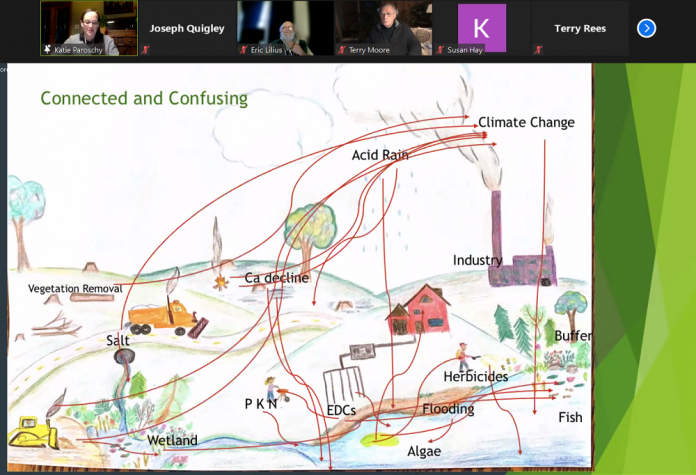
Biologist Katie Paroschy used a handdrawn diagram recently to illustrate the many stressors impacting local lakes.

Paroschy presented at an online EnviroCafé for Environment Haliburton! She was invited to discuss the intersection of threats to watershed health. Whether climate change, salt, calcium decline, vegetation removal, herbicides, or industry, Paroschy told 70 attendees the factors can amplify each other to create problems.

However, the project manager for Zygoptera Consulting and Permit Management – a new local environmental consulting firm – offered plenty of ways for people to address those issues. She suggested supporting research, advocating to governments, or taking measures on private property.

“Lake health and watershed health is confusing. It’s multi-faceted,” Paroschy said. “But that doesn’t mean you can’t do anything about it. You have the power to help, and together, we can make a difference.”

Paroschy’s presentation went over each lake stressor in detail. She discussed how winter road salt is contaminating lakes, the negative impacts of pesticides and herbicides and the harm of reducing natural vegetation along shorelines. She said the factors add up – amplified by climate change – and cause harm, such as by reducing fish or increasing algae blooms.

Federation of Ontario Cottagers Associations assistant lake stewardship coordinator Liz Favot, during a questionand-answer session, said it is important to examine the interactions between different harms.

“Often, I think just by necessity, some of these stressors are kind of siloed,” Favot said. “But they definitely interact with each other.”

Paroschy suggested keeping natural vegetation intact. She said even though people have different viewpoints, there should be widespread agreement about the importance of water.

“Encourage other lake users to get them to explore the lake,” she said. “Eventually, everybody will hopefully be doing more to decrease these stressors.”

“Join and support your local lake associations,” Minden Hills Coun. Bob Carter added. “Who are sampling and monitoring water quality as well as influencing government.”

Paroschy said there are also plenty of local scientists examining the issues who are worth supporting. But she said it is vital to support plant life and that “nature knows best.”

“We’re in a time where we can’t hug the people we care about, but you know, you can hug a tree,” she said. “Get outside and thank a plant, because we wouldn’t exist without them.”

Lions donate new tablets for seniors

0

The Haliburton Lions Club partnered with the Angus Glen Lions Club to acquire tablets to give to seniors in long-term care homes. Angus Glen’s project was supported by a Horizons for Seniors Program Grant. It allowed them to match one-for-one the tablets purchased by another Lions Club. The Haliburton Lions bought five tablets and Agnus Glen Lions Club matched that with five of its own.

They were recently given to Highland Wood, Hyland Crest and Extendicare Haliburton. The tablets enable residents to chat with loved ones and provide families assurance and comfort that they’re safe and sound. Seniors can also use the tablets to play music, access information and play games.

Long-term care coalition gets letter of support from HHHS

0

The Haliburton Highlands Health Services (HHHS) board issued a letter of support for the Haliburton-City of Kawartha Lakes Long-Term Care Coalition, but fell short of calling for an end to for-profit homes during its meeting May 27.

Coalition member, Trina West, who is chair of the Highland Wood family council, made the request on behalf of committee co-chair Bonnie Roe.

CEO Carolyn Plummer said the board agreed to issue a letter of support and pass a motion.

The letter of support reads, “HHHS shares the coalition’s overarching goal of enhancing quality of care and living requirements for all LTC residents. Like you, we recognize that increased funding and higher staffing levels for long-term care homes are needed to realize this goal.”

However, in regards to the coalition’s specific calls for amendments to the Canada Health Act and the discontinuation of forprofit involvement in long-term care delivery, the letter states, “we respectfully cannot take a position on these matters.”

The letter goes on to say, “We do recognize that advocacy plays an important role in influencing change and we applaud your efforts to improve the quality of care and living environment for all long-term care residents.”

Plummer also touched on the recently-released Long-term Care (LTC) Commission report. She told the board it contains 85 recommendations with a focus on pandemic preparedness, LTC funding, regulation, oversight, and support needed to enhance quality of care and quality of life for LTC residents.

“Like many others, HHHS has been advocating for several years for improvements to the long-term care sector; it is good to see this advocacy come to fruition, and we are hopeful that this report will form the basis for meaningful change,” Plummer said.

She added that HHHS has reviewed the recommendations, and made note of the ones specifically directed to LTC licensees and/or that will impact LTC licensees.

“I am very pleased to see that many of the recommendations specific to LTC homes are already in place at Hyland Crest and Highland Wood – and I am incredibly proud of our dedicated team and the work they do every day to help provide the best possible quality of care and quality of life for our residents,” Plummer said.

There are, however, some areas highlighted in the recommendations that will require additional work, and in many cases, additional funding, the CEO added.

“We have begun working on an analysis to identify gaps as well as needed resources; once the analysis is complete, HHHS will establish a preliminary plan for addressing gaps with our two LTC homes.”

She also referenced the Auditor General report on pandemic readiness and response in LTC, which contained 16 recommendations with 55 action items.

“HHHS will take into consideration the Auditor General’s recommendations when reviewing the LTC Commission’s report and recommendations, and as plans are developed to address identified gaps,” she said.  

The Haliburton-City of Kawartha Lakes Long-Term Care Coalition has a petition circulating in the communities it represents. The petition calls upon local signatories to support measures prescribed by local residents, the Registered Nursing Association of Ontario, and the province’s COVID-19 Commission including:

• ensuring four hours of direct care per resident per day;

• increasing infection prevention and health care expertise;

• improving working conditions;

• reinstating thorough inspections with consistent enforcement;

• changing nursing home culture to being more resident-centred, family/caregiver-centered, and rights-based; and

• taking the profit motive out of long-term care, moving taxpayer money from private shareholders to investing in public care.

Fleming opening to expand summer horizons

0

Artist Rhonda Payne said she is looking forward to returning to Haliburton this summer to both teach and learn art.

The Toronto-based painter missed summer courses at the Haliburton School of Arts + Design last year after 14 years of attending. Fleming College suspended programs in 2020 due to the pandemic, but one year later, the college is offering more than 80 courses and workshops again starting June 28 until Aug. 13.

“It’s a real thrill,” Payne said. “We’ve all really missed it. I missed it terribly.”

The courses each last about one week, with daylong workshops also on offer. Programming includes a wide range of artistic fields, including drawing, blacksmithing, jewellery, pottery, photography and more.

The course offerings are about 25-50 per cent fewer than usual, according to vice president of academic experience Linda Poirier. She said this is due to protocols and the college opting not to use the space at local grade schools, as it would in a typical year.

Nonetheless, Poirier said Fleming is eager to offer summer lessons again and has had experience delivering lessons safely throughout the pandemic.

“It actually feels fantastic,” she said.

“The utmost importance to Fleming is that everybody is safe. We’re excited to be able to once again open our doors.”

Protocols include safe work plans for every space at the facility, with personal protective equipment and limits on the number of people. Those entering the facility will also be pre-screened and only registered students and staff will be allowed to enter.

Payne said she does not have safety concerns, adding classes are separate. However, she said she might miss the opportunity to walk around and see what others are working on.

But Poirier said there will be common areas to allow for some interactions, though with masks required.

“We’re trying to create space that can be casual space for our students,” she said.

“We also want to feel welcoming to all of the students, so they’re relaxed and having the experience they hope to be having.”

Payne said although artists have been able to do online interactions and lessons throughout the pandemic, it is not the same as doing it in person.

“This is an opportunity to really immerse yourself in an environment that’s creative, that builds the creative in you,” Payne said. “You can just expand your horizons.”

Registration information is available by contacting askus@hsad.ca.

Parents show preference for in-school learning

0

By Kirk Winter

Parents, students and staff of the Trillium Lakelands District School Board (TLDSB) have been promised they’ll be told what the 2021-22 school year will look like come June 8.

Director of education, Wes Hahn, made the pledge at a May 25 board meeting.

Hahn said he wants everyone to know sooner rather than later what will be going on regarding instructional models in September.

“There are still a lot of moving parts and we are doing the best we can,” Hahn said “We don’t want to be scrambling that last week of August like we were last year. The only thing that might affect our June decisions is the ministry has promised a key update in mid-August that we might need to pivot from depending upon what they say.”

“We want to have kids back in school,” Hahn added. But we want to do it when it is right and safe and when the medical officers of health have approved that move.”

Families were asked to make a choice about in-person or virtual learning as of June 1. With those numbers, the board will have a better idea of where students are going to be.

Hahn said, “We can’t build anything concrete without those numbers. Staffing and budget are going to be so tight this year.”

He told trustees that an overwhelming number of parents have so far chosen in-school learning for their children but that all options are being looked at for delivering virtual learning, including a partnership with the board’s Virtual Learning Centre (VLC).

“For elementary learn at home, the numbers just aren’t there,” Hahn said. “The numbers committed at secondary are very low also.”

Hahn said there’s still significant instability regarding what September will look like because of issues around the vaccine roll-out and how many students between the ages of 12 and 17 choose to get vaccinated after they became eligible May 31.

“Vaccines are moving along quite well,” Hahn said. “They will have a definite impact on school opening in September.”

The director said high schools will open in September with cohorted classes utilizing either octomesters or quadmesters [studying one or two subjects at a time], and he expects direction from the ministry on which model the province would prefer. The board is also surveying its secondary leadership teams to see if they have a preference. At elementary, little change in the structure of a student’s day is expected.

Masks are expected to be mandatory, along with the enhanced cleaning protocols that were seen right across the board this year.

Trustee Louise Clodd asked Hahn if they are considering a hybrid form of delivery next year that would have a teacher instructing students in and out of class.

“We are not considering a hybrid model for next year,” Hahn said.

“It is not our preferred model and we think we have other options like teaming with VLC.”

The province announced June 2 students will not be returning to in-person classes this spring or summer.

Living a foodie’s charcuterie dream

0

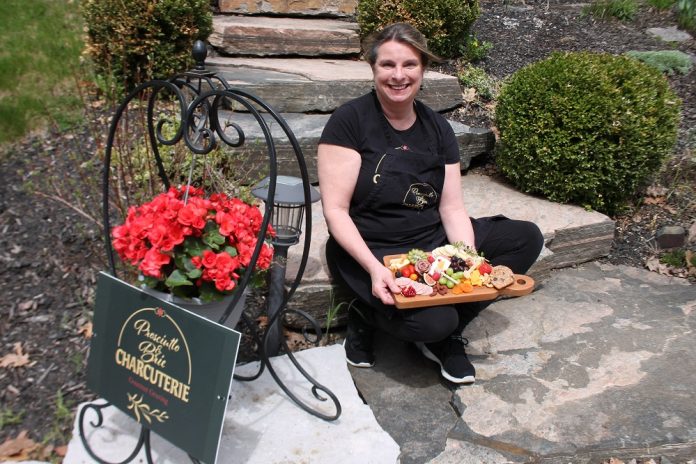
The pandemic has allowed Sandra Slauenwhite-Box time to focus and bring something that has always been a dream to reality

June 2021 marks the seventh-month anniversary of her new business, Prosciutto & Brie Charcuterie.

A self-described “lifelong foodie,” Slauenwhite-Box loves to dine out, cook, be creative and make beautiful and delicious food.

“I wanted to offer our community a gourmet product that is the perfect sensory combination of visual beauty and exquisite taste,” she said.

Prosciutto & Brie Charcuterie is a specialty catering company that offers gourmet grazing boxes, charcuterie boards and grazing tables with options ranging from traditional charcuterie, to themed boxes for special occasions.

The boxes come in a variety of sizes and can add a special touch for any occasion including holidays, weddings, birthdays, date nights, virtual parties, business meetings, as a thank you, bridal showers or anything really, Slauenwhite-Box added.

She hand picks each item in each box, scouring the highest quality ingredients internationally and partnering locally whenever possible. For her, every bite is important and presentation as important as taste.

She said the new business has been wellreceived with “amazing and encouraging feedback.” There have also been continuous requests to cater weddings, birthdays, anniversaries, holidays and virtual parties.

She said she is looking forward to summer “and continuing putting forward our best visual culinary experience whether it’s for a larger catered event or for one person’s enjoyment at home.”

While COVID-19 gave her the time and space to follow her heart’s business desires, Slauenwhite-Box said that despite the lockdowns and restrictions, “food is still one of the pleasures everyone can enjoy from the comfort of their homes.”

She said they have had businesses order individual sized boxes for their staff to have them open at home with a bottle of wine and host virtual staff parties. She added friends and families have also organized virtual charcuterie parties.

“People have adapted and been very creative with finding ways to gather around food and come together while still following the new rules.

“I hope through my new charcuterie business, I can bring joy through food during difficult times and join people together in creative new ways.”

Slauenwhite-Box added, “The Haliburton Highlands is a beautiful environment and I have been fortunate to live, work, volunteer and play here for over 14 years. The community is made up of wonderful people and businesses and Prosciutto & Brie Charcuterie strives to be a part of that and to enrich the County with a gourmet specialty food service.”

Find her at prosciuttoandbriecharcuterie. ca, Instagram – prosciuttoandbrie; and Facebook – Prosciutto & Brie Charcuterie.

Council wants arena loan cemented soon

0

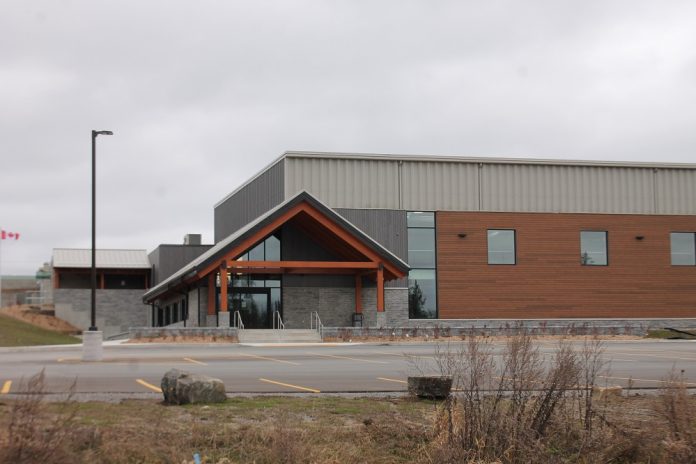
With interest rates rising, councillors asked staff to finalize their loan with Infrastructure Ontario for the new S.G. Nesbitt Memorial Arena and Community Centre during a meeting May 27

The discussion came during a first quarter financial report by director of finance and treasurer Lorrie Blanchard.

Mayor Brent Devolin asked, “how close are we to being able to lock that in as we continue to be in historic lows (interest rates)?”

Blanchard said they were waiting as there are still outstanding arena items they’d like to include in the debenture, such as the snack bar, equipment not covered by an Ontario Trillium Foundation grant, and a mobile stage.

She added they are awaiting some invoices but it could be cut off at some point. At that juncture, she said it would take six weeks to convert the construction loan to a debenture

She conceded that interest rates “have popped up a little bit” from preparations for the 2021 budget

For example, when looking at a 25-year debenture, the interest rate had been 2.31 per cent, a figure that had risen to 3.02 per cent as of last week. For a 30-year debenture it had climbed to 3.18 per cent from 2.25 per cent

Devolin suggested a staff report come back for the June meeting to decide on timing “if we feel that interest rate creep may cost us more in the long run.”

But Coun. Bob Carter suggested they should not wait until the June meeting.

“I don’t think there’s any expectation that interest rates are going to go down right now … and so I am a little bit concerned with us not shutting it down right now,” he said.

He said that if there are extra expenses, they could take out a second debenture later or finance internally.

“I think we should start the process now. “ Devolin said Blanchard’s news about interest rate increases “added fuel to it.”

Coun. Jean Neville agreed, saying staff should start the debenture process now and not wait.

Coun. Jennifer Hughey predicted interest rates will continue to go up and concurred with starting the process now.

Devolin suggested staff “bundle up as much as you can today” on project costs and begin the process of converting the construction loan to a debenture.

The arena project is worth about $12.75 million.

County’s books get clean bill of health

0

The County’s accounting practices are in tip-top shape, according to an independent audit of expenditures, revenues and assets

On May 26, council approved the 2020 financial audit, completed by KPMG.

The yearly audit found no irregularities in the county’s accounting and reporting practices.

“This is about as clean as it gets,” said KPMG’s Oscar Poloni, who presented the report. The audit process also highlights any problems with how money is spent, received, and transferred by the County

“There’s nothing that we’ve seen that enhances your risk or is cause for concern,” Poloni told councillors.

COVID-19-related grants and expenditures account for some reporting irregularities: health services operating costs increased by $425,000 from 2020. That’s in part due to wage and staffing changes, as well as equipment needed to prepare and handle COVID-19. The operating cost increase is covered by federally administered Safe Restart funding as well as funding from Haliburton Highlands Health Services

The audit reports that salaries and bonuses for County of Haliburton staff increased by $110,000. That’s in part due to increased pandemic pay, as well as a shift towards full-time employees rather than seasonal workers.

KPMG found no issues in the way the County handled pandemic-related procedural changes or grants.

“There’s nothing we’ve seen that would cause concern to County council,” Poloni said.

Capital assets – money spent on roads, vehicles and everything else the County owns – increased by $4.89 million in 2020.

These projects included fixing multiple road surfaces, and bridge repairs at Hawk Lake and Eagle Lake. Four new vehicles, library materials and financial software were also included in 2020’s capital additions

Municipal long-term debt, used to finance capital projects, has increased by $2.88 million primarily due to road refurbishment projects. The County is paying 1.38 per cent interest, which is “fairly low” according to Poloni.

Unspent funds for capital projects accounted for a $3.05 million cash and investment balance at the end of 2020.

According to the KMPG audit, the County’s investments are low risk – with $84,000 in investment returns in 2020.

“What we’ve seen with the County is very consistent with what we’ve seen to be best practice, as far as investing advice.”

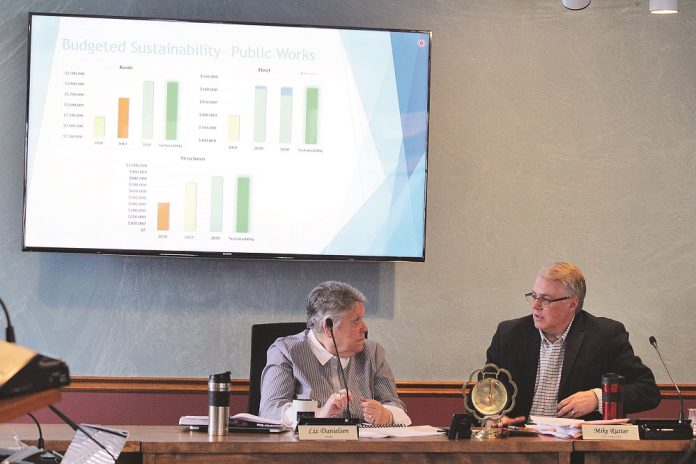
County Warden Liz Danielsen said she was happy with the audit’s conclusion.

“It’s always music to a County’s ears when we hear ‘it doesn’t get any better than this’,” Danielsen said.

County council members also directed CAO Mike Rutter to report back on a possible audit of the County’s reserve funds. That would summarize best practices and possibilities for County funds earmarked for specific future projects.

For the full report, visit haliburton.ca/ council

Managing water levels a ‘giant balancing act’

0

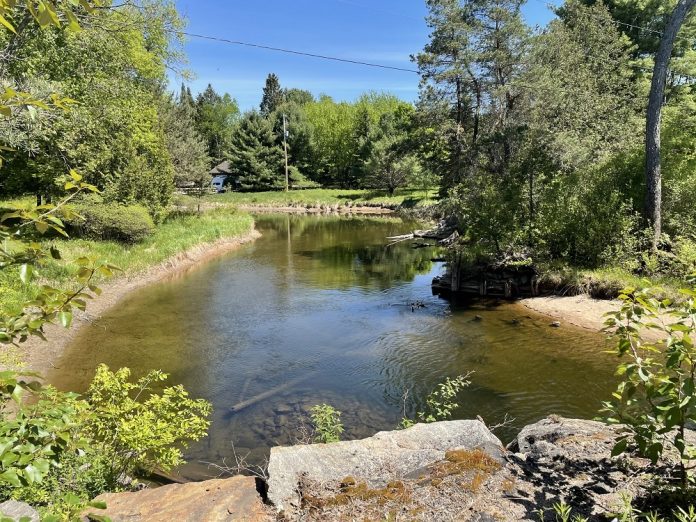
After receiving 25 per cent of May’s average rainfall, experts and politicians are calling for patience as water levels in the Gull River Watershed remain worryingly low.

Without substantial rainfall for weeks, as well as minimal snowmelt, reservoir lakes such as Kennisis Lake are experiencing lower than normal late spring water levels

In order to preserve the health of those reservoirs, flow through lakes without dams or weirs such as Pine Lake, Beech Lake, and Grass Lake are drying up.

However, the low water levels aren’t due to mismanagement by the Trent-Severn Waterway (TSW), said Ted Spence of the Coalition for Equitable Water Flow (CEWF).

“It’s totally based on climate change and climate variability, and the fact that we’ve had so little rain fall,” Spence said. Spence and the CEWF has been working with the TSW for more than 10 years to increase the health of the watershed’s lakes and rivers.

“To see those very large reservoirs at the top of the Gull not full this year: it’s pretty extreme,” he said.

Algonquin Highlands Mayor Carol Moffatt is also worried. She’s been monitoring lake levels and how the TSW chooses to release and hold back water throughout the watershed.

“If Trent-Severn Waterway were to release the water, they’d be taking a great risk … ” Moffatt said. She added it’s because warmer and dryer weather is on the way with minimal rain in the forecast. She said water released from the reservoir lakes might not be refilled. While the TSW released more water for the May long weekend, rain is the key ingredient to normal levels.

“It’s a giant balancing act,” said Moffatt. However, that balance, between the health of rivers and lakes throughout the system and the TSW itself, is frustrating for the thousands who live on nearly-dry rivers and lakes. The TSW opened its boating season May 28, including for the Rideau Canal.

“People are frustrated that our lifestyle and economy here are sacrificed for people in the south,” Moffatt said. “This is an old, complex, and complicated system.”

Spence agreed. According to his communication and work with the TSW, “It is true that their commitment is to open the canal and keep it operating,” he said. But he clarified that if the TSW opened up the reservoir lakes to fill up flow through lakes, cottagers could see worse conditions in the dry months of July and August

“Everybody would like to see enough water in the system,” said Spence. “But I think it’s not only in the interests of the TSW to have the reservoirs full: it’s also in the interests of all the cottagers.”

Concern over waterfowl

The TSW operates dams throughout the system – allowing drainage from lakes or stopping water flow.  Margot Roberts, who lives on a river near Pine Lake, said she’s never seen such worrying water levels.

“Usually [the river] is really moving – it’s a good 30 or 40 feet across to the neighbour’s yard across the river,” said Roberts. “Now, if I had a good pair of boots I could walk over it.”

That also means that Roberts, an active volunteer with Birds Canada, can’t kayak to complete the annual Loon survey. Even more concerning, she said, is if the water is released too quickly, it could wash away Loon nests.

“I thought it would be fun to live on a river,” said Roberts. “Little did I realize the up and down of a river.”

Moffatt said she understand resident’s frustration – and how much the low water levels affect day-to-day life: but the issue is widespread.

“It’s not just us – it’s not that Haliburton County is being ignored by the TrentSevern Waterway,” Moffatt said. “They are doing what they can; the problem is there’s not much they can do.” The TSW did not respond to Highlander questions before press time.