
Home Blog Page 261

Chamber of Commerce rolls out fresh strategy

0

The Haliburton Highlands Chamber of Commerce (HHCC) is implementing a new strategic plan with a fresh team in 2022.

During the organization’s July 26 annual general meeting, president Mark Bell said the plan was an “opportunity to step back and say ‘what do we need to do differently?”

He said 2021 was a “challenging and interesting year. I’m pleased to see the work the chamber did in delivering value to members.”

The strategic plan lays out five goals for the organization, which has 270 Highlands businesses. They include: member experience, prospering and growing membership, partnering and advocating on behalf of members and pursuing governance excellence.

Bell said the chamber has acted on these priorities already. They submitted feedback on the County of Haliburton’s draft shoreline preservation bylaw, for instance.

Executive director Bob Gaudette said he was impressed by the chamber’s clear direction and plan when he took over from Amanda Conn in April 2022.

“When I started, I was a little concerned with how the pandemic would have affected the chamber. The more I dug in… I was really impressed. I think that goes to great leadership and great staff,” he said.

He pointed to the success of recent chamber initiatives such as providing rapid testing kits to partner businesses. They’ve distributed 20,000 so far.

Kirstley Dams, who joined as office administrator this summer, has helped develop new ways of showcasing Highlands’ businesses. Dams has been creating short videos that explain services and products available at local shops and posting them to the popular social network TikTok, for example.

“You want to get the most appealing information you can in a short amount of time,” she said.

“Most of the small businesses that are participating have been really good at re-sharing on their own social media pages.”

The HHCC board also voted to approve new directors for 2022: Francis Pilon, Dr. Kassie Wright, Aaron Hill, and Ryan Merritt.

Dysart council says ‘no’ to cell tower for Minnicock Lake Road

0

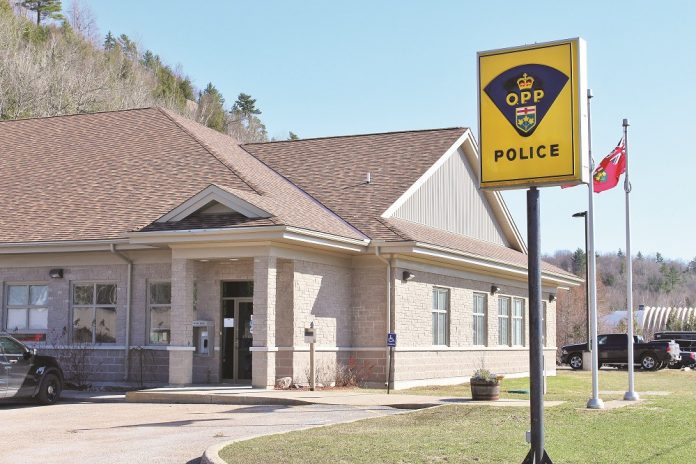
Dysart council has turned down an application from Rogers to install a new 90-metre cell tower on Minnicock Lake Road, though the project may not be completely dead.

Following a debate July 26 over the proposed location of the tower, councillors split a 3-3 vote in a move that saw the project – the first to come to the municipality through the Eastern Ontario Regional Network’s (EORN) cell gap initiative – defeated. Deputy mayor Pat Kennedy was absent from Tuesday’s meeting. Tie votes result in defeated motions.

Mayor Andrea Roberts labelled council’s decision an embarrassment.

“I’m not sure what the next steps are. I’m very disheartened,” Roberts said. “We will be left behind in the dust. If this is the legacy this council wants to leave, that’s what it is.”

Roberts and councillors Walt McKechnie and Nancy Wood-Roberts voted in favour of the proposal, while Tammy Donaldson, Larry Clarke and John Smith shot it down.

Clarke said he was concerned the project appeared to fly in the face of Dysart’s policy 38 – legislation introduced in 2014 regulating the use and installation of cell towers. That policy stipulates any proposed towers should be located a minimum of one-kilometre from the nearest residence; be camouflaged or designed to blend with the surroundings, with the natural-looking Mono-pine structures preferred; be set back a minimum of 60 metres from the nearest road, and feature the minimum required lighting to meet Transport Canada safety standards.

Earlier that day, council heard from Michael Butz, who lives in one of 40 residences within a one-kilometre radius of the proposed site. He called on council to uphold the requirements outlined in policy 38. He noted a petition organized by his neighbours, opposing the project, had garnered over 100 signatures.

He identified a potential site 4.5 kilometres south of the Minnicock Lake Road location, which he said would be a “perfect fit” for a tower, with the nearest residence over a kilometre away.

Rogers spokesperson Eric Belchamber told council that location wouldn’t be viable.

“Having a tower one kilometre away from where people live isn’t practical… It wouldn’t have a meaningful impact on improving service and achieving the EORN goals,” he said. “Policy 38 is one of the most onerous policies I’ve come across. It was written with what seems to be a sentiment of not wanting cell towers [in Dysart].”

Smith said if Rogers had issues with the policy, they should have been raised when the process began 18 months ago.

Donaldson said her belief is that 5G technology is unsafe for human health.

“There is no health risk whatsoever to humans through this technology,” Belchamber said.

Christian Lee, a site acquisition specialist with Rogers, expressed confusion over Donaldson’s comments given that Innovation, Science and Economic Development Canada (ISED) outlined in its information for municipal councils that these type of concerns were unfounded and unwarranted and should not be part of the decision-making process.

Belchamber noted this was only the second out of around 85 EORN projects he’s worked on in the past year to have been rejected. He mentioned Rogers was working on five other cell tower location sites in Dysart.

Roberts asked Clarke, Smith and Donaldson what would have to happen to change their minds. Clarke said he would be willing to revisit the issue should council revise policy 38. CAO Tamara Wilbee said it would be brought forward at next month’s committee of the whole meeting.

“We have policies in place for a reason. Our residents are looking at us to uphold policy 38… and I think we have to do that in this case,” Clarke said. “If it can be revised and the site can still work within the policy, then I’ll support it.”

Mayor ‘gobsmacked’ by Bear Lake Road findings

0

Algonquin Highlands mayor Carol Moffatt issued a public apology on behalf of the township to residents of Bear Lake Road July 21, stating the municipality was in the wrong following a long-standing dispute over winter maintenance of the thoroughfare.

Council has been at loggerheads with residents, now mobilized under the Bear Lake Winter Maintenance Association (BLWMA), for decades, with property owners lobbying the municipality to allow them to plow the road during the winter.

Due to safety concerns, township staff has not been providing winter maintenance. They also prohibited residents from carrying out the work themselves or contracting a snow removal company to do it, citing liability concerns.

Frustrated by a lack of movement on the issue, BLWMA reached out to a lawyer to find out what options they had. What happened next was “gobsmacking”, Moffatt said.

“The lawyer insisted that the township doesn’t and never has had jurisdiction over the road, so council agreed to take a deeper look at it. It turns out they were right and the township has never had formal ownership of Bear Lake Road,” she said. “It’s a humble watershed moment for this municipality, and I think it’s really important to make an apology. We unknowingly failed some people and we have to do better.”

Moffatt said the township had documentary evidence suggesting the former Sherbourne township assumed ownership of the road in 1971, but that paperwork is wrong. Bear Lake Road is, and has always been, Crown land.

With this revelation, Moffatt said the municipality had a decision to make. Staff have carried out minor maintenance on the road during the summer for more than 50 years. Now, because the township doesn’t own the road, it has no obligation to maintain it, nor does it have any authority to police issues.

That doesn’t mean council is going to walk away, though. The township’s lawyer presented options to council: immediately cease all maintenance, leaving the property owners to take care of any required work themselves; try to obtain full and formal jurisdiction of the road; or request the province close the road during the winter.

“I hardly think council is going to want to just walk away from this,” Moffatt said, indicating a fourth option, where the township works with residents to come up with a solution, could be on the cards.

“Unfortunately, it’s not as simple as saying ‘OK, you take care of the plowing, we’ll take care of the grading and everyone is happy’,” Moffatt added, “We have to go through a formal process of seeing the options more specifically laid out and discuss how we would formally reach out to folks to say ‘what do you want us to do there?’

“I’d like council to consider a variation on the options, perhaps on a trial basis, to see what works. It could be a win-win, but it comes with some caveats that come with Crown land that some people might not like,” she added.

Staff will spend the next couple of months investigating potential hybrid solutions, with a report to be brought back to council in September.

County ambulance planning for busy future

0

With ambulance call volumes up by close to 15 per cent in the first half of 2022, emergency services chief Tim Waite was happy with response times and also eager to get a move on with the County’s paramedic service master plan.

Speaking to call volumes between Jan. 1 and June 30, 2022, Waite said, “the data obtained from the Ambulance Dispatch Reporting System “shows a significant call volume increase for the first half of 2022.” He added it was evident for urgent and emergent cases, as well as total calls, including deferrable, booked transfer and standby.

“April, usually being one of our quietest months, saw a significant increase of 64 per cent in priority 3 and 4 emergency calls. Total call volume for the first half of 2022 has increased close to 15 per cent,” Waite added.

In a report to the July 20 meeting, he added that when it came to response times for that same six-month period, the service “is presently meeting or exceeding all response time targets except in the case of the Canadian Triage Acuity Scale (CTAS) 1, where we are two per cent short of our target.”

CTAS 1 are conditions that are considered threats to life or limb or have an imminent risk of deterioration requiring immediate aggressive interventions. Waite noted it is hard to hit the six-minute target for sudden cardiac arrest in some instances and one call over thresholds can skewer numbers.

At the meeting, council also endorsed awarding the contract for the paramedic service master plan to Emergency Management Group, for $114,924 plus HST, from municipal modernization funding. The remaining $13,000 or so will come from budget savings.

CAO Mike Rutter said they’d be doing a community risk assessment as well for each township, which would also help fire departments.

An interim report will be presented to staff in late September with a final report being delivered by end of December, Waite said.

Adventure Haliburton awaits app decision

0

Adventure Haliburton will have to wait a while to find out if County council will partner with it to expand its use of Driftscape – an Ontario-made exploration app.

The group, that represents tourism operators and accommodation providers, launched the app – which functions as a digital, interactive roadmap for adventures – last July 29.

Its vice-president, Randy Pielsticker, came to the July 20 County council meeting. The County gave it $5,000 last year to help with initial costs. While the app promotes private businesses, Adventure Haliburton promoted 15 municipal points of interest.

Pielsticker said they’d had a “great working relationship” with Driftscape the past 1.5 years. He added the platform had grown to nearly 60,000 subscribers by June 2022, from 30,000 in February 2021.

The app is available for iOS and Android devices and can be accessed on internet browsers.

For now, Pielsticker said they had created a basic digital footprint, but wanted to take it to the next level. For example, he said they would like to add tours of downtown Haliburton and Minden, and quests, such as digital scavenger hunts. They’d also like to better promote events and provide navigational assistance for events such as Hike Haliburton and the Studio Tour.

His ask was another $5,000 from the County, for each of 2022-2024, to pay for the annual subscription. Adventure Haliburton would match that to maintain the development of the site and market and promote it.

“Since we’ve taken on the project, it really has grown, and much further beyond the initial launch that we had anticipated,” Pielsticker said. “The challenge is Adventure Haliburton is a not-for-profit group and we are run by volunteers. We do have the budget to continue to develop this software program, this marketing platform to try to really take full advantage of it and that’s where we’re looking for your help.”

He said the plan is to share the data with the County to, “help inform the decision-making process of County tourism, help analyze trends, target markets we need to offer extra support to, and key performance indicators.”

Warden Liz Danielsen said, “it does sound like the strategy that you developed for 2021 was successful from the numbers that you’ve given us, and your strategy going forward has got some pretty exciting ideas that will probably work well for us all.”

However, councillors said they wanted to hear from economic development and tourism staff before committing to anything. Director of tourism, Tracie Bertrand, did not attend the meeting and there was no staff report accompanying Pielsticker’s delegation.

Council was also concerned since they have already set the County budget for 2022 and are soon going to be going into lame duck mode. That means they don’t want to made decisions during an election period.

Coun. Pat Kennedy noted the County had been successful in getting a $50,000 grant from Ontario’s Highlands Tourism Organization, including $25,000 for data collection and $25,000 for marketing activities so that might cover the Adventure Haliburton ask.

Council deferred a decision until after a staff report at a future meeting.

Trees cut down as highway fixes begin

0

Ontario’s Ministry of Transportation (MTO) has started a months-long project along Hwy. 118 between Haliburton and Carnarvon.

“The purpose of this rehabilitation is to improve the safety and operation of Hwy. 118, including pavement rehabilitation, slope stabilization, and improvements to intersections, drainage and guide rails,” said a spokesperson for the ministry July 26.

Contracted workers have cut trees from more than 300 feet of waterfront adjacent to the roadway beside the Gardens of Haliburton.

For some Highlands residents, the sight of the tree clearing was alarming.

Susan Hay of Environment Haliburton! struggled to find out what work was occurring. She said the County of Haliburton and Dysart et al could not provide further information since the highway is provincially maintained.

“You would think that MTO would have notified someone in the community that a project of this size was going to take place,” said Hay, who eventually contacted the ministry.

Hay said she understood the necessity of the road maintenance project, but “it seems tragic that all those trees had to come down all the way to the shoreline. Not just for the trees and the stabilization of the shoreline but for the herons and other wildlife that those trees provided habitat for. And, for the beauty and the character that the trees gave to the lake.”

Further projects along the highway are scheduled to be completed by the fall.

The MTO did not respond to questions about how crews would mitigate the impact of tree clearing on local wildlife, or whether notice was given to residents, before deadline.

The MTO encouraged residents and travellers to visit 511on.ca or twitter.com/511Ontario for updates regarding the work and any impacts to traffic. This information can also be accessed from the Ontario 511 app.

Traffic lights coming to busy intersection

0

Traffic control signals could be constructed on County Road 21 at Industrial Park Road in Haliburton next year, director of public works, Robert Sutton, told councillors at their July 20 meeting.

By way of background, he reminded councillors that in the fall of 2020, in partnership with Dysart et al, an application to extend the multi-use pathway on County Road 21 was submitted under the Investing in Canada Infrastructure Program COVID-19 Resilience Infrastructure stream.

The project proposed to install a pedestrian crossover at the intersection and extend the existing pathway from Industrial Road, west along the north side of the road to the traffic signals at the Independent Grocer.

The estimated cost was $200,000 with the County and Dysart each applying for a $100,000 grant. In the spring of 2021, the application was approved with the federal government contributing $160,000 and the province $40,000.

Sutton said as staff started planning, they were concerned about traffic volumes at the intersection. He added the original application and project scope was based on the 2017 County Road 21 corridor study completed by AECOM.

The study recommended a pathway and pedestrian crossover at Industrial Road.

But Sutton said due to the passage of time, impacts from COVID and increased development in the area, County and Dysart staff thought it would be a good idea to review the five-year-old study.

“AECOM completed the memo in December of 2021 and concluded and recommended that a full traffic control signal was now warranted at this intersection,” Sutton said.

The preliminary estimated cost is $350,000, with the County picking up the added costs.

“Once the senior levels of government approve the change in scope of the project, staff will develop and advertise a request for proposal to obtain a consultant to design the project this coming fall and winter as well as determine a more accurate estimated total cost of the project. Construction is projected to be substantially complete by the end of 2023,” Sutton said.

Dysart et al mayor Andrea Roberts commented, “It is an extremely busy intersection and will only get busier when the student residence is built and, potentially, a phase three of the industrial park.”

She added, “this is great for that area. It will also help calm traffic, I believe, because it’s very hard sometimes to even get a break in traffic. I know. It’s my neighbourhood and a very busy area, particularly in the summer.”

Council, locals concerned over retreat plans

0

Algonquin Highlands council is considering the long-term implications of a re-zoning application from Dimensions Retreats that would see the Maple Lake operation introduce a medical component to its programming.

At a public meeting July 21, township planner Sean O’Callaghan said Dimensions was looking for a permit to add acupuncture services, install a float tank, leading light, sound and group therapy and set up a medical clinic. This was a change from initial plans approved by council last November, which centred around a “destination retreat” for visitors, with yoga, massage and meditation.

O’Callaghan said the application complies with the township’s official plan, but council was hesitant given controversy surrounding the project over the past year.

Dimensions bought the 40-plus acre site in May 2021. In an initial press release, they described it as a “psychedelic treatment company,” focusing on inpatient treatment integrating neuroscience with traditional healing practices. There was concern from the public that the site would be transformed into a drug rehabilitation clinic.

A few months later, CEO Christopher Dawson told local media Dimensions would “not be providing medical services of any kind”, billing themselves as one of Canada’s premiere tourist getaway destinations.

Dawson then told The Highlander in March that, while the company would not be offering drug and alcohol rehabilitation programs, there was a long-term plan to introduce a medical component. He said they wanted to expand into psychotherapy and psychedelics, referencing psilocybin – or magic mushrooms – currently illegal in Canada.

Mayor Carol Moffatt expressed concern over the planned “accessory” uses Dimensions outlined in its new application.

“How many uses does there have to be before the overall use is no longer accessory? We started out with accommodation, massage, yoga and woodland frolic and we’ve ventured into medicine and medical practitioning,” Moffatt said.

The new application also called for a small pharmacy space, which Dawson clarified would serve only as storage for prescribed medications brought on-site by visitors, not operate as a dispensary.

“We are definitely not an acute care facility, a hospital, a rehabilitation centre, a treatment centre. We don’t have capacity to do detox for individuals that suffer from addiction,” Dawson said last week. “We are going to primarily focus on [people] that have demonstrated themselves to be treatmentresistant within the context of traditional treatment.”

He referenced a recent decision by Health Canada to legalize psychedelics on a caseby-case basis for people suffering PTSD or relapsed addicts, hoping Dimensions would be able to lean into that segment.

Deputy mayor Liz Danielsen said Dimensions has not been clear about the intent of the facility.

“I do see there are some pretty substantial benefits to Algonquin Highlands and the County. But when I’m looking at this from a pure planning perspective, your report does not give us the information we’re seeking,” she said. Dawson said the company’s total investment would be about $20 million.

Public concern

Carolyn Dartnell, a cottager on Placid Lane, feels there’s been a lack of transparency with residents. She said Dimensions, and its services, are not a good fit for the township or Maple Lake community.

Amber Meirik, a cottager on Maple Lake, is concerned about community safety, given Dawson’s admission he intends to use cannabis as a treatment option and hopes to one day expand into psychedelics

“There would be an elevated risk of unwanted exposure to people under the influence of dangerous drugs,” Meirik said. She also cited concerns over increased traffic, and the impact on lake water quality.

Dartnell urged council to proceed with caution.

“This is the only time council will have influence over this site. Once there is a medical clinic on that site, it will be there forever,” she said.

Next steps

Moffatt didn’t feel entirely comfortable approving the proposal with question marks over the request to include a pharmacy space and usher in various medical services.

“If there doesn’t need to be a pharmacy… get rid of it. I want this to be as concise and accurate as it can be. If there aren’t currently short-or-medium term goals or plans for osteopathy and chiropractic, get rid of it. It almost sounds now like they’re saying they want one of each thing just in case they want to introduce them in the future,” Moffatt said.

Coun. Jennifer Dailloux said AH is one of the first jurisdictions in Canada dealing with an application of this nature so there’s extra pressure to get things right.

“If there is no urgency, maybe it’s a gift that we can take some time on this file, ask some more questions and enable Dimensions to reach out to the community a little bit more… We want to get this right for our community,” she said.

U-Links seeking research projects

0

If you’re a local resident concerned about homelessness in Haliburton County, a business owner wondering how improved transportation options could bolster the region’s dwindling workforce, or a waterfront property owner worried about the long-term health of your lake, U-Links Centre for Community-Based Research wants to hear from you.

Since launching in 1999, the organization has facilitated hundreds of research projects in the Highlands between area residents, organizations and student researchers from Trent University and Fleming College. It’s all about helping to provide insight and information on various social, cultural, environmental and economic issues facing the community.

Earlier this month, U-Links put out a call to the community seeking ideas for future projects.

“We’ll do this once a year, typically, connecting with our community to try and find out what they want to know. If the community says ‘I want answers to A, B and C’, we’ll do our best to go away and make it happen,” said Daniela Pagliaro, logistics coordinator with U-Links.

Once a project has been formulated, U-Links staff post details to its website and reaches out to contacts at Trent and Fleming to see if there are any students interested in taking them on.

It isn’t as simple as finding someone, though. There is an extensive application process, Pagliaro said, that’s designed to find “a perfect match” between student and project.

“Because these projects are so important to us, we want to make sure that the student we’re trusting to take it on is committed and understands exactly what’s expected of them,” Pagliaro said. “We want the projects to be good so that they benefit our community.”

At the end of each school year, U-Links hosts a celebration of research, where students have the opportunity to present their work to the community. At the most recent event, held virtually in March, U-Links featured 18 completed projects.

Among them was a report on food waste reduction strategies for Dysart et al, benthic assessments of more than a dozen area lakes and a study of existing supports for people with eating disorders in rural communities.

Pagliaro noted around 80 per cent of the projects U-Links has on its books are environmentally focused, but that isn’t by design.

“We would love to see more sociocultural projects come our way… We would absolutely welcome a project, for example, that looks at housing and homelessness in Haliburton County. That would be a perfect fit for the issues we’re presently seeing, and for connections we have,” Pagliaro said.

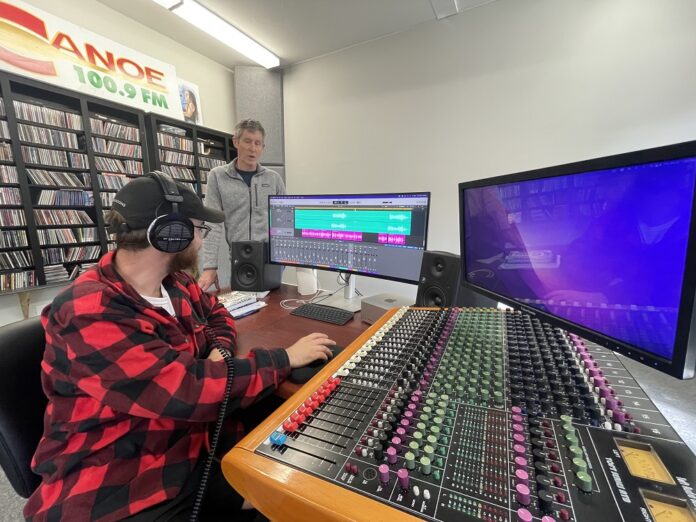
Other non-environmental projects U-Links is looking to move forward include delving into the history of the old Mountain Street Red Cross Outpost (now the CanoeFM building), the viability of a virtual adaptation of Abbey Gardens’ on-site Sprouts to Snacks program, and a programming evaluation assessment for the Abbey Retreat Centre.

The organization is asking that people reach out with project ideas by mid-August, to give staff enough time to finalize things and get in touch with schools. For more information, contact Sadie Fischer at environment@ ulinks.ca, or call the office at 705-286-2411.

Marking 75 years of history on Hall, Hawk Lakes

0

Elvin Johnson Park was a hive of activity this past weekend as the Halls & Hawk Lakes Property Owners Association (HHLPOA) marked its diamond anniversary with a community celebration more than 12 months in the making.

Hundreds of cottagers and permanent residents pitched up along the shore of Halls Lake July 16, enjoying the festivities put on by the association. There were games and birdhouse painting for children, while adults enjoyed music provided by Nick and Benton, and catching up with friends and neighbours.

It was an emotional day for some, noted HHLPOA president Peter Dadzis.

“This was our first real community event in three years, our first time seeing familiar faces in a long, long time,” Dadzis said.

“There were lots of smiles, but there were some tears too as people reunited… It’s been a very special day for our community.”

Since its launch in 1946, the HHLPOA has been responsible for the protection and stewardship of Halls Lake, Little Hawk Lake, Big Hawk Lake and the Kennisis River. Today, the association boasts more than 200 members.

Among them are the Greenhow family. Patriarch Abiathar Carey is the first known cottager to frequent Halls Lake, having built a cabin on the water in 1919.

Ninety-one-year-old Dorothy Watts still spends time at the place, albeit updated, her grandfather built all those years ago. She and her sister, Trish Greenhow, are two of seven siblings to have spent almost their entire life cottaging in Algonquin Highlands.

The family is now fifth generation at the lake. Rob Greenhow and his wife Angela, who live in Colorado, make a point to visit Halls Lake every summer. The couple’s two children, Ella and Adam, are regular visitors of nearby Camp Kandalore.

“This is a special place for our family. Most of us grew up on Halls Lake during the summer,” Greenhow said. “Now we’re introducing the next generation and hoping they’ll carry the torch forward.”

Joan O’Halloran and her late husband, Jim, bought their property on Big Hawk Lake in 1953. She has spent nearly every summer since visiting the area.

“We had to come in by boat for a lot of years… The road only extended out to our property in 2010,” Joan said. Her son, Regan, and his wife, Carol Foderick, took ownership of the one room cabin in 2013. They recently completed construction of a brand-new cottage, and spend seven or eight weeks of the year there with children, Katie and Ben.

“I remember back when I was a kid, we’d get in a boat and head out with a quarter in our back pockets, wondering what the day ahead would bring. Those were some of the best days of my life. I had so many amazing times finding fun places on the lake,” Regan said. “Those are the sort of experiences I’m hoping my kids will make coming up here.”

The Greenhow, O’Halloran and dozens of other families’ history on Halls and Hawk lakes are outlined in the recently published Lure of the Lakes. Written by cottager Joan Hamilton, the book captures the HHLPOA’s 75 years, and shares stories of some of the area’s earliest settlers.

“This book ensures that the history of this lake and the people that make up our community will be remembered forever,” Dodzis said. “We owe an awful lot to the people that came before us and helped to settle this community.”

For more info, visit hallshawklakes.ca.