

Home Blog Page 156

Post mastectomy clinic coming to Minden Hills

0

When Mary and Vanessa Douglas opened Mostly Her, a women’s boutique in Minden, earlier this year they had a vision of offering more than just clothing and undergarments to their customers.

Having recently celebrated their sixth-month anniversary in the community, the pair are partnering with a Burlingtonbased clinic to bring post mastectomy services to Haliburton County.

On Oct. 27 and 28, the business will open its doors to Barb Daize and Anne Thompson of Bodymed Boutique, who will be in town conducting specialty bra fittings.

“This is something we’ve been really passionate about for some time – I think bringing a clinic like this to the County is going to help so many people. It’s a service that is not easily accessible for people who live here,” Mary said. “I think this is going to be an incredible learning opportunity for us, and for a lot of our customers.”

Daize, an RPN, and Thompson, a breast cancer survivor, have been working together for about 15 years educating women about the mastectomy process and how they can move forward with their lives post-procedure

“A mastectomy is major surgery that removes the entire breast following a cancer diagnosis,” Daize told The Highlander. “It’s a very personal surgery and can often lead to women mistakenly feeling embarrassed about their situation… we’re here to tell you, there’s absolutely nothing to be embarrassed about.”

Thompson added, “I can relate to people’s stories, what they’re going through after beating the cancer. How they’re feeling mentally and physically. Part of the reason I do this is to share my story and let people know there is a path to feeling comfortable and confident in yourself again.”

Daize, who cottages in the area, said she reached out to the Douglas’ shortly after Mostly Her opened in the spring. While they weren’t ready to host a clinic right away, the possibility piqued their interest. They started planning for an event in the fall.

Private fittings are available by appointment or walk-in. Douglas said she has two scheduled already.

“The event is already a success, because we have people booked already,” Daize said. “It’s at least an hour and a half drive for most women to get to a specialized mastectomy store, so we’re really pleased to be offering this. The education piece is important for us, because Anne and I know of many women who, after a surgery, will continue to wear normal bras, and stuff them with socks or toilet paper.

“Nothing is more sad to me, because these people deserve so much better, to maintain [their dignity],” she added.

Fittings are complimentary, while the Mostly Her team will be on-hand with options should women decide to make a purchase.

And if you can’t make this month’s event, there will be further chances in the future. The Douglas’ have committed to hosting four clinics annually, which Daize said she’s really excited about.

“It means we’ll have a continued presence. We know this is a very intimate thing and people might not be quite ready – there will be other opportunities,” Daize said. “Even though you feel different now, you feel a loss, it doesn’t always have to be that way.”

To book an appointment, contact Mostly Her at 705-2864233
CanoeFM celebrates 20 years on air

0

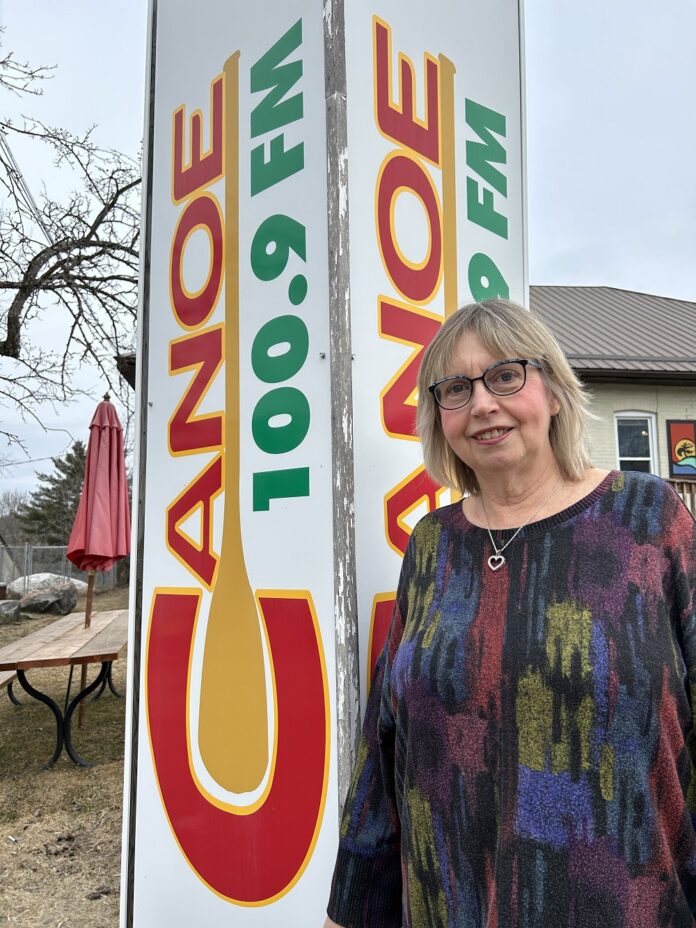
CanoeFM, Haliburton County’s non-profit community radio station, turned 20 recently, with volunteers spanning two decades attending the station Sept. 26 to mark the occasion.

Among those was Joan Cameron – widow of Don, whose idea it was to bring radio to life in the Highlands.

Cameron said her husband was, “like a dog with a bone… tenacious” once he decided to launch the station. He enlisted the help of Dave Sovereign and, later, Jack Hewitt, with the trio coming together in March 2001 to conceptualize how to bring their dream into reality. They incorporated Canoe as a nonprofit later that year.

Dysart et al authorized the use of the Canoe building in July, and the group of volunteers, which had grown to include a handful of other names, such as former Algonquin Highlands mayor Carol Moffatt and community stalwarts Wendy Bartlett, Eric Beaulieu, Russ Hemphill, Ray Miller, Caryl Ann Moulton, Al Sheridan and Harry Southworth, started to fundraise.

Start-up costs were pegged at $125,000 – for a transmitter, antenna, transmission line, stereo generator, and audio processor. They utilized a tower in Eagle Lake to broadcast a signal across the County.

By mid-2003, the station had received the go-ahead from Industry Canada. On July 8, it had its first unofficial broadcast, celebrating its grand opening on Sept. 26. The first song broadcast, ‘The Impossible Dream’, was a direct nod to Cameron.

“His whole life revolved around that station at the beginning,” Joan said. “And, as a consequence, so did mine.”

Joan played a pivotal role in the early years. She was Don’s chauffeur – he had to give up his driving licence after suffering a stroke in the late 1980s – and, later, became one of Canoe’s most celebrated voices. Getting her start on the ‘Women, Weeds and Wisdom’ show on Tuesdays, Cameron blossomed as an on-air personality. Her most famous role was as “the story lady”, where she read Junie B. June tales to listeners.

“I still get stopped by people who recognize my voice,” Cameron said.

During those early years, there was no guarantee the station would be celebrating a 20-month anniversary, let alone 20 years, said Dave Allen, long-time sales representative. He joined Canoe weeks after the station’s official launch. It may seem surprising now, but back then not everyone was convinced about the station’s long-term viability.

Allen remembers when, upon returning from sales meetings, Don would greet him with a big smile. “Do you have a cheque for me?” Don would ask.

“Things were really tight back then,” Allen said.

Greg Roe was one of the first people to come forward in 2002 once word about the station’s formation got out. He’d always had a passion for radio, dating back to his formative years when, growing up in Scarborough, he’d tune into stations across the border that played his kind of music.

The ‘It’s Only Rock and Roll’ show has been running for as long as Canoe has been on the airwaves. Roe still gets excited when, on Friday nights, he escapes to the studio, closes the door, picks up his headphones, and goes out to people across the County.

“Things have changed a little over the years, but that feeling remains. Canoe has been such a big, wonderful part of my life. I don’t know if there will ever be a time when I don’t want to go on, on a Friday night,” Roe said.

While Cameron doesn’t get out to the station much anymore, she’s still a keen listener. She said the 20th anniversary celebration was a special day for her, as she got to reconnect with dozens of friendly faces from years past. One of those was station manager Roxanne Casey. Originally joining Canoe as an on-air host in 2004, transitioning to her current position in 2008, Casey has spent almost 19 years helping shape the station’s programming.

“Canoe is a wonderful story of what can be achieved when a community pulls together,” Casey said. “There’s been a lot of people who have come through those doors over the years, and each one has contributed in their own way. It’s been quite the journey.”

Her focus now is on ensuring Canoe is still around for another 20 years. Growing from that initial team of 10 or so volunteers, the station now has around 125 people who contribute in different ways, including 40 who frequently appear on-air. She noted succession planning is underway, to ensure the next generation can keep Canoe going.

Looking back on the many success stories, Casey said there’s nothing quite like radio bingo. Since its inception in 2012, it has raised more than $1 million – with half of that being donated back into the community, supporting dozens of causes over the years.

“It’s a nice feeling knowing how much of a positive difference that money has made in the community,” Casey said.

After spending so much time herself, and watching Don give so much to ensure Canoe got off the ground, Cameron said it’s amazing to see the station still thriving all these years later.

“It’s a testament to Haliburton, it’s a testament to all the incredible people who have contributed over the years, and it’s a testament to Don, Dave, and Jack, who didn’t give in even when everyone thought they should,” Cameron said. “This community is a much better place thanks to 100.9 CanoeFM.”

HE puts brakes on new office

0

With the design bid build RFP for a new municipal office coming in substantially over budget, council paused the project at its Oct. 10 meeting.

The municipality budgeted $100,000 in 2023 towards the pre-construction work. However, costs as prepared by successful bidder, The Ventin Group, from Toronto, came in at $376,890 plus HST.

The work on offer is developing a detailed municipal office design and parking lot and then assisting the township in putting the construction of the project out to tender, with building starting in 2024 and concluding in the fall of 2025.

Deputy treasurer, Brittany McCaw, said the balance of monies would have to be included as part of the 2024 budget if council were to proceed. She added there was surplus money available. She noted they had been putting money away for the past seven years, with more than $930,000 banked, not including the previous years’ surplus. She added the cost will only increase if they wait. Further, she argued they need shovel-ready projects for future funding applications.

She told council, “I understand there may be some concerns around the dollars,” but said staff have been lobbying for some time that one facility housing all municipal staff would: aid financial stability; be cost effective; conserve energy and increase accessibility; ease operational defragmentation; help human resources management, and there’s the potential to convert the current municipal buildings into housing units or office space.

“Currently, we cannot meet or exceed our current levels of service, which is desired by ratepayers of council,” she said. “If ratepayers are required to visit the office… they need to visit multiple offices depending on the service. So, we have a building department down in Gooderham, and then if they require planning assistance, or need to pay their taxes, they need to come up to the office in Wilberforce.” She noted they also have no permanent council chambers.

McCaw added the current buildings are at-capacity for additional staff and make it hard to plan other service models.

Coun. Cam McKenzie said, “these numbers just blew me away. We were talking about $100,000. Now, we’re into, with tax… $425,000 to get a plan and oversight. We’ve been putting money away for seven years, with $938,000 in reserves for this project. We’re going to spend half of that on the plan and the oversight… and I know that’s important, and we haven’t bought a cement block or a two-by-four… I have a hard time getting my mind around this.”

Coun. Cec Ryall said no one is arguing the need, or the return on investment, but “I think the cost is unbelievable.”

He said when they last discussed the item, he suggested working with one of the community colleges or universities on design bid build and assumed that had not occurred. He said it would not have cost $400,000.

“There’s got to be a more financial, palatable, way of doing this than $400,000 up front. This building is going to cost us $2 to $3 million bucks on the short side. Where’s that coming from? We’re going to have to borrow money or something …”, Ryall said.

Council opted not to proceed at this point.

Minden Hills gives STR bylaw the nod

0

Minden Hills council, at its Oct. 12 meeting, supported in principle the County-led shortterm rental bylaw, as well as a municipal accommodation tax.

County director of planning, Steve Stone, and director of economic development and tourism, Scott Ovell, are making the rounds of lower-tier townships.

After their presentation, mayor Bob Carter commented the bylaw was a culmination of six-plus years of work but, “this (County) council has been relatively aggressive in making sure that not only would we have a bylaw (but one that) would stand the test of time and the test of the legal world.”

He added, “we went out and hired a very experienced legal firm that has been working with these short-term rentals for a number of years. And we spoke extensively with people and other municipalities across the province.”

He said one of the challenges in the Highlands is “we have absolutely no idea how many short-term rental properties there are. Estimates have started in the hundreds to well over 3,000.” As a result, he said they don’t know how many applications they will get. He said the bylaw eases the load on fire departments, for example, from having to inspect 1,000 to 2,000 properties as there is a self-attestation in the bylaw.

Carter further added they have also been firm that “not one penny of taxpayer dollars should go into this program. In other words, the short-term rental structure should all be paid for by the fees that are collected for the program. This isn’t a money grab. This is something that is required. We’ve all heard complaints, we’ve all heard the issues, and we need to take control of the situation.”

As for the municipal accommodation tax, Carter said money collected could be put towards tourism infrastructure, roads and services, and even housing.

He said he’d like both the STR bylaw and MAT in place for the beginning of the summer tourist season next year.

Coun. Pam Sayne, while in favour of the County’s work to date, said “this is something that I think should have been handled at the provincial level. She said the province has essentially allowed commercial properties in residential neighbourhoods across Ontario without giving townships planning teeth.

Sayne added it has created a situation where people are worried about security with renters moving in and out of homes.

“They don’t know who their neighbours are anymore… And that has really cut into the fabric of our communities.”

Sayne said it had greatly affected housing. She knows of people who have lost longterm rentals to landlords seeking more money from STRs.

Ovell said once the short-term rental bylaw goes live, the MAT should kick in as well. “If you don’t do it that way, I would say you’re just leaving money on the table.”

Carter said they may have legal challenges but, “we have done our best to make sure that we follow all the best practices. And, again, this isn’t a money grab. This is to make sure that what we have in our tourist world within Haliburton County is safe.”

AH council outlines details for docks policy

0

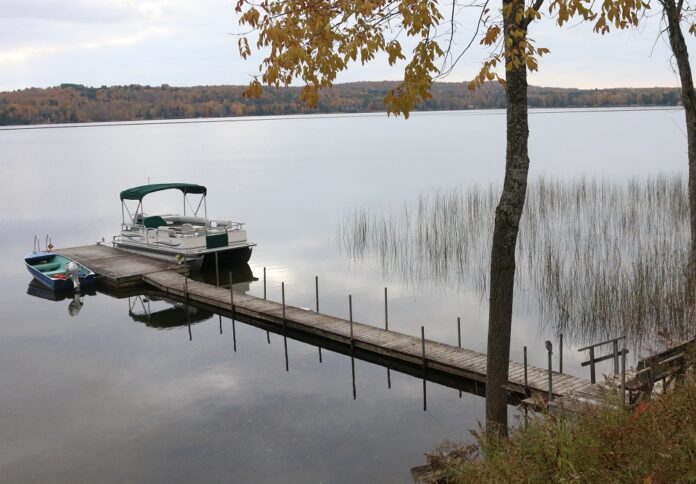
Algonquin Highlands council has agreed to terms on a new license of occupation policy outlining rules for private dock registration on municipal property, with the legislation set to come into effect as of Jan. 1, 2024.

Following months of recent discussion, and years of consideration, the township’s elected officials supported the policy in principal Oct. 5. It calls for residents who own property across a municipal road from a waterbody, which has a dock or other infrastructure installed on township land, to register them.

Algonquin Highlands planner, Sean O’Callaghan, said the policy would protect the township from any liability, while enabling staff to keep accurate records of the number, and type, of structures located on municipal land fronting lakes.

The original proposal called for residents to pay a $750 application fee and provide a $2,500 deposit to cover any legal fees. It also required a site plan identifying the location and size of the docks and proof of insurance – first set at $5 million, but since reduced to $2 million. It was recommended licenses be renewed annually for $500.

Following criticism from some landowners, council came to something of a compromise at the meeting.

Coun. Sabrina Richards was concerned about the year one costs for those who would have to enrol, suggesting a lower annual renewal fee. Since he was unsure how much the program would cost, and council felt it was important to operate it strictly on a cost recovery basis, O’Callaghan suggested the $500 annual fee be maintained, at least for the first two years, with the possibility of it being lowered later.

Policies, once approved, will remain in place for 10 years, the planner said. Should someone sell their property within that window, and the new homeowner wish to maintain use of a waterfront area, they would have to reapply for a new license, O’Callaghan said.

To help offset the financial burden for good actors, coun. Lisa Barry suggested the township waive the $750 application fee for any property owner with existing structures who register in 2024. The fee would be for anyone who applies after that point, and for anyone looking to install a new structure. Council unanimously supported the amendment.

Council established a two-year window for registration, giving everyone until Dec. 31, 2025 to secure a license. Any unlicensed structure still in place by 2026 will be removed, O’Callaghan said.

“Giving people two years to enter into a license is very reasonable,” O’Callaghan said.

Concerns levelled

James Cooper and Logan Percy, who own impacted properties on North Shore Road, told council at the meeting they would not comply with the policy in its current format, and would be recommending members of the Haliburton County Landowners Association – recently established to combat the policy – follow suit.

James Cooper and Logan Percy, who own impacted properties on North Shore Road, told council at the meeting they would not comply with the policy in its current format, and would be recommending members of the Haliburton County Landowners Association – recently established to combat the policy – follow suit.

Cooper also took umbrage with O’Callaghan’s assessment that the township would reserve the right to terminate any license of occupation at any time at its own discretion.

We asked for documented guidelines for scenarios where the township can revoke a license, the response was… guidelines will not be developed,” Cooper said. “Without guidelines, anyone who signs this agreement effectively has little to no rights.

“There’s no appeal process, no tribunals, no lawsuits, nothing. You’ve covered yourself in a way that says if there’s any disputes, there’s no recourse for us… Because we’re the ones putting out significant funds, we want to make sure we get this right,” Cooper added.

O’Callaghan said it would be difficult to establish a standard list, noting there’s no one size fits all approach that would cover all properties. He outlined lack of payment and issues with the building code as two reasons for possible termination.

Percy wanted to know if applicants would have exclusive use of waterfront areas upon registration. O’Callaghan said that was the intent, but he was unsure whether that could be enforced. He committed to bringing an answer back to council at a future meeting.

Paying a fair share

Percy also took exception to prior comments made by Danielsen indicating homeowners like him were not paying their fair share for their docks.

“MPAC does assess us as waterfront residential, our properties are bought and sold at waterfront pricing, and Algonquin Highlands taxes us accordingly… we pay similar amounts in tax per year as all equivalent waterfront properties, so we are paying our fair share and always have been,” Percy said.

He opined if this policy were to come into effect, the approximate 350 landowners impacted would be paying more in taxes and fees, by percentage, than any other ratepayer in Algonquin Highlands. Danielsen expressed her belief Oct. 5 that this was untrue. She also shut down calls from Cooper and Percy to set up a meeting with MPAC, the body responsible for determining property values for taxation purposes.

“I don’t see that helping at all,” Danielsen said.

The mayor did admit the township “jumped the gun a little bit” in trying to establish the license without rolling out an extensive educational program, noted as a key priority in discussions over the years. She thanked Percy and Cooper for the work they had done on the file.

“In some ways you’ve forced our hand… we’ve gone a lot further with respect to education and we should have done that earlier,” Danielsen said.

O’Callaghan said he would provide answers to outstanding questions and bring the policy back for official adoption in November.

HHHS, Foundation ask County for $1M for CT units

0

The County of Haliburton has put HHHS and its Foundation’s request for $1 million towards a CT scanner and CT mammography unit in the waiting room for now. However, the ask is expected to return to the next council meeting, scheduled for Oct. 25.

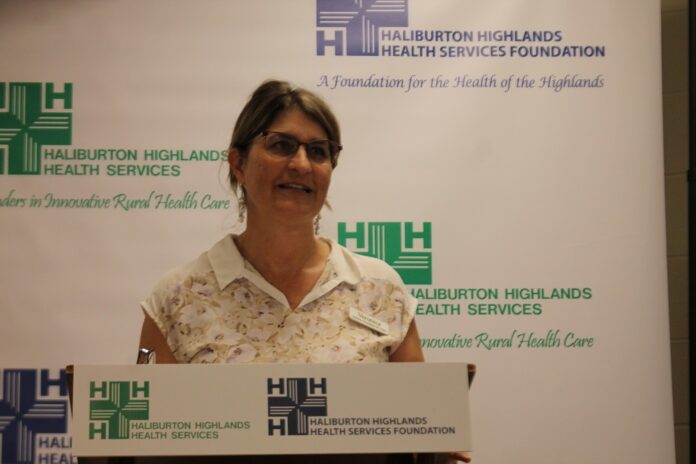
Haliburton Highlands Health Services interim president and CEO, Veronica Nelson, and Haliburton Highlands Health Services Foundation’s (HHHSF) executive director, Melanie Klodt Wong, made a delegation to an Oct. 11 County council meeting.

The province has approved both diagnostic tools but Klodt Wong told council the Foundation will need to raise more than $4 million. It now generates about $700,000-$800,000 for health care services anually, so this, “is a big undertaking.

“And one that has such a profound effect on the wellbeing of Highlanders. We also don’t want to take years and years to raise the funds. They (HHHS) need to raise these funds now and the plan is in motion.”

Nelson said they would like both diagnostic tools up and running for the summer of 2024. “There’s a desperate need for these services in our area, and we know that these services will keep health care local,” she said.

Nelson added the tools will meet doctor expectations and reduce pressure on County EMS, which is now taking patients out of town for CTs. She estimated it will save County EMS $200,000-a-year and more than 300 trips.

She added women are also travelling well over an hour each way for mammograms, or are not getting them due to distance.

Nelson said last week they were 75 to 80 per cent complete with design detail, which will go to the Ministry of Health this month, and then they can issue an request for proposals for construction.

The breakdown of costs is $2 million for diagnostic suite construction and design, $1 million for CT scanner equipment, $800,000 for CT mammography equipment, $250,000 for picture archiving upgrades and $250,000 for ultrasound replacement for a total of $4.3 million.

Funding request deferred

In making the $1M ask of the County, Klodt Wong said “this investment will not only enhance our health care infrastructure but also improve the overall quality of life for our communities. The one thing I hear over and over is we need this…”

Klodt Wong added it will have an economic impact since people will spend money in the County versus out of town while there for “nerve wracking” medical appointments, build the health care system after a tumultuous four years, and optimize conditions for health care professionals.

Thank you for considering this request. We are passionate about this project and truly believe it will have a positive impact on our community. Your support will make a significant difference and we’re hopeful for your favourable consideration,” Klodt Wong said. She added they want the funds in the next year, or may have to look into a loan.

Council weighs in

Coun. Murray Fearrey said when they funded the original hospitals in Haliburton and Minden, council of the day made a financial commitment. He asked CAO Mike Rutter how much one per cent of the tax base would be, and was told approximately $220,000. Fearrey said if it was two per cent, that would generate close to $500,000 ($440,000) and the County could find other savings in the budget to get HHHS and the Foundation its money.

Fearrey said it “wouldn’t raise the taxes any more than one per cent. And that’s how we did it before… that seems like not a big increase, and at the same time something that’s needed for all County taxpayers, and we’re going to save that on the ambulance on the other end.”

Rutter said he had discussed the issue with the director of corporate services and they could look to see if they have available reserve money to give upfront, then pay that money back into reserves over a period of five years.

Coun. Bob Carter wanted to defer the ask to budget time. “We can say it’s only one per cent or two per cent, but if that’s on top of five, or six, or seven already, then it gets to be a bit more difficult.”

Coun. Walt McKechnie was in favour of giving the money as soon as possible. “This is an important thing for every person who lives in Haliburton County… we spend so much money, this is really important to me and it’s going to save us money in the long run.” He wants the diagnostic tools up and running by May 2024.

Fearrey agreed he would like it done now.

Warden Liz Danielsen said she’d like to give Rutter and the director of corporate services time to look into funding options and impacts first. She asked for the referral to the next meeting.

Hard to keep professionals

0

I’m sorry to see Haliburton County Public Library CEO Chris Stephenson leaving.

While Chris was very open during a chat last week about the medical reasons behind his decision (back-related), it’s the other ‘back’ story that worries me.

Chris talked about how he moved here two years ago. He was lucky to find a rental because he had contacts at the County of Haliburton, his new employer.

However, his dream of home ownership eluded him. The lack of local housing stock and the astronomical prices were not his friend.

When he and partner, Amanda, crunched house buying numbers, they could not find anything in the Highlands that matched their algorithm. Instead, they were directed to property on the east coast. In this case, Saint John, New Brunswick.

Add the fact Chris has been unable to find a primary care provider. With that bad back and related medical issues, he had to go to the ER when things starting causing problems again. And, most of the specialist medical care he needs cannot be found here, or if it can, there are long waiting lists.

Chris had planned to stay another three to five years, and retire. However, our double whammy – the lack of affordable housing and insufficient medical care – is sending him elsewhere. It’s a story we’ve heard before and a story we will hear again.

Many candidates for job vacancies in the Highlands are telling prospective employers they would love to take the job, but can’t because there isn’t anywhere to live and no one to take care of them if they get sick or injured. Others take the job but commute from towns an hour or more away. That has proven unsustainable.

None of this is new to County politicians, realtors, health care providers, or any of us, really.

There have been some improvements.

We are starting to see the County and its four lower-tier municipalities working towards fulfilling the mandate of the More Homes Built Faster Act. Official plans are being changed. The County of Haliburton yesterday (Oct. 11) received a report from its director of planning, Steve Stone, aimed at additional residences. Once the County is done, Algonquin Highlands, Dysart et al, Highlands East and Minden Hills can follow suit.

We’ve seen Places 4 People selling bonds to help them bring more affordable housing to the Highlands. Paul Wilson continues to work towards overcoming hurdles to bring 88 units to Haliburton. There are other planned builds in Dysart, including a newly purchased parcel of land on County Road 21; and at the corner of Maple Avenue and Victoria Street. Fleming College said it is nearer to breaking ground on student housing. That should free up rental units.

Is all of this happening quickly enough? No.

Minden Hills coun. Shirley Johannessen wants developable land now seemingly abandoned to be looked at in her township. At the last meeting, she asked about the former Beaver Theatre. The most recent owner said he was going to convert to condos but has disappeared. The property already has servicing and would be ideal for a housing retrofit. Councils have to chase these owners down. They have to force their hands. Develop or sell.

And while the Minden ER may have been replaced by now a full-time urgent care clinic, that is not helping the hundreds, if not thousands, of Highlanders who do not have a primary care provider. People like Chris, who can’t get the support he needs to deal with a chronic condition. We have fewer doctors but more residents.

Sure, a CT scanner and CT mammography might help attract new physicians. However, it isn’t like we have a shiny new toy that no one else has. In fact, we had the dubious honour of being the last health services in Ontario to get the diagnostic tools.

More must be done on all levels if we ever hope to retain good talent in the Highlands.

HCDC a shining light of success

0

It’s been a big week for the Haliburton County Development Corporation (HCDC).

The organization unveiled its new digs – The Link, located on County Road 21 beside Haliburton Timber Mart – last Wednesday, welcoming around 50 of the community’s most prominent business leaders for tours of the facility.

The project, months in the making, is significant in that it provides a recognizable face for business services to the community. As well as housing all HCDC staff and operations, including the business incubator – previously located beside Dysart town hall – The Link brings the Haliburton Highlands Chamber of Commerce, the Arts Council – Haliburton Highlands, and services from the Business Development Bank of Canada (BDC) together under one roof.

The space also features room for networking events that will be used to host a series of workshops and other gatherings soon. There are five private offices available to rent, with eight new ‘hot desks’ providing working space for emerging businesses and entrepreneurs.

Outlining her vision for the new space, Patti Tallman, HCDC executive director, said she hopes it will become a bustling hive of activity for the local business community. Having so many supports and services available in a single location will be a major benefit to many people starting out on their business journey, Tallman said. She noted the concept has been well received in other communities, such as Belleville and Kawartha Lakes.

There was more big news to come. Admittedly, when board chair Pat Kennedy stepped up to the podium, saying he had a major announcement, I was skeptical. Usually these sort of things fall flat, but when Kennedy said HCDC had become the first community funds development corporation in Ontario, and only the second in Canada, to surpass $100 million in support for local business, the gasps and applause from the audience were merited.

Since its inception in 1985, HCDC has assisted 2,324 businesses across the Highlands, a phenomenal number.

Of the 60 or so similar organizations provincewide, HCDC stands above them all – a beacon of success. The organization is what its staff and volunteers say it is: one of the biggest and best CFDCs in the country. That they’ve been able to make such a contribution despite operating in one of the smallest communities, by population, makes the milestone that much more impressive.

Over the years, the organization has earned over $19.8 million in interest, enabling it to support an array of community initiatives outside its usual scope of investment. Non-profits such as SIRCH Community Services, Wetlands and Waterways EcoWatch, and many others have benefitted from money filtered down from HCDC. The organization has been instrumental in the launch of the Haliburton Highlands Sports Hall of Fame, supporting operations at Glebe Park, and the recent inclusion of athletes Taly Williams and Lesley Tashlin on Haliburton’s mural wall of sports heroes. It has helped with the start-up of Skyline Dance Studio, Project SHE, and is supporting efforts to bring a new performing arts centre to the Highlands.

In short, as well as ensuring its bank balance is topped up, HCDC is spreading its wealth across Haliburton County. That commitment to bettering the community it operates in deserves recognition.

Congratulations to all those involved with HCDC on a job well done. Keep doing what you’re doing.

Keep it simple

0

I’ve lived in the County for seven-plus years. County council was talking about public transportation before I arrived. It’s discussed it since. Tens of thousands of dollars have been spent. It’s long past time something was done.

If other Association of Municipalities of Ontario cities and towns can deliver public transit to their constituents, why has Haliburton County not been able to?

Granted, it’s complicated. The County is more than 4,000-square-kilometres. The logistics of getting a bus, from say, Dorset in the north, to Wilberforce in the east, and to hamlets such as Carnarvon and West Guilford, and all points in between, has so far proven impossible.
Consequently, councils have thrown their hands up in the air in capitulation, constantly kicking the tires but never getting the wheels in motion.

Part of the problem has been trying to offer a service that provides all things to all people. The wish list has been long. Dial-a-ride to get to people’s doors. Accessible in every way, shape and form. Serving as many villages as humanly possible. All of this rendered complex and expensive propositions.

Then there’s the four-township challenge, as I like to call it. Since every municipality pays into the County’s transportation reserve, they all, naturally, want a piece of the pie. However, that has also resulted in nothing happening to date.

So, Coun. Bob Carter’s notice of motion last week – that the County look into a simple shuttle between Minden and Haliburton as a starting point – is refreshing.

No dial-a-ride. No manner of strapping on bicycles and watercraft. Catch route one from Minden to Haliburton at set times of the day, and catch route two back again, six days a week. In other words, keep it simple.

Warden Liz Danielsen – who is the mayor of Algonquin Highlands – raised the point her constituents don’t want to pay for a service that only benefits Haliburton and Minden. And Highlands East Coun. Cec Ryall certainly doesn’t want his folks paying operational costs for a service they are not benefitting from.

I see their point. I live in Carnarvon and pay taxes to Minden Hills. I wouldn’t be crazy about subsidizing a bus that ran between Algonquin Highlands and Highlands East exclusively. However, if a bus between Minden and Haliburton means the stores and services I use there can be bolstered by, say, more employees, and therefore longer opening hours, I’d be happy to see my tax dollars used for that.

All too often our parochialism blinds us as to how we can benefit from better services in our larger centres, and let’s face it, those larger centres are Haliburton and Minden.

The County should absolutely see if there is a provider out there willing to do a two-year pilot project between Haliburton and Minden. The money is there, with more than $200,000 in a reserve. If it’s working, then consider adding some of the other major hamlets, such as Wilberforce and Dorset. If it can’t be expanded, don’t throw the baby out with the bathwater. Figure out how Minden Hills and Dysart et al can fund it, and reimburse whomever has to be reimbursed.

But, please, County council, do not squander another attempt to provide this service to at least some of your residents.

Not everyone needs a Tesla charging station, but quite a few need a bus.

A lost opportunity

0

Last week’s 1 Million March 4 Children event – contrasted with a quickly-organized Minden Pride counter-rally – was eye-opening for a number of reasons.

First, I was surprised to see more than 50 folks turn up for the first rally and march – part of a cross-Canada movement concerned about sexual orientation and gender identity (SOGI) curriculum in schools. The locals joined with people across the County in calling for an end to gender-based pronouns, ideology and mixed bathrooms in schools.

A local spokeswoman added the movement’s mission is to free children from the bondage of indoctrination, breaking a system they say is designed to sexualize children.

I noted some of the people attending the 1 Million March 4 Children were the same people I had seen at the Freedom Convoys during COVID, and anti-vaccination gatherings. The same Canadian flags that showed up there, showed up here.

In many ways, these protestors are fighting all things government. They are also battling what they believe is a shift to a far left-wing, woke, agenda.

On the other side of the park, they were certainly outnumbered by the Pride-gathered folks. They argued that the idea of removing queer ideology from the curriculum in high schools is a very dangerous proposition, because it’s been proven that people who are within the queer spectrum have to have some sense of belonging. If you remove it from the education system, they argued, they don’t know where else they’re supposed to get it from.

Here’s one idea; how about their parents.

The other counter-argument was that education is not about the sexualization of children.

They called out “educate don’t discriminate” as the 1 Million March 4 Children folk yelled “God bless you.”

This division in Haliburton County – indeed this division across Canada – is a byproduct of COVID. When people live in states of fear, they do everything they can to protect their patch.

And that was the other telling takeaway from last week. Both camps stayed in their camps. No one ventured across the parking lot divide to have a discussion about their differing opinions. All said they were there for the children. However, there wasn’t much of an attempt to understand each others’ differences.

For example, if one of the 1 Million March 4 Children lot had talked to 22-year-old Poet, they would have found out that what is being done in schools isn’t classroom-based curriculum or ‘gay class.’

Poet grew up queer, always struggling with her identity, and was bullied at school.

She wishes she had been exposed to the education, or staff telling her it was fine to be who she was. That didn’t happen and she was at-risk. She thinks when resources are removed, young people fall through the cracks. Some commit suicide.

No one on either side of the Head Lake Park lot would want that to happen. The lack of discussion last Wednesday was a lost opportunity. Going forward, if we want to tackle the great divide that is growing in our County, we have to begin a dialogue to at least try to understand each others’ differences.