

Home Blog Page 153

Scott ‘passionate’ about new private member’s bill

0

Haliburton-Kawartha Lakes-Brock MPP Laurie Scott has tabled a new private member’s bill at Queen’s Park seeking to prevent convicted sex offenders from legally changing their names in Ontario.

The local politician brought the legislation forward Oct. 19 as a joint endeavour with Thornhill MPP Laura Smith. It will be brought back for second reading Nov. 14. If passed, it will stop convicted offenders under Christopher’s Law from securing new identities at any time in the future.

“We need to eliminate the opportunity for sexual offenders to sever the tie between their criminal past and their current identity,” Scott said. “To sexually assault another human being is a violating deed, not only physically, but psychologically and emotionally. Sexual assault can have profound implications beyond the initial attack. The effects can linger for years.

“We want to close this loophole, like other provinces have, so that sexual offenders are not given the chance to hide their criminal past. These victims deserve to know their attacker will not be able to escape the accountability,” Scott added.

The bill was initially introduced by former Scarborough Centre MPP Christina Mitas in 2021, but a decision on its implementation was delayed until after the 2022 provincial election. Mitas was not re-elected, so Scott and Smith picked up where she left off.

The local MPP said she has spent 12 months consulting with fellow politicians, government agencies and other stakeholders to reshape the bill. She said it’s something MPPs across all parties have expressed interest in supporting.

She noted that, today, there are no obstacles for offenders seeking to change their name, noting some choose to do so before leaving jail.

“This makes it easier for them to conduct further harm against unsuspecting communities – we want to prevent this possibility,” Scott said.

She noted recent reports released by Statistics Canada suggest a visible upward trend in the number of sexual assaults, especially against children, in recent years. People with a prior sexual offence conviction are more likely to re-offend, Scott noted, pegging the recidivism rate at around 35 per cent.

“These are people that are charged with sexual abuse against children. These are people who have violated another human being in a way that has altered the life of the victim forever,” Scott said. “We will always stand up for victims and survivors to make sure that an offender’s rights are not held above their own.”

Following second reading, the bill will go to review by committee where public hearings may be held and amendments considered. A report will then be submitted to the house and brought back for third reading. Should it be approved, it will be sent to the lieutenant governor for signing, where it will become law.

Scott said she hopes to see the bill formally adopted in the new year.

Coach: hard work key for turnaround

0

Haliburton County Huskies head coach Ryan Ramsay is challenging his team to put their recent struggles behind them and re-establish themselves as one of the Ontario Junior Hockey League’s top contenders.

The hometown team slumped to successive defeats last weekend, dropping a 4-2 decision on the road Friday (Oct. 27) to the St. Michael’s Buzzers and losing Saturday’s (Oct. 28) tilt in Minden against the Cobourg Cougars 4-1.

The results saw the Huskies slip to 10th in the league’s East Conference – outside a playoff spot – with the team boasting a negative record of seven wins, nine defeats and two ties.

“Costly errors and untimely mistakes are really killing us,” Ramsay told The Highlander. “Against St. Mike’s, I thought we played well for the first part of the game, then there were a couple of slips and we fell into a hole… same thing Saturday. It’s different players, but the same kind of issues where a guy loses his battle, loses his guy and they go and score.

“When we’re in a little bit of a slump too in terms of scoring goals, it’s obviously not a good combination,” Ramsay added, noting the team needs more offensive contributions from depth players.

The Huskies started Friday’s tilt on top, taking the game to a Buzzers outfit that had won four of its last five games on home ice. Charlie Fink gave the visitors the lead 4:03 into the opening frame, assisted by Ty Petrou and Nicholas Lamont – acquired via trade from the Collingwood Blues last week.

There was a new face between the sticks for the Huskies – 19-year-old Brett Fullerton, who has split time over the past two seasons between the Blues and the Ontario Hockey League’s Saginaw Spirit. He made some good early stops to keep the Huskies on top, but was beaten midway through the period, David Green tying the game at 10:25. The Buzzers landed a killer blow late on, David Elmy scoring his 16th goal of the season with 13 seconds remaining in the first.

Brandon Cohen added a powerplay marker for the Buzzers five minutes into the second, after Jack Staniland was punished for goaltender interference. Petrou got the Huskies back into the game at 11:59, notching his fourth goal of the year assisted by Raine Nadeau and Patrick Saini.

That was as good as it got for the blue and white, who gave up a fourth in the final frame, Julian Campoli beating Fullerton at 10:44.

Cobourg 4 Minden 1

Welcoming the Cougars to town Saturday for Pink in the Rink, the Huskies wanted to lay down a marker and get one over their fierce rival. Their previous encounter, at S.G. Nesbitt Memorial Arena Sept. 30, ended in a 4-4 tie.

It was a tense opening, with both sides taking turns controlling the puck. The Huskies had a few openings, but couldn’t find a way past Ryan Piros in the Cougars goal. Gavin McGahey-Smith took a tripping penalty midway through the period, giving the dangerous Cobourg powerplay a chance to get on the board. Trevor Hoskin, the team’s leading scorer, wasted no time, firing past Fullerton at 11:05 for his 13th goal of the season.

Hoskin added his second of the game during the middle frame, notching at 4:52 to put the Huskies into a hole.

Saini provided some hope of a fight back, getting the home side on the board 7:20 into the third, assisted by Lucas Stevenson and Lucas Vacca, but it was short lived. Matt Mueller re-established a two-goal lead for the Cougars at 14:08, with Jack Falkner adding an empty-netter at 18:47.

Ramsay said his team needs to retain their focus during games, even when things aren’t going their way.

“We need to stay true to our principles and practice good habits – hitting the net, stopping on pucks, finishing hits. Sometimes, for an amateur hockey player, when things aren’t going their way, they tend to veer off from what got them here. They get into their own head and end up doing more damage. We’re telling the guys they just need to stay the course and work hard,” Ramsay said.

“When you’re in a slump, I always preach working harder. If you do that and are persistent, you’ll get out of it,” he added.

The Huskies are back in action Saturday when they welcome the Buzzers to Minden. Puck drop is 4 p.m. They will be at home again Tuesday, Nov. 2, when the Stouffville Spirit come to town. Puck drop is 7:30 p.m.

Pink in the Rink jerseys are available for purchase, with money supporting cancer research. Ramsay said they can be bought at any home game until Nov. 25 – when the team will host its second Pink in the Rink event, going against the Aurora Tigers.

Storm crush Parry Sound

0

On Saturday, Oct. 28, the U13 LL Cheryl Smith RE/MAX team thumped Parry Sound in their home opener.

James Gooley opened the scoring for the Storm at the sixminute mark, assisted by Moss Davis. Bently Bull added two unassisted goals and Nash Wilson ended the first period with three goals, assisted by Travis Mann and Oakley Craftchick.

Kelson Bagshaw continued to add to the Storm’s lead in the second, scoring twice and Benton Lloyd added two as well. Wilson closed the second with his fourth.

In the third, Lloyd scored, assisted by Bagshaw. Parry Sound finally snuck one past Storm goalie Carter Shaw. Wilson retaliated, scoring two more times. McKay Windover added two goals, assisted by Gooley and Bull. Mann scored with an assist by Davis. Wilson added yet another, assisted by Huxlee Campbell. Bagshaw finished the scoring with two more goals assisted by Davis. The Storm took the win 20-1.

Gearing up for HIFF this weekend

0

Organizers of the Haliburton International Film Festival are back from Cinefest, Sudbury and the Toronto International Film Festival (TIFF) and have announced films to be screened the Nov. 3-5 weekend.

One of the spokespeople, Tammy Rea, said, “from Friday, Nov. 3 at 7:15 p.m. until Sunday, Nov. 5 in the afternoon, we will journey around the world and right back to ourselves exploring and remembering who we truly are.”

She said the theme of the first HIFF since COVID is ‘Love is Stronger than Fear’ and “it comes shining through in these stories, as the characters puzzle the pieces of their lives back together and find joy in more radiant ways.”

Some of the films include:

• The Unlikely Pilgrimage of Harold Fry – 107 minutes, UK, drama. An ordinary man passes through life on the sidelines until the day he goes to mail a letter and just keeps walking. Starring Jim Broadbent and Penelope Wilton.

• Les Hommes De Ma Mère /My Mother’s Men – 126 minutes, Canada, subtitles, drama. A woman sets out to honour her dead mother’s wish that her ashes be distributed amongst her five ex-husbands to scatter in a place most significant to each of them. Starring Léane LabrècheDor, Jean-Simon Leduc, Colm Feore, Patrick Huard.

• Rose – 106 minutes, Denmark, subtitles, drama. Among a group of tourists travelling by bus from Denmark to Paris are two sisters, Inger and Ellen. The bus has barely hit the highway when Inger shares her mental illness with the rest of the party. This will be a journey they all will never forget. Rose is a film about love and care for each other, in spite of our differences, as much as it is a film about not judging a book by its cover.

• The Old Oak – 113 minutes, UK/France/ Belgium, drama. Imbued with the fiercely humanistic spirit that has defined director Ken Loach’s filmography, The Old Oak serves as a fitting finale to a remarkable career. A landlord, in a previously thriving mining community, struggles to hold onto his pub. Meanwhile, tensions rise when Syrian refugees are placed in the empty houses. This film was the “audience choice award” winner at the Sudbury and Calgary International Film Festivals.

• Boundless – 10 minutes, Canada, drama. Haliburton-raised filmmaker, Kate Campbell, brings her multi-award-winning short film inspired by her grandmother’s experience as a Second World War airforce service pilot. Rea said, “last time, Kate gave us an update on the production.

This year, we see the short, and then find out what’s next. Kate will be present to introduce the film and for a Q and A.

Rea said, “meanwhile, it is suggested to avoid watching the trailers for these films, as they can give too much away and take away from the magic.”

Those Other Movies, which puts on HIFF, is a not-for-profit, volunteer organization that provides film fans unique experiences through year-round programming. Rea said they are proud of their association with The Film Circuit, a division of the TIFF Group and with their membership in the Haliburton County Community Cooperative.

Find out more at ThoseOtherMovies.com.

Smokehouse Sunday every day at Boshkung

0

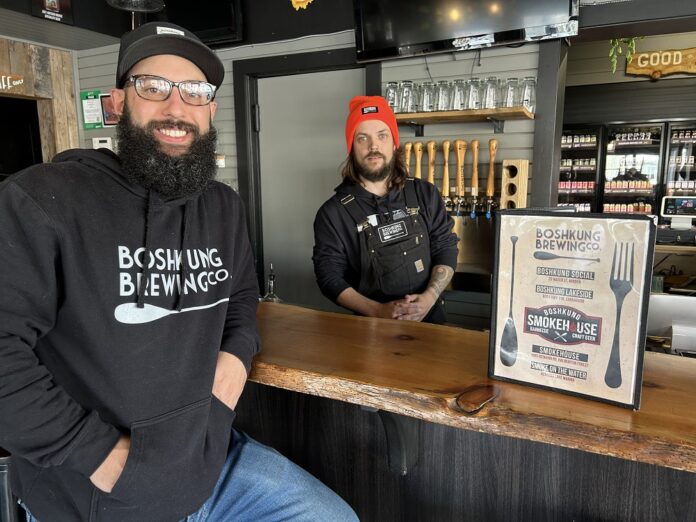
There’s a new name in the Highlands’ hospitality sector – Boshkung Smokehouse.

Announced late last week, Boshkung Brewing and Truss Foodworks are merging. New owners Mathew Renda and Mike Rae are bringing two businesses together under one umbrella, with the goal of making the Boshkung brand a household name not just in Haliburton County, but nationwide.

The business will boast four locations across the County – Boshkung Social taphouse in Minden; the Boshkung Lakeside retail location in Carnarvon; Boshkung Smokehouse at Haliburton Forest; and the Smoke on the Water pario and bar, seasonally on Kennisis Lake.

Renda, who has served as general manager of the brewery since 2021, reached out to Rae late in 2022 when the business’ previous ownership decided to sell. The two had been familiar with one another for several years and had experience working together after Truss came on board for ‘Smokehouse Sundays’ at the Social.

“I think we knew after that very first Sunday there was something special here, there was an opportunity for us to work more closely together,” Rae said.

“Sundays had always traditionally been slow, but when we partnered with Mike to bring a new, refreshing food menu to town, there was a lot of interest. It was a huge success,” Renda added.

Now, every day at the Social can be a ‘Smokehouse Sunday’ Renda said, with the kitchen open year-round serving specialties that have been enjoyed by Truss customers for years. People will also have the chance to taste test a Boshkung brew at the revamped Haliburton Forest location.

“It’s the best of both worlds now at all our locations,” Rae said.

While the deal only closed in mid-October, the pair have been working together for much of this year on the understanding they would soon be partners. Collaborations between the businesses were common through the summer, which they say were well received. Now, patrons can expect them to continue for years to come.

One of the other big wins, Rae said, is that more staff will be retained year-round.

“I’ve been there myself, working a busy summer or winter season only to be laid off once things die down. The most exciting thing for me is we now have a unique business that will operate 12 months of the year, meaning we can keep our staff employed all year,” Rae said. “That helps us retain staff, but it also lets us show the workers we do have that we do value them.”

Rae said he also wants to provide opportunities to people looking to turn their lives around.

“I’ve battled addiction before. Because of the help I had, I’ve been able to rebuild my life. I want to do that for other people,” Rae said. “I want to provide a safe space for employees who are struggling, or who have struggled. I want [Boshkung] to be that company that supports people and helps people get back on their feet. Everybody deserves a second chance.”

With the brewery set to celebrate its 10th anniversary next year, Renda believes this new direction will set Boshkung up for years to come.

“Growth is important, and that’s our primary focus with this merger. The Boshkung brand is recognized all over Canada, now we just want to build on that. By bringing everything Boshkung and Truss has together, we’re building a hub for people here in Haliburton County,” Renda said.

“We want to be the heart and soul of the hospitality service within this County,” Rae added.

Haliburton gets rid of meters

0

Dysart et al plans to get rid of pay and display machines, as well as parking meters in Haliburton village.

Council voted to take the action at its Oct. 24 meeting.

The meters are to be bagged immediately – as is done over the festive Christmas shopping season – until they can be removed.

Mayor Murray Fearrey said the Business Improvement Area (BIA) want them, however the municipality is having to replace sidewalks as winter ploughing around the machines and meters is causing damage.

Chief building official Karl Korpela added council should take into consideration that the pay and display machines are nearing the end of their life, and parking meter heads are “antiquated” and would need to be replaced.

Korpela noted the BIA likes them as they control the amount of time that people can park on the main streets, allowing turnover for customers of their businesses. But Fearrey said he thinks the biggest problem is staff parking there. “I don’t think it’s the visitors. They come. They shop and they leave. I would like to think that owners have some discretion about how they provide parking on the back street or somewhere.”

Treasurer Barb Swannell said they have a parking meter reserve fund. She said Maple Avenue and Highland Street generate about $22,000-a-year in revenue, offset somewhat by municipal bylaw enforcement staffing costs. “Typically, we’ve been drawing $20,000-a-year to put into the municipal operating budget. At the end of 2022, the reserve had a balance of just over $100,000,” she said.

But Fearrey countered it was for two streets and had been accumulating for 30 years. Swannell said they’d consistently drawn on the reserve each year as well. Fearrey countered, “compare that to replacing the sidewalks every four or five years… not a very good business deal.”

It was pointed out the machines and meters make ploughing difficult in winter.

Coun. Pat Casey, said he felt “stuck” because he sits on the BIA board.

“They definitely want them to stay but the resounding feedback I get from the general public is they’re a nuisance, and I say that respectfully. But on the same note, if you’re sitting at Kozy Korner, you’re watching people with disabilities, elderly people, trying to get parking. They have to go back to their car and put the card in… there’s definitely concerns on both sides.”

Fearrey added “parking meters are a great tool if you’ve got somebody on the street all day because I see violation after violation.”

CAO Tamara Wilbee said time limits could still be enforced without machines and meters.

Korpela said they could be and that was in the report before the last council. For example, he said there is a hotspot app; or old school chalking of tires, “but that means that we’d have to go out, verify that vehicles are there, and then go out and see if they’re still there two hours later. It’s not a very effective means.” He told council he could revisit the report to come up with options.

Deputy mayor Walt McKechnie was vocal in wanting them gone as soon as possible.

“I think we should remove them and move on like so many other communities have.” However, he was interested in seeing what Korpela could come up with so people don’t park in the same spot for a full day.

“But… we all go to different communities, and quite a few of the communities I go to, there’s not any parking meters and it just seems more of a friendly atmosphere in our town, and you see people struggling. You don’t want them leaving here with a bad experience because of a silly parking ticket.” As for staff using up parking spots, McKechnie added, “it’s on the owners of the businesses. Common sense should prevail there.”

Coun. Barry Boice said it should lead to quicker snow removal, which should appeal to the BIA.

Council passed a motion that staff do what’s needed to remove the machines and meters and report back on how it will happen and how much it will cost. Fearrey suggested they could take some money out of the $100,000 reserve.

Wilbee said, “if you direct us that you want them removed at this point, we can figure out those details. And if there’s anything that’s outside what we can do, we can bring it back.

BIA weighs in

Business improvement association chair, David Zilstra, said it there are no machines and meters, they are worried about people staying in one spot all day. He added, “our area is growing, obviously more people, and the downtown is only so big. So that would be our concern. That was our concern and that still is a concern.”

He said he understands machines and meters are expensive to install and maintain, and if the expense is “way” greater than the revenue he gets where council is coming from. But, “I don’t think anybody was ticketing this summer.”

Zilstra added he understands staff are looking at alternative ways to police parking times. “That would be fine. As long as it’s enforced somehow or other.” He would like council to look at a long-term parking strategy for the downtown as well.

County falling far short on housing plan

0

County coun. Jennifer Dailloux termed the state of a 10-year housing and homelessness plan a “bone-chilling nightmare” during a special council meeting Oct. 25.

Her comments came after a presentation from City of Kawartha Lakes – human services division employees, Kirstin Maxwell, CEO of Kawartha Lakes Housing, Michelle Corley, manager of human services, and Don Quibell, manager of building and property.

Corley said the current 10-year plan was established in 2020 but most of the work leading up to it occurred in 2019.

It concluded 750 new affordable housing units were needed in the Highlands by 2029. The County determined it needed partners, with the KLH Housing Corporation building 150 new affordable rental units and non-profit partners and private developers each contributing 50, while accessing approximately 500 existing or new market rent units to make them affordable through rent subsidies.

Slide after slide showed the challenges. For example, there are now 2,383 households waiting for community housing in the region, a more than 300 per cent jump over a 10-year timeframe. People are waiting 10-plus years.

Between 2020-22, in Haliburton County, KLH Housing Corporation has built just 15 units. They project another 35 between 2023 and 2029 – for a total of 50 of their 150 goal, or a third.

Also flagging badly are partner builds. With construction costs skyrocketing, the CKL staffers told County council that 735 units at $400,000 each would require $294 million, or $49 million annually.

The three said it’s obvious now the 750 target had been based on a misconception that upper-level government funding is always available; that completing a project every couple of years was possible; that borrowing money alone was enough to make a project viable; that revenues would be sufficient to cover financing and operating costs; and that rent subsidy costs are sustainable.

Some of the other curveballs, they said, were significant changes to the housing market creating challenges for first-time buyers; people being evicted for short-term rentals; rising inflation; and rental rate jumps.

Combined with that are construction cost increases, interest rate increases and household incomes remaining static, directly affecting project revenues.

For example, they said the Gull River housing project has seen square footage construction costs climb to $440/sq. ft., compared to historical pricing of $200/sq. ft. Financing costs have risen to five per cent, from two per cent. They said capital is now needed to pay for these types of projects.

Other development challenges include availability of serviced land, cost of servicing, and availability of labour.

They said there may be hope in a municipal accommodation tax, and the Eastern Ontario Wardens’ Caucus 7 in 7 initiative. They also encouraged municipalities to continue to look for other ways to support the plan.

Coun. Bob Carter said other housing corporations are facing similar problems, in some cases $500/sq. ft. building costs, so there is no way of making units affordable. “And it’s not changing. It seems to continue to accelerate.” He added they could borrow money but have to pay it back without revenue until a month after a renter moves in. He said it will make it very difficult to achieve the target.

Dailloux said, “this is a nightmare. It is a bone-chilling nightmare… it’s really, really frightening. We all know it’s not just us. It’s the entire province and well beyond that. But to see how those figures materialize in our communities is really, really, really, frightening. They’re only getting worse and they’re clearly set on a trajectory for getting worse. I can only think that a complete overhaul of our economic system is going to be what (is needed)… and obviously that’s far beyond the control of anybody sitting here, or anywhere for that matter.”

Deer feeder says ban is short-sighted

0

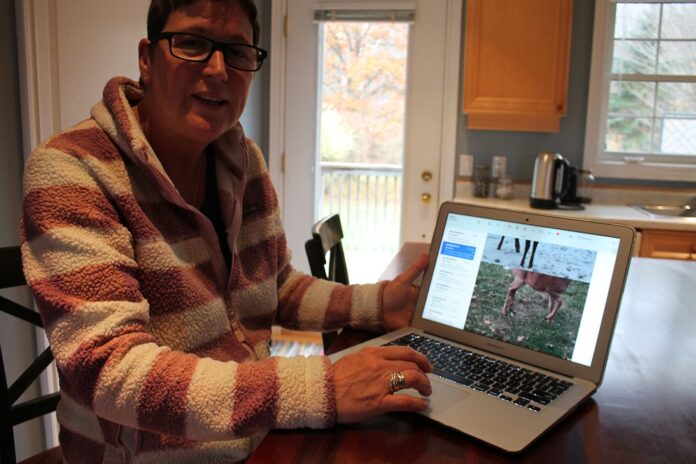
When Lori King moved to Haliburton in 2019, she said she was told not to feed the deer.

“I was here two days and they said ‘you won’t be very popular if you feed the deer.’ I thought, wow, these people are brutal,” she says with a laugh. She said she was sent literature on how bad feeding is for deer and thought, “‘alright, I don’t want to make any enemies right away’.”

She didn’t feed – until a young deer showed up at her back door with an injured leg, followed by what she presumed was its mother, also hurt

She calls up a photo on her laptop, cooing, “oh my God, he is too cute.”

She said she called the Ministry of Natural Resources for advice. She claims she was told, by possibly a volunteer, 50 per cent of infant deer die in winter without feeding and she could do so responsibly. She said she was also advised once she started, she could not stop. Even on vacation, she had to ensure the deer were fed when she was away.

Today, she said no one at the MNR would admit to giving such advice.

However, King said she stopped feeding this past summer, and as soon as Dysart et al council started talking about a ban. However, she said the young deer showed up last week with another injury and, “he’s not going to survive unless he gets a bit of help…”

Referencing the do not feed petition, King said some people didn’t sign it because they plan to continue.

She said she won’t be able to feed as she is known after making a delegation to council, but says people around still will.

She thinks council is short-sighted and does not know anything about deer. She said she’s been studying them since COVID.

“This is not going to work. People will feed them at night so they can get away with it and it’s going to increase the collisions because they’ll run from house to house like little trick or treaters. I see when my neighbour shuts up shop, they all come here, and I just think there’s a better approach to this.”

Asked for suggestions, King says, “stick with their plan to not ban it this winter – and rely on the media to really educate people.”

She said if the total ban goes ahead, deer will starve to death in town. “It’s the abruptness of it. I cannot believe that people are OK with them starving to death. I can’t wrap my head around it.”

Asked for other ideas, she said people could make their gardens less appealing or put up small, electrical fences.

She adds, “I want to think outside the box. Get the town… both sides together.

“There has been some success leading deer out of towns. If we all get on board with this. It will require discipline from a lot of deer lovers who are in areas where they should not feed. They just have to reject them and let the people on the outskirts take care of it. I could sign up for that plan if someone told me they’re not all going to starve to death.” She said the feeders could be exempted from the bylaw and given a permit.

She agrees with the anti-deer feeders it isn’t the deer’s doing. She said cottagers came up during COVID and bought deer feed locally. She said people worked on elaborate gardens.

“You don’t think the deer are going to miss that tragically… this is catastrophic… we don’t know what will happen.”

King said she is planning to move somewhere where she does not have neighbours, and can feed the deer.

“I know I’m going to fail. Another lame one will show up and I’ll be on my third glass of wine and I will be emptying my fridge for them. I know it as surely as I know my own name.”

Coalition wants immediate ban on feeding

0

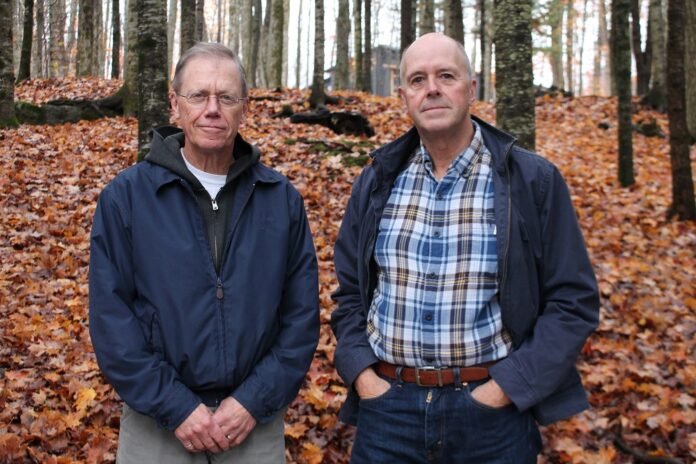
When Greg Gillespie and his wife, Gail, moved to their current Haliburton home 10 years ago, Greg says they had a lot of regeneration under their mature trees. They had Hermit Thrush nesting on the property as well.

However, Greg says the deer have eaten the undergrowth and the birds have moved on.

“So, it’s not just traffic accidents,” Greg says of the deer problem in Haliburton. “It’s a whole litany of things they’re impacting.”

As if on cue, a deer walks into the forest behind Gillespie’s house, visible through the living-room window where he and Chris Bishop are sitting on a couch.

The two are behind the Stop Deer Feeding Property Owners Coalition. They made a delegation to Dysart et al’s Oct. 24 council meeting, calling for an immediate, year-round, ban on deer feeding in the Haliburton settlement area. They came armed with a 720-name petition

Council is expected to formalize a bylaw at its November meeting.

Gillespie said he was concerned with talk of the ban only being for Ward 1, since they want the settlement area included, and the section north of Harburn Road, up to the area around Country Rose.

“If it wasn’t for Pat Casey stepping in with a very timely refocus on what we’re trying to do here I’m not sure what would have happened and then there was confusion about the map…” Gillespie says.

In the end, Gillespie and Bishop said council appeared to get to where they wanted them to go

“If they do the coverage area that we presented in the map, we’re happy with that,” Bishop said. “It’s a starting point, that’s for sure.”

The coalition had also asked that notice of the bylaw be posted at feed stores, as well as attaching their research paper ‘consequences of deer feeding in urban areas’ to the bylaw. However, they conceded council could not do the two minor asks.

“But the key is education,” Gillespie says. “Notification of the bylaw, and education of why the bylaw is there in the first place.” He added it sounded as if council was conducive to doing that.

Bishop said he would like education on the township website, and an insert with tax bills.

“If they don’t educate the people, and people don’t know that they’re not supposed to be feeding them, people will feed them,” Bishop said.

He added when someone complains, he is okay with a first-time warning.

Gillespie said they want a ban first, then enforcement, then possibly a County-wide ban.

‘They’re not afraid’

“You read all of the consequences of feeding deer. It is absolutely amazing to me that the Ministry of Natural Resources, the Ontario government, hasn’t stepped in to legislate against it. They’ve got reams of information on their website and yet they leave it to the municipalities to deal with, if there’s a problem. I just can’t understand it,” Gillespie said.

Bishop said they went door-to-door to collect the signatures and encountered a lot of domesticated deer. At one property, he said he was told the feeder gets up to 30 deer at a time. He added he does not buy the argument that people are hitting deer with vehicles because they are speeding.

They’re (deer) not afraid. That’s why they walk out on the road in front of you.”

He added because they are being fed in winter, fewer deer are dying, which does not allow for natural control of the population.

Gillespie said the pro-feeders are bringing the emotional side of the debate, “which is powerful.” He added they are arguing for private property rights. “But we have property rights too.”

For example, he said he and Gail can’t use their property in the spring when doing maple syrup because their paths are paved with droppings and buckets have deer hair in them. They added people’s gardens are being decimated.

Nor do they want the bylaw phased in. “We have to deal with this issue now or next year it’s going to be even worse. The sooner we start, the sooner we get it resolved,” Gillespie said.

Bishop added, “the deer are going to die. They always do die in the winter. Yes, the first couple of years, there will be more carcasses. That is nature’s way and the reason that’s going to happen is you fed them. People who are feeding them need to take responsibility because they are the ones causing all the problems.”

Fact versus emotion

0

There is plenty of research about why humans should not feed deer, especially in urban areas.

People have complained about having their flowers and vegetables eaten. Some of us have hit deer with our vehicles. We’re walking on deer droppings.

We’re also hurting – not helping – the deer. They are converging at feeding sites and sharing diseases and parasites. Humans can pick up some of these and there may be more ticks around. They are leaving optimal winter shelter to come to the village. Artificial feeding is actually disrupting their winter cycle of getting leaner. Their metabolism gets sped up and they burn their fat reserves quicker.

Here’s the tough one: yes, some deer starve during extreme winters. It’s upsetting to many people, but winter mortality is a natural process that helps keep the deer population at long-term sustainable levels. Also, a lot of the man-made food isn’t good for deer, anyway. It messes with their digestive system. Deer can actually starve to death with a stomach full of food they can’t digest.

And, of course, by feeding them, we take away their wildness. They become dependent on easy food sources and don’t eat as much of their natural food. Young deer don’t know how to forage. They’re not afraid of us. While I was out taking photos for stories in today’s paper, I turned to find a young deer about six feet away from me, looking for a handout.

At feeding sites, deer can fight, some get stressed out, others injured.

The folks behind the Stop Deer Feeding Property Owners Coalition have come up with three pages of research with references.

They’ve been working on the file the last two months, as well as collecting 720 signatures for a petition they presented to Dysart et al council last week, calling for an immediate, year-round, ban on deer feeding in Haliburton village.

They don’t think phasing in a ban will work. They believe that just reducing the amount of deer feeding, or allowing feeding for part of the year, will still result in significant numbers of deer in the village. They argue it’s not far for town deer to migrate to areas with natural sources of food, and where deer feeding will still be allowed, so mass starvation resulting from a complete feed ban is unlikely.

On the other side of the coin are people who feed deer. They make some pretty powerful emotional arguments.

A delegate to last week’s council meeting has sent a follow-up letter to the mayor.

She concedes there are too many deer in town but thinks an immediate ban is cruel.

She is proposing a committee of the Stop Deer Feeding group, with feeders, and council, to come up with a phased-in solution.

For example, she wonders if some feeders can be exempted from the bylaw to do responsible feeding outside of town.

She said people such as her need some peace of mind in order to willingly comply.

She told the mayor it will be very difficult for her and others to ignore the deer’s hungry faces this winter but they would if there was a better plan. She said they will continue to feed unless there is some sort of compromise.

One thing both sides agree on is there has to be more education. We encourage people to do their homework.

From what we can see, all information points to a total ban not just in Dysart et al, but across the County.