
Home Blog Page 107

Driving instructor likes view from office

0

From facing road rage, to white knuckle driving experiences, and a near-miss lightning strike in Glebe Park, Richard van Nood has seen it all in 35 years at the helm of Haliburton County’s only driving school.

After leaving the military as a radio operator, van Nood was perusing the classifieds in an Oakville newspaper when he came across a job looking for someone who loved driving. “I’ve always loved driving,” he says in a chat at Castle Antiques in downtown Haliburton. He applied and got the job with Young Drivers of Canada in Mississauga in 1983. He won instructor of the year twice at that office; became an in-class instructor in 1985 after logging 2,000 hours of car work; and taught other instructors.

He and wife, Shelley, moved to Haliburton in 1988. Shelley was born and raised in the Highlands.

At the time, the high school offered driver training that was subsidized by the Ontario government, so van Nood got into commercial printing for a spell. He then took on part-time work teaching in-class and in-car based out of Hal High in 1990. It was in 1996 that he opened The Driver’s Edge Driver Training after the NDP government cancelled funding of driver education in the province.

Since then, he said he has no idea how many people he has taught to drive. When it is suggested “thousands” he said that could be right. He is now teaching the children of his first students, and former students have come up to tell them how many years they have been driving accident-free.

At the time of the interview, he had 37 students on the go; and was about to launch a new course to add another 20.

While many are 16 and 17-year-olds, he said he has some older students, including people who have moved to the Highlands from the city and now have to drive as there is no public transit.

“I meet people from all walks of life, 16-year-olds to 80-year-olds, male, female, new Canadians.”

Despite the busyness of the full-time job, van Nood said he loves that he can pick his own hours, which was handy when he and Shelley’s children were growing up.

“For the most part, I have enjoyed all of the students I have taught. Some are more challenging, as they may have no concept of driving and are back-and-forth on the road.” He finds kids in Haliburton have better driving sense as they are exposed to motorized vehicles, such as four-wheelers, snowmachines, and even tractors, before getting behind the wheel of a car.

Memorable moments

His most “white knuckle” experience was when a student driver in his Mercury Mystique was driving on Bobcaygeon Road and hit the ditch in winter; “next thing you know, a hydro pole was going past.” After that, he added skid control to her lesson.

Another time, his student driver was turning in downtown Haliburton but was taking a bit long, forcing a driver behind to slow down. The other driver tailgated them to the high school, cutting in front and jamming on his brakes. After, van Nood followed the guy; to tell him it was not a great idea. Clearly it was a student driver and they could have panicked and hit the gas instead of the brake.

“He didn’t give me a chance; up one side and down the other side of me, shouting ‘you should be banned from teaching. I should report you to the police.’ Van Nood walked away, knowing, “I’m not going to make headway with this gent.”

There was a fateful day after a driving lesson on the gravel road in Glebe Park. The skies opened up as van Nood was about to pick up pylons. He got back in the car just as a lighting strike hit the ground by the nearest cone. “You could smell the burning from the lightning strike. I made the right choice.” Early in his career, he also got the chance to teach a deaf student. But first, he had to learn some sign language for words such as turn and brake. Because the student was born deaf, van Nood said he had excellent observation skills. He got his license.

Changes

He has seen a lot of changes in the industry over the years. Probationary driver is now graduated licencing. There must be 10 hours of car work, up from eight. Government bodies have changed and the Ontario government sold driver testing rights to DriveTest.

He would like to see tougher testing standards, noting tests are just 17 minutes long; improved quality control for driving schools; and more parent involvement. He said parents tell him they are too nervous to drive with their teens, but seem content to let them drive on their own after 10 hours in a car. He added parents have to be driving role models. He allowed his kids to get behind the wheel of his car on their property. Mind you, his car had dual brakes. However, they would do a serpentine course around the trees.

He’s asked if it’s easier to learn driving in rural and regional areas, such as Haliburton County but says the intersection of Hwy. 118 and Highland Street in downtown Haliburton is a challenge, particularly in summer and Christmas holidays.

He’s asked if kids are more distracted, and tells the story of seeing a driver in the GTA behind the wheel while reading a novel. “Distracted driving has always been there and is always going to be there.”

As for car features that make it easier for students, he notes they can’t use things like automatic reverse park when doing driving tests.

Looking back on his career, van Nood says, “It’s not going to make me rich, but I enjoy it. I enjoy the freedom of being my own businessman. I like the fact I meet so many different people. I like the scenery from my office. I think it would drive me crazy being in an office looking at the same four walls all day long. I get to drive around. I’m everywhere.”

Cold as ice but willing to sacrifice

0

The Jan. 25-26 weekend saw ice racers return to the Minden fairgrounds for the 2025 season.

The first two days of the year went off without a hitch, save for a couple of inevitable spin-outs, and racers and spectators enjoyed the spectacle.

The racers came from all over Ontario and were excited to hit the track, which was in pristine condition due to recent cold weather and snow. The races are organized by the Canadian Automobile Sports Clubs.

They work with Minden Kinsmen volunteers, who each year transform the fairgrounds into a winding, frozen-over circuit that draws people from across North America. It’s one of the few dry land locations in the country, and home to ice racing in Ontario.

Weather permitting, the races will run for six weeks, concluding the March 1 weekend.

U15 Rep battle Kawartha Coyotes

0

The Highland Storm U15 Rep Haliburton Timber Mart team faced off against the Kawartha Coyotes Jan. 24, in an intense matchup that ended with a 7-3 loss for the Storm.

Vanek Logan delivered a standout performance, scoring a hat-trick. Brody Hartwig and Zach Prentice contributed with key assists, with Hartwig earning two and Prentice adding one to the scoresheet.

Despite strong individual efforts, the team faced challenges, including penalty trouble that disrupted their rhythm and allowed the Coyotes to capitalize. The Storm fought hard throughout the game, showing determination, but ultimately couldn’t overcome the Coyotes’ offensive momentum.

With this game marking the second part of their season, the Highland Storm now find themselves among the top four teams. They will compete against the other three teams three times each in this phase. Once these games are completed, the standings will determine playoff matchups, with team one facing team four and team two squaring off against team three in a best-of-three series. The winners will then battle in another best-of-three series, with the ultimate victor moving on to the OMHA competition.

The team remains focused on their goals and is determined to regroup and come back stronger in the upcoming games. Their dedication and teamwork will be critical as they continue their journey toward OMHA qualification. Fans are encouraged to cheer them on and show support as they push forward in the playoffs.

Huskies back in top 20

0

It was another perfect week for the Haliburton County Huskies, racking up three more wins as the team continues to chase down the frontrunners atop the Ontario Junior Hockey League’s (OJHL) East Division.

It was an impressive showcase of the team’s depth, with 16 different players getting on the scoresheet in wins over the Aurora Tigers, Pickering Panthers, and North York Rangers. The results extend the Huskies winning streak to five games, while earning points in eight of the last nine.

The hometown club remains locked in third place in the division, six behind the Toronto Jr. Canadiens and seven ahead of the Wellington Dukes. The Trenton Golden Hawks, this week ranked as the nation’s best Jr. A team, top the standings – 11 points ahead of the Huskies.

Following a two month absence, the blue and white broke back into the Canadian Junior Hockey League Top 20 on Jan. 27, ranking 19th.

Huskies 5-0 Aurora

It was a dominant performance on the road Jan. 24, with the Huskies outshooting the Aurora Tigers 55-15 through three periods of play.

Declan Bowmaster, enjoying his second stint with the team, broke the deadlock 8:06 into the opening period for his fifth goal of the season, assisted by Nathan Poole and Tai York. Sharpshooter Deandres De Jesus added a second six minutes later, his 24th of the year, after being set up by Daniel Vasic and Cameron Hankai.

Poole helped himself to his second point of the game late in the period, beating the buzzer at 19:47 – assisted by Nolan Ling and Luke Hampel – to give the Huskies an unassailable lead.

Offensive defenceman Hankai notched his 10th of the season with a lone second period tally, assisted by Kaiden Thatcher and Ryan Goose. York then completed the scoring 17:36 into the final frame, assisted by De Jesus and Bowmaster, who each had two points on the game.

Goaltender Stephen Toltl earned a 15-save shutout.

Huskies 4-1 Pickering

The home side picked up where it left off the previous night on Saturday (Jan. 25), routing the Pickering Panthers 4-1 at S.G. Nesbitt Memorial Arena.

Despite dominating the shot clock in the first, firing 21 pucks on the Pickering net and giving up only six in return, the Huskies faced a hot netminder in Gavin Betts. Noah Lodoen was able to sneak one in at 6:39, assisted by Hankai, but the Panthers’ Drew Mclennan tied things at 19:42.

Undeterred, the Huskies kept pushing and got their reward on the powerplay early in the second – Poole helping himself to his 21st goal of the season at 2:53. Alex Bradshaw and Ling were credited with assists.

Co-captain Ty Petrou made it a two-goal game at 11:45, giving the Huskies some breathing room. Assists on the play were given to Poole and blueliner Curtis Allen.

Kieran Litterick added some gloss to the scoreline in the third, striking for his third goal as a Husky at 17:34, assisted by Thatcher and Bradshaw.

Goaltender Tyler Hodges was named the game’s third star after making 24 saves in the win.

Huskies 5-2 North York

Braving the elements for a trip to the GTA Jan. 28, the Huskies earned two more points in a 5-2 win over the division’s last-place team the North York Rangers.

A run of four straight goals through the opening two periods, beginning with Litterick three-quarters of the way through the first and continuing with Gosse, Thatcher and Ling in the second, seemed to put this game to bed early. De Jesus had two assists, with lone apples going to Bowmaster, Chase Del Colombo, Hankai, Gosse, and Hampel.

Alexey Kulikov gave the few homes fans in attendance something to cheer about 8:40 into the third, breaking Toltl’s attempt at a second successive shutout. Vasic replied with the Huskies fifth goal at 9:33, assisted by Petrou and Poole, before a late marker by Andrew Artenosi finished the scoring.

Drag Lake reno to be featured on Paramount+

0

Honourary Highlanders, Colin McAllister and Justin Ryan, will be sharing the story of a winter renovation they did on Drag Lake when Paramount+ debuts Colin & Justin’s Sub-Zero Reno starting Jan. 31.

According to Farpoint Films, the series showcases “the relentless pursuit of perfection as the designers face numerous obstacles, including blizzards, dangerous roads, and a rapidly ticking clock.

“From fraught deliveries and icy conditions to the custom designs required for the new space, every step of the renovation is pressure-filled. But the two are no stranger to adversity and are determined to overcome delays, unpredictable weather and their own demanding personalities.”

Known for Hotel Hell, Cabin Pressure, Great Canadian Cottages, Reno Rumble (Australia) and their Globe and Mail book Escapology, the new series follows the couple as they embark on renovating their dream home in Haliburton during winter; a first for the veteran designers.

It is a six-part series following their purchase of a dilapidated cabin.

McAllister and Ryan said, “the challenge nearly destroyed us physically, emotionally, and financially. As temperatures plummeted, it seemed like everything that could have gone wrong did go wrong, but we had a dream of turning this cottage into the home of our dreams.”

Vanessa Case, vice president of content at Paramount+ and Pluto TV Canada added, “we are excited to bring beloved design duo and honourary Canadians Colin and Justin to Paramount+.

“Renowned for their incredible renovation work and eccentric personalities, this series takes their talents to a new extreme, set against one of Canada’s most beautiful wilderness backdrops.”

Hike Haliburton winter edition blows in

0

Hike Haliburton winter edition returns for a fourth year this coming weekend, with 15 guided hikes organized to “highlight the beauty of the Highlands,” according to County tourism manager Angelica Ingram.

Running Feb. 1 and 2, the event typically attracts more than 100 participants. Launched in 2020, the winter version of the popular fall festival – which began in the 2000s – is designed to give people the opportunity to explore some of the County’s most prominent trails and nature reserves at a time when most prefer to be cooped up indoors.

“The event encourages participants to get outside and enjoy the outdoors, through walking, hiking, or snowshoeing,” Ingram said. “All guided hikes are free and are led by hike leaders with a wealth of knowledge about the geography, environment and history of the Haliburton Highlands.

“One of the main priorities of Hike Haliburton is to provide educational experiences for all ages and abilities,” she added.

There are 11 features on Saturday and four on Sunday, with 135 spots out of a possible 184 filled. Ingram confirmed seven hikes are full.

Hikers will have the chance to traverse the Queen Elizabeth Wildlands via the Ganaraska Hiking Trail, explore the Barnum Creek Nature Reserve, check out ‘Icicle Alley’ at The Frost Centre, and learn about 60 years of memories and traditions at Eagle Lake while climbing Sir Sam’s ski hill.

There are ice climbing experiences at Haliburton Forest, an educational opportunity for identifying and tracking animals offered through the Forest’s wolf centre, an historical tour of the old Cox Farm property, exploration of Bethel Heights Farm, and a ‘Back Forty’ snowshoe stomp led by Pat and Barrie Martin – one of the founding members of the fall edition.

New this year, Ingram said, is an Altai ski demo at Glebe Park Feb. 1 in partnership with Algonquin Outfitters, led by Dave Paddock and Thom Lambert.

She said both versions of Hike Haliburton promote tourism to the Highlands at all times of the year. A report published by the Ontario Ministry of Tourism, Culture and Sport following the 2023 events showed an economic benefit to the region of approximately $150,000. The report stated visitors spent $248,881 while attending.

This year, the County is investing $17,000 into running and promoting the events.

“We want the event to draw people to the area, and by saving money on attending the festival, they are likely to stay in local accommodations and support our businesses,” Ingram said.

To register, visit winter.hikehaliburton.com.

Enough is enough

0

With provincial and federal elections on the horizon this year, naturally there’s only one name on the lips of both seasoned and prospective politicians in Canada – U.S. president Donald Trump. 

It’s been a long-running joke, certainly for the 18 years I’ve lived in Canada, that people pay way more attention to the political scene south of the border than the one on their doorstep. 

While I’ve never been able to fully comprehend it, recently I’ve started to understand why. The public has become so disconnected and disillusioned following years of political gaffes, mishandlings, and controversies – at all levels – that politics has become little more than a pantomime for most. 

Thanks in large part to parts of the mainstream media, talk around the dinner table has shifted from how the latest policy, investment or budget cut will impact their lives, to whatever outfit the flavour-of-the-day politician wore that day.

You might think I’m being facetious there but bear with me.

When prime minister Justin Trudeau visited India in 2018, pretty much the only thing people picked up on was how ridiculous they thought he looked donning traditional Indian attire. Macleans, which promotes itself as “Canada’s magazine” dedicated an entire story to the supposed debacle, while circling back to an array of outfits Trudeau had worn on other international and domestic endeavours, dubbing him ‘The Mr. Dressup prime minister’. 

Politics, it seems, is viewed more as entertainment these days than anything else. The problem is, with each passing election, more and more people are turning off the proverbial television. 

Voter turnout has seen a steady decline for decades. The last time the country saw more than 70 per cent of people participate was 1992, when 71.8 per cent voted. Numbers have swayed from the low-to-high 60s ever since, with a record low of 58.8 per cent in 2008. 

Things are even more concerning provincially – voter turnout hasn’t exceeded 70 per cent since 1971. In the last seven votes stretching back to 1999, the average participation is 52.42 per cent – including an embarrassing 44 per cent last time out in 2022. 

The Haliburton-Kawartha Lakes-Brock ridings are no exception. Federally, voter turnout has averaged 66.23 per cent through the past four elections – in line with the national average. 

It’s hard to determine an average for the past four provincial polls – turnout in 2022 was a record-low 48.14 per cent, down from 54.98 per cent in 2011. Averages weren’t listed for 2014 and 2018, only totals – 52,839 people voted 11 years ago, and 57,143 four years later. Only 49,292 of a possible 101,416 voted in 2022. 

I lay the blame directly at the feet of those running and elected to serve us. 

In today’s Highlander, we offered MPP Laurie Scott, Haliburton-Kawartha Lakes-Brock Liberal Association president Judi Forbes, and local Green Party candidate Tom Regina an opportunity to share some thoughts ahead of the Feb. 27 provincial vote. They all largely spent their time talking about premier Doug Ford, with a sprinkling of Trump. 

I gave them all the chance to discuss local issues and priorities.Forbes did later follow-up with some Liberal priorities. Scott touched on healthcare, continuing to blame Haliburton Highlands Health Services for the closure of the Minden ER, but no platforms were presented. No innovative ideas. Nothing to give people hope in, let’s be honest, pretty desperate times. 

There are really concerning issues all around us, things like homelessness, food insecurity, rampant drug use – which is sparking an increase in crime. The Haliburton Highlands OPP reported a 15.7 per cent increase to the number of Criminal Code and Provincial Statute charges laid locally last year. 

Enough is enough. It’s beyond time for real change in our political spectrum. And it must begin with the people wanting to represent us. 

We, the public, play an important role too. Simply switching off is not the answer. We need to challenge those who do put their names forward to find solutions. Hold them accountable. Expect them to show up and be there when the proverbial poop hits the fan.

The malaise has to stop. Either that, or we’re doomed to repeating the same cycles of mediocrity that have been allowed to fester for so long.

Science clear on deer

0

For a while on Monday morning, Monika Melichar of Woodlands Wildlife Sanctuary thought a deer that had to be euthanized after a vehicle-deer collision in front of the new A&W was ‘Mooch.’

That is the name affectionately given to a young deer that has been looking for hand-outs in the Independent parking lot in Haliburton.

By all reports, the rather cute-looking deer is getting exactly what it wants; plenty of apples, carrots and other food from shoppers. Some are even petting it.

In doing so, they are taking the ‘wild’ out of this wildlife.

‘Mooch’ could have easily been the deer that was killed following that collision en route to his favourite restaurant. It’s likely the animal that was killed was headed to a human feeding area.

I’m not immune to a cute-looking deer, but I have never fed one in the wild and never will.

I have read so many Ministry of Natural Resources and Forestry reports on why we should not feed deer. I have written numerous stories in my time here at The Highlander. And, yet, the message does not seem to be getting across to some people.

So, let’s go over it… again.

Feeding deer the wrong food can cause digestive problems, such as bloating, diarrhea, and even death. 

Feeding deer can lead to overpopulation, which can harm the deer and other wildlife. 

Feeding deer can increase the risk of disease transmission among deer and other animals. 

Feeding deer can attract predators, such as wolves and coyotes, which can increase the risk of death for deer. 

Feeding deer can increase the risk of vehicle collisions as deer cross roads to get to feeders. 

Feeding deer, and then suddenly stopping, can cause stress-related deaths. 

I can’t figure out why people can’t appreciate wildlife from a distance. It isn’t hard to keep household waste, compost, and pet food out of reach of wild animals. If you really need to see them, instead of coaxing them with human food, improve the natural habitat on your property to attract wildlife. I’d rather they eat your trees and shrubs than corn. And, of course, work with your neighbours to help keep wild animals wild. 

I understand the mentality of feeders. They think the animal is cute. They like to see them up close and personal. They are worried the deer are starving in winter. They think they are saving their lives.

They are not. An average of a deer a day – but usually more than one – are killed in Haliburton County, often crossing a road to get to a feeding area. Feeding them corn will eventually kill them. How in the world will they ever be able to go back to the wild, and hunt and gather like a normal deer should, when people are hand feeding them apples and carrots. They do not stand a chance. 

We have a huge problem. Dysart et al has tried to help by implementing a bylaw preventing feeding. People who think they know better continue to ignore it. Bylaw resources are limited in terms of tracking down all the bylaw breakers and fining them. Others are employing technicalities to get around the rules. 

We, as a community, must come together on this issue once and for all. 

The science is clear. Do not feed deer.

Waste not, want not

0

It’s time the County of Haliburton and its four lower-tier municipalities hire someone to oversee elimination of waste – from having five governments and 32 political positions in an area with just over 20,000 residents.

County CAO Gary Dyke told councillors at the last meeting of 2024 he wanted to have a good look at the service delivery review delivered in late 2020, to see if the file could be further advanced.

Good intent, but Dyke has enough to do. No CAO has been able to really crack the recommendations in the review. As such, it has largely occupied the corner of a desk or two. As municipalities grapple with their 2025 budgets, it has become abundantly clear County taxpayers can’t afford the way their governments operate anymore. Tax increases are outstripping wage increases. There is too much dipping into reserves and taking on added debt. And the hand is being held out not only by townships and the County, but the school board, province and federal governments, too. Something has to give.

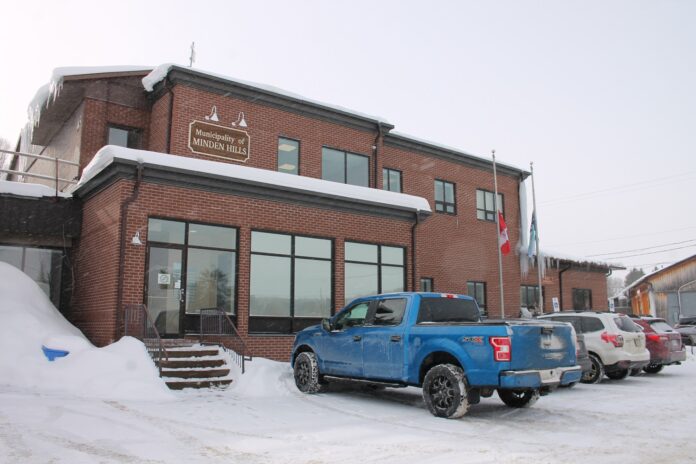
While governments may have little say over how much they must collect, when it comes to local government, it can have a say. Let’s look at Minden Hills for example. A consultant just told them they have assets valued at more than $300 million. Collectively, our townships have hundreds of millions of dollars’ worth of assets. Are there efficiencies to be had? Of course there are. In what universe does it make sense that Minden Hills meets on Milne Street while the County meets a stone’s throw away? Do we really need two council chambers in that town? Of course not. 

I get that some would argue you need five council chambers due to the geographic size of the County. However, with virtual meetings remaining the norm, do we really need all of this infrastructure?

We don’t. However, while our townships have done a better job in the past four years of playing in the sandbox together, they are still a long way from being efficient.  

Take in point Dysart et al mayor Murray Fearrey talking about developing a new curling club, arena and… gasp… swimming pool on the CR21 site. Once again, we need to look at a project like this from the vantage point of all municipalities. It will take five governments to pay for a swimming pool. We’ve seen Minden Hills task its ratepayers with its Minden ice palace facility. There was not enough County-wide vision back when that plan was being prepared. We need to ask tough questions. Do we need a new arena in Dysart? Can the needs of our hockey and ice skating community not be met by the current arena, and the ones in Minden and Wilberforce?

For the future of this community, we must finally drive a stake through the parochial hearts of Haliburton and Minden, and to a lesser extent, Wilberforce and Dysart. Our politicians must look beyond their borders. But the only way I see this happening is an impartial staffer who can come in, resurrect the service delivery review, adapt it to what is achievable, and get on with it. I would mandate that person to report back in a year with their suggestions. By then [April 2026 for arguments’ sake], we will be heading into a fall municipal election with the hope of voting in some progressive councillors who can finally find the efficiencies that we all so desperately need. 

We must end epidemic

0

While I support the County of Haliburton joining other municipalities in declaring intimate partner violence an epidemic in Ontario – proclamations such as these are somewhat toothless tigers.

As detailed in a story in today’s Highlander, the YWCA Peterborough Haliburton and Kawartha Sexual Assault Centre made a presentation at the last County council meeting of 2024.

And despite coronial inquests and reports, the situation does not seem to be improving. In fact, it is getting worse.

The reality that a coronial inquest into the killing of three women in Renfrew was not wrapped up until June 28, 2022 – when the crime occurred on Sept. 22, 2017 – tells a story in itself. How broken must a system be when it takes five years to rule on such a killing?

Carol Culleton, Anastasia Kuzyk and Nathalie Warmerdam were murdered by a man with whom each had a past relationship. None of them knew about his history of violence against women. It highlighted the critical failures in the systems meant to protect victims of intimate partner violence.

That inquest resulted in 86 recommendations speaking to oversight and accountability, system approaches, collaboration and communication, funding, education and training, measures addressing perpetrators of intimate partner violence, intervention and safety. One of the 86 was to declare intimate partner violence an epidemic. 

Another commission, the Mass Casualty Commission of March 2023, recommended a public health approach to preventing mass casualty incidents and mobilizing a society-wide response. The National Action Plan to End Gender-Based Violence, November, 2022, spoke to things such as more funding for supports, prevention, and a responsive justice system. 

The Ontario Association of Interval and Transition Houses is one of the few that does an annual femicide report. They review media reports, so femicides that have not made the news are not included. 

They found 62 in 2023-24, the same as the previous year – decidedly trending up since 2015-16, when there were 35.

Why is this happening?

For one thing, living in rural areas such as Haliburton County make it a dangerous place for some women. There is physical and social isolation, transportation challenges, and some struggling to make a living wage. They may not be able to afford, or get, good, reliable internet. The abuser takes the phone when he goes to work. We are also hunters, which means men have access to, and are familiar with, guns.

OPP reports indicate that in rural areas, violence against women is 75 per cent higher than for women in urban areas.

We suspect the post-pandemic economic challenges are also leading to violence in the home. 

Coun. Walt McKechnie quite rightly commented that sometimes abuse goes on for a long time; neighbours, family members, even the police may know about it. However, he said it is not until someone is killed that people really take notice. The OPP and courts regrettably also let us down.

He’s right. As a community, we have to take a zero-tolerance approach to intimate partner violence. That means if we hear or see something, we must speak up. Perhaps not in front of the actual perpetrator, making it worse for the victim. However, we can reach out to authorities. And they must step up and take action. Ending an intimate partner violence epidemic is up to all of us