Home Blog Page 341

Work moves forward on new Red Pine dam

0

Work is expected to begin this month on the Red Pine Lake Dam, downstream of Kennisis Lake.

Parks Canada said July 29 it is advancing on-site work to replace the dam. The dam was originally built prior to 1878, and has seen many changes and improvements over the years.

The current timber crib dam, constructed downstream of Kennisis Lake, has a wooden deck with one sluice measuring 5.2m wide.

“Engineering inspections in recent years have identified the declining condition of the Red Pine Lake Dam. The wood structure has outlived its normal expected service life and will be replaced,” Parks Canada said.

The new dam has been designed with two sluices spanning the same width, and its longevity will be increased by utilizing concrete construction with a metal deck. The new dam’s location will be 14m upstream of the current dam as a result of more favorable bedrock conditions in that location.

Access to the dam is by water only.

“This adds a challenging element to modern construction. To facilitate reliable construction, sections of the upstream river will be dredged to allow access for a construction barge to and from the site. In an effort to minimize costs, environmental impact and public interruptions, the project will be accessed via West Shore Road,” Parks Canada said.

It said contractors are expected to start in August the work will span three calendar years. There will be little to no work over the winter due to the reduced accessibility of the site. The expected timeline is as follows:

• 2021: construction will be mainly ancillary to the dam which will consist of dredging, cofferdam and bypass channel installation, the transportation of material and site setup.

• 2022: construction of the dam at the site.

• 2023: continued construction followed by full restoration and demobilization.

For questions or concerns, or to receive email updates regarding this project, contact pc.trentsevern.pc@canada.ca and include “Red Pine Lake Dam” in the subject heading. For more information about this infrastructure project, as well as questions and answers, visit pc.gc.ca/tswHaliburton.

County looks for help with rentals

0

Haliburton County could soon hire external help to assist it in drafting short-term rental rules.

Staff will develop a request for proposals (RFP) to be circulated among municipal CAOs and Warden Liz Danielsen before being made public. The County could begin receiving bids as soon as late August.

“We can be going before the end of the year for sure,” CAO Mike Rutter said at a July 28 meeting of council.

He suggested the process of establishing short-term rental rules could be similar to the path the County took regarding a review of its contentious shoreline bylaw.

In that case, a consultant is currently conducting best practices analysis, engaging residents and stakeholders with surveys and open houses and developing a draft bylaw to submit to council.

Currently, there are few zoning or regulatory bylaws governing short-term rentals in the County.

Conduct of hosts and guests at these informal rental locations have sparked dismay across the County. These stays are often at private residences rented through online services such as Airbnb or VRBO. That makes regulation and enforcement difficult.

“I don’t think there’s any other way than to hire a consultant,” said Dysart et al mayor Andrea Roberts.

Across Canada, various municipalities are trying to tackle the issue. Northern Ontario’s Sault Ste. Marie is considering restricting Airbnb owners from renting out properties not attached to their primary residence, and capping rental stays at 180 nights a year.

In a May meeting of Haliburton County Council, the municipalities voted to discuss possible regulation and zoning requirements at a County level.

“We have to acknowledge as a community that we have to govern for the bad apples,” Algonquin Highlands mayor Carol Moffatt said. “There are good people who rent well to good people and that’s never a problem.”

However, enforcing bylaws regarding short-term rentals would be challenging for County staff already stretched thin, acknowledged Danielsen.

“I’m not suggesting we don’t do it because of that, but it’s one of the elephants in the room,” she said.

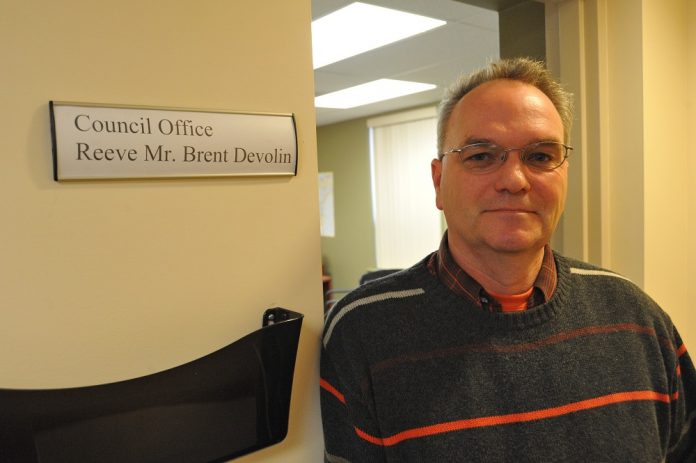
Minden Hills mayor Brent Devolin said the need for guidance on short-term rentals is urgent, as the County sees increased traffic and tourism.

“This can’t happen fast enough,” Devolin said. “We’re beginning to be who we don’t want to be.”

Minden wrestles with lake access issues

0

Minden Hills is proceeding with plans to clamp down on people behaving badly while using unopened road allowances to access lakes.

CAO Trisha McKibbon brought a report to the July 29 council meeting in hopes of addressing complaints that include noise, parking, environmental concerns and trespassing on neighbouring private property.

She is calling for a use of unopened road allowance bylaw or policy, applications and agreements.

The report came about after Mayor Brent Devolin, at a June 10 council meeting, highlighted an issue at the end of Murdoch Road.

An unopened road allowance is land dedicated as a road right of way that has not been fully developed or required for vehicle traffic. The public has the right to use them but not, without township permission, to modify them so people and vehicles can access the lake.

McKibbin said Minden Hills was getting more seasonal and year-round residents prior to 2020 but “the COVID-19 pandemic has had a significant impact on the number of individuals residing and visiting the area.”

She said that population influx has put pressure on access to waterways and lakes, often through unopened road allowances.

“There has been a corresponding increase in the number of complaints,” she said and the municipality does not have enough bylaw officers to respond to the number and frequency of those complaints.

She noted fire chief Nelson Johnson has identified those areas delay or make rescue or fire calls difficult.

Further McKibbon said there have been recent instances where real estate property listings include reference to lake access for non-lakefront properties through unopened road allowances.

She had a look at what other townships are doing, including Highlands East, North Stormont, and the townships of Faraday, South Stormont and Georgian Bluffs.

She said a policy or bylaw establishing and outlining the use would protect the township from liability, control township expenses for maintaining and improving unopened shore road allowances; manage public access; protect the environment and manage future transportation needs.

She said a bylaw could have provisions such as: no person shall erect a dock or any kind of structure on an allowance leading to water; can’t store a vehicle, boat, trailer etc.; or do any work such as removing trees or soil.

Council has numerous other considerations, she noted, such as whether to restrict vehicles and what to do about adequate parking.

She also touched on a possible application process for use to be considered on a caseby-case basis and what would be required for that.

Task force recommended

Coun. Bob Carter said, “Yes, definitely we need to do something. And I think that we have to recognize that we’re not going to be able to do this quickly. There’s going to be lots of exceptions. We have situations where people’s domiciles are sitting on some of these road allowances. There’s going to be a lot of these weird and wacky things.”

He added there is a difference between road allowances that run along the water’s edge and those that go towards the water and they may have to be handled in a totally different manner.

He suggested the municipality might need to establish a separate committee or task force to help develop a bylaw or policy due to the complexity of the issue.

Coun. Pam Sayne argued a committee could slow the process down and stall momentum on the portfolio. She was also opposed to hiring a consultant.

Devolin agreed with Carter it may have to go out of house. He thinks it is similar to the County’s shoreline preservation bylaw which is now in the hands of consultants.

“It is fraught with no less levels of complexities … and will be no less politically charged.” He added it may take until the end of this term of council to complete.

The report was received as information only. McKibbin is expected to bring a follow-up item to the August 26 council meeting on next steps. She emphasized there would be public input.

Residents speak out on shoreline bylaw

0

People shared concerns, ideas and visions for lake protection at the first of two shoreline bylaw open houses July 29.

The Zoom meeting was the first-time members of the public, as opposed to private and public stakeholder organizations, had an opportunity to speak to County of Haliburton-hired planners Hutchinson Environmental and J.L Richards.

The two companies have been contracted to review a draft bylaw and submit recommendations to council for a final policy document in October.

For more than a year, it’s proved a divisive topic: some consider its rules too far reaching and restrictive, while others say it’s only a first step in protecting lake health.

“Council has heard many of these comments loud and clear, as well as some confusion about the original guidelines that were proposed,” Warden Liz Danielsen said, as the meeting kicked off.

All who spoke said healthy lakes were important. However, views diverged on whether a proposed 30-metre no development zone was the most efficient or realistic way to protect water quality.

Speakers such as Susan Hay, who represented Environment Haliburton! said 30-metres is a must. Hay said her home was made uninhabitable after blue-green algae, often caused by septic systems and stormwater runoff, polluted her water supply. It cost $30,000 to switch to a well system.

Hay said strict development rules such as the draft bylaw “reduce erosion and protect our lakes and the fish, birds and wildlife that inhabit them, and the people who enjoy the lakes.”

Others argued the County should target issues that are equally, and more, important than restricting the space between a development and lakes.

“In terms of water quality, the single greatest threat is improperly functioning septic tanks,” said Tayce Wakefield, a Kennisis Lake property owner who’s coordinated with 20 nearby residents to navigate development rules. She reports a recent inspection program on Kennisis Lake showed over one quarter of all septic systems failed.

“Clearly this shows that a full pumpout septic inspection program should be the first priority to protect our water.”

Property rights

Many who spoke said the proposed bylaw is inappropriately restrictive and general.

“Owners feel like they’re totally losing control of their properties, particularly if it’s 30 metres,” said Bill Missen, a director of the Maple, Beech and Cameron Lakes Area Property Owners’ Association.

Missen said he doubted the County has the capacity to enforce the bylaw. Current regulations – such as the tree preservation bylaw — are often bypassed with no repercussions, he alleged.

“I think it’s unfortunately going to go back to neighbours policing neighbours.”

He explained how reporting lake residents for building infractions decreases the sense of “comaraderie” the lake community enjoys.

Carson MacDonald, owner of the Dock Shop in Minden Hills, said the proposed rules are too general to put into practice.

“It’s a one size fits all bylaw. But it can’t address the countless variables we address daily,” he said, mentioning how property size, landscaping and more determine suitable development.

“Every shoreline is different — every customers’ needs are different.”

Similarly, Wakefield of Kennisis Lake said the proposed approach doesn’t account for specific lakes and their unique environmental characteristics.

“For the large proportion of lakes that are near or above the objectives of the bylaw such as Kennisis, establishing a 30 metre ‘no-go zone’ represents an unwarranted reduction in property rights where there is no acute problem to address,“said Wakefield. She recommended rules which make accommodations for different sized lots and the needs of individual lakes.

Deb Wratschko, president of the Kennisis Lake Cottage Owners’ Association, said the existing draft needs to be explained clearly.

“The draft bylaw is written in bylaw language, which most people don’t take the time to read or fully understand,” Wratschko said.

“In order for our members to provide thoughtful feedback they need to know and understand what the bylaw is, why it’s necessary, what is in it, and how it will affect them. We need a “Coles notes” version directly from the people drafting the bylaw to support meaningful discussion and feedback.”

More than 500 people had viewed the town hall as of July 30. It’s now available to watch on the County’s YouTube channel.

A second town hall will take place at a yet undetermined date.

Haliburton couple wins big in Haliburton Rotary club raffle

0
Haliburton Rotary Club car draw

After ten cranks of the raffle drum, Ross and Laurie Burk ended up winners of the Rotary Club of Haliburton’s annual car lottery.

Heather Phillips and Ted Brandon read out the winning number of the club’s annual car raffle.

At 8 p.m. sharp on August 4, Rotary president Heather Phillips and past president Ted Brandon picked the winning ticket, sold to the Burks by Andrew Hodgson — the third winning ticket the Rotarian has sold.

The couple opted to pass up the 2021 Chevrolet Camaro in favour of $33,000 in cash, which they’ll use to buy a new car.

The Burks estimate they’ve bought Rotary club raffle tickets for 37 years.

The raffle was a sell-out, raising $64,963.22 for the Rotary club’s work in the community. 

Health unit issues warning over frozen mangoes

0

Local residents are being asked to check their freezers for frozen mango products potentially contaminated with Hepatitis A, as some are known to have been distributed in the region. 

The Haliburton, Kawartha, Pine Ridge District Health Unit warns the frozen mango products suspected of being contaminated were sold in some stores in Haliburton County, Northumberland County and the City of Kawartha Lakes.

Anyone with this frozen fruit product at home is asked not to eat it, but immediately throw out the product or return it to the store. If anyone has eaten the affected product within the past 14 days, they need to contact their health care provider. 

Child care facilities, day camps, overnight camps and long-term care homes should also check their food products to determine if the recalled product was served. 

The Canadian Food Inspection Agency (CFIA) issued a food recall warning on July 30 relating to Nature’s Touch Frozen Food Inc. Various brands of the company’s frozen mango products are possibly contaminated with Hepatitis A. The affected products were widely available in multiple grocery store chains and independent retailers in Ontario and elsewhere in Canada. Specific product information include: 

  • Nature’s Touch frozen mangoes: 2 kg size; UPC: 873668001807; Best before date: Nov. 9, 2022 
  • Compliments frozen mango mania: 600 g size; UPC: 055742504309; Best before date: Nov. 10, 2022 and Dec. 18, 2022 
  • Irresistibles frozen mango chunks: 600 g size; UPC: 059749876001; Best before date: Nov. 10, 2022 

President’s Choice frozen mango chunks: 600 g size; UPC: 060383993870; Best before date: Nov. 6, 2022 and Nov. 10, 2022 


People can call the Health Unit at 1-866-888-4577, ext. 1507 for more information. Health Unit staff are also contacting local stores that may have sold the frozen mango products to ensure they are removed from shelves. 

Province announces school plans

0

The Trillium Lakelands District Board (TLDSB) has written to families about the Ministry of Education’s guide to reopening schools, announced earlier this week.

It said, “staff are reviewing the detailed document, which focuses on health, safety, and operational guidance for schools, to update plans for a safe return to school in September.”

It highlighted some of the information released by the ministry and added that many of the strategies and protocols in place in the past school year will continue in the upcoming school year.

Students will return to in-person learning daily for the full school day. Elementary school students in Kindergarten through Grade 8 will remain in one cohort for the full day and secondary school students will follow the quadmester system, at least for the full first semester of the school year.

All staff and students will be required to self-screen every day before attending school and wear masks while indoors and on student transportation. Masks will not be required outdoors.

Students do not need to stay within their cohort during recess and breaks outdoors, but distancing is to be encouraged between cohorts as much as possible. Physical distancing measures are to be layered with other public health measures, such as screening, hand hygiene, cohorting, enhanced cleaning, and masking.

The province said extra-curricular and inter-school sport activities will be permitted with some modifications.

Other measures included that ventilation systems in all schools are to be inspected and in good working order prior to the start of the school year. School boards are to work with local public health units to promote vaccination prior to school starting in September. Shared homerooms, libraries (for group and individual use, for example, drop-in study time, etc.) and computer/technology labs, are permitted and use of lockers/cubbies is permitted. 

The board said that prior to the school year, all families will receive a link to an updated Return to School 2021-2022 plan, providing further details about a healthy and safe return to school for students in September. 

All COVID-19 information and updates can be found at tldsb.ca/covid19/.

Strange booth found at Head Lake Park

0

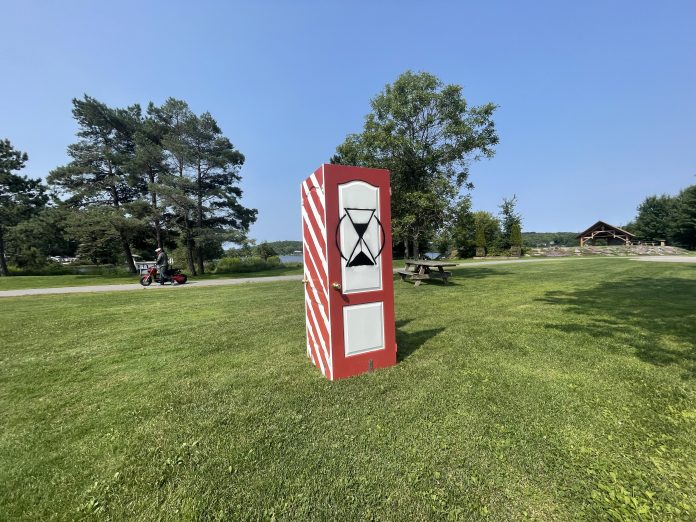
On the grass of Head Lake Park lies a strange object and a series of clues.

At 9:43 a.m. on Tuesday, Aug. 3, the Highlander was alerted that a box had been spotted in Head Lake Park.

A reporter approached and noted the box had unusual properties. First, it appeared unrelated to Dysart et al township operations, with no official markings on it, no visible source of electrical connections or staff.

Upon closer investigation, it seemed to be roughly the size of a phone box, such as the iconic red telephone booths of London, England, painted red and white on three sides.

There is a black symbol painted on the booth; an hourglass shape with two curving lines on either side.

Doors on three sides of the small booth added to the confusion: the inside, however, is where the mystery deepens.

There is a poem and instructions — it seems like whoever set up the booth wants people to “write [their] problem on the inside of one of the doors” and photograph it, sending the picture to @haliburtonlocalrep on Instagram.

That Instagram account, once investigated, only has posted twice. The Highlander could not confirm who is operating it — however, their posts raise even more questions. Specifically, the account identifies itself as the “Dust Society Haliburton.”

This is an ongoing investigation. The Highlander has received tips from a source who said similar things have been found in other locations. Due to ongoing investigations into these appearances, our source wished to remain anonymous.

We encourage readers to investigate this box themselves and send any further information to our editorial team.

Stay tuned to The Highlander as we continue to photograph and investigate these strange occurrences.

(This story is not part of regular editorial news from The Highlander )

An ode to Tom Thomson and his artistic wizardry

0
Deborah J Reed

Deborah J. Reed recently fulfilled a lifelong project of writing and illustrating a children’s book.

Reed said Ontario Wizard was her COVID project. 

It also allowed her to honour Group of Seven painter, Tom Thomson.

She said the book is “a rhyming tribute to Thomson’s unique contribution to Ontarians’ love for their stunningly beautiful province.”

For the former English teacher, the project was a culmination of her love of writing, painting and Thomson.

She said she’s “long been captured by the mystique and talent that was Tom Thomson, and am grateful that my childhood art teachers made sure that he was as big a part of discussion as was The Group of Seven.” 

She said Ontario Wizard was also her way to collaborate remotely online with two other creative forces: acclaimed Ontario-based landscape painter Robert McAffee and popular local artist, Jackie Wells. 

“Both talents generously agreed to contribute images to this book, and both have been profoundly influenced by Tom Thomson, and by the rich heritage of past and current Ontario landscape painters,” Reed said.

She said that she also generated 10 new illustrations for the book’s narrative.

She added its shiny picture pages are perfect for sharing with families or schoolchildren, and the accompanying poem “resonates with respect and affection for the solitary paddler who took his oil paints deep into the remote back country, and somehow, like a ‘wizard,’ was able to dab together his almost supernatural colours to represent how he interpreted the particular magic of our Ontario wilderness.”

Copies of Ontario Wizard, which Reed self-published, are available at Haliburton’s Rails End Gallery & Arts Centre, and at Master’s Book Store.

Public speaks up at Haliburton’s shoreline bylaw town hall

0
A shoreline in Haliburton County

People shared concerns, ideas and visions for lake protection at the first of two shoreline bylaw open houses July 29.

The Zoom meeting was the first-time members of the public, as opposed to private and public stakeholder organizations, had an opportunity to speak to County of Haliburton-hired planners Hutchinson Environmental and J.L Richards. 

The two companies have been contracted to review a draft bylaw and submit recommendations to council for a final policy document in October.

For more than a year, it’s proved a divisive topic: some consider its rules too far reaching and restrictive, while others say it’s only a first step in protecting lake health. 

“Council has heard many of these comments loud and clear, as well as some confusion about the original guidelines that were proposed,” Warden Liz Danielsen said, as the meeting kicked off. 

All who spoke said healthy lakes were important. However, views diverged on whether a proposed 30-metre no development zone was the most efficient or realistic way to protect water quality. 

Speakers such as Susan Hay, who represented Environment Haliburton! said 30-metres is a must. Hay said her home was made uninhabitable after blue-green algae, often caused by septic systems and stormwater runoff, polluted her water supply. It cost $30,000 to switch to a well system. 

Hay said strict development rules such as the draft bylaw “reduce erosion and protect our lakes and the fish, birds and wildlife that inhabit them, and the people who enjoy the lakes.”

Others argued the County should target issues that are equally, and more, important than restricting the space between a development and lakes. 

“In terms of water quality, the single greatest threat is improperly functioning septic tanks,” said Tayce Wakefield, a Kennisis Lake property owner who’s coordinated with 20 nearby residents to navigate development rules. She reports a recent inspection program on Kennisis Lake showed over one quarter of all septic systems failed. 

“Clearly this shows that a full pump-out septic inspection program should be the first priority to protect our water.” 

Property rights 

Many who spoke said the proposed bylaw is inappropriately restrictive and general. 

“Owners feel like they’re totally losing control of their properties, particularly if it’s 30 metres,” said Bill Missen, a director of the Maple, Beech and Cameron Lakes Area Property Owners’ Association. 

Missen said he doubted the County has the capacity to enforce the bylaw. Current regulations – such asthe tree preservation bylaw — are often bypassed with no repercussions, he alleged. 

“I think it’s unfortunately going to go back to neighbours policing neighbours.” 

He explained how reporting lake residents for building infractions decreases the sense of “comaraderie” the lake community enjoys.

Carson MacDonald, owner of the Dock Shop in Minden Hills, said the proposed rules are too general to put into practice. 

“It’s a one size fits all bylaw. But it can’t address the countless variables we address daily,” he said, mentioning how property size, landscaping and more determine suitable development. 

“Every shoreline is different — every customers’ needs are different.” 

Similarly, Wakefield of Kennisis Lake said the proposed approach doesn’t account for specific lakes and their unique environmental characteristics. 

“For the large proportion of lakes that are near or above the objectives of the bylaw such as Kennisis, establishing a 30 metre ‘no-go zone’ represents an unwarranted reduction in property rights where there is no acute problem to address,“said Wakefield. She recommended rules which make accommodations for different sized lots and the needs of individual lakes. 

Deb Wratschko, president of the Kennisis Lake Cottage Owners’ Association, said the existing draft needs to be explained clearly. 

“The draft bylaw is written in bylaw language, which most people don’t take the time to read or fully understand,” Wratschko said. 

“In order for our members to provide thoughtful feedback they need to know and understand what the bylaw is, why it’s necessary, what is in it, and how it will affect them. We need a “Coles notes” version directly from the people drafting the bylaw to support meaningful discussion and feedback.” 

More than 500 people had viewed the town hall as of July 30. It’s now available to watch on the County’s YouTube channel. 

A second town hall will take place at a yet undetermined date.