

Home Blog Page 325

Haliburton Huskies pick up impressive road win

0
NORTH YORK, ON - OCTOBER 10: Goaltender Tyler Hodges #30 of the Haliburton County Huskies watches the play during the second period at the Herbert Carnegie Centennial Arena on October 10, 2021 in Ontario, Canada (Photo by Ray MacAloney / OJHL Images)

Haliburton County Huskies head coach and general manager Ryan Ramsay said there were “hugely encouraging signs” this past weekend as his new outfit hit the road to take on two of the top teams in the OJHL, picking up a win and taking a loss to improve their seasonal record to 2-2. 

While the Huskies fell to a 5-1 defeat to divisional rival Wellington Dukes on Friday night, they rebounded in the best possible way on Sunday – dominating the previously undefeated North York Rangers and cruising to a 3-1 victory.

 Reflecting on the games, Ramsay said he couldn’t be more proud of his team and the way they battled on the ice against topclass opposition. Both the Dukes (4th) and the Rangers (20th) were included in the Canadian Junior Hockey League’s top 20 pre-season rankings, and have been touted as potential frontrunners for the Centennial Cup national Jr. A championship.

 “That we were able to compete against these teams was huge,” Ramsay said. “Against the Dukes, I don’t think the score was an indicator of how the game went. I would say we were right there in the game throughout. We were out shooting them all game.

Their goalie played really well and I think ours had an off night. Sometimes that’s just how it goes. “Then, against North York, I think we played pretty much the exact same way. The boys played hard and fought for every inch. The difference, maybe, is that the bounces went our way in that game. But I think we deserved the win,” Ramsay added. 

The Dukes got off to a hot start on Friday night – racing away to a 3-0 lead before the midway point of the second period. Forward Oliver Tarr brought the Huskies back into the game with a wellplaced finished after good work from Jack Staniland and Bryce Richardson, before the Dukes once again took control, with a fourth goal late in the second, and a fifth part way through the third.

 The Huskies showed remarkable character at the Herbert Carnegie Centre in North York on Sunday. The Rangers took the lead just 32 seconds into the game. Rather than let their heads drop, the Huskies dug in – outshooting the Rangers in that opening period and silencing the raucous hometown crowd for large spells.

 Then, forward Patrick Saini took centre stage. He scored the tying goal at 3:51 of the second, assisted by Will Gourgouvelis, and would go on to grab the game winner at 13:54 of the same period, assisted by Tarr and Lucas Stevenson. 

Saini then set up Tarr for an empty netter with 23 seconds to play to confirm the victory. “Pat Saini plays the same way every game. He just comes in and keeps working hard, he’s like the ‘Steady Eddy’ of the team. He’s got great skill and comes in and competes every single night,” Ramsay said. 

The coach also reserved special praise for Tarr, who picked up his team-leading fourth point of the season in the game against the Rangers, rookie defenseman Will Gourgouvelis and recent forward acquisition Nicholas Athanasakos. The Huskies completed a trade on Tuesday, adding 20-year-old goaltender Christian Cicigoi to the roster. Cicigoi comes to the Huskies from the OHL’s North Bay Battalion. 

He played seven games for the Battalion in the 2019/20 season, before COVID-19 shut league play down, posting a 6.24 goals against average and .837 save percentage.

 Ramsay said he’s expecting to welcome forwards Jacob Dupuis and Kolby Poulin back into the fold as early as this weekend, with the pair having recovered from concussions they picked up during preseason. “We’re very happy with the group we have now. I think we look good – we’ve added some bodies, and we’re starting to get some of our injured guys back on the ice. Christian Linton should be back soon – he’s a really good goalie who came to [summer] camp with a high ankle sprain,” Ramsay said. “I think we’re going to be very competitive this season.” The Huskies will take on the Cobourg Cougars at S.G. Nesbitt Memorial Arena on Saturday. With the provincial government recently lifting capacity restrictions at hockey rinks, there will be a full complement of seats available to the public for the first time this season. 

The arena can hold a crowd of approximately 500 people. Puck drop on Saturday is slated for 4:30 p.m. To enquire about tickets, visit www. huskieshockey.ca.


Time for the trades

0

When I started high school, students had the option of three streams of learning: advanced, general and basic. 

At that time, it was thought a university career was the best way to go. I chose the advanced stream to get there, attending Carleton University for journalism. To be perfectly honest, at that time in Ontario’s history, some of my classmates and I looked down on those opting for the general or basic streams, which would allow them to go to college or enter the workforce. Were we ever wrong as we perpetuated a stigma. 

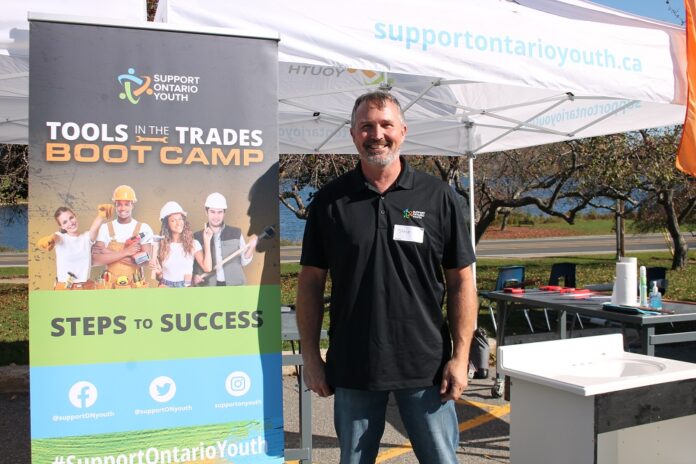
Driving by the high school Tuesday, I noticed that something was going on. Being curious, I donned my mask and maintained my six-foot distance to find out what it was. I first talked to Steve Dramnitzke of Support Ontario Youth who told me it was a skilled trades day promoting plumbing. 

The students were getting some hands-on learning as well as some practical advice from a panel representing would-be employers. They also got $250 worth of tools and a free lunch. Haliburton Highlands Secondary School trades teacher Chris Simpson was pretty proud of the fact it was the first practical application of the Trillium Lakelands District School Board’s new Start Me Up Campaign.

 The board unveiled the plan to encourage students to consider choosing the skilled trades as a career path back on April 27. The timing couldn’t be better. In the next five years, one in five new jobs will be in the skilled trades. By 2030, the province will need more than 500,000 new tradespeople to keep up with retirements and economic expansion. 

According to a Sept. 2021 RBC report, more than 700,000 skilled tradespeople are expected to retire by 2028. We’re in for shortages across the board but critical areas when it comes to an expected postpandemic infrastructure boom: industrial mechanics, welders and boilermakers. The Ontario Construction Secretariat, a lobby group for homebuilders in Ontario, said a 2019 survey of 500 member firms found 79 per cent reporting company growth slowed and 76 per cent turning down work because of a lack of skilled workers. 

The school board now has technological studies classes and two-credit co-ops that place students in workplaces and the Specialist High Skills Major program and Ontario Youth Apprenticeship Program.

 In Haliburton County, this new Start Me Up campaign really resonates. That’s why Aggie Tose of the Haliburton County Home Builders Association was there. She knows it’s all about getting kids into the trades and onto their worksites. In the past, an outdated perception of the trades has hampered recruitment efforts. That is improving. 

Some of the next hurdles include getting under-represented groups on board, such as women (only about five per cent of apprentices) and new Canadians (only 8.7 per cent). Another challenge, according to the RBC report, is training these new tradespeople for a much more digital future. I wish I’d had access to Tuesday’s session when I was in high school.

 I would have learned that the median incomes can start at $80,000 and climb into the six figures; and that I would be valued and intellectually challenged. Don’t get me wrong. I love my job. I just wish I knew more about the options when I was in school.

Plumbing holes in skilled trades sector

0

Haliburton Highlands Secondary School student Braedon Miller said he always thought he would end up in the trades so found a Supporting Ontario Youth skilled trades day at the high school Oct. 12 “interesting.”

“I think it’s pretty neat,” Miller said while taking a lunch break. “We had the chance to actually come out and do plumbing stuff.”

Support Ontario Youth’s Steve Dramnitzke said the day was about introducing students to plumbing with some hands-on activities. There was also a panel offering tips on things such as resume writing, finding out what employers are looking for, and what students need to do to get into the trades.

“Every student that comes in today gets $250 worth of free tools to be able to go out into the trades, get to do some hands-on projects, so they understand a few things,” Dramnitzke added.

Chris Simpson, who teaches woodworking and automotive at the high school, said it was the first session of the Trillium Lakelands District School Board’s new Start Me Up campaign.

“This is basically a means to help address a little bit of the skilled trades shortage,” he said.

“They started [the campaign] and this organization, Supporting Ontario Youth, put together these boot camps to help entice some of the kids to maybe explore some of the trades. So, this one here is plumbing and they come and they actually do some plumbing projects and soft skills as well, employability skills, and all that good stuff. The kids get some tools and some lunch.”

The boot camps were also headed to Bracebridge and Lindsay this week with a focus on automotive and millwrighting. Electrician sessions are also on the cards.

“We’re the first run for the board which is kind of nice,” Simpson said.

Haliburton Highlands Home Builders Association executive director Aggie Tose was one of the panelists on hand to answer students’ questions.

“Today is about getting kids involved in the trades,” she said. “Just getting them on our worksites.”

Another ‘stellar’ year for HCDC

0

The Haliburton County Development Corporation (HCDC) continued to invest money in the Highlands throughout the first year of the COVID-19 pandemic, distributing more than $5.7 million in different loans to area businesses from April 2020 to March 2021.

During the organization’s annual general meeting, held at Haliburton Highlands Brewing Oct. 6, it was noted that HCDC enjoyed another “stellar” year, despite all the complications brought on by the pandemic.

“We were deemed essential right from the get go – we pivoted our operations, and then got to work on helping businesses from across our community,” said Patti Tallman, HCDC executive director.

The organization moved quickly to establish a COVID-19 loan program, which was structured to help businesses and nonprofits in Haliburton County that had been adversely impacted by the pandemic. The program offered loans of up to $25,000, to be paid back at zero per cent interest over a two or three year period. Sarah Joanu, HCDC loans officer, said 18 loans had been approved by March 2021, totalling $908,500.

During the lockdown, HCDC also deferred more than $570,000 in principal and interest payments for clients. Joanu noted that $213,000 of that amount was eventually forgiven.

“HCDC was very fortunate to be in such a strong financial position to be able to do this for our clients. Most other organizations and banks deferred payments, but kept the interest still accruing,” Joanu said.

Shortly after HCDC launched its COVID loan fund, the federal government unveiled the Regional Relief and Recovery Fund. Joanu said HCDC received just over $1.7 million through that program, which was split among 48 qualifying businesses and non-profits in the Highlands.

In discussing HCDC’s complete year-end financials, Joanu noted the organization presently had 162 outstanding loans in the community totalling just over $14 million, approximately $4.9 million cash in the bank and an investment portfolio of $20.6 million.

Since incorporation in 1986, Joanu revealed HCDC had approved 2,203 loans across the community totalling almost $94 million.

While the organization’s primary job is providing financial assistance to businesses, program and operations coordinator, Heather Reid, program and operations coordinator, said HCDC also offers advice and mentorship to new ventures through its business incubator.

Established in 2010 in partnership with Dysart et al, the incubator was designed to support creative businesses in the Highlands and offer them an affordable office space, with access to high-speed internet, in the downtown core.

Over the years, it has evolved to become more of a mentorship program, spearheaded by Jim Blake.

The incubator currently serves as a home for two businesses – Haliburton Guitar Studio and Highlands Technical.

According to Reid, businesses that have at one time or another been a part of the HCDC incubator program are now providing more than 20 full-time jobs in Haliburton County.

Eatery ‘fabulous fit’ for new owners

0

When Baked and Battered reopens in the spring, it will have rebranding to go along with its new owners.

The mother and son team of Veronica VanLeeuwen and Taylor Pridham are taking over the popular Haliburton eatery from Craig Gordon and Colby Marcellus.

The two hail from the Collingwood area but have cottaged on Little Redstone Lake for 13 years so know the iconic business well.

“We’re very familiar with the location, quality of food, the great service and the friendly staff and the feel of this,” VanLeeuwen said.

“When we saw the listing, it brought up excitement right away. It was like what a fabulous fit. It was a place we both loved and haven’t lived full-time so that crossed all the T’s and dotted all the I’s. It was instantaneous.”

The two say they share a love of the restaurant industry and have worked together in the past. Pridham said, “we’ve always got along well.” VanLeeuwen added “We argue well. It’s a healthy conversation.”

Pridham went to Fanshawe College to study hotel and resort management and has worked in the field for 11 years. VanLeeuwen has worked at a variety of self-employed businesses, most recently a restaurant franchise she sold. During COVID, Pridham said it gave them both time to reset, reevaluate and “see this amazing opportunity and jump on it while we can.”

The two said they were grateful that Gordon and Marcellus were so generous with their time.

“I think our focus wasn’t so much about learning the industry,” said VanLeeuwen. “[It was about] how well they’ve done in the community and what everybody loves about this place because we’ve always heard such good feedback and so we just wanted to really get to know what it was that made everybody love it.”

Pridham said “it’s been great becoming part of the community and getting to know everybody the last few weeks.”

The two have been thinking about how they will make the restaurant their own while ensuring they keep the things the clientele loves.

Pridham said that means maintaining a lot of the menu items “with some more tastier dishes we’d like to bring as well.”

VanLeeuwen said they will be letting go of the bakery – “Colby is tough competition to follow” – hence the need for rebranding. They plan to offer breakfast, lunch and dinner, and are hoping to get a liquor license.

They are closed for the season and plan to do some renovations. Once they reopen in the spring, they hope to become year-round. They added a lot of staff have expressed an interest in staying on.

Meanwhile, Gordon and Marcellus called it a day Oct. 10.

“It’s very bittersweet because it’s been almost a decade,” Gordon said. “The community has been great to us. But we’re getting a little bit older and we’re going to pass it on to people who are far younger than me.”

“And energetic … I couldn’t be more excited,” Marcellus added.

Safe vehicles mean better winter driving

0

Servicing your vehicle before the snow flies will help you stay safe on winter roads.

“Fall maintenance is an important preventative measure which will ensure your safety and the longevity of your vehicle,” said Dennis Pennie, owner of Minden Auto Care.

“This is more important in cottage country as we tend to get colder weather and the possibility for heavier snowfall. We also have limited cell service, longer response time for tow trucks and less service facilities in the area.”

Pennie’s top recommendations for general fall maintenance begin with servicing the brakes to make sure they will operate properly under winter road conditions.

Have your coolant (antifreeze) strength checked to make sure the coolant is operational to -40 degrees. Use winter wiper blades to ensure they will keep the windshield cleared effectively and won’t freeze up.

“Have the vehicle battery tested to ensure the voltage is good for cold weather startup,” added Pennie. “Have your air filter and cabin air filter checked to make sure they are clean and free of debris from rodents. This will ensure proper heat and air flow.”

Next is the switch to winter tires.

“Tires should be changed when the weather is consistently seven degrees celsius or below, which is normally the first of November. Winter tires wear faster at temperatures warmer than seven degrees … Have your winter tires checked to make sure they will stop properly and won’t slide on snow and ice-covered roads.”

Finally, ask your service provider to perform a general inspection to make sure the front end is tight and confirm the brakes are working well.

Vehicles that haven’t been maintained regularly may need additional attention. The Canada Safety Council (CSC) recommends checking heaters and defrosters, flushing the cooling system, doing a diagnostic checkup on the engine and checking the exhaust system for carbon monoxide leaks.

Maintenance shops are generally busy during the fall so Pennie recommends booking an appointment.

Safe winter driving also involves emergency preparation. The CSC’s checklist for winter safety and survival includes ensuring your spare tire is inflated properly and you have a wheel wrench and a jack. Pack a windshield scraper and snow brush and a lightweight shovel along with a wire traction mat, bag of sand or other abrasive material to help you dig out your vehicle if it gets stuck. Add battery jumper cables, flares, a first aid kit and a flashlight. The CSC also advises bringing lined winter boots, a hat, other warm clothes, a blanket, candles, a lighter or matches, and small heating cans for warmth in case you need to wait for help.

During the pandemic you may want to bring extra masks and hand sanitizer.

For more information on making your vehicle ready for safe winter driving, contact your maintenance service provider and visit canadasafetycouncil.org/get-readywinter-driving/.

No rust buckets if you get your vehicle sprayed

0

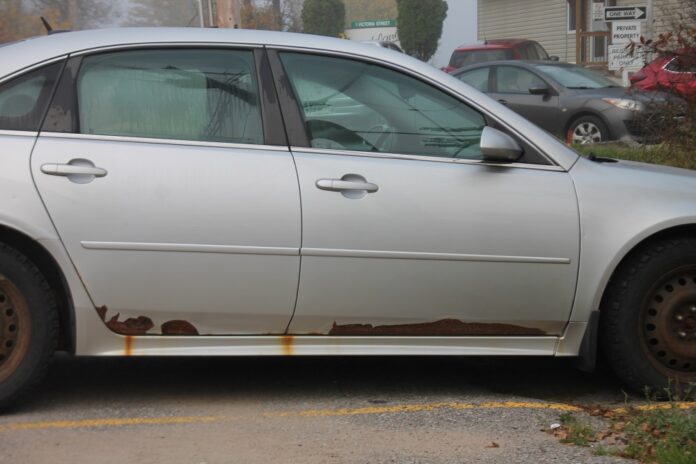
A vehicle’s longevity and value can disintegrate quickly if it’s not protected through rustproofing, a film application that protects metal from contact with oxygen and water to avoid rusting.

“Annual rustproofing is important because it protects the metal, it adds to the longevity of your vehicle, it keeps your vehicle looking better for longer with less down time due to repairs and [helps ensure] a better resale value when you decide to sell,” said Chris Anderson, owner of Niche Auto in Minden.

“Cottage country is full of large hills and winding roads. These areas have to be made safe for winter driving and to do that it requires a lot of salt [or] de-icing agent … so, you have to be proactive and keep your vehicle protected.”

Different rustproofing companies may use different products and approaches. Anderson is a big believer in Fluid Film, which he said has been leading the market since 1940.

“It has been proven in the most extreme conditions and is used by the Canadian and American Army, Navy and Air Force, exclusively,” said Anderson. “In Fluid Film there are no solvents, it is non-toxic, nonhazardous, it protects all metals, stops rust on contact and is long-lasting.”

Anderson differs in service approach by offering both garage-based and mobile options. Customers can go to the Niche garage or, for three or more vehicles, Anderson will come to them with a mobile lift that can raise halfton trucks or with ramps for larger vehicles.

“This service works great for large families, businesses and anyone that doesn’t have the time to drive their vehicles around and wait for service or try to organize rides.”

Anderson’s own experiences led him to start the mobile service. He found rustproofing vendors were not located within walking distance of stores or entertainment where customers could pass the time while waiting, and given the wait times or pickup needs, business owners were often paying for the treatment and the wages for two employees just for one vehicle.

“What if they have trailers, campers, RVs, or heavy equipment?” asked Anderson. “So, I made a service tailored for busy people that are interested in protecting their daily drives and anything else they could possibly want protected.”

Anderson recommends rustproofing your vehicle in spring as well as fall to make up for any rustproofing film loss due to harsh winter conditions and to protect against gravel chips. In addition, the metal is exposed to more moisture in spring, summer and fall than in winter when water turns to ice, and rustproofing fluid tends to creep more easily in warmer weather.

“[If] you were to do just one spray a year I recommend getting it done in late summer – August or September … but what is really important, is to just make sure you get it done before the salt hits the road.”

New ‘life saving device’ installed at Welcome Centre

0

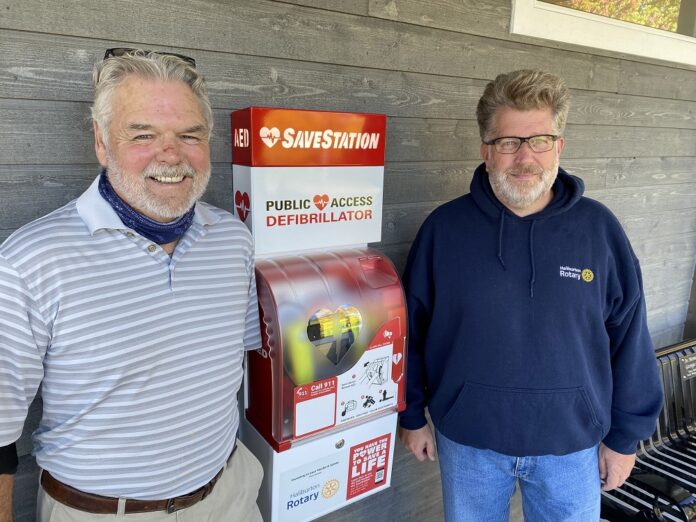
The Rotary Club of Haliburton has invested approximately $6,000 to install a new Automated External Defibrillator (AED) at the community Welcome Centre in Head Lake Park.

Unlike the several other AEDs that are already sprinkled across various locations in Haliburton, this device is a little different, said Rotarian Ted Brandon.

“This safety station is sort of unique in that it can be mounted outdoors in the open. This unit is heated and ventilated and so can be outside 365 days a year,”

Brandon said. “It will be available for use 24 hours a day, seven days a week.”

All of the other AEDs in town are located indoors and are only available during a facility’s open hours.

Long-time Highlander Phil Carrol was instrumental in the effort to bring this new device to Haliburton.

He organized for a representative from Action First Aid to attend a Rotary meeting over the summer and explain the benefits of having an AED available to the community year-round.

“The young woman who came out told us how one of these devices actually saved her life,” Brandon said.

“It was just dumb luck that a fire truck happened to be close by where she went into cardiac arrest, and they brought her back with the defibrillator … What a powerful message, for her to tell her story. I think it really resonated with everyone.”

This new AED is simple to use, Carrol said, and has various “neat” features.

“If you take it out and open it up, it starts talking to you and it tells you exactly what to do, how to utilize it and what to do to the patient.

If the patient is not in cardiac arrest, it will know and it won’t operate,”

Carrol said. “You can’t charge it or operate it if the person doesn’t need it, so it’s really great that way.”

As soon as the storage station is opened up, the AED sends a message to emergency services and contacts in Haliburton.

While first responders will be notified the device has been activated,

Brandon said it was still important to call 911 if someone is in a state of emergency.

“Calling 911 is always the first step. Then get the defibrillator,” Brandon said.

“When you’re on the phone, the operator will actually stay with you and help you through the process.

They will be able to hear the defibrillator talking and will confirm to you what steps to take and when.”

Science helping to mitigate future flooding

0

The County of Haliburton believes it will be well prepared the next time a 100-year storm rips through the community.

In September, regional staff partnered with representatives from the Ganaraska Conservation Authority and the Kawartha Lakes Conservation Authority to kick start a new bathymetry surveying project of the Gull and Burnt River watersheds.

The information will be used to improve flood protection practises in the area, said Steve Stone, the County’s director of planning.

The project is being funded by the federal government through its National Disaster Mitigation program, launched in 2015. The initiative is designed to reduce the impacts of natural disasters on Canadians through focused investments on significant recurring flood risks, while also advancing work to facilitate private residential insurance for overland flooding.

Stone said the County plans to use the approximately $175,000 it received from the feds to create new floodplain mapping for the reservoirs, lakes and connecting rivers that experience frequent flooding around the Highlands.

The idea is to avoid the sort of situation seen in 2017, when the Gull River burst its banks, flooding many riverside properties.

“We’re trying to introduce science into why these disasters are happening and, ultimately, come up with a mitigation plan for them,” Stone said

Project to wrap up December 1

There have been several funding intakes since the program was launched six years ago. The County initially applied for, and received funding in 2017. That money was used on LiDAR mapping of the watershed, which involved commissioning airplanes to fly in a straight line over certain areas of the County to form a digital map of the terrain below.

That terrestrial mapping project, as Stone calls it, is still ongoing. While it was expected to wrap up in 2019, the COVID-19 pandemic forced the County to put it on hold. Those involved in the work are only just now getting back to it, Stone said.

The bathymetry project is a second, separate intake that involves the use of SONAR technology to get an accurate read for what different waterbodies look like under the water line.

“We’ve basically broken this down into three phases – we’re going out, surveying in the water, looking at what the terrain looks like in the rivers and lakes in a few key areas. The Gull River is our primary focus right now, because of the flooding that’s happened there in the past,” Stone said. “The net result of all this survey work is that we’ll have data that the conservation authorities can plug into a model. Then, based on what we find in the water, and the features along the different rivers and lakes, they will be able to accurately figure out where the floodplain is, and based on rainfall, snowfall etc. accurately plot where this theoretical floodplain is within all the major rivers that cycle through Haliburton County.”

Stone noted this information will be used to direct public policy and assist in the decision- making process when proposals for new or existing developments along potential floodplains come before council.

While the first phase is focused on populated areas around the Gull River – most notably the village of Minden – the second and third phase will focus on more outlying areas, covering the southern portion of the Gull River watershed. Stone expects all three phases to be wrapped up by Dec. 1.

Public consultation is expected to take place in late 2022 and early 2023, presenting the project’s findings, before being officially presented to County council and the four lower tier municipalities.

“This is the sort of thing that will lead to better mapping and better policies as it relates to development in and around our County’s rivers,” Stone said. “This is the sort of thing that will lead to better response (during extreme storm events). I guess you could say we’ll be more preventative, because we’ll know more and, hopefully, through our preventative measures we’ll end up mitigating some of the potential for severe damages in the future.”

Provincial taxpayers help pay for new hospital doors

0

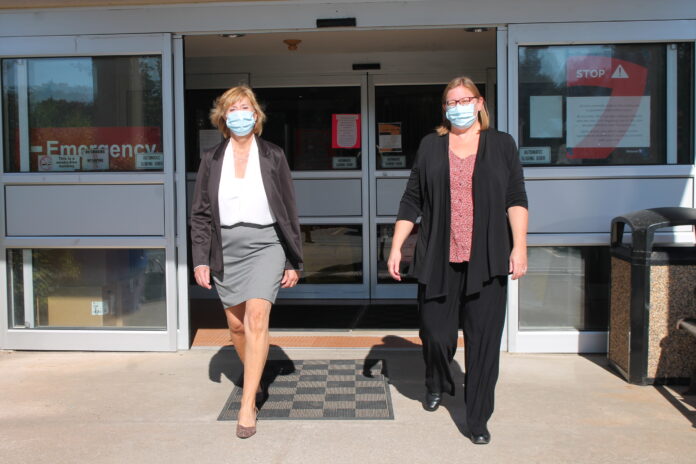
Haliburton’s hospital is getting new sliding doors courtesy of Ontario government taxpayers. MPP Laurie Scott was in Haliburton Oct. 12 to make the announcement alongside Haliburton Highlands Health Services (HHHS) president and CEO Carolyn Plummer.

Scott said the investment of $130,000 will fund the replacement of the existing automatic accessible main doors. Plummer said the doors have been in operation for more than 20 years and have exceeded their life expectancy. 

As a result, she said repairs are becoming more frequent, while at the same time parts are becoming more difficult to source as the doors and parts are becoming obsolete. She added the doors operate frequently every day and need to be reliable. 

She’s hopeful the work can be done in the spring. “This funding allows us to replace the well-used main entrance at our Haliburton site, supporting both security and accessibility,” Plummer said. “We appreciate the support of the Ministry of Health in our ongoing efforts to maintain our facilities.” Scott said, “throughout the pandemic, our local hospitals have gone above and beyond to provide exceptional care to patients and families in Haliburton County. This new funding will help improve operations and support capacity building to ensure residents of Haliburton and surrounding areas have access to quality health care.” 

She said the money is part of the government’s $182.6 million investment provided through the Health Infrastructure Renewal Fund and the Community Infrastructure Renewal Fund. 

She added it will ensure that patients can continue to access the care they need in safe, comfortable environments and that the local health care system is prepared to respond to any scenario as the COVID-19 pandemic continues to evolve. 

In a press release, the government said funding from the province allows its health care system partners to address urgent infrastructure renewal needs such as upgrades or replacements of roofs, windows, security systems, fire alarms and back-up generators. 

A total of $50 million from the Health Infrastructure Renewal Fund will be used by hospitals for urgent projects, including those that support the health system’s response to COVID-19, such as upgrading HVAC systems to enhance patient and staff safety, and improving infection prevention and control measures.

 In addition to this new funding, Scott said HHHS also received a two per cent increase to their estimated base and one-time funding for 2020-21. 

The press release further noted that HHHS received $1.329 million in funding in 2020-21 through the Health Infrastructure Renewal Fund and the Local Health Integration Network for critical infrastructure upgrades.