
Home Blog Page 316

Another ‘stellar’ year for HCDC

0

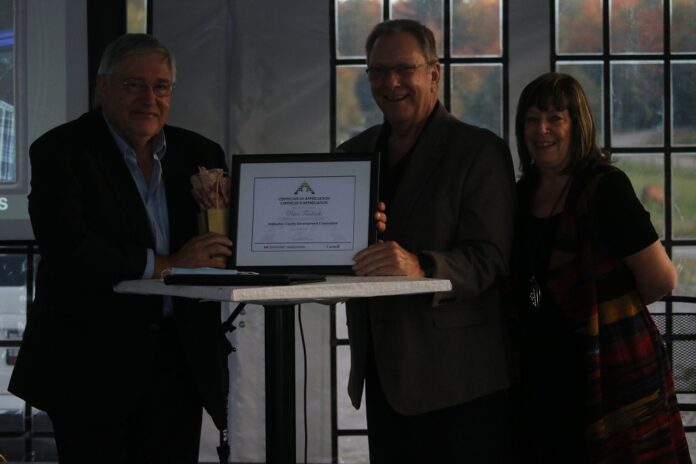
The Haliburton County Development Corporation (HCDC) continued to invest money in the Highlands throughout the first year of the COVID-19 pandemic, distributing more than $5.7 million in different loans to area businesses from April 2020 to March 2021.

During the organization’s annual general meeting, held at Haliburton Highlands Brewing Oct. 6, it was noted that HCDC enjoyed another “stellar” year, despite all the complications brought on by the pandemic.

“We were deemed essential right from the get go – we pivoted our operations, and then got to work on helping businesses from across our community,” said Patti Tallman, HCDC executive director.

The organization moved quickly to establish a COVID-19 loan program, which was structured to help businesses and nonprofits in Haliburton County that had been adversely impacted by the pandemic. The program offered loans of up to $25,000, to be paid back at zero per cent interest over a two or three year period. Sarah Joanu, HCDC loans officer, said 18 loans had been approved by March 2021, totalling $908,500.

During the lockdown, HCDC also deferred more than $570,000 in principal and interest payments for clients. Joanu noted that $213,000 of that amount was eventually forgiven.

“HCDC was very fortunate to be in such a strong financial position to be able to do this for our clients. Most other organizations and banks deferred payments, but kept the interest still accruing,” Joanu said.

Shortly after HCDC launched its COVID loan fund, the federal government unveiled the Regional Relief and Recovery Fund. Joanu said HCDC received just over $1.7 million through that program, which was split among 48 qualifying businesses and non-profits in the Highlands.

In discussing HCDC’s complete year-end financials, Joanu noted the organization presently had 162 outstanding loans in the community totalling just over $14 million, approximately $4.9 million cash in the bank and an investment portfolio of $20.6 million.

Since incorporation in 1986, Joanu revealed HCDC had approved 2,203 loans across the community totalling almost $94 million.

While the organization’s primary job is providing financial assistance to businesses, program and operations coordinator, Heather Reid, program and operations coordinator, said HCDC also offers advice and mentorship to new ventures through its business incubator.

Established in 2010 in partnership with Dysart et al, the incubator was designed to support creative businesses in the Highlands and offer them an affordable office space, with access to high-speed internet, in the downtown core.

Over the years, it has evolved to become more of a mentorship program, spearheaded by Jim Blake.

The incubator currently serves as a home for two businesses – Haliburton Guitar Studio and Highlands Technical.

According to Reid, businesses that have at one time or another been a part of the HCDC incubator program are now providing more than 20 full-time jobs in Haliburton County.
Eatery ‘fabulous fit’ for new owners

0

When Baked and Battered reopens in the spring, it will have rebranding to go along with its new owners.

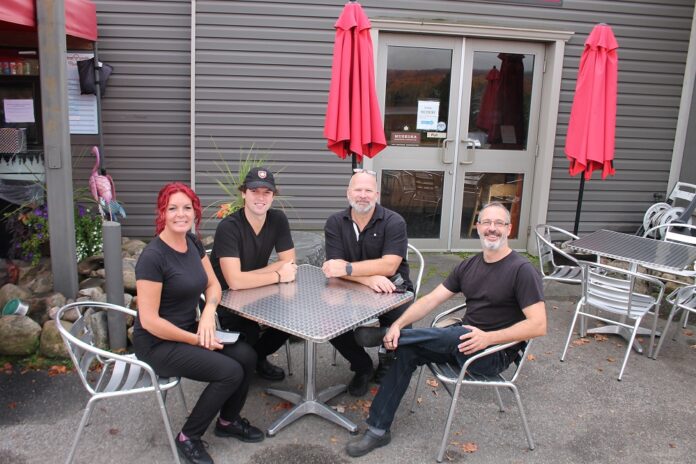
The mother and son team of Veronica VanLeeuwen and Taylor Pridham are taking over the popular Haliburton eatery from Craig Gordon and Colby Marcellus.

The two hail from the Collingwood area but have cottaged on Little Redstone Lake for 13 years so know the iconic business well.

“We’re very familiar with the location, quality of food, the great service and the friendly staff and the feel of this,” VanLeeuwen said.

“When we saw the listing, it brought up excitement right away. It was like what a fabulous fit. It was a place we both loved and haven’t lived full-time so that crossed all the T’s and dotted all the I’s. It was instantaneous.”

The two say they share a love of the restaurant industry and have worked together in the past. Pridham said, “we’ve always got along well.” VanLeeuwen added “We argue well. It’s a healthy conversation.”

Pridham went to Fanshawe College to study hotel and resort management and has worked in the field for 11 years. VanLeeuwen has worked at a variety of self-employed businesses, most recently a restaurant franchise she sold. During COVID, Pridham said it gave them both time to reset, reevaluate and “see this amazing opportunity and jump on it while we can.”

The two said they were grateful that Gordon and Marcellus were so generous with their time.

“I think our focus wasn’t so much about learning the industry,” said VanLeeuwen. “[It was about] how well they’ve done in the community and what everybody loves about this place because we’ve always heard such good feedback and so we just wanted to really get to know what it was that made everybody love it.”

Pridham said “it’s been great becoming part of the community and getting to know everybody the last few weeks.”

The two have been thinking about how they will make the restaurant their own while ensuring they keep the things the clientele loves.

Pridham said that means maintaining a lot of the menu items “with some more tastier dishes we’d like to bring as well.”

VanLeeuwen said they will be letting go of the bakery – “Colby is tough competition to follow” – hence the need for rebranding. They plan to offer breakfast, lunch and dinner, and are hoping to get a liquor license.

They are closed for the season and plan to do some renovations. Once they reopen in the spring, they hope to become year-round. They added a lot of staff have expressed an interest in staying on.

Meanwhile, Gordon and Marcellus called it a day Oct. 10.

“It’s very bittersweet because it’s been almost a decade,” Gordon said. “The community has been great to us. But we’re getting a little bit older and we’re going to pass it on to people who are far younger than me.”

“And energetic … I couldn’t be more excited,” Marcellus added.

Safe vehicles mean better winter driving

0

Servicing your vehicle before the snow flies will help you stay safe on winter roads.

“Fall maintenance is an important preventative measure which will ensure your safety and the longevity of your vehicle,” said Dennis Pennie, owner of Minden Auto Care.

“This is more important in cottage country as we tend to get colder weather and the possibility for heavier snowfall. We also have limited cell service, longer response time for tow trucks and less service facilities in the area.”

Pennie’s top recommendations for general fall maintenance begin with servicing the brakes to make sure they will operate properly under winter road conditions.

Have your coolant (antifreeze) strength checked to make sure the coolant is operational to -40 degrees. Use winter wiper blades to ensure they will keep the windshield cleared effectively and won’t freeze up.

“Have the vehicle battery tested to ensure the voltage is good for cold weather startup,” added Pennie. “Have your air filter and cabin air filter checked to make sure they are clean and free of debris from rodents. This will ensure proper heat and air flow.”

Next is the switch to winter tires.

“Tires should be changed when the weather is consistently seven degrees celsius or below, which is normally the first of November. Winter tires wear faster at temperatures warmer than seven degrees … Have your winter tires checked to make sure they will stop properly and won’t slide on snow and ice-covered roads.”

Finally, ask your service provider to perform a general inspection to make sure the front end is tight and confirm the brakes are working well.

Vehicles that haven’t been maintained regularly may need additional attention. The Canada Safety Council (CSC) recommends checking heaters and defrosters, flushing the cooling system, doing a diagnostic checkup on the engine and checking the exhaust system for carbon monoxide leaks.

Maintenance shops are generally busy during the fall so Pennie recommends booking an appointment.

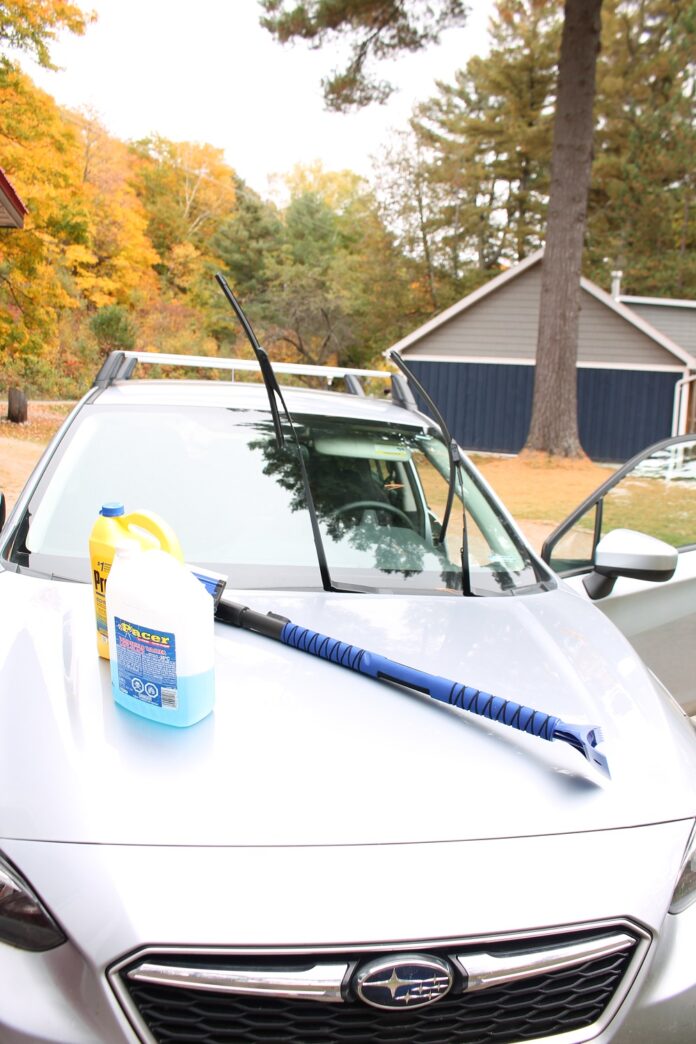
Safe winter driving also involves emergency preparation. The CSC’s checklist for winter safety and survival includes ensuring your spare tire is inflated properly and you have a wheel wrench and a jack. Pack a windshield scraper and snow brush and a lightweight shovel along with a wire traction mat, bag of sand or other abrasive material to help you dig out your vehicle if it gets stuck. Add battery jumper cables, flares, a first aid kit and a flashlight. The CSC also advises bringing lined winter boots, a hat, other warm clothes, a blanket, candles, a lighter or matches, and small heating cans for warmth in case you need to wait for help.

During the pandemic you may want to bring extra masks and hand sanitizer.

For more information on making your vehicle ready for safe winter driving, contact your maintenance service provider and visit canadasafetycouncil.org/get-readywinter-driving/.

No rust buckets if you get your vehicle sprayed

0

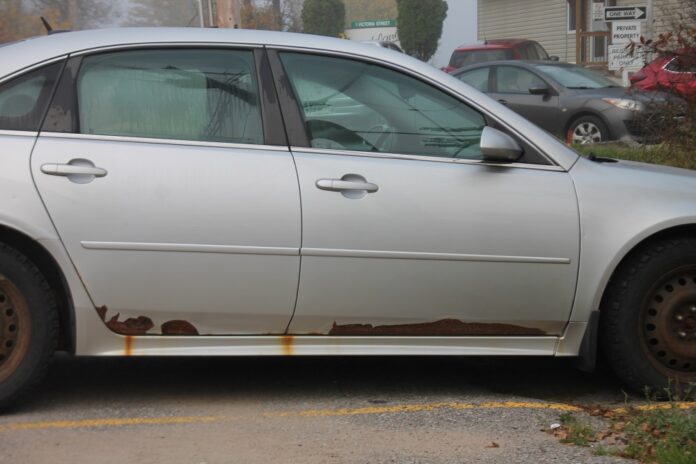
A vehicle’s longevity and value can disintegrate quickly if it’s not protected through rustproofing, a film application that protects metal from contact with oxygen and water to avoid rusting.

“Annual rustproofing is important because it protects the metal, it adds to the longevity of your vehicle, it keeps your vehicle looking better for longer with less down time due to repairs and [helps ensure] a better resale value when you decide to sell,” said Chris Anderson, owner of Niche Auto in Minden.

“Cottage country is full of large hills and winding roads. These areas have to be made safe for winter driving and to do that it requires a lot of salt [or] de-icing agent … so, you have to be proactive and keep your vehicle protected.”

Different rustproofing companies may use different products and approaches. Anderson is a big believer in Fluid Film, which he said has been leading the market since 1940.

“It has been proven in the most extreme conditions and is used by the Canadian and American Army, Navy and Air Force, exclusively,” said Anderson. “In Fluid Film there are no solvents, it is non-toxic, nonhazardous, it protects all metals, stops rust on contact and is long-lasting.”

Anderson differs in service approach by offering both garage-based and mobile options. Customers can go to the Niche garage or, for three or more vehicles, Anderson will come to them with a mobile lift that can raise halfton trucks or with ramps for larger vehicles.

“This service works great for large families, businesses and anyone that doesn’t have the time to drive their vehicles around and wait for service or try to organize rides.”

Anderson’s own experiences led him to start the mobile service. He found rustproofing vendors were not located within walking distance of stores or entertainment where customers could pass the time while waiting, and given the wait times or pickup needs, business owners were often paying for the treatment and the wages for two employees just for one vehicle.

“What if they have trailers, campers, RVs, or heavy equipment?” asked Anderson. “So, I made a service tailored for busy people that are interested in protecting their daily drives and anything else they could possibly want protected.”

Anderson recommends rustproofing your vehicle in spring as well as fall to make up for any rustproofing film loss due to harsh winter conditions and to protect against gravel chips. In addition, the metal is exposed to more moisture in spring, summer and fall than in winter when water turns to ice, and rustproofing fluid tends to creep more easily in warmer weather.

“[If] you were to do just one spray a year I recommend getting it done in late summer – August or September … but what is really important, is to just make sure you get it done before the salt hits the road.”

New ‘life saving device’ installed at Welcome Centre

0

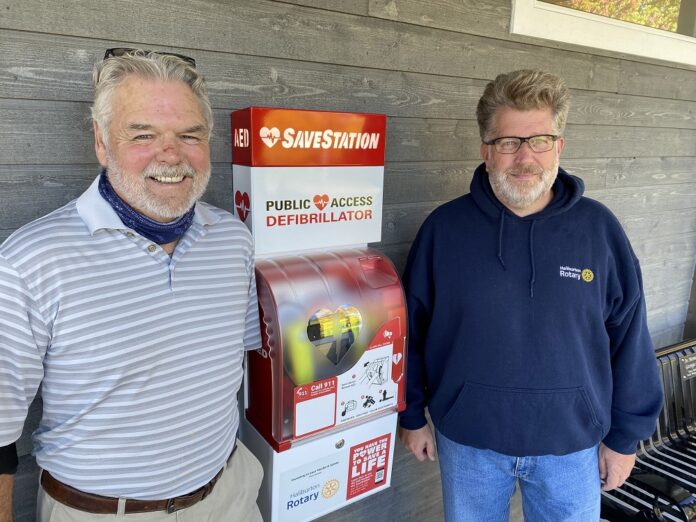
The Rotary Club of Haliburton has invested approximately $6,000 to install a new Automated External Defibrillator (AED) at the community Welcome Centre in Head Lake Park.

Unlike the several other AEDs that are already sprinkled across various locations in Haliburton, this device is a little different, said Rotarian Ted Brandon.

“This safety station is sort of unique in that it can be mounted outdoors in the open. This unit is heated and ventilated and so can be outside 365 days a year,”

Brandon said. “It will be available for use 24 hours a day, seven days a week.”

All of the other AEDs in town are located indoors and are only available during a facility’s open hours.

Long-time Highlander Phil Carrol was instrumental in the effort to bring this new device to Haliburton.

He organized for a representative from Action First Aid to attend a Rotary meeting over the summer and explain the benefits of having an AED available to the community year-round.

“The young woman who came out told us how one of these devices actually saved her life,” Brandon said.

“It was just dumb luck that a fire truck happened to be close by where she went into cardiac arrest, and they brought her back with the defibrillator … What a powerful message, for her to tell her story. I think it really resonated with everyone.”

This new AED is simple to use, Carrol said, and has various “neat” features.

“If you take it out and open it up, it starts talking to you and it tells you exactly what to do, how to utilize it and what to do to the patient.

If the patient is not in cardiac arrest, it will know and it won’t operate,”

Carrol said. “You can’t charge it or operate it if the person doesn’t need it, so it’s really great that way.”

As soon as the storage station is opened up, the AED sends a message to emergency services and contacts in Haliburton.

While first responders will be notified the device has been activated,

Brandon said it was still important to call 911 if someone is in a state of emergency.

“Calling 911 is always the first step. Then get the defibrillator,” Brandon said.

“When you’re on the phone, the operator will actually stay with you and help you through the process.

They will be able to hear the defibrillator talking and will confirm to you what steps to take and when.”

Science helping to mitigate future flooding

0

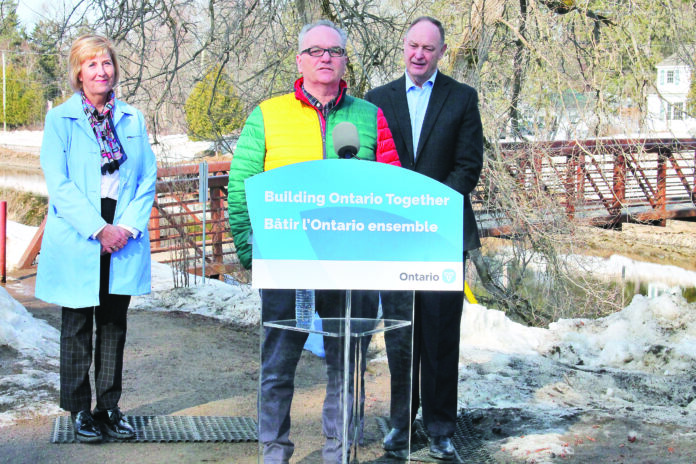
The County of Haliburton believes it will be well prepared the next time a 100-year storm rips through the community.

In September, regional staff partnered with representatives from the Ganaraska Conservation Authority and the Kawartha Lakes Conservation Authority to kick start a new bathymetry surveying project of the Gull and Burnt River watersheds.

The information will be used to improve flood protection practises in the area, said Steve Stone, the County’s director of planning.

The project is being funded by the federal government through its National Disaster Mitigation program, launched in 2015. The initiative is designed to reduce the impacts of natural disasters on Canadians through focused investments on significant recurring flood risks, while also advancing work to facilitate private residential insurance for overland flooding.

Stone said the County plans to use the approximately $175,000 it received from the feds to create new floodplain mapping for the reservoirs, lakes and connecting rivers that experience frequent flooding around the Highlands.

The idea is to avoid the sort of situation seen in 2017, when the Gull River burst its banks, flooding many riverside properties.

“We’re trying to introduce science into why these disasters are happening and, ultimately, come up with a mitigation plan for them,” Stone said

Project to wrap up December 1

There have been several funding intakes since the program was launched six years ago. The County initially applied for, and received funding in 2017. That money was used on LiDAR mapping of the watershed, which involved commissioning airplanes to fly in a straight line over certain areas of the County to form a digital map of the terrain below.

That terrestrial mapping project, as Stone calls it, is still ongoing. While it was expected to wrap up in 2019, the COVID-19 pandemic forced the County to put it on hold. Those involved in the work are only just now getting back to it, Stone said.

The bathymetry project is a second, separate intake that involves the use of SONAR technology to get an accurate read for what different waterbodies look like under the water line.

“We’ve basically broken this down into three phases – we’re going out, surveying in the water, looking at what the terrain looks like in the rivers and lakes in a few key areas. The Gull River is our primary focus right now, because of the flooding that’s happened there in the past,” Stone said. “The net result of all this survey work is that we’ll have data that the conservation authorities can plug into a model. Then, based on what we find in the water, and the features along the different rivers and lakes, they will be able to accurately figure out where the floodplain is, and based on rainfall, snowfall etc. accurately plot where this theoretical floodplain is within all the major rivers that cycle through Haliburton County.”

Stone noted this information will be used to direct public policy and assist in the decision- making process when proposals for new or existing developments along potential floodplains come before council.

While the first phase is focused on populated areas around the Gull River – most notably the village of Minden – the second and third phase will focus on more outlying areas, covering the southern portion of the Gull River watershed. Stone expects all three phases to be wrapped up by Dec. 1.

Public consultation is expected to take place in late 2022 and early 2023, presenting the project’s findings, before being officially presented to County council and the four lower tier municipalities.

“This is the sort of thing that will lead to better mapping and better policies as it relates to development in and around our County’s rivers,” Stone said. “This is the sort of thing that will lead to better response (during extreme storm events). I guess you could say we’ll be more preventative, because we’ll know more and, hopefully, through our preventative measures we’ll end up mitigating some of the potential for severe damages in the future.”

Provincial taxpayers help pay for new hospital doors

0

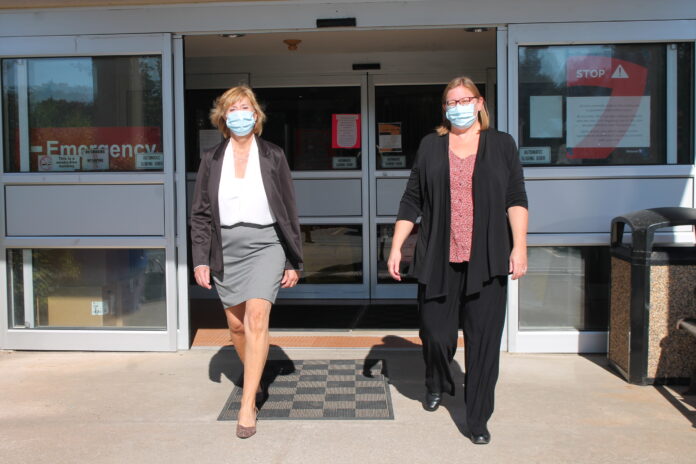
Haliburton’s hospital is getting new sliding doors courtesy of Ontario government taxpayers. MPP Laurie Scott was in Haliburton Oct. 12 to make the announcement alongside Haliburton Highlands Health Services (HHHS) president and CEO Carolyn Plummer.

Scott said the investment of $130,000 will fund the replacement of the existing automatic accessible main doors. Plummer said the doors have been in operation for more than 20 years and have exceeded their life expectancy. 

As a result, she said repairs are becoming more frequent, while at the same time parts are becoming more difficult to source as the doors and parts are becoming obsolete. She added the doors operate frequently every day and need to be reliable. 

She’s hopeful the work can be done in the spring. “This funding allows us to replace the well-used main entrance at our Haliburton site, supporting both security and accessibility,” Plummer said. “We appreciate the support of the Ministry of Health in our ongoing efforts to maintain our facilities.” Scott said, “throughout the pandemic, our local hospitals have gone above and beyond to provide exceptional care to patients and families in Haliburton County. This new funding will help improve operations and support capacity building to ensure residents of Haliburton and surrounding areas have access to quality health care.” 

She said the money is part of the government’s $182.6 million investment provided through the Health Infrastructure Renewal Fund and the Community Infrastructure Renewal Fund. 

She added it will ensure that patients can continue to access the care they need in safe, comfortable environments and that the local health care system is prepared to respond to any scenario as the COVID-19 pandemic continues to evolve. 

In a press release, the government said funding from the province allows its health care system partners to address urgent infrastructure renewal needs such as upgrades or replacements of roofs, windows, security systems, fire alarms and back-up generators. 

A total of $50 million from the Health Infrastructure Renewal Fund will be used by hospitals for urgent projects, including those that support the health system’s response to COVID-19, such as upgrading HVAC systems to enhance patient and staff safety, and improving infection prevention and control measures.

 In addition to this new funding, Scott said HHHS also received a two per cent increase to their estimated base and one-time funding for 2020-21. 

The press release further noted that HHHS received $1.329 million in funding in 2020-21 through the Health Infrastructure Renewal Fund and the Local Health Integration Network for critical infrastructure upgrades.

County ‘begs’ while ‘Muskoka millions’ flow

0

Haliburton County has to “beg and scrape” for provincial money to support its watershed projects while ‘the Muskoka millions’ continue to flow, Algonquin Highlands Mayor Carol Moffatt told a township council meeting Oct. 7. 

During a Muskoka River Watershed communications committee meeting in late September, Moffatt, who sits on the committee because the watershed partly falls in Algonquin Highlands, said she learned about provincial government funding for work in the Muskoka watershed.

 She was referring to an April announcement in Gravenhurst that the Ontario government is investing more than $4.25 million on 16 projects to further protect that watershed. According to a Ministry of Environment, Conservation and Parks press release, the funding would help safeguard the region from environmental pressures, such as severe weather and flooding, while also improving the health of the watershed.

 Moffatt said one of the projects is a hydrology model for Muskoka. “I’ve been waving the angry flag for some time that Haliburton County is miles ahead in its integrated watershed management process and relationships and modelling, and we’ve had to beg and scrape for every cent and this is just some more money … the Muskoka millions,” she said.

 Moffatt added, “It’s frustrating that a neighbouring municipality continues to receive tremendous amounts of money to address problems that neighbouring communities and other jurisdictions across the province are facing.” 

Coun. Jennifer Dailloux commented, “I wonder if now is another moment to write a letter and say there are equity issues here. Cottage country across Ontario is vast and it isn’t just one region. We all have these same questions and we’ve said it before, but we’d like to say it again now.” In August 2018, Ontario announced a $5 million Muskoka Watershed Conservation and Management initiative.

 In August 2019, the MECP established the Muskoka Watershed Advisory Group. The Ministry of Natural Resources and Forestry did release its Protecting People and Property: Ontario’s Flooding Strategy in March 2020 in Minden. However, there was no money specifically announced for Haliburton County.

 And while the County of Haliburton received $175,000 from the National Disaster Mitigation program to assist with flood prevention planning in 2017, that was federal money for LiDAR mapping of the Burnt and Gull River watersheds following significant flooding.

Moffatt, and Minden Hills Mayor Brent Devolin are County representatives on the Upper Trent Water Management Partnership.

 Moffatt said municipalities within the local watershed have forged relationships, including with the Coalition for Equitable Water Flow and the Trent Severn Waterway, and have expertise, yet she feels the County has been slighted. “In some ways [the two watersheds] have different battles, different hills to climb, but when they [the province] issue a press release that says, ‘The Muskoka region is one of Ontario’s crown jewels, and we want to ensure that we continue to protect its environment which is so important to the local economy and the great people who live there, said Premier Doug Ford … well I think there are a lot of other jurisdictions in Ontario that would like to receive that same largesse over and over.” 

Moffatt indicated it is a County of Haliburton issue and she would be talking to deputy mayor and County warden Liz Danielsen about raising it there in future.

 Haliburton-Kawartha Lakes-Brock MPP Laurie Scott said that in April 2021, the Ontario government announced an initial investment of over $4.25 million to fund 16 projects to address flooding and the watershed health of the Muskoka River Watershed as previously announced in 2018.

 However, she said, “our municipalities have been working hard to protect local waterways including a successful application through the Great Lakes Local Action Fund to create a sustainable, citizenbased model of benthos biomonitoring in the Haliburton, Peterborough and Kawartha Lakes areas to identify early indicators of lake issues. “This was one of the 44 community-based projects to receive $1.9 million in funding through the Great Lakes Local Action Fund. This fund supports local projects that protect and restore coastal, shoreline and near shore areas of the Great Lakes.” 

Scott added, “our government is committed to protecting and conserving our environment and we want to ensure that Ontario’s natural beauty can be enjoyed for generations to come. That is why we created the Made-in-Ontario Environment Plan outlining practical, sensible, and affordable solutions to some of our province’s most pressing environmental concerns.” 

Minden Lions celebrate Octoberfest

0

The kegs won’t be flowing, but bratwursts, potato salad and coleslaw will all be on
offer at the Minden Lions Club’s first family-friendly Octoberfest celebration.

On Oct. 16, the Lions will be serving up German-style fare in their clubhouse. Guests can book one of two seatings, at 5
p.m. or 6:30 p.m. “We’re trying something new,” said Lions Dan Bingham, who is organizing the event.

“We thought October would be a good time to do it.” To comply with COVID-19 protocols,
everyone attending must be vaccinated, since the event falls under the same classification as a restaurant. They’re
also offering takeout. “The reason we’re doing the takeout we know some aren’t comfortable with the dine-in experience
yet,” he said.

All diners must book their table or takeout order by Oct. 14.

The dinner is the Lions’ first large-scale in-person fundraising event for over a year
and a half. “It’s been very frustrating,” Bingham said. He mentions other cornerstone events on
the Lions’ calendar such as Music on the Gull, which was canceled this year.

Funds from the Lions Club go towards multiple community initiatives, as well as helping out in times of need such as the town’s 2017 flood.
For Bingham, this event could act as a kick-start for fundraising as pandemic restrictions continue to allow more
in-person events.
“Because it’s been so long since we’ve done any fundraising, we wanted to get back in the groove,” he said.
To book a table or takeout order email mindenlions@lionsa16.com or call
705-286-6476

Planners launch second shoreline bylaw survey

0
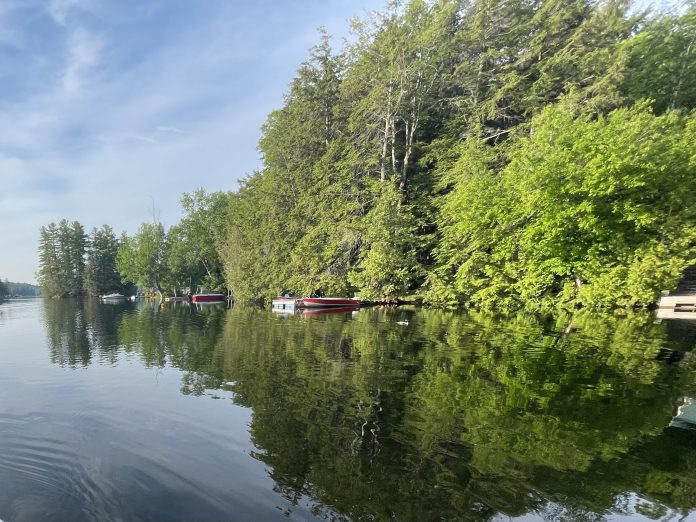
A shoreline in Haliburton County

In partnership with the County of Haliburton, planners have released a second survey polling residents on options for a draft shoreline protection bylaw. 

The survey focuses on specific aspects of the previous draft that consultants J.L Richards and Hutchinson Environmental Services Ltd. have identified as areas to clarify or improve in a new draft bylaw.

One element of the bylaw which has stirred debate is the previously proposed 30-metre setback. 

In the survey, JLR asks residents what elements of a property, including topography, existing site conditions and developments, should be considered when applying the bylaw. 

As well, the survey asks how people view a protection plan meshing with existing planning requirements such as the County’s official plan which states “the 30-meter shoreline preservation setback shall apply from the high watermark of a ‘body of water’ including lakes, rivers and streams.”

From Oct. 6-19, the eight-question survey can be accessed through the County of Haliburton’s website. 

Another survey, completed in August, focused on general feelings towards lake health and waterfront development. Among the 286 respondents, all indicated lake health was either extremely important, very important or somewhat important. 

The surveys are one part of a wider consultation strategy from JLR and HES. Ahead of presenting a draft bylaw to County Council at the end of October, the consultants met with stakeholders and received input from private residents through two virtual town hall meetings, also attended by County councillors.

You can complete the survey here.