

By Adam Frisk, Local Journalism Initiative Reporter
Highlands East council vows to “tweak” the municipality’s controversial Short-Term Rental (STR) bylaw after a heated public meeting that exposed the conflict between the township’s economic needs and its quiet lakeside character.
Elected officials heard from members of the public on March 24 who warned that the current STR licensing program is dragging down the economy, while others pleaded for protections from lakeside “party pits.”
Township business owners argued that current STR regulations are already causing a declining economy. Lindsay Watling, co-owner of the Wilberforce Service Centre, told council her business saw a 30 per cent decline in revenue from June to September 2025, a drop she attributes to a lack of local hospitality.
“We simply do not have the infrastructure to support tourism through hotels alone,” she said, adding that the nearest rooms are about 40 minutes away, in nearby towns. “That distance matters because when visitors cannot stay here, they don’t sleep here, and when they don’t sleep here, they don’t spend their money here; they spend it elsewhere.”
Watling went on to note a potential safety concern surrounding the lack of hospitality in the township and pointed to the recent ice storm as an example. She said that emergency hydro crews were forced to commute up to five hours daily from as far away as Kingston because local STRs were unavailable.
“This is a valuable time that could have been spent restoring power to our residents,” the business owner said. “Just a few years ago, many of those same crews were able to stay locally at short-term rentals.”
While business owners pleaded for growth, lake association leaders voiced concerns over the lack of STR limits on lakes, the apparent lack of enforcement of unlicensed rentals, and party venues.
Chris Williams, president of the Minnicock Lake Cottagers Association, told council that at least one cottage had turned over three times because residents could no longer tolerate living next to a poorly managed rental.
“Essentially, it’s called a party pit,” he said. “They sit there every weekend and have a constant stream of parties all the time. And so they’re like, ‘What is the value of this property?’ And they dump it.
“What it also means is that the zoning has become irrelevant. You’ve got businesses that are operating in residential zones,” Williams said.
He went on to urge council to move faster on enforcement, suggesting that lax enforcement means low enrollment.
“Why did I pay all this money for a licence when other people are allowed to operate without one?” Williams questioned.
Some of the granular details of the bylaw were addressed during the public meeting, such as capacity limits, shore road allowances and overall privacy concerns, with one host slamming the municipality for posting an online map of STR locations without consent.
“Big, big, big privacy issues there,” Elizabeth Oakley told council.
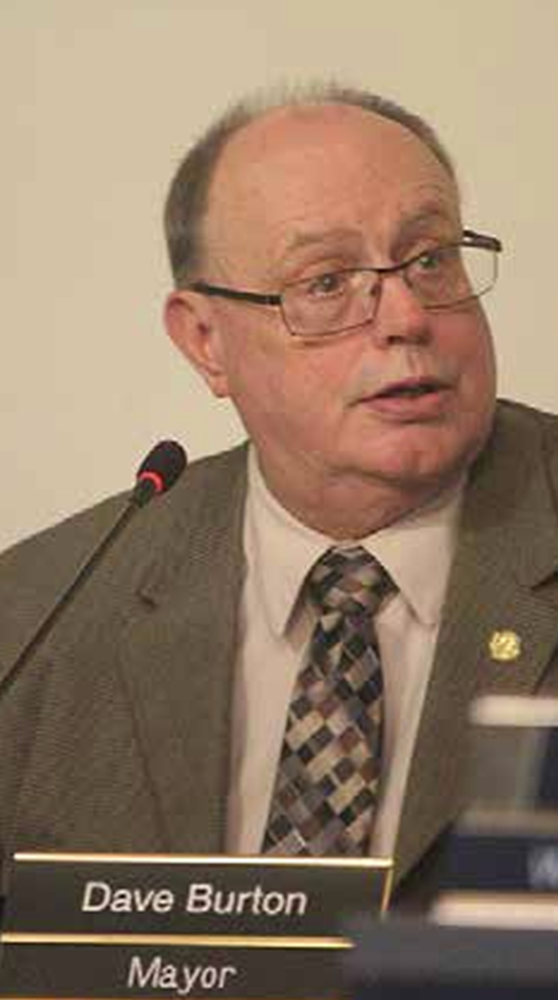
The public meeting lasted just over an hour, with mayor Dave Burton acknowledging that the 18-month-old program requires adjustments. “We’ve been gathering the information.
We’ve been compiling everything that has been spoken about today,” he said. “I’m very willing to look at the bylaw. We understand that it does need a bit of tweaking, and we will certainly do that.”
The mayor indicated he would request a full staff review of the public’s suggestions that were presented to council.