
It took Dysart et al council just 11 minutes last week to support the township’s 2026 budget, with mayor Murray Fearrey saying, “this is pretty well a stand-pat budget,” with little-to-no money set aside to expand services this year.
A second draft of the budget was tabled during a Jan. 9 special meeting, with elected officials happy with a 4.98 per cent increase to property taxes. This is down from 5.83 per cent, proposed in the first draft of the budget in December. Treasurer Brayden Robinson noted staff had found more savings in recent weeks, reducing the required tax levy increase by $111,529.
As a result, residential ratepayers can expect to pay an additional $17.54 per $100,000 of their property’s assessed value. That equates to a median increase of $40.17 on the year for non-waterfront taxpayers and $71.04 for those with seasonal residences.
“We’ve not done anything to lessen the services of the municipality, but we’ve had to cut some projects that would be nice to do, especially roads, because if we did them, we’d just have to borrow the money,” Fearrey said.
“We’re going to provide the same services that we did last year – we’ll get some of the roads done that need to be done in town here, one out on Wenona Lake, and we’ve got the [three] bridges, which are huge,” he added.
The township is slated to spend $3.8 million replacing the Redstone Brook and Barry’s Bay bridges and Head Lake Park footbridge this year. A further $1.5 million is being spent resurfacing a dozen roads in the community, including the entirety of the Halbiem Crescent subdivision and portions of Fred Jones Road, Wenona Lake Road, Meadowview Road, Industrial Park Road, Eastern Avenue, Pine Avenue, Humber Avenue, Dome Street, Harmony Road and Mink Road.
The township’s operating expenses – things they have to pay for year-over-year that council has little control over, according to Fearrey – are up more than $1 million in 2026, climbing to $17.76 million. Taxpayers will pay approximately $14 million of that, with 76 per cent borne by those with residential properties.
Robinson noted commercial properties would pay an additional $26.01 per $100k of assessment, with industrial owners paying an extra $30.14 per $100k.
In his report to council, Robinson broke down the savings from the December meeting – expected costs for a final cover at the West Guilford and Kennisis landfills, initially projected at $429,243, have come in at $252,743 – a reduction of $176,500. Landfill haulage costs yielded a $46,638 reduction, with another $51,689 saved on the bridges due to a revised repayment plan.
Building and bylaw staff are now projecting an increase of $5,000 in STR revenues – welcome news after council learned last month that program uptake hasn’t been as successful as initially projected. The township expected to have 500 STR properties as of the start of 2026, but staff have only registered 250270, leading to a $110,000 decrease in anticipated revenues.
The biggest increase across the whole budget, Robinson confirmed, was OPP costs, which are up 11 per cent ($244,993). This is a big jump from recent years, with police carrying a 0.5 per cent increase in 2023, 1.4 per cent in 2024 and 3.6 per cent in 2025.
Tightening belts
Fearrey reiterated how difficult it was toeing the line with this budget.
“It would have been nice if we could have done some other things – adding a grader or fixing some of our other issues, but we’re just going to have to fix things as we go. That’s just what we have to do right now if we’re going to be at all reasonable to taxpayers.
“I don’t want to leave the next council with a bigger mess than we inherited, so there are some things we need to do [and pay for]… it would have been nice not to have a tax increase, but that day has gone, I’m afraid, for a long time,” he said.
The mayor again targeted the provincial and federal governments, saying municipalities need additional sources of revenues to cover costs – especially in the wake of recent provincial governments downloading costs, for things such as social housing, to the local level.
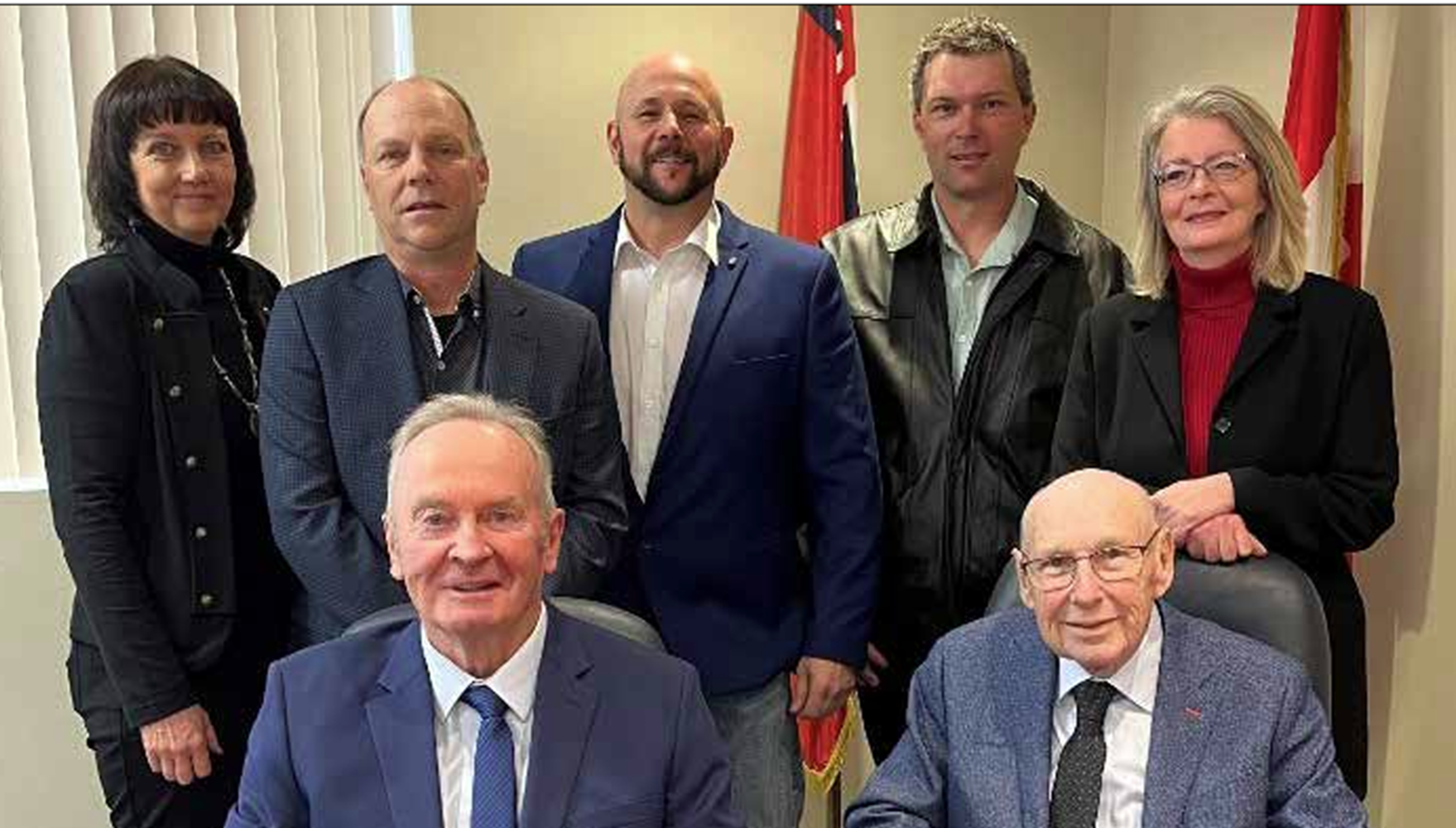
Deputy mayor Walt McKechnie and councillors Barry Boice, Pat Casey and Tammy Donaldson took turns complimenting Fearrey, Robinson and department heads for delivering a trimmed budget – the first since Ontario premier Doug Ford mandated mayors in most municipalities take control of the process.
Fearrey said despite the additional responsibility, which he said he doesn’t like, he still worked alongside council to ensure they felt a part of proceedings.
“To me, it was the same process. There’s only one way to do a budget and that’s with the department heads, staff and council. This didn’t change anything for me, I didn’t think it needed to happen, but it did. It might work in Toronto, but isn’t needed in these rural municipalities,” Fearrey said.
Under the new process, Robinson said there is no formal approval mechanism required for the budget, with the process now considered complete.