
Students from the hospitality and tourism specialist high skills major (SHSM) program at Haliburton Highlands Secondary School recently had the opportunity to learn about career paths firsthand during a day-long industry tour co-ordinated by the County of Haliburton.
Eric Casper, the County’s tourism co-ordinator, said the students learned that tourism and hospitality careers extend far beyond hotel front desks and restaurant kitchens; to include event planning, marketing, culinary arts, outdoor recreation, guest services, accommodations, and countless behind-the-scenes roles that help create memorable visitor experiences.
He said 21 students visited Sir Sam’s Ski/Ride, Boshkung Smokehouse, and Haliburton Forest & Wild Life Reserve to gain real-world insight into the region’s tourism and hospitality industry.
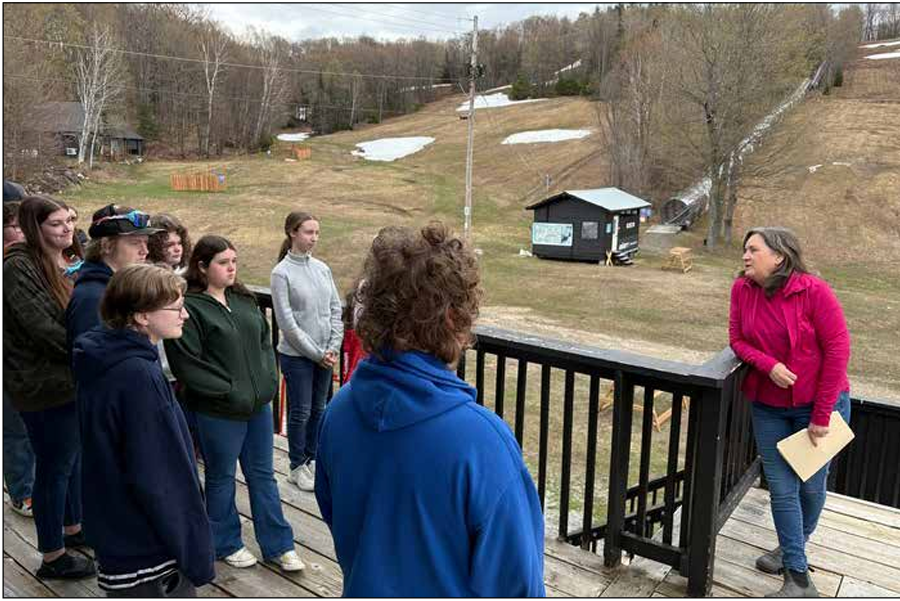
At Sir Sam’s Ski/Ride, Casper said students learned about the realities of operating a four-season tourism destination, including weddings, events, food services, and seasonal recreation. Director of sales and events, Sharon Kennedy, shared her career journey and emphasized tourism and hospitality offer strong opportunities for advancement and travel.
Kennedy told students many successful careers begin in entry-level positions, such as starting as a dishwasher, server, or lift operator, but they can provide valuable experience and open doors to management, sales, marketing, and event planning roles over time.
“Sir Sam’s Ski/Ride welcomed the opportunity to give students an inside look at the dynamic world of hospitality and tourism,” Kennedy said. “Experiential learning plays a vital role in helping students connect classroom learning with real-world industry experience.”
She added opportunities such as this help students build confidence while gaining a deeper understanding of the wide range of
careers available within the industry.
The group visited Boshkung Smokehouse, at Haliburton Forest, where students learned about culinary tourism and restaurant operations. Casper said the discussion turned to the use of artificial intelligence within the food industry. Examples included using AI tools to assist with nutritional labeling and menu information, helping simplify tasks that once took significantly more time to complete manually. He added there were discussions about smoking meats, food preparation, and restaurant operations, with students hearing an important message about perseverance and resilience.
Forest general manager, Tegan Legge, provided a behind-the-scenes look at the moving parts required to operate a large tourism destination. Students toured accommodations, operations areas, and the wolf centre, while learning about guest services, bookings, maintenance, environmental management, and outdoor recreation experiences.
Legge encouraged students to pursue careers connected to their passions and spoke about the importance of flexibility within the industry. She highlighted examples of staff members helping to develop unique visitor experiences, such as a clay shooting program, while also taking on a variety of additional roles throughout the operation.
Casper said the tour was designed to give students insight into one of the region’s most important industries, while connecting them directly with local employers and professionals.
“Experiences like this allow students to see the many different career pathways available within tourism and hospitality,” Casper said. “From culinary arts and accommodations to events, recreation, and marketing, the industry offers opportunities for many different skillsets
and personalities.