
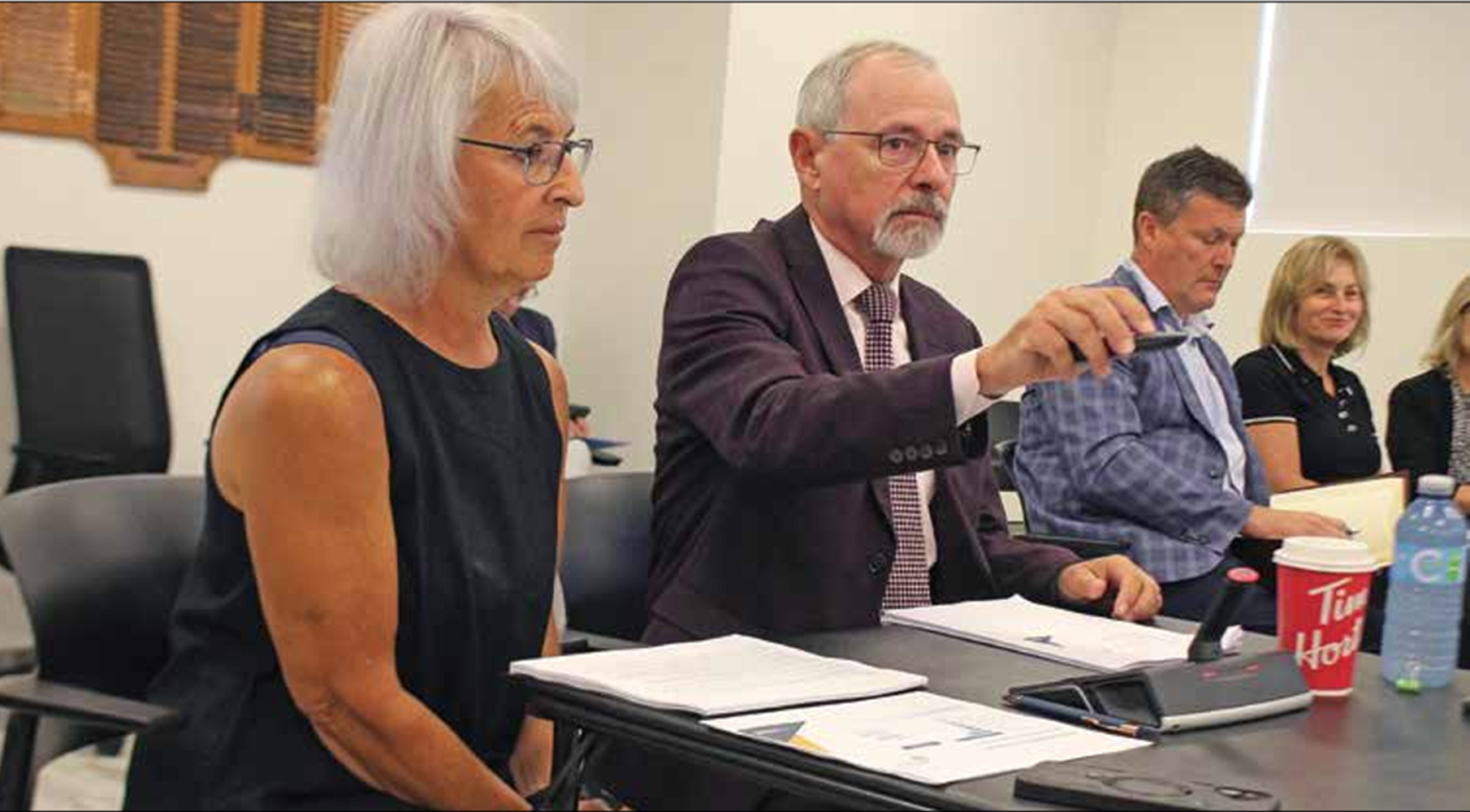
Deputy warden, Liz Danielsen, told County council Wednesday (Aug. 12), she recalled a Haliburton Highlands Chamber of Commerce meeting 12 years ago in which two or three “very well-respected local folks were stamping their feet saying there’s nothing but amalgamation to be done.”
A single-tier government is one of just four models the Eastern Ontario Regional Network (EORN) presented to County and local councillors. The others are status quo, or hybrid models.
Danielsen said back in 2014, she thought “no way” to amalgamation at that chamber meeting, factoring in things such as losing local identity.
“Over time, you start to see the true need for change. We truly do need to do something because we cannot sustain ourselves financially without massive increases in taxes, or doing something different.”
Danielsen, looking around a County table that had not just County councillors, but local councillors as well, added they had to work closer together. “More partnerships, more discussion, we need to play nice in the sandbox in order for us to improve things and keep life the way we want it to be in Haliburton County.”
She questioned if there was any room for the current council to have further input, despite already deferring the decision to the 2026-30 councils. For example, she wondered if it made sense to have a deeper dive only into models palatable to councils.
Coun. Walt McKechnie said he’s passionate about Dysart et al and would do what is best for its taxpayers. He’s worried about loss of identity.
“I just feel that this process right now is being really rushed, especially for the new council coming in.”
He said he couldn’t understand why the report did not mention amalgamations that had resulted in higher taxes. He said he would expect single-tier to produce lower taxes and better services.
Referring to something sent to him when he was driving to yesterday’s meeting, McKechnie read out examples of post-amalgamation figures from his phone; that City of Kawartha Lakes employee compensation had jumped 52 per cent and spiked property taxes; Haldimand County property taxes rose by 50 per cent … and other examples The Highlander was unable to verify as of press time.
He said he was unaware of good stories around amalgamation.
Counsultant Maureen Adams said she did not think County council wanted to commit to lowering taxes, but to building capacity, so, for example, there was not a need to do five audits, fives sets of financial statements, five budgets, five asset management plans, etc. so they could put more money into infrastructure and capital.
Pine, who was involved in the Quinte West amalgamation, urged councillors to look at what levy increases would look like going forward if they don’t change.
In the case of their four municipalities, he said, “we all came to the recognition we could stay the same, but what we wanted to do was more. And we realized on our own, we couldn’t do more. If public service is about the public and service, what can we do differently that will improve things … ?”
He said from 1995-96 to where the city is today, “it’s growing … they were able to hard top all the gravel roads in one year …”
They were able to open an industrial park.” He said it is an example of a success story.
Burton said there were differences in assessment base and population.
Coun. Pat Casey said the models were akin to a merger-acquisition, “and we need very solid financial data and efficiency data as to how much will be saved.
“Show us the money. Show us the efficiencies and then walk through the process of how we are to collectively vote on it or implement it. We need a crystalclear picture of its benefits.” He suggested they continue to work on service delivery review suggestions.
Danielsen asked Pine what his choice would be.
“Single-tier offers the greatest opportunity for reduction in duplication, the most opportunity around building capacity.”