
One of the world’s leading voices against burning waste has warned Haliburton County council it would be making a mistake investing in “outdated” incinerator technology.
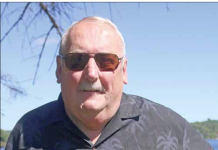
Dr. Paul Connett, a retired environmental chemistry professor and waste management consultant based in Canton, New York, spoke at an Environment Haliburton! webinar July 31 to advise the community against pursuing incineration for municipal garbage.
County council established a working group in May to investigate the potential merits. While warden Liz Danielsen said at last week’s meeting talks are in the very early stages, The Highlander has learned the topic will be discussed next month, with council meetings scheduled Sept. 11 and 25.
“Incineration is a lazy, uncreative solution. It’s the Rambo approach to waste management – you don’t like something, get out the flamethrower and zap it,” Connett said.
He’s been researching incinerators since 1985 and has visited communities in 69 countries to advocate against the machines. Connett estimates helping prevent around 300 incinerators from being built across North America over the past 30 years – only one has been built in the U.S. since 1997, while there are six in operation today in Canada.
Instead, he’s helped communities establish new ways to deal with waste. He believes the answer lies in adopting a zero-waste strategy and transitioning from a linear economy based on quick consumption and disposal of goods to a circular one that promotes organic recycling, such as composting, and reusing.
‘If incinerating wasn’t safe it wouldn’t be happening’
“We would need five planets if everyone consumed as much as the average North American,” Connett said, noting how most people in Canada and the U.S. typically generate 52 tonnes of garbage by their 75th birthday.
He suggested the County consider banning things such as single-use plastics as a starting point.
In speaking against incineration, Connett said the financial and environmental repercussions could be disastrous for the County. He said the Durham-York plant, in Clarington, Wednesday – Friday 10 AM – 5 PM Saturday 10 AM – 4 PM 23 Hops Dr. • 705-457-1919 mid SUMMER carried an initial $295 million cost when it was built in 2016 and annual operating costs north of $16 million. The facility processes about 140,000 tonnes of garbage per year. Connett estimated a similar build would run closer to $400 to $500 million today.
The dangers
While the Durham-York incinerator and others located in Brampton and soon-to-be Edmonton are promoted as clean and safe for the environment, Connett contends the opposite.
“Incineration produces a toxic ash that nobody wants. For every four tons of trash burned, about one ton of ash is created – bottom ash that gathers under the grate and fly ash by the boilers and air pollution control devices,” Connett said, noting the ash contains dangerous levels of toxic metals such as lead and cadmium.
He noted fly ash was particularly dangerous – saying many countries, such as Germany and Switzerland, treat it as hazardous waste, place the ash into nylon bags and store them in salt mines. “It’s the same way they handle low-level radioactive waste,” Connett said.
The Durham-York plant transports its fly ash to New York State, where it’s buried, Connett noted – showing that incinerators require some form of landfilling operation to safely operate, so shouldn’t be considered a replacement.
Connett said there are miniscule dioxins, furans, and nanoparticles produced during the burning process that can be harmful to people. He said a 2020 study completed by McGill University links air pollution nanoparticles to increased cases of brain cancer.
“Incinerators convert thousands of tons of solid waste into trillions of very tiny particles, which are difficult to capture and can carry the most toxic substances known to man into every tissue in the human body,” Connett said.
Durham plant ‘not perfect’
Linda Gasser and Wendy Bracken are community advocates residing in Durham Region. They say they’ve spent years questioning the Durham-York plant, which they claim has run into many expensive problems in the eight years it’s been operational.
Within 18 months of opening, Gasser claimed there had been three fires, an enforced three-month closure to repair corroded boiler tubes, and a situation where almost 14 times the acceptable levels of major dioxin and furan emissions were released into the public, causing another closure.
Bracken estimated 26 per cent of total mass burn at the Durham-York landfill is eventually transported to landfills. She said independent scientists conducting tests on nearby land in 2023 found the incinerator has had a negative impact on soil quality since opening.
Something needs to be done
Dysart et al deputy mayor Walt McKechnie has been a long-time proponent of incinerators. He led the charge for the County to explore options for bringing a plant to Haliburton County.
He said incinerators have been used for years in Europe, in places like Norway, Sweden, and Poland.
“In this day and age, if incinerating wasn’t safe, it wouldn’t be happening,” McKechnie told The Highlander this week.
He feels County townships are in a race against time to establish new waste management practices and policies before local landfills reach their capacity. There are 18 dump sites across the County, 12 of them landfills and six transfer stations. Estimated lifespan of the remaining landfills is between 15 and 90 years.
McKechnie believes in a made-in-Haliburton County solution, though stopped short of providing examples of how to bring a facility online, or how much it could cost.
“We have to come up with an alternative. We’ve been filling landfills here for 60, 70 years. When you think of the improvements we’ve made elsewhere in infrastructure, building codes, the way we look at septics – landfill operations have stagnated,” McKechnie said.
He added, “we’re at a point in Dysart where, relatively soon, everything is going to be a transfer station. Eventually, the whole County will be the same way. Trucking garbage down the highway for hundreds of thousands of dollars every year, it doesn’t make sense to continue down that path.
“I’m not stupid enough to think there’s going to be an incinerator in Haliburton tomorrow. Someday there could be. But we need to be thinking about this today so that our future community does not suffer.”