
Home Blog Page 409

Harp on the Water: chapter 2 – The Fireball

0

Spruce County Coroner, Boyce Williams, was a small, bird-like man with an enlarged sense of confidence. He followed Detective Harry Harp and Constable Terry Becker behind the Calvert place where the ground dropped sharply down to the water. Becker stopped and pointed at a length of birch firewood, its bark smeared with a dark red substance. After kneeling down and sniffing, Williams wriggled his nose then pronounced the substance to be, indeed, blood.

“How long to get it tested?” Harp asked, gazing down the slope. He could hear the sound of outboard engines and laughter in the distance. The lake was waking up.

“Three days to a week.” Williams thrust out his chin. “But in 37 years on the job, I have never been wrong.” He marched back to the cottage. “Now, to see if the bloody log and the deceased fit together.” Harp knew they would. He had been wrong before, but he felt sure about this.

“Looks like we’ve got ourselves a murder weapon. Good work, Terry,” Harp said then started down the slope with Becker trailing behind him. After a few steps, the detective peered past a clump of scrawny maples.

“Looks like a path–.” He noticed some broken branches, like someone had grabbed at them. “Grace said she walked around the lake …”

“Think she did this?” Becker asked. “Her–or the killer.”

“You’re ruling her out?”

“No–everyone’s a suspect.”

Harp felt his face suddenly redden. Just then, Frank Gill appeared, ghost-like, from behind a tree.

“That’s the shore path,” he said like he’d been listening in on their conversation. “Goes right around the lake but it’s not used on account of the shore’s private. Cottagers don’t like people walking on their property.”

Harp said, “Does the path cross your property?”

Gill nodded. “Right past my front window.”

“Did you see anyone using it last night? Did you see Grace?”

“Like I said,” The old man folded his arms across his chest. “It’s not used anymore.”

Harp frowned. “You got a spare boat we can borrow?”

Twenty minutes later, Becker rowed and Harp sat in the stern of a beat-up tin boat. On his left, Harp watched the Calvert cottage pass behind a veil of foliage.

“What do you think of Grace Calvert?” Harp said over the splash of oars.

Becker shrugged. “She seems bushed. Like she’s been in that cabin playing ‘pioneer’ too long. Enough to make anyone crazy.”

Just then, the coroner appeared through the trees, waving. He yelled, “I had a gander at your victim. Time of murder’s between 10:00 and midnight. And remember …”

Harp shouted, “You’re never wrong?” The little man nodded sagely then disappeared behind the trees. Harp and Becker tied up at the cottage in the bay. A neat garden banked the property and in the middle of it, a woman in yellow pants and a long-sleeved shirt was bent over, blond curls hiding her face. Her gloved hands attacked a spiky weed, fiercely pulling at its root.

Harp introduced himself. After recovering from her surprise at seeing two strangers on her property, the woman said her name was Heather Mackenzie-Wilson and led them into the cottage. The Mackenzie-Wilsons’ living room was the size of the entire Calvert home. A flat screen TV hung over a fireplace and next to it, a set of shelves held players, consoles, cords and stacks of DVDs and in front of the TV, a U-shaped sectional wrapped around a glass coffee table. The table was bare except for a spray bottle of hand sanitizer and a row of remotes.

“Bob? We have guests,” Heather said to a man walking into the room holding two beach towels.

“Huh?” Then he noticed Harp and Becker. “Who are you?”

“They’re detectives,” she said crossing to the kitchen and washing her hands.

“Detectives?” He peered at them. “You guys want to sit down?” His black hair was shoveled straight back off his forehead mobster-style and he was wearing orange swim trunks under a tanned and oiled belly. On the floor, two 6-year-olds played with toy cars. Bob Mackenzie-Wilson glanced at Harp’s suit jacket.

“You must be hot,” he said, smirking. “Say, you want coffee? A drink?”

“No thanks,” Harp said pulling at his damp collar. Heather sat down near Bob.

“I can handle this,” he snapped. “You’re supposed to be taking the boys swimming, anyway, not messing around in that garden.” He pushed the towels at her. “Go put on your bikini.”

“I don’t feel like swimming.”

“And I don’t feel like seeing you in pants! Go change. This is a cottage, for Christ’s sake. Show some skin.”

Harp said quickly, “Actually, I’d like to speak to both of you.” Becker opened his notebook. All eyes turned to Harp.

He said, “We’re investigating Ida Calvert’s murder.”

Bob’s head fell back against his seat. “Are you frickin’ serious?”

“Oh my god–.” Heather’s trembling hands covered her mouth.

The boys looked up, eyes wide.

“Scram, you two. The deck. NOW–,” Bob pointed at a glass door. Reluctantly, the pair left the room.

Harp rubbed his temples and sighed.

“Where were you both last night?”

“Right here,” Bob Mackenzie-Wilson barked. “We had dinner then everyone came over for fireworks like they always do.”

Becker said, “And what time was that?”

The man shrugged. “Finished dinner about when–?”

“Eight-thirty,” Heather said quietly.

“Yeah. That’s right. The kids watched a movie, the wife cleaned up and I got the fireworks ready. We always start the show bang on eleven.”

Harp frowned. “That seems late. Aren’t people sleeping?”

Bob’s face stretched into a toothy grin. “Nobody’s sleeping because everyone is right here enjoying the show.”

Becker looked up from his notebook.

“Except the Calverts.”

“Look–those two broads wouldn’t come to an afternoon tea party if they were invited. They don’t like anyone on the lake and quite frankly, nobody likes them.”

Heather said, “But you love their spot on the point, don’t you, Bob? You always say how much you love–.”

Bob’s face turned purple. “Jesus Heather– everyone loves that goddamn point–.”

He drove his hands through his hair then muttered, “Sorry fellas.” Heather picked at her nails. Popping the button on his collar, Harp flapped it for air.

“Heather, tell me how long have you had your cottage?”

She glanced at Bob, then at the floor, then back to Harp.

“We bought here three years ago–with the help of my mother and, I mean, this is all we could afford even with her gift. It’s not perfect, not like the point–.”

Bob Mackenzie-Wilson cut in.

“Her old woman wouldn’t give us the cash unless we hyphenated our names. Can you believe it? Said it would remind me that the wife and I are in an ‘equal partnership’. Now I gotta wear this surname like a goddamn cross.” He grinned at the men. Harp ignored him and turned to Heather.

“When did the fireworks end?”

“Midnight on the dot. Right after ‘The Fireball.’ Bob always sets it off last because it’s the loudest. He says that one day, it’ll scare Ida to death. Isn’t that right, Bob?”

Editor’s note: This is the second installment of a series entitled Harp on the Water. It’s written by Hope Thompson, who lives in Algonquin Highlands.

Dysart pursuing funding for new septage facility

0
Dysart et al will pursue funding to build a new septage treatment facility, to replace land application as its way to deal with septage. File photo.

Dysart et al is pursuing funding for a new septage treatment facility at its Haliburton landfill site.

Clearford ASI vice president of engineering John Levie presented to council May 26 about the completion of phase four of the municipal class environmental assessment process. The wastewater management company recommended a new facility with a dewatering system to deal with municipal septage, with an estimated capital cost of $2 million to $2.5 million and an annual operating cost of approximately $130,000.

Mayor Andrea Roberts said the assessment process went well and the landfill was an ideal location compared to explored alternatives.

“We’ve been at this for Dysart for a long time now,” Roberts said. “Using the location of the Haliburton Landfill off Industrial Park Road, that’s where large trucks are meant to be.”

Dysart et al has undergone a class environmental assessment process since 2017 to explore alternatives to land application for septage, due to difficulty acquiring sites and provincial government changes. The municipality has now completed its Environmental Study Report and can proceed with searching for grant funding.

In his report, Levie said he found constructing a new treatment facility to be better than alternatives such as continuing use of spreading fields, hauling to outside municipalities, or retrofitting the Haliburton Wastewater Treatment Plant. Levie said a new plant would address municipal septage issues and provide a “reliable, long-term solution.”

Roberts noted there would be some revenue with charges on pumpers to help offset the operating costs.

Coun. John Smith said the federal government could be making money available in the coming months.

“I’d like to see us pursue the next stage of this in terms of the feasibility study and opportunities to secure a grant,” Smith said. “This could be a project that’s sort of ready to go and would provide a service we badly need.”

There is no definite timeline to build the facility yet and the environmental assessment must still be accepted by the Ministry of Environment, Conservation and Parks.

Council unanimously passed a resolution to direct staff to pursue funding opportunities to construct the new facility.

Hike Haliburton Festival cancelled

0
Hikers at the 2019 Hike Haliburton Festival. The 2020 edition was cancelled due to COVID-19. File photo.

Haliburton County council voted May 27 to cancel the 2020 Hike Haliburton Festival due to the pandemic.

Councillors expressed concern with spending more money planning the September event given the public health restrictions that may still be in place.

The event has a $46,500 budget, with only $7,107 spent so far. Council also voted to put the remaining budget into a reserve for future Hike Haliburton events.

“I’m not in favour of spending any more money for something that really just won’t be what our event should be,” deputy warden Andrea Roberts said.

Director of tourism Amanda Virtanen presented council with three other options besides cancelling. They included trying to proceed with a full-scale festival, running a smaller-scale version, and “packaged” version with local businesses, providing visitors with the option to get a hike as part of their stay.

But Virtanen also highlighted challenges. With the need to finish most planning in June, it is difficult to know what the restrictions would be and whether the event might have to get cancelled closer to the date. The average hike has 20 participants and Virtanen said those sizes might not be possible. She also noted it is difficult to know the availability of all spaces needed, and restrictions around administering first-aid could create greater liability.

Virtanen also said businesses would likely not be in a position to provide sponsorship this year, leaving the County with more of the cost. The sponsorship target was $25,000 for 2020.

She added cancelling the festival would be an economic blow to businesses. A total of 2,790 people participated in 2019.

“Cancelling the festival will have an impact but we do need to keep in mind that it’s likely they may not be able to stay in those accommodations or spend in the way they were able to in prior years,” Virtanen said.

Coun. Brent Devolin said he might favour trying for a smaller-scale event, depending on stakeholder feedback.

“If there’s some light at the end of the tunnel, I’m more supportive,” Devolin said, adding the smaller version might still have to get cancelled closer to the date. “I would rather have circumstances dictate that to us.”

Coun. Cec Ryall said informal hikes could still go on, promoted by the County. Virtanen noted the event’s social media feed posts year-round and could continue to promote hiking

“We really don’t want to spend a lot of money on something that is so way up in the air at this point,” Ryall said.

“We can possibly make next year’s bigger and better,” Coun. Dave Burton said.

Pandemic can’t stop accountability

0

Some windfalls come with being a politician in a crisis.

It is certainly not enviable to have to deal with difficult decisions during a pandemic. But, as long as leaders do the logical thing, of listening to health experts, they can at least enjoy a surge in poll numbers, a public disinterested in partisan bickering, and media preoccupied with writing about the crisis.

Canadians generally have faith in government and are willing to give them a lot of leeway amidst COVID-19. However, as we progress through this, we must be mindful and willing to hold our officials to account.

Both provincial and federal leaders have seen their approval ratings soar. According to the Toronto Star, Prime Minister Justin Trudeau was at a 65 per cent approval rating at the start of May, up from 31 per cent last October. Premier Doug Ford has had an even bigger swing, going from a 20 per cent approval rating in July to 76 per cent in May.

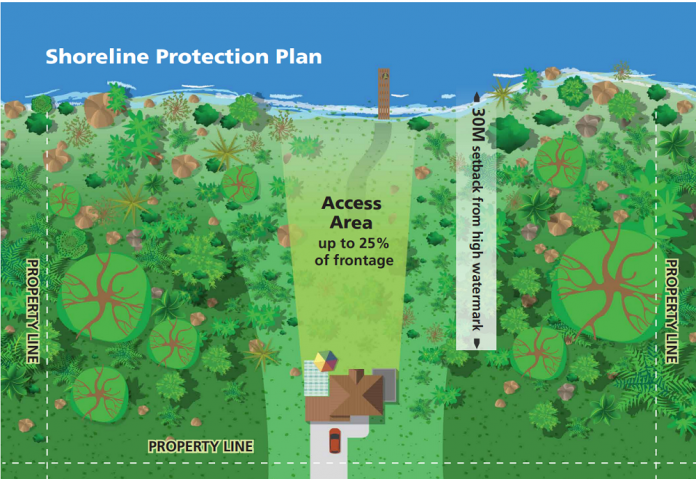
Though not all of that is pandemic-related, their handling of the situation has earned them marks. Though such polling does not exist for our municipal leaders, they have at least had headaches stalled by the crisis. Issues such as a controversial shoreline bylaw or the budgetary woes of the Minden arena cannot stand out as prominently when people are just trying to figure out how to get by. The biggest controversy in two months locally has been the return of seasonal residents, but most of the ire was not towards governments, but individuals sniping at each other and a generalized “other.”

Activism is harder, too. For instance, the Ontario Secondary School Teachers’ Federation effectively caved in their attempts to stop class size increases or mandatory online credits. They acknowledged that, but recognized the need for some stability given the pandemic. It is hard to pick a fight with the government when no one has much energy to spare.

Media, including The Highlander, has also been preoccupied. Though there is plenty of questioning of government, our plates are filled with pandemic coverage taking priority over anything else.

But as the country begins to open, we must be ready and welcoming of efforts to hold people in power accountable.

Our leaders are still making vital decisions that will impact us. More and more, local council agendas are shifting from crisis management to regular business. All those issues that got sidelined before the pandemic are still there and will have to be dealt with. That also goes for our venerated health care sector, rightfully applauded for weathering this storm.

That should continue, but some attention will need to be paid to how this pandemic was handled, and what flaws it exposed in our health care system. Long-term care needs scrutiny especially after the failure of Highland Wood’s roof last year.

If we do our jobs well, you will see more of that accountability in our pages this summer than in recent weeks. We may risk coming off as unkind in a difficult time, but we cannot hold back forever.

COVID-19 is not going anywhere anytime soon. It will not be easy, but our media and public must get back to government scrutiny. It is good we have faith in our governments, but even in a long-term crisis, it cannot be boundless.

Frustration as renters defy restrictions

0
Photo via flikr.

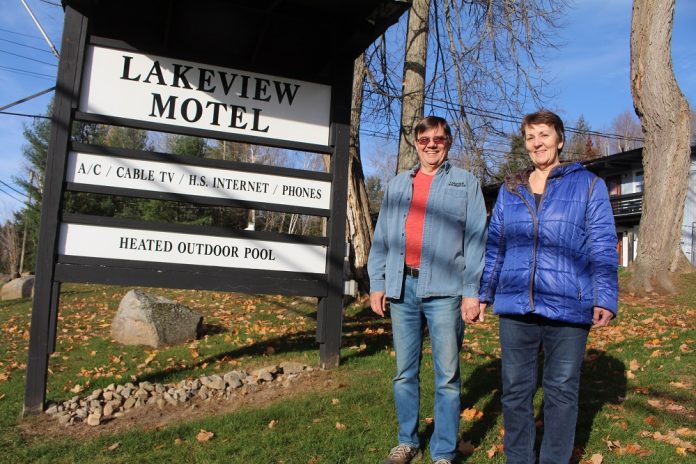
Short-term rentals are still mostly banned across Ontario, but professional cottage rental agencies are concerned about people on online platforms, such as Airbnb, breaking the rules.

The province has heavily restricted short-term rentals as of April 4, only allowing them for people in need of housing during the COVID-19 emergency (though that restriction does not apply to hotels, motels or student residences). Despite the restriction, Airbnb is still allowing hosts to list in the province, with several local hosts continuing to do so in April and May.

All-Season Cottage Rentals owner J.T. Lowes has suspended his company’s listings during the pandemic. But he said he knows of at least one online rental that has continued while flouting the restriction and he believes there are more.

“It’s really frustrating to see,” Lowes said. “The professional agencies are doing their part and not allowing bookings. It’s annoying to see other people aren’t. “I don’t think it’s very widespread. It’s probably a small number of people that are still renting, but it’s definitely going.”

Airbnb said it updated its platform to advise guests to check local travel restrictions, which they see before booking. It said it has communicated with hosts to check local orders as well. The platform has also prohibited listing titles that reference pandemic terms, to prevent marketing around escaping from COVID-19.

“Leisure travel should not occur right now, and we have encouraged our host and guest community to follow all restrictions,” a spokesperson said. “We’re glad the Province of Ontario recognizes the many situations where short-term rentals remain an available resource during this crisis, including for frontline responders, other workers requiring isolation and those sheltering in place during this crisis.”

But leaving the onus on owners to find and follow the rules is an issue, Lowes said.

“Unfortunately, owners are not always up-to-speed on current rules and regulations.”

The issue has also garnered County attention. Council voted May 26 to direct the warden to write a letter to the province asking for clarification on when short-term rentals and cottage resorts are allowed to open and encourage a level playing field for all levels of accommodation. It will also be raised at the Eastern Ontario Warden’s Caucus.

“I’m not prepared to watch our resorts struggle and possibly fail when private cottage rentals are in full swing,” Coun. Carol Moffatt said. “There are many, many people visiting Haliburton County through private cottage rentals that are not supposed to be open.”

Cottage Care Rentals, another professional agency which has stopped listing, also expressed concerns.

“It would be a shame to hear that landlords using Airbnb would put our community at risk,” owner Don Critchley said.

Lowes said he is concerned that rogue renters could further increase vocal opposition against the sector.

“The vast majority of owners are responsible and following the rules, but their (Airbnb’s) system allows for some of those bad apples,” he said.

Although Airbnb did not address a request for local booking data during the pandemic, many Haliburton-area hosts on their site have halted listings while the restriction is up.

OPP Sgt. Jason Folz said Airbnb is not mandated to close. He said OPP is enforcing orders surrounding gatherings of more than five people and specific businesses opening in contravention of the order.

Warden Liz Danielsen questioned whether OPP were taking as strong a position as they should be, but said the lack of clarity on some of the emergency orders is an issue.

“Unless they can get clarity, they seem not to desire to act on them,” Danielsen said. “To me, that’s our only avenue of any kind of enforcement.”

Lowes said it is still too soon to have rentals going on. But he thinks they could possibly open by the start of July, with restrictions.

“For us to recover and the economic recovery to begin, I think it would be beneficial to allow rentals under certain circumstances,” he said.

Decorated curlers earn parting gift from club

0
Jessica Byers and Dustyn McCready-Debruin earned bursary awards from the Haliburton Curling Club after years of dedication and decorated high school careers. Photo via Haliburton Curling Club.

Graduating student Jessica Byers said she would not be the person she is today without the Haliburton Curling Club.

Byers and fellow student Dustyn McCready-DeBruin each earned $500 bursary awards from the club for their efforts over the years, announced May 10.

Byers said she began curling with the club in Grade 5 and it meant a lot to her to receive the bursary after all her years there. “I’ll be going to post-secondary, so any contributions to help with that is obviously very appreciated,” Byers said. “I was just happy with myself and was grateful for the opportunity.”

“It means a lot. The curling club has really supported me since I joined in Grade 4,” McCready-DeBruin said. “It just means a lot as they’re still supporting students as they move to a different stage in their life.”

Byers and McCready-DeBruin are both alumni of the club’s youth curling program and spent their high school years volunteering there, coaching younger curlers.

“I’ve always enjoyed helping kids because I was a pretty shy person,” Byers said. “It’s nice to see if you keep trying, you’ll get to a point where you’re more confident and you can see they’re successful and happy.”

Club director Wanda Stephen said after not awarding the bursary last year as there were no graduating students from the club, they felt comfortable giving out two awards this year. She said Byers and McCreadyDeBruin stood out amongst applicants.

“They’ve been so committed to the youth curling program at the curling club. They come every week, several times a week, to help with the youngsters,” Stephen said. “All the adults really, really love having the younger curlers curl with us.”

She added the youth program is still going strong, with 40 kids involved and 17 high schoolers. Byers said she became passionate about the game because of its strategy, friendly competition and social atmosphere. She added it was good club members were supportive when she started into adult leagues.

“I was very lucky to have those members of the club appreciate having kids out there because not every club is like that. It felt good to show the product of the youth program,” Byers said.

“It’s a really close knit community and it just feels great to be apart of it,” McCreadyDeBruin said.

That experience would help Byers and McCready-DeBruin lead decorated high school curling careers. Byers had second and fourth place finishes at provincials, two all star nods and a COSSA silver. McCready-DeBruin also achieved strong results on the boys’ side, with fourth and sixth place finishes at provincials and COSSA gold and silver.

Now, Byers and McCready-DeBruin have their sights set on varsity curling. Byers has a spot secured at Humber College, where she will be studying interior design. McCready-DeBruin plans to play at Dalhousie University, where he’ll study marine biology.

“I’m just grateful for all of them. I know they’re super supportive of me,” Byers said of the Haliburton club.

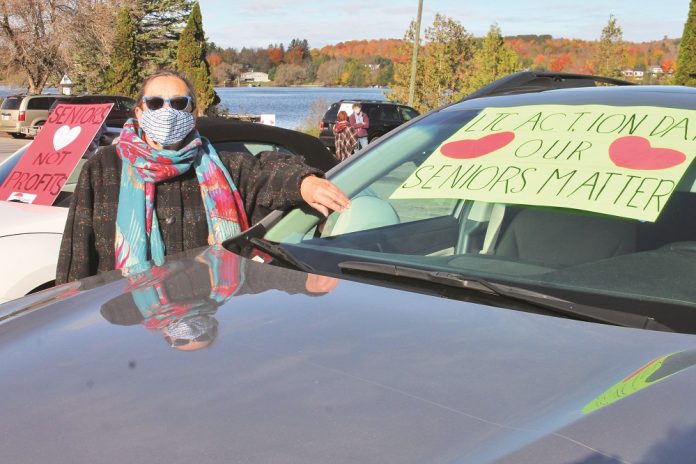
Seniors seek long-term financial support

0
Seniors are looking for more long-term financial support due to COVID-19. Above, MPP Laurie Scott and MP Jamie Schmale address seniors at a seminar in 2019. File photo.

Seniors advocates are welcoming a $500 one-time payment from the federal government but are seeking more support to ensure long-term security.

The government announced May 12 that seniors eligible for the old age security pension would get a $300 payment, with an additional $200 for seniors eligible for the guaranteed income supplement (GIS).

But the Canadian Association for Retired Persons (CARP) said although these are positive, they do not address the organization’s concerns with how COVID-19 has hit retirement security. The organization is advocating for measures such as waiving mandatory registered retirement income fund (RRIF) withdrawals and eliminating the withholding tax on registered retirement saving plan (RRSP) withdrawals this year.

“The official statement of the supports today for seniors are welcome, but they don’t directly address many of the concerns relayed to the government on retirement security and access to liquidity,” CARP Chapter 54 Haliburton Highlands president Jon Dannewald said. “We’re looking to have as many tools as possible to maximize cash flow and protect our retirement. A onetime payment is welcome, but it’s not a solution.”

The federal government also highlighted other help it has provided during the pandemic, including a payment through the GST, as well as funding for community organizations providing seniors programming. In the Haliburton area, that’s included the likes of the Central Food Network, Rotary Club of Haliburton’s Good Food Box and SIRCH Community Services, each receiving between $3,000-$5,000 through the New Horizons for Seniors Program.

The government has also lowered RRIF withdrawals by 25 per cent.

“The Government of Canada will continue to monitor and respond to the health, social, and economic impacts of COVID-19. We stand ready to take additional actions as needed to support all Canadians, including seniors, and stabilize the economy,” the prime minister’s office said in a press release.

Dannewald said he does not know if the government will be receptive to CARP’s proposals. CARP has said stock market plunges have hurt retirement savings and rising costs for things such as groceries will hurt seniors in the long-term. Dalhousie University and the University of Guelph have not changed their forecast of a two to four per cent increase in grocery prices for 2020, but said in a March 31 update factors such as more safety practices at grocery stores and online purchasing could drive costs up over time.

“Our costs are going up but our retirement income is not,” Dannewald said.

But Dannewald said other government measures have helped ease the burden, such as the province keeping hydro rates to off-peak pricing. He added local programming is also helping, such as food banks, which the local CARP chapter has donated to.

“Locally, I think we’re in pretty good shape,” he said.

Libraries plan for reopening

0
The Haliburton County Public Library is planning for reopening but will not yet offer curbside pickup services. File photo.

The Haliburton County Public Library (HCPL) is planning for reopening but staff are uncertain how it will unfold.

The province has declared that libraries could begin offering curbside pickup May 19 as part of the first phase of its reopening plan. However, HCPL announced it is still developing the service and it is not yet ready to launch.

“Developing a curbside pickup service that is safe for staff and patrons is a large endeavour and we are working on a way to safely provide this service. However, there are many unknowns, and we will provide this service only once we can do it safely,” HCPL said in a Facebook post. “We miss all of you. But we also want to make sure that when we can increase our services, we are keeping our patrons, our staff, and our communities safe.”

The library board discussed the reopening process during its May 13 meeting and what will eventually be required, such as personal protective equipment, additional cleaning supplies and plexiglass shields. Library CEO Bessie Sullivan also said protocols will be needed for maintaining distance, computer usage, and possibly locking down books for some time after use.

However, she said there is not yet much provincial guidance on what libraries will have to do and uncertainty around what
additional funding there might be due to the situation. She also said there is uncertainty about how much decontamination books will require due to COVID-19.

“I still feel like we’re in a great abyss of non-information,” Sullivan said during the meeting.

Councillors on the board spoke to municipal willingness to help. Since local library buildings are owned by municipalities, capital expenses would have to go through them.

“What we are basically prepared to do is take our guidance from the library board and the County,” board member and Highlands East Coun. Cec Ryall said. “It’s going to take all of us to make this work.”

Warden Liz Danielsen said municipal CAOs are working on the issue and the municipalities would need to figure out if they would bear individual costs or if it would be shared with the County.

Board member and Algonquin Highlands Mayor Carol Moffatt said it is important to collaborate and ensure costs can be accommodated in municipal budgets.

“We want to be careful that we don’t have a splintered approach,” Moffatt said.

Vice-chair Andrea Roberts thanked staff for their efforts in keeping libraries going with online services.

“Thank you for adapting, to try to keep the library services going in these strange and unusual times,” Roberts said.

The library board has scheduled a special meeting May 27 at 4 p.m. to discuss curbside delivery.

Haliburton County getting back in business

0
Up River Trading Co. co-owner Mike McKeon prepared the outside of his store May 19 for a reopening the next day. Photo by Joseph Quigley.

Haliburton County’s construction and retail sectors began further reopening May 19 after the province lifted some restrictions.

Ontario launched stage one of its COVID-19 reopening plan. It means if proper public health safety protocols are followed, all construction can proceed, and retail stores with street-front entrances can open with limited capacity.

G.J. Burtch Construction Enterprises Ltd. owner and Haliburton County Home Builders Association representative Gary Burtch said although the health restrictions will be in place for a long time, starting more construction will be a boon for the County.

“At least we’re able to get going,” Burtch said. “That will help the economy of the town and the County, so I’m happy about that.”

The province is also allowing businesses such as vehicle dealerships, marinas, golf driving ranges, pet care and more to start reopening. Burtch said working with new restrictions around sanitation and distancing takes some getting used to. But builders have dealt with those restrictions in recent weeks, having been allowed to continue ongoing projects and do some work such as site grading.

“For us up here, we’re working in the bush,” Burtch said. “There’s enough space.”

The County’s four townships are again issuing building permits.

Up River Trading Co. is one of the retail stores opening this week. It’s been closed since March 22 due to the pandemic. Owner Paul Roy said they are following government safety guidelines, adding screens, touchless pay and limiting capacity.

“We’re very excited. Looking forward to seeing all of our customers back,” Roy said. “We feel very comfortable opening.”

The business ran an online shop while it was closed. Roy said it did not compare to having a physical space but they were very pleased with the support they received.

“We’re happy to be able to open in more of a limited capacity and hopefully, as it progresses, it will become a little bit more like normal again,” Roy said.

Meanwhile, governments and agencies are still offering businesses support due to the crisis.

The Haliburton County Development Corporation (HCDC) rolled out the federal Regional Relief and Recovery Fund May 15, aiding “main street” businesses such as retailers and restaurants with new loans of up to $40,000.

“Sole proprietors, social enterprises and small and medium-sized businesses have been particularly impacted by the COVID-19 pandemic,” HCDC executive director Patti Tallman said. “We look forward to delivering this critical program to our local community.”

Burtch said it should be full steam ahead for the construction sector. Thus far, he said he has not heard of any local construction projects getting held off due to economic circumstances, though he acknowledged that could happen.

“Let’s get rolling,” he said.

Harp on the Water: instalment one – The Faceless Lady

0

Editor’s note: This is the first installment of a series entitled Harp on the Water. It’s written by Hope Thompson, who lives in Algonquin Highlands. Thompson writes for theatre and television and has had plays produced in Toronto, Vancouver and Los Angeles. She recently wrote for the CBC’s Baroness von Sketch Show and is currently working on a collection of crime stories. Her series will run over the next eight weeks.

Spruce County Police Detective, Harry Harp, panted up the crisscrossing path that led from the dock to the top of the point. He was tall with dark eyes and at 47, had a creased forehead, giving him a quizzical look. Three weeks earlier, he had relocated to Spruce County, grateful for the escape from Toronto and the bitter aftermath of his failed marriage. For his first case in Spruce County, Harp had chosen a business suit but could already feel his dress shirt clinging, damply, to his skin.

Mistake number one, he thought.

Trotting behind Harp was Constable Terry Becker. A tanned local, he looked enviably comfortable in his cargo pants and shortsleeved cop-issue shirt.

Nimbly leading the trio up the path was Frank Gill. He looked to be in his 70s and was wearing work pants held up by suspenders over a checked shirt. About forty minutes earlier, Gill had called the police station in town and told the desk clerk that there was trouble at the Calvert place. He had met Harp and Becker at the boat launch to ferry them across the lake. During the boat ride, Gill explained that the Calverts lived off-grid. They also didn’t have a phone. Gill’s place was across the lake from the point and he’d woken to the sound of screaming.

The path from the dock ended in front of a wood-sided cottage. Two rotting chairs stood in front of it and Harp noticed that they were turned away from the lake, as if purposely ignoring the view.

That’s odd, Harp thought, catching his breath.

But there wasn’t much to see, anyway. A wall of trees blocked out the view of the lake, and, he guessed, hid the point’s inhabitants from prying eyes below.

Frank Gill stepped forward and knocked on the front door of the cottage, then without waiting for a response, pushed open the door. Harp and Becker followed him into a narrow room. The detective adjusted his eyes to its dim interior, lit by a single wick lantern and smelling strongly of dust and kerosene. The main feature of the room was a long display shelf of natural objects—a turtle’s shell, birds’ nests, a pair of deer antlers, varieties of dried leaves, desiccated berries, a piece of shelf fungus, the abandoned skin of a snake. At the far end was a small kitchen with a woodstove, cupboards and a length of counter. Across from the room’s only window was a pair of threadbare chairs and a sagging sofa. Sitting on the sofa was a woman and her eyes were fixed on Harp.

Frank Gill closed the door behind Harp and Becker. “Grace,” he said gently. “These men are police. They come to help—about Ida.” The woman wiped her eyes with a piece of cloth she pulled from her shirt pocket. It was then that Harp noticed something in her hair.

Pine needles?

She was wearing faded cotton pants smudged on the knees like she’d been kneeling in dirt and her flannel men’s shirt was caught with burrs.

“Ms. Calvert, I’m Detective Harp and—.” Cutting him off, she said, “My dead mother is in her bedroom.” She gestured to a narrow hallway then added. “They finally got what they wanted.”

Harp said, “They?”

“The cottagers!” She cried. “They hate us—.” Her face crumpled into tears.

Frank Gill stayed with Grace while Harp and Becker walked down the hallway to a closed door. Gently pushing it open, they were met with the smell of floral perfume, mothballs and blood. Ida Calvert lay on her bed under a flowered eiderdown, her grey-hair fanned out over her blood-soaked pillow. Liver-spotted hands were folded over her chest. Serene, almost, except that something had struck the woman’s face with enough force that her features—eyes, nose and mouth—were gone. Bits of bone mixed with wood chips and dirt lay scattered around.

“Becker?” Harp said.

The constable looked up and Harp noticed he’d lost some of his tan.

“Walk around the place, check the doors, windows, make note of anything out of order.”

The young man nodded.

A moment later, Harp was alone with the faceless woman.

To the right of the bed stood a chest of drawers and on it, was a collection of combs and lotions. The curved vials and tubes looked like they’d been sitting there for decades, grease darkened with dust and time. His gaze followed back over the woman’s thin body to the left of the bed where a side table had been placed. A glass of water stood next to a flashlight. Harp positioned himself between the wall, the side table, and the woman’s bed then raised his hands over his head and swiftly brought them down towards the woman’s missing face.

He frowned, thinking.

The room had one small window. Taking a step towards it Harp banged his knee against the sharp corner of the steel bed frame. Cursing, he gripped his kneecap and hobbled to the window. From the flakes of varnish in the corner of the frame, it was clear that it hadn’t been opened in years.

Harp looked back at Ida Calvert, his brain turning over.

After his inspection, Harp returned to the cabin’s main room. Grace Calvert stood at the counter ladling water from a bucket into an aluminum coffee pot.

“All we ever wanted was nature and quiet,” she said and pushed her hair back from her face. Her features were smooth, even patrician and Harp felt himself strangely drawn to her.

“I just never imagined they’d go this far.” She placed the pot on the woodstove.

“You say the other cottagers—hate you?”

A mosquito buzzed around his head.

“Because we’re different. We’re not like them. We don’t race around in boats screaming our heads off and blowing up firecrackers—.” She squished shut her eyes. When she opened them, anger had replaced her tears. “That’s why they hate us. That’s why they killed my mother!”

Harp tried to loosen his tie then thought better of it. “For the record, where were you last night, Ms. Calvert?”

At that moment, Harp noticed movement from the corner of his eye and turned his head. A scene unfolded through the front window as if a movie director had yelled, “Action!”

From the east side of the point, Becker ran into view waving dirt-covered hands. From the west, Spruce County Coroner, Boyce Williams, followed by two assistants, paraded up the path. And at centre stage, Frank Gill sat on a swing hung between two pine trees. The old man was swinging back and forth like a child.

Harp blinked.

Behind him, Grace Calvert was speaking. “I was in the forest, Detective. Sleeping. I walked to the village to buy a newspaper and when I returned, my boat was gone. They do that to us.”

“Wait—the forest?” Harp turned to her. Grace sighed. “With no boat, I had to walk around the lake. It became dark—so I lay down. I feel quite safe in the woods. At least you can trust the animals.”

Just then, the door burst open.

  • To be continued