

Home Blog Page 146

HCDC unveils new business hub The Link

0

Haliburton County Development Corporation welcomed around 50 guests to the grand opening of The Link Oct. 4, with board chair, Pat Kennedy, saying the new space is “going to be a really valuable part of the Highlands community.”

Announced earlier this year, the facility, located beside Haliburton Timber Mart on County Road 21, will house all HCDC operations, including its business incubator, the Haliburton Highlands Chamber of Commerce, the Arts Council, services from the Business Development Bank of Canada (BDC), and provide office space for County of Haliburton economic development staff.

It also features space for networking events and will be used to host a series of workshops, Kennedy said. There are five private offices available to rent, with eight new ‘hot desks’ that will provide working space for emerging businesses that require high-speed internet. Organizations will also be able to rent the upstairs conference room.

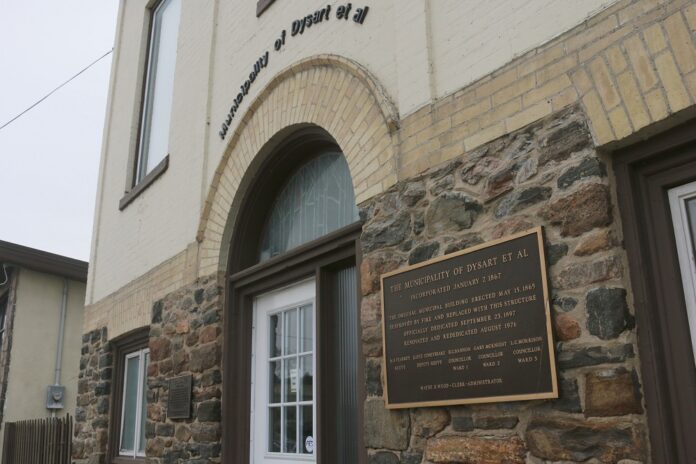
The Link initiative was thought up a couple of years ago during the COVID-19 pandemic and was first proposed as an expansion to the incubator, previously located beside Dysart town hall. HCDC has nurtured 10 start-ups and assisted more than 15 other developing businesses and entrepreneurs at the site since its launch in 2010.

“We needed to decide what we were going to do with it – were we going to close it? We decided no, we need to expand it, because there’s a real need for this type of service in the community,” Kennedy said, noting the expansion was approved last fall.

Executive director, Patti Tallman, said The Link will be a place for new and existing entrepreneurs to find the resources they need to start, sustain, relocate, and grow their business.

Having so many like-minded entities operating within the space is a major win for the community, Kennedy said.

“I think we all know when talent comes together, great things can happen. The focus is to make businesses, organizations, and our communities more nimble, effective, profitable, to create new wealth, new jobs, and contribute to our economic development,” he said.

Amy McFadden, representing the Federal Economic Development Agency for southern Ontario, said HCDC is one of the province’s biggest success stories for supporting local business, lauding the organization’s expansion with The Link.

“Over the last three years alone, HCDC has assisted with more than 140 SMEs [small and medium-sized enterprises] and entrepreneurs, and moved out over $15 million in capital financing, which has impacted over 890 jobs,” McFadden said

“This impact, on top of the delivery of the regional relief and recovery fund, which supported another 50 local businesses and provided almost $1.76 million in liquidity relief at a time when businesses needed support… due to the pandemic, is huge.

“The Link will greatly promote and support the entrepreneurial ecosystem in the region, providing access to the services and support entrepreneurs and SMEs need to grow and expand,” she added.

Tallman thanked those who had helped bring The Link to life – Haliburton Timber Mart for providing the space, North of Seven Custom Carpentry for leading the redevelopment, and ACM Designs for their interior work.

“This is really exciting for all of us at HCDC… it’s a new era,” Tallman said.

Small business week

Next week is small business week in Haliburton County, with six events organized to help local entrepreneurs network, learn, and grow their business.

The Arts Council – Haliburton Highlands will kick things off Oct. 17 with a panel discussion focusing on the art of managing your business, at The Link at 1 p.m. Later in the day, at 4 p.m., the County’s economic development department and HCDC is hosting a networking kick-off at Boshkung Social.

The County is hosting its second-annual business summit at Sir Sam’s Oct. 18, with Scott Ovell, director of economic development, saying the event will centre on the idea that strong communities build stronger businesses.

“At the heart of this theme lies the recognition that communities play a pivotal role in shaping the success and resilience of businesses. We firmly believe that when businesses and communities unite, they have the power to drive lasting prosperity and foster sustainable growth,” Ovell said. “Haliburton Highlands has demonstrated exactly this for so many years.”

The summit will feature five keynote speakers, kicking off at 10 a.m.

The City of Kawartha Lakes is hosting a lunch and learn session at The Link Oct. 19 at 1 p.m. focusing on digital transformation for non-profits. ACM Designs is hosting a networking event at the space at 5 p.m.

The week will conclude with the Haliburton Highlands Chamber of Commerce business and community achievement awards gala, being held Oct. 20 at Eagle View Event Centre. Chamber representative Kirstley Dams said there are more than 100 people and businesses vying for 12 premiere awards.

For more information, or to register for these events, visit thelinkhaliburton.ca/ events.
Library CEO closes book on Highlands

0

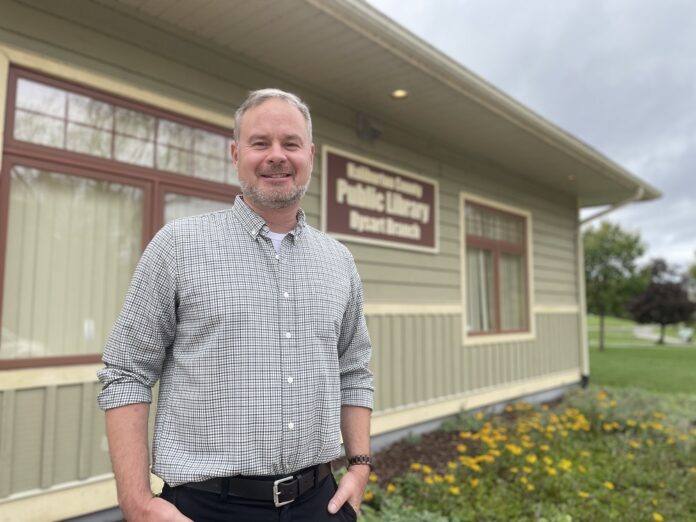
Chris Stephenson had planned to stay on as CEO of Haliburton County Public Library for the next three to five years, until retirement. Unfortunately, his back had other plans.

Stephenson said with his retired parents living in nearby Muskoka, the prospect of leaving the job and moving was difficult.

However, doctors have told him a back issue isn’t going to go away overnight, and, without a family doctor in the Highlands, he had to consider alternatives.

“I slipped a disc 13 years ago, and symptoms have come back recently. I spend too much time sitting, maybe, I don’t know. I have a single foot drop, which means partial paralysis in my right foot, so I’m not walking well, and I’ve inherited arthritis that is making the healing process a little more challenging,” he shared with The Highlander during a chat Oct. 6.

Stephenson added, “I hit a wall during the day where I just can’t sit and I can’t stand.” He said it had been two months since he’d taken himself to the ER. He will see a doctor when he arrives in Saint John, New Brunswick later this month but says the plan will likely entail reducing stress, acupuncture, a therapy pool and physiotherapy.

“These are things that have eluded me,” he said.

Stephenson met his partner, Amanda, when the two were attending library school in Vancouver. Amanda works remotely, and is already in Saint John. The librarian said another challenge has been finding affordable housing in the Highlands. He has been renting.

“We wanted to buy a house. Whenever we looked at our budget, it kept sending us to the east coast and we thought ‘well, we love the ocean. So, let’s try the other ocean’.” He added Saint John boasts people from all over Canada and has a lot of history. He said it also has milder winters.

Stephenson has been the library CEO for two years. The vacancy is posted and he said, “there’s already interest trickling in.”

He believes he is leaving the service in good shape. It’s one of the reasons he wrestled with his decision, wanting to keep the momentum going. However, he felt it was best to step down as opposed to going on leave for an extended period of time, which would have led to uncertainty. “It’s no fun when you’re a small team of 20 and there’s no leader.”

He, his staff, and board completed a strategic plan; launched the Dorset depot lockers; reopened the Stanhope branch, made key staffing changes; rebranded with a new website; and got a courier and programming van.

Stephenson said he will end his time in the Highlands on a high note; attending the gala fundraiser Oct. 22 at the Minden branch, featuring Maureen Jennings of Murdoch Mysteries fame.

“That’ll be a really nice departure. I just really enjoyed my time here. People really do care about the library. This is a very creative, artistic community and I knew that if I, and we, put energy in, we would get that back tenfold every time, regardless of what demographic we were serving.”

Dysart buys 90-acre parcel for development

0

Dysart et al has completed a $1.725 million purchase of a 90-acre property fronting County Road 21, with mayor, Murray Fearrey, labelling the parcel “prime, developable land.”

The municipality closed with the listed owner, Ontario Vantage Consulting Inc., in May, with the deal being complete in late July. One of the stipulations outlined is that the previous owner will retain a 3.25-acre lot on the southwest corner of the property, which is to be surveyed on the township’s dime.

The previous mortgage, valued at $1.45 million, was held by Harburn Holdings – a company owned by local businessman Paul Wilson. The property is located across from Haliburton Veterinary Clinic.

Speaking to The Highlander, Fearrey said the purchase – the most financially significant in Dysart’s recent history – was big news for the community.

“We’re looking at it for residential and recreation opportunities. It’s right on the sewer line. It’s all diggable, there’s no bedrock in there, so it’s got a lot of potential,” Fearrey said. “The size of it, it’s almost as many acres as Haliburton village. It’s a big area, and it touches our industrial park property [to the north]. This is a big win for Dysart. It’s the only way the town could grow. With the hill on one side and the lake on the other, there’s just not this kind of land around, so this is very exciting for us.”

Fearrey said the township will be looking to sell the land to developers.

“We’ve got people showing an interest, but we want to do this in a fashion that we have an overall plan. We need to know we’re putting the right things in place there. We want to get a good mix of housing,” the mayor said.

Housing, recreation targeted

“It will not be our intent to lose one cent on the value of that property. We won’t be giving a whole lot away, because we need to recoup that money for other things.”

With A.J. LaRue Arena and the Haliburton Curling Club building, in the mayor’s words, nearing the end of their lives, he believes this new property could be an ideal home for replacements. He wasn’t keen on opening the parcel up for extensive commercial development, however.

“We don’t want to remove [the draw] of the downtown. I think there would be more recreational opportunities we’d be looking at there. We know our arena is coming to the end of its life, the curling club, too,” Fearrey said. “There’s a lot of possibilities here that I may not see in my term but can be planned for the future.”

Coun. Pat Casey said the site could be an ideal location for a swimming pool down the line. While he’s excited about the “many possibilities” this land presents, he noted council will take their time and ensure they’re making the best decision for the long-term.

The first priority, Casey said, will be proceeding with various studies of the site in the coming months. Once those reports arrive back at town hall, proposals will be brought to council for consideration.

“Buying the land is one thing, but it’s another to get all the infrastructure we need here. That’s not going to be an overnight process,” he said. “This is just one step of making sure we’re setting this community up for the future. Whether it’s this council, or another council five or 10 years down the line, you have to be forward thinking and find ways to help this place handle the growth [we’ve already seen] and are expecting to see.”

Council’s next focus, Casey noted, will be the township’s sewage treatment plant, which he says will likely need to be upgraded. Council’s next focus, Casey noted, will be the township’s sewage treatment plant, which he says will likely need to be upgraded.

“We can buy all this land, we can get development going here, but if you don’t have the necessary sewage capacity then it puts everything in a vacuum,” Casey said. “We don’t want to be limited with what we can do here.”

Fearrey said the land, once developed, would go a long way to addressing the community’s housing crisis, saying he wants to see all types of housing built there. During a recent County council meeting, it was estimated Dysart’s population is to grow almost 60 per cent over the next 30 years, from 7,300 people to 11,600. By developing this land, Fearrey believes the township would be able to support that growth.

“This was something we had to do, we had to look for if we’re going to grow how [the province] wants us to. Our next move, once we’ve surveyed the land and got a handle for what’s needed, is to find a developer who will pay a price for a good property and do the right thing on it,” Fearrey said.

Watershed report: lake health at risk

0

Environmental scientist Dr. Peter Sale believes a recently-released state of the Muskoka watershed report, outlining a decrease in water quality in hundreds of lakes, could have widespread implications on lake health in Haliburton County.

The Muskoka Watershed Council released the report in September, providing a scientific assessment of the watershed’s overall health. Typically produced every five years, the document looks at local water and land conditions and provides the basis of the council’s priorities for future watershed management.

While the bulk of the watershed’s 2,000plus lakes are located within the District of Muskoka, there are some that stretch into Algonquin Highlands. Sale said since the County is so close to Muskoka, some of the things being seen there are likely happening here.

“Our environment is changing, but it’s changing slowly enough that most people probably don’t notice it. This makes it a very difficult problem to deal with as we’re not having catastrophes, emergencies, we’re having slow degradation,” Sale told The Highlander.

“Because Haliburton County is directly east of us, it’s very likely the kinds of patterns we’re seeing here are repeated,” Sale added. “Some are driven by development, which may be more intense here, but many are being driven by things like road management and climate change… this is valuable information for people in Haliburton, because it will help direct you towards things that should be looked at [in your] watershed.”

A look at some trends

One of the most significant changes, Sale said, is the decline of calcium concentration in lake waters. Just over a quarter, or 28 per cent, of 187 lakes dipped below a threshold of two milligrams per litre – which is problematic for keystone species like zooplankton.

“We’re getting to the point where many organisms that live in the lakes can’t build their skeletons because they don’t get enough calcium. The environment is becoming hostile to species that are supposed to be there,” Sale said.

If the trend continues, species like zooplankton could see their population levels massively deplete, causing ripple effects up the food chain. “They feed fish, which then feed water birds… the functioning of a lake can be hugely disrupted if any of those links is not performing effectively,” Sale noted.

The Muskoka watershed has also seen an increase in blue green algae blooms, with five cases reported in 2022.

Another major negative, he notes, is 70 per cent of monitored lakes are saltier now than they used to be. In about a quarter of those, the concentration is high enough that it’s impacting the survival of dozens of natural species.

“We are importing tons of salt every year and spreading it on our roads. When it washes off the roads, it runs through the soils in our forests and into our lakes,” he said. “There’s a simple solution – we just need to find a way of taking care of our winter roads without dumping salt on them.”

Climate change is having an impact. Sale said changes in rainfall patterns have amounted to a month more of rainy days annually compared to 100 years ago. There is also evidence storms are becoming more intense – double the systems yielded more than 51 millimetres of rain between 2019 than from 1970 to 1999.

Lakes in Muskoka are also experiencing about 20 fewer days of ice cover than in the mid-1970s

“That has consequences for people who like to ice fish, snowmobile, for the construction industry, and winter tourism. It also has significant consequences for the environment because those lakes are open now 20 more days per year for evaporation, and for the water to warm,” Sale said. “As a result, our lakes are different kinds of systems to what they were before. That’s likely to continue as climate change intensifies.”

Time to act

Sale said watersheds across the province stand at a crucial turning point – while they may be healthy now, existing management systems seem incapable of halting or reversing the negative trends outlined in the report.

The solution, he believes, is an integrated watershed management system where all communities work together to identify and deal with pressing issues as they arise.

There needs to be some significant changes to the way we manage the environment… we are working directly with municipalities, trying to bring them to the table and get them organized as a consortium to introduce a new type of adaptive management process based on monitoring the environment and responding to the changes while they’re still small enough that it won’t be hugely expensive and arduous,” Sale said.

“It’s a completely different way of looking at things, but it’s something we need to do across the board in Ontario,” he added.

“The current system where one government agency is responsible for keeping the roads clean but doesn’t have any responsibility over what happens along the edges of a road… was developed at a time when the world was a simpler place, the environment was not changing very rapidly, and our development was low scale. We’re in a totally different world now,” Sale said.

These problems are not going to go away by themselves. They’re only going to get worse if we don’t deal with them… We’ve always been able to say our environment is in pretty good shape – it still is, but it’s getting worse every year,” he added. “Now is the time to change the way we do things before it’s too late.”

Coach calls on team to play complete game

0

Haliburton County Huskies head coach Ryan Ramsay has called on his young team to improve defensively after giving up leads in three games last week.

The blue and white returned home winless from the OJHL Governors’ Showcase, held in Buffalo, New York, losing a close game with the Oakville Blades 4-3 Sept. 25 before being bested 3-2 by the Toronto Junior Canadiens the next day. The hometown team battled to a 4-4 tie with the Cobourg Cougars on home ice on Saturday – their second straight stalemate at S.G. Nesbitt Memorial Arena.

“We’re a lot younger this year, a little bit greener. We’ve got a lot of new faces still learning our system. Last year, I think we would have found ways to win those games,” Ramsay told The Highlander. “Right now, we just can’t close teams out. The guys are working, they’re playing really hard. We’re in the games – we’ve just got to find a way to get the result.”

A fast start to Saturday’s encounter saw the Huskies earn an early powerplay opportunity – the visitors’ Kaiden Harmon sent to the box 1:20 in for high sticking. While the home team created some openings, Ryan Piros stood tall in the Cougars net.

The game was scoreless until the final quarter of the period, when Gavin McGaheySmith took centre stage – roofing the puck into the net at 16:38, assisted by Jack Staniland. The lead lasted less than two minutes, with Jordan Fuller tying things up at 18:29.

The home side got their noses ahead again in the second frame, Lucas Vacca scoring his second goal of the season somewhat fortuitously – sneaking the puck in off Piros’ pad from wide at 9:50, assisted by Izayah Luddington and Lucas Stevenson.

This time, the Huskies were ahead for barely over a minute, with Riley Pitt evening the score at 11:04.

It was one-way traffic early in the third, with Aidan Yarde and Johnathan Mead testing Piros. It was captain, Patrick Saini, who broke the deadlock at 3:45, tallying his team-leading seventh goal of the season unassisted.

After Yarde was tripped, the Huskies went on the powerplay and wasted no time doubling their advantage – Luddington going bar down with a snipe from the left faceoff circle at 5:40 to the delight of the home crowd.

Almost immediately following the restart, the Huskies found themselves killing a penalty, after Hunter Martell was sent to the box for roughing. The Cougars wasted no time capitalizing on the opportunity, with captain Andy Reist making it a one-goal game at 6:16.

The Huskies defended well through the mid-stages of the period, but were outmanned in the final minutes. Alex Bradshaw, acquired mid-week from the OHL’s Flint Firebirds, took a rare two minute illegal equipment minor at 18:15. The Cougars then pulled Piros, giving them a 6-on-4 opportunity to close the game, and they took full advantage – tying things at 18:57 through Pitt.

The teams battled for two overtime periods, but Piros and Vlad Visan, manning the Huskies net, stood tall, combining for 14 saves.

The result leaves the Huskies in sixth place in the East Conference, with 10 points from nine games.

“We’re still happy with our team, the way we’re progressing. I think offensively we’re doing great, but guys have got to learn how to play without the puck,” Ramsay said, noting the team was missing the presence of alternate captain Ian Phillips, out for the next three to four weeks with a knee injury picked up in Buffalo.

“We battle hard – it’s just some games we’re there for 50 minutes, some games it’s 55 minutes. But we let in a couple of goals bam, bam (after scoring) and that’s killing us right now. We’ve got to figure out how to play a complete 60-minute game. The minor lapses are really hurting us right now,” Ramsay added.

The Huskies will be back in action Friday on the road against the Pickering Panthers, before welcoming the Wellington Dukes to town on Saturday. Puck drop in Minden is set for 4 p.m.

New online hub supports youth growth, development

0

Haliburton County families with concerns about their child’s development can now access a wealth of resources and connect to care at the click of a button.

Five Counties Children’s Centre launched its new SmartStart Hub Sept. 13. The online portal is available to people in the Highlands, Peterborough, Northumberland County and Kawartha Lakes who have children up to the age of 19, or 21 if they’re still in school.

The site can connect families to support for any child development concerns relating to moving around, performing daily tasks like feeding and eating, speaking with and being understood by others, getting along with other people, and taking part in routine activities.

“Think of the hub as the front door to go through to find support and services in your community for concerns about your child’s development,” said Alex Cranfield, a program manager at Five Counties. “SmartStart simplifies the process, as we do the work to connect you to the right service provider or care agency.”

Some of the top services provided, Cranfield said, include things like speech and language therapy, occupational therapy, physiotherapy, parent coaching, and professional diagnoses and assessments. Once a request is made to Five Counties, staff will connect with parents and guardians to establish a game plan to assist the child.

The program is supported by Haliburton, Kawartha, Pine Ridge District Health Unit, Kinark Child and Family Services, which runs a youth camp in Minden, and local non-profit Point in Time.

Cranfield noted parents are welcome to make use of any support they already have in place, and that the SmartStart Hub serves only to enhance the level of programming and assistance.

“Accessing the hub doesn’t prevent families from directly contacting a service provider if they know what their child’s needs are, and where to go for help,” he said.

Five Counties is one of 22 childrens’ treatments services offering the hub program in Ontario. The organization specializes in providing speech, physio and occupational therapies, as well as other kids’ treatment services, across the region.

Last year, Five Counties served more than 6,200 local children and youth – the highest number of clients in its near 50 year history.

For more information on the program, visit fivecounties. on.ca.

Kate’s Burger Counter flipping once again

0

Kate’s Burger Counter has reopened on Kashagawigamog Lake Road after a Canada Day incident set the local eatery back over much of the summer.

Co-owners, Tanya Smith and Jon Tulk, were back in business Sept. 23 and have resumed fall hours.

Smith said she was changing the cooking oil July 3, but it hadn’t cooled enough and melted the bucket she was putting it in. It splashed across the floor, got under the counter, started to melt the drain pipe and the sub floor began smoldering.

Tulk called the fire department and the first volunteer on scene used the restaurant’s fire extinguisher.

Smith said there was very little fire or smoke damage “but there were just all the things that the firefighters had to do to make sure it didn’t get worse. So, there were holes in the floor. They banged out the counter, and a couple of holes in the walls to make sure there were no flames going up the wall. They were fantastic. They did a great job.”

It took about 11 weeks to make the necessary repairs and get things up and running. The business was still able to sell ice cream from the ice cream hut, as well, so it was not a total financial loss. The business also had insurance.

“Once the work started, it didn’t take long to get fixed,” Smith said.

She added their regulars and visitors were happy to see them reopened.

“We were busy over the weekend (Sept. 23). It was great. And everybody was excited.”

Tulk added, “we would really like to give a shout out to all of the wonderful people that came by, and still supported us for ice cream, and were concerned about the business going away. We’re back and we’re not going anywhere.”

Regular fall hours are Thursdays to Mondays 11 a.m. to 7:30 p.m. and Sunday 11 a.m. to 6 p.m.

Employers needed for carpentry, plumbing apprentices

0

Fleming College wants to connect with employers who are willing to provide paid placements for pre-apprenticeship carpentry and plumbing students.

The college said the placements are crucial in providing students with valuable, real-world experience, while setting them up for successful careers in the carpentry and plumbing sectors.

Paid placements are approximately 12 weeks long and include wage subsidies funded by the Ministry of Labour, Immigration, Training and Skills Development.

Placements are set to begin as early as Oct. 16, with completion by February 2024.

Pre-apprenticeship carpentry and plumbing students have already completed six weeks of hands-on technical skills training, numeracy, computer skills and health and safety and 12 weeks of Level 1 Apprenticeship Training in their respective trade.

These pre-apprenticeship training programs were provided free of charge at Fleming College to entice students to pursue successful careers in skilled trades.

For more information about the program and to submit an expression of interest visit flemingcollege.ca/preapprenticeshiptraining, call 1-866-353-6464 ext. 1510 or email PreApprenticeship@flemingcollege. ca.

Dysart shelves official plan, zoning changes until December

0

Dysart et al council has deferred implementing widespread changes to its official plan and zoning amendment bylaw until at least December.

At a Sept. 26 public meeting, Jeff Iles, the township’s director of planning, said the update addresses new rules regarding accessory units on a property, removing restrictions for minimum floor area for new builds, clarifying setback regulations for docks and rafts, and opening the door for residents to install outdoor saunas on their property.

Iles noted the delay was due to the County currently undergoing a similar process. He said Dysart can’t move forward before the upper tier wraps things up. The County is hosting a public meeting in October to discuss its proposed changes, with approval expected in November, Iles said.

The most significant change at the local level, Iles said, is to allow additional units in accessory buildings, rather than within the main structure. Previously, duplexes and basement apartments were the only way for residents to have a secondary living unit on their property.

The planner said additional units would not be permitted in waterfront areas and would only be approved on lots with direct frontage to a public road. Additional units will not be permitted on properties within 300 metres of lake trout lakes deemed at-capacity, Iles added.

Only one additional unit will be permitted on lots that don’t have access to full municipal water and sewer, while Iles noted the maximum floor plan of any additional unit should not be greater than 75 per cent of the main dwelling unit’s size. A minimum floor plan of 189 sq. ft. is outlined, as per provincial building and fire codes. Additional units will be permitted on the second storey of accessory buildings, such as garages.

Iles said additional units should not be used as short-term rentals, noting if someone is found to be renting space out for less than 28 days, they could face a fine.

Local resident Lance Payne asked why Dysart wasn’t implementing a maximum floor space for accessory buildings, noting if someone has a huge main structure, say 5,000 sq. ft., they would be permitted to build a secondary structure up to 3,750 sq. ft. He noted Minden Hills allows for accessory units to be up to 1,000 sq. ft.

Iles noted the bylaw, technically, would allow accessory buildings to be any size – noting there was nothing preventing property owners from making existing structures an accessory unit, as long as all other rules, such as ensuring there’s enough septic capacity, are followed.

Payne also called on council to prohibit additional dwelling units within 300 metres of any lake, not just those with lake trout and deemed to be at-capacity.

With the Ontario government pushing municipalities for more housing, bringing forward legislation such as the More Homes Built Faster Act and amending its provincial policy statement to remove bureaucratic red tape and allow developers to move quickly through the approval process, mayor Murray Fearrey felt Dysart should prioritize these changes.

“Housing is a big need in our community – I think we should move quickly on this,” Fearrey said.

Another public meeting will be held in December.

Partnering with Service Canada for outreach

0

Sue Tiffin updated council on her work since last spring, on the community safety and well-being plan adopted by council in January 2022. She said it had been slightly changed for accessibility online, including a ‘plan-on-apage.’

She added an advisory table meets about every two months and now includes councillors Bob Carter and Jennifer Dailloux, Marg Cox, Nycole Duncan, OPP Staff Sgt. Rob Flindall, Andrew Hodson, Jennifer Mills, Janine Mitchell, Veronica Nelson, Chris Parish, Mike Rutter and Pam Stuckless.

She added they now have working groups for: housing and homelessness, poverty and employment, mental health, substance abuse and addiction, and healthcare and system access. She said the plan has 12 goals and 23 strategies. She added they are working with people in the field already to avoid duplication. They are also further along in having a police services board for the County.

Tiffin said they’d had a first responders’ day, a youth art exhibition and spoken at schools. In June, they launched a community directory survey, there’s a planned onestop hub and a community mobile outreach initiative. Tiffin said they also have started augmentative and alternative communication boards. They also partnered with Service Canada to do outreach in Minden recently. They’ll be back with two events in October and two in November. Service Canada will also be going to Highlands East.

Coun. Murray Fearrey, commenting as a layperson, said of the provincially-mandated plan, “it’s a scattergun approach. What I’d like to know is what the mandate is and how you measure the success? There are so many things we’re involved with here. It’s unbelievable. Like a little bit of everything. I think if we don’t focus on one or two things, you don’t get anything done.”

However, Rutter said one of the reasons the province mandated CSWB plans was, “because there are so many groups doing really good work all over the place in a scatter gun approach. But there hasn’t been a coordination of that work. In our case, it was really evident through the planning process that people weren’t aware that help was there.

“A big part of Sue’s job is to first of all find out what is out there… and then connecting people to it.”

For example, he said there was a recent call about people experiencing homelessness and not knowing whom to connect with. Tiffin was able to put them in touch with the housing outreach officer to find help. Rutter added a plan will also save the County money in the long run.

Carter agreed it’s multi-faceted and requires keeping eyes on goals.

“This is not something you start off and create the committee and the group and you’re done. It’s a much bigger task than that. And I think it’s going to evolve and change over the years.” He said there had been “terrific” progress made and it will become more focused and concrete moving forward.

Dailloux asked about people living in the County where agencies are Muskoka-based. Tiffin said others are grouped with the City of Kawartha Lakes. She said she hopes a community services directory guide going to households emphasizes, “just because it says City of Kawartha Lakes, or Huntsville, doesn’t mean they can’t serve our community members here, too.”